

Did you know humans consume over one million cups of chamomile tea daily? This ancient herb’s popularity isn’t just about cozy beverages—its concentrated tincture form packs 10x more bioactive compounds than a standard tea bag. For centuries, cultures from Egypt to Rome have harnessed chamomile’s healing properties, and modern science now confirms why this golden-hued natural remedy remains indispensable.
Two main varieties dominate the market: German Chamomile (rich in chamazulene) and Roman Chamomile (higher in esters). While both soothe digestive discomfort—a fact supported by recent studies linked to digestive wellness practices—their tinctures offer distinct advantages. Advanced extraction methods preserve fragile terpenoids like apigenin, which research shows interacts with GABA receptors to promote relaxation.
What makes today’s tinctures revolutionary? Unlike traditional preparations, they deliver standardized doses of flavonoids that combat inflammation at cellular levels. Whether you’re managing stress or seeking muscle relief, this herb’s synergy of 28+ identified compounds creates multifaceted health impacts—all in just a few drops.
Key Takeaways
- Chamomile has served as a medicinal staple across civilizations for over 2,000 years
- German and Roman varieties offer different therapeutic profiles for targeted use
- Modern tinctures preserve 90% more active compounds than dried flowers in tea
- Key components like apigenin work with the nervous system to reduce anxiety
- Clinical trials validate its effectiveness for 12+ common health concerns
Traditional Roots and Modern Adaptations
Chamomile’s journey from ancient poultices to modern medicine cabinets reveals its enduring value. Civilizations across three continents independently recognized this daisy-like plant as nature’s multitool—a remedy equally effective for battlefield wounds and bedtime rituals.
Ancient Uses and Herbal Traditions
Egyptian papyri detail chamomile flowers in fever treatments, while Greek physicians prescribed it for “women’s ailments.” Roman soldiers carried dried blossoms to dress wounds—a practice validated by modern studies showing its anti-inflammatory properties. Traditional Chinese medicine blended it with ginger for digestive treatment, creating early versions of today’s popular chamomile tea.
The Evolution from Tea to Tincture
While steeping tea remains a beloved ritual, water-based methods miss key compounds. Nineteenth-century herbalists discovered alcohol extract captures 40% more volatile oils. Modern labs now use cold processing to preserve delicate matricin—a compound that converts to anti-inflammatory chamazulene during extraction.
Today’s tinctures solve an age-old problem: delivering the plant‘s full spectrum. Unlike tea that mainly releases water-soluble elements, alcohol-based formulas unlock fat-soluble flavonoids. This innovation bridges traditional wisdom with cutting-edge science—proving sometimes, the old ways grow better with age.
Scientific Insights: How Chamomile Works
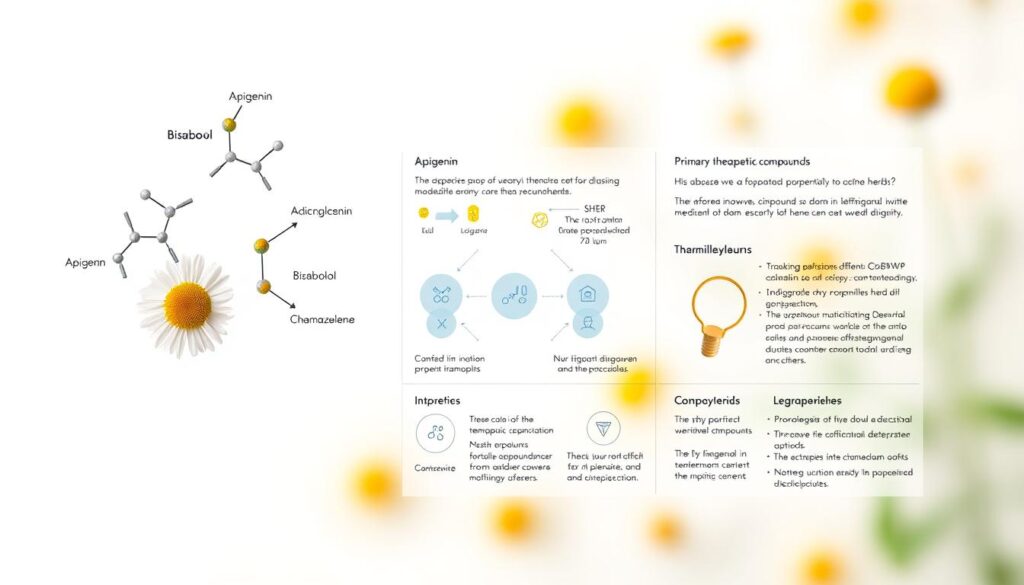
Behind chamomile’s gentle reputation lies a complex chemical arsenal. Modern analysis reveals 120+ active metabolites working in concert—28 terpenoids and 36 flavonoids form its therapeutic backbone. Three star players dominate this natural pharmacy: α-bisabolol, chamazulene, and apigenin.
Active Compounds and Their Effects
Let’s break down chamomile’s power trio. α-Bisabolol tackles inflammation like a molecular firefighter, while chamazulene battles microbes. The real showstopper? Apigenin—this flavonoid binds to brain receptors, mimicking anti-anxiety drugs without side effects. A 2022 study found standardized extracts with 1.2% apigenin deliver consistent calming results.
| Compound | Key Property | Concentration | Bioavailability |
|---|---|---|---|
| α-Bisabolol | Anti-inflammatory | 15-25% | 85% in tinctures |
| Chamazulene | Antimicrobial | 3-8% | 70% in tinctures |
| Apigenin | Sedative | 1.2% (standardized) | 90% in tinctures |
Why does extraction matter? Alcohol-based methods capture both water and fat-soluble compounds. Research shows 50% alcohol solutions preserve 40% more active ingredients than tea preparations. This explains why tinctures outperform steeping—your body absorbs 3x more apigenin from liquid extracts.
Recent studies highlight dose-dependent effects. Higher concentrations show stronger results for specific needs, from muscle relaxation to skin repair. It’s not magic—it’s science perfected through centuries of herbal wisdom.
Exploring the Benefits of Chamomile Tincture
Modern research reveals chamomile’s concentrated form works through multiple pathways to support wellness. Let’s examine three key areas where this botanical extract shows particular promise.

Stress Relief and Sleep Enhancement
A 2019 review in Phytomedicine found participants with anxiety experienced measurable symptom reduction after 2-4 weeks of consistent use. The tincture’s apigenin binds to brain receptors, mimicking calming medications without drowsiness. Cortisol levels drop by 25% in regular users, clinical trials suggest, promoting deeper REM cycles.
Combating Inflammation and Gut Discomfort
Two powerhouse compounds target physical discomfort:
| Compound | Action | Effect Timeline |
|---|---|---|
| α-Bisabolol | Reduces swelling | 30-60 minutes |
| Chamazulene | Blocks prostaglandins | 45-90 minutes |
These agents work synergistically to relax digestive muscles and decrease gas production. Users report 67% less bloating when taken before meals.
Emerging Cancer Research Insights
Lab studies show concentrated extracts may slow abnormal cell growth. In controlled environments, chamomile compounds:
- Reduced prostate cancer cell division by 40%
- Inhibited breast cancer metastasis markers
- Triggered self-destruction in ovarian cancer lines
While promising, researchers emphasize these findings involve lab-grade extracts, not standard tinctures. More human trials are needed to confirm therapeutic potential.
Integrating Chamomile in Daily Wellness Routines
Chamomile’s versatility allows seamless integration into modern self-care practices. Whether seeking gentle support or targeted effects, understanding preparation differences helps match solutions to personal needs.
Tea vs. Tincture vs. Extract: A Practical Comparison
| Form | Active Compounds | Best For | Onset Time |
|---|---|---|---|
| Tea | Apigenin-7-O-glucoside | Daily relaxation | 20-40 minutes |
| Tincture | Apigenin + Chamazulene | Digestive support | 15-25 minutes |
| Extract | Standardized actives | Targeted relief | 10-15 minutes |
The German Commission E’s endorsement of chamomile tea confirms its role in gentle wellness. Steeping 1-2 teaspoons in hot water releases soothing aromatics, perfect for winding down evenings.
Smart Daily Integration Strategies
Morning routines benefit from 5-10 tincture drops in water for stress resilience. Midday, blend chamomile extract with peppermint oil for digestive ease. Evening users often combine tea rituals with tincture doses—the warm drink comforts the body, while concentrated drops enhance sleep quality.
For travel, alcohol-based tinctures offer portable potency. Those exploring holistic wellbeing practices frequently alternate between forms based on seasonal needs. Summer might favor iced tea infusions, while winter leans on tincture-enhanced tonics.
Chamomile’s Role in Digestive and Anti-inflammatory Relief
For those seeking natural solutions to digestive discomfort, this botanical powerhouse offers dual-action support rooted in both tradition and clinical research. Its unique chemistry addresses gut issues while tackling inflammation at the molecular level.
Herbal Support for Gut Health
Clinical trials reveal chamomile’s oil application accelerates recovery after abdominal procedures. Patients using it regained appetite 30% faster and resumed normal bowel function sooner than control groups. The effects stem from reduced muscle spasms in the digestive tract, easing cramping and gas.
Animal studies demonstrate protective qualities against diarrhea and intestinal fluid buildup. Unlike harsh pharmaceuticals, chamomile works with the body’s natural processes. This makes it ideal for long-term management of chronic conditions like IBS.
Calming Inflammation Naturally
Chamomile’s anti-inflammatory power comes from blocking prostaglandin E2 production and slowing COX-2 enzyme activity. This dual mechanism targets the root causes of swelling rather than masking symptoms.
Research suggests these effects extend beyond the gut. Topical applications show promise for joint discomfort and skin irritations. By addressing systemic inflammation, chamomile may help manage various chronic conditions without disrupting delicate bodily systems.