

Starting a family is an exciting journey. Many couples want to conceive naturally without medical treatments. The good news is that science supports many natural methods to help you become parents.
Your body can create life with the right support. Simple changes in diet, exercise, and lifestyle can help. Studies from Mayo Clinic and Cleveland Clinic show antioxidants protect reproductive cells from damage. These nutrients fight harmful particles in your body.
The timing of conception is crucial. Your fertile window lasts about six days and ends on ovulation day. Having intercourse every one to two days during this time increases your chances of pregnancy. This approach is simple and stress-free.
Age affects fertility success. Women over 35 should consult specialists like those at Shady Grove Fertility if they can’t get pregnant after six months. Taking 400 micrograms of folic acid daily prevents birth defects and supports early pregnancy. These steps are key to boosting conception naturally.
Key Takeaways
- Antioxidants protect reproductive cells and improve fertility outcomes
- The fertile window spans six days ending on ovulation day
- Regular intercourse every 1-2 days maximizes pregnancy chances
- Women over 35 should seek help after 6 months of trying
- Daily folic acid supplements support healthy pregnancy development
- Lifestyle changes can significantly impact reproductive health
- Natural methods work best when combined with proper timing
Understanding Fertility and Its Importance
When we talk about fertility definition, we’re talking about the natural ability to have children. For women, it means they can get pregnant and carry a baby to full term. For men, it’s about making healthy sperm that can fertilize an egg. Knowing these conception basics is key to starting a family.
What Is Fertility?
Fertility is when your body is ready to make a baby. Doctors say infertility is when you can’t get pregnant after a year of trying without protection. Both men and women play a part in making a baby. Women need healthy eggs and regular periods. Men need enough sperm that can move well and are the right shape.
Why is Fertility Important?
Fertility is key for planning a family and staying healthy. It’s not just about having kids. Reproductive health boosting is linked to your overall health. Many couples find that improving their fertility leads to better health choices for life.
Common Myths About Fertility
There are many wrong ideas about fertility and conception basics. One myth is that only women have fertility problems. But, about 40% of infertility cases are in men. Another myth is that stress alone causes infertility. Stress can hurt reproductive health, but it’s not the main cause.
Some think fertility awareness methods like tracking cervical mucus are not reliable. But, studies show these methods can predict when you’re most fertile as well as modern tests.
Factors Affecting Fertility
Trying to conceive? Knowing the factors that affect your fertility is key. Your body’s ability to conceive depends on many elements working together. Some you can control, while others need careful monitoring.
Age and Fertility
Age is crucial for both women and men when it comes to fertility. Women are most fertile in their 20s and early 30s. After 35, egg quality and quantity drop fast, linking age to conception.
Men’s fertility declines more slowly. But, older men can still face sperm quality issues and genetic risks.
Weight and Its Impact
Body weight affects reproductive hormones and ovulation. Both being too thin or too heavy can cause problems:
- Being underweight can stop menstrual cycles and prevent ovulation
- Excess weight disrupts hormone balance and reduces egg quality
- Maintaining a healthy BMI between 18.5-24.9 optimizes fertility
Lifestyle Choices
Your daily habits greatly impact fertility. Environmental exposures and personal choices affect reproductive health. Working irregular hours, especially at night, can mess with hormone production. Chemicals like pesticides and industrial solvents can harm reproductive cells.
“Small changes in daily habits can lead to significant improvements in fertility outcomes.”
Sexual health is also important. Untreated infections can harm reproductive organs. Regular check-ups help catch problems early.
Nutrition for Fertility Enhancement
What you eat is key to reproductive health. A good fertility diet plan can really help. It’s all about the right mix of nutrients and foods that support fertility.
Choosing the right foods helps balance hormones and supports reproductive health. This is crucial for getting pregnant.
Essential Nutrients for Reproductive Health
Your body needs certain nutrients for fertility. Omega-3 fatty acids in fish, flax seeds, and walnuts are great. They help with hormone balance and reduce inflammation.
Vitamin D from dairy products is also important. It helps with egg quality and implantation. B vitamins and folic acid are key for cell division and preventing birth defects.
Fiber is important too. Aim for 25 grams a day from whole grains, fruits, and vegetables. These foods help control blood sugar and remove hormones from your body. For women with PCOS, eating less than 45% of calories from carbs can help symptoms and fertility.
Foods to Boost Fertility
Some foods can really help with fertility. A 2013 study found that bigger breakfasts improve hormones, especially for women with PCOS. The Mediterranean diet, with its fish, veggies, and healthy fats, boosts live birth rates during IVF.
| Food Category | Examples | Fertility Benefits |
|---|---|---|
| Fatty Fish | Salmon, sardines, mackerel | Rich in omega-3s for hormone balance |
| Whole Grains | Quinoa, brown rice, oats | Provide fiber and B vitamins |
| Leafy Greens | Spinach, kale, Swiss chard | High in folate and iron |
| Nuts and Seeds | Walnuts, chia, flaxseeds | Contain healthy fats and zinc |
| Full-Fat Dairy | Greek yogurt, whole milk | Source of vitamin D and calcium |
Supplements to Consider
Natural fertility supplements can help fill diet gaps. Prenatal vitamins have more folic acid and B vitamins for fertility and early pregnancy. Look for at least 400 micrograms of folic acid.
Other good supplements include vitamin D, omega-3 fatty acids, and CoQ10. Always talk to your healthcare provider before starting supplements. Choose high-quality brands that are tested for purity and potency.
The Role of Exercise in Fertility
Finding the right balance with exercise for fertility can make a big difference. Your body needs movement to work well, including your reproductive system. Exercise affects your health in many ways, from hormone balance to blood flow.
Benefits of Regular Physical Activity
Regular movement is good for your reproductive health. It helps keep your weight healthy, which affects your menstrual cycle and ovulation. Exercise also improves blood flow to your reproductive organs, bringing oxygen and nutrients.
Exercise and conception are linked through stress reduction. Exercise lowers stress hormones like cortisol. High stress can harm ovulation and sperm production. So, it’s important to manage stress.
Regular workouts also help control insulin levels. This is key for reproductive hormone balance.
Types of Exercise Beneficial for Fertility
Not all workouts are the same for fertility. Some types support your reproductive goals better:
| Exercise Type | Duration | Fertility Benefits |
|---|---|---|
| Walking | 30-45 minutes daily | Improves circulation, reduces stress |
| Swimming | 20-30 minutes, 3x weekly | Low-impact cardio, full-body workout |
| Yoga | 45-60 minutes, 2-3x weekly | Balances hormones, increases flexibility |
| Strength Training | 20-30 minutes, 2x weekly | Builds lean muscle, regulates metabolism |
If you’re at a healthy weight, avoid too much intense exercise. Marathon running or competitive cycling should be less than five hours a week. Your healthcare provider can help create an exercise plan for you.
Managing Stress for Better Fertility
The journey to becoming parents can be full of surprises. It’s important to understand how stress affects fertility. High stress can mess with your body’s ability to make babies. Learning to relax can help a lot.
Stress and Its Impact on Reproductive Health
Stress can change your hormones, which can hurt your ability to have kids. Women might miss their periods or have irregular cycles. Men might have lower sperm quality and less testosterone.
The stress of trying to get pregnant can make it harder. Couples might feel less connected and have less sex. This can put a strain on their relationship.
Techniques for Stress Reduction
There are simple ways to lower stress and help your fertility:
- Deep breathing exercises: Do belly breathing for 5-10 minutes a day to relax
- Gentle yoga: Choose poses that help your reproductive organs and calm your mind
- Meditation: Start with guided apps for 10 minutes each morning
- Regular walks: Nature walks can lower cortisol and boost your mood
If stress about fertility is affecting your life or relationship, talk to a mental health expert. They can help you find the best ways to manage stress and improve your chances of getting pregnant.
Sleep: A Key Component of Fertility
Quality sleep is crucial for reproductive health. While we sleep, our bodies make and control key reproductive hormones. Bad sleep habits can mess with this balance, making it harder to get pregnant. Knowing how sleep and fertility are linked helps us get ready for reproductive success.
The Connection Between Sleep and Hormones
Our bodies release vital hormones during sleep, and these hormones are key for getting pregnant. The pituitary gland makes luteinizing hormone and follicle-stimulating hormone while we sleep. These hormones help women ovulate and men produce sperm. Not getting enough sleep can lower these hormone levels, making it harder to conceive.
Melatonin, made during darkness, protects eggs from damage. Cortisol levels go down when we sleep well, which is good for our reproductive health. Working night shifts can mess with these natural cycles, affecting fertility in shift workers.
Tips for Improving Sleep Quality
Improving sleep habits can help with fertility goals. Here are some tips:
- Maintain a consistent bedtime schedule, even on weekends
- Keep your bedroom cool, dark, and quiet
- Avoid screens at least one hour before bed
- Limit caffeine intake after 2 PM
- Practice relaxation techniques like deep breathing
Night shift workers need to focus on sleep hygiene. Use blackout curtains, white noise machines, and sleeping masks to sleep well during the day. Getting seven to nine hours of sleep helps keep hormones healthy and boosts chances of conception.
Herbal Remedies for Increasing Fertility
For centuries, people have looked to nature for help with fertility. Natural remedies offer a gentle boost for those trying to conceive. Plants and substances have been found to support both male and female fertility, backed by ancient wisdom and modern science.
Popular Herbs Known for Fertility Support
Many herbs are known for their fertility benefits. Vitex agnus-castus, or chasteberry, helps balance hormones and regulate cycles. Red raspberry leaf strengthens the uterus and tones muscles. Maca root from Peru boosts hormone levels and energy.
Bee products are also key in natural fertility remedies. Studies from 2021 and 2023 show royal jelly, bee pollen, and propolis support reproductive health. They are rich in nutrients and antioxidants, helping with PCOS and male fertility issues.
How to Safely Use Herbal Supplements
When using fertility herbs, safety is paramount. The FDA doesn’t regulate supplements as it does medicines. Here’s how to stay safe:
- Research brands for third-party testing and quality certifications
- Start with recommended doses and monitor your body’s response
- Consult healthcare providers before combining herbs with medications
- Choose organic products when possible to avoid pesticides
- Keep detailed records of what you take and any effects noticed
While animal studies are promising, human trials are still needed. Patience and consistency are key when using herbal remedies for fertility.
The Importance of Hydration
Water is key for your body’s systems, including reproductive health. Drinking enough water helps your body work well. It’s important for your fertility journey.
Water’s Role in Reproductive Health
Your reproductive system needs water to work right. Water carries nutrients to your reproductive organs. It also keeps cervical mucus quality high, helping sperm reach the egg.
Dehydration can harm your reproductive system. Without enough water, your body can’t make good cervical mucus. This makes it tough for sperm to survive and move.
Dehydration also affects blood flow to your reproductive organs. It can mess with hormone production too.
Tips for Staying Hydrated
Drinking water daily is key for your fertility. Here are some tips to help you stay hydrated:
- Drink 8-10 glasses of water daily
- Start your morning with a glass of water
- Keep a reusable water bottle with you
- Eat water-rich foods like cucumbers and watermelon
- Set reminders on your phone to drink water
- Add lemon or berries for flavor variety
| Daily Activity | Recommended Water Intake |
|---|---|
| Upon waking | 1-2 glasses |
| Before meals | 1 glass |
| During exercise | 2-3 glasses |
| Throughout workday | 4-5 glasses |
| Evening hours | 1-2 glasses |
Remember, caffeine and alcohol can dry you out. Drink extra water to balance it. Check your urine color. Pale yellow means you’re hydrated, dark yellow means drink more.
The Effect of Environmental Factors on Fertility
The world around us has a big impact on our reproductive health. From the air we breathe to the products we use, environmental factors can affect our ability to conceive. Knowing how environmental toxins and fertility are connected helps couples make better choices about their surroundings and lifestyle.
Chemicals and Their Impact
Modern life exposes us to many chemicals that can mess with our hormones. These chemicals, known as endocrine disruptors, can interfere with our body’s natural reproductive processes. Research shows that chemicals in plastics, pesticides, and household products can lower fertility rates in both men and women.
Studies in Europe, the United States, and China show worrying trends. Couples living near busy highways face higher infertility risks. Women exposed to more air pollution have lower chances of getting pregnant and higher miscarriage rates.
| Common Environmental Toxins | Sources | Impact on Fertility |
|---|---|---|
| BPA (Bisphenol A) | Plastic containers, canned foods | Disrupts hormone production |
| Phthalates | Personal care products, vinyl flooring | Reduces sperm quality |
| Pesticides | Non-organic produce, lawn care | Affects egg quality |
| Lead | Old paint, contaminated water | Damages reproductive organs |
Creating a Fertility-Friendly Environment
Creating a fertility-friendly environment starts with simple changes at home. Use glass or stainless steel containers for food storage. Choose organic produce, especially for fruits and vegetables with high pesticide residues. Install water filters to remove contaminants from drinking water.
Indoor air quality is also important. Open windows regularly to improve ventilation. Use natural cleaning products instead of harsh chemicals. Adding houseplants that naturally filter air pollutants is a good idea. These small steps help create a healthier space that supports reproductive wellness.
Acupuncture and Fertility

Acupuncture is getting more attention from couples trying to have a baby. It’s an ancient Chinese method that uses thin needles to help the body heal and find balance. Many fertility experts now use it because it might help with reproductive health.
How Acupuncture Can Support Fertility
Acupuncture can help with fertility in several ways. It boosts blood flow to the ovaries and uterus, making it easier to conceive. This can improve egg quality and make the uterine lining thicker, both key for a successful pregnancy.
It also helps control hormones that affect ovulation and menstrual cycles. By using specific points, practitioners aim to balance the body’s hormone system. This can lead to more regular cycles and less symptoms of conditions like polycystic ovary syndrome.
Studies Supporting Acupuncture Efficacy
Research on acupuncture for fertility shows mixed results. A study in Fertility and Sterility found that women who got acupuncture with IVF had better pregnancy rates. Another study from the University of Maryland found that acupuncture might lower stress hormones that can block conception.
But not all studies show the same results. Success can depend on many things, like the practitioner’s skill and how often you get treated. Most agree that acupuncture works best as part of a bigger fertility plan, not alone.
Mind-Body Practices for Increased Fertility
The mind and body are closely linked to reproductive health. Many couples find calm and balance by adding specific practices to their day. These practices help reduce stress and promote wellness, making conception more likely.
Yoga and Its Benefits for Fertility
Yoga for fertility combines stretching, breathing, and mindful movement. It boosts blood flow to the reproductive areas. Poses like legs up the wall, butterfly, and supported bridge pose help fertility.
Studies show yoga lowers stress and balances hormones in women. It doesn’t need to be hard. Just 20-30 minutes, three times a week, can help. Many fertility clinics now suggest yoga as part of treatment.
Meditation Techniques to Support Reproduction
Meditation and conception work together by calming the mind and reducing anxiety. Simple breathing, guided visualizations, and body scans help. These take just 10-15 minutes a day but offer big benefits.
Popular meditation and conception techniques include:
- Deep belly breathing to activate the relaxation response
- Visualization of healthy reproductive organs
- Loving-kindness meditation to reduce self-criticism
- Mindfulness practices to stay present during treatment
Both yoga and meditation complement medical treatments well. They help manage emotions and support physical health by reducing stress.
The Impact of Substance Use on Fertility
Substance use can harm reproductive health in both men and women. Knowing how substances affect fertility is key for couples trying to conceive. Some habits can greatly lower pregnancy chances and raise the risk of complications.
Alcohol and Fertility
Heavy drinking can lead to serious fertility issues. Women who drink two or more alcoholic drinks a day face higher infertility risks. Men with chronic alcohol use often have lower sperm counts and less testosterone.
Alcohol and fertility studies show that too much drinking messes with hormone levels and ovulation.
However, light to moderate drinking might not harm fertility as much. Drinking like you would one to two cups of coffee doesn’t seem to hurt reproductive health. Many fertility experts advise limiting alcohol intake when trying to conceive for the best results.
Smoking’s Role in Reproductive Health
The smoking effects on conception are alarming. Women who smoke are 60% more likely to face infertility than non-smokers. Smoking also makes menopause come earlier, by one to four years.
| Substance | Impact on Women | Impact on Men |
|---|---|---|
| Cigarettes | 60% higher infertility risk | Reduced sperm quality |
| Heavy Alcohol | Increased infertility | Lower sperm counts |
| Cannabis | 70% higher ovulatory issues | 29% lower sperm counts |
Male smokers see lower sperm density, reduced motility, and abnormal shapes. Smoking also ups the risk of miscarriage in both natural and assisted pregnancies. Cannabis use adds to the problem, with studies showing a 70% increase in ovulatory infertility in women.
Medical Approaches to Enhance Fertility Naturally
Trying to conceive can be a journey. Combining medical help with natural methods is a strong strategy. Many couples find that working with doctors and keeping a healthy lifestyle is the best way. This mix helps find and fix any problems while supporting your body’s natural ways.
Understanding Fertility Treatments
Natural fertility treatments begin with a medical check-up. Doctors can test hormone levels, track ovulation, and find conditions that might stop conception. Common issues include:
- Polycystic ovary syndrome (PCOS)
- Thyroid imbalances
- Endometriosis
- Low sperm count or motility
These problems often get better with medical treatment and lifestyle changes. Women over 35 should see a doctor after six months of trying. Younger women usually wait a year.
Integrative Approaches to Conventional Medicine
Integrative fertility combines traditional medicine with natural methods. This might include medicines and nutrition advice, stress management, and physical therapy. Many doctors now suggest acupuncture, special diets, and supplements as part of treatment.
Success often comes from tackling many factors at once. Medical treatments handle specific problems, while natural methods boost overall health. This mix of traditional and natural treatments offers more options and often better results than either alone.
Building a Supportive Community
Connecting with others who get your fertility journey can really help your emotional health and treatment success. Finding the right mix of peer support and expert advice is key. It helps many people face fertility challenges with more confidence and strength.
The Role of Support Groups
Fertility support groups are a safe place to share your story with others who get it. These groups, whether in-person or online, offer emotional relief. People share practical tips on treatments, lifestyle changes, and coping strategies.
Many find joining these groups reduces feelings of loneliness and anxiety. Groups like RESOLVE and Path2Parenthood hold meetings across the U.S. They offer a space to connect face-to-face or online. Together, they celebrate successes and offer comfort during tough times.
Engaging with Professionals
Working with qualified specialists is crucial for many fertility journeys. Professional help includes reproductive endocrinologists, registered dietitians, and licensed therapists. They help with medical evaluations, nutrition plans, and reproductive health.
A complete care team might include:
- Reproductive endocrinologists for medical evaluations and treatments
- Fertility nurses who provide education and emotional support
- Acupuncturists trained in reproductive health
- Mental health counselors experienced in fertility-related stress
Starting with professional help early is important. It allows for a proper assessment and a treatment plan tailored to you. These experts work together to tackle physical, emotional, and lifestyle factors affecting fertility.
Taking Action: A Plan for Improving Fertility
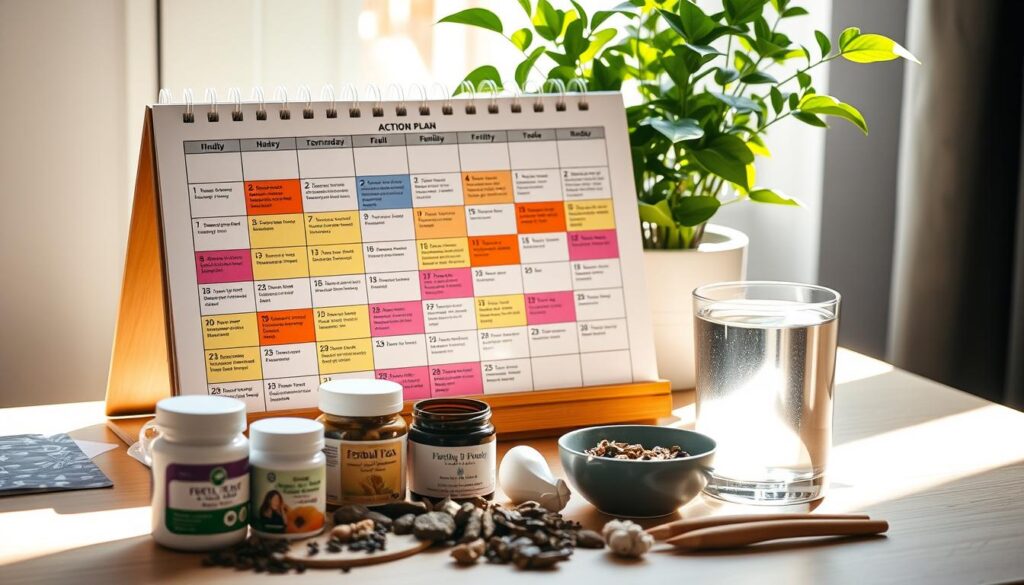
Creating a successful fertility plan needs careful thought and effort. Set clear goals and track your progress. This helps increase your chances of getting pregnant while keeping a positive attitude.
Setting Realistic Goals
Start your plan with goals you can reach. Most couples get pregnant in 12 months of regular sex. If you’re under 35, wait a year before seeing a doctor. Women over 35 should get help after six months.
Focus on what you can control. Stay healthy, manage stress, and avoid bad habits. Try to have sex every one to two days when you’re most fertile. This way, you increase your chances without feeling too much pressure.
Tracking Your Progress
Tracking your fertility progress is key. Use different methods to find your most fertile days. These tools will help you plan:
| Tracking Method | Best Time to Use | Accuracy Level |
|---|---|---|
| Cervical Mucus Monitoring | Daily throughout cycle | High when combined with other methods |
| Ovulation Predictor Kits | Days 10-20 of cycle | Very High (99%) |
| Basal Body Temperature | Every morning before rising | Moderate (confirms ovulation) |
| Fertility Apps | Daily data entry | Varies based on data input |
Remember, tracking methods should help, not replace, regular sex. Many couples find success by having sex often, not just on predicted fertile days.
Conclusion: Embracing a Holistic Approach to Fertility
Your journey to having a baby is more than one thing. It’s about using many holistic fertility methods together. Each part is key to helping your body get ready for pregnancy.
Summary of Key Points
This guide shows how simple changes can help you get pregnant naturally. Eating well gives your body the vitamins it needs. Exercise keeps you healthy and balances your hormones. Stress management, like yoga, helps your body work better.
Getting enough sleep is also crucial. It lets your body make the right hormones at the right time. Making small changes every day can make a big difference.
Keeping a healthy weight helps your hormones stay balanced. Drinking less alcohol and caffeine protects your reproductive cells. Avoiding smoking and harmful drugs keeps your eggs and sperm safe.
Taking folic acid supplements gets your body ready for pregnancy. Reducing pollution and chemicals makes your environment safer. Having regular sex during your fertile window boosts your chances each month.
Encouragement for the Journey Ahead
Everyone’s path to having a baby is different. What works for one couple might not work for another. Working with healthcare experts can help tailor a plan just for you.
Combining lifestyle changes with medical advice often leads to the best results. Remember, improving fertility takes time. Be patient and focus on making healthy habits that support your overall well-being.