

Surprising fact: health officials linked 95 illnesses to one supplier, and 18 people required hospital care.
This multistate outbreak began in January and surged from mid‑June to mid‑July. Most cases—73—occurred in California, with infections reported in 13 other states. The Centers for Disease Control notes a 3–4 week reporting lag, so recent cases may not yet appear in totals.
The report covers a wide recall of large brown, cage‑free eggs sold under several brand names and distributed to retail and foodservice channels. You will find clear guidance in the article on which carton codes and sell‑by dates signal risk.
Why this matters: official counts likely understate the full impact because many people recover without testing. The piece explains common symptoms, when to seek care, and how federal agencies coordinate the investigation and recall to protect public health.
Key Takeaways
- 95 people became ill and 18 were hospitalized; no deaths reported.
- Most infections were in California; other cases spanned 13 states.
- Illnesses began in January with a notable mid‑June to mid‑July spike.
- Reporting lags mean the true number of cases may be higher than shown.
- Article explains which carton codes carry risk and safe handling steps.
- CDC and FDA are coordinating the investigation and recall oversight.
Breaking overview: 95 illnesses tied to recalled eggs across 14 states
Health agencies traced a cluster of illnesses to a common supplier after cases appeared across more than a dozen states. The centers disease control reports 95 people became ill across 14 states, and 18 required hospitalization. No deaths have been reported.
What CDC and FDA officials have confirmed so far
Federal investigators linked many cases to products sold by Country Eggs LLC based on where people bought or ate them. The cdc said illness onset dates run from January 7 through late July, with a surge from mid‑June to mid‑July.
Hospitalizations reported and current severity snapshot
Officials noted 18 hospital admissions, indicating a meaningful illness burden but no fatalities so far. Reporting can take several days to weeks; recent cases may not yet be counted.
“Check your home for the identified cartons and dispose of or return any affected product,” public health officials advised.
Key actions: confirm product codes, follow local guidance, and seek care if symptoms worsen over several days.
Recall details: brands, carton codes, and sell-by dates to check now
Officials have listed exact product names and pack codes to help consumers spot affected cartons quickly.
Brands involved: Country Eggs LLC products also appeared under Nagatoshi Produce, Misuho (also reported as Mishuo), and Nijiya Markets. If you bought items from these labels, review your packaging.
Product identifiers and pack info
Look for large brown cage-free cartons labeled sunshine yolks or omega-3 golden yolks. The single identifying code to watch for is CA-7695.
Sell-by dates run from July 1 through mid‑September (Sept. 16–18). Distribution occurred to grocery stores and food service distributors in California and Nevada between June 16 and July 9.
“If you find a carton with code CA-7695 and those dates, treat it as suspect and follow retailer guidance.”
- Check both brand name and the code on the cartons—don’t rely on packaging alone.
- Food service buyers should review inventory and supplier notices.
- People who recently bought eggs sold during the distribution window should keep receipts and retailer alerts nearby.
eggs recalled salmonella: what this means for consumers in the United States
More than a dozen states have reported illnesses linked to the recall, and California accounts for the largest share with 73 confirmed cases.
States reporting cases, with a concentration in California
Illnesses have surfaced in 14 states total: Arizona, Florida, Georgia, Hawaii, Iowa, Minnesota, Nebraska, Nevada, New Mexico, New York, North Carolina, Pennsylvania, Washington, and California.
That list shows exposure reached beyond initial distribution zones. Check your carton details rather than assuming safety by location.
Why actual case counts may be higher than reported
The CDC estimates only about one in 30 infections are diagnosed. Many people recover at home and recover without ever entering the surveillance system.
There is also a typical 3–4 week lag before new illnesses appear in outbreak totals. That delay means current public numbers may rise.
- Action: verify carton identifiers now and follow retailer guidance.
- Monitor for symptoms and follow safe handling if you used affected product.
Timeline of the salmonella outbreak and recall actions
Investigators mapped the timeline from early January through late July to show when exposures most likely occurred.
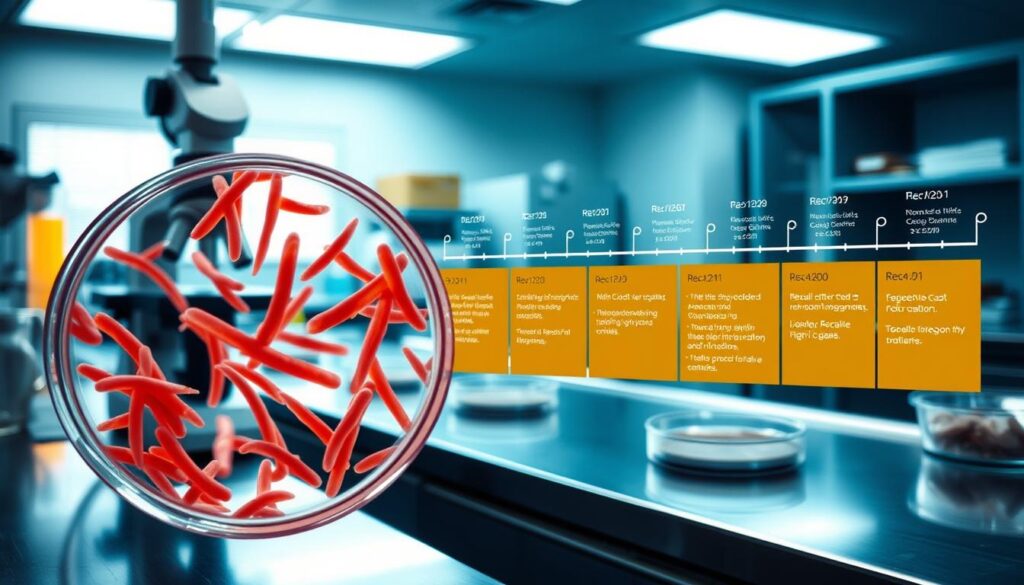
Illness onset window: reports begin as early as January 7, with a pronounced surge from mid‑June to mid‑July. That cluster of cases helped focus interviews and testing.
How the investigation unfolds: it can take several days to weeks for lab results and patient interviews to link an individual illness to an outbreak linked to a product.
State public health labs work with federal teams in disease control prevention to match samples and trace exposure points.
As control prevention measures escalated, FDA traceback results pointed to a common supplier and Country Eggs LLC initiated a recall.
- The cdc said there is typically a 3–4 week lag before new cases appear in totals.
- Understanding these days-long steps explains why advisories sometimes follow weeks after first reports.
- Retailers and restaurants use the timeline to decide when to remove product and notify customers.
“Knowing when exposures likely occurred helps consumers evaluate whether products in the home fall within the risky window.”
How to identify and handle recalled eggs safely
A quick label check at home can identify whether a purchase falls within the affected lot. Start by comparing what you have to the list of product names and pack info from health officials.
Check your cartons: names, code, and dates to verify
Inspect cartons for the brand descriptors sunshine yolks or omega-3 golden yolks.
Confirm the pack code CA-7695 and sell-by dates from July 1 through Sept. 16–18.
What to do if you have recalled eggs: discard, refund, and cleaning steps
- Do not taste or cook suspect product; place it in a sealed bag and discard or return to the stores for a refund.
- Clean and sanitize counters, utensils, and fridge shelves. Follow label contact times; some sanitizers need several hours to work.
- Wash hands with soap and warm water after handling suspect cartons and before touching other food.
- If diarrhea or other symptoms appear within a few days, contact a healthcare provider, especially for young or vulnerable people.
Guidance for food service operators and retailers
Quarantine affected inventory, update prep lists, and notify staff to prevent accidental use. Deep-clean egg handling stations, sanitize mixers, and replace porous items like cardboard flats.
Keep photos of labels and receipts to speed refunds and documentation.
Symptoms, risks, and when to seek medical care
People usually notice the first signs of infection within hours or up to six days after eating contaminated food.
Common symptoms include diarrhea, fever, abdominal cramps, nausea, vomiting, and dehydration. Most people recover in about 4–7 days with rest and fluids.
Who is at higher risk
Young children, adults 65 and older, and people with weakened immune systems face greater danger of severe illness and possible hospitalization.
When to seek care
- See a clinician if diarrhea lasts more than three days.
- Seek urgent care for a high fever (over 102°F), severe vomiting, or signs of dehydration.
- Infants, older adults, or people on immune‑suppressing medicines should get prompt evaluation.
“Keep a note of when you ate suspect eggs and any symptoms — that timing helps clinicians assess exposure.”
Your health provider can arrange testing, recommend fluids or oral rehydration solutions, and decide if antibiotics are needed. Most sickened people recover with supportive care, but early action protects vulnerable household members and reduces the chance of hospitalization.
What investigators have found: tracing Country Eggs LLC supply
Chain-of-custody reviews by the FDA revealed that a common source supplied product to affected retailers and food service outlets.
How FDA tracebacks connected cases
FDA tracebacks used purchase records, shopper interviews, and distributor logs to follow product lots from stores and restaurants back to one packing plant.
Those steps tied multiple illness reports to Country Eggs LLC through labels like sunshine yolks and omega-3 golden yolks.
Investigators matched distribution paths across grocery and food service channels to explain how a single supplier reached consumers in many states.
Production status and ongoing surveillance
Officials said production at the implicated facility was suspended while corrective actions and testing continue.
Centers disease partners and state labs are performing subtyping, environmental sampling, and record reviews to refine the case map.
Disease control teams will monitor new reports and maintain oversight until contamination risks are mitigated and safe operations resume.
“Public health work continues until investigators can confirm the source is controlled and distribution is safe.”
- Tracebacks informed targeted inspections and testing.
- Retail and food service inventories helped narrow affected lots.
- Federal and state officials coordinate to track reports across 14 states.
Conclusion
Final takeaway: Before you use any eggs for holiday meals, inspect your cartons for the pack code CA-7695, sell-by dates through mid‑September, and labels like omega-3 golden yolks or golden yolks. If you find suspect cartons tied to the recalled eggs, discard or return them and avoid using them in shared dishes.
With 95 cases and 18 hospitalizations reported, people across multiple states — including North Carolina — should stay alert for symptoms. Because some illnesses may recover without testing or appear later, continue disease control prevention practices and watch updates from centers disease and local health partners.
As Labor Day and other gatherings approach, photograph cartons and receipts before you visit service counters. Separate raw items from ready-to-eat food, cook thoroughly, and sanitize prep surfaces to reduce risk at home.