
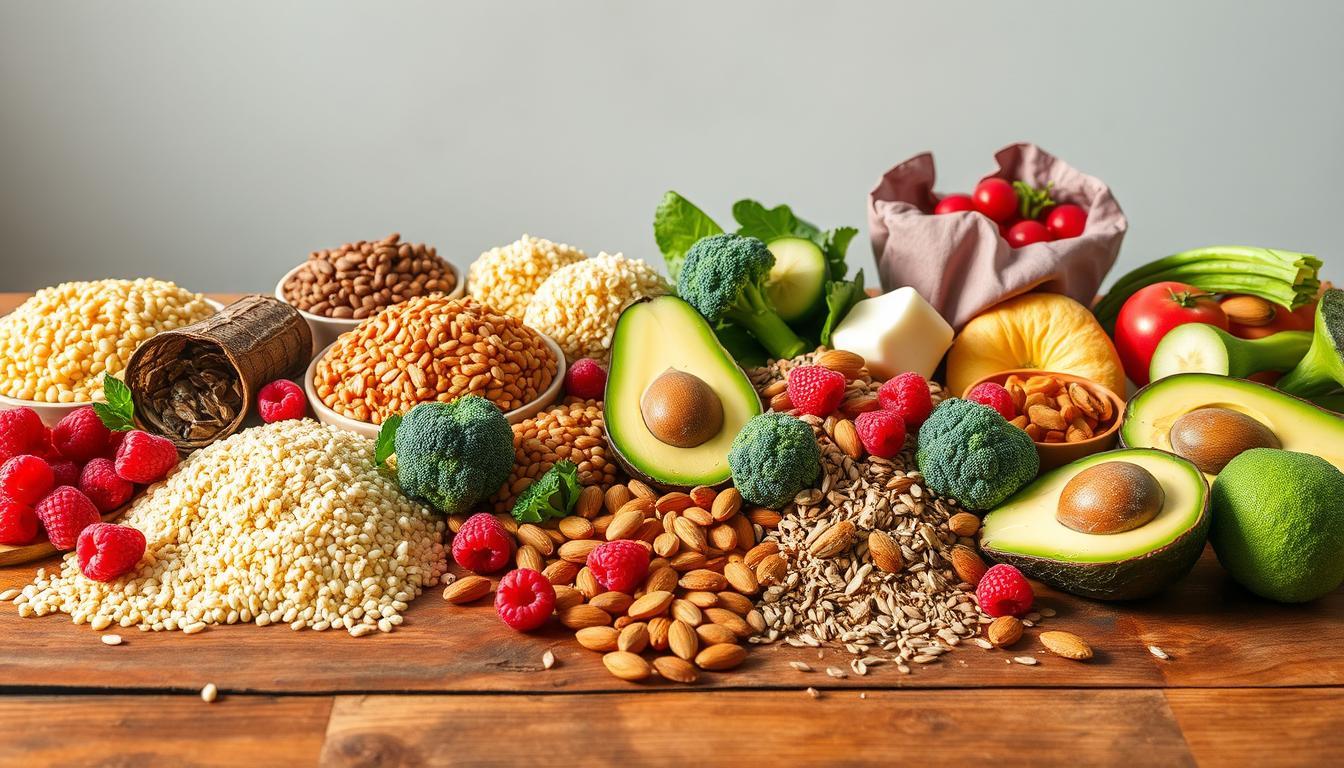
Do you remember the last time you felt really satisfied after eating? It’s not just about feeling full. It’s about feeling content and full of energy for hours. This feeling often comes from eating foods high in fiber.
But, did you know that over 90% of women and 97% of men don’t get enough fiber? This is a shocking fact from the USDA. Eating 22 high fiber foods can change your health in amazing ways.
From kidney beans and strawberries to chia seeds and dark chocolate, these foods do more than help with digestion. They also lower blood sugar, manage constipation, and boost heart health.
Registered dietitians say we should aim for 25-35 grams of fiber each day. But, it doesn’t have to be hard. Adding foods like oats, cruciferous vegetables, and fresh berries to your diet can be delicious and healthy. Learning which foods are high in fiber is the first step to better health.
Key Takeaways
- More than 90% of women and 97% of men don’t meet daily fiber requirements
- Aim for 25-35 grams of fiber each day for optimal health
- High fiber foods include kidney beans, strawberries, oats, and chia seeds
- Fiber helps lower blood sugar and supports heart health
- Dark chocolate can be a surprising source of dietary fiber
- Regular fiber intake helps manage constipation naturally
What is Dietary Fiber and Its Importance?
Understanding dietary fiber is key to improving your health through nutrition. This plant-based nutrient plays essential roles in your body that go beyond simple digestion. Learning about different fiber types helps you make smarter choices when selecting the best foods for fiber.
Definition of Dietary Fiber
Dietary fiber is a type of carbohydrate found in plant foods that your body cannot digest or absorb. Unlike other carbs that break down into sugar, fiber passes through your digestive system relatively intact. This unique property makes it vital for maintaining good health. When you increase fiber intake through natural sources, you’re giving your body a powerful tool for wellness.
Types of Dietary Fiber
There are two main categories of dietary fiber, each with distinct benefits:
- Soluble fiber dissolves in water to form a gel-like substance. You’ll find it in oats, beans, apples, and citrus fruits
- Insoluble fiber doesn’t dissolve in water and adds bulk to stool. Whole wheat, nuts, and many vegetables contain this type
Both types appear on any comprehensive fiber food list and work together to support your health.
Health Benefits of Fiber
Regular consumption of high-fiber foods delivers multiple health advantages. Fiber helps lower cholesterol levels and reduces your risk of heart disease. It stabilizes blood sugar levels and promotes feelings of fullness that support healthy weight management. Studies show fiber may help prevent colorectal cancer. Current dietary guidelines recommend consuming 14 grams of fiber for every 1,000 calories you eat. Young children between 12-23 months need about 19 grams daily for proper development.
Top 22 High Fiber Foods to Include
Knowing which foods are high in fiber is key to a healthy diet. The best top sources of fiber are found in three main groups. These include legumes, whole grains, and fruits. Each group offers a lot of dietary fiber per serving.
Legumes: Beans, Lentils, and Peas
Legumes are fiber powerhouses. A cup of cooked lentils has 18 grams of fiber. Split peas offer 16 grams. Black beans and kidney beans have 15 and 12 grams per cup.
Chickpeas and edamame add 12 and 4 grams of fiber per serving. They are great for any meal.
Whole Grains: Oats and Quinoa
Whole grains are rich in fiber and nutrients. Barley has 6 grams of fiber per cup. Whole-wheat pasta has 7 grams.
Cooked oats and quinoa each have 5 grams of fiber. They’re perfect for breakfast, sides, or main dishes.
Fruits: Berries and Apples
High fiber fruits are great for snacks and desserts. Raspberries have 8 grams of fiber per cup. Medium pears and apples have 6 and 4.5 grams each.
Half an avocado adds 5 grams of fiber to dishes. They’re delicious in salads and sandwiches.
| Food Category | Food Item | Fiber per Serving |
|---|---|---|
| Legumes | Lentils (1 cup cooked) | 18g |
| Legumes | Split Peas (1 cup) | 16g |
| Legumes | Black Beans (1 cup) | 15g |
| Vegetables | Artichoke Hearts (1 cup) | 14g |
| Fruits | Raspberries (1 cup) | 8g |
| Whole Grains | Whole-Wheat Pasta (1 cup) | 7g |
| Nuts/Seeds | Chia Seeds (2 tablespoons) | 10g |
Fiber-rich vegetables like artichoke hearts have 14 grams of fiber per cup. Brussels sprouts add 4 grams. Nuts and seeds are also high in fiber.
Chia seeds have 10 grams of fiber per two tablespoons. Almonds provide 6 grams per 23-nut serving.
Legumes: A Nutritional Powerhouse
Legumes are top picks for high fiber and plant-based protein. They are packed with nutrients in every serving. From lentils to chickpeas, they offer many options for a high fiber diet. This diet helps with digestion and overall health.
High Fiber Legume Varieties
Each legume has its own fiber amount. Lentils have about 18 grams of fiber per cup. Split peas have 16 grams per cup, making them a great source of soluble fiber. Black beans have 15 grams of fiber and are also rich in potassium.
| Legume Type | Fiber per Cup (Cooked) | Key Nutrients |
|---|---|---|
| Lentils | 18g | Protein, Iron, Folate |
| Split Peas | 16g | Protein, Vitamin B1 |
| Black Beans | 15g | Protein, Potassium |
| Kidney Beans | 12-15g | Magnesium, Iron |
| Chickpeas | 12g | Protein, Manganese |
Cooking and Preparation Tips
Right preparation makes legumes taste better and easier to digest. Lentils cook fast in 30 minutes without soaking. Split peas take about 60 minutes to cook well. Soaking dried beans overnight helps them cook faster and taste better.
Benefits of Adding Legumes to Your Diet
Eating legumes regularly has many health benefits. They are full of B vitamins and minerals, and they’re a good plant-based protein source. It may take a few weeks for your body to adjust, but it’s worth it. This adjustment makes it easier to keep a high fiber diet.
Whole Grains: More Than Just Bread
Whole grains are more than just bread. They are packed with fiber and nutrients. These foods keep all parts of the grain kernel, like the bran, germ, and endosperm. This makes them some of the best foods for fiber.
Adding different grains to your diet can really help you get more fiber. It’s a simple way to improve your health.
Popular Whole Grains to Try
Here are some whole grains you should try:
| Whole Grain | Fiber per Cup (Cooked) | Special Features |
|---|---|---|
| Whole-wheat pasta | 6-7 grams | Easy substitute for regular pasta |
| Barley | 6 grams | Nutty flavor, rich in vitamins |
| Quinoa | 5 grams | Complete protein, gluten-free |
| Oatmeal | 4-5 grams | Contains cholesterol-lowering beta-glucan |
| Brown rice | 3.5 grams | Versatile base for many dishes |
Health Benefits of Whole Grains
Whole grains offer many health benefits. Oats help control blood sugar and lower cholesterol. Quinoa is a great source of iron and protein.
Barley supports bone health with its minerals. These grains keep your energy up and help with digestion.
How to Incorporate Whole Grains
To increase fiber intake, start with oatmeal or bran flakes. Swap white rice for brown rice or quinoa at dinner. Choose whole-wheat bread with at least 2 grams of fiber per slice.
Try barley in soups or as a side. Mix different grains in salads for extra nutrition. Making small changes can make a big difference in your fiber intake.
Fruits: Nature’s Fiber-Rich Treats
Fruits are among the top sources of fiber in our diet. They are naturally sweet and full of nutrients. Fresh fruits have both soluble and insoluble fiber, which is good for digestion and blood sugar.
Best Fiber-Rich Fruits
Raspberries are the top high fiber fruits with 8 grams per cup. Their seeds add to the fiber and offer antioxidants. Pears have 6 grams of fiber per medium fruit, with most of it in the skin.
| Fruit | Serving Size | Fiber Content | Key Nutrients |
|---|---|---|---|
| Raspberries | 1 cup | 8g | Vitamin C, Manganese |
| Blackberries | 1 cup | 7.5g | Vitamin K, Folate |
| Pears | 1 medium | 6g | Copper, Vitamin K |
| Apples | 1 medium | 4.5g | Vitamin C, Potassium |
| Bananas | 1 medium | 3g | Vitamin B6, Potassium |
Creative Ways to Eat More Fruit
Make your fruit intake exciting with simple ideas. Blend berries into smoothies or add sliced apples to oatmeal. Freeze grapes for a cool snack or mix diced pears into yogurt. Try mashing avocados on whole grain toast or banana slices in peanut butter sandwiches.
Nutritional Benefits of Fruits
Fruits offer more than fiber. They give vitamins, minerals, and antioxidants that fight inflammation. Apples’ pectin can lower cholesterol. Berries protect the brain with anthocyanins. Bananas feed good gut bacteria with resistant starch. These foods boost wellness and satisfy sweet cravings naturally.
Vegetables: The Unsung Heroes of Fiber
Vegetables are a great source of fiber, helping you meet your daily needs. They are full of vitamins and minerals too. Many people forget to include veggies in their high fiber diet, but they are easy to add and very versatile.
Fiber-Rich Vegetables to Include
Artichoke hearts are a top choice with 14 grams of fiber per cup. Green peas offer 9 grams per cup, plus antioxidants. Brussels sprouts and broccoli add 4-6 and 5 grams per cup, respectively, and have health benefits too.
Sweet potatoes are a surprise with 6.4 grams of fiber per cup. Turnip greens have 5 grams per boiled cup. Carrots and beets add 2-3 grams per serving, making them great for your meals.
Cooking Methods to Preserve Fiber
Steaming vegetables keeps the most fiber and nutrients. Roasting at moderate heat is better than boiling, which loses nutrients. Raw veggies have all their fiber, making salads a great choice.
Health Benefits of Eating Enough Vegetables
Eating veggies regularly helps your digestion with fiber. They also have vitamins K, A, and C for overall health. Veggies help control blood sugar and cholesterol, making them key to a balanced diet.
Nuts and Seeds: Small but Mighty
Nuts and seeds are tiny but mighty. They are packed with fiber and offer heart-healthy fats, protein, and minerals. These nutrients support your overall health.
High Fiber Nuts and Seeds
Chia seeds are a fiber superstar, with 10 grams per ounce. Two tablespoons give you 4.1 grams of fiber and omega-3s. Almonds are close behind with 3.5 grams of fiber per ounce, plus protein and healthy fats.
Ground flaxseed has 2 grams of fiber per tablespoon, plus phytonutrients. Pistachios offer 3 grams of fiber per ounce, and sunflower seeds give 3 grams per quarter cup. These make it easy to boost your fiber intake.
Serving Ideas for Nuts and Seeds
Adding these fiber-rich foods to meals is easy and tasty. Sprinkle chia or ground flaxseed on oatmeal or blend into smoothies. Add almonds or sunflower seeds to salads for crunch. Mix nuts into yogurt parfaits or enjoy a small handful as a snack. Just remember to control your portions because they are calorie-dense.
Nutritional Benefits of Nuts and Seeds
Nuts and seeds do more than just provide fiber. They offer omega-3s for brain health and inflammation reduction. Almonds and pistachios have vitamin E, protecting cells. Their fiber, protein, and healthy fats help control blood sugar and keep you full between meals.
Benefits of A High-Fiber Diet
Adding more top sources of fiber to your meals can change your health for the better. It helps your digestive system and aids in weight management. Fiber supports your body’s key functions without you even noticing.
Digestive Health and Fiber
Your digestive system benefits from fiber-rich foods. Fiber acts like a natural broom, cleaning your intestines. This prevents constipation and ensures regular bowel movements.
Eating fiber-rich vegetables like broccoli and Brussels sprouts feeds good bacteria in your gut. These microbes break down soluble fiber, boosting your digestive health.
Weight Management with Fiber
Fiber helps you maintain a healthy weight. Foods high in fiber take longer to digest, keeping you full. This natural appetite control reduces overeating and snacking.
High fiber fruits like pears and raspberries offer sweetness without extra calories. They’re great for managing weight.
Reducing the Risk of Chronic Diseases
Eating enough fiber can lower your risk of serious health issues. Soluble fiber in oats and beans reduces LDL cholesterol. This lowers heart disease, Type 2 diabetes, and colorectal cancer risks.
Fiber also slows sugar absorption, keeping blood glucose levels steady. This is a big plus for your health.
How Much Fiber Do You Need?
Knowing how much fiber you need is key to staying healthy. Most Americans don’t get enough, with over 90% of women and 97% of men not meeting their fiber goals. Eating enough fiber is vital for your digestive health and overall well-being.
Recommended Daily Intake
The recommended fiber intake is 14 grams per 1,000 calories. For adult women, this means about 25 grams a day. Men should aim for 35 grams. Children aged 12 to 23 months need about 19 grams daily. These amounts help build a high fiber diet for good health.
Factors Affecting Fiber Needs
Your fiber needs change based on several factors. Age is a big factor, with older adults needing less. Your calorie intake also affects how much fiber you should eat. Physical activity and health conditions can also play a role. Pregnancy and breastfeeding may require more fiber to meet nutritional needs.
Tips for Meeting Your Fiber Goals
Begin by tracking your current fiber intake with food labels. Mix different high fiber foods throughout your day. For instance, 1 cup of raspberries, 1 cup of oatmeal, and half a serving of almonds give you about 13.5 grams of fiber. This is more than half the daily amount for many. Gradually increase your fiber intake to avoid discomfort.
Tips for Increasing Fiber Intake
Switching to a high-fiber diet takes time. Your body needs to adjust to more fiber. Making small changes can help you increase fiber without discomfort.
Gradually Adding Fiber
Start by adding 5 grams of fiber each week. This slow approach prevents bloating and discomfort. Try whole grain bread or add flaxseed to your cereal.
Keep track of your fiber intake by reading labels. Many foods now show their fiber content. Use a fiber food list to find high-fiber items.
Hydration and Fiber
Water is key for fiber digestion. It helps fiber move through your system, preventing constipation. Without enough water, fiber can cause constipation.
Drink at least 8 cups of water a day when you increase fiber intake. Herbal teas and water-rich fruits also count toward your hydration.
Meal Planning for High-Fiber Diets
Start with fiber-rich foods at the grocery store. Stock up on the best foods for fiber. Cook beans and grains in bulk for quick meals.
| Meal | Fiber-Rich Swap | Fiber Added |
|---|---|---|
| Breakfast | Steel-cut oats instead of instant | 4g per serving |
| Lunch | Whole wheat wrap instead of white | 3g per wrap |
| Dinner | Brown rice instead of white | 2g per cup |
| Snack | Apple with skin instead of juice | 4g per apple |
Smart shopping includes buying frozen berries and whole fruits. Add veggies to meals by using spinach in smoothies or adding lettuce to sandwiches.
Common Myths About Fiber
Many people have wrong ideas about dietary fiber. This stops them from getting enough of this key nutrient. Let’s look at some common myths and find out the truth about fiber’s role in our health.
Myth-Busting: Fiber and Weight Loss
Some think fiber directly leads to weight loss. But the truth is more complex. Fiber doesn’t burn fat or make pounds disappear. Instead, it makes you feel full longer, which can help you eat fewer calories.
When you eat high fiber fruits like apples or pears, the fiber slows digestion. This keeps hunger away.
Fiber’s Role in Digestive Health
Some worry that eating more fiber will upset their stomach. It’s true that too much fiber can cause gas and bloating at first. But your body gets used to it in about 3-4 weeks.
Both soluble and insoluble fiber typesare important for good digestion. They help with regular bowel movements and feed good gut bacteria.
Misconceptions About Whole Grains
People often think of whole grains as just bread. But top sources of fiber include many grains like quinoa, barley, oats, and brown rice. Another myth is that instant oatmeal is bad for you.
While many instant oats have added sugar, plain instant oats are just as good as traditional rolled oats. The important thing is to choose wisely and read labels well.
High Fiber Foods Over Time
The history of fiber-rich foods in America is quite interesting. Our view of dietary fiber has changed a lot. Now, the USDA sees fiber as key for our health.
Historical Perspective on Fiber Consumption
Our ancestors ate a lot of 22 high fiber foods naturally. Their meals were full of whole grains, veggies, and legumes. This gave them plenty of fiber without trying.
But, the 20th century changed this. People started eating more processed foods. White bread and canned veggies became common, leading to less fiber in our diets.
Changes in Dietary Guidelines
Guidelines for fiber have gotten stricter over time. Now, everyone over two should eat 14 grams of fiber for every 1,000 calories. This means about 25 grams a day for women and 38 for men. These numbers show how important fiber is for staying healthy.
The Future of Fiber in Diets
Looking to the future, high fiber diet trends are promising. More people are eating plant-based foods, which are full of fiber. There’s also a growing interest in gut health, leading to more fiber in our diets.
Recipes Featuring High Fiber Foods
Enjoy tasty meals full of fiber to reach your daily goals. These recipes use high-fiber ingredients from your list. They make delicious dishes that are also good for you.
Breakfast Ideas with Fiber
Begin with overnight oats and fresh blueberries, topped with chia seeds. Mix half a cup of oats with almond milk and a tablespoon of chia seeds. Refrigerate it overnight. In the morning, add berries for a fiber-rich breakfast with 12 grams.
Edamame hummus on whole-wheat toast is another quick option. It gives you 8 grams of fiber per serving.
Lunch and Dinner Recipes
Make main courses with the best fiber foods. Lentil soup with red lentils, carrots, and spinach has 15 grams of fiber per bowl. Black bean chili, with beans, tomatoes, and bell peppers, is a filling meal with 18 grams of fiber.
Whole-wheat pasta primavera with broccoli and zucchini has 10 grams of fiber per serving.
| Recipe | Main Fiber Source | Fiber per Serving |
|---|---|---|
| Quinoa Grain Bowl | Quinoa, chickpeas | 14g |
| Barley Risotto | Pearl barley | 12g |
| Split Pea Soup | Split peas | 16g |
Snacks to Boost Your Fiber
Snacking smart can boost your fiber intake. Air-popped popcorn has 3.5 grams of fiber in three cups. Apple slices with peanut butter add 7 grams of fiber.
Carrots with hummus give 6 grams, and celery sticks with almond butter offer 4 grams. Keep almonds and sunflower seeds on hand for quick fiber boosts.
Conclusion: Embracing Fiber for Better Health
Making fiber a priority in your diet can change your health in many ways. The first step is to know which foods are high in fiber. Foods like creamy lentils and crunchy chia seeds offer delicious ways to meet your fiber needs.
Summary of High Fiber Foods
Many food groups are high in fiber. Legumes like lentils and split peas are at the top, with 18 and 16 grams per cup. Black beans and chickpeas offer 12 to 15 grams per serving.
Artichokes are a standout among vegetables, with 14 grams of fiber per cup. Green peas have 9 grams per cup. Raspberries and pears are high in fiber, with 8 and 6 grams per cup, respectively.
Whole grain pasta and quinoa add 5 to 6 grams of fiber per serving. Chia seeds are a powerhouse, with 10 grams of fiber per ounce.
Encouragement to Incorporate Fiber
Starting your fiber journey is easy. Just add one extra serving of fiber-rich vegetables to your lunch. Swap white bread for whole grain options.
Remember to drink more water as you increase your fiber intake. This helps your body digest it better. Mix different fiber sources throughout the day instead of relying on supplements. Your digestive system will appreciate these changes.
Final Thoughts on Dietary Choices
Small changes in your diet can lead to big health benefits. Choose high fiber fruits for snacks and add beans to your meals. These choices help with digestion and weight management.
They also lower your risk of heart disease and diabetes. Start your journey to better health with one fiber-rich meal at a time.