
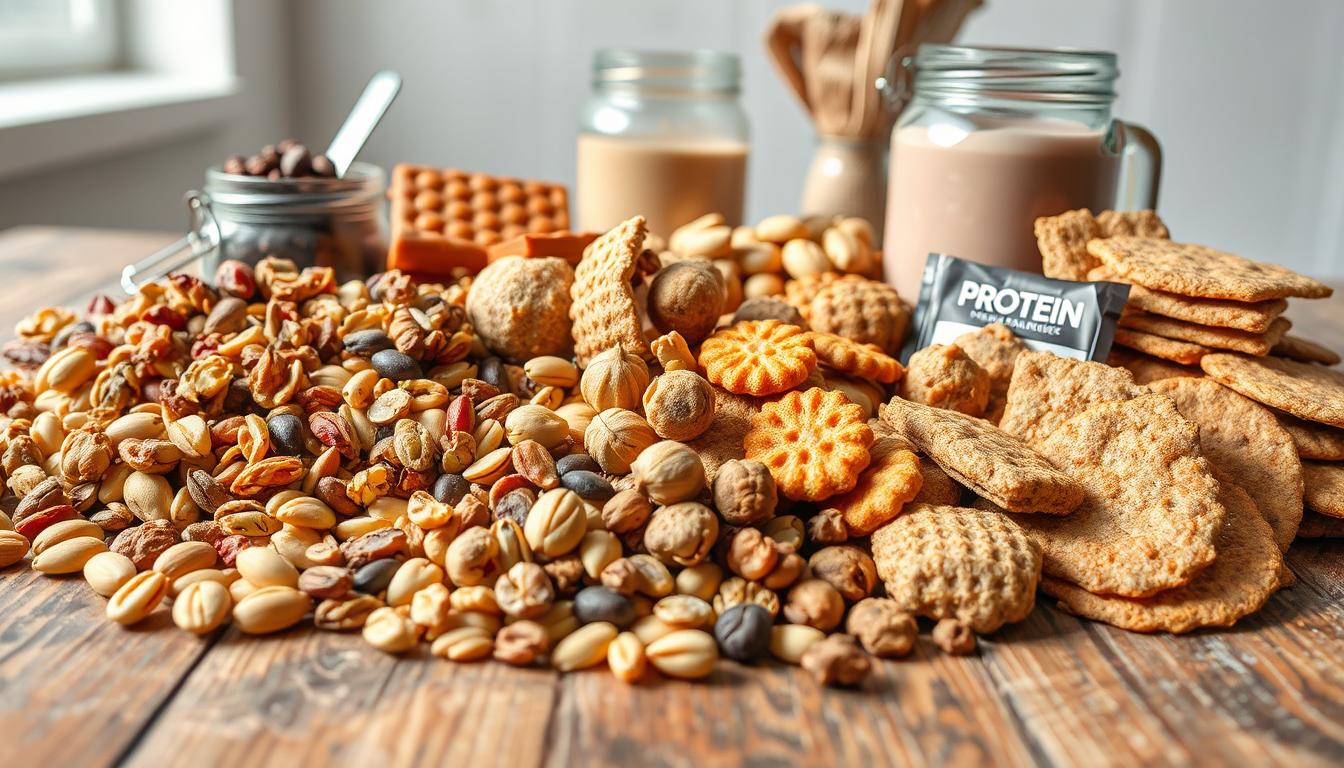
I remember those afternoon crashes at work. The 3 PM slump was always there, and I’d grab something sugary. But then I found protein-rich foods. They changed my energy and how I snack.
Many of us face snack problems that make us hungry again soon. Vending machine snacks are often full of carbs and sugar. But healthy protein snacks keep you full and stable all day.
High protein snacks come in many forms. You can choose from eggs to chickpeas, depending on what you like. The USDA says we should try different protein sources, like seafood and plants.
Switching to protein doesn’t mean giving up taste or convenience. Try Greek yogurt parfaits or protein balls. They’re tasty and good for you. The goal is to find snacks that match your life and give you energy.
Key Takeaways
- High protein snacks help maintain fullness between meals by signaling appetite-suppressing hormones
- Protein-rich foods stabilize blood sugar levels and prevent energy crashes
- Both animal and plant-based protein sources offer nutritious snacking options
- Healthy protein snacks slow digestion, keeping you satisfied longer than refined carb alternatives
- The USDA recommends incorporating more seafood and plant proteins into your diet
- Choosing the right protein-rich foods can transform your energy levels throughout the day
What Are High Protein Snacks?
High protein snacks are packed with nutrients, unlike regular snacks. They have 5 to 25 grams of protein per serving. This makes them great for increasing your daily protein intake. They also keep you full between meals, unlike snacks that leave you hungry soon after.
Definition and Key Characteristics
Healthy protein snacks are different from regular snacks. They make you feel full for longer. They also help keep your muscles strong and your blood sugar stable all day. Snacks like Greek yogurt and cottage cheese are high in protein but small in size.
| Snack Type | Serving Size | Protein Content |
|---|---|---|
| Greek Yogurt | 1 container (6 oz) | 16 grams |
| Cottage Cheese | ½ cup | 14 grams |
| Beef Jerky | 1 ounce | 9 grams |
| Hard-Boiled Eggs | 1 large egg | 6 grams |
Importance for a Balanced Diet
Adding protein-rich foods to your snacks is good for your health. They help with digestion, heart health, and brain function. When you mix protein with veggies and healthy fats, you get a snack that gives you energy and nutrients.
Benefits of High Protein Snacks
Protein-packed snacks are more than just a quick snack. They are full of nutrients that help your body all day. They help build lean muscle and keep hunger away. This makes them a favorite for those who want to stay energized and perform better.
Muscle Repair and Growth
When you work out, your muscles get tiny tears that need fixing. That’s where best protein snacks for muscle growth come in. They give your body the amino acids it needs to fix and grow muscle.
Top picks for muscle recovery include Greek yogurt, cottage cheese, and hard-boiled eggs. They offer 10-20 grams of protein per serving.
Weight Management and Satiety
Protein snacks are great at keeping you full between meals. Eating protein makes your body send signals to your brain that you’re full. This helps you avoid eating too much at your next meal. Low carb high protein snacks can even help you eat fewer calories overall.
One study found that protein-enhanced popcorn made people feel fuller than regular potato chips. Turkey roll-ups and string cheese offer similar benefits and keep your blood sugar stable.
Energy Boosts and Performance
Unlike sugary snacks, protein gives your body steady energy. By choosing low carb high protein snacks, you keep your blood sugar steady all day. This means better focus, improved sports performance, and energy without the crash.
Popular Types of High Protein Snacks
There are many types of protein-rich snacks for different tastes and needs. You can find everything from creamy dairy to crunchy plant-based bites and savory meats. Knowing these options helps you choose snacks that fit your lifestyle and health goals.
Dairy-Based Options
Dairy products are high in protein and easy to grab. Greek yogurt protein has 16 grams per container, great for breakfast or a snack. Cottage cheese has 14 grams in half a cup, and string cheese and cheese slices offer 4-6 grams per serving.
Plant-Based Alternatives
Plant proteins are a great choice for those who don’t eat animal products. Edamame beans have 13 grams of protein per cup, and cooked lentils have 18 grams. Roasted chickpeas and almonds are tasty snacks with 6-7 grams of protein each. Tofu cubes have 9 grams per 3-ounce serving and are versatile in recipes.
Meat and Seafood Snacks
Meat and seafood snacks are filling and packed with protein. Beef, turkey, and salmon jerky have about 9 grams per ounce, similar to many whey protein bars. Canned tuna is a standout with 50 grams of protein per can. Sardines and canned salmon offer 8-19 grams per serving.
| Snack Type | Protein Content | Serving Size |
|---|---|---|
| Greek Yogurt | 16g | 1 container |
| Cottage Cheese | 14g | 1/2 cup |
| Edamame | 13g | 1 cup |
| Lentils | 18g | 1 cup cooked |
| Beef Jerky | 9g | 1 ounce |
| Canned Tuna | 50g | 1 can (171g) |
How to Choose Healthy High Protein Snacks
Choosing the right protein snacks is key. Not all high-protein foods are good for you. Some have hidden sugars and artificial stuff that can harm your health. Knowing how to pick quality snacks is important for keeping your body fueled right.
Reading Nutrition Labels
First, check the protein in each serving. A good snack should have 6-10 grams of protein. Then, look at the sugar content. Many snacks hide sugar under names like corn syrup or dextrose. Try to find snacks with less than 5 grams of added sugar.
Don’t forget to check the sodium levels. Some snacks have too much salt. Aim for snacks with less than 200mg of sodium per serving. The ingredient list is also important. Short lists with easy-to-pronounce ingredients usually mean better quality.
Understanding Ingredients
The best snacks use whole foods you can say out loud. Avoid artificial colors, flavors, and preservatives. Look for nuts, seeds, eggs, Greek yogurt, and lean meats without fillers.
Stay away from snacks with maltodextrin, hydrogenated oils, or chemical preservatives. Natural proteins give you vitamins and minerals, plus help build muscle. Choose brands that use real ingredients over made-in-a-lab stuff.
Portion Control Tips
Even healthy snacks need the right amount. Here are some tips to keep calories in check:
| Snack Type | Recommended Portion | Protein Content |
|---|---|---|
| Almonds | 22 kernels (1 oz) | 6g |
| String Cheese | 1-2 pieces | 6-12g |
| Greek Yogurt | 3/4 cup | 15g |
| Hard-Boiled Eggs | 1-2 eggs | 6-12g |
| Trail Mix | 1 handful (1/4 cup) | 5g |
Pre-portioning snacks helps avoid overeating. Store them in containers or bags for easy access. Eating protein with veggies or a bit of complex carbs keeps your blood sugar steady all day.
High Protein Snack Ideas for Busy Individuals
It’s hard to eat healthy when you’re always on the go. Protein-rich snacks keep your energy up and help muscles recover. Here are some easy ideas that fit into your busy schedule.
On-the-Go Options
Portable protein snacks make it easy to eat healthy anywhere. Beef jerky and turkey sticks have 10-15 grams of protein and are easy to carry. String cheese and hard-boiled eggs give you a quick protein boost with little effort.
Trail mix with nuts, seeds, and dried fruit is a great snack for traveling. Roasted chickpeas offer plant-based protein with a nice crunch. Nut butter packets with apple slices or whole grain crackers are also convenient. Wild Planet and Bumble Bee have salmon pouches that don’t need to be refrigerated until opened.
Meal Prepping for Convenience
Meal prep on Sundays can make your week easier. Mini egg frittatas in muffin tins are a quick breakfast option. Mix eggs with veggies and cheese, then bake 12 at once for the week.
Overnight oats with protein powder make great Post-Workout Snacks. Energy bites from peanut butter, oats, and protein powder keep well in the fridge. Greek yogurt parfaits with berries and granola offer balanced nutrition. Leftover grilled chicken or marinated tofu cubes add protein to any meal.
High Protein Snacks for Athletes
Athletes need the right nutrition to fuel their workouts and recover well. The right snacks can boost performance and muscle growth. Eating protein at the right times helps a lot.
Pre-Workout Choices
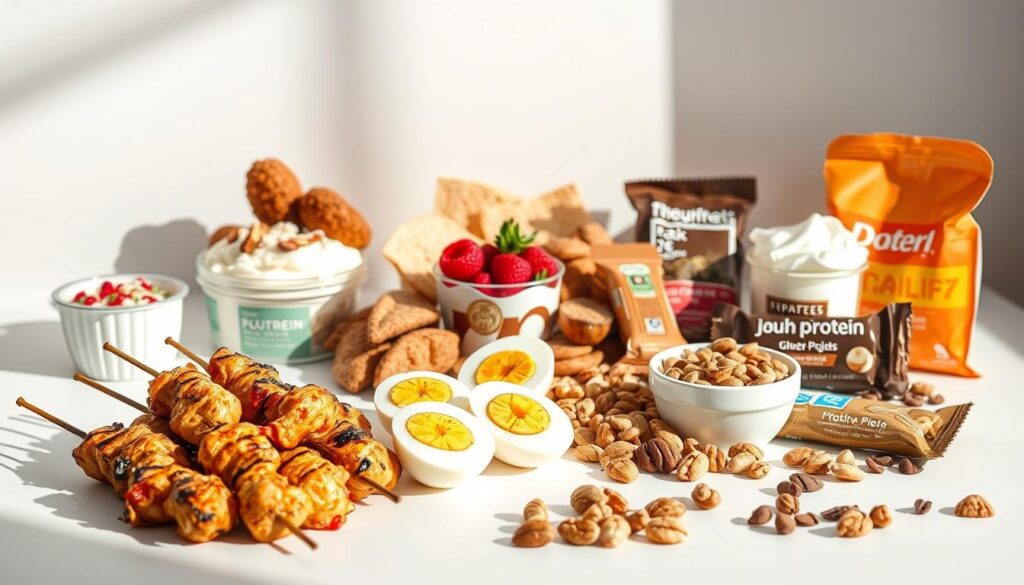
Before the gym, choose snacks that give steady energy without being too heavy. Whey protein bars are a good choice with 15-20 grams of protein. Try almonds with dried apricots or peanut butter on apple slices for energy.
Post-Workout Recovery Snacks
After working out, muscles need quick nutrition for repair. The best snacks mix protein with carbs. A protein shake with whey powder has 25 grams of protein per scoop. Chocolate milk is great for recovery with a 3:1 carb-to-protein ratio.
| Recovery Snack | Protein Content | Additional Benefits |
|---|---|---|
| Greek Yogurt with Granola | 20g | Probiotics and fiber |
| Tuna with Crackers | 22g | Omega-3 fatty acids |
| Cottage Cheese with Peaches | 24g | Calcium and vitamins |
| Edamame (1 cup) | 18g | Plant-based option |
Homemade High Protein Snack Recipes
Making your own high protein snacks at home lets you control what goes into them. These recipes are quick to make and pack a protein punch. You can adjust them to fit your taste and dietary needs.
Protein Balls
No-bake protein balls are great for when you’re in a rush. Mix peanut butter, oats, chia seeds, and vanilla protein powder in a bowl. Add honey for sweetness. Roll into balls and chill for 30 minutes. Three balls give you about 9 grams of protein.
Try pumpkin spice energy balls for a fall treat. Blend dates, coconut, flaxseed, and pumpkin pie spice in a food processor. They’re a tasty, protein-rich snack for the season.
Greek Yogurt Parfaits
Greek yogurt is the star in this layered snack. Start with a cup of plain Greek yogurt. Add fresh berries for sweetness and antioxidants. Top with granola for crunch. This mix gives you 16 grams of protein and important vitamins.
Roasted Chickpeas
Turn canned chickpeas into a crunchy snack. Rinse and dry one can of chickpeas. Toss with olive oil and seasonings like paprika or garlic powder. Roast at 400°F for 15-20 minutes until crispy. Half a cup has 6 grams of protein.
High Protein Snacks for Kids
It can be tough to get kids to eat healthy snacks, like protein-rich foods. This is true, even with allergies or picky eaters. Luckily, there are many tasty options that kids love and that are good for them. These snacks keep kids full and focused all day long.
Nut-Free Options
Many schools don’t allow nuts, so finding safe snacks is key. Sunflower seed butter is a great peanut butter substitute. It tastes similar but is nut-free. Roasted pumpkin seeds are also a hit, with 7.5 grams of protein per ounce.
Hard-boiled eggs are a classic choice, packed with protein. String cheese and Greek yogurt cups are also favorites. These snacks are easy to pack and keep kids going all afternoon.
Engaging Snack Ideas
Fun snacks make kids more excited to eat healthy. Try ants on a log with celery, sunflower butter, and raisins. Mini mozzarella and cherry tomato kabobs are another hit, with 15 grams of protein.
Here are some creative ways to serve snacks:
- Turkey and cheese roll-ups cut into pinwheels
- Mini bagels topped with cream cheese and smoked salmon
- Cottage cheese boats filled with fresh berries
- Cauliflower cheese crisps for a crunchy alternative to chips
Homemade trail mix with seeds is a fun way for kids to make their own snacks. It’s safe for kids with allergies too.
The Role of Protein in Snacking
Protein is key to a good snacking routine. It keeps you energized, supports muscle health, and controls hunger. Knowing how much protein you need and how to mix it with other nutrients is important.
Recommended Daily Protein Intake
Your protein needs change based on age, weight, and how active you are. Adults need at least 0.8 grams of protein per kilogram of body weight. This is about 51 grams for a 140-pound woman. Athletes and those who are very active need even more to help with muscle recovery and performance.
Knowing how much protein you’re getting is easier with portion sizes. Greek yogurt has 15-20 grams per serving. An ounce of almonds has about 6 grams. Eating protein throughout the day helps your body use it better than eating too much at once.
Balancing Protein with Other Nutrients
Healthy protein snacks work best with other important nutrients. Adding fiber from fruits and veggies makes you feel full longer. Healthy fats from nuts, seeds, or avocados help with vitamin absorption and brain function. Complex carbs give you steady energy without causing blood sugar spikes.
Good combinations include apple slices with almond butter, whole grain crackers with cheese, or carrots with hummus. These snacks give you complete nutrition and keep calories low. Plant-based snacks like edamame and lentil chips offer protein and antioxidants that are good for your heart.
Common Misconceptions About High Protein Snacks
Many people believe false things about protein snacks. This stops them from making good food choices. Knowing the truth helps you pick the best snacks for muscle growth and health. Let’s look at some common myths that need to be cleared up.
Weighing Protein Sources
Not all proteins are the same. Animal proteins like chicken breast, Greek yogurt, and cottage cheese have all the amino acids you need. Plant-based foods like chickpeas, lentils, and edamame add fiber and minerals too.
| Protein Source | Protein per Serving | Additional Benefits |
|---|---|---|
| Greek Yogurt (1 cup) | 20g | Calcium, probiotics |
| Roasted Chickpeas (1/2 cup) | 12g | Fiber, iron, folate |
| Cottage Cheese (1 cup) | 25g | B vitamins, calcium |
| Edamame (1 cup) | 17g | Fiber, vitamin K, folate |
Protein and Kidney Health
Eating protein snacks won’t hurt your kidneys if you’re healthy. Adults with normal kidneys can safely eat protein up to 1.2 grams per kilogram of body weight. But, people with kidney disease should watch their protein intake and get medical advice.
Many protein bars have too much sugar and artificial stuff, even if they seem healthy. Eating whole foods is always better than processed snacks. Always check the labels to make sure you’re getting real nutrition, not just sugar and fake stuff.
High Protein Snack Brands to Consider
Finding the right protein snack brand can make healthy eating easier. Many companies now offer convenient options that fit busy lifestyles. Quality varies between brands, so comparing ingredients and nutritional content helps you make smart choices.
Overview of Popular Brands
Quest Nutrition leads the market with their Whey Protein Bars containing 20 grams of protein per serving. RXBAR uses simple ingredients like egg whites and nuts in their products. KIND offers protein bars with whole nuts visible through clear packaging. Epic Provisions specializes in meat-based snacks, producing grass-fed beef and free-range chicken strips.
Greek yogurt brands Chobani and Fage deliver consistent protein content at 15-20 grams per serving. Justin’s and RX Nut Butter create single-serving almond butter packets perfect for On-the-Go Protein Options. These portable packs contain 7 grams of protein each.
Brand Comparisons
Price points and ingredients differ significantly across brands. Premium options like Bulletproof and Primal Kitchen use grass-fed collagen and organic ingredients. Budget-friendly choices include Pure Protein and Think! brands. Many protein snacks contain added sugars, so reading labels becomes essential.
Sodium levels in jerky brands range from 200mg to 600mg per serving. Country Archer and Krave offer lower-sodium options compared to traditional brands. Plant-based alternatives from companies like Hippeas and Biena provide roasted chickpea snacks with minimal processing.
How to Incorporate High Protein Snacks into Your Diet
Adding high protein snacks to your daily routine can change your eating habits and energy levels. Smart snacking fills the gap between meals. It gives your body the nutrients it needs all day.
Snacking Between Meals
Timing is key when adding high protein snacks. Eat them 2-3 hours after your main meals. This stops energy crashes and prevents overeating later.
Good mid-morning snacks include *string cheese with grapes*, almonds with dried fruit, or Greek yogurt with granola. For afternoon, try hummus with baby carrots, apple slices with peanut butter, or roasted chickpeas. These snacks give you energy and satisfy hunger.
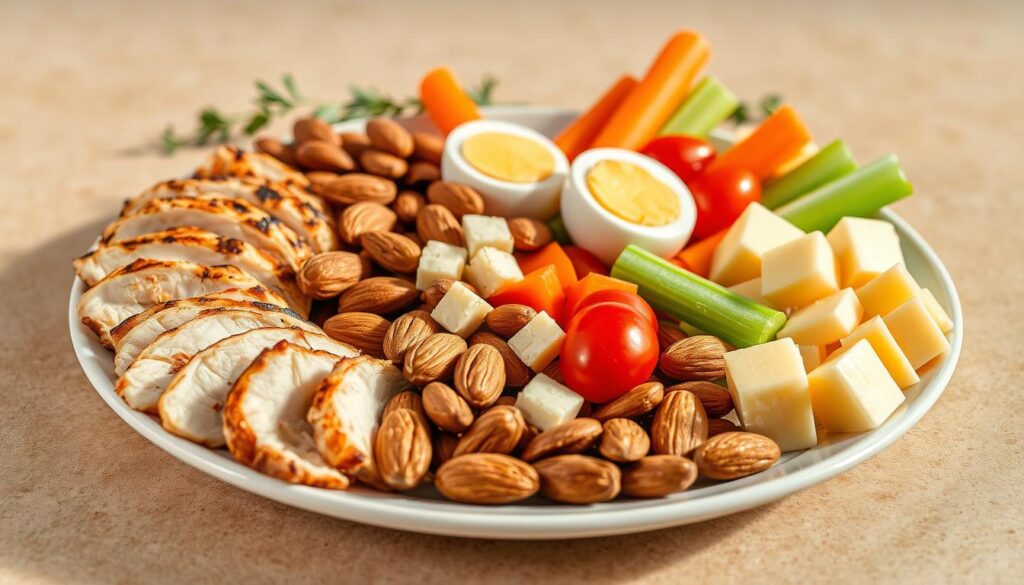
Evening snacks need special care. Cottage cheese with fresh berries or a small protein shake can stop late-night hunger. Post-workout snacks like chocolate milk or turkey roll-ups help muscles recover and keep you full until your next meal.
High Protein Breakfast Ideas
Starting with protein in the morning is healthy. Overnight oats with protein powder have about 20 grams of protein. Greek yogurt parfaits with nuts and fruit make a great morning meal.
Other quick breakfasts include:
- Hard-boiled eggs on whole grain toast
- Smoothie bowls with chia seeds
- Scrambled eggs with spinach and feta
- Protein pancakes with almond butter
Pair your protein with fruits or veggies for more fiber and nutrients. This combo keeps you full and gives you energy all morning.
Trends in High Protein Snacking
The snack industry is changing fast. People want snacks that are high in protein and good for their health. New snacks are being made with protein-rich ingredients, making them both tasty and nutritious.
Innovations in Snack Products
Snack makers are adding protein to old favorites. For example, popcorn with nutritional yeast has 3 grams of protein per 2-tablespoon serving. It tastes like cheese but is healthier.
Cauliflower crisps are another new snack. They’re crunchy like potato chips but have more protein.
Watermelon seed snacks are great for those with allergies. They have 8 grams of protein per ounce. Brands like 88 Acres and Go Raw are leading the way with these snacks.
Rise of Plant-Based Proteins
Plant-based snacks are taking over the market. Chickpea snacks, from bars to roasted treats, are everywhere. Lentil chips from Bada Bean Bada Boom are also popular for their protein.
Pea protein bars are now common, thanks to brands like RXBAR and No Cow. They’re dairy-free and loved by many.
People want snacks made from whole foods and with less processing. Savory snacks are becoming more popular. Snacks made from vegetables and plant proteins are the future of the market.
Conclusion: Making Informed Snack Choices
Choosing the right snacks can change your daily nutrition. High protein snacks are great for muscle health, controlling hunger, and keeping energy up. You can find many healthy options, like string cheese, almonds, protein smoothies, and egg muffins, to fit any diet or lifestyle.
Recap of Key Takeaways
The best snacks have protein, fiber, and healthy fats. Greek yogurt from brands like Fage or Chobani has 15-20 grams of protein per serving. Nuts and seeds are good for plant-based protein and heart health. Ready-to-eat options like Quest bars or RX bars are convenient and nutritious.
Always check labels to avoid too much sugar and artificial stuff in packaged snacks.
Encouragement for Healthier Snacking
Small changes in snacking can make a big difference. Start by swapping one processed snack for a protein-rich one each day. Make healthy snacks like hard-boiled eggs or nuts easy to grab on busy days.
Your body will thank you with more energy, better focus, and faster recovery after working out. Choosing high protein snacks helps you reach your wellness goals without feeling limited. It’s a step towards better health and performance.