

This piece summarizes a high-profile ascent that ended in tragedy. A 23-year-old Alaskan climber lost his life after a fall from El Capitan in Yosemite National Park while his climb was livestreamed on TikTok.
The granite formation on El Capitan rises about 3,000 feet and draws elite climbers from around the world. He had gained attention this year for a solo of Denali’s Slovak Direct in 56 hours and for repeating rare big-wall routes.
Park rangers and emergency teams responded immediately, and an investigation is underway. Family members confirmed the death and shared emotional tributes that highlighted his life on the wall and public presence at the park.
The story matters beyond technical climbing: it ties together bold solo ascents, social media visibility, and the risks of big-wall routes. For background and timeline, see a detailed report on the incident here.
Key Takeaways
- High-profile loss: A well-known Alaskan climber died during an El Capitan ascent that was livestreamed.
- Iconic route: El Capitan is an approximate 3,000-foot granite formation and a central big-wall objective.
- Recent achievements: He had notable solo ascents this year, including the Slovak Direct on Denali.
- Immediate response: Park rangers and emergency personnel reacted quickly; an investigation is active.
- Public impact: His social presence and distinctive camp persona drew wide attention and tributes.
El Capitan fall at Yosemite National Park: what happened and what we know
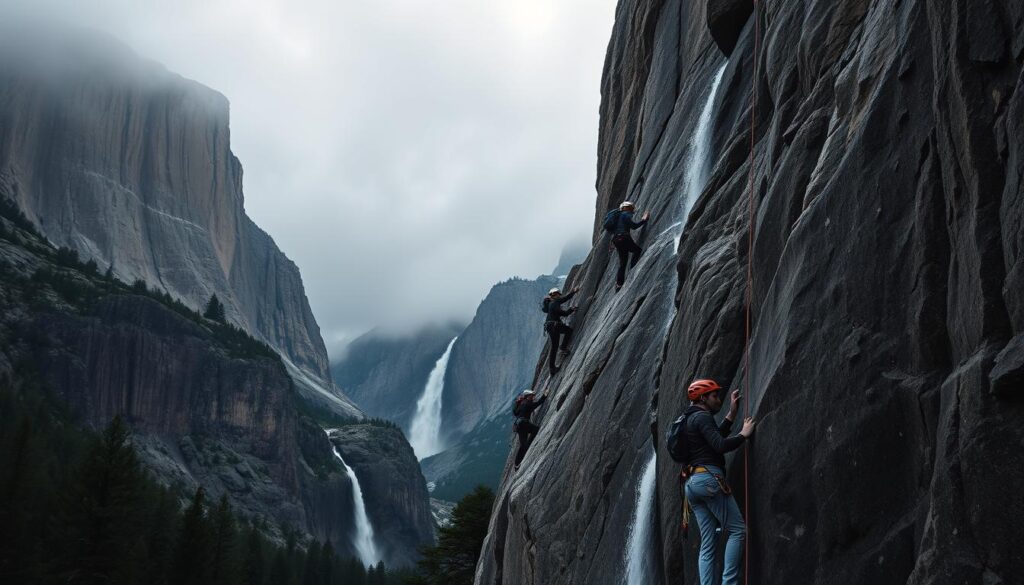
The face of El Capitan towers over Yosemite Valley, creating one of the most exposed big-wall climbs in the park.
Sea of Dreams route and the reported rappel off the end of the rope
Reports say he was lead rope soloing the Sea of Dreams route, a roughly 2,400-foot big-wall line on El Capitan.
After topping out, he was hauling his last gear when family accounts and witnesses say he likely rappelled off the end rope. That scenario is a known hazard if a stopper knot is missing or a line runs out.
“I saw him trying to free a stuck bag and then called 911,” said Yosemite photographer Tom Evans.
3,000-foot granite formation, immediate response, and ongoing NPS investigation
El Capitan is a massive granite rock formation rising about 3,000 feet, where small mistakes can turn deadly.
The fall and accident happened while national parks remained open during a federal shutdown with limited services. The National Park Service said rangers and emergency teams responded immediately, and an investigation is underway.
| Detail | What is known | Why it matters |
|---|---|---|
| Route | Sea of Dreams, ~2,400 feet | Big-wall complexity affects rigging and hauling |
| Mechanism | Likely rappelled off the end rope | Stops and knot checks are critical on descent |
| Witness | Photographer observed stuck bag and called 911 | Provides a real-time account of the fall |
| Response | NPS and emergency teams acted immediately | Investigation will clarify causes and safety factors |
American climber Balin Miller: background, bold achievements, and persona
Anchorage roots and family trips seeded a career that bridged ice, rock, and long solo pushes.
From Anchorage beginnings to a life in the mountains
He learned systems, rope work, and judgment while climbing with his father and brother. Those early years shaped how he approached complex objectives and risk.
First solo of Denali’s Slovak Direct and weeks of solo climbs
In June he claimed the first solo of the slovak direct on Denali in 56 hours, a breakout effort that drew worldwide coverage.
He then spent weeks soloing in Patagonia and the Canadian Rockies, adding rare repeats on mixed and ice walls.
Persona, style, and recognition
Known as the “Orange Tent Guy”, he wore glitter freckles before hard pushes and favored fast, efficient tactics on every route.
Veteran alpinists praised his run; one drew comparisons to Alex Honnold, underscoring how his climbs resonated beyond regional circles.
- Range: ice, mixed, and big-wall rock objectives.
- Tempo: fast solo efforts and sustained endurance.
- Profile: unique persona that drew global attention.
Reactions, safety context, and Yosemite’s difficult season
Reports of the fall prompted an outpouring of tributes and safety discussions across the climbing community.
Family response
Jeanine Girard-Moorman, the mother of the son who died, confirmed the death and offered a heartfelt tribute about his impact on others.
The brother, Dylan Miller, described his sibling as a mentor and clarified how a rope setup and the descent phase on Sea of Dreams may have played into the accident.
Witnesses and media
Photographer Tom Evans said he called 911 after seeing an effort to free a stuck bag. Reports in Climbing magazine and other outlets followed quickly, tracking both the personal response and technical facts.
“I saw him trying to free a stuck bag and then called 911,” said Tom Evans.
| Topic | What was said | Why it matters |
|---|---|---|
| Family | Mother and brother shared tributes; Dylan Miller explained rope context | Humanizes the miller death and clarifies technical detail |
| Witness | Tom Evans reported a stuck haul bag and called emergency services | Shows how quickly an accident can escalate on a big wall |
| Media & safety | Climbing magazine covered the event; discussion on rope vs free solo | Educates readers on differences and risks |
| Park season | Earlier free solo and hiking deaths; services limited during shutdown | Highlights broader safety and operational context in Yosemite National Park |
Conclusion
As officials review reports from Yosemite, the focus stays on the Sea of Dreams route and the descent that followed. Investigators with the National Park Service continue to piece together how a rappel near the end rope may have caused the fall.
Family statements and eyewitness accounts frame a life spent in high-altitude climbing, from the Slovak Direct to big-wall routes on El Capitan’s roughly 3,000 feet face. The brother’s words and public posts show a son whose posts and presence inspired many.
For the national park community, the response underscores swift ranger action and the hard lessons of descent management. While the official finding will guide future practice, the legacy of balin miller endures in stories, photos and cautious reminders about rope systems and checks after a long route.