

In today’s world, it’s surprising to learn that Ayurveda, an ancient Indian healing art, has been helping people for over 5,000 years. This ancient knowledge is rich in history and practice. It shows us the importance of wellness and balance in our lives.
Looking into Ayurveda’s history, we find a deep legacy. It treats more than just physical problems. It looks at a person’s environment, lifestyle, and mental health too. This makes it a holistic way to heal.
Ancient texts and scholarly work show Ayurveda as more than just medicine. It’s a philosophy that connects life, the universe, and the five elements of matter. It uses natural treatments like diet, herbs, meditation, massage, and detox to help the body, mind, and spirit find harmony.
Ayurveda treats each person as unique, focusing on their ‘Prakriti’ or constitution. It aims to prevent illness and believes in the body’s power to heal itself. This tradition teaches us to live in harmony with nature, balancing body, mind, and soul.
Key Takeaways
- Ayurveda’s history spans over 5 millennia, making it one of the oldest known systems of medicine.
- This ancient Indian healing art melds physical, psychological, and spiritual health.
- Traditional Ayurveda knowledge emphasizes preventative care and natural healing.
- Individualized treatments are a hallmark of Ayurvedic practice, reflecting the unique nature of each person.
- Ayurveda’s holistic approach integrates dietary recommendations, herbal remedies, and mind-body therapies.
Introduction to Ayurveda: The Origin and Evolution
Ayurveda comes from ancient India, deeply connected to Hindu culture. It’s a system of medicine that has grown from old traditions and insights from the Vedas. Ayurveda is not just about treating sickness but also about preventing it and living a long, healthy life.
The start of Ayurveda combined natural philosophy with human body studies. This led to healing practices that focus on balance between body, mind, and nature. This balance is key to understanding Ayurveda’s approach to health and wellness.
Ayurveda’s Historical Significance
Ayurveda means ‘the science of life’. It offers a wide range of healing methods and teachings. Its history shows how it has influenced people for centuries by blending diet, herbs, and daily routines into life.
Foundational Principles of Ayurvedic Healing
Ayurveda’s healing is based on balancing three vital energies: Vata, Pitta, and Kapha. By understanding and adjusting these energies, Ayurveda aims to prevent illness. It helps maintain health and vitality for a long time.
Overview of Ayurvedic Medicine
The ayurvedic medicine origin dates back thousands of years, rooted in ancient Indian culture. This holistic health system aims to keep health in balance by focusing on mind, body, and spirit. It sees humans as part of nature, using natural therapies and lifestyle changes.
Principles of Ayurveda focus on balancing three doshas: Vata, Pitta, and Kapha. These doshas are made of five elements: space, air, fire, water, and earth. Each person has a unique mix of doshas, shaping their health and personality.
Ayurveda is more than treating symptoms; it’s a way to live a full, healthy life. It suggests diets, routines, yoga, and natural treatments. Its appeal comes from its personal touch and harmony with nature, making it valuable today.
The Vedic Roots of Ayurveda
The history of ayurveda is deeply connected to the ancient Vedas. These spiritual texts are key to understanding the origins of ayurvedic medicine. They come from India, the ayurveda origin country.
Ayurvedic medicine originated in which country?
- India
The Vedas, including the Rig Veda and the Atharva Veda, are at the heart of ayurvedic wisdom. They reveal a wealth of herbal knowledge and healing practices. These are seen as gifts from the divine.
| Veda | Contributions to Ayurveda |
|---|---|
| Rig Veda | References to over 67 medicinal plants and outlines basic Ayurvedic concepts. |
| Atharva Veda | Focuses on the magical formulas for healing and mentions the use of minerals, and other natural resources for medical purposes. |
History of Ayurveda: Unveiling Its Timeless Journey

The historical development of Ayurveda started in ancient India around the 2nd Century BC. It began with the Vaisheshika and Nyaya schools working together. They combined physical health with spiritual wellness, seeing illness as more than just physical.
As time went on, ayurvedic medicine grew and changed. Each new era built on the knowledge of sages and scholars. The Charaka Samhita was a key text that helped keep Ayurvedic knowledge alive for future generations.
This scholarly pursuit ensured that Ayurveda was not just confined to certain regions but found resonance across different cultures and continents.
The table below shows important moments in Ayurveda’s history. It shows how its ideas have lasted and changed over time.
| Period | Development |
|---|---|
| 2nd Century BC | Origination from Vaisheshika and Nyaya schools |
| 1st Century AD | Creation of Charaka Samhita |
| Medieval Period | Expansion across Islamic and European medicine |
| Modern Era | Global integration into holistic health practices |
Today, Ayurveda’s timeless ideas guide health practices all over the world. Its lasting impact and ongoing evolution show its deep relevance in modern wellness.
The Sages and Scholars of Ayurveda
The impact of ancient sages and scholars on Ayurveda is huge. They carefully wrote down the medical wisdom in ancient texts. This helped shape Ayurveda into the health care system we know today.
Their work is key to Ayurveda’s rich history. It guides many towards holistic wellbeing.
Atreya and Charaka are two important figures. Atreya is seen as the father of Indian medicine. Charaka wrote the Charaka Samhita, which is a cornerstone of Ayurveda.
Their work shows a deep understanding of health and disease. It’s essential for studying and using Ayurveda today.
| Ancient Scholar | Contribution |
|---|---|
| Atreya | Systematized Ayurvedic theory and diagnostic methods. |
| Charaka | Authored the Charaka Samhita, elaborating on medical ethics, diagnostics, and treatments. |
| Sushruta | Pioneered surgical techniques and instruments, which he detailed in Sushruta Samhita. |
The work of these sages is at the heart of Ayurveda. It shows how to mix spirituality with health care. They created a way of healing that lasts for centuries, giving us deep insights into wellness.
Ayurveda’s Holistic Approach to Health and Wellness

At the heart of ayurvedic philosophy lies a holistic health system. It sees health as a balance between body, mind, and spirit. This approach aims to prevent illness by aligning individuals with nature through holistic wellness practices.
Ayurveda believes our lives affect our health in many ways. It looks at physical, emotional, and spiritual health. It suggests a lifestyle that supports all aspects of well-being.
This includes eating right, following daily routines, practicing yoga, and meditating. These practices are customized to improve personal health and happiness.
Ayurveda offers personalized care, understanding health and wellness on an individual level. It ensures treatments fit each person’s unique balance. This isn’t just medicine; it’s a lifelong path to health and harmony.
Ancient Ayurvedic Practices and Treatments
The legacy of original ayurveda is filled with health practices passed down through generations. Among these, Panchakarma stands out. It’s a key part of ayurvedic treatments for purification and rejuvenation.
Panchakarma is known for removing toxins from the body. It uses five main techniques. These show the advanced medical knowledge of ancient ayurveda.
Along with Panchakarma, original ayurveda offers herbal remedies for health. These natural medicines come from plants, minerals, and animal products. They show a deep connection between nature and human health.
Panchakarma Origin and Techniques
Panchakarma comes from the heart of ayurveda. It was seen as key for health and treating diseases. The name means “five actions” in Sanskrit, referring to five detoxifying methods.
These methods include therapeutic emesis, purgation, enema, nasal medication, and blood purification. Each is tailored to address health issues based on individual imbalances.
Ayurveda’s Herbal Remedies and Therapeutic Methods
Herbal remedies are a key part of ayurvedic treatments. Recipes have been shared for centuries. They help not just symptoms but also the root causes of diseases.
These remedies use herbs, spices, and oils. They help the body heal and boost its natural healing powers.
Learning about these ancient methods gives us a glimpse into a health system that’s very old and influential. It’s based on the wisdom and philosophy of original ayurveda.
Ayurveda Across Borders: Global Influence and Modern Adaptations

The global influence of Ayurveda is vast, showing a rich ayurveda historical background. It has smoothly moved into ayurveda in modern times. Wellness trends change, but Ayurveda stays relevant, blending ancient wisdom with new health practices.
In the Western world, Ayurveda’s ideas and methods are gaining popularity. This shows its universal appeal for health. Western medicine now looks at Ayurveda for preventive care and managing chronic diseases. This highlights the strong global influence of Ayurveda.
Ayurgenomics is a new field that combines Ayurveda with genomic science. It aims to tailor medicine to each person’s health needs. This research could lead to new ways to treat diseases in the future.
The following table shows how Ayurvedic ideas are being used in today’s medicine:
| Ayurvedic Principle | Modern Adaptation | Health Focus |
|---|---|---|
| Body Type Analysis (Prakriti) | Personalized Nutrition Plans | Diet and Nutrition |
| Herbal Remedies | Integrative Medicine Supplements | Chronic Disease Management |
| Detoxification Procedures (Panchakarma) | Adapted Cleansing Techniques | Toxin Removal & Holistic Rejuvenation |
These changes show the global influence of Ayurveda and its key role today. As people look for holistic health, Ayurveda’s impact grows. It’s changing how we see and treat health worldwide.
The Philosophical Foundations of Ayurveda
The roots of Ayurveda, an ancient healing system, are deeply rooted in a holistic view of the universe. Ayurvedic philosophy history shows that the universe and our bodies are made of five basic elements: space, air, fire, water, and earth. This idea is a key part of ayurveda philosophy.
In Ayurveda, these elements mix to form three life forces or doshas: Vata, Pitta, and Kapha. Our health and well-being depend on the balance of these doshas. The ayurveda philosophy focuses on keeping the body and nature in harmony. It aims for a life of wellness through balance.
At its core, ayurvedic philosophy is about more than just treating sickness. It’s about connecting deeply with nature and understanding the energy exchange between our bodies and the environment. This approach is at the heart of Ayurvedic practice, valuing prevention and personal balance.
The Structure of Ayurvedic Medicine: Doshas, Dhatus, and Malas
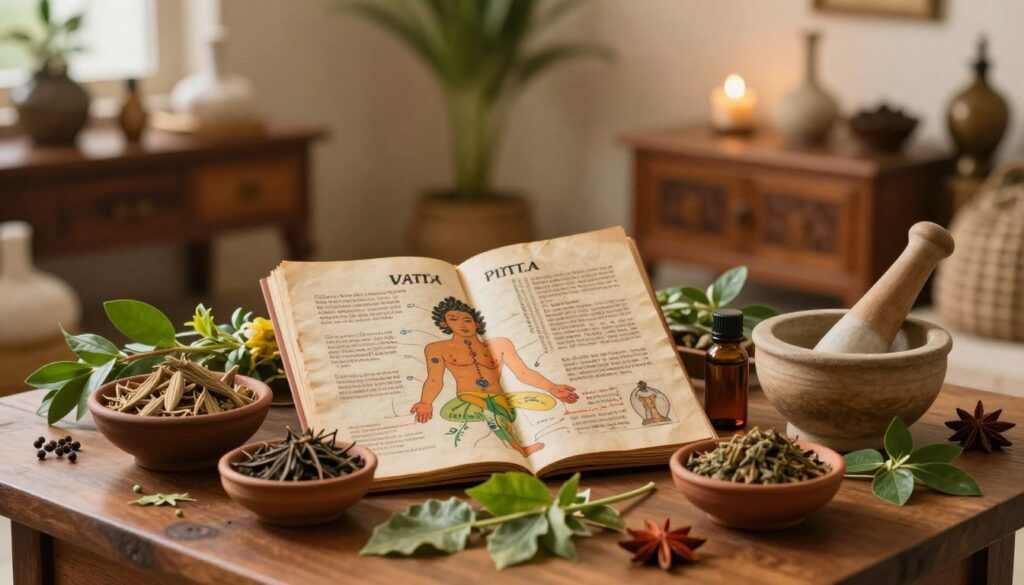
Ayurveda is a holistic healing system that deeply understands the body. It focuses on doshas, which are key energy types that control our health. These doshas, Vata, Pitta, and Kapha, are vital for balance and wellness.
The relationship between these doshas and our physical makeup is key. It guides ayurvedic remedies and treatments.
Understanding Vata, Pitta, and Kapha
Ayurveda divides the body into three main life forces: Vata, Pitta, and Kapha. Each dosha manages important body functions and affects our physical, mental, and emotional states. Vata controls movement and communication, Pitta handles metabolism and temperature, and Kapha oversees growth and stability.
When these doshas are in balance, we are healthy. But imbalance leads to health problems. Ayurvedic remedies help restore balance.
The Seven Tissues (Dhatus) and Waste Products (Malas)
Ayurveda also talks about seven key tissues: plasma, blood, muscles, fat, bones, marrow, and reproductive tissue. These tissues are vital for our body’s functions and structure. They help with nutrient delivery and body formation.
Waste products, like feces, urine, and sweat, are also important. They help remove toxins from our body. Managing these elements is key to Ayurvedic health.
Ayurveda’s approach to health is both preventive and curative. It uses knowledge of doshas, dhatus, and malas. This system supports physical, mental, and emotional well-being. It shows the deep influence and complexity of Ayurvedic practices.
Ayurvedic Diagnostics: Examining the Individual as a Whole
In ayurvedic medicine, diagnosing goes beyond just symptoms. It sees health and sickness as a whole, focusing on body, mind, and spirit. Each person’s unique balance of Vata, Pitta, and Kapha doshas is considered.
The diagnostic process in Ayurveda is detailed. It includes medical history, sensory checks, and touch exams. Pulse diagnosis is a key method, giving insights into energy imbalances.
Let’s look at what makes Ayurvedic diagnostics special:
- Observation (Darshan): Looking at physical features and behavior.
- Touch (Sparsha): Feeling the pulse, abdomen, and skin and tongue.
- Questioning (Prashna): Asking about diet, lifestyle, and mental health.
This detailed check-up leads to a treatment plan that fixes the imbalance’s root cause. Ayurveda focuses on individual care, aiming for long-term health and disease prevention.
Ayurvedic medicine stands out with its deep and caring diagnostic approach. It remains a holistic health approach in today’s health world, staying true to its traditional healing system roots.
Traditional Ayurvedic Texts and Literatures
The history of Ayurveda is filled with ancient texts that offer deep insights into healing. These texts have shaped Ayurveda’s holistic approach. They connect us to our health and well-being, passed down through generations.
Ayurvedic literature, like the Charaka Samhita and Sushruta Samhita, is key to understanding traditional Ayurveda. They describe ancient Indian medicine systems. These texts cover internal medicine and surgery, focusing on body, mind, and spirit balance.
Charaka Samhita and Sushruta Samhita
The Charaka Samhita explores internal medicine, a vital part of Ayurveda’s history. The Sushruta Samhita, on the other hand, details surgical techniques. It shows the advanced medical knowledge of ancient India.
Exploring Lesser-Known Ayurvedic Manuscripts
There are many lesser-known texts beyond Charaka and Sushruta Samhita. These texts, including nighantus or lexicons, help scholars understand medicinal plants and therapies. Each manuscript offers unique insights into Ayurvedic practice.
These ancient texts are the heart of Ayurveda, guiding modern practitioners. The effort to preserve and study these texts shows our commitment to Ayurveda. It ensures this ancient science remains relevant today, tackling modern health challenges.
The Art of Ayurvedic Healing: Principles and Practices
Ayurvedic practices are key in traditional Indian medicine. They focus on the whole body and mind. The goal is to keep the body in balance with nature’s rhythms.
Each person’s unique makeup is considered. Ayurveda aims to restore health in a natural way.
Ayurveda offers many ways to stay well, like diet and herbal treatments. Yoga and meditation are also part of it. These methods work together to prevent sickness and help people live longer.
Every treatment is made just for you. It’s based on your body’s specific needs. This is called balancing your doshas.
Herbal remedies like ginger and licorice tea are used. They help soothe the stomach and improve digestion. This shows how Ayurveda uses herbs in a detailed way.
These ancient practices are always being updated. This shows Ayurveda’s lasting value. It has helped people for centuries with its health solutions.
Ayurveda teaches us how to stay healthy and prevent sickness. It helps us live in harmony with nature’s laws.
A Journey Through Ayurveda’s Impact on Lifestyle and Diet
Ayurveda deeply influences our approach to wellness. It focuses on ayurveda lifestyle practices and ayurveda medicinal herbs. This holistic system tailors diet and lifestyle to fit each person’s unique needs, aiming for balance and well-being.
Ayurveda teaches us to follow dietary habits and routines that match our natural cycles and needs. It’s not just about what we eat. It’s about making lifestyle changes that include better sleep, daily routines, and managing stress.
The Importance of Diet in Ayurvedic Teachings
In Ayurveda, diet is seen as a healing tool, not just for nutrition. Our dietary needs depend on our dosha balance—Vata, Pitta, or Kapha. Foods can either help or harm this balance, affecting our health. Ayurveda suggests a diet that nourishes and heals, using ayurveda medicinal herbs and specific foods.
Adopting an Ayurveda-Inspired Lifestyle
Living an Ayurveda-inspired life means following principles that support health and harmony. Key elements include:
- Routine: Aligning daily activities with nature’s cycles to boost energy and health.
- Diet: Eating foods that match our dosha to improve digestion, immunity, and mood.
- Herbal Remedies: Using ayurveda medicinal herbs to prevent and treat health issues.
- Mindfulness and Meditation: Practicing to reduce stress and improve mental and emotional health.
Ayurveda is about preventing illness by creating a wellness environment. It guides us to make mindful choices and habits. These ayurveda lifestyle practices help us live a fulfilling, health-focused life.
Conclusion
The history of Ayurveda is more than just an old practice. It’s a journey of holistic medicine that keeps evolving. Ayurveda’s deep understanding of balance and natural health has lasted through time. It offers a unique approach to health that fits well with today’s medicine.
Ayurveda’s growth shows how it blends tradition with new ideas. The wisdom from ancient sages in the Vedas guides today’s healing methods. Ayurveda’s focus on the whole person—mind, body, and spirit—has given us valuable ways to heal.
In our search for better health, Ayurveda’s benefits are now known worldwide. It teaches us about the power of prevention and nature’s healing. Ayurveda’s story is a lasting legacy that will guide us towards wellness for years to come.