
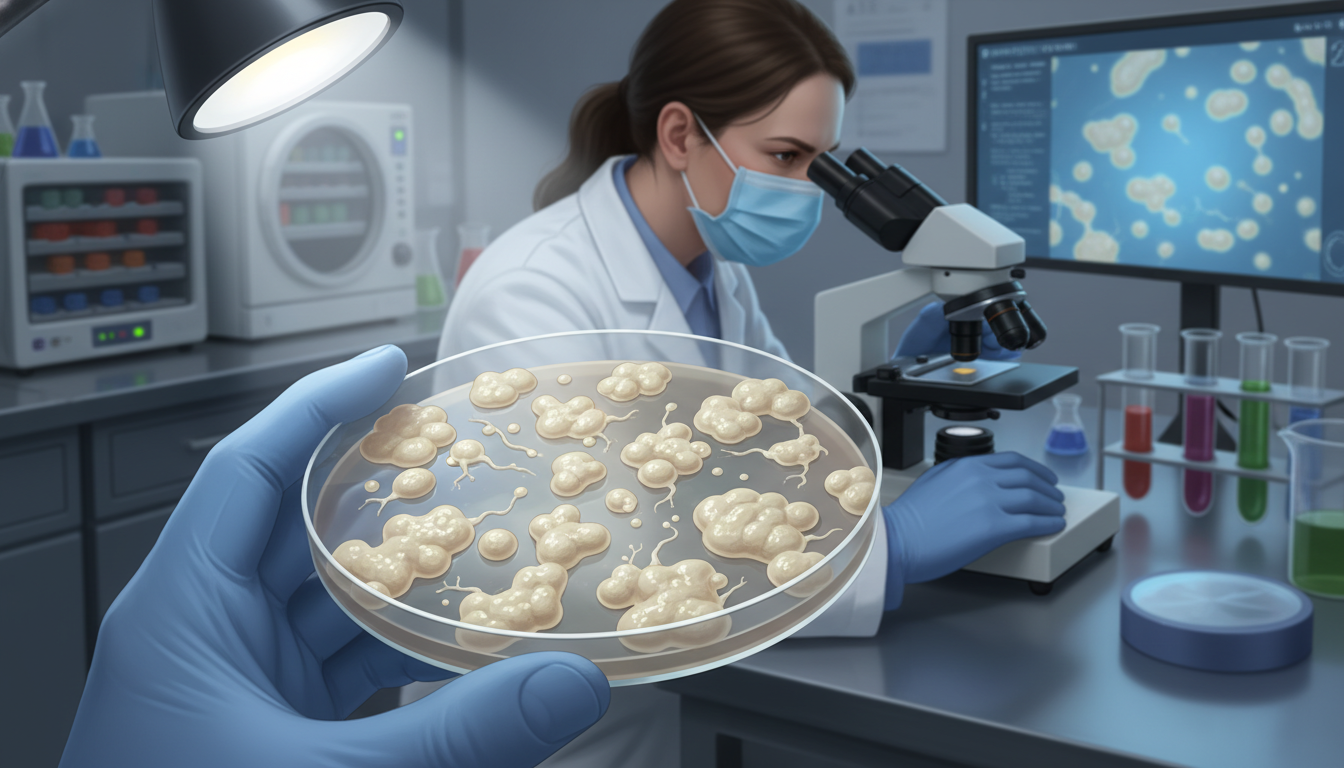
Did you know a dangerous germ can spread through a hospital without making a sound? Candida auris (or C. auris) is doing exactly that. This stubborn organism has been found in over half of U.S. states. It’s a quiet but serious problem.
This isn’t your average infection. We’re dealing with a type of yeast that fights back against medicine. Standard treatments often fail. That’s what makes it a superbug.
The tricky part? The signs it causes look like many other common illnesses. This makes it incredibly hard for doctors to spot quickly. It primarily affects people who are already in poor health or in healthcare settings.
But here’s why you should care. Even healthy people can carry C. auris on their skin without knowing. They can accidentally pass it to vulnerable loved ones. Understanding this threat is the first step to protection.
We’re going to explore this together. Let’s break down what to look for and how modern medicine is fighting back.
Key Takeaways
- Candida auris is a drug-resistant fungal infection spreading globally.
- It poses the greatest risk to individuals with weakened immune systems in healthcare settings.
- The signs of infection are often non-specific and mimic other common conditions.
- Early and accurate identification by medical professionals is critical for management.
- Healthy individuals can be carriers, unknowingly transmitting the organism.
- Strict infection control practices in hospitals are vital to containing outbreaks.
- New research and treatments are actively being developed to combat this threat.
Introduction to Candida auris and Its Emergence
What if I told you that one of today’s biggest healthcare threats was completely unknown just over a decade ago? That’s the surprising truth about Candida auris. This mysterious organism appeared out of nowhere and has been causing headaches for doctors ever since.
Overview of Candida auris as a Superbug
Back in 2009, scientists in Japan discovered something unusual. They found a new type of yeast in a patient’s ear canal. They named it Candida auris – “auris” means “ear” in Latin.
What makes this particular fungus so concerning? It’s incredibly tough. Unlike other candida species, this one can survive extreme conditions. It handles heat and salt that would wipe out its relatives.
“The rapid spread of Candida auris represents one of the most serious emerging threats to modern healthcare systems.”
The Rise of Fungal Infections in U.S. Healthcare
The numbers tell a scary story. When the first U.S. case appeared in 2016, officials hoped it was isolated. Instead, cases exploded over the years.
| Year | Confirmed Cases | Growth Rate |
|---|---|---|
| 2017 | 173 | Baseline |
| 2019 | 476 | 175% increase |
| 2020 | 756 | 59% increase |
| 2021 | 1,471 | 95% increase |
| 2022 | 2,377 | 62% increase |
Healthcare facilities have become ground zero for this disease. The fungus can live on surfaces for weeks. This turns ordinary medical equipment into potential transmission points.
What really sets Candida auris apart is its survival skills. It forms protective layers that help it evade cleaning products. This makes containment incredibly challenging for healthcare teams.
Key Risk Factors and Vulnerable Populations
It turns out that your personal risk level depends heavily on your current health situation. If you’re generally healthy and don’t spend much time in medical facilities, your chances of encountering serious problems are pretty low.
But for certain groups of people, this organism presents a real challenge that healthcare teams work hard to manage.
Underlying Conditions, Surgery, and Medical Devices
Recent surgery can make you more vulnerable. Why? Operations often involve tubes and catheters that create direct pathways for organisms to enter your body.
Certain medical conditions also increase risk. Diabetes is one example. Extended antibiotic use is another—these medications can disrupt your body’s natural balance.
Medical devices like breathing tubes or catheters become potential entry points. They’re like open doors that allow unwanted visitors inside.
The Role of Hospitalization and Immune System Weakness
Long stays in hospitals or nursing homes create high-risk situations. The longer you’re there, the more opportunities organisms have to find you.
Your immune system is your body’s defense team. When it’s weakened—from chemotherapy, transplants, or other conditions—you become more vulnerable.
Here’s the tricky part: healthy people can carry the organism without any issues. They won’t get sick, but they might pass it to vulnerable patients in hospitals. This invisible spread makes containment challenging for care teams.
Understanding these risk factors helps everyone work together to protect those most at risk.
Understanding superbug fungus symptoms
Ever had a fever that just wouldn’t quit, no matter what medicine you took? That’s one of the first clues something unusual might be happening. The warning signs of this organism often look deceptively ordinary.
Your body’s response depends entirely on where the trouble starts. The most common signals include persistent fever, intense chills, and drenching sweats. What makes these particular? They typically don’t respond to standard antibiotic treatments.
Common Signs: Fever, Chills, and Sweats
These general symptoms are your system’s first line of defense. When antibiotics fail to bring relief, it’s a red flag. Healthcare teams pay close attention to this pattern in vulnerable patients.
Your entire body might feel like it’s fighting an invisible battle. The persistence of these signs separates ordinary illnesses from something more concerning.
Variations in Symptoms Across Different Infections
Where the problem occurs changes what you experience dramatically. An ear infection might cause sharp pain and hearing changes. Wound issues show visible redness and delayed healing.
When the organism enters your blood, the situation becomes critical. The infection can spread to vital organs, causing overwhelming fatigue and pain.
| Infection Type | Specific Manifestations | Key Characteristics |
|---|---|---|
| Ear Infection | Ear pain, fullness, drainage | Localized discomfort, hearing changes |
| Wound Infection | Redness, pus, delayed healing | Visible signs at injury site |
| Blood Infection | Fever, chills, organ involvement | Systemic spread, potentially fatal |
| Urinary Tract | Resistant to standard medications | Often misdiagnosed initially |
Recognizing these patterns early makes all the difference. What seems like a simple fever could be your body’s way of signaling something that needs specialized attention.
Identifying Candida auris Infections in Clinical Settings

When it comes to spotting candida auris, the laboratory becomes the real detective in this medical mystery. Unlike quick tests you might get for strep throat, identifying this organism requires serious scientific firepower.
Diagnostics and Laboratory Testing Techniques
Doctors typically start with blood tests when they suspect auris infections. They might order a complete blood count to see how your body is responding. Blood cultures help grow the actual organism for identification.
A specialized test called the B-1,3 glucan test looks for specific sugar molecules found on fungal cell walls. It’s like finding a unique fingerprint that points directly to candida auris.
Healthcare teams also use skin swabs from armpits and groin areas. These spots tend to harbor the organism if someone is colonized. Identifying carriers helps prevent spread to vulnerable patients.
Challenges in Early Recognition of Symptoms
The biggest hurdle? Candida auris looks almost identical to other candida species under a microscope. Many labs initially misidentify it as a less dangerous relative.
This means auris infections often get the wrong treatment initially. The process takes significant time—something critically ill people don’t have to spare.
Advanced technology called MALDI-TOF can distinguish auris from its relatives. But not every hospital has this expensive equipment. Samples may need traveling to specialized labs, creating more delays.
Healthcare providers order tests when they suspect active auris infection, possible colonization, or for monitoring previous positives. Many facilities now screen high-risk individuals proactively.
Treatment Options and Managing Fungal Infections
Imagine finding out you have an infection that laughs at the usual medicines doctors prescribe. That’s the reality with Candida auris infections. The good news? We do have effective treatment options, but they require careful management.
When facing these challenging infections, healthcare teams don’t mess around. They go straight for the heavy artillery.
First-Line Therapies: Echinocandins and Their Use
The first choice for most auris infections involves a class of medications called echinocandins. These aren’t your everyday antifungal pills—they’re intravenous treatments that attack the organism’s cell wall.
| Medication Name | Brand Name | Administration |
|---|---|---|
| Anidulafungin | Eraxis | Intravenous |
| Caspofungin | Cancidas | Intravenous |
| Micafungin | Mycamine | Intravenous |
What makes these medications so crucial? Candida auris often resists common drugs like fluconazole. Echinocandins become the reliable option many patients need.
Monitoring and Antifungal Susceptibility Testing
Here’s where things get really interesting. This crafty organism can develop resistance during treatment. That’s why careful monitoring is essential.
Doctors use antifungal susceptibility testing to determine which medications will work best for your specific strain. It’s like custom-fitting your treatment plan.
The recent FDA approval of REZZAYO™ gives healthcare providers another weapon against serious fungal infections. Having more options means better care for everyone facing this challenging disease.
Preventing the Spread in Healthcare Facilities

What if the most dangerous part of a hospital visit wasn’t the procedure itself, but the equipment used during it? That’s the reality healthcare teams face with Candida auris. This organism can live on surfaces for weeks, turning ordinary medical tools into transmission vehicles.
Stopping the spread requires a multi-layered approach. The Centers for Disease Control and Prevention has developed comprehensive strategies that facilities nationwide now implement.
Hygiene, Disinfection, and Sanitation Protocols
Hand hygiene becomes your first defense. Everyone—doctors, nurses, visitors—must wash thoroughly before and after patient contact. Alcohol-based sanitizers or soap and water work effectively.
Surfaces demand special attention. Bed rails, doorknobs, and medical equipment need daily cleaning with EPA-approved disinfectants. Shared items like blood pressure cuffs require disinfection between every patient.
| Prevention Strategy | Key Action | Impact Level |
|---|---|---|
| Hand Hygiene | Alcohol-based sanitizer use | High |
| Surface Disinfection | EPA-approved cleaners | Critical |
| Equipment Management | Dedicated patient devices | Moderate-High |
| Physical Separation | 3-foot bed spacing | Moderate |
Screening, Isolation, and Communication Procedures
When a new case appears, healthcare workers screen close contacts immediately. This proactive approach identifies colonization before outbreaks develop.
Isolation rooms or dedicated units help contain the spread. Patient transfers between hospitals or nursing homes require clear communication about Candida auris status.
The disease control prevention effort relies on everyone working together. From laboratory surveillance to family education, each layer adds protection against this challenging organism.
Research and Innovations in Superbug Fungus Control
Have you ever wondered how scientists are fighting back against these stubborn infections? The good news is that researchers worldwide are making incredible progress against Candida auris. We’re seeing real breakthroughs that could change how we handle these challenging diseases.
Novel Therapeutic Agents and Emerging Vaccines
The FDA recently approved REZZAYO™, a new weapon against serious fungal infections. This gives doctors another option when treating tough auris infections. Even more exciting? Researchers have successfully tested an NDV-3A vaccine in mice infected with Candida auris.
While human trials are still years away, this represents a potential game-changer. Imagine being able to protect high-risk patients before they ever develop infection!
Ongoing Studies and Future Directions
Scientists are digging deep into how this organism operates. The CDC and international partners are studying everything from genetic mutations to environmental survival. They’re trying to understand why some strains attack the heart so aggressively.
The urgency comes from rising cases. Between 2019 and 2021, we saw the rate jump from 44% to a staggering 95% increase. Each of these cases represents real people facing serious diseases.
Researchers are particularly focused on how Candida auris adapts to the human body. By understanding these mechanisms, they hope to develop smarter treatments for future auris infections.
Conclusion
You’ve now journeyed through the complete story of this emerging medical threat. Knowledge truly becomes your greatest ally when facing complex health situations.
For most healthy people, this organism isn’t a major concern. Your immune system provides solid protection. But if you or loved ones face higher risk, understanding these infections becomes vital.
Remember the red flags we discussed. In healthcare settings, speak up if treatments aren’t working. Early action makes all the difference for successful outcomes.
The medical community continues advancing against Candida auris. New protocols and research offer real hope. Stay informed and advocate for proper care when needed.