
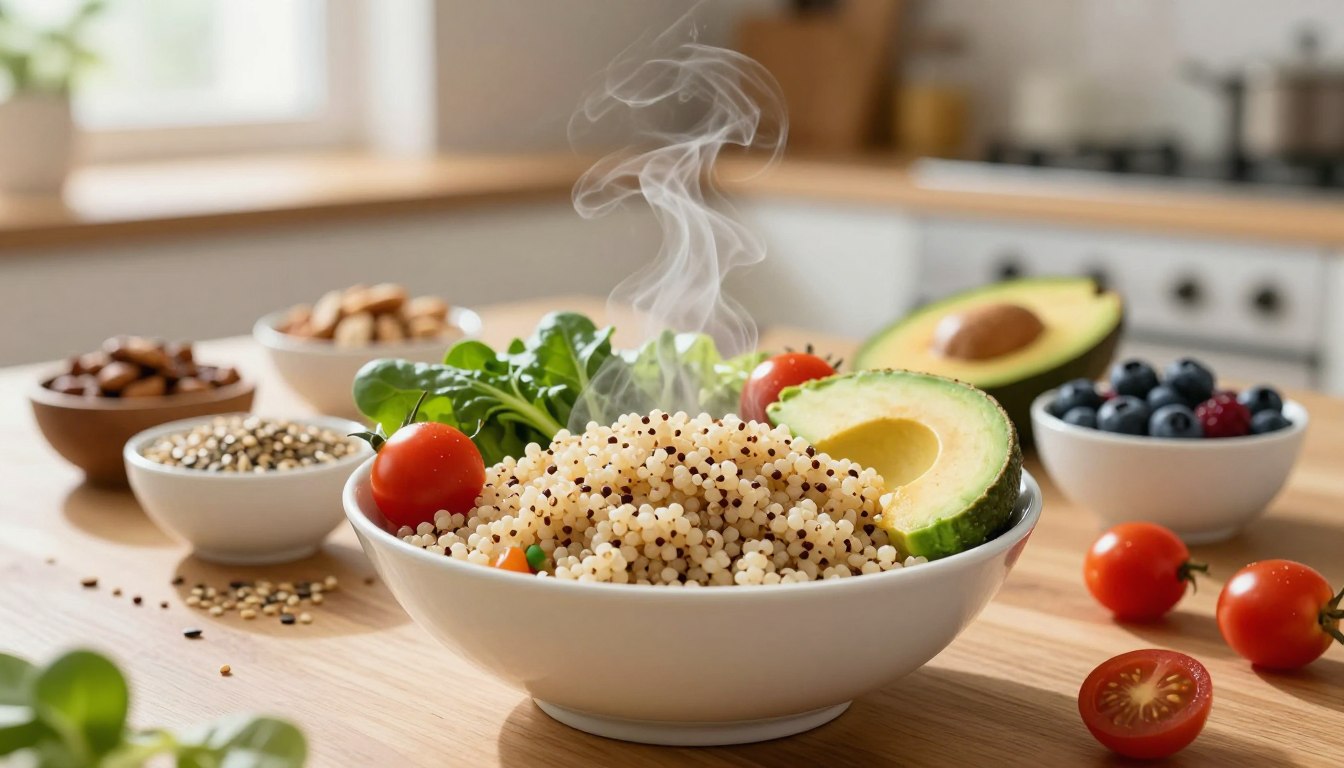
Is a small seed from the Andes Mountains really a health game-changer, or just a fleeting food trend? This debate is heating up among nutrition experts and health enthusiasts. They all want to know if quinoa is the right choice for their diets.
The Inca people called quinoa their “mother grain” thousands of years ago. Now, it’s everywhere in American kitchens and restaurants. The big question is: is quinoa truly healthy?
The United Nations made 2013 the International Year of Quinoa. This move made quinoa a household name. Today, farmers in 95 countries grow quinoa, a big jump from just eight in 1980.
In the U.S., people love quinoa for its many uses and health perks. Stores offer many types, and food makers add it to products like breakfast bowls and protein bars. But, does quinoa really live up to its hype?
Key Takeaways
- Quinoa has ancient roots in South American culture, specially among the Inca civilization
- Global quinoa production expanded from 8 countries in 1980 to 95 countries by 2015
- The United Nations recognized quinoa’s nutritional importance in 2013
- Americans increasingly choose quinoa as a gluten-free grain alternative
- Scientific evidence supports many health claims about quinoa
- Quinoa offers complete protein, making it unique among plant foods
What is Quinoa?
Quinoa is a favorite in health-focused kitchens in America. But, many are curious about what it is. It’s not a true grain, but a seed we eat like one. Foods like buckwheat and amaranth are similar.
Origin and History of Quinoa
Quinoa comes from the Andes Mountains in South America, over 5,000 years ago. The Incas called it “chisaya mama”, or “mother of all grains.” Spanish colonizers saw it as poor people’s food, but locals kept growing it. Now, Peru and Bolivia grow most of the world’s quinoa.
Nutritional Profile of Quinoa
Quinoa is special because of its nutritional benefits. One cup of cooked quinoa gives you:
| Nutrient | Amount | Daily Value |
|---|---|---|
| Calories | 222 | – |
| Protein | 8 grams | 16% |
| Fiber | 5 grams | 20% |
| Manganese | 1.2 mg | 51% |
| Magnesium | 118 mg | 28% |
| Copper | 0.4 mg | 39% |
Types of Quinoa
White quinoa is the most common, with a mild taste. Red quinoa stays firm in salads. Black quinoa has a richer taste and crunch. All are gluten-free and nutritious, so pick based on taste and recipe needs.
Nutritional Benefits of Quinoa
Quinoa is a standout among plant foods for its nutritional value. It’s packed with macronutrients and micronutrients that boost health. With its high protein and rich vitamins and minerals, organic quinoa is a key nutrient many Americans miss.
High Protein Content
One cooked cup of quinoa has 8 grams of complete protein. It has all nine essential amino acids your body needs. This makes quinoa a great choice for vegetarians and vegans, unlike wheat or rice.
Fiber Content and Digestive Health
A single cup of cooked organic quinoa has 5.18 grams of fiber. This meets 18% of your daily fiber needs, more than brown rice. With most Americans not getting enough fiber, quinoa helps fill this gap. It feeds good gut bacteria and aids digestion.
Vitamins and Minerals Found in Quinoa
Quinoa is rich in essential nutrients often lacking in American diets:
| Nutrient | Amount per Cup | % Daily Value |
|---|---|---|
| Folate | 78 mcg | 19% |
| Magnesium | 118 mg | 28% |
| Iron | 2.8 mg | 15% |
| Zinc | 2 mg | 18% |
These minerals are vital for energy, immune function, and oxygen transport. Magnesium alone is involved in over 300 enzyme reactions. So, adding organic quinoa to your diet is a smart move.
Quinoa and Weight Management
Choosing the right foods is key to managing your weight. Quinoa is a great choice for those trying to lose or maintain weight. It offers a mix of nutrients that keeps you full and gives you the energy you need.
Quinoa as a Satiety-Enhancing Food
One cup of cooked quinoa has about 5 grams of fiber. This fiber helps you feel full after eating. When combined with 8 grams of protein, it’s a powerful combo that controls hunger.
The carbs in quinoa break down slowly. This prevents quick hunger pangs. Dr. Maya Vadiveloo from the University of Rhode Island says carbs are the preferred fuel for our brain and should be 45 to 65 percent of our daily calories.
Comparing Quinoa to Other Grains
| Grain (1 cup cooked) | Calories | Protein (g) | Fiber (g) | Carbs (g) |
|---|---|---|---|---|
| Quinoa | 222 | 8 | 5 | 39 |
| Brown Rice | 218 | 5 | 4 | 46 |
| White Rice | 205 | 4 | 1 | 45 |
| Oatmeal | 158 | 6 | 4 | 27 |
Quinoa in Weight Loss Diets
Quinoa is a great addition to weight loss diets. It provides steady energy and fits into most eating plans. Its balanced nutrients prevent the fatigue that comes with cutting calories.
Quinoa makes portion control easy. Half a cup is enough to make a filling meal. Add vegetables and lean proteins to create balanced dishes that support your weight goals.
Quinoa for Heart Health
Your heart works hard every day. The foods you eat can make a big difference in keeping it strong. The quinoa superfood has gained attention for its heart health benefits. Studies show eating quinoa regularly may protect your heart in several ways.
Quinoa and Cholesterol Levels
Recent research is promising about quinoa’s effect on cholesterol. A 2020 study followed 40 older adults eating quinoa flour biscuits. These biscuits had 15 grams of quinoa daily for four weeks. The results were impressive: participants saw big drops in LDL (bad) cholesterol and total cholesterol levels.
Anti-Inflammatory Properties of Quinoa
The answer to is quinoa healthy becomes clearer with its anti-inflammatory compounds. Quinoa has quercetin and kaempferol, two powerful flavonoids. These compounds work as antioxidants in your body.
They help protect your cells from damage caused by free radicals. This can lead to inflammation and heart problems over time.
Studies Linking Quinoa to Heart Health
A 2017 study offers more evidence of quinoa’s heart benefits. Fifty overweight participants added 50 grams of this quinoa superfood to their diet for 12 weeks. The outcome showed significant reductions in triglyceride levels.
This is another important marker for heart disease risk. These findings suggest that making quinoa a regular part of your meals could support long-term cardiovascular wellness.
Gluten-Free and Grain Alternatives
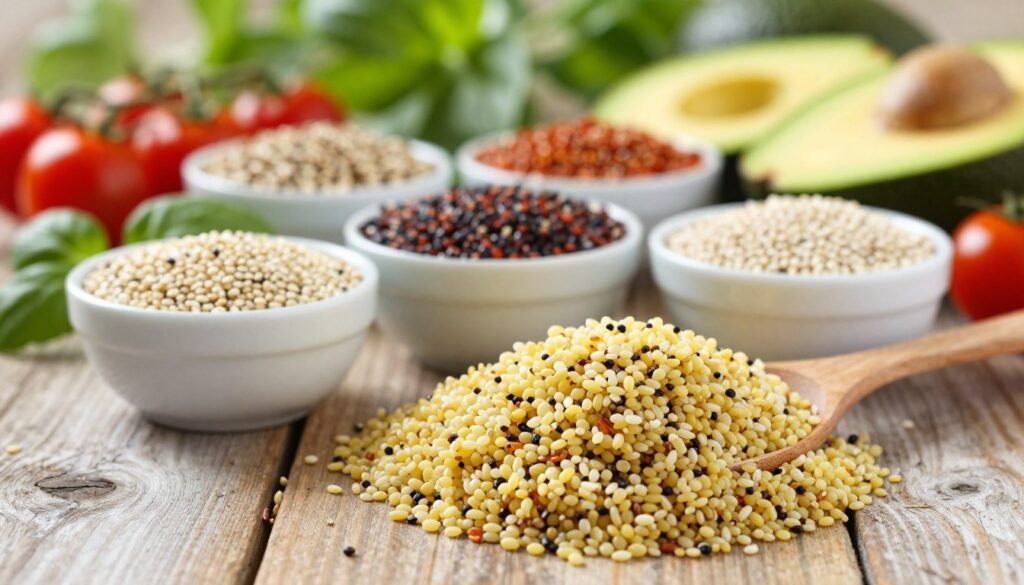
Millions of Americans with gluten sensitivities face a big challenge: finding nutritious grain alternatives. Gluten-free quinoa is a complete protein source that’s packed with essential nutrients. It’s rich in fiber, folate, zinc, and magnesium, which are often missing in gluten-free diets.
Why Quinoa is a Suitable Gluten-Free Option
Quinoa is special because it’s a pseudocereal, like amaranth and buckwheat. These seeds look and cook like grains but come from different plants than wheat, barley, or rye. Gluten-free quinoa is rare because it has all nine essential amino acids. Always check for certified gluten-free symbols on labels to avoid cross-contamination.
Quinoa vs. Other Gluten-Free Grains
Quinoa beats rice in nutrition. Here’s a comparison of popular gluten-free options:
| Grain Alternative | Protein (per cup cooked) | Fiber (grams) | Complete Protein |
|---|---|---|---|
| Quinoa | 8.1g | 5.2g | Yes |
| Brown Rice | 5.0g | 3.5g | No |
| Millet | 6.1g | 2.3g | No |
| Buckwheat | 5.7g | 4.5g | Yes |
Quinoa for Celiac Disease Patients
People with celiac disease must avoid gluten to prevent damage. Gluten-free quinoa is safe and doesn’t trigger immune responses. It helps celiac patients stay healthy and even improves cholesterol levels.
Quinoa’s high fiber content aids in digestive healing. B vitamins in quinoa help with energy production, which is often low in damaged intestines.
Cooking with Quinoa
Turning organic quinoa into a tasty meal is quick and easy. This versatile seed fits into any meal, from breakfast to dinner. Learning how to cook it brings out its nutritional benefits.
How to Prepare Quinoa
Rinse one cup of quinoa under cold water first. Then, add it to two cups of boiling water with a bit of salt. Cook for 15 to 20 minutes until it’s fluffy and has a spiral tail. It tastes mild and nutty, with a great texture.
Many stores sell pre-rinsed and sprouted quinoa. Sprouted quinoa has fewer antinutrients, making its minerals easier to digest. For more flavor, use vegetable or chicken broth instead of water. Adding garlic or onion while it cooks adds a savory taste.
Quinoa Recipes for Every Meal
Make a warm breakfast porridge with quinoa and coconut milk. Add fresh berries, walnuts, cinnamon, and honey on top. For lunch, mix cooled quinoa with feta, chicken, tomatoes, and cucumber. These dishes highlight quinoa’s nutritional value and keep meals exciting.
Pairing Quinoa with Other Ingredients
Quinoa’s mild taste works well with both sweet and savory dishes. Fresh herbs like parsley, cilantro, and mint add brightness to grain bowls. Roasted veggies add depth, and nuts provide crunch. Dried fruits sweeten breakfasts.
Potential Downsides of Quinoa
Quinoa is packed with nutrients, but it’s not perfect for everyone. The question is quinoa healthy for all depends on personal health. Knowing the downsides helps you choose better foods.
Risk of Saponins and Nutrient Absorption
Quinoa has compounds called saponins on its surface. These can make it taste bitter and affect how your body absorbs nutrients. Saponins, along with phytic acid and tannins, can block minerals like iron and magnesium.
To lessen these effects, you can:
- Rinse quinoa well under cold water
- Soak grains for 2-4 hours before cooking
- Sprout quinoa to make minerals more available
Caloric Density of Quinoa
The quinoa carbs might be a concern for those watching calories. One cooked cup has 222 calories and 39 grams of carbs. It’s key to control portions to manage weight.
Allergies and Sensitivities
Some people may have trouble digesting quinoa or react to it allergically. A 2022 study found quinoa has high oxalate levels. This can be a problem for those prone to kidney stones. They should eat quinoa in small amounts and drink plenty of water.
The Environmental Impact of Quinoa Farming
Quinoa has grown from an ancient Andean crop to a global favorite. This change has brought both benefits and challenges. By 2015, quinoa was grown in 95 countries, up from 8 in 1980.
The United Nations named 2013 the International Year of Quinoa. This fast growth has raised questions about how it’s farmed and its impact on traditional areas.
Sustainability of Quinoa Production
Quinoa is good for the environment because it can grow in poor soil and withstand drought. It needs less water than wheat or corn and can grow at high altitudes. This makes it a great choice for farmers.
Organic quinoa farming doesn’t use harmful chemicals. It helps keep the soil healthy and protects local ecosystems. Farmers also use ancient practices like crop rotation with llama grazing to improve the soil.
Effects of Quinoa Popularity on Local Communities
The demand for quinoa has changed the economy in Bolivia and Peru. Farmers now earn more money. But, this success has its downsides.
Prices for traditional foods have gone up, making them unaffordable for some families. Young people are moving back to rural areas to farm quinoa. This is a big change from the past.
Ethical Sourcing of Quinoa
Fair Trade certification helps farmers get fair prices for their quinoa. Companies like Alter Eco and La Siembra work with farmers in South America. They make sure farmers get:
- Minimum price guarantees for farmers
- Investment in community projects
- Sustainable farming education
- Preservation of heirloom varieties
Quinoa in Different Diets
Quinoa fits well into many diets, thanks to its high protein and weight loss benefits. It’s a favorite in various eating plans. Each diet gets something special from quinoa’s nutritional value.
Quinoa in a Vegan Diet
For those who eat plants, quinoa is a great protein source. Dr. Maya Vadiveloo says it’s a “nice way to increase plant-based protein and whole grains”. Unlike many plant proteins, quinoa has all nine essential amino acids.
Vegans can make protein-rich meals with quinoa and:
- Black beans and roasted vegetables
- Tofu stir-fries
- Chickpea curries
- Mixed nuts and seeds
Incorporating Quinoa in a Paleo Diet
Quinoa is a seed, but some paleo followers include it. They see it as a nutrient-rich food that helps with weight loss. Its protein and minerals fit well with the paleo diet’s focus on whole foods.
Quinoa for Keto Diet Considerations
Keto dieters need to be careful with quinoa because of its carbs. A quarter-cup has about 20 grams of carbs, which might be too much. But, small amounts with lots of fat could work for some. Quinoa’s protein helps keep you full, which is good for weight control on a keto diet.
Quinoa vs. Rice: A Nutritional Comparison
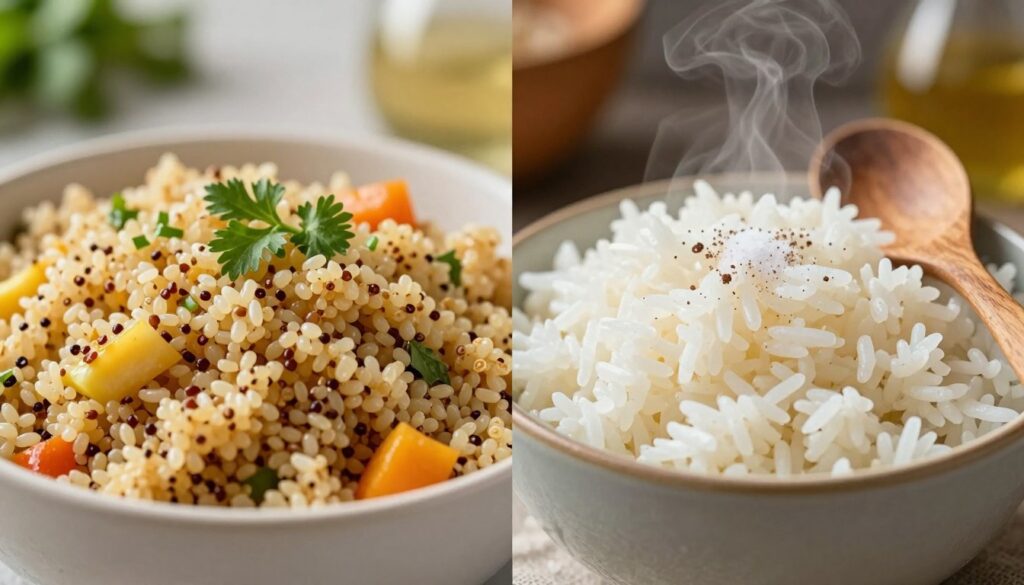
Choosing between quinoa and rice for your meals can be a smart move. Both grains are great for different dishes. But, they have different health benefits.
Caloric Differences Between Quinoa and Rice
One cup of cooked quinoa has 222 calories. White rice has 205 calories, and brown rice has 216 calories. Quinoa has more protein per calorie, making it more nutritious.
Nutritional Benefits of Choosing Quinoa
The debate on quinoa vs rice often focuses on fiber. Quinoa has 5.18 grams of fiber per cup, while brown rice has 3.51 grams. This extra fiber is good for your digestion and blood sugar.
| Nutrient (per cup cooked) | Quinoa | Brown Rice | White Rice |
|---|---|---|---|
| Calories | 222 | 216 | 205 |
| Protein (g) | 8 | 5 | 4.3 |
| Fiber (g) | 5.18 | 3.51 | 0.6 |
| Carbohydrates (g) | 39 | 45 | 44.5 |
Versatility in Meals: Quinoa vs. Rice
Both grains are great for many dishes like poke bowls and protein bowls. Quinoa’s flavor is perfect for Mediterranean and Latin dishes. Rice is better for Asian and Southern dishes. Both are gluten-free, making them safe for those with celiac disease.
Quinoa cooks faster, in just 15 minutes. Brown rice takes 45 minutes to cook.
Quinoa and Athletic Performance
Athletes look for foods that boost their training and aid in recovery. Quinoa is a top choice because it has the right mix of carbs and protein. This ancient seed is essential for athletes to perform at their best.
Role of Quinoa in Sports Nutrition
Quinoa has 8 grams of protein per cooked cup, making it great for athletes. It’s unique because it has all nine essential amino acids. These amino acids help build and repair muscles after hard workouts.
Quinoa’s carbs give athletes steady energy for their training. The brain uses these carbs to stay focused during competitions. B vitamins in quinoa also help turn food into energy.
Quinoa’s Benefits for Endurance Athletes
Runners, cyclists, and swimmers need energy that lasts. Quinoa’s slow release of energy prevents energy crashes. This steady energy helps athletes keep their pace during long workouts.
The answer to is quinoa healthy for endurance sports is yes. Quinoa’s iron helps muscles get oxygen. Magnesium prevents muscle cramps during long activities.
Recovery Benefits After Exercise
What athletes eat after working out affects how fast they recover. Quinoa’s complete protein starts muscle repair right after exercise. Its complex carbs also refill energy stores, getting the body ready for the next workout.
Quinoa and Blood Sugar Regulation
Keeping blood sugar levels in check is key for good health, more so for those with diabetes. Quinoa carbs are a better choice than refined grains, giving steady energy without sudden spikes in blood sugar. This ancient seed is packed with fiber, protein, and minerals that help regulate blood sugar.
Low Glycemic Index of Quinoa
The glycemic index (GI) shows how fast foods raise blood sugar. Quinoa, being gluten-free, has a GI of 53, which is low to medium. It slowly releases glucose, avoiding energy drops. The fiber in quinoa slows digestion, helping glucose absorption over time.
Impact on Blood Sugar Levels for Diabetics
Studies find that adding gluten-free quinoa to meals helps type 2 diabetes patients. Its mix of protein and complex carbs keeps glucose stable all day. Replacing white rice with quinoa can cut blood sugar spikes after meals by up to 20%.
Quinoa in a Diabetic Meal Plan
It’s easy to make balanced meals with quinoa for better blood sugar control. Here are some tips:
| Meal Time | Quinoa Serving | Paired Foods |
|---|---|---|
| Breakfast | 1/2 cup cooked | Berries, nuts, cinnamon |
| Lunch | 3/4 cup cooked | Grilled chicken, vegetables |
| Dinner | 1/2 cup cooked | Salmon, leafy greens |
The Future of Quinoa Consumption
Quinoa has moved from a special health food to a common kitchen item in America. It began as an ancient grain from the Andes and is now a fast-growing food in U.S. stores. This change shows how diets are changing and people are learning about its health benefits.
Trends in Quinoa Usage Across the U.S.
More Americans are buying organic quinoa than ever before. Sales have jumped 35% from 2018 to 2023. Younger people, like millennials and Gen Z, are leading this trend, adding quinoa to their meals every week.
Different parts of the country have different tastes. The West Coast eats the most quinoa, while the Midwest is growing the fastest. Restaurants are also adding more quinoa dishes, tripling their offerings from 2015.
Innovations in Quinoa Products
Food makers are always finding new ways to use organic quinoa. Here are some recent ideas:
- Pre-sprouted quinoa for better nutrient absorption
- Quinoa pasta and noodles
- Ready-to-eat quinoa breakfast cereals
- Quinoa-based protein powders
- Frozen quinoa meal bowls
Predictions for Quinoa in the Health Food Industry
Experts think the quinoa market will keep growing until 2030. They say organic quinoa sales will hit $2.8 billion by 2028.
| Year | Market Value | Growth Rate |
|---|---|---|
| 2024 | $1.6 billion | 8.2% |
| 2026 | $2.1 billion | 9.5% |
| 2028 | $2.8 billion | 10.3% |
Quinoa: A Versatile Superfood
Quinoa’s journey from ancient grain to modern favorite is fascinating. It went from being rare in South America to a staple in kitchens worldwide. Today, it brings many health benefits to people everywhere.
Cultural Significance of Quinoa
The Inca people called quinoa chisaya mama, or “mother of all grains.” They valued it deeply for its ability to feed their communities in the Andes. When the Spanish arrived in the 16th century, they tried to stop its growth. But, the indigenous people kept its seeds alive, ensuring quinoa’s survival.
Quinoa in Modern American Cuisine
In the U.S., quinoa is loved for its many uses. It’s used in:
- Mason jar salads with quinoa, grilled veggies, and feta
- Buddha bowls with quinoa, roasted chickpeas, and tahini
- Quinoa breakfast porridge with almond milk and berries
- Stuffed bell peppers with quinoa and black beans
People who like to meal prep love quinoa. It cooks quickly and stays good in the fridge for up to five days.
Global Trends in Quinoa Consumption
Quinoa farming has grown a lot. In 1980, it was grown in 8 countries. By 2015, that number jumped to 95 countries. This shows more people are learning about quinoa’s health benefits.
| Region | Annual Consumption (2023) | Growth Rate |
|---|---|---|
| North America | 145,000 tons | 12% yearly |
| Europe | 89,000 tons | 18% yearly |
| Asia-Pacific | 67,000 tons | 25% yearly |
Conclusion: Is Quinoa Right for You?
Whether quinoa is healthy for you depends on your diet and taste. Quinoa is nutritious but should be part of a balanced diet. Dr. Maya Vadiveloo says eating various whole grains is best for nutrition. Quinoa is just one of many healthy foods you can choose.
Assessing Nutritional Needs
Your body needs different nutrients based on your age, activity, and health goals. Quinoa has complete protein, fiber, and minerals that support health. It’s great for boosting protein, iron, and magnesium.
For those looking to lose weight, quinoa’s fiber helps you feel full longer. It’s a good choice for weight loss.
Personalized Diet Considerations
Not everyone likes quinoa’s texture. If you don’t like it, try brown rice, buckwheat, or oats. They have similar health benefits.
The most important thing is to eat a variety of fruits, vegetables, whole grains, and plant-based proteins. Avoid sugary drinks and ultra-processed foods. What you eat overall is more important than any single food.
Final Thoughts on Quinoa’s Health Benefits
Quinoa is a great choice for a healthy diet. It’s full of fiber, minerals, antioxidants, and protein. It’s also gluten-free, making it safe for those with gluten issues.
Quinoa is easy to prepare and fits well into busy lives. While it’s often linked to weight loss, its real value is in being part of a varied, nutritious diet. This supports long-term health.