
Did you know that pressing specific spots on your feet could help relieve headaches, improve digestion, and reduce stress? This ancient practice dates back to 2330 B.C. and is now popular in wellness centers across America.
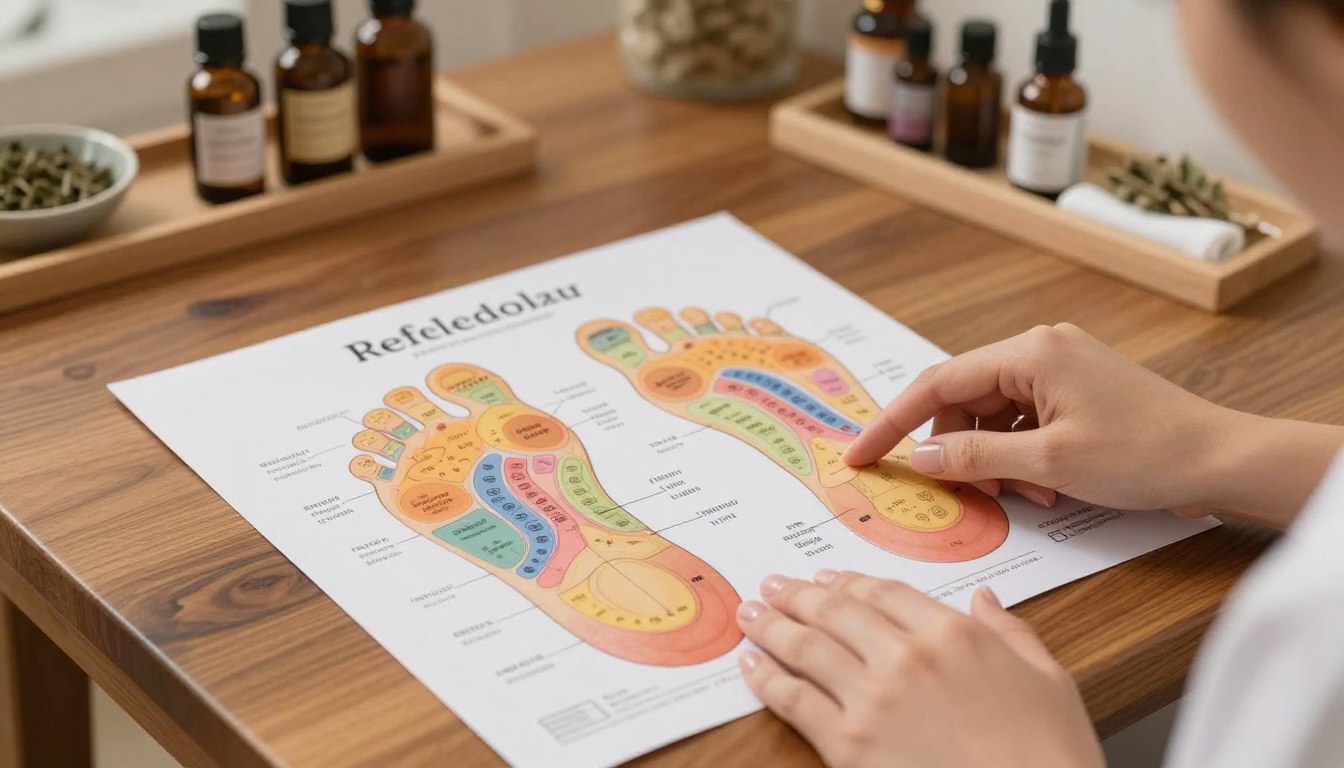
A reflexology on foot chart is like a map for your feet. It shows how different areas of your feet connect to organs and systems in your body. These maps guide practitioners during sessions, helping them target specific points.
According to Brian Goodwin from Éminence Organic Skin Care, reflexology works by using meridian points on the feet. These points connect to various organs. Practitioners apply pressure to these points using specific techniques without oils or lotions. Each session follows the reflexology on foot chart to ensure accurate treatment.
Learning about foot reflexology points can change how you view wellness. Traditional Chinese medicine teaches that energy flows through specific pathways in the body. Applying pressure to certain spots on the feet can help restore balance and promote healing.
Key Takeaways
- Reflexology is an ancient healing practice dating back to 2330 B.C. that uses foot pressure points
- Each area on your feet corresponds to different organs and body systems according to traditional Chinese medicine
- The practice received its current name in the United States in the early 1900s
- Sessions involve thumb, finger, and hand techniques without oils or lotions
- Foot reflexology charts map out specific points that connect to various body organs
- Brian Goodwin from Éminence Organic Skin Care explains that meridian points on feet create pathways to organs
- Regular reflexology sessions may help with stress relief, pain management, and improved circulation
What is Reflexology?
Reflexology is an ancient healing method. It involves applying pressure to specific points on the feet, hands, and ears. These points are linked to different organs and systems in the body. Practitioners use a detailed reflexology foot map to guide their work.
They believe that stimulating these areas can promote healing and restore balance to the body.
Definition and Origins
This holistic foot therapy has roots in ancient Egypt, China, and India. Wall paintings in Egyptian tombs from 2330 BCE show people getting foot and hand treatments. The modern version started in the early 1900s with Dr. William Fitzgerald’s zone therapy in America.
Physiotherapist Eunice Ingham refined this work in the 1930s. She created the first detailed reflexology foot map that practitioners use today.
Benefits of Reflexology
Regular sessions bring many health benefits. People often feel more relaxed and experience less pain after a treatment. The practice may help with:
- Reducing stress and anxiety levels
- Improving blood circulation
- Supporting better sleep patterns
- Easing headaches and migraines
- Boosting immune system function
Common Practices
During a typical session, practitioners look for tender spots on the feet. These spots may indicate imbalances. They apply gentle to moderate pressure using specific thumb and finger techniques.
Sessions usually last 30 to 60 minutes. Many wellness centers now offer reflexology alongside other treatments like massage and acupuncture.
Understanding the Foot Reflexology Chart
A pressure point foot chart is like a map for your feet. It shows how different parts of your feet relate to your body. Each foot has many reflex points that match specific organs and body parts. Knowing this map helps you focus on wellness practices that can improve your health.
Key Zones on the Foot
The foot pressure points diagram breaks down each foot into zones that match your body’s layout. The soles of your feet have most of the reflex points. These points are linked to your head, brain, and sinuses at the toes.
As you move toward the heel, you’ll find points for your liver, kidneys, and intestines. The medial side (inside edge) of your foot is connected to your spine, bladder, and reproductive system. The lateral side (outside edge) is linked to your joints, hips, and pelvis. This layout helps find specific reflex points during a session.
How to Read the Chart
Understanding a pressure point foot chart is key. Your right foot is for the right side of your body, and your left foot is for the left. The toes are for your head and neck, the ball of the foot is for your chest, and the arch is for your digestive organs. The heel is for your lower back and pelvic area.
Importance of Accurate Mapping
Accurate mapping on a foot pressure points diagram is vital. It ensures that practitioners hit the right spots during treatment. Knowing these zones helps get the most out of each session. Many places, like Sacred Waves, offer detailed charts to help everyone understand the treatment better.
Health Benefits of Foot Reflexology
Foot reflexology offers significant health benefits by stimulating specific pressure points. Studies from recent years confirm what experts have known for years. It does more than just relax you; it affects your body’s systems through special foot massage techniques.
Stress Relief and Relaxation
A 2022 review showed reflexology lowers stress by improving blood flow. It naturally reduces anxiety and blood pressure with gentle pressure. Regular sessions help manage daily stress.
It works by activating the parasympathetic nervous system. This makes your body relax and reduces stress. Many feel more peaceful after just one session.
Pain Management
Studies show reflexology reduces pain in many conditions. A 2020 study found it helped patients after kidney transplant surgery. It’s also good for headaches, back pain, joint issues, and cancer side effects.
It’s also great for eye strain from screens. The massage relaxes facial and neck muscles. It’s a natural way to manage pain without drugs.
Enhanced Circulation
Reflexology boosts blood circulation, which is key to its benefits. Better circulation means cells get more oxygen and nutrients. This supports healing, increases energy, and improves overall health.
Techniques Used in Reflexology
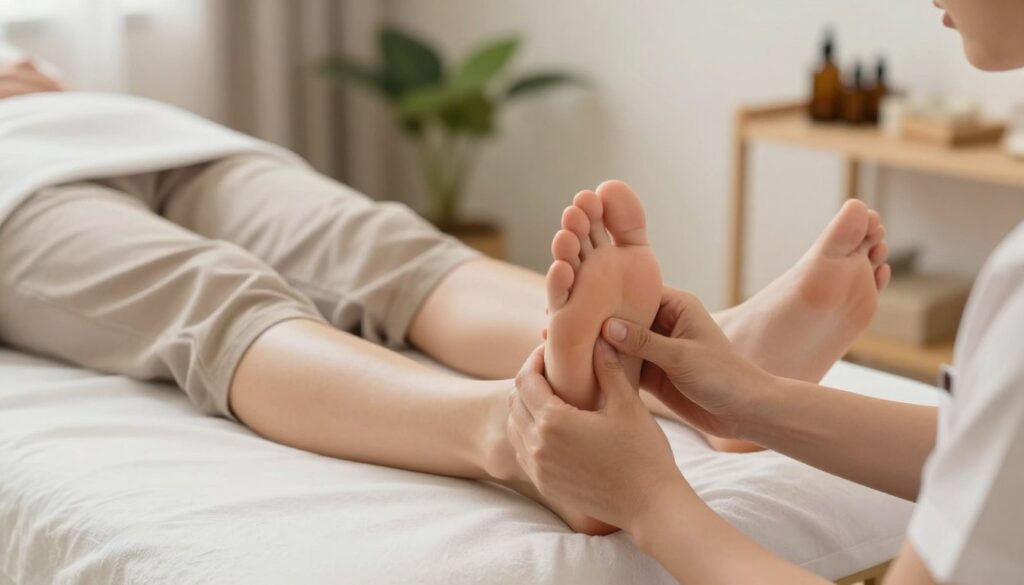
Reflexology uses special techniques to apply pressure to foot reflexology points. It’s different from regular massage, which uses broad strokes and oils. Reflexology focuses on precise pressure on specific areas of the feet.
Finger and Thumb Walking
The main technique in reflexology is using the thumb or finger to “walk” across reflexology zones. Practitioners bend their thumb at the first joint and apply steady pressure. They move forward in small, caterpillar-like movements.
This method allows for precise work on foot reflexology points without discomfort. The pressure stays consistent as the practitioner moves across each zone. This ensures all reflex areas are covered.
Hook and Back-up Technique
This method targets deeper foot reflexology points that need extra attention. The practitioner places their thumb on a specific point, hooks into the tissue, and pulls back slightly. It’s great for accessing reflexology zones that correspond to internal organs.
The controlled pressure helps release tension in stubborn areas. It keeps the client comfortable throughout the treatment.
Rotating and Pressing
Rotating techniques involve applying pressure to a single point while making small circular movements. Practitioners use their thumbs or fingers to press into foot reflexology points, then rotate clockwise or counterclockwise. This method helps break up deposits and stimulate energy flow through reflexology zones.
The pressure varies based on individual sensitivity. It always stays within comfortable limits while remaining effective.
Preparing for a Reflexology Session
Getting ready for your first holistic foot therapy session is important. It’s all about creating the right atmosphere for healing. Knowing what to expect and how to prepare will make your reflexology foot map treatment better.
Choosing the Right Environment
The setting for your reflexology session is key to your comfort. Look for a clean, quiet space with soft lighting and a comfy temperature. Wellness centers, spas, or private offices are often used for this.
The room should be peaceful and private. This lets you relax fully without distractions. Some therapists use calming music or nature sounds to make the atmosphere even more relaxing.
Necessary Tools and Equipment
Professional reflexologists use specific tools for the reflexology foot map. They have:
- A comfortable reclining chair or massage table
- Clean towels and sanitizing products
- Reflexology sticks or thumb savers for precise pressure
- Natural lotions or oils for smooth movements
- Foot charts for reference during treatment
Finding a Qualified Practitioner
Choosing the right therapist is important for safe and effective holistic foot therapy. Look for professionals certified by organizations like The American Reflexology Certification Board. Many have backgrounds in massage therapy, naturopathy, or physical therapy.
Ask about their training, experience, and treatment approach. A good reflexologist listens to your concerns and explains the process before starting.
Foot Reflexology Points and Their Correspondences
The feet have many reflex points that connect to different parts of your body. A pressure point foot chart shows where to press for certain effects. Each foot area links to specific body parts, forming a network for healing.
Organ and System Connections
Your feet are like a mini map of your body. The toes connect to your head and neck, including the pituitary gland and sinuses. The ball of your foot is linked to your chest, covering the lungs, thyroid, and bronchi.
The arch of your foot relates to your digestive system, like the stomach and pancreas. The heel area is connected to your lower body systems, including the bladder and reproductive organs.
Common Reflex Points
A foot pressure points diagram shows key areas for reflexology. The solar plexus point in the foot’s center helps lower stress and anxiety. The diaphragm line, just below the ball, aids in breathing and relaxation.
Points for the spine are along the inner edge of each foot.
| Reflex Point Location | Corresponding Body Part | Common Benefits |
|---|---|---|
| Big Toe Tip | Pituitary Gland | Hormone balance |
| Toe Base | Neck and Throat | Tension relief |
| Ball of Foot | Lungs and Heart | Better breathing |
| Arch Center | Stomach | Digestive support |
| Heel | Lower Back | Pain reduction |
How Points Impact Overall Health
Stimulating specific points on a pressure point foot chart can help balance your body. Tenderness in certain areas often signals tension or congestion in the corresponding organs. Practitioners apply targeted pressure to these points, encouraging your body to return to its natural state of equilibrium.
This process supports your body’s own healing mechanisms without treating specific medical conditions.
Safety Considerations in Reflexology
A reflexology on foot chart is a great tool for practitioners. But, knowing safety guidelines is key for a good experience. It’s important to know when reflexology might not be right and what precautions to take for the best results.
Risks and Contraindications
Some health conditions need extra care before getting reflexology. Women in their first trimester of pregnancy should avoid it. This is because of the risk of stimulating certain pressure points.
Also, people with fever, infectious diseases, or acute digestive issues like vomiting or diarrhea should wait until they get better.
Foot conditions that make reflexology unsuitable include:
- Active gout flare-ups
- Skin infections or inflammation on the feet
- Open wounds or non-healing diabetic ulcers
- Recent blood clot history
- Severe peripheral neuropathy
Consulting a Healthcare Provider
If you have chronic conditions, talk to your doctor before trying reflexology. This is very important for those with diabetes, heart disease, or circulatory problems. Your doctor can check if reflexology is safe for you.
Aftercare Recommendations
After reflexology, some people might feel a bit tired, emotional, or lightheaded. Drinking lots of water helps get rid of toxins. Resting allows your body to fully benefit from the session. Most reactions go away within 24 hours as your body heals.
DIY Reflexology Techniques for Home
Learning basic foot massage techniques at home lets you enjoy reflexology without a professional. It takes patience and practice, but it’s easy to learn. Start with clean, dry feet and sit comfortably so you can reach both feet.
Understanding Self-Application
Self-application means using your fingers and thumbs to press on reflexology zones on your feet. Start with light pressure and get firmer as you get used to it. Each point on your feet connects to different parts of your body, so where you press is key. Use a reflexology chart to help find these points.
Tools for Home Use
Several tools can make your home practice better:
- Reflexology sticks made from wood or plastic help reach hard-to-get areas
- Foot rollers give even pressure across many zones
- Tennis balls are great for rolling under the arch
- Thumb savers help prevent hand fatigue during long sessions
Suggested Techniques and Tips
Effective techniques include thumb walking, where you move your thumb across reflex points in small, caterpillar-like steps. Press each point for 10-15 seconds before moving to the next. Work on one foot at a time before switching. Pay extra attention to spots that feel tender, as they often need extra care. Practice these methods three times a week for the best results.
The Science Behind Reflexology
Research into holistic foot therapy shows interesting links between old practices and today’s wellness. For thousands of years, traditional Chinese medicine has valued foot reflexology. Now, studies explore how it affects our bodies.
Studies and Research Findings
Recent studies have looked at reflexology’s effects on health. A 2020 study found kidney transplant patients slept better and felt less pain after regular sessions. Other research shows benefits for those with low back pain, migraines, and diabetes-related nerve damage.
Physiological Effects on the Body
Applying pressure to foot reflexology points makes the body release endorphins. These natural chemicals help reduce pain and promote calm. This can lower stress, which is linked to many illnesses. Studies also show it can improve circulation, reduce muscle tension, and aid in healing.
Testimonials and Anecdotal Evidence
Many people share stories of how reflexology has changed their lives. Those with asthma, multiple sclerosis, and chronic constipation have found relief. While experiences differ, these stories back what practitioners have seen for years. They show that working with foot reflexology points can improve overall health.
Integrating Reflexology into Your Wellness Routine
Adding reflexology to your daily routine can change your life. Many find using a reflexology foot map is key to self-care. It’s about finding the right mix of sessions and other wellness activities.
Frequency and Duration of Sessions
Start with weekly sessions for a month, then adjust as needed. Each session is 30 to 60 minutes. A pressure point foot chart helps track your progress.
Regular practice yields the best results – whether you see a pro or do it yourself. Pay attention to how your body feels and adjust your schedule.
Complementing Other Treatments
Reflexology pairs well with many healing methods. The pressure point foot chart helps target areas for:
- Massage therapy for muscle tension relief
- Acupuncture for energy balancing
- Physical therapy for mobility improvement
- Chiropractic care for alignment issues
Creating a Balanced Health Plan
Combine reflexology with a healthy lifestyle for best results. Start with five minutes of foot reflexology each morning. Use your reflexology foot map as a guide. Add healthy eating, exercise, and enough sleep for a balanced life.
Different Types of Reflexology
Reflexology has grown into many forms over time. Each one has its own way of using pressure points to heal. They all work with reflexology zones to help people feel better, but they do it in different ways. Knowing about these differences can help you pick the best one for you.
Traditional vs. Modern Approaches
Traditional reflexology comes from ancient China and Egypt. It focuses on energy flow and spiritual balance. Practitioners think blocked energy leads to sickness, and they use pressure to clear these blocks.
Modern reflexology looks at the body in a more scientific way. It maps out specific zones for organs and systems. Today, many use both old and new ideas, like a foot pressure points diagram and energy concepts together.
Zone Therapy
Dr. William Fitzgerald started zone therapy in the early 1900s. He divided the body into ten zones from head to toe. Each zone has specific fingers and toes, and pressing them can affect organs in that zone.
Practitioners use charts to show how these zones connect. This helps them know which points to press.
Hand and Ear Reflexology
Hand reflexology is great for self-care, with points similar to those in the feet. The hands have smaller zones but are easier to work on every day. Auriculotherapy, or ear reflexology, targets over 200 points on each ear.
French neurologist Paul Nogier found these connections in the 1950s. He showed how ear points can affect the nervous system, immune function, and stress. Both hand and ear reflexology can add to traditional foot reflexology for better health.
Common Misconceptions About Reflexology
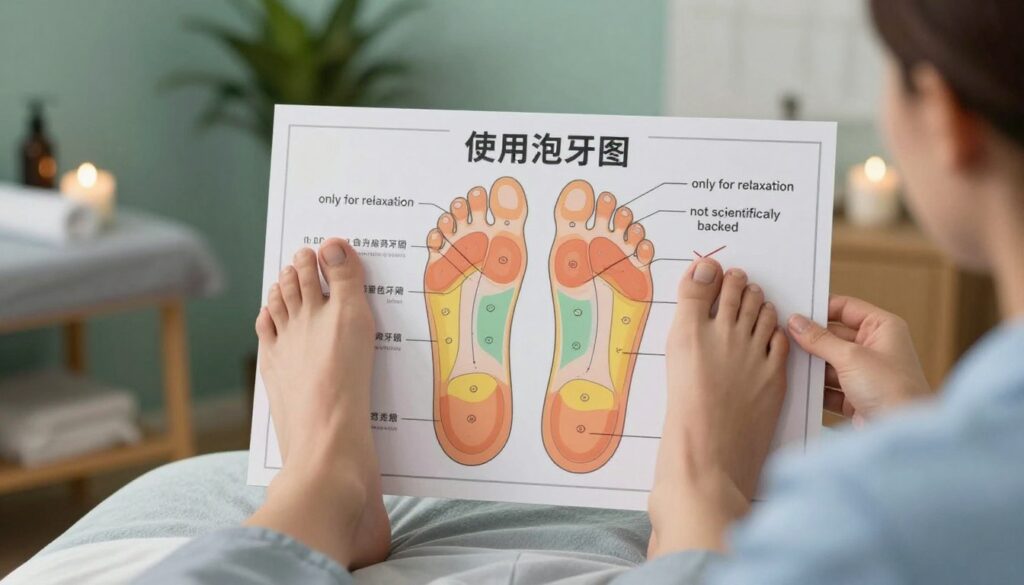
Many people have wrong ideas about reflexology. Knowing what it can and can’t do is key. Let’s clear up the myths and see what reflexology really offers.
Debunking Myths
One big myth is that reflexologists can find diseases by looking at your feet. This is not true. They aim to relax you and help your body heal naturally. They don’t take the place of doctors or medical tests.
Some think reflexology is just a foot massage. But, reflexologists use a special chart to press certain points on your feet. These points are linked to different parts of your body. A regular massage, on the other hand, is more about relaxing muscles.
Understanding the Limitations
Reflexology can help with stress and improve blood flow. But, it’s not a fix for every health problem. There’s no scientific proof it can cure specific diseases. While it has been used for centuries, the benefits are mostly based on personal stories, not scientific studies.
Good reflexologists know their place in helping your health. They work with doctors, not against them. They’ll tell you to keep up with your medical check-ups and listen to your doctor’s advice.
Educational Resources
Groups like The Association of Reflexologists provide accurate info on reflexology. They explain how it fits into your health routine. Learning from trusted sources helps you make smart choices about reflexology.
Frequently Asked Questions (FAQs)
Many people wonder about reflexology before trying it for the first time. It’s a natural wellness approach that’s becoming more popular in the United States. Knowing what happens in a session and who can get it helps you choose the best for your health.
What to Expect in a Session?
A reflexology session is a relaxing experience. Your practitioner will use firm pressure on specific points on your feet. This pressure should be strong but not painful.
You might feel warmth or tingling in your body. Some people feel tension melt away. Afterward, most feel refreshed and balanced, with relief from health concerns.
How Long Does a Session Last?
Reflexology sessions usually last 30 to 60 minutes. First-timers might need longer for a full assessment. Some places, like Canyon Ranch in Arizona, offer 30-minute sessions.
Others, like the Pacific Institute of Reflexology, provide 90-minute treatments. The length depends on your needs and the areas being treated.
Is Reflexology Safe for Everyone?
Reflexology is safe for most, but not everyone. Those with gout, blood clots, or circulation issues should avoid it. People with open wounds, fractures, or severe skin conditions should wait until they heal.
Pregnant women should talk to their doctor before trying it, specially in the first three months. The American Reflexology Certification Board suggests talking to your doctor and reflexologist before starting.