
Did you know that eating just one cup of this tropical fruit delivers less than 100 calories? It’s packed with nutrients. The mango nutritional value is impressive, balancing sweetness with health benefits.
Mangifera indica, known as mango, is called the “king of fruits” in India and Southeast Asia. It’s been grown for over 4,000 years, with hundreds of varieties. Each variety has its own taste, shape, and size, making mango calories an exciting topic.
A typical serving of mango has amazing nutritional benefits with few calories. One cup of fresh mango weighs 165 grams and has 99 calories. A whole mango, weighing 336 grams, has about 202 calories. Even a 3/4 cup portion has only 70 calories, with no fat, sodium, or cholesterol.
The kcal mango content varies slightly by variety. But all types have a great nutritional profile. This tropical fruit is sweet without the guilt, making it great for those watching their diet.
Key Takeaways
- One cup of fresh mango contains only 99 calories with zero fat and cholesterol
- A whole mango provides approximately 202 calories while delivering essential nutrients
- Mango has been cultivated for over 4,000 years with hundreds of varieties available today
- This stone fruit originates from India and Southeast Asia where it’s called the “king of fruits”
- A 3/4 cup serving offers just 70 calories, making it an ideal low-calorie snack option
- Different mango varieties maintain similar caloric values while providing unique flavors and textures
What Are the Nutritional Values of Mango?
Fresh mangoes are packed with essential nutrients in every juicy bite. They offer vital vitamins, minerals, and fiber while keeping calories low. This makes mangoes a great addition to your diet.
Overview of Mango’s Macronutrients
One cup of sliced fresh mango (165 grams) has about 99 calories. This makes it a good choice for those watching their health. It has 24.8 grams of carbohydrates, with natural sugars adding sweetness.
You’ll find 1.4 grams of protein and just 0.6 grams of fat in each serving. The 2.6 grams of dietary fiber help with digestion and keep blood sugar steady.
Key Vitamins and Minerals in Mango
Mangoes are rich in vitamin C, with one cup giving you 67% of your daily value. This vitamin is great for your immune system and skin. Mangoes also have 18% of your daily folate needs, which is important for cell growth and DNA.
They offer 10% of your daily vitamin A, which is good for your eyes and immune system. Copper is the top mineral in mangoes, making up 20% of your daily value. It helps with bone health and making red blood cells.
Comparing Mango with Other Fruits
Mangoes have fewer calories than many fruits. Fresh mangoes have less than 100 calories per cup. Dried mango, on the other hand, has 510 calories in the same amount.
Mangoes have more vitamin C than apples or bananas. They match oranges in boosting your immune system. Their natural sweetness is satisfying without the calories found in grapes or cherries.
How Many Kcal Are in a Mango?
Knowing how many calories are in a mango helps you make better food choices. This sweet fruit is packed with nutrients but not too many calories. The number of calories depends on the mango variety and how much you eat.
Kcal Content in Different Mango Varieties
Fresh mangoes have fewer calories than you might think, given their delicious taste. A cup of fresh mango pieces (165 grams) has only 99 calories. The Ataulfo variety has similar calories, while bigger Kent mangoes might have a bit more because of their size.
Dried mango, on the other hand, is a different story. One cup of dried mango pieces has 510 calories—five times more than fresh. The drying process makes the natural sugars and carbs more concentrated. Fresh mango is the better choice if you’re watching your calories.
Portion Sizes and Their Caloric Impact
Controlling how much mango you eat is key. A three-quarter cup serving has just 70 calories. One whole medium mango (336 grams) has about 202 calories. These sizes add sweetness without breaking your calorie budget.
| Portion Size | Weight | Calories |
|---|---|---|
| 3/4 cup sliced | 124 grams | 70 |
| 1 cup pieces | 165 grams | 99 |
| Whole medium mango | 336 grams | 202 |
Starting your day with fresh mango can help you eat fewer calories. Its low calorie density means you get full without eating too much.
The Health Benefits of Eating Mango
Mangoes are more than just a tasty tropical fruit. They are packed with nutrients that can boost your health. With their mango dietary information profile, these golden fruits offer many benefits. They support your immune system and improve digestion, making healthy eating delicious.
Boosting Immunity with Mango
One cup of mango gives you almost 67% of your daily vitamin C. This vitamin is key for fighting infections. It works with vitamin A to strengthen your body’s defenses.
Mangoes also have minerals like copper and folate, and B vitamins for cell health. Your skin benefits from vitamin C, helping protect against harmful pathogens.
Mango’s Role in Digestive Health
Mangoes have digestive enzymes called amylases that break down carbs. This natural aid, along with water and fiber, helps your gut. A study showed mangoes are better at relieving constipation than fiber supplements.
| Digestive Benefit | Active Component | Effect |
|---|---|---|
| Enzyme Activity | Amylases | Breaks down starches |
| Regularity | Dietary Fiber | Prevents constipation |
| Hydration | Water Content | Softens stool |
Mango’s Impact on Weight Management
Managing weight doesn’t mean giving up delicious fruits. Mangoes are a sweet choice for those watching their calories. They have a lot of nutritional value and are naturally sweet. This makes them great for satisfying cravings while helping with weight goals. Knowing how many calories are in a mango helps with making better food choices.
Low-Calorie Snacks: How Mango Fits In
Fresh mango is a great low-calorie snack. One cup of sliced mango has less than 100 calories. It’s perfect for those watching their weight. The fruit’s high fiber content helps control hunger.
Mangoes digest slowly, keeping you full between meals. This is different from processed snacks that can cause energy crashes.
The natural sugars in mango give quick energy without guilt. Studies show eating fresh fruit at the start of meals can prevent overeating. This is because the fiber fills you up before you eat more.
Incorporating Mango into a Balanced Diet
Adding mango to your daily routine supports the 2020-2025 Dietary Guidelines for Americans. These guidelines suggest 1.5 to 2.5 cups of fruit a day for adults. Eating about 2 cups (330 grams) of mango a day balances its health benefits with sugar intake.
| Serving Size | Calories | Fiber (g) | Sugar (g) |
|---|---|---|---|
| 1 cup sliced | 99 | 2.6 | 22.5 |
| Half mango | 67 | 1.8 | 15.2 |
| 2 cups (daily limit) | 198 | 5.2 | 45 |
Delicious Ways to Enjoy Mango
Make your meals sweeter with fresh mango. It adds natural sweetness and keeps calories low. Mangoes add flavor and nutrients to any dish, from breakfast to dinner.
Fresh Mango Recipes and Ideas
Begin your day with mango in Greek yogurt or oatmeal. Its sugars and carbs give you energy without added sugars. For lunch, add mango to quinoa salads with bell peppers and cilantro.
Savory dishes also benefit from mango’s sweetness. Mix diced mango with red onion, jalapeño, and lime for a quick salsa. It’s great with grilled salmon, adding omega-3 fats. Mango salsa on fish tacos makes your meal taste like a restaurant’s.
Grilling enhances mango’s sweet flavors. Brush thick slices with olive oil and grill for 2-3 minutes each side. Serve with burgers or seafood for a sweet contrast.
Smoothies and Juices Featuring Mango
Blend frozen mango with coconut milk and spinach for a smoothie. It’s packed with vitamins A and C. Add protein powder for a post-workout drink.
- Mango-pineapple juice with fresh ginger
- Green smoothie with mango, kale, and banana
- Mango lassi with yogurt and cardamom
- Tropical blend with mango, passion fruit, and orange
Understanding the Glycemic Index of Mango
The glycemic index (GI) shows how fast foods raise blood sugar. Mangoes have a GI of about 51, causing a moderate increase in blood glucose. Knowing how mango affects your body helps you make better food choices while enjoying its taste and health benefits.
How Mango Affects Blood Sugar Levels
Fresh mango has about 22 grams of natural sugar per cup. This mango dietary information highlights the need for portion control to manage blood sugar. The fruit’s sugars, like fructose and glucose, enter your blood at different speeds.
A typical 165-gram serving has about 99 kcal mango energy. Mangoes also have vitamin C and carotenoids, which help protect against diabetes. A 2020 study found these nutrients support metabolic health when eaten regularly.
To avoid blood sugar spikes, eat mango with protein like Greek yogurt or nuts. The fiber and protein slow down sugar absorption, making the mango calorie content more effective for energy.
Comparing Glycemic Response with Other Fruits
Mangoes are in the middle when compared to other fruits. Here’s a comparison:
| Fruit | Glycemic Index | Calories per Cup | Sugar Content (g) |
|---|---|---|---|
| Mango | 51 | 99 | 22 |
| Apple | 36 | 57 | 11 |
| Banana | 62 | 134 | 18 |
| Watermelon | 72 | 46 | 9 |
| Orange | 43 | 62 | 12 |
Watermelon raises blood sugar faster than mango, despite having less sugar. Apples and oranges cause slower increases in glucose. The kcal mango content is balanced, making it a good choice for many diets.
Mango in Different Cuisines
Mango has been around for 4,000 years, starting in India and Southeast Asia. It has traveled the world and is now loved everywhere. This fruit is sweet and packed with mango nutritional value, making it great for many dishes. Each culture has its own way of using mango, keeping its natural goodness.
Traditional Dishes Featuring Mango
In India, aam panna is a cool summer drink made with raw mango. It’s tangy and refreshing. In Thailand, sticky rice with mango is a sweet treat, with about 240 mango calories per serving.
Mexican street vendors mix mango with chili powder and lime for a zesty snack. In the Philippines, bagoong with green mango is a bold flavor dish. It combines salty shrimp paste with tart fruit.
International Mango Uses and Recipes
Modern cooking loves mango in new ways. Red snapper tacos with mango salsa add tropical taste. Grilled mango is a sweet side dish at American barbecues, with about 60 calories per half cup.
Quinoa salads get a boost from mango’s sweetness without too many calories. Salmon with mango makes a meal full of omega-3s. Bakers add fresh mango to muffins and cakes, and smoothie bars use it in drinks. Knowing how many calories in a mango helps us use it in healthy meals.
The Best Time to Eat Mango
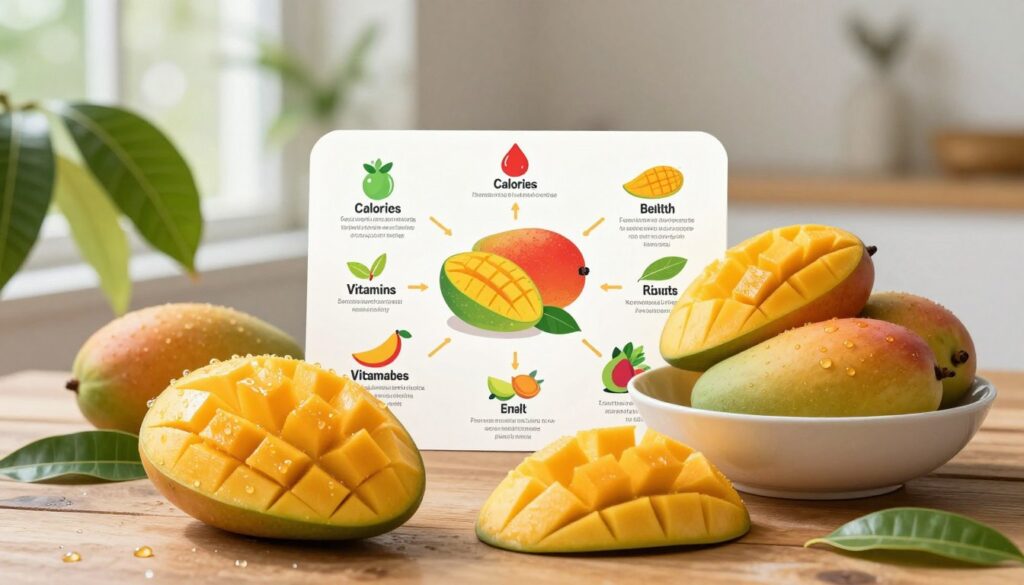
Finding the perfect moment to enjoy mangoes can make them taste better and be more nutritious. Even though you can buy them all year, knowing when they’re in season and ripe is key. This way, you get the most health benefits from every bite.
Seasonal Availability of Mango
Fresh mango nutrition is best during certain times of the year, even if stores sell them all year. The US gets mangoes from Mexico, Peru, Ecuador, Brazil, Guatemala, and Haiti. Each country has its own harvest season, so mangoes are always available.
In the Northern Hemisphere, mango season is from March to July. This is when you’ll find the best mangoes and prices. Mexican mangoes are in spring, and those from the Caribbean and South America come in summer. Frozen mangoes are a good option when fresh ones aren’t available.
Ripe vs. Unripe Mango: Nutritional Differences
The ripeness of your mango greatly affects its nutrition. Ripe mangoes have the most vitamin C, giving you 67% of your daily value per cup. They also have natural sugars, making them sweet, but only 99 calories per cup.
Green mangoes have more pectin and vitamin C but less vitamin A than ripe ones. In many Asian dishes, unripe mangoes are used for their tart taste. Fresh mangoes are nutritious at any stage, but dried mangoes have 510 calories per cup—five times more than fresh. Opt for fresh mangoes to enjoy their health benefits without too much sugar.
Organic vs. Conventional Mango
When you’re at the grocery store, you might think about whether organic mangoes are worth the extra money. Both organic and conventional mangoes have the same mango dietary information and nutrients. The main difference is in how they’re grown and the chemicals used.
Knowing these differences helps you choose based on what matters most to you and your budget.
Benefits of Organic Mango
Organic mangoes are grown without harmful chemicals. Farmers use natural ways to keep pests away and feed the soil. The mango calorie content is the same for both organic and conventional mangoes, with about 60 calories per 100 grams.
Organic farming is better for the soil and helps keep our environment clean. It also supports a variety of plants and animals.
Addressing Pesticide Concerns
Conventional mangoes might have pesticide residue on their skin. But, the Environmental Working Group says mangoes have lower pesticide levels than many other fruits. Rinsing mangoes well under water can remove most of these chemicals.
It’s important to peel mangoes before eating them. The skin can cause allergic reactions, similar to poison ivy.
| Growing Method | Pesticide Use | Average Price per Pound | Mango Carbs per 100g |
|---|---|---|---|
| Organic | Natural only | $2.50-3.50 | 15g |
| Conventional | Synthetic allowed | $1.50-2.50 | 15g |
Some people get itchy hands when touching mango skin. Wearing gloves can prevent this. The mango carbs and nutrients are the same, whether they’re organic or conventional. So, both are good choices for your diet.
Sustainable Mango Farming Practices
The sweet taste and impressive mango nutritional value we enjoy today depend on farming methods that protect both people and planet. Mango farming has a long history, dating back 4,000 years in India and Southeast Asia. It has evolved to meet global demand while facing new environmental challenges.
Each serving of mango delivers 67% of daily vitamin C needs and 20% of copper requirements. This makes sustainable production vital for future nutrition security.
Importance of Ethical Sourcing
Ethical mango farming directly impacts the kcal mango content and overall quality consumers receive. Fair trade practices ensure farmers receive living wages. They also maintain soil health through crop rotation and organic composting.
Countries like Mexico, Peru, and Haiti have adopted certification programs. These programs guarantee workers’ rights and safe growing conditions. These practices preserve the fruit’s natural mango calories and nutrient density without harmful chemicals.
Environmental Impact of Mango Production
Water management is the biggest environmental concern in mango cultivation. A single tree requires 700-1,200 liters of water weekly during fruiting season. Progressive farms in India and Thailand now use drip irrigation systems.
These systems reduce water usage by 40% while maintaining the same mango nutritional value. Transportation creates another challenge, as mangoes travel thousands of miles from tropical regions to reach American tables. Local greenhouse initiatives in Florida and California aim to reduce carbon footprints.
Storage Tips for Mango
Proper storage keeps your mangoes fresh. It helps them stay sweet and full of nutrients. A well-stored mango keeps its vitamins and minerals, giving you all the health benefits.
How to Ripen Mango Properly
Put unripe mangoes in a brown paper bag at room temperature. The ethylene gas they make helps them ripen faster. Adding an apple or banana to the bag speeds up the process.
Check if the mango is ripe by gently pressing near the stem. A ripe mango will feel slightly soft.
Keep mangoes away from direct sunlight while they ripen. The best temperature is between 70-75°F. Once ripe, they will smell fruity and may show yellow or red colors.
Best Ways to Store Fresh Mango
Ripe mangoes can last up to five days in the fridge. Cut mangoes should be in an airtight container and eaten within three days. This way, you keep the fruit’s vitamin C, vitamin A, and fiber.
- Freeze mango chunks for up to six months
- Store cut pieces in glass containers to prevent odor absorption
- Keep whole ripe mangoes in the crisper drawer
- Wrap cut halves tightly in plastic wrap
Frozen mangoes are perfect for smoothies and keep their nutrients. Remember, proper storage keeps the calories in a mango around 99 per cup.
Potential Allergies and Risks
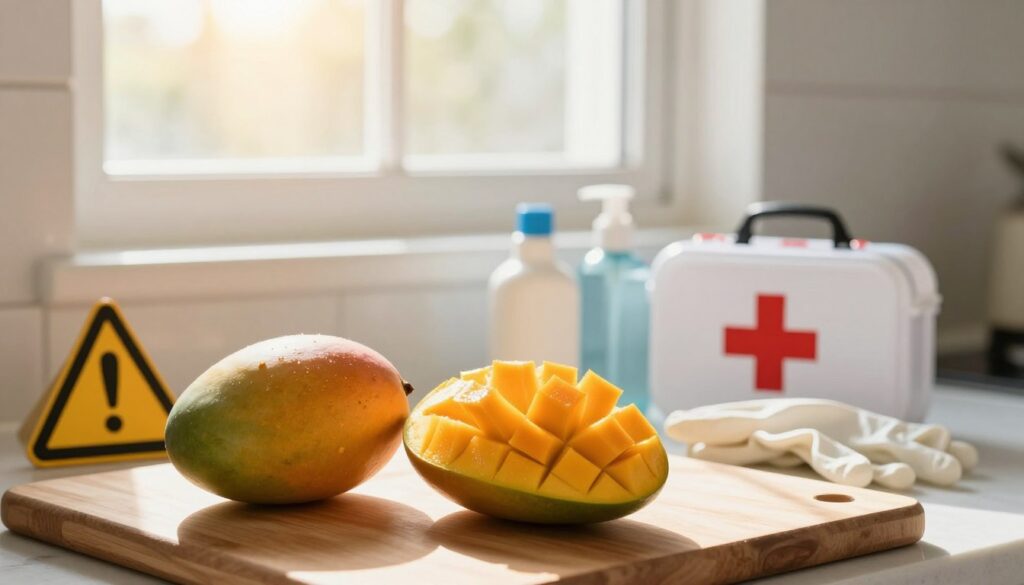
Mangoes are packed with good stuff like tropical fruit calories and nutrients. But, some folks need to be careful when eating them. Knowing the risks lets you enjoy mangoes safely and get the most from their calories.
Common Allergies Related to Mango
Mango skin has urushiol, like poison ivy and oak. This can cause allergic reactions in some people. Symptoms include itchy hands, redness, and swelling around the mouth and fingers after touching or eating mangoes.
Those allergic to cashews or pistachios might also react to mangoes. These foods come from related plants. The allergic reaction can happen within minutes to hours after contact.
Safety Precautions for Consumption
To avoid allergies, always wash and peel mangoes before eating. Wearing gloves while peeling helps protect your skin from urushiol. Make sure to remove the skin completely before eating the fruit.
People with kidney disease should watch their mango intake. One cup of mango has about 6% of daily potassium needs. If you’re on a low-potassium diet, talk to your doctor about how much to eat.
Because mangoes have 22.6 grams of natural sugar per cup, eating no more than two cups (330 grams) a day is wise. This way, you can enjoy their tropical fruit calories without too much sugar.
Fun Facts About Mango
Mangoes have amazing stories and surprising facts. They are more than just a sweet fruit. This tropical fruit has been a big deal in cultures around the world for thousands of years.
Cultural Significance of Mango
In India and Pakistan, mangoes are called the “King of Fruits”. They have a special place in Asian culture. Mangoes first grew in India and Southeast Asia over 4,000 years ago.
Ancient Sanskrit texts mention mangoes. Even Buddha meditated in mango groves. Today, India makes almost half of the world’s mangoes. They celebrate mangoes with festivals and ceremonies.
In Hindu culture, mango leaves decorate doors at weddings and religious events. The paisley pattern in textiles comes from the mango’s shape.
Fascinating Trivia About This Fruit
Mangoes are related to cashews and pistachios. They are a type of stone fruit. Each mango has a big seed that can grow into a tree that bears fruit in six years.
There are over 500 mango varieties worldwide. Each one has its own taste, color, and texture. But they all have fewer than 100 calories per serving.
Scientists call mangoes a superfruit. They are packed with nutrients. Mangoes have over a dozen types of polyphenols. These compounds help protect cells from harm.
Conclusion: Embrace Mango for Health and Flavor
Mangoes are a superfood, packed with nutrients. They have only 99 calories per cup. This tropical fruit is rich in vitamins and minerals.
One cup of mango gives you 67% of your daily vitamin C. You also get 20% of copper and 18% of folate. Plus, you get vitamins A, E, and B6 without any fat, sodium, or cholesterol.
Recap of Nutritional Benefits
Mangoes do more than just fill you up. They boost your immune system with vitamin C. The soluble fiber in mangoes helps lower cholesterol.
Potassium in mangoes helps control blood pressure. Mangoes also contain mangiferin, a strong antioxidant that fights cancer cells. Magnesium and potassium support heart health, and the fiber helps with digestion.
Knowing how many calories in a mango helps you eat well. It lets you enjoy these benefits without overeating.
Encouragement to Include Mango in Your Diet
It’s easy to add mango to your meals. Blend frozen mango into your smoothie for sweetness. Dice fresh mango into salsas for fish or chicken.
Stir mango pieces into Greek yogurt or oatmeal. Mango’s sweet taste is perfect for dessert. It’s full of nutrients that support your health.
Try different mango varieties like Ataulfo, Kent, or Tommy Atkins. Each one brings flavor and nutrition to your meals.