

Why does your period seem late even though the pregnancy test shows negative? This puzzling situation affects millions of women each year. It can trigger a whirlwind of emotions and questions.
A missed period with negative pregnancy test results creates confusion. Many women try to understand what their body is telling them. The connection between menstrual cycles and pregnancy tests isn’t always straightforward.
Your body operates on complex rhythms that can shift for various reasons beyond pregnancy. This includes stress levels, weight changes, and timing issues.
Home pregnancy tests have been available in pharmacies for over 40 years. Yet, a late period and negative HPT can leave you searching for explanations. Advanced testing technology today doesn’t always provide clear answers.
The human menstrual cycle is one of the body’s most complex processes. When your period doesn’t arrive on schedule but pregnancy tests keep showing negative results, multiple factors could be at play. Understanding these factors helps you make sense of what’s happening and decide your next steps.
Key Takeaways
- A late period with negative pregnancy test doesn’t always mean you’re pregnant
- Testing too early can produce false negative results even if conception occurred
- Stress and weight fluctuations significantly impact menstrual cycle timing
- Home pregnancy tests detect hormone levels that vary between individuals
- Medical conditions like PCOS can cause irregular periods and confusing test results
- Waiting at least one week after a missed period improves test accuracy
Understanding Your Menstrual Cycle
Your menstrual cycle is a complex process that prepares your body for pregnancy each month. Many think a “normal” cycle is exactly 28 days. But cycles from 21 to 35 days are perfectly healthy. Knowing your cycle helps you notice changes, like a late menstrual cycle negative test result.
Phases of the Menstrual Cycle
Your cycle has four phases that work together like a dance. The menstrual phase starts with bleeding and lasts 3-7 days. Then, the follicular phase prepares an egg for release. The ovulation phase is when the egg is released, around day 14 in a 28-day cycle. The final luteal phase lasts about 14 days and ends with your period or pregnancy.
Common Cycle Lengths
Cycle lengths vary a lot between people and can change each month. Here’s what research shows about typical cycle patterns:
| Age Group | Average Cycle Length | Normal Range |
|---|---|---|
| Teenagers | 29-31 days | 21-45 days |
| Adults 20-30 | 28-30 days | 24-35 days |
| Adults 30-40 | 27-29 days | 24-35 days |
| Perimenopause | 26-35 days | 21-60 days |
Factors Affecting Cycle Regularity
Many things can disrupt your cycle and lead to irregular periods. Stress affects reproductive hormones. Rapid weight changes and too much exercise can also impact your cycle. Even traveling can throw off your body’s rhythm. Using apps like Clue or Flo can help track these changes.
What is a Late Period?
A late period can make you worry, like when you get a negative test but think you might be pregnant. Most women get their period every 21 to 35 days. If it’s late, you might wonder what’s going on with your body.
Definition of a Late Period
Your period is late if it’s more than five days past when you expected it. If you have a regular cycle, this delay is clear. If you notice no period but a negative test, many things could be happening. Every woman’s cycle is unique, so what’s normal for one might not be for another.
Missing your period for over 90 days without being pregnant is a sign something’s off. This is called amenorrhea and affects about 3-4% of women. It’s important to see a doctor.
When to See a Doctor
If you’ve missed your period for three months, call your doctor. Dr. Euna Chi, MD, says you should get checked if your period is gone for a long time. You should also see a doctor if you notice:
- No period for 90 days or more
- Sudden changes in your cycle pattern
- Severe pain or unusual symptoms
- Repeated negative pregnancy test delayed period results
Your doctor can do blood tests, ultrasounds, and hormone checks to find out what’s wrong. Finding problems early, like polycystic ovary syndrome or thyroid issues, helps with treatment.
Home Pregnancy Tests (HPT): An Overview
When you’re late for your period, a home pregnancy test is your first step. These tests look for human chorionic gonadotropin (hCG), a hormone made during pregnancy. Knowing how they work can help explain a negative HPT but period overdue situation.
How HPTs Work
Home pregnancy tests have antibodies that find hCG in your urine. When hCG levels hit 25 mIU/mL, the test shows you’re pregnant. Your body starts making hCG when a fertilized egg implants in your uterus, usually 6-12 days after you conceive.
The hormone doubles every 48-72 hours in early pregnancy. Everyone’s hCG levels grow at different rates. This is why you might wonder why is my period late if not pregnant when tests say you’re not.
Types of Home Pregnancy Tests
There are two main types of pregnancy tests you can buy:
- Digital tests show “Pregnant” or “Not Pregnant”
- Line tests have colored lines or plus/minus symbols
Brands like First Response and Clearblue have early detection tests. They can find hCG levels as low as 6.5 mIU/mL. Standard tests usually find levels at 20-25 mIU/mL.
Accuracy of HPTs
Most pregnancy tests say they’re 99% accurate on the first day of your missed period. But testing too early can make them less reliable. Things that can affect how well a test works include:
- When you test (morning urine has more hCG)
- The test’s expiration date
- Following the instructions carefully
- How fast your body makes hCG
Reasons for a Negative HPT
Getting a negative pregnancy test can be confusing, even when you’re feeling pregnant. A delayed cycle with BFN (Big Fat Negative) doesn’t always mean you’re not pregnant. Several factors can cause a home pregnancy test to show negative even when conception has occurred.
Testing Too Early
The most common reason for false negatives is testing before your body produces enough hCG hormone. After implantation, hCG levels double every 48-72 hours. If you test at 10 days past ovulation, only about 66% of pregnancies will show positive. By day 14, this increases to 99%.
Ovulation can vary by up to two weeks in any cycle. You might think you’re four weeks pregnant when you’re actually only two weeks along. This timing difference explains why some women with pregnancy symptoms with negative test results later discover they’re expecting.
User Error in Testing
Simple mistakes can lead to inaccurate results. Not following test instructions properly accounts for many false negatives. Common errors include:
- Testing with diluted urine instead of first morning urine
- Reading results outside the time window
- Using expired tests
- Not saturating the test strip adequately
Variations in Pregnancy Hormones
Individual hormone patterns vary significantly. Women carrying multiples sometimes experience a delayed cycle with BFN due to the hook effect, where extremely high hCG levels overwhelm the test. Recent hormonal contraceptive use or breastfeeding can affect hormone levels and cycle timing. Pregnancy bleeding might also confuse dating, leading to testing too early.
Common Causes of a Late Period
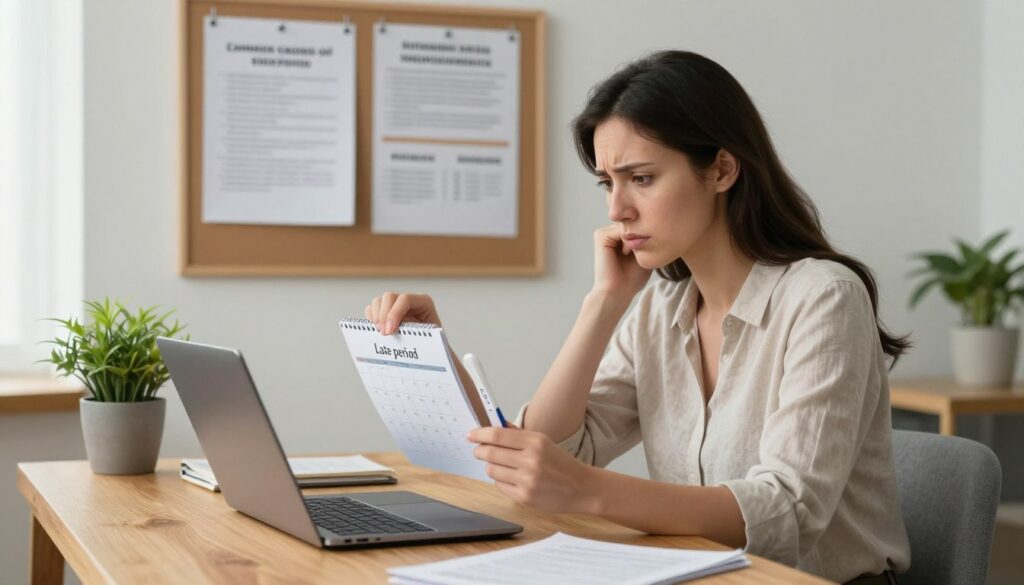
When you have a late period and a negative hpt, many things can be to blame. Your body’s reproductive system is influenced by many factors. These can change your regular cycle. Knowing these reasons helps understand why you might miss your period and get a negative test.
Stress and Its Effects
Stress is a big reason for delayed periods. It makes your body produce more cortisol. This hormone messes with the hormones that control your cycle.
Physical and emotional stress from work, family, or big life changes can delay your period. Your body focuses on stress instead of your cycle.
Changes in Weight
Big changes in weight can mess with your cycle. Losing too much weight can upset hormone levels needed for ovulation. Your body needs good nutrition to stay healthy.
Weight gain can also mess with your cycle. It can change insulin and hormone levels. Both can lead to a missed period and a negative test while your body adjusts.
Medical Conditions that Affect Menstruation
Many health issues can cause irregular periods or late menstruation. Polycystic ovary syndrome (PCOS) is one example. It affects millions and can make cycles unpredictable. Thyroid problems also impact menstrual cycles.
Other conditions include diabetes, celiac disease, ovarian cysts, and uterine fibroids. Each one affects hormone levels or reproductive organs differently. This can cause a late period and a negative hpt result, even with regular sex.
When to Take a Pregnancy Test
Timing is key when it comes to pregnancy test accuracy. Women with a late menstrual cycle might test too early. Your body needs time to produce enough hCG for detection. Knowing when and how to test can lead to accurate results.
Timing and Test Sensitivity
Pregnancy tests look for hCG in your urine. But, it takes time for hCG levels to rise. If you conceived later in your cycle, hormone levels might not be high enough by your expected period.
Most tests, like First Response and Clearblue, suggest waiting until the first day of your missed period. By then, about 97% of pregnant women will have enough hCG. Each woman’s hCG levels rise differently, which can affect test results. Some might need to wait an extra week for a positive reading.
Best Practices for Testing
Here are some tips for getting the most accurate results:
- Use your first morning urine, which has the highest hCG levels
- Check the test expiration date before use
- Read results within the timeframe specified in instructions
- Wait at least three days between tests if negative
- Consider retesting one week after a late menstrual cycle negative test
If you’re unsure after a negative test, wait and test again. Your hCG levels double every 48-72 hours in early pregnancy. This makes detection more likely with each passing day.
Can You Stil Be Pregnant with a Negative Test?
Not getting your period but getting a negative test can be confusing and stressful. Home pregnancy tests are usually reliable but not always. There are many reasons you might get a negative result even if you’re pregnant. Knowing these reasons can help you decide when to retest and when to see a doctor.
Understanding False Negatives
A false negative happens when you’re pregnant but the test says you’re not. The main reason is testing too early. Your body needs time to produce enough hCG for the test to detect.
There are several reasons for false negatives when you’re wondering why your period is late:
- Testing before your missed period
- Having irregular cycles that make timing difficult
- Drinking too much water before testing, which dilutes urine
- Using an expired or faulty test
- Having an ectopic pregnancy (rare but serious)
The Importance of Follow-Up Tests
If you don’t get your period but get a negative test, waiting and retesting is usually the best plan. HCG levels typically double every 48-72 hours in early pregnancy. This means you’ll have a better chance of detecting it as time goes on.
| Days After Missed Period | Detection Rate | Recommended Action |
|---|---|---|
| 1-3 days | 90% | Wait and retest in 2-3 days |
| 7 days | 97% | Retest or consult doctor |
| 14+ days | 99% | See healthcare provider |
Call your doctor right away if you have severe abdominal pain, dizziness, or heavy bleeding along with missed periods. These symptoms could mean you need urgent medical care.
Other Symptoms to Monitor
When you have a negative HPT but your period is overdue, your body might send signals. These signs can help you understand what’s happening inside. Some might mean you’re pregnant early, while others could mean your period is coming.
Signs of Early Pregnancy
Early pregnancy brings changes in your body, even if tests are negative. Breast tenderness can start as early as one to two weeks after conception. Your breasts might feel fuller, heavier, or more sensitive than usual.
Nausea is common before a positive test shows up. This feeling can happen all day, not just in the morning. Frequent urination is also a sign, caused by increased blood flow to your kidneys.
Extreme fatigue is different from regular tiredness. Progesterone levels rise, making you feel very tired even after sleeping well. Light spotting or implantation bleeding happens in about 25% of pregnancies when the fertilized egg attaches to the uterine wall.
Symptoms Indicating a Period is Imminent
Certain symptoms signal your period is coming, not pregnancy. Cramping in your lower abdomen gets more intense as your period approaches. These cramps are different from the stretching sensations of pregnancy.
Mood swings before your period follow a pattern if you track them. Bloating and water retention make your clothes tighter around your waist. Food cravings for chocolate or salty snacks peak right before your period starts. Lower back pain radiates across your pelvis, signaling hormone shifts that trigger your period.
When to Consult a Healthcare Professional
Getting irregular menstruation negative home test results can worry you. Many things can cause a delayed cycle with BFN. But, some situations need a doctor’s check-up. Knowing when to get help ensures you get the right care and feel better about your health.
Timing and Symptoms for a Doctor’s Visit
See your doctor if your period is over a week late and you’ve had two negative tests. This timing is right for accurate tests and to find any problems. If your cycle is delayed for more than seven days and it’s not usual for you, get checked by a doctor.
- Severe abdominal pain or cramping
- Heavy vaginal bleeding
- Dizziness or fainting
- Fever with pelvic pain
- No period for more than 90 days
Tests and Evaluations a Doctor May Recommend
Your doctor will do different tests to find out why you’re getting irregular results. These tests check for hormonal problems, structural issues, or other health issues that might be affecting your cycle.
| Test Type | Purpose | What It Detects |
|---|---|---|
| Blood HCG Test | Confirm pregnancy status | Lower hormone levels than urine tests can detect |
| Thyroid Panel | Check thyroid function | Hypothyroidism or hyperthyroidism |
| Prolactin Level | Measure prolactin hormone | Elevated levels affecting ovulation |
| Pelvic Ultrasound | Examine reproductive organs | Cysts, fibroids, or structural abnormalities |
| FSH and LH Tests | Assess ovarian function | Premature ovarian failure or PCOS |
Lifestyle Factors That Impact Your Cycle

Your daily habits are key to regular periods. If you’re late and your hpt is negative, it might be due to lifestyle. Making small changes can greatly impact your hormones and cycle.
Diet and Nutrition
What you eat affects your menstrual health. Crash diets or sudden weight changes can mess with your cycle. Your body needs enough calories and nutrients for regular periods.
Eating disorders like anorexia or bulimia can stop periods altogether. A diet full of iron, vitamin B12, and omega-3s helps hormones. But, foods high in sugar can mess with insulin and ovulation.
Exercise and Physical Activity
Exercise is good for cycles, but too much is bad. Athletes often see late periods and negative hpt from too much training. Your body sees hard exercise as stress, which can delay ovulation.
| Activity Level | Impact on Cycle | Recommended Duration |
|---|---|---|
| Light Exercise | Improves regularity | 30-45 minutes daily |
| Moderate Exercise | Maintains balance | 150 minutes weekly |
| Intense Training | May delay periods | Limit to 5 hours weekly |
Impact of Sleep Patterns
Sleep quality is vital for hormone production, like melatonin and cortisol. Night shift workers often have irregular cycles. Less than six hours of sleep can raise stress hormones, leading to missed periods.
Try for seven to nine hours of sleep each night. Keep a regular bedtime to help your reproductive health.
Hormonal Imbalances and Menstrual Irregularities
Hormonal imbalances can cause a late menstrual cycle and a negative test result. When hormone levels are off, periods can become unpredictable. This can lead to confusion when you get a negative pregnancy test but your period is late.
Common Hormonal Disorders
Several hormonal conditions can disrupt your regular cycle. Polycystic Ovary Syndrome (PCOS) affects about 10% of women of reproductive age. It causes high androgen levels, leading to missed or infrequent periods. Women with PCOS often get a late menstrual cycle negative test due to irregular ovulation.
Thyroid disorders add another layer of complexity. Both hyperthyroidism and hypothyroidism affect menstrual regularity. Your thyroid hormones directly influence reproductive hormones, affecting cycle length and flow intensity.
Primary ovarian insufficiency (POI) occurs when ovaries stop functioning before age 40. This condition causes estrogen levels to drop dramatically. Symptoms include hot flashes, night sweats, and irregular periods.
Treatment Options Available
Managing hormonal imbalances requires targeted approaches based on specific conditions:
| Condition | Primary Treatment | Success Rate |
|---|---|---|
| PCOS | Metformin, birth control pills | 70-80% |
| Thyroid Disorders | Levothyroxine, antithyroid medications | 85-90% |
| POI | Hormone replacement therapy | 60-70% |
Lifestyle modifications can help medical treatments work better. Regular exercise, balanced nutrition, and stress management help regulate hormone levels naturally. Many women find relief by combining medical intervention with these holistic approaches when dealing with a negative pregnancy test delayed period.
Understanding Irregular Periods
Irregular periods can make you wonder why your period is late if you’re not pregnant. Your cycle might change in length, flow, or timing. These changes often happen due to hormone shifts, lifestyle changes, or health issues.
Knowing what causes irregular periods helps you track your cycle better. It also tells you when to seek medical help.
What Constitutes Irregularity?
A regular menstrual cycle is between 21 to 35 days. Irregular periods are outside this range. You might have no period but a negative test result if your cycles are unpredictable.
Signs of irregularity include:
- Periods arriving earlier than 21 days or later than 35 days
- Missing periods for three months or more
- Very light bleeding that barely requires a pad
- Heavy flow lasting longer than seven days
- Spotting between periods
Anovulation, when your ovaries don’t release an egg, often causes irregular cycles. Thyroid problems, extreme weight changes, and intense exercise routines also disrupt ovulation.
How to Track and Manage Irregular Cycles
Digital period tracking apps like Flo and Clue help spot patterns in irregular cycles. Keep a daily record of your period start date, flow intensity, and any symptoms. This shows trends that explain why your period is late if you’re not pregnant.
Managing irregular periods starts with fixing the underlying causes. Eating well and keeping a healthy BMI supports regular cycles. Yoga or meditation can help balance hormones. If you have no period but negative test results for months, see a gynecologist for a check-up and treatment.
Emotional Well-Being and Menstrual Health
Your mental state greatly affects your menstrual cycle. Feeling stressed can cause your period to be late. The connection between your mind and body can make your body think it’s pregnant, even if it’s not.
Mental Health Impact on Menstrual Cycles
Stress makes your body produce too much cortisol. This hormone messes with your reproductive hormones. It can make ovulation late, sometimes by weeks.
This can lead to feeling pregnant, even with a negative test. It’s because your body’s hormones are acting like they are in pregnancy mode.
- Work-related pressure
- Relationship difficulties
- Financial worries
- Major life changes
- Anxiety disorders
Coping Strategies for Stress
Dealing with stress can help your cycle get back on track. Exercise is key to balancing hormones. Simple daily habits can make a big difference:
| Activity | Time Needed | Benefit for Cycle |
|---|---|---|
| Deep breathing | 5-10 minutes | Lowers cortisol immediately |
| Yoga | 20-30 minutes | Balances hormones |
| Walking | 15-20 minutes | Reduces stress hormones |
| Meditation | 10-15 minutes | Regulates nervous system |
Remember that stress-induced delays produce no hCG hormone. This is why tests stay negative, even when you miss your period.
Alternative Testing Methods for Pregnancy
If you get a negative home test result but think you might be pregnant, there are other ways to find out. These methods can be more accurate and give you results sooner. They can help figure out if you’re pregnant or if there’s something else going on with your cycle.
Blood Tests vs. Home Tests
Blood tests done at a doctor’s office are more precise than urine tests. They look for the pregnancy hormone (hCG). There are two kinds: qualitative tests say if you’re pregnant, and quantitative tests show how much hormone is there. Blood tests can spot pregnancy 6-8 days after you ovulated, before most home tests can.
- Blood tests detect hCG levels as low as 5 mIU/mL
- Home tests typically need 20-50 mIU/mL for positive results
- Laboratory results provide numerical values for tracking hormone progression
- Medical testing eliminates user error common with at-home testing
Other Monitoring Techniques
There are other ways to keep an eye on your reproductive health, too. Ovulation predictor kits show when you ovulated. Digital apps like Clue and Flo track your cycle to guess when you’ll get your period and when you might be fertile.
If blood tests don’t give clear results, doctors might suggest ultrasounds. Transvaginal ultrasounds can spot a gestational sac as early as 4.5 weeks. Doctors can also check your cervix and uterus size during a physical exam. This can give more clues when other tests don’t make sense of missed periods.
FAQs About Late Periods and Negative HPTs
Many women get confused when they have a late period and a negative HPT. They wonder why the test shows negative even though their period is late. Several things can cause this.
Your body might not have enough hCG hormone yet. Testing too early can also lead to false negatives. Stress from work, family, or big life changes can delay ovulation and your period.
Common Concerns and Myths
Medications can affect your menstrual cycle. Birth control pills, starting or stopping them, can cause missed periods and negative tests. Blood pressure and allergy medicines can also mess with your cycle.
Breastfeeding moms often have irregular periods, even months after giving birth. Growth spurts or more night feedings can disrupt hormones and delay periods. Women in their mid-30s might start experiencing early menopause symptoms. This can cause wild hormone swings and missed periods, even with negative tests.
Additional Resources for Information
For accurate info on late periods and negative HPTs, check out these trusted sources. The American College of Obstetricians and Gynecologists has great guides on menstrual health. Planned Parenthood offers free resources on pregnancy testing and tracking your cycle.
The Mayo Clinic website has detailed info on menstrual conditions. Apps like Clue and Flo help track your cycles and find patterns. If your period is gone for over 90 days or you have unusual symptoms, see your healthcare provider. They can give you peace of mind and check everything out.