
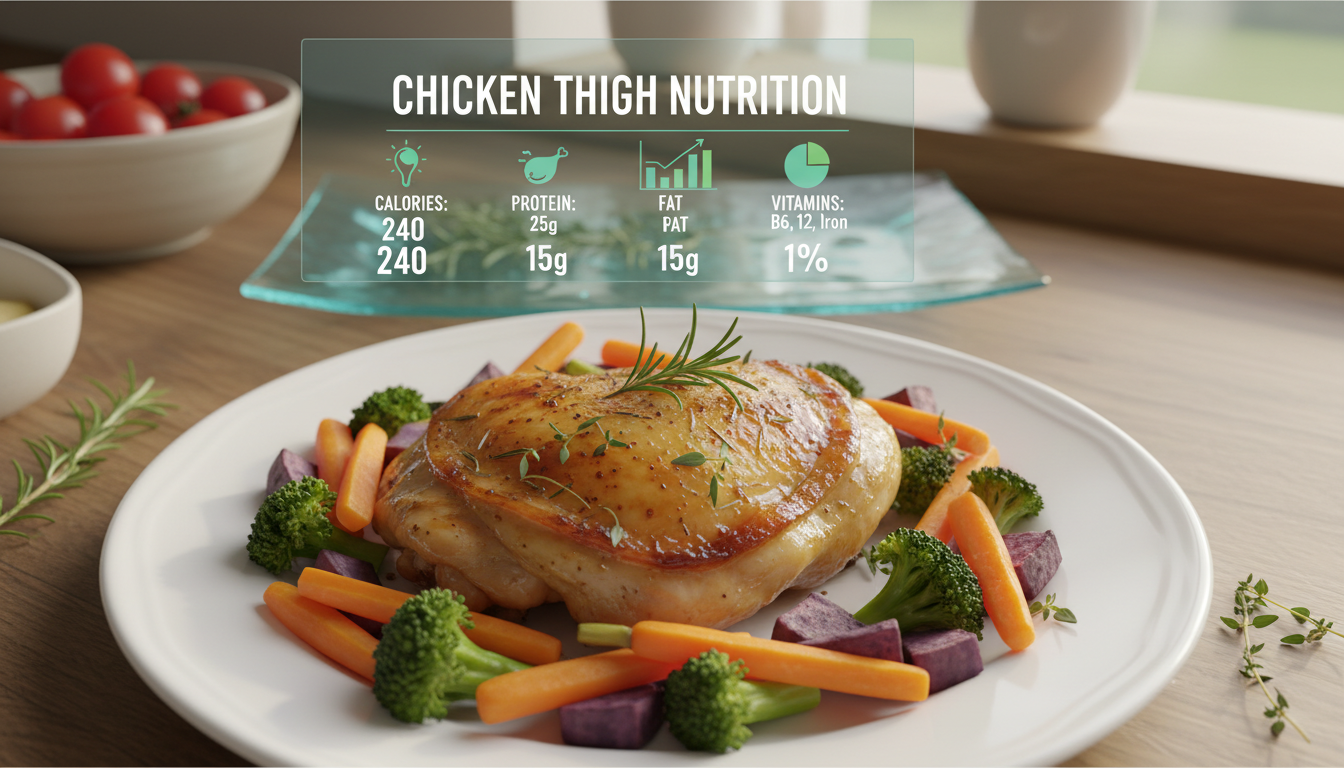
Why do many cooks and chefs choose chicken thighs over breasts? It’s because of the amazing nutrition in thighs. They offer more flavor and health benefits than breasts.
Chicken thighs are a great source of protein, with all nine essential amino acids. They also have healthy fats, vitamins, and minerals. These nutrients support muscle growth and immune health.
Chicken thighs are great for many cooking methods. You can bake, grill, or stir-fry them. They’re perfect for meal prep and family dinners. Knowing about chicken thigh nutrition helps you make healthy and tasty choices.
Key Takeaways
- Chicken thighs contain complete protein with all nine essential amino acids
- Dark meat provides more iron and zinc compared to white meat
- The fat content in thighs helps absorb fat-soluble vitamins
- Cooking methods like grilling and baking preserve nutritional value
- Thighs cost less than breasts while providing similar protein
- A 3-ounce serving gives about 25% of daily protein needs
Overview of Chicken Thigh Nutrition
Chicken thighs are a tasty and nutritious protein choice that many miss out on. Knowing the calories in chicken thighs and their nutritional value helps you choose them wisely. The dark meat in chicken thighs is packed with nutrients your body needs, adding flavor and texture to your meals.
Nutritional Profile
A 3-ounce serving of skinless chicken thigh is a nutritional powerhouse. It has 20 grams of protein and important minerals like selenium, zinc, and iron. It also has B vitamins, like vitamin B12, which is good for your nerves and energy.
Each serving has about 285 milligrams of sodium and 223 milligrams of potassium. These help keep your body’s fluids balanced.
Calories in Chicken Thighs
The calories in chicken thighs depend on how they’re prepared. A 3-ounce skinless thigh has about 164 calories, making it a good protein choice. With the skin on, the same amount has 278 calories because of more fat.
This lets you plan your meals better, whether you’re watching calories or need more energy.
Macronutrient Breakdown
The macronutrients in chicken thighs make them versatile for different diets. A skinless serving has 20 grams of protein and 9 grams of fat, with only 2 grams of saturated fat. Chicken thighs have zero carbohydrates, which is great for low-carb diets.
With the skin, the fat goes up to 18 grams, with 5.5 grams of saturated fat.
Health Benefits of Chicken Thighs
Chicken thighs are packed with health benefits, making them great for any diet. They offer more than just food, providing key nutrients for the body. These nutrients help with muscle growth, immune health, and more, often overlooked for leaner options.
Rich in Protein
Chicken thighs are a complete protein source, with all nine essential amino acids. A cooked thigh has about 26 grams of protein. This supports muscle and helps with weight management.
They also have tryptophan, which helps make serotonin. This neurotransmitter is key for mood and sleep, improving emotional health.
Essential Vitamins and Minerals
Dark meat chicken is rich in vitamins, aiding energy and nervous system health. The nutritional value of chicken thighs includes:
- Vitamin B12: 60% of daily value in skinless portions
- Riboflavin: 20% of daily value
- Biotin: 15% of daily value
- Thiamine: 10% of daily value
- Zinc: Supports immune function, beneficial in chicken soup during illness
Healthy Fats
Chicken thighs have a mix of fats, aiding hormone production and nutrient absorption. These fats help absorb vitamins A, D, E, and K. The fat content also keeps the meat moist, adding flavor and energy.
Comparison: Chicken Thighs vs. Chicken Breasts
Choosing between chicken thighs and breasts often comes down to personal preference. But knowing their nutritional differences helps you make better choices. Both cuts are high in protein, but they differ in fat content, calories, and nutrients.
Caloric Differences
The calorie difference between these cuts is noticeable. A 3-ounce serving of boneless skinless chicken thigh has about 170-180 calories. Chicken breast has around 140 calories. This difference mainly comes from thigh meat’s higher fat content.
Despite this, both cuts meet the Dietary Guidelines for Americans. They suggest 20-35% of daily calories should come from fat.
Nutrient Disparities
Chicken breasts are better at providing potassium (12% Daily Value), vitamin B6 (20% DV), and niacin (100% DV). They also have about 30% of your daily pantothenate needs.
On the other hand, dark meat from thighs has its own benefits. They offer more iron (6% DV), which is good for iron intake. Thighs also have more vitamin B12, biotin, and thiamine than white meat.
Cooking Methods
The fat content in each cut affects the best cooking methods. Chicken thighs stay moist and flavorful when roasted, grilled, or braised. Their higher fat content helps.
Breasts need careful cooking to avoid drying out. They often benefit from marinades or shorter cooking times. Both cuts are versatile and work well in many recipes, from stir-fries to slow-cooked dishes.
How Cooking Methods Affect Nutrition
The way you cook chicken thighs greatly affects their nutritional value. Different cooking methods can either keep nutrients or add extra calories. Knowing these methods helps you choose healthier options while enjoying tasty meals.
Roasting vs. Frying
Roasting chicken thighs in the oven lets excess fat drip away. A 3-ounce roasted thigh with skin has about 278 calories. The skin adds extra calories, but removing it cuts down the fat content by nearly 50 percent.
Frying chicken thighs in oil makes them absorb fat. Deep-fried chicken thighs can have up to 400 calories per serving. Pan-frying with a little oil is a better choice, adding fewer calories than deep-frying but making the outside crispy.
Grilling Chicken Thighs
Grilling chicken thighs adds flavor without extra fats. The high heat sears the outside while keeping the inside juicy. This method keeps protein and B vitamins intact. Season with herbs like rosemary, thyme, and oregano instead of salt-heavy marinades.
Slow Cooking Benefits
Slow cooking tenderizes chicken thighs while keeping them moist. This gentle method keeps heat-sensitive vitamins safe. The fat content stays the same because no extra oils are used. Adding vegetables makes for a complete one-pot meal.
| Cooking Method | Calories (3 oz) | Added Fat |
|---|---|---|
| Baked (no skin) | 180 | None |
| Grilled | 185 | None |
| Pan-fried | 250 | 1 tbsp oil |
| Deep-fried | 400 | Absorbed oil |
Chicken Thighs and Weight Loss

Many think chicken thighs are too high in calories for weight loss. But, when prepared right, chicken thigh nutrition can help. Skinless chicken thighs have only 164 calories per 3-ounce serving. They are a great protein choice for those watching their calories.
Protein’s Role in Satiety
Chicken thighs are high in protein, which helps you feel full longer. Each serving has about 21 grams of protein. This takes longer to digest than carbs, keeping hunger away between meals.
Low-Calorie Meal Ideas
Creating tasty meals with chicken thighs is easy. Simple recipes are best for managing weight:
- Grilled chicken thighs with roasted Brussels sprouts and quinoa
- Chicken thigh stir-fry with bell peppers and cauliflower rice
- Baked chicken thighs served over mixed greens with balsamic vinegar
- Slow-cooked chicken thighs in vegetable soup
Incorporating Chicken Thighs in Diet Plans
Chicken thighs are cheaper than chicken breasts, making them budget-friendly. They’re great for batch cooking on Sundays. This way, you have protein for meals all week. Their flavor works well with many seasonings, keeping your meals exciting.
Chicken Thighs in Dietary Guidelines
Dietary guidelines help us eat healthy. They show us how chicken thighs fit into these plans. When cooked right and eaten with other foods, chicken thighs meet these guidelines.
Recommended Servings
The USDA says adults should eat 5 to 6.5 ounces of protein each day. A chicken thigh is about 3 to 4 ounces, making it a great choice. The fat in chicken thighs also fits within the daily fat intake.
Integrating into Balanced Meals
To make meals with chicken thighs better, pair them with veggies. Try roasted Brussels sprouts or steamed broccoli. Add whole grains like quinoa or brown rice for energy. This mix gives you all the nutrients you need.
Cooking Recommendations
How you cook chicken thighs matters a lot. Baking at 375°F uses little oil. Use herbs like rosemary or thyme instead of salt. Marinating in citrus or yogurt makes it tasty and tender. But, avoid deep frying to avoid extra calories and bad fats.
Chicken Thighs for Athletes and Active Lifestyles
Athletes and active people need foods that fuel their bodies and help them recover. Chicken thighs are perfect because they have the right mix of nutrients. They offer high-quality protein and calories, making them great for an active lifestyle.
Muscle Repair and Recovery
Chicken thighs have all nine essential amino acids for muscle repair. A serving gives about 26 grams of protein. This helps fix muscle fibers after hard workouts.
They also have phosphorus and magnesium. Phosphorus helps with nerve signals and muscle actions. Magnesium is key for many body functions.
Dark meat chicken thighs have more iron than white meat. Iron helps carry oxygen to cells, speeding up recovery and reducing fatigue after exercise.
Energy Needs
Chicken thighs give you energy with their protein and healthy fats. A thigh has about 180-220 calories, depending on how it’s cooked. These calories keep you going without the crash that carbs can cause.
Meal Prep for Performance
Preparing chicken thighs ahead of time saves time and meets your nutritional needs. Batch cooking on weekends lets you make meals with the right protein and calories. Season them with herbs and spices, then bake several pounds at once.
Store them with quinoa or sweet potatoes for complete meals after workouts.
Selecting the Right Chicken Thighs
Choosing quality chicken thighs can greatly improve taste and nutrition. Making smart shopping choices helps keep costs down while getting the most nutritional value. Knowing the differences between options helps families make better choices.
Fresh vs. Frozen
Fresh chicken thighs are convenient and ready to cook right away. They keep their texture and don’t need thawing. Frozen chicken thighs also keep nutrients well when stored correctly. Flash-freezing helps preserve nutrients at their peak.
Frozen chicken thighs can save 30-40% compared to fresh. Both have about 26 grams of protein per 4-ounce serving. Frozen thighs can last up to nine months, while fresh ones should be cooked within two days.
Organic Considerations
Organic chicken thighs are raised without antibiotics or synthetic hormones. These birds eat organic feed and have access to the outdoors. Their nutrition is similar to conventional, but they might have more omega-3 fatty acids.
Sourcing Sustainably
Sustainable farming is good for the environment and our health. Look for labels like Global Animal Partnership or Certified Humane. Local farms offer fresher products and traceable sources. Pasture-raised chickens have meat with more vitamins.
Storage and Handling of Chicken Thighs
Keeping your chicken thighs safe is key. It helps keep their nutrients and macros intact. Fresh chicken needs careful handling to avoid bacterial growth. The right steps ensure your protein stays top-notch from start to finish.
Safe Storage Practices
Raw chicken thighs should go in the coldest part of your fridge, at 40°F or below. Put them on the bottom shelf in a sealed container. This stops juices from dripping on other foods. They stay fresh for 1-2 days in the fridge.
For longer storage, freeze them at 0°F. They keep their macros for up to nine months in the freezer.
Thawing Methods
There are three safe ways to thaw frozen chicken thighs:
- Refrigerator method: Place frozen thighs in the fridge 24 hours before cooking
- Cold water method: Submerge sealed chicken in cold water, changing every 30 minutes
- Microwave method: Use defrost setting and cook immediately after thawing
Never thaw chicken at room temperature. Bacteria grow fast between 40°F and 140°F.
Best Practices for Cooking
Cook chicken thighs to 165°F. Use a meat thermometer to check. Let them rest for 3-5 minutes before serving.
Refrigerate leftovers within two hours of cooking. This keeps food safe and preserves macros. Use cooked chicken within 3-4 days for best quality and nutrition.
Common Myths about Chicken Thigh Nutrition
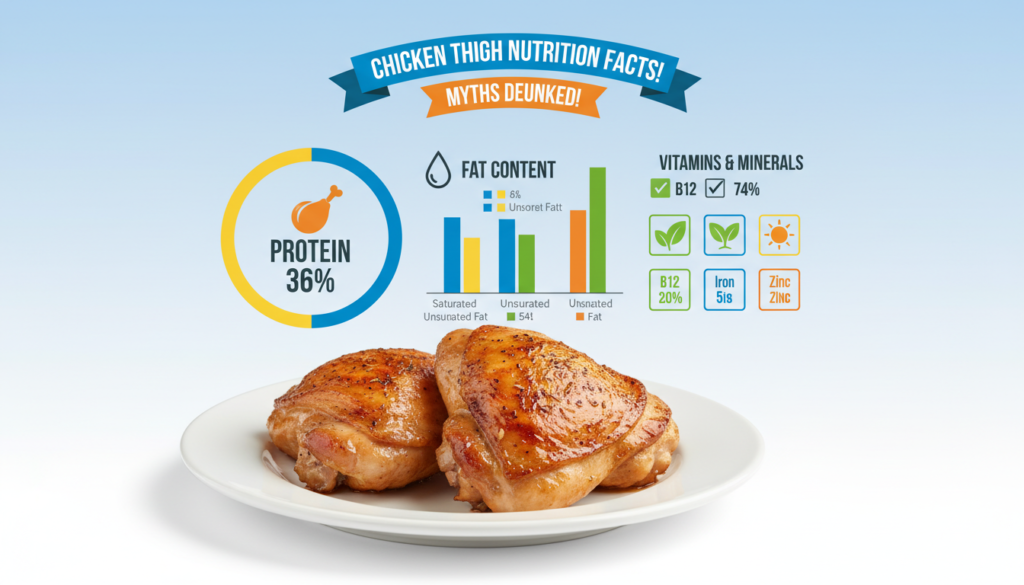
Many people think chicken thighs are unhealthy. But, let’s look at the facts. Chicken thighs are a great choice for a balanced diet.
Misconceptions about Fat Content
Some think chicken thighs are bad because of fat. But, a 3.5-ounce serving has only 9 grams of fat. And, only 2.5 grams are saturated.
This is within the American Heart Association’s daily limit. Dark meat has monounsaturated fats, like olive oil. These fats are good for your heart and help you feel full longer.
Protein Myths
Some think chicken breasts have more protein. But, chicken thighs have almost as much protein. They also have more iron, zinc, and B vitamins like B12 and biotin.
Myth-Busting Popular Beliefs
Dark meat is often seen as less nutritious. But, chicken thighs have 12% more iron than breasts. They also have double the zinc, which is key for your immune system.
When you grill, bake, or roast chicken thighs, they stay nutritious. This way, you avoid extra calories from deep-frying.
Cooking Tips for Chicken Thighs
Learning to cook chicken thighs is all about knowing their special traits. Their fat content makes them easy to cook and super tasty. Follow these tips to make tasty meals that are also good for you.
Spice and Marinade Ideas
Make your chicken thighs taste amazing with simple spices. Try using fresh herbs like rosemary, thyme, and oregano. They match the rich flavor of chicken thighs perfectly.
For a Mediterranean flavor, mix citrus juice, minced garlic, and olive oil into a marinade. Paprika, cumin, and coriander add warmth without needing salt.
Cooking Temperatures
Getting the right temperature is key for safety and keeping meat moist. Cook chicken thighs to 165°F (74°C) at the thickest part. Their fat keeps them juicy, even at higher temperatures.
For crispy skin, start by baking at 425°F (218°C) for 20 minutes. Then, lower the heat to 375°F (190°C).
Perfecting Texture
The secret to great texture is in your cooking method. Grilling over medium heat is perfect. It makes the skin crispy and the meat tender.
When baking, put thighs skin-side up on a wire rack. For stir-frying, cut them into even pieces and cook fast over high heat. Pat them dry before cooking for better browning.
Popular Recipes Featuring Chicken Thighs
Chicken thighs are loved in many recipes worldwide. They have a rich flavor and soft texture. This makes them great for quick dinners or weekend meals. Cooking them keeps their vitamins and minerals safe, making your meals healthy.
One-Pan Recipes
One-pan chicken thigh recipes are quick and keep nutrients in. Sheet pan dinners mix chicken with veggies. Try chicken with Brussels sprouts, sweet potatoes, and bell peppers.
The chicken’s juices make a tasty sauce. This way, iron and zinc stay safe.
Grilled Chicken Thigh Dishes
Grilling adds flavor without extra fat. Marinate chicken thighs in lemon juice, olive oil, and herbs for 30 minutes before grilling. This keeps nutrients in while making the outside crispy.
Popular grilled chicken includes Mediterranean, teriyaki, and barbecue styles.
Comfort Food Classics
Chicken thighs are perfect in comfort foods. Chicken and dumplings, pot pies, and creamy casseroles warm you up. Slow-cooked stews and soups make broth full of nutrients.
These dishes boost zinc for immunity and B vitamins for energy. Rice bowls with braised chicken thighs offer complete proteins and energy for busy days.
Dietary Restrictions and Chicken Thighs
Chicken thighs are great for many diets because they’re full of protein. They fit into different eating plans well. Knowing how to cook and pick chicken thighs helps keep your diet on track.
Gluten-Free Options
Chicken thighs don’t have gluten, which is good for those with gluten issues. They naturally have no gluten. But, be careful with seasonings and marinades.
Many spices and some marinades have gluten. Always check the labels. Fresh herbs, pure spices, and citrus juices are great for flavor without gluten.
Low-Sodium Considerations
A 3-ounce serving of skinless chicken thigh has about 285mg of sodium. For those watching sodium, how you prepare it matters a lot. Avoid pre-marinated chicken, which is often too salty.
Use herbs, garlic, pepper, and lemon for flavor instead of salt. This way, you can enjoy chicken without too much sodium.
| Preparation Method | Sodium Content (mg) | Serving Size |
|---|---|---|
| Plain Roasted | 285 | 3 oz |
| Store-Bought Marinated | 450-600 | 3 oz |
| Home-Seasoned (No Salt) | 285 | 3 oz |
Allergen Awareness
Chicken thighs are a good protein choice because they don’t have common allergens like dairy, eggs, nuts, or shellfish. But, they can cause allergies in some people. Be careful about cross-contamination during processing.
Choose places that are certified to handle chicken safely if you have a severe allergy. Always check what’s in marinades and coatings for allergens like soy or wheat.
Chicken Thighs in Global Cuisines
Chicken thighs are loved worldwide for their taste and health benefits. They are great for many cooking styles. From Mediterranean herbs to Asian spices, they fit right in, keeping their nutritional value.
Mediterranean Dishes
Mediterranean cooking highlights chicken thighs’ health benefits. Greek lemon chicken is a light dish with lots of protein. Italian cacciatore is a hearty meal that keeps the meat’s nutrients.
Asian-Inspired Recipes
Asian cooking shows off chicken thighs’ health benefits. Japanese teriyaki glazes add flavor without extra calories. Thai curry and Chinese five-spice dishes keep the meat’s protein.
Southern Comfort Food
Southern cooking makes chicken thighs into comforting meals. Buttermilk-marinated fried chicken is crispy on the outside and juicy inside. Smothered chicken and barbecued thighs add smoky flavors.
| Cuisine Style | Popular Dish | Key Ingredients | Cooking Method |
|---|---|---|---|
| Mediterranean | Greek Lemon Chicken | Olive oil, lemon, oregano | Roasted |
| Asian | Teriyaki Chicken | Soy sauce, ginger, garlic | Grilled |
| Southern | Nashville Hot Chicken | Cayenne, paprika, buttermilk | Fried |
Conclusion: The Nutritional Value of Chicken Thighs
Chicken thighs are a nutritional powerhouse that fits into many eating styles and budgets. They offer complete protein and essential nutrients that support overall health. The calories in chicken thighs provide sustained energy and vitamins B12, B6, and niacin that your body needs daily.
Rich minerals like zinc, selenium, and phosphorus work together to maintain strong bones and support immune function.
Summary of Health Benefits
The protein in chicken thighs helps build and repair muscles while keeping you satisfied between meals. This makes them ideal for weight management when prepared using healthy cooking methods like grilling or roasting. Chicken thighs support bone health through their phosphorus content and boost immunity with selenium.
The B vitamins found in these cuts help convert food into energy and maintain healthy brain function.
Encouraging Diverse Meal Planning
Adding chicken thighs to your weekly meal rotation opens up countless recipe possibilities. From Mediterranean sheet pan dinners to Asian stir-fries, these protein-rich cuts adapt to any cuisine. The calories in chicken thighs make them filling enough for main dishes yet light enough for salads and grain bowls.
Their budget-friendly price point allows families to enjoy nutritious meals without breaking the bank.
Final Thoughts on Chicken Thigh Nutrition
Chicken thighs deserve a regular spot on your dinner table. They deliver quality protein in chicken thighs alongside essential vitamins and minerals that support daily health needs. Whether you choose Perdue or Tyson brands at your local grocery store, these cuts provide excellent nutrition value.
By selecting smart cooking methods and pairing them with vegetables and whole grains, chicken thighs become part of a balanced diet that tastes great and nourishes your body.