

One in 20 Americans has fatty liver disease, affecting 15 million people. When NFL legend Dan Marino talks about it, it feels closer to home. This update explores how he deals with MASH, a type of fatty liver disease, and its impact on awareness and liver health.
In 2007, Dan Marino found out he had Metabolic Dysfunction–Associated Steatosis Hepatitis during a routine checkup. He noticed mild fatigue and less energy in his workouts. Tests confirmed the diagnosis. Now, he says his condition is stable, thanks to a Mediterranean diet, regular exercise, and yearly ultrasounds.
Marino teamed up with Novo Nordisk for its Unordinary Stories campaign. He wants others to take action early. He believes MASH can be managed with regular doctor visits, healthy eating, and staying active. This update shows how managing dan marino liver disease offers hope and why taking proactive steps is key for liver health.
Key Takeaways
- About 15 million Americans face fatty liver disease, underscoring the scope of the issue.
- Dan Marino’s MASH was found in 2007 after mild fatigue and reduced workouts.
- His current health update is positive: stable status with no noted progression.
- Mediterranean-style eating, walking, biking, and routine ultrasounds support hepatic health.
- Marino’s partnership with Novo Nordisk boosts early detection and patient action.
- Consistent checkups and lifestyle changes can help manage dan marino liver disease.
Overview of Dan Marino’s Health Situation
Dan Marino has shared a thoughtful health update to raise awareness about metabolic dysfunction–associated steatohepatitis. This condition is often linked to dan marino liver disease in public talks. The former Miami Dolphins quarterback uses his fame to teach fans about monitoring, nutrition, and steady habits.
Brief Biography of Dan Marino
Marino played for 17 seasons with the Miami Dolphins, setting passing records that changed the game. He was inducted into the NFL Hall of Fame in 2005. He’s known for quick reads, a lightning release, and a relentless drive.
After retiring in 2000, he remained a voice in football and the community. His story now combines his gridiron success with practical wellness advice.
Importance of Marino to the Sport
Marino ushered in the era of high-volume passing offenses. Coaches and quarterbacks study his tape for timing and space creation. His legacy with the Miami Dolphins anchors the franchise’s identity and inspires new talent.
As a member of the NFL Hall of Fame, his influence goes beyond game film. His advocacy adds weight to every health update he shares. This connects sports culture with preventive care.
Recent Developments in His Health
Marino talks about regular checkups and yearly imaging as part of his routine. He frames dan marino liver disease awareness around early action. He credits steady exercise and a Mediterranean-style diet with supporting his daily energy.
His current messages focus on consistency and follow-through. Each health update encourages monitoring and practical steps fans can take. This echoes his leadership from the pocket to everyday life.
What is Liver Disease?
Liver disease changes how the liver works. It filters blood, regulates energy, and removes toxins. When this balance is upset, liver health declines. Many cases start quietly, making regular check-ups key for those at risk.
Definition and Types of Liver Disease
Liver disease refers to many conditions that harm liver cells or reduce its function. MASH is a common form. It’s a fatty liver disease linked to metabolic issues. It can worsen from simple fat buildup to inflammation and scarring.
Other types include viral hepatitis, autoimmune injury, genetic disorders like hemochromatosis, and alcohol-related damage. News stories about famous people’s diagnoses help us understand how it starts. See this report on a public figure’s diagnosis for insight.
Common Symptoms of Liver Disease
Many people don’t notice liver disease symptoms at first. When they do, they might feel tired, have mild pain in the right upper abdomen, or have abnormal liver tests. Some may also get jaundice, dark urine, or bruise easily as the disease gets worse.
With MASH, symptoms can be hard to spot. Regular health checks are important. This is true for those with weight gain, type 2 diabetes, or high cholesterol.
Causes of Liver Disease
Major causes of liver disease include viral infections, immune conditions, toxins, and metabolic stress. In MASH, obesity, insulin resistance, type 2 diabetes, and high cholesterol are key drivers. Over time, this can lead to fibrosis and cirrhosis.
Lifestyle, genetics, and other health issues often play a role. Early action to address risk factors can protect liver health. It can also slow or stop damage with the right medical care.
| Type | Main Drivers | Typical Early Signs | Potential Long-Term Risks |
|---|---|---|---|
| MASH (metabolic fatty liver) | Obesity, insulin resistance, type 2 diabetes, dyslipidemia | Fatigue, mild abdominal discomfort, elevated liver enzymes | Fibrosis, cirrhosis, liver failure, hepatocellular carcinoma |
| Viral hepatitis (B, C) | HBV or HCV infection | Often asymptomatic, occasional malaise or jaundice | Chronic inflammation, cirrhosis, liver cancer |
| Alcohol-related liver injury | Heavy, prolonged alcohol intake | Loss of appetite, nausea, abnormal tests | Steatohepatitis, cirrhosis, portal hypertension |
| Autoimmune hepatitis | Immune-mediated liver attack | Fatigue, joint aches, elevated enzymes | Chronic hepatitis, cirrhosis |
| Genetic/metabolic disorders | Iron or copper overload, enzyme defects | Often silent until advanced | Organ damage, cirrhosis, systemic complications |
Dan Marino’s Diagnosis Journey
His journey started with a focus on staying healthy and catching problems early. The story of Dan Marino’s liver disease shows how important regular check-ups are. They can find issues before they cause big problems.
Initial Symptoms Leading to Diagnosis
At first, Dan felt a bit tired and less active. He didn’t think much of it, but he went for a check-up. This simple step led to a deeper understanding of his health.
Tests and Procedures Performed
Doctors ran liver function tests to check for any issues. When the results weren’t normal, they used imaging to look at the liver. Sometimes, a biopsy is needed to find the exact cause.
- Bloodwork: liver function tests to track enzymes and bilirubin
- Ultrasound: noninvasive imaging to evaluate fat and structure
- Biopsy: targeted sampling if imaging and labs raise concern
How the Diagnosis Was Confirmed
Doctors looked at all the results together. They linked Dan’s symptoms with the test findings. This careful process helped them understand his condition fully.
| Step | Purpose | Key Indicator | Outcome Used For |
|---|---|---|---|
| Routine Checkup | Baseline screening | Mild fatigue noted | Triggers targeted liver assessment |
| Liver Function Tests | Detect enzyme changes | ALT/AST, bilirubin | Guides need for imaging |
| Ultrasound | Visualize liver tissue | Fat accumulation or stiffness | Determines monitoring plan |
| Follow-Up Review | Confirm clinical picture | Trends over time | Refines diagnosis journey path |
The process shows how careful steps, from labs to imaging, build a complete view without rushing to conclusions.
Lifestyle Factors Affecting Liver Health
Our daily choices have a big impact on liver health. Making small changes in what we eat and drink can help prevent liver disease. It also keeps our energy levels up throughout the day.
Consistency beats intensity. A simple, consistent routine is more effective than trying to do too much at once. This approach helps the body stay balanced and repair itself.
Diet and Nutrition’s Role in Liver Health
The Mediterranean diet is great for liver health. It includes foods like extra-virgin olive oil, vegetables, fruit, whole grains, beans, nuts, and fish. It limits foods high in sugar and processed ingredients.
Switching to olive oil, eating more leafy greens, and choosing fish like salmon or sardines can help. These changes improve insulin sensitivity and reduce belly fat, which is good for the liver.
Make simple swaps to eat better. Choose berries and yogurt over sugary snacks. Opt for a veggie-rich whole-grain pizza instead of one loaded with processed meats. And aim for balanced meals to avoid late-night cravings.
The Impact of Alcohol Consumption
Drinking alcohol regularly can harm the liver. Cutting back on alcohol reduces inflammation and stabilizes liver markers. This is important for preventing liver disease.
Set limits and have alcohol-free days each week. Enjoy sparkling water with citrus instead of alcohol in social situations. Or choose smaller drinks to stay in control without missing out.
Those at risk of metabolic problems benefit even more from drinking less. Combining reduced alcohol intake with a Mediterranean diet offers extra protection against liver disease.
Exercise and Liver Disease
Regular exercise boosts fat metabolism, lowers liver enzymes, and helps control weight. Aim for exercise most days. Choose activities like brisk walking, cycling, light strength training, or intervals that fit your schedule.
Even short sessions of exercise can add up. Try a 20–30 minute walk in the morning, followed by a bike ride or body-weight routine later. Include one rest day with stretching to keep up the good work.
- Cardio: 150 minutes a week of moderate effort, like fast walking or steady biking.
- Strength: 2–3 sessions focusing on large muscle groups to enhance glucose control.
- Recovery: sleep, hydration, and mobility work to sustain consistency.
Combine a Mediterranean diet, mindful alcohol choices, and regular exercise for liver health. This combination creates a strong foundation for long-term liver function.
Dan Marino’s Treatment Plan
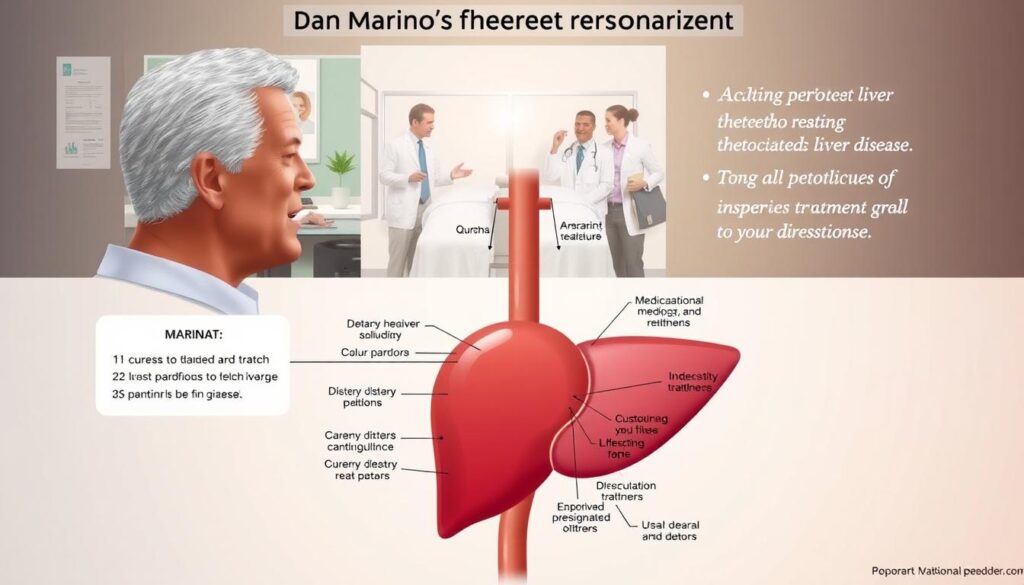
Dan Marino’s treatment plan combines science-backed liver care with habits he can keep up. His doctors focus on managing weight, reducing inflammation, and keeping a close eye on his health. Marino talks about catching problems early and following a routine that helps his liver stay healthy for the long term.
Medical Interventions and Medications
Doctors start with noninvasive methods first. Marino gets yearly ultrasounds and blood tests to check his liver health. His team also looks into new treatments for liver disease, like those that target fat and scarring.
When needed, doctors adjust his treatment to manage blood sugar, cholesterol, and blood pressure. This helps reduce liver damage. The plan is flexible, changing based on how well it works.
Lifestyle Modifications Recommended
Marino eats a Mediterranean diet full of veggies, legumes, fish, and olive oil. These changes help his liver and improve how it handles insulin. He also watches his portion sizes and limits refined carbs.
He exercises regularly, working out with former teammate Terry Kirby. This mix of cardio and strength training helps with weight loss and keeps his muscles strong. Drinking enough water and getting enough sleep are also key parts of his routine.
Support from Healthcare Professionals
A team of doctors, including primary care, hepatology, and nutrition, helps guide Marino. They meet regularly to check progress, set goals, and give feedback. Marino also works with certified trainers to ensure his workouts are safe and effective.
Good communication keeps Marino’s treatment plan on track. With clear goals and data, his lifestyle changes become second nature. This focus on measurable results helps him stay on course with his MASH management.
Emotional and Psychological Impact
Living with liver disease changes daily life in big ways. It’s not just about health; it touches identity, confidence, and routines. Building a positive mindset and focusing on mental health can turn fear into action.
Coping with a Chronic Illness
Starting to cope with chronic illness is about today’s small steps. Simple habits like regular sleep, light exercise, and meals help keep the mind grounded. Setting short goals helps reduce stress and shows progress.
Going back to familiar routines helps build momentum. Many find journaling or breathing exercises helpful during tough times. These habits support a positive outlook while facing reality.
The Role of Support Systems
Having a strong support system turns isolation into teamwork. Family members often help with appointments, meals, and rides. Friends, colleagues, and neighbors can also help with tasks, freeing up energy for healing.
Clear roles build trust. One person might handle questions for doctors, another insurance, and a third check-ins. This organization makes coping with chronic illness feel more manageable.
Mental Health Considerations
Mental health care is essential, not just an extra step. Anxiety and low mood are common, often around big events like scans. Brief counseling, peer groups, or mindfulness can help ease these feelings.
Plan for tough days: know who to call, where to rest, and what to do to regain control. This plan helps keep a positive mindset and supports chronic illness coping. Over time, these steps help maintain stability.
| Focus Area | Practical Action | Why It Helps | Frequency |
|---|---|---|---|
| Mood Tracking | Rate mood 1–5 and jot one stressor | Flags patterns to discuss with care team; supports mental health | Daily |
| Breathing Reset | 4-4-6 breaths for three cycles | Lowers heart rate and eases tension; aids chronic illness coping | As needed |
| Connection | Call a friend or family member | Activates support systems and reduces isolation | 3x weekly |
| Routine Anchor | Same wake time and short walk | Builds consistency and a positive mindset | Daily |
Public Reaction and Support for Marino
When Dan Marino’s liver disease was announced, people from all walks of life rallied. Fans, former teammates, and local leaders showed their support. They encouraged everyone to get regular check-ups.
National news outlets played a big role in spreading the message. They focused on the importance of acting early and getting reliable information.
Fans’ Responses to the News
Stadiums and online communities filled with messages of support. People shared their own stories of getting checked. The dan marino foundation became a symbol of giving, as fans looked for ways to help.
Posts on social media talked about making healthy choices. They encouraged smart eating, less drinking, and regular exercise. This shift helped turn sympathy into action.
Increased Awareness About Liver Disease
Marino’s openness about his health issues raised awareness about liver disease. More people started asking about tests for fatty liver and MASH. Media coverage helped spread the word about the importance of early detection.
His work with Novo Nordisk brought together medical advice and simple tips. They encouraged people to get checked and make healthy lifestyle changes.
Marino’s Role as a Health Advocate
Through Novo Nordisk’s Unordinary Stories, Marino shared his journey. He showed how small, consistent changes can lead to big improvements. The dan marino foundation supported this by pointing fans to educational resources and community programs.
As Marino’s message spread, the campaign reached beyond football. He showed that liver health is a team effort. Patients, families, and doctors working together can make a difference.
The Importance of Regular Health Screenings
Quiet symptoms can hide serious liver trouble. Simple steps at routine checkups help spot changes early. This way, damage can be prevented before it starts.
Small tests, done on time, can guide big decisions.
Recommended Screenings for Liver Health
Start with liver function tests during routine checkups. These blood tests read enzymes and bilirubin to hint at inflammation or injury. If results look off, clinicians often add ultrasound screening to visualize fat, stiffness, or nodules.
People with risks such as type 2 diabetes, high triglycerides, or obesity benefit from a set schedule. Many clinics pair annual liver function tests with ultrasound screening every 12 to 24 months to watch trends over time.
How Early Detection Can Save Lives
Early detection gives you options. When labs nudge upward or an image shows fat change, doctors can act before fibrosis grows. That window supports weight loss, diet shifts, and exercise plans that may halt or even reverse progression.
Dan Marino underscored this point in his own story, noting how standard blood work during annual visits led to close follow-up. With consistent surveillance, his team tracks stability and adjusts care without delay.
Personal Stories of Early Diagnosis
Marino reported mild fatigue at a yearly physical. That prompted liver function tests and, later, ultrasound screening, which caught MASH at a manageable stage. From there, training tweaks and nutrition changes helped him maintain control.
His path mirrors what many patients experience: routine checkups reveal quiet signals, early detection opens options, and steady monitoring keeps momentum. Clear information and timely steps make a complex condition feel manageable.
| Screening Tool | What It Checks | When It’s Used | Why It Matters |
|---|---|---|---|
| Liver function tests | ALT, AST, alkaline phosphatase, bilirubin | Baseline and during routine checkups | Flags inflammation or injury before symptoms appear |
| Ultrasound screening | Liver fat, size, texture, focal lesions | After abnormal labs or at set intervals for at-risk adults | Noninvasive view that helps confirm concerns and guide care |
| Metabolic risk review | Weight, blood pressure, A1C, lipids | Every preventive visit | Identifies drivers of liver disease that can be treated |
| Follow-up monitoring | Trend lines in labs and imaging | Every 6–12 months or as advised | Tracks response to lifestyle changes and therapy |
Advances in Liver Disease Research
Scientists at major centers are studying how fat, inflammation, and scar tissue affect the liver. This research is leading to new treatments and better ways to track liver health. It helps patients understand what changes they can make to their diet and exercise.
Latest Treatments and Therapies
Researchers are working on drugs to fight inflammation, manage fat, and stop scarring. They are looking at FXR agonists, GLP-1–based combinations, and THR-β agonists. These treatments aim to work alongside healthy lifestyle choices.
New ways to monitor liver health are also being developed. Labs, elastography, and imaging help doctors adjust treatments and see how well they’re working. This makes it safer to increase treatment strength when needed.
Importance of Clinical Trials
Clinical trials are key to finding effective treatments. They test how well treatments work and if they lead to better health outcomes. Trials also make sure the results apply to a wide range of patients.
Patients in trials get close monitoring and feedback. This includes advice on nutrition and exercise, which can improve treatment results.
How Research is Shaping Patient Care
Research is helping doctors tailor care plans to each patient. They use risk scores and ultrasound to decide how often to check in. This approach helps patients make steady progress.
Today, care plans combine lifestyle changes with specific goals. As research grows, doctors can make quick adjustments to keep patients on track without disrupting their lives.
Resources for Liver Disease Awareness
Liver disease awareness grows when trusted voices share clear steps and reliable help. Dan Marino’s outreach echoes what many families need. They look for simple guidance, strong patient education, and access to credible hepatic health resources that support everyday choices.

Organizations for Support and Education
Marino’s collaboration with Novo Nordisk spotlights MASH. It shows how support organizations can drive physician visits and lifestyle change. Programs that teach the Mediterranean diet, steady exercise, and reduced alcohol and sweets help turn awareness into action.
Campaigns like Unordinary Stories provide real patient voices. These efforts blend motivation with facts. They give families practical tools and reinforce patient education at each step of care.
Online Resources for Patients and Families
Accessible hepatic health resources online can guide symptom tracking, lab understanding, and appointment prep. Checklists, nutrition tips, and goal-setting sheets encourage early questions and informed talks with clinicians.
Digital videos and plain-language explainers build liver disease awareness at home. When tools are simple and credible, people are more likely to follow through on screenings and lifestyle plans.
Community Initiatives and Events
Town halls, local health fairs, and team-led wellness days turn information into action. Marino’s media appearances model how public figures can amplify liver disease awareness while promoting sustainable habits.
Walking groups, cooking demos, and clinic Q&A sessions connect neighbors with support organizations and practical hepatic health resources. Small, steady steps help families stay engaged and informed.
Dan Marino’s Legacy and Ongoing Influence
As an NFL icon, Dan Marino set the bar for quarterbacks in Miami. His legacy is tied to health awareness and public advocacy. He shows how sports and service can go hand in hand.
Contributions to Football and Sports
Marino’s quick release and record-breaking seasons made him a legend in Miami. He changed how offenses play and how young quarterbacks train. His influence is seen in today’s quarterback play.
Coaches and players admire his dedication and accuracy. His defensive reading skills are taught in clinics and youth programs. This connects old playbooks to new strategies.
Philanthropic Efforts Post-Diagnosis
The dan marino foundation focuses on education, inclusion, and family services. Marino’s health advocacy adds a new dimension to his work. It highlights the importance of early detection and informed care.
His partnership with Novo Nordisk shows how an NFL icon can make a difference. These efforts expand the Miami Dolphins legacy beyond football. They focus on community wellness.
Marino’s Ongoing Role in Public Life
Marino shares his story through interviews and campaigns. He stresses the importance of regular check-ups and healthy habits. His message is clear: manage your health, learn from experts, and stay active.
Through the dan marino foundation, he turns his personal journey into advice. His advocacy links the Miami Dolphins legacy to a culture of action. Fans see health as a key part of the game.
The Role of Nutrition in Liver Health
Eating right can ease the liver’s work and boost energy and recovery. A diet rich in whole foods, balanced portions, and fewer processed items is key. Many find the Mediterranean diet a tasty and structured choice.
Consistency matters. Small daily steps, like smart snacks and mindful eating, add up to better liver health. Clear guidelines help pick foods that lower liver fat and reduce inflammation.
Foods That Support Liver Function
- Colorful produce: berries, leafy greens, tomatoes, and citrus provide antioxidants that help reduce oxidative stress.
- Whole grains: oats, quinoa, and brown rice support steady glucose and limit fat buildup.
- Lean proteins: fish like salmon and tuna add omega-3s; skinless chicken and beans supply satiety without excess saturated fat.
- Healthy fats: extra-virgin olive oil and nuts fit a Mediterranean diet and aid hepatic health nutrition.
- Fermented dairy and yogurt: live cultures may support a healthy gut-liver axis.
Nutritional Guidelines for Patients
Follow guidelines to keep added sugars low and choose unsalted nuts over chips. Swap butter for olive oil. This approach supports liver health and nutrition.
- Limit refined carbs and desserts; choose fruit for a sweet finish.
- Prioritize fiber at each meal to improve satiety and insulin response.
- Keep alcohol intake minimal or avoid it per medical advice.
- Use herbs, garlic, and spices for flavor instead of heavy sauces.
- Plan ahead: prepare simple meals to make a Mediterranean diet easy on busy days.
The Importance of Hydration
Drinking water aids digestion, supports circulation, and can curb cravings. Aim for water throughout the day. Use unsweetened tea or sparkling water with lemon for a refreshing touch.
Drink fluids with meals and activity. Steady hydration complements a liver-friendly diet and reinforces nutritional guidelines, making hepatic health nutrition practical.
| Goal | Practical Swap | Why It Helps | How It Fits the Plan |
|---|---|---|---|
| Cut added sugar | Sparkling water with lime instead of soda | Reduces fructose load that can raise liver fat | Supports a liver-friendly diet and better insulin control |
| Improve fat quality | Extra-virgin olive oil instead of butter | Boosts monounsaturated fats and antioxidants | Core element of a Mediterranean diet |
| Increase fiber | Oats and berries instead of pastries | Stabilizes glucose and supports satiety | Aligns with nutritional guidelines for hepatic health nutrition |
| Boost lean protein | Grilled salmon instead of fried meats | Adds omega-3s and trims saturated fat | Advances liver-friendly diet patterns |
| Enhance hydration | Herbal tea or water between meals | Supports metabolism and appetite control | Reinforces daily routine for sustainable choices |
Lifestyle Changes for Better Liver Health
Making small changes can greatly help your liver and energy levels. Start with simple habits like moving more, following a routine, and resting well.
Effective Exercise Routines
Regular exercise helps lower liver fat and boosts health. Aim for 30–45 minutes of cardio daily. Then, add brief strength training sessions.
- Walk or bike 30–45 minutes at a brisk pace.
- Do 2–3 short strength sessions per week using bodyweight or light dumbbells.
- Include mobility: hip hinges, calf stretches, and thoracic rotations.
Being consistent is more important than being intense. Daily activities like biking and walking keep you going without getting tired.
Stress Management Techniques
Too much stress can harm your hormones and sleep. Combining exercise with stress management helps your liver and mind.
- Use 5-minute box breathing or diaphragmatic breathing between tasks.
- Try a brief mindfulness break after lunch to reset focus.
- Schedule a digital sunset: no notifications one hour before bed.
Keep it simple: A short walk, a few breaths, and a calm evening ritual can help you stick to your new lifestyle.
Importance of Sleep and Rest
Good sleep helps repair tissues and control blood sugar. Treat sleep and recovery like you would a workout.
- Set a fixed wake time, even on weekends.
- Darken the room; keep it cool and quiet.
- Avoid heavy meals and hard training within two hours of bedtime.
Short daytime naps—10 to 20 minutes—can improve focus without hurting your sleep at night.
| Routine Element | Action Step | Why It Helps | Frequency |
|---|---|---|---|
| Cardio | Brisk walk or bike 30–45 min | Reduces hepatic fat; boosts insulin sensitivity | 5–6 days/week |
| Strength | Bodyweight circuit: squats, push-ups, rows | Preserves muscle; supports glucose control | 2–3 days/week |
| Stress Management | 5-minute breathing or mindfulness | Lowers cortisol; eases cravings | 1–2 times/day |
| Sleep and Recovery | Fixed sleep/wake, dark cool room | Improves repair and metabolic balance | Nightly |
| Active Recovery | Easy walk and light mobility | Enhances circulation; prevents overtraining | Daily |
Prognosis for Liver Disease
Outcomes depend on the cause, stage, and how well care works. Early action, tracking symptoms, and protecting the liver improve chances. Regular tests and scans show how things are going over time.
MASH can lead to fibrosis, cirrhosis, or cancer. But, many stop or slow damage with diet and exercise. Regular check-ups can also lower the risk of serious problems.
Understanding Outcomes Based on Diagnosis
The stage at diagnosis is key to knowing what to expect. Early stages can often be managed with lifestyle changes and treatments. But, advanced stages need closer monitoring for symptoms like swelling and confusion.
Having a baseline is important. Tests like imaging and ultrasound can spot scarring early. This helps make safer choices about treatment and lifestyle.
Long-Term Management of Liver Conditions
Managing liver conditions long-term means keeping things simple. Eat less sodium, more fiber, and lean proteins. Also, do some exercise every day.
It’s also important to review medication plans often. This helps avoid liver problems. Taking care of diabetes and heart health also helps.
Importance of Follow-Up Care
Regular check-ups are essential. They catch changes early. This allows for quick adjustments in treatment or lifestyle.
Tracking weight and energy levels at home adds extra safety. Keeping a log helps spot patterns. This guides better choices between visits.
| Monitoring Step | What It Tracks | Action If Abnormal | Benefit to Prognosis |
|---|---|---|---|
| Ultrasound monitoring | Liver structure, masses, ascites | Advance imaging, adjust therapy, specialist review | Early detection of complications |
| Blood tests (ALT, AST, platelets) | Inflammation and fibrosis signals | Refine meds, assess alcohol and diet triggers | Tracks response to long-term management |
| Elastography | Stiffness linked to scarring | Increase frequency of follow-up care | Quantifies fibrosis trends |
| Clinical review | Cirrhosis symptoms and nutrition status | Diuretics, dietary shifts, referral as needed | Prevents decompensation events |
How to Support a Loved One with Liver Disease
Support is most effective when it’s steady, hopeful, and real. Start with small actions you can do every day. Use caregiver support and family involvement to make healthy habits feel easier, not forced.
Communication Tips and Strategies
Speak clearly and with respect. Ask, “What do you need today?” and listen without rushing to fix everything. These strategies help reduce stress and build trust.
Set a shared plan for updates after checkups, labs, and scans. Celebrate routine wins, like a stable ultrasound. Clear notes and a calm tone show steady caregiver support.
Encouraging Healthy Habits
Make change simple and social. Plan a Mediterranean-style dinner, then take a 20-minute walk together. Family involvement turns goals into daily routines.
Track sleep, steps, and meals with a journal or an Apple Watch. Pair reminders with encouragement strategies—short texts, a thumbs-up, or a quick call—to keep momentum going.
Resources for Caregivers
Build a team. Ask the primary care physician and hepatology nurse for care plans in plain language. Use a shared calendar for meds, appointments, and meal prep to strengthen family involvement and caregiver support.
- Medical coaching: Request teach-back from the clinic to confirm dosing and timing.
- Lifestyle aids: Choose grocery delivery for heart-healthy foods and schedule weekly walks.
- Motivation: Mark small milestones to reinforce healthy habits.
| Goal Area | Daily Action | Why It Helps | Role for Family |
|---|---|---|---|
| Nutrition | Mediterranean-style meals with lean protein and fiber | Supports liver function and steady energy | Plan menus, shop, and cook together |
| Activity | 20–30 minutes of walking or cycling | Improves mood, cardio health, and stamina | Provide companionship and track progress |
| Medication Adherence | Set phone alarms and pillbox checks | Prevents missed doses and fluctuations | Shared reminders and pickup rotation |
| Appointments | Calendar for labs, imaging, and follow-ups | Ensures continuous care and early action | Rides, notes during visits, and questions list |
| Mindset | Brief gratitude or breathwork daily | Lowers stress and builds resilience | Offer praise and practical encouragement strategies |
Conclusion: The Path Forward for Dan Marino
Dan Marino has shed light on a complex issue by sharing his 2007 MASH diagnosis and his journey. He started with mild fatigue, then regular ultrasounds, a Mediterranean diet, and exercise. With support from family, his medical team, and Novo Nordisk, he keeps his health on track.
Summary of Key Updates
Marino says he’s doing well with annual check-ups and lifestyle changes. He believes early detection, good nutrition, and daily activity can manage risks. Through Unordinary Stories, he’s making dan marino liver disease a topic for public learning, encouraging others to talk to their doctors.
Hopes for the Future
Looking forward, Marino wants to keep improving with disciplined habits and regular check-ups. His simple goal is to protect his liver, avoid complications, and live well. This approach shows how consistent routines can help prevent liver disease.
The Importance of Awareness and Advocacy
Marino uses his platform to raise awareness and advocate for others. He notes that one in 20 Americans may have fatty liver disease. He encourages people to get screened, ask about ultrasounds or blood panels, and stick to healthy eating and exercise plans.
His message is clear: early action, informed care, and community support can make a difference. This is true for dan marino liver disease and for families across the country working on liver disease prevention.