
Estrogen is key to your body’s health. It helps your reproductive system, keeps bones strong, and aids heart function. But too much estrogen can upset your body’s balance.
High estrogen levels can affect both women and men. Women might see irregular periods, mood swings, or weight gain. Men could feel tired or notice changes in their body shape. These signs mean your body needs help to get back in balance.
Fortunately, treating estrogen dominance doesn’t always mean medication. Many find relief with simple lifestyle changes. Natural ways include eating right, managing stress, and making smart choices.
Your body can heal itself with the right help. Knowing what causes high estrogen and how to fix it naturally lets you take charge of your hormones. Small changes can make a big difference in how you feel.
Key Takeaways
- Estrogen dominance occurs when your body has too much estrogen compared to other hormones
- Both women and men can experience symptoms of high estrogen levels
- Natural remedies include dietary changes, exercise, and stress management
- Environmental factors like plastics and chemicals can affect hormone levels
- Regular sleep and maintaining a healthy weight support hormone balance
- Certain herbs and supplements may help restore hormonal equilibrium
Understanding Estrogen Dominance
Estrogen dominance happens when estrogen levels get too high compared to progesterone. This imbalance affects both women and men, leading to health issues. It’s important to manage excess estrogen to restore balance and improve health.
What is Estrogen Dominance?
The body makes three types of estrogen: estrone (E1), estradiol (E2), and estriol (E3). Estradiol is the strongest form made by ovaries before menopause. Estrone becomes more important after menopause. Estriol is mainly seen during pregnancy.
There are two types of estrogen dominance. Frank estrogen dominance is when the body makes too much estrogen. Relative estrogen dominance happens when progesterone levels drop too low, even with normal estrogen levels.
Symptoms of Estrogen Dominance
Knowing the symptoms is key to figuring out if you need to detoxify estrogen. Women and men show different signs of this imbalance.
| Women’s Symptoms | Men’s Symptoms |
|---|---|
| Irregular or heavy periods | Erectile dysfunction |
| Weight gain and water retention | Gynecomastia (enlarged breast tissue) |
| PMS and mood swings | Loss of muscle mass |
| Brain fog and fatigue | Decreased body hair |
| Hot flashes and night sweats | Mood changes and anxiety |
Causes of Estrogen Dominance
Many things can lead to high estrogen levels. Birth control pills and hormone therapy add synthetic hormones. Environmental toxins, like pesticides and plastics, disrupt hormones. Poor gut health also affects estrogen removal.
During perimenopause, hormone changes can cause imbalances. Many suggest using progesterone cream to fix these issues.
The Role of Diet in Managing Estrogen Levels
Diet is key to keeping hormone levels healthy. What you eat affects how your body makes and breaks down estrogen. Eating wisely can help balance your hormones naturally. Simple changes in your diet can help your body process estrogen better.
Foods to Include for Hormonal Balance
Eating like a Mediterranean can help control estrogen. This diet focuses on fish, veggies, fruits, and legumes. It limits red meat and dairy. Studies show women on this diet see estrogen levels drop in six months.
Foods high in fiber are vital for liver detox for hormones. Add these to your meals:
- Whole grain cereals and breads
- Fresh berries, pears, and oranges
- Leafy greens and cruciferous vegetables
- Beans, peas, and lentils
- Nuts and seeds for seed cycling protocol
- Potatoes with skin
Fiber helps get rid of extra estrogen through bowel movements. It stops estrogen from being reabsorbed in your colon. High-fiber diets are linked to lower risks of estrogen-related issues, as research shows.
Foods to Avoid That May Increase Estrogen
Some foods can upset hormone balance and raise estrogen levels. Western diets, full of processed foods, can lead to hormonal imbalances. Avoid these:
- Red and processed meats
- Refined carbohydrates and sugary treats
- Foods high in saturated fats
- Excessive dairy products
Vegetarian diets are good for estrogen control. People who eat plants tend to weigh less and have lower estrogen levels than meat-eaters.
Importance of Organic Produce
Opting for organic produce cuts down on pesticide exposure that can mess with hormones. Conventional farming uses chemicals that mimic estrogen. Organic foods help keep hormone balance natural without synthetic additives. Adding DIM supplements for estrogen metabolism with organic cruciferous veggies can boost benefits.
Herbal Remedies for Estrogen Dominance
Plants have been used for centuries to support women’s health and hormonal balance. Many herbs contain compounds that can help regulate estrogen levels naturally. These natural remedies for estrogen dominance work by supporting your liver’s ability to process hormones and promoting healthy estrogen metabolism.
Common Herbs for Hormonal Support
Cruciferous vegetables are powerful allies in managing estrogen levels. Broccoli, cauliflower, cabbage, and Brussels sprouts contain special compounds called indole-3-carbinol (I3C) and diindolylmethane (DIM). Your stomach acid activates these compounds, helping your body process estrogen more effectively.
Green tea offers another gentle approach to hormone balance therapy. Its polyphenols support healthy estrogen metabolism. Flaxseed and whole soy foods contain isoflavones that can help shift estrogen toward safer forms in your body.
Anti-inflammatory herbs play an important role too. Ginger and turmeric support overall hormone balance while reducing inflammation. These spices are easy to add to meals or enjoy as teas.
How to Use Herbal Remedies Safely
Start slowly when adding herbal remedies to your routine. If you can’t eat enough cruciferous vegetables daily, supplements like indole-3-carbinol (300 mg) might help. Your healthcare provider can recommend the right dose based on your age and health needs.
Remember that herbs can interact with medications. Always consult a healthcare professional before starting any supplement program. They can create a personalized plan that combines herbs with stress reduction for hormones and other lifestyle changes for the best results.
Lifestyle Changes to Reduce Estrogen Levels
Making simple lifestyle changes can greatly affect your estrogen levels. Focus on exercise, sleep, and managing stress. These natural methods help your body regulate estrogen better.
Exercise and Its Impact on Hormonal Health
Regular exercise is key in managing excess estrogen. It helps move estrogen metabolism to a healthier pathway. This is vital for women with hormonal issues.
Exercise also helps reduce estrogen levels by burning fat. Fat tissue makes estrogen, especially in postmenopausal women. Even short walks can help keep hormones balanced.
Importance of Sleep in Hormonal Balance
Good sleep is crucial for hormone regulation and gut health. Your body repairs and balances hormones while you sleep. Aim for 7-9 hours each night to support estrogen balance. Poor sleep can worsen hormonal issues.
Stress Management Techniques
Chronic stress harms estrogen dominance treatment by lowering progesterone. Stress makes cortisol, using the same materials as progesterone. This reduces progesterone, upsetting the estrogen-progesterone balance.
Effective stress reduction for hormones includes:
- Deep breathing exercises
- Regular meditation practice
- Progressive muscle relaxation
- Mind-body activities like tai chi
- Spending time in nature
Combining these lifestyle changes is a strong way to manage hormones naturally. Start with small changes and build healthier habits over time.
The Influence of Environmental Factors
Your daily environment is key to hormonal balance. Many products contain chemicals that mess with estrogen detox. Knowing these sources helps keep your hormones in check.
Common Endocrine Disruptors to Avoid
Xenoestrogens are synthetic compounds that act like estrogen in your body. They’re found in everyday items and mess with your hormones. Bisphenol A (BPA) is in plastic containers and canned food linings. Phthalates are in shampoos, soaps, and cosmetics.
Pesticides on non-organic produce contain toxins that mess with hormone detox. Studies show these toxins boost harmful estrogen in the body. Industrial solvents and PCBs in older buildings also pose risks.
Reducing Chemical Exposure at Home
Making simple swaps can help a lot. Use glass or stainless steel for food storage instead of plastic. Pick personal care products with plant-based ingredients and essential oils over synthetic fragrances.
- Buy organic produce when possible
- Use natural cleaning products without harsh chemicals
- Replace plastic water bottles with glass or metal alternatives
- Choose fragrance-free laundry detergents
- Look for “BPA-free” labels on products
These changes help your body detox estrogen better. A cleaner home environment eases the load on your liver. It helps restore hormonal balance naturally.
Supplements to Support Hormonal Balance
Many people use supplements to manage estrogen levels. These supplements work well with a healthy diet and lifestyle. Always talk to a doctor before starting any supplements, as they can vary in quality and meet different needs.
Recommended Vitamins and Minerals
DIM supplements are known for their benefits in estrogen metabolism. DIM, found in veggies like broccoli and cabbage, helps the body process estrogen better. It promotes good estrogen metabolites and reduces harmful ones.
Some vitamins and minerals are key for hormone balance. They work in different ways:
| Supplement | Daily Dosage | Benefits for Hormonal Balance |
|---|---|---|
| DIM | 100-200 mg | Supports healthy estrogen metabolism |
| Vitamin B6 | 50-100 mg | Aids progesterone production |
| Magnesium | 300-400 mg | Reduces stress hormones |
| Vitamin D3 | 1000-2000 IU | Regulates hormone receptors |
The Role of Omega-3 Fatty Acids
Omega-3 fatty acids are important for healthy estrogen metabolism. They reduce inflammation and support hormone health. Taking 1,000-2,000 mg of EPA and DHA daily can be helpful.
While omega-3s are good for hormones, too much omega-6 can cause inflammation. It’s important to balance these fats. Some people also use progesterone cream therapy under a doctor’s guidance for hormone imbalances.
The Impact of Body Weight
Body weight is key to hormone balance, especially in managing excess estrogen. After menopause, fat tissue becomes the main source of estrogen in women. This is because fat cells have an enzyme called aromatase that turns other hormones into estrogen.
The more fat tissue, the more estrogen is produced. This can cause hormonal imbalances that need proper treatment.
How Excess Weight Affects Estrogen Levels
Extra body weight makes it hard to balance hormones. Fat cells produce estrone, the main estrogen after menopause. When body fat increases, estrogen production goes up too.
This can cause symptoms like mood swings, weight gain, and fatigue.
Insulin resistance, common in those with extra weight, makes things worse. It boosts aromatase activity, turning testosterone to estrogen. This also reduces proteins that regulate hormones, leading to inflammation and health issues.
Strategies for Healthy Weight Management
Effective weight management involves several strategies. Regular exercise burns fat and supports liver detox for hormones. Eating a balanced diet with vegetables, lean proteins, and whole grains gives nutrients for hormone metabolism.
| Weight Management Strategy | Benefits for Hormone Balance |
|---|---|
| 30 minutes daily exercise | Reduces fat tissue and estrogen production |
| Anti-inflammatory foods | Supports healthy hormone metabolism |
| Adequate sleep (7-9 hours) | Regulates insulin and hormone levels |
| Stress reduction techniques | Prevents cortisol-related weight gain |
Small, consistent changes are often better than big ones. Aim for sustainable habits that help with weight loss and hormone balance for lasting success.
Essential Oils for Estrogen Support
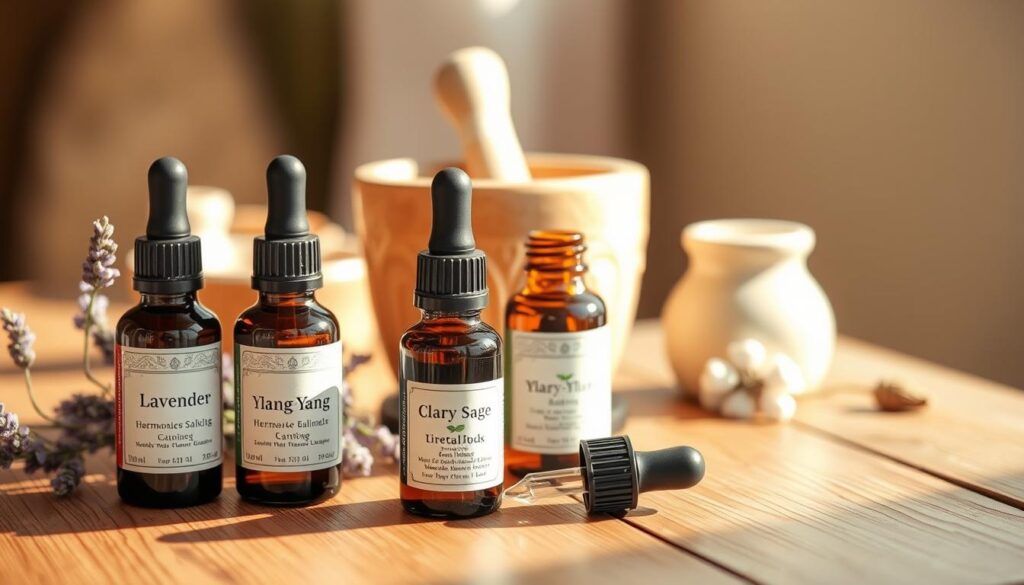
Essential oils are powerful plant extracts that help balance hormones naturally. They are a safe choice compared to products with harmful chemicals. Using these oils daily can help manage hormonal issues without the use of synthetic fragrances.
Popular Essential Oils for Hormonal Balance
Some essential oils are known for their natural remedies for estrogen dominance. Each oil has unique compounds that work with the body’s hormones in different ways.
| Essential Oil | Primary Benefits | Active Compounds |
|---|---|---|
| Clary Sage | Balances estrogen levels, reduces hot flashes | Sclareol, linalyl acetate |
| Lavender | Promotes relaxation, supports sleep quality | Linalool, camphor |
| Geranium | Regulates hormone production, reduces anxiety | Citronellol, geraniol |
| Thyme | Supports progesterone production | Thymol, carvacrol |
Methods of Use
Using essential oils correctly is key to their benefits for hormone balance therapy. Aromatherapy diffusers spread the oils’ benefits in the air. Add 3-5 drops to water in your diffuser and run it for 30-60 minutes.
For topical use, mix essential oils with carrier oils like jojoba or coconut oil. A 2% dilution is good – about 12 drops per ounce of carrier oil. Apply to pulse points, the lower abdomen, or inner ankles for support.
Making natural cleaning products with essential oils is a great way to avoid synthetic chemicals. Add 10-15 drops to homemade cleaners with vinegar, baking soda, and water. This makes effective, hormone-safe cleaning solutions.
Importance of Regular Health Check-ups
Working with healthcare experts is key to managing hormonal issues. Regular visits help spot and tackle estrogen dominance. Your doctor will look at your age, health, and meds to tailor a treatment plan for you.
How Medical Professionals Can Help
Doctors are skilled in finding the cause of hormonal imbalances. They suggest treatments based on your needs. For those at risk, they offer advice on diet, exercise, and stress management.
They might recommend progesterone cream as part of your treatment. They know how different estrogens work in your body. They explain how certain metabolites impact cell growth and health.
Monitoring Hormone Levels
Lab tests give insights into your hormone levels. They check estrogen ratios and track treatment progress. Your doctor decides if tests are needed based on your symptoms and health history. Understanding hormone changes over time helps in making treatment choices.
Regular checks let doctors tweak treatments as needed. This ensures your treatment stays effective and safe.
Incorporating Mindful Practices
Mind-body practices are key in stress reduction for hormones. They help balance estrogen levels naturally. Stress can raise cortisol, upsetting hormone balance. Mindful practices improve hormonal health and overall well-being.
Mindfulness and Its Benefits on Hormones
Mindfulness meditation helps manage excess estrogen by lowering cortisol. Studies show regular practice reduces anxiety and improves emotional health. This helps balance hormones.
Daily mindfulness exercises keep estrogen and progesterone in balance by:
- Lowering cortisol production
- Improving sleep quality
- Enhancing self-awareness
- Promoting healthier eating habits
- Supporting metabolic health
Yoga and Other Exercises
Yoga is great for hormonal balance because it combines physical movement with stress relief. Different yoga styles offer various benefits for managing excess estrogen:
| Yoga Style | Primary Benefits | Best For |
|---|---|---|
| Hatha Yoga | Gentle stretching, relaxation | Beginners, stress relief |
| Restorative Yoga | Deep relaxation, hormone balance | Chronic stress, fatigue |
| Yin Yoga | Calms nervous system | Anxiety, sleep issues |
| Vinyasa Flow | Builds strength, reduces cortisol | Active stress management |
Other great exercises include tai chi, qigong, and gentle walking meditation. These activities help by improving circulation, reducing inflammation, and calming the endocrine system.
Understanding Phytoestrogens
Phytoestrogens are compounds found in plants that are similar to human estrogen. They can interact with estrogen receptors in your body. This interaction may help balance hormones naturally.
What Are Phytoestrogens?
Phytoestrogens act as weak estrogen mimics in the body. They are different from synthetic hormones or DIM supplements for estrogen management. These plant compounds work gently with your body’s natural processes.
These compounds play a unique role in hormone regulation. They can block excess estrogen in people with high levels. For those with low levels, they provide gentle support. This adaptogenic quality makes them valuable for natural hormone balance, especially when combined with other strategies like a seed cycling protocol.
Foods High in Phytoestrogens
Many common foods contain beneficial phytoestrogens. The richest sources include:
- Soybeans and soy products (tofu, tempeh, edamame)
- Flaxseeds and flaxseed oil
- Red clover sprouts
- Chickpeas and other legumes
- Sesame seeds
- Red grapes and wine
Whole food sources provide the best benefits. Eating these foods regularly supports gentle estrogen detoxification through your diet. This approach works well alongside other natural methods like seed cycling protocol for comprehensive hormonal support.
The Role of Gut Health
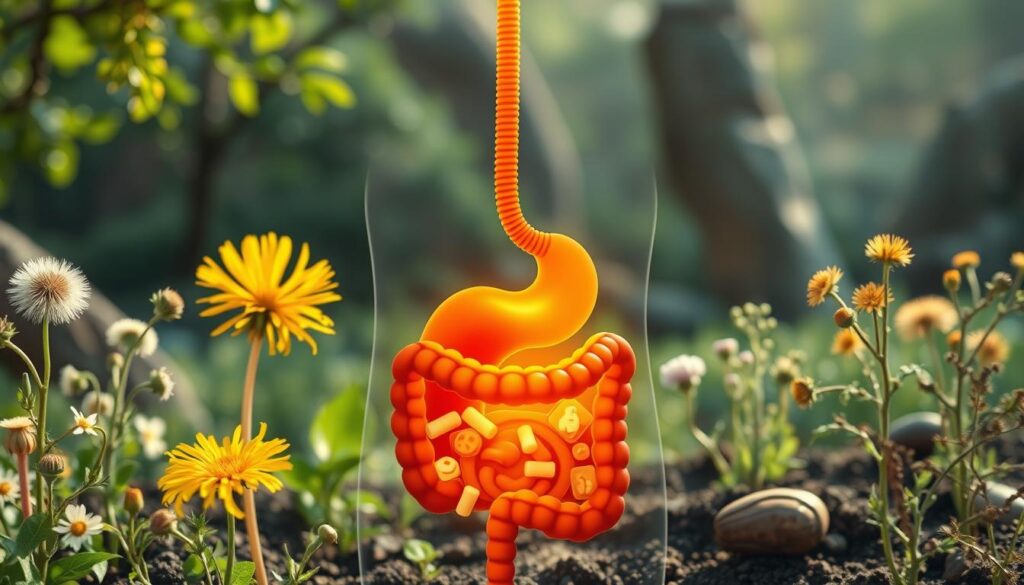
Your digestive system is key in managing excess estrogen and keeping hormone levels healthy. The gut is a major route for estrogen detox, with certain bacteria breaking down and removing excess hormones. A balanced gut microbiome helps with hormone metabolism and prevents estrogen buildup.
Connection Between Gut Health and Hormones
The link between your gut and hormones is strong. Some gut bacteria make an enzyme that hinders estrogen removal. When these bacteria grow too much, they undo the bonds that prepare estrogen for removal, letting it get reabsorbed into your blood instead.
Poor digestion and constipation harm hormone balance. Slow-moving waste lets estrogen get reabsorbed, raising estrogen levels and upsetting hormone balance. Keeping your gut healthy and supporting liver detox starts with regular bowel movements and healthy gut bacteria.
Probiotic Foods to Consider
Eating probiotic-rich foods boosts estrogen detox by growing good bacteria. These foods help push out bad bacteria and enhance hormone processing and elimination.
- Yogurt with live active cultures
- Kefir for diverse probiotic strains
- Sauerkraut and kimchi for fermented vegetables
- Kombucha as a refreshing probiotic drink
- Miso and tempeh for plant-based options
Drink plenty of water with these foods. Water helps move waste and supports gut health.
Additional Lifestyle Considerations
Many lifestyle factors are key to managing estrogen levels naturally. Simple changes can greatly improve your hormonal health. They support natural remedies for estrogen dominance.
Hydration and Its Importance
Drinking enough water helps your body detox naturally. It keeps your digestive system working well, which is key for getting rid of excess estrogen. Try to drink at least 8 glasses of water a day for better hormone balance therapy.
Water helps move waste through your intestines and kidneys. It carries away hormones your body has processed. Without enough water, these processes slow down, leading to hormone buildup.
The Role of Fiber in Estrogen Metabolism
Fiber is like a natural broom for your digestive system. Eating a lot of fiber helps your body absorb less estrogen and get rid of more. This is a simple but effective way to fight estrogen dominance.
Good sources of fiber include:
- Whole grains like oats and quinoa
- Vegetables such as broccoli and Brussels sprouts
- Legumes including lentils and chickpeas
- Fruits like apples and berries
Vegetarians, who eat more fiber, get rid of three times more estrogen in their stool. This helps keep hormone levels healthy. Adding a seed cycling protocol to your diet can offer even more hormonal support.
Conclusion: Emphasizing Holistic Approaches
Treating estrogen dominance is more than just fixing symptoms. Conventional treatments like birth control pills or antidepressants might help for a while. But they don’t fix the hormonal imbalance at its root. A good treatment plan includes diet changes, lifestyle tweaks, and natural remedies to balance hormones.
This approach tackles the main issue and helps your body heal naturally.
The Importance of a Personalized Plan
Hormonal imbalances affect everyone differently. Your age, health history, and current health are key in finding the right treatment. Some might need progesterone cream, while others might require something else.
Having a plan made just for you ensures you get the right treatments for your body and life.
Encouragement to Seek Professional Advice
Getting help from healthcare experts who know about integrative medicine is crucial. Doctors like naturopathic ones, functional medicine practitioners, and endocrinologists at places like Cleveland Clinic or Mayo Clinic can help a lot. They can suggest tests, track your progress, and change your treatment as needed.
Getting professional advice makes sure your treatments are safe and work for you.