

Did you know a single chicken thigh can have 170 to 300 calories? This popular protein is a staple in many American dinners. Yet, many don’t know how many calories they’re eating. Knowing the calories in chicken thighs can change how you eat healthy.
Chicken thighs are a favorite for their protein. A serving of skinless, boneless chicken thigh has about 208 calories and nearly 29 grams of protein. This meets the USDA’s daily protein goal for a 2,000-calorie diet. Chicken thighs are packed with nutrients beyond just calories and protein.
Dark meat in chicken thighs tastes better and is leaner than white meat. Each serving has no carbs and about 9.5 grams of fat without skin. This makes chicken thighs good for many diets, from keto to balanced meals. Knowing the calories in chicken thighs helps you choose the right portions and cooking methods.
Key Takeaways
- A 3.5-ounce serving of cooked skinless chicken thigh contains approximately 179 calories
- One medium skinless, boneless chicken thigh provides about 208 calories and 29 grams of protein
- Chicken thighs contain zero carbohydrates, making them suitable for low-carb diets
- Removing the skin can reduce calorie content by 50 to 80 calories per thigh
- Cooking methods significantly impact the final calorie count of chicken thighs
- Dark meat offers more vitamins and minerals than white meat alternatives
Understanding Chicken Thighs
Chicken thighs are a favorite in American kitchens for their rich flavor and versatility. They offer a great mix of taste and nutrition, perfect for many recipes. Knowing the nutritional value of chicken thighs helps you make better food choices.
What Are Chicken Thighs?
Chicken thighs are the top part of a chicken’s leg, above the drumstick. They are dark meat, which means they taste richer than white meat. Their natural fat keeps the meat tender while cooking.
You can find chicken thighs at most grocery stores, often with bones and skin. Many places also sell boneless thighs for easier cooking.
Nutritional Value Overview
Chicken thighs are a great source of protein. A 3.5-ounce serving has about 55% of its calories from protein and 45% from fat. This mix gives you lasting energy and helps build muscle.
| Nutrient | Amount per 100g | % Daily Value |
|---|---|---|
| Protein | 24.8g | 50% |
| Total Fat | 8.2g | 13% |
| Iron | 1.3mg | 7% |
| Zinc | 2.1mg | 19% |
The boneless chicken thigh calories depend on how you cook them. But, they always have a lot of protein, about 25 grams per 100 grams.
Caloric Breakdown of Chicken Thighs
Chicken thighs have different calorie counts based on how they’re prepared. Raw meat starts with a certain calorie level, but cooking changes it. The biggest factor is whether you keep the crispy skin or remove it before eating.
Calories in Raw Chicken Thighs
Raw chicken thighs have about 185 calories per 3.5-ounce serving with skin. Without skin, that number drops to around 165 calories. The meat has most of the protein, while the skin adds extra fat. Raw thighs are a good starting point for meal nutrition.
Calories in Cooked Chicken Thighs
Cooking changes the calorie count of chicken thighs. A 3.5-ounce serving of cooked meat with skin has 229 calories, 25 grams of protein, and 15.5 grams of fat. Grilled chicken thigh calories change based on cooking time and temperature. A single boneless, skinless cooked thigh weighs about 116 grams and has 208 calories.
Skin-On vs. Skinless Thighs
The skin greatly affects calorie intake. Removing it cuts calories to 209 per serving and fat to 10.9 grams. Skin-on thighs offer extra flavor but add 84 milligrams of sodium and boost iron to 1.3 milligrams.
| Type | Calories | Protein (g) | Fat (g) |
|---|---|---|---|
| Skin-On Cooked | 229 | 25 | 15.5 |
| Skinless Cooked | 209 | 25 | 10.9 |
Cooking Methods and Their Impact
The way you cook chicken thighs greatly affects their calorie count. Different cooking methods can change calories, fat, and nutrients. Each method adds unique flavors and textures, impacting your meal’s health.
Grilling Chicken Thighs
Grilling adds flavor without extra calories. When grilling, fat drips away, making thighs leaner. A grilled, skinless thigh has about 180 calories.
The high heat makes the outside crispy and the inside juicy. Marinate thighs in herbs and spices for the best taste.
Baking Chicken Thighs
Baking is great for baked chicken thigh nutrition with little fat. A baked, skinless thigh has about 185 calories. It keeps moisture and nutrients in while letting seasonings soak into the meat.
Use cooking spray instead of oil to keep calories low. The gentle heat cooks evenly.
Frying Chicken Thighs
Deep frying increases fried chicken thigh calories because of oil absorption. A battered and fried thigh has 238 calories and 14.2 grams of fat. Pan frying in butter also adds calories and saturated fat.
Air frying is a healthier choice. It cuts calories by up to 70% compared to deep frying, keeping the texture crispy.
Comparing Thighs to Other Chicken Cuts
When planning meals and counting calories, knowing the differences between chicken cuts is key. Each part of the chicken has its own nutritional profile. This makes it easier to choose what fits your diet best. The roasted chicken thigh calories are different from other cuts, making this comparison important for meal planning.
Caloric Content of Breast vs. Thigh
Chicken breast and thighs are two popular choices at the grocery store. A 3.5-ounce serving of chicken breast has about 165 calories, with 31 grams of protein and 3.6 grams of fat. The same size of chicken thigh has 179 calories, with 24.8 grams of protein and 8.2 grams of fat. This shows that thighs have more flavor because of their higher fat content.
| Chicken Cut (per 100g) | Calories | Protein (g) | Fat (g) |
|---|---|---|---|
| Breast | 165 | 31 | 3.6 |
| Thigh | 179 | 24.8 | 8.2 |
| Drumstick | 155 | 23.5 | 6.3 |
| Wing | 203 | 22.1 | 12.1 |
| Tenderloin | 89 | 19.4 | 1.2 |
Dark Meat vs. White Meat
The difference between dark and white meat affects taste and nutrition. Dark meat, found in thighs and drumsticks, has about 178 calories per 100-gram serving. White meat from the breast averages 153 calories for the same portion. Dark meat gets its color from myoglobin, a protein that stores oxygen in muscle cells. This extra protein adds to the calorie count but also provides more iron and zinc.
Health Benefits of Chicken Thighs
Chicken thighs are not just tasty; they’re also packed with nutrients. The dark meat in thighs is full of essential nutrients that boost your health. Whether you prefer bone-in or boneless, thighs offer valuable protein and minerals for your body’s needs.
Protein Content and Muscle Health
A 116-gram serving of chicken thigh has about 28.8 grams of protein. This protein is key for rebuilding muscle tissue after working out and keeping your body lean. It helps with enzyme production, supports your immune system, and aids in tissue repair.
Chicken thighs have all nine essential amino acids your body can’t make. This makes them a great choice for athletes and fitness lovers. The protein-to-calorie ratio is good, even in skinless preparations.
Essential Vitamins and Minerals
Chicken thighs are a good source of minerals many people don’t get enough of. A 3.5-ounce serving gives you:
- 1.3 milligrams of iron for oxygen transport
- 84 milligrams of sodium for fluid balance
- B vitamins for energy metabolism
- Zinc for immune function
- Selenium for thyroid health
The iron in thighs is great for preventing anemia and keeping your energy up. Dark meat has more iron than white meat. This makes thighs a good choice for boosting iron without eating red meat.
Factors Affecting Caloric Content
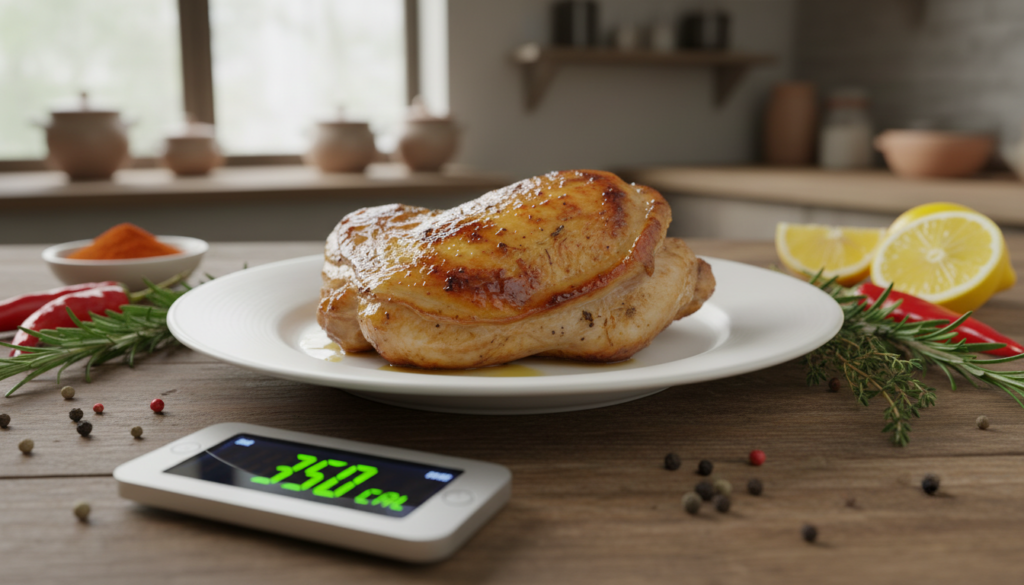
Many things affect the calories in chicken thighs, not just the meat. Knowing these helps you choose better meals and track your nutrition.
Size of the Thigh
Chicken thighs vary in size at the store. The USDA uses a 3.5-ounce (100-gram) serving for chicken thigh nutrition facts. But, actual portions can be 4 to 6 ounces. A smaller thigh has about 140 calories, while a bigger one can have 280 calories or more.
Weight affects boneless chicken thigh calories. A 4-ounce boneless thigh has about 185 calories. A 3-ounce portion has 140 calories. Weighing your chicken before cooking gives the most accurate calorie count.
Preparation Ingredients
What you add while cooking changes the calorie count. Plain grilled chicken has the lowest calories. But, adding things quickly increases the calories:
- One tablespoon of olive oil adds 120 calories
- Barbecue sauce coating adds 50-70 calories per serving
- Breading and frying can double the original calorie count
- Butter-based marinades add 100+ calories per serving
Simple seasonings like garlic powder, paprika, and herbs add flavor without extra calories. Choose marinades with vinegar, citrus juice, or yogurt. They have fewer calories than those with sugar or oil.
Popular Recipes Featuring Chicken Thighs
Chicken thighs are loved in many dishes around the world. They taste great when grilled, baked, or slow-cooked. You can keep the calories low by choosing the right cooking methods. Here are three recipes that highlight the chicken thigh’s versatility and health benefits.
Grilled Lemon Herb Chicken Thighs
This dish is full of Mediterranean flavors without too many calories. A single serving has about 180-200 calories, thanks to minimal oil. Marinate the chicken in lemon juice, garlic, oregano, and olive oil. Grill for 6-7 minutes on each side until it’s 165°F inside.
Spicy BBQ Chicken Thighs
BBQ fans can enjoy this dish without feeling guilty. Homemade BBQ sauce lets you control the sugar. Mix tomato paste, apple cider vinegar, smoked paprika, and honey for a healthier glaze. Bake at 375°F for 35-40 minutes to keep the nutrition in.
Slow-Cooked Chicken Thighs
Slow cookers and pressure cookers make tender, flavorful meals with little fat. Put bone-in thighs, tomatoes, bell peppers, and onions in your slow cooker. Add cumin, chili powder, and garlic. Cook on low for 4-5 hours. This way, you get about 25 grams of protein and 220 calories per serving.
Incorporating Chicken Thighs into a Balanced Diet
Chicken thighs can be a great part of a healthy diet if you know how to cook them right. The USDA recommends eating 5.5 ounces of protein foods every day for a 2,000-calorie diet. By planning your meals with chicken thighs, you can meet your nutritional needs without going over your calorie limit.
Portion Sizes and Serving Suggestions
A medium chicken thigh is about 3 to 4 ounces raw and cooks down to 2.5 to 3 ounces. For weight control, aim for one or two thighs per meal. Removing the skin also cuts calories, with a skinless thigh having about 40 fewer calories than one with skin. Serve your chicken with veggies and whole grains for a full meal.
Meal Prep Ideas with Chicken Thighs
Batch cooking chicken thighs can save you time and keep you on track with your diet. Bake six to eight thighs on Sunday for lunches during the week. Try different seasonings like Italian herbs, Mexican spices, or Asian marinades to keep things interesting. Store cooked thighs in containers with steamed veggies and quinoa.
| Meal Prep Option | Calories per Serving | Prep Time |
|---|---|---|
| Baked Thigh with Brown Rice | 320 | 35 minutes |
| Grilled Thigh Salad Bowl | 280 | 25 minutes |
| Stir-Fried Thigh with Veggies | 350 | 20 minutes |
Knowing the difference between fried chicken thigh calories and roasted chicken thigh calories helps you make better choices. Roasted thighs have about 180 calories each, while fried ones can have 250 calories or more.
FAQs About Chicken Thigh Caloric Content

Many people wonder about the nutritional value of chicken thighs. Knowing the calorie content helps you make better food choices. Let’s answer the most common questions about this popular protein.
How Many Calories Are in a Cooked Thigh?
A cooked boneless, skinless chicken thigh weighing 116 grams has about 208 calories. If it has skin, it has around 229 calories per 3.5 ounces. The cooking method also matters.
Grilled or baked thighs have similar calorie counts. But fried versions can add 50-100 extra calories from oil.
Are Chicken Thighs Healthy for Weight Loss?
Chicken thighs can help with weight loss if prepared right. Remove the skin to cut calories from 229 to 209 per serving. The protein content is 55% of total calories, making you feel full longer.
Dark meat has more iron and zinc than chicken breast. This supports metabolism during weight loss.
Smart preparation tips:
- Choose skinless thighs to reduce fat content
- Season with herbs instead of high-calorie sauces
- Control portions to 3-4 ounces per meal
Can I Eat Chicken Thighs Every Day?
Eating chicken thighs daily is okay if you mix up how you prepare them. Knowing the calorie count helps with meal planning. The remaining 45% of calories come from fat, which is good for you.
Vary between grilling, baking, and slow-cooking. This keeps meals interesting and ensures you get different nutrients.
Conclusion
Chicken thighs are great for taste and nutrition, fitting many diets. They have about 179 calories per 100 grams without skin. With skin, they have around 229 calories. This shows how meal prep choices can change your calorie intake.
Summarizing Chicken Thigh Calories
Chicken thighs are packed with protein, from 24.8 to 28.8 grams per serving. This makes them perfect for muscle health. Cooking methods like grilling or baking are better than frying, which adds fat.
Final Thoughts on Nutritional Choices
Chicken thighs are good for most diets if prepared right. Removing the skin reduces calories by about 50 per serving. Cooking methods like steaming, baking, or grilling keep the meat tasty and healthy.
Your cooking choices greatly affect your meal’s nutrition. Chicken thighs are full of nutrients and flavor, helping with weight management and healthy eating.