
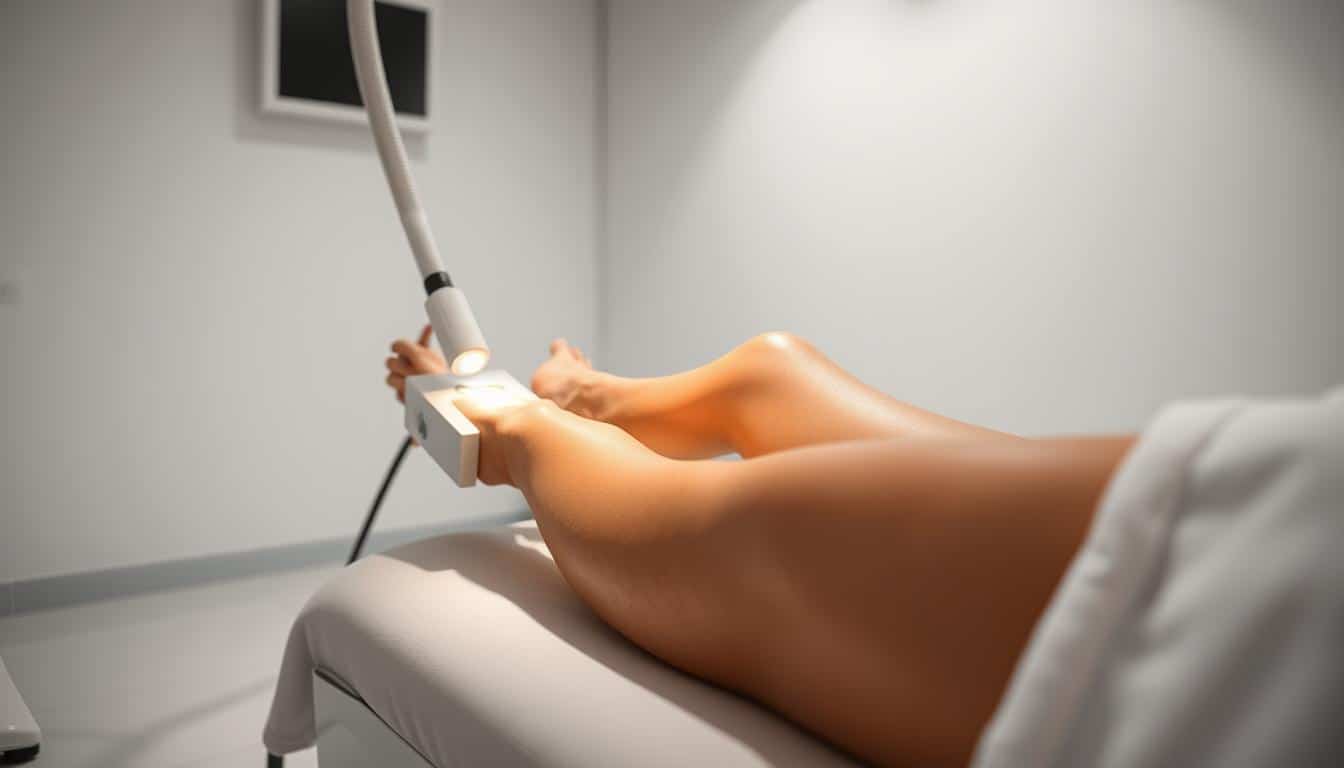
Did you know that 85% of adults who try traditional hair removal methods like shaving or waxing report skin irritation? This widespread frustration has made laser treatments a game-changer for achieving smoother legs. Unlike temporary fixes, this method focuses on long-term results by targeting hair cells during their active growth phase.
One session can reduce visible hair, but lasting outcomes require multiple appointments. Why? Hair grows in cycles, and only 15–20% of follicles are in the active anagen phase at any time. Repeated treatments ensure all hair is addressed as it transitions through growth stages.
Your unique traits—like hair color and growth patterns—also play a role. Darker pigments absorb laser energy more effectively, while hormonal changes or genetics may extend your treatment plan. Compared to waxing or creams, this approach minimizes ingrown hairs and offers years of smooth skin with proper care.
Key Takeaways
- Multiple appointments are essential for targeting hair in all growth phases.
- Individual factors like pigment and hormones influence session frequency.
- Laser methods reduce long-term maintenance compared to shaving or waxing.
- Each treatment weakens follicles, leading to gradual, permanent reduction.
- Consultation with a specialist ensures a personalized plan for optimal results.
Introduction to Laser Hair Removal for Legs
Laser technology has revolutionized how we approach unwanted leg hair. This cosmetic procedure uses concentrated light beams to target pigments in follicles, heating them until they can no longer produce new strands. Darker hairs absorb energy most effectively, making the interaction between melanin and light the cornerstone of this method.
Understanding the Basics
Effective outcomes depend on timing treatments to match hair’s natural growth cycles. Follicles must be in their active phase (anagen) for lasers to disable them permanently. Since only 15–20% of hairs are in this stage at once, spaced appointments ensure all strands get treated as they transition through growth phases.
Common Misconceptions
One persistent myth suggests a single session delivers lasting results. In reality, most people need 6–8 visits to achieve significant reduction. Skin tone and texture also influence effectiveness—darker complexions require specific laser types to avoid pigmentation issues.
While some notice thinner regrowth after initial treatments, consistency remains key. Those with hormonal imbalances or lighter hair colors may need additional sessions. Upcoming sections will explore how biological factors and aftercare routines shape your journey toward smoother skin.
The Science of Hair Growth and Laser Mechanism
Your hair follicles operate on a biological clock that determines their visibility to laser energy. Three distinct phases—active, transitional, and resting—dictate when follicles respond best to treatment.
Hair Growth Phases Explained
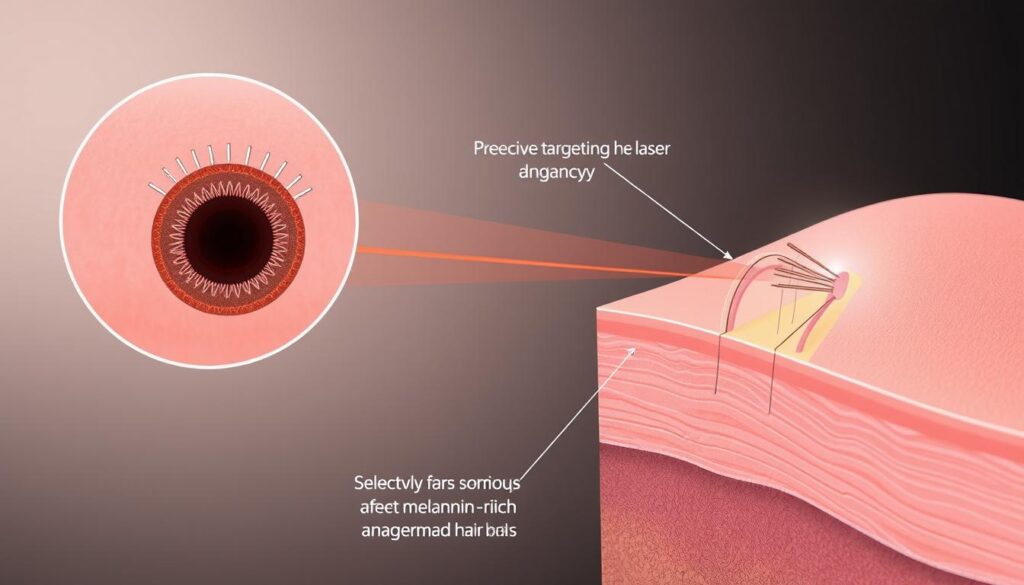
The anagen phase is the only stage where lasers can permanently disable follicles. During this active period, hairs remain connected to blood vessels, allowing concentrated light to travel down the shaft and destroy the root. Roughly 15–20% of your body’s follicles are in this state at any moment.
In the catagen phase, growth slows as follicles detach from nutrients. By the telogen stage, hairs shed naturally. Since inactive strands don’t absorb laser energy, treatments must align with your unique growth rhythm.
How Lasers Target Hair Follicles
Melanin in darker pigments acts like a bullseye for laser beams. When light energy converts to heat, it damages follicles enough to delay or stop regrowth. Areas like the legs often require more sessions due to varied hair density and growth speeds.
Body zones differ significantly—coarse thigh hairs might linger in anagen longer than finer calf strands. Individual factors like hormonal shifts or genetics further influence how quickly follicles cycle through phases. Customized plans account for these variables to maximize results.
Critical Factors Impacting Treatment Outcomes
Results from laser-based procedures vary widely due to biological and environmental factors. Three key elements determine whether your regimen delivers smooth, lasting results or requires adjustments.
Hormonal Influences and Hair Density
Androgen levels directly affect follicle activity. Conditions like PCOS or thyroid imbalances can trigger rapid regrowth, increasing the number of appointments needed. Dense hair clusters—common in the bikini zone—also demand precise energy calibration to avoid skin irritation.
Skin Type and Hair Color Considerations
Lasers work best with high melanin contrast: dark strands against light skin. While newer devices safely treat darker complexions, reduced pigment in blonde or gray hairs limits effectiveness. “Color mismatch is the top reason for incomplete follicle destruction,” notes a 2023 dermatology study.
Individual Hair Regrowth Cycles
Your body’s unique rhythm dictates when follicles enter the growth phase. Though 15–20% of hairs are active at any time, genetic factors can skew this ratio. Customized schedules account for these variations, ensuring each procedure targets the maximum number of viable strands.
Coarse bikini-area hairs often linger in growth phases longer than leg strands, requiring tailored approaches. Regular progress assessments help technicians adjust timing or intensity for optimal outcomes.
how many sessions for laser hair removal legs
Achieving smooth, hair-free legs through advanced methods requires strategic planning tailored to individual biology. Most individuals need three to six appointments spaced over several months to see full results. Early visits focus on reducing density, while later ones address stubborn strands.
Expected Session Count and Frequency
Clinics typically recommend initial appointments every 6–8 weeks. This aligns with hair regrowth cycles, allowing technicians to target new follicles entering the active phase. Maintenance visits then extend to 10–12 week intervals as regrowth slows.
| Treatment Phase | Average Sessions | Interval |
|---|---|---|
| Initial Reduction | 3–4 | 6–8 weeks |
| Consolidation | 1–2 | 8–10 weeks |
| Maintenance | As needed | 3–6 months |
Variations Based on Personal Factors
Hormonal conditions like PCOS may extend treatment timelines by 30–50%. Coarse hairs often require higher energy settings and additional visits compared to finer strands. “Patients with darker pigmentation typically see faster results due to better melanin absorption,” explains a 2023 clinical review.
Genetic factors also influence outcomes. Those with rapid growth cycles might complete their plan in four months, while others need six. Regular assessments ensure adjustments align with your body’s response, maximizing efficiency.
Personalizing Your Laser Hair Removal Treatment
Custom treatment plans are the cornerstone of effective follicle reduction strategies. Unlike one-size-fits-all approaches, tailored regimens account for biological nuances that determine long-term success. This begins with a detailed consultation and evolves through ongoing adjustments.
Consultation Insights and Customization
Your initial assessment maps three critical elements: skin type, hair texture, and hormonal patterns. Specialists use this data to select appropriate laser settings—for example, lighter complexions often pair well with Alexandrite devices, while darker tones may require Nd:YAG technology.
Areas like the bikini area or facial hair zones demand extra precision due to sensitivity.
“We adjust pulse durations based on density—coarse clusters need slower energy delivery to prevent irritation,”
explains a certified dermatologist. This attention to detail ensures safer procedures andoptimal results.
Scheduling and Touch-Up Treatments
Appointment frequency adapts to your unique growth cycle. Most clients start with 6-week intervals, extending gaps as regrowth slows. Maintenance visits every 3–6 months help sustain outcomes, especially for stubborn zones.
- Thicker hair in the bikini area often requires 1–2 extra sessions
- Facial hair may need shorter intervals due to faster regrowth
- Seasonal adjustments account for sun exposure risks
Clinicians track progress through each phase, modifying plans if hormonal shifts or lifestyle changes occur. This dynamic approach minimizes total sessions while maximizing removal works efficiency.
Preparing for and Maintaining Optimal Results
Proper preparation extends beyond clinic visits—it begins at home. Following specific guidelines before and after appointments ensures treatments work efficiently while protecting your skin. Consistency in care routines directly impacts how quickly you achieve lasting smoothness.
Pre-Treatment Guidelines
Avoid sun exposure for two weeks before appointments. Tanned skin increases burn risks and reduces effectiveness. Refrain from waxing or plucking—these methods remove follicles that lasers need to target. Shaving is permitted 24 hours prior, as it preserves the root.
Skip skincare products with retinoids or acids 3–5 days beforehand. These ingredients heighten sensitivity. Wear loose clothing to your appointment to minimize friction on treated areas.
Post-Treatment Care and Aftercare
Apply fragrance-free moisturizers and SPF 30+ daily for 7–10 days. Cool compresses ease redness, while lukewarm showers prevent irritation. Avoid pools, saunas, or intense workouts for 48 hours to let skin recover.
If body hair regrows faster than expected, schedule your next session promptly. Delays allow follicles to re-enter dormant phases, reducing progress. Most clinics recommend 6–8 week intervals for optimal timing.
| Activity | Before Session | After Session |
|---|---|---|
| Sun Exposure | Avoid 14 days | Limit 7 days |
| Skincare | No retinoids | Gentle cleansers |
| Exercise | No restrictions | Wait 48 hours |
Adhering to these steps maximizes each session’s impact. “Patients who follow aftercare protocols see 30% better results,” notes a 2023 dermatology report. Track your skin’s response and communicate changes to your technician for tailored adjustments.
Conclusion
Achieving lasting smoothness requires aligning advanced technology with your body’s natural rhythms. Success hinges on scheduling treatments during active growth phases, when follicles best absorb light-based energy. Most individuals need 6–8 appointments spaced over weeks to address all hair cycles effectively.
Your skin type, pigment contrast, and hormonal patterns shape outcomes. Darker strands respond faster to energy absorption, while genetic factors may extend timelines. Regular progress checks ensure adjustments match your unique regrowth speed.
Consultations provide personalized plans for your target area, balancing density and sensitivity. Combined with proper aftercare, this strategic approach minimizes long-term maintenance. Though gradual, results often last years—a worthwhile trade-off for ditching daily shaving.
Ready to explore your options? Book a professional assessment to map your ideal treatment journey. Consistent effort today leads to effortlessly smooth skin tomorrow.