
Surprising fact: since 2007, roughly 1 in 27,500 blood donors in the United States tests positive for this infection, showing silent risk even where many assume it is rare.
This introduction explains what Chagas disease is and why attention matters. A tiny parasite carried in feces from certain insects can enter the body at a bite or through the eye. Early infection may cause mild symptoms or none at all.
Over years a chronic problem can develop, often affecting the heart or digestive tract. Timely diagnosis improves chances that antiparasitic treatment will help. Health systems screen blood supplies and monitor risk, yet underdiagnosis persists.
Readers will get clear, practical guidance on recognition, testing, and action steps to reduce exposure and protect family health.
Key Takeaways
- Chagas disease can be silent early, then cause serious heart or digestive problems years later.
- A parasite transmitted via insect feces is the usual cause; bites alone may not tell the whole story.
- Screened blood and organ supplies reduce risk, but awareness helps prompt testing when needed.
- Antiparasitic drugs work best in early infection; monitoring is key for chronic cases.
- Simple home and travel precautions cut exposure in higher-risk areas.
American Trypanosomiasis at a Glance: What Chagas Disease Is
Also known as American trypanosomiasis, this infection is caused by the protozoan Trypanosoma cruzi. The parasite can invade cells and quietly persist in the body for years.
How transmission happens
Triatomine insects—commonly called a kissing bug—feed at night and often bite near the face. They defecate near the bite, and parasite-containing material can enter through the wound, eye, mouth, or broken skin.
Acute versus chronic
In the acute phase, many people have no obvious symptoms or only mild signs, which complicates early detection.
If untreated, infection can progress to a chronic phase that remains silent for years yet leads to serious complications. Long-term effects include arrhythmias, an enlarged heart and heart failure, or digestive enlargement such as a megacolon or megaesophagus.
- Early detection improves chances that antiparasitic therapy will help.
- Awareness of the vector and exposure settings supports timely testing and care.
Where Chagas Disease Occurs: From Latin America to the United States
Many cases remain concentrated in south america, central america, and Mexico where vector habitats and housing conditions favor spread.
In the united states, awareness is rising as health officials note both imported and locally acquired infections. Estimates suggest over 300,000 people in the united states may be infected, and routine screening outside blood banks is limited.
Endemic regions and risk factors
Most infections occur where triatomine insects and animal reservoirs thrive. Rural and peri-urban housing often raises exposure risk. The parasite cruzi persists in reservoir hosts, shaping local transmission.
Emerging presence in the united states
From 2000–2018, 29 confirmed locally acquired cases appeared across several states. Blood donor screening since 2007 finds about 1 in 27,500 donors positive, signaling low but present risk.
Migration, climate, and changing areas
Migration moves infections into new communities. Warming climates can expand vector-friendly areas northward. Presence of vectors does not always mean high transmission; housing and animal hosts matter.
“Surveillance and clinician awareness are key to finding hidden infections early and connecting people to care.”
| Region | Estimated Burden | Key Risk Factors |
|---|---|---|
| South America | High (millions) | Rural housing, reservoir mammals |
| Central America & Mexico | High | Peridomestic vectors, housing gaps |
| United States | Emerging (~300,000+) | Imported cases, local vectors, underdiagnosis |
kissing bugs chagas disease: What It Means and Why It Matters
A bug’s routine behavior at night creates the pathway that allows T. cruzi to reach human tissue. Triatomine insects feed and often defecate near the bite, and parasites in fecal matter can enter through tiny skin breaks, the eye, or the mouth—especially if someone scratches.
Why this matters: the infection can be silent for years yet later cause serious heart or digestive problems. Early detection and treatment matter most for better outcomes.
Who is at increased risk
- People living in mud, adobe, or thatch homes where vectors hide in cracks.
- Households near reservoir animals such as rodents, dogs, and opossums.
- Travelers or immigrants from endemic regions and children born to infected mothers.
- Residents in parts of the United States where infected insects have been documented.
“Awareness of how the parasite spreads helps you take simple steps that reduce long-term harm.”
| Risk Factor | Why it matters | Simple action |
|---|---|---|
| Housing type | Cracks and thatch create hiding places for insects | Seal cracks; improve walls and roofs |
| Peridomestic animals | Animals can carry the parasite and attract vectors | Keep pet bedding clean; limit wild mammal access |
| Travel and origin | People from endemic areas may have prior exposure | Ask about testing if symptomatic or pregnant; learn more about symptoms and causes |
How Infection Happens: Transmission Routes You Should Know
Transmission is not limited to a single event. T. cruzi reaches people through several clear pathways, each needing different prevention steps.
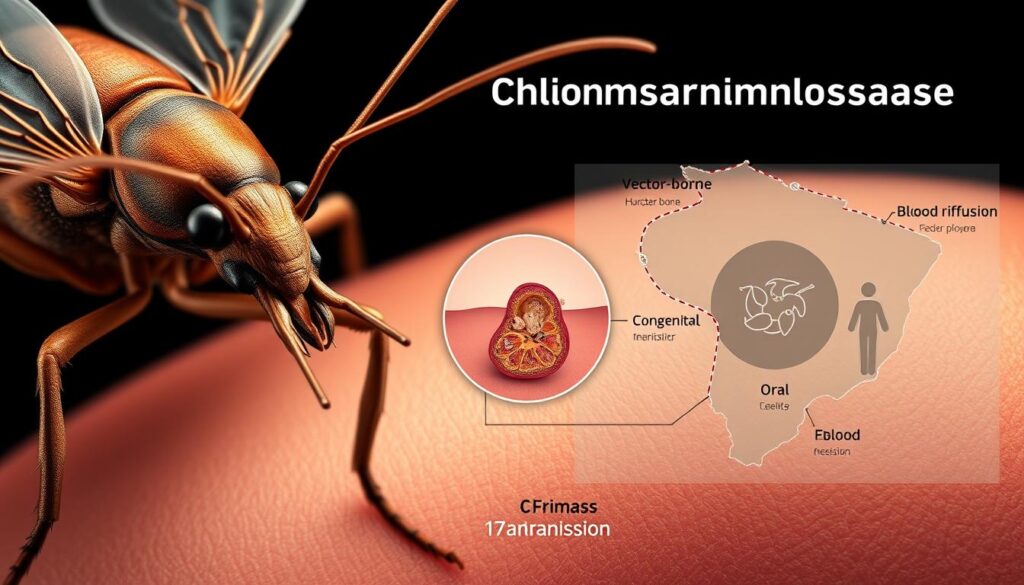
Vector-borne exposure: the bite, the scratch, and parasite entry
When triatomine insects feed, they may leave fecal material at the site. Rubbing or scratching moves the parasite into broken skin, the eye, or the mouth.
Mucosal entry matters: fingers that touch contaminated material during sleep can transfer the parasite to the conjunctiva or mouth and cause infection.
Beyond bugs: blood, organ, and lab routes
Non-vector transmission includes contaminated blood and organs. In the United States, blood screening since 2007 lowered risk; about 1 in 27,500 donors tests positive.
Organ transplant can transmit infection, especially with heart grafts, so pre-transplant testing and post-transplant monitoring are routine where risk exists.
Laboratory exposure from sharps or mucosal contact can also infect a person, so biosafety protocols are essential for workers who handle T. cruzi.
Foodborne and congenital transmission: kitchen and pregnancy risks
Outbreaks have linked unpasteurized juices and unpeeled produce to infection when contaminated material enters food or drink. Heating or drying inactivates the parasite, so safe food handling helps prevent illness.
Congenital transmission occurs in some births from infected mothers—screening during pregnancy in at-risk populations can identify infants who need testing and early care.
- Practical steps: wash and peel produce, avoid suspect juices in endemic areas, and tell clinicians about any blood or transplant history.
- Remember: because non-vector routes skip the need for a bite, system-level screening and personal vigilance both matter.
Signs and Symptoms by Phase: From Acute to Chronic
Early signs vary widely. Some people have a mild fever, tiredness, or a rash. Others have no clear symptoms. That makes the acute phase easy to miss.
Acute phase (weeks to months)
Typical early symptoms include fever, swollen glands, and body aches.
A painless eyelid swelling called Romaña’s sign can appear when the eye is the entry point.
Also common are headache, appetite loss, nausea, vomiting, and enlarged liver or spleen.
Chronic phase (10–20+ years)
The infection can persist silently and then affect the heart or digestive tract decades later.
Cardiac problems range from palpitations and conduction issues to heart failure and sudden arrest.
Digestive problems include an enlarged esophagus causing trouble swallowing and an enlarged colon with long-term constipation.
“Early recognition of acute signs opens a window for treatment when it helps most.”
| Phase | Common signs | When to seek care |
|---|---|---|
| Acute phase | Fever, Romaña’s sign, rash, swollen glands | If symptoms follow travel or exposure |
| Chronic phase | Arrhythmias, heart failure, esophagus/colon enlargement | New heart rhythm trouble or persistent digestive issues |
| Follow-up | Regular cardiac monitoring, symptom checks | Ask your clinician about testing if at risk |
Complications to Watch: Heart and Digestive System Damage
Long-term infection can quietly harm the heart and gut, producing problems that may not appear for years. In chronic cases, cardiac and digestive outcomes affect a sizable minority of people.
Cardiac outcomes
Chronic infection leads to arrhythmias and dilated cardiomyopathy in about 14–45% of cases. Irregular heart rhythms show up on ECG and can progress to an enlarged heart with reduced pumping ability.
As damage advances, heart failure can develop, causing swelling, fatigue, and breathlessness. There is also a risk of sudden cardiac arrest in some people.
Digestive outcomes
Digestive involvement occurs in roughly 10–21% of chronic cases. Loss of nerve endings can cause a painful enlarged esophagus (megaesophagus) and an enlarged colon (megacolon).
These changes produce difficulty swallowing, weight loss, severe constipation, bloating, and abdominal pain. Progressive nerve loss slows movement of food and stool, worsening symptoms over time.
“New palpitations, fainting, or lasting bowel changes are red flags that deserve prompt medical review.”
- Not everyone develops these complications, but early recognition improves outcomes.
- Care usually involves cardiology for rhythm and pump support and gastroenterology for swallowing and bowel management.
- Nutrition and regular follow-up help limit loss of function and maintain quality of life in chronic cases.
Diagnosis: How Chagas Disease Is Detected in Different Phases
Accurate diagnosis depends on timing, clinical signs, and targeted tests. Early infection often needs direct detection, while long-standing infection relies on antibody confirmation.
Acute phase testing
When a person is recently infected, labs look for the parasite in the blood. Microscopy or PCR finds Trypanosoma cruzi DNA. PCR is more sensitive and useful for tracking response to treatment.
Chronic phase testing
In later stages, parasite levels drop and clinicians use antibody-based serology. Two different serologic assays are often required to confirm infection.
Who should be tested in the United States
Testing is advised for people with travel or origin from endemic areas, unexplained cardiomyopathy or arrhythmias, pregnant persons from high-risk regions, and recipients of screened blood or organs.
Therapy and long-term care
Acute treatment uses benznidazole or nifurtimox to reduce parasite burden; side effects include rash, neuropathy, and GI upset so clinicians monitor patients closely.
In the chronic phase, therapy may lower progression risk, but care focuses on rhythm monitoring and management of heart failure or digestive problems.
Transplant considerations
Organ recipients, especially heart transplant patients, face reactivation risk under immunosuppression. Regular PCR surveillance enables early detection and prompt antiparasitic therapy.
Prevention Toolkit: Reducing Your Risk at Home and During Travel
A layered approach—household fixes, personal protection, and system-level safeguards—offers the best defense against infection. Small, consistent steps make a measurable difference for people who live in or visit areas where the vector and related transmission routes exist.

Vector control: insecticides, sealed housing, and bed nets
Reduce indoor colonization by sealing wall and roof cracks, patching plaster, and upgrading roofs where possible.
Use residual insecticides (for example, pyrethroid-based products) through public health programs or licensed pest services to lower indoor insect presence. Sleep under tightly tucked bed nets; insecticide-treated nets add extra protection in rural settings.
Personal protection: repellents, sleeping under nets, food safety
Apply EPA-registered repellents to exposed skin at night and follow label directions. Elevate beds away from walls, keep bedding off floors, and remove clutter that shelters vectors.
Practice safe food habits: peel and wash produce, avoid unpasteurized juices, and choose hot, freshly prepared foods to reduce oral transmission risk.
System-level safeguards: screened blood and organs in the United States
Public health measures complement personal actions. Since 2007, screening of blood donations in the united states has reduced transfusion risk.
Organ transplant programs also screen donors and monitor recipients to limit transmission via organ grafts. Together, these systems plus household and travel precautions make a practical, layered defense.
“Combine home improvements, personal protection, and health-system screening for the most reliable protection.”
Living with Risk in the United States: Practical Guidance for People and Providers
Residents and providers in affected areas can use simple, practical steps to reduce exposure and speed diagnosis. This guidance focuses on recognizing the insect, improving homes, and reducing pet and rodent attraction.
Recognize and respond
In the united states, the kissing bug is elongated and flattened with a patterned edge. It feeds at night and may leave itchy marks on exposed skin.
Capture a suspected bug using a container or tape. Do not crush it. Contact local extension or public health for identification and advice.
Home and pet measures
High-risk dwellings have wall or roof gaps and clutter. Seal cracks, reduce clutter, and use nets to lower indoor colonization.
Keep pet bedding clean and manage rodents to reduce peridomestic attraction. These steps support broader disease control goals.
- Tell clinicians about travel or residence in Mexico, Central or South America if you have new cardiac symptoms.
- Providers should screen at-risk people with conduction problems or unexplained cardiomyopathy and coordinate care with specialists.
- Community education and clinic partnerships improve testing access and reduce underdiagnosis.
“Simple household fixes, safe handling of specimens, and timely testing empower people and providers to act.”
Conclusion
Early detection and practical prevention together offer the best defense against long-term harm from infection with Trypanosoma cruzi. Prompt diagnosis by blood testing (microscopy, PCR, or serology) and timely treatment raise the chance of limiting parasite persistence and future complications.
Long-term effects often affect the heart—including arrhythmias and heart failure—and can also cause serious digestive problems. In the United States, blood screening and clinician awareness reduce risk, yet underdiagnosis remains a concern for many people.
Simple actions—sealing home cracks, using bed nets, safe food handling, and seeking screened blood or organ services—cut exposure. If you have lived in or traveled to endemic areas and develop unexplained cardiac or gut symptoms, ask your clinician about testing for T. cruzi.