

Did you know nearly 476,000 people in the U.S. get treated for Lyme disease each year? The CDC says this. It’s very important to know the symptoms early. Lyme disease comes from deer ticks and has different stages with symptoms.
Spotting it early can stop it from getting worse. People who often go to grassy or brushy places are at risk. This article will help you know the early signs of Lyme disease. It’s all about acting fast and right.
Key Takeaways
- Lyme disease affects nearly 476,000 Americans each year.
- Early detection of Lyme disease symptoms is key to avoid serious problems.
- The disease is mainly spread by deer ticks (Ixodes scapularis).
- Those who spend time in grassy or brushy areas are more at risk.
- Knowing the signs of Lyme disease helps in getting the right treatment quickly.
What is Lyme Disease?
Lyme disease is a big problem in the northern United States. It’s caused by an infection from Borrelia bacteria. This disease spreads mainly through the bite of infected black-legged ticks.
Overview of Lyme Disease Transmission
Lyme disease spreads when an infected tick bites a person. The tick injects Borrelia bacteria through its saliva. These ticks are hard to see, so they can attach to your body without you noticing.
It’s very important to remove ticks quickly. This helps prevent the disease from spreading.
Importance of Early Detection
Finding Lyme disease early is key to treating it well. Look out for symptoms like fever, chills, and fatigue. Also, watch for the distinctive rash called erythema migrans.
Seeing these signs early means you can get help fast. This helps avoid long-term problems and makes you feel better sooner. Knowing how Lyme disease spreads helps you spot symptoms early and get the right care.
Common Early Symptoms
The early signs of Lyme disease show up 3 to 30 days after a tick bite. Spotting these signs early is key for quick treatment. Here are the common early symptoms:
Fever and Chills
Fever and chills are early signs of Lyme disease. They feel like the flu, making it hard to tell them apart. The fever is usually low but lasts a while and can cause muscle aches.
Fatigue and Weakness
Lyme disease fatigue is another common symptom. It’s not just feeling tired. It’s a deep tiredness that makes daily tasks hard. People also feel weak, making simple tasks hard to do.
Headaches
Many people get headaches early on. These headaches can be strong or weak. They might also be sensitive to light and noise. Watching these headaches and any other symptoms is important.
Knowing about early Lyme disease symptoms like fever, chills, fatigue, and headaches helps. It makes it easier to catch the disease early and treat it well.
| Symptom | Description | Impact |
|---|---|---|
| Fever and Chills | Low-grade fever, often with muscle aches | Flu-like symptoms |
| Fatigue and Weakness | Distinct from everyday tiredness, can be debilitating | Impact on daily activities |
| Headaches | Varying intensity, sometimes with light and noise sensitivity | Can persist, affecting comfort and productivity |
Distinctive Skin Rash
A rash is a key sign of Lyme disease. It warns us and helps us find treatment early. Knowing about this rash is key to fighting Lyme disease.
Erythema Migrans Explained
About 70-80% of people with Lyme disease get a rash called erythema migrans. It starts as a small, red spot at the tick bite. Then, it grows, looking like a bull’s-eye rash with a clear center and a red ring.
Other Rash Variations
Not everyone gets the same rash. Some people might have rashes on different parts of their body. Others might have rashes that are all red or don’t look like a bull’s-eye.
These different rashes mean we need to watch for any unusual rashes after being bitten by a tick. It’s important to see a doctor right away if you notice anything strange.
Late-Stage Symptoms
Lyme disease can get worse if not treated. It can show up months or years after a tick bite. This stage has many bad symptoms that hurt different parts of the body.
Joint Pain and Swelling
Severe Lyme disease joint pain is a big problem in the late stage. It feels like arthritis and hurts the knees a lot. It can also hurt other big joints. Swelling and pain make it hard to do everyday things.
Neurological Issues
Neurological problems are common in late Lyme disease. These include facial palsy, which makes one or both sides of the face droop. People might also have chronic encephalopathy, numbness, and headaches.
Other issues are meningitis and leukoencephalitis. These are serious problems with the brain. Untreated Lyme disease can lead to long-term brain problems. For more info, check the Late Lyme disease page.
Heart Complications
Lyme disease can hurt the heart too. It causes irregular heartbeats or blockages. This can make you dizzy, short of breath, and even hurt your chest.
Knowing about late-stage symptoms is key to treating Lyme disease well. Watch for these signs and see a doctor fast. This helps keep you healthy and happy.
Symptoms in Children
Lyme disease in kids can be tricky to spot. It shows up differently than in grown-ups. This makes it hard to catch early.
Unique Manifestations in Young Patients
Kids with Lyme disease might show signs that adults don’t. These include:
- Behavioral changes: Kids might get moody, irritable, or do worse in school.
- Sleep disturbances: They might have trouble sleeping or feel very tired.
- Digestive problems: Stomach pain and not wanting to eat can be signs too.
Importance of Parental Awareness
Parents need to watch for Lyme disease in kids. Here’s how to act fast:
- Check for ticks after being outside.
- Notice if your child acts differently or sleeps a lot.
- See a doctor if you think Lyme disease might be there.
Acting quickly can help kids get better faster. It makes their recovery smoother.
Diagnostic Procedures
Finding Lyme disease takes careful steps. Doctors use exams and tests to check for it. A rash and tick bites help, but more tests are needed to be sure.
Blood Tests for Lyme Disease
Blood tests like ELISA and Western blot are used. The ELISA test looks for antibodies first. It’s very good at finding them.
If ELISA shows something, Western blot is next. It checks for antibodies in two ways. This gives a full picture of the body’s fight.

| Blood Test | Purpose | Notes |
|---|---|---|
| ELISA | Detects antibodies against Borrelia burgdorferi | First step in testing |
| Western Blot | Confirms ELISA test results | Uses IgM and IgG panels |
Physical Exams and Symptom Evaluation
A doctor’s exam is key in finding Lyme disease. They look at your history and symptoms. They also check for the rash.
They also think about tick bites and your symptoms. Things like fever and tiredness help confirm it.
Treatment Options
Treating Lyme disease often means using medicines and other help. Knowing about these options helps patients choose the right care.
Antibiotic Therapies
Antibiotics are key in fighting Lyme disease. Doctors usually give doxycycline, amoxicillin, or cefuroxime axetil. How long you take the medicine depends on how far the disease has spread and how you react to it.
Most people get better with antibiotics. But, it’s very important to take all the medicine your doctor says. This makes sure you get better fully and don’t get sick again.
Alternative Treatments and Their Efficacy
Some people try herbal remedies, acupuncture, or change their diet. But, how well these work can vary. It’s important to talk to a doctor before trying these to make sure they work well with other treatments.
Here’s a quick look at the different treatments:
| Treatment | Method | Efficacy |
|---|---|---|
| Antibiotic Therapies | Doxycycline, Amoxicillin | High |
| Herbal Remedies | Natural extracts | Variable |
| Acupuncture | Needle therapy | Unproven |
For those fighting Lyme disease, mixing medical advice with good treatments is the best way to get better.
Prevention Strategies
Preventing Lyme disease is very important. Cases are rising fast. Knowing how to avoid tick bites and using good tick repellents can keep you safe.
Tick Bite Prevention
To stop tick bites, we need to do a few things. First, stay away from wooded and grassy areas. This is important from April to September when ticks are most active.
Also, use insect repellents that the Environmental Protection Agency has approved. Check yourself for ticks after being outside. This helps catch ticks before they bite.
Protective Clothing Recommendations
Wearing the right clothes is key. Choose long pants and long-sleeved shirts. Make sure pants are tucked into socks or shoes.
Wear light-colored clothes so you can see ticks easily. Treat your clothes and gear with 0.5% permethrin. This gives you extra protection. Wearing a hat helps keep ticks out of your hair.
Also, take off outdoor clothes right away. Wash and dry them at high heat to kill ticks. This way, you can greatly lower the chance of tick bites and Lyme disease.
The Role of the Environment
The Lyme disease environment and tick activity are closely linked. Understanding this helps us prevent Lyme disease. Things like where we live, the weather, and the local wildlife affect tick habitats.
Tick Habitats and Their Impact
Ticks love wooded, brushy, and grassy places. These areas are perfect for Lyme disease. They need humid spots with lots of leaves or plants to stay wet.
These spots also have many hosts for ticks. This is important for their life cycle.
Seasonal Considerations for Lyme Disease
Knowing when ticks are most active is important for staying safe. Ticks are busiest from late spring to early fall. This is when they are most likely to spread Lyme disease.
So, it’s key to wear protective clothes and check for ticks often during these months.
Co-Infections with Lyme Disease
Lyme disease often has friends along for the ride. Ticks can carry many germs, causing more than one illness at once. This makes it hard to figure out what’s wrong and how to fix it.
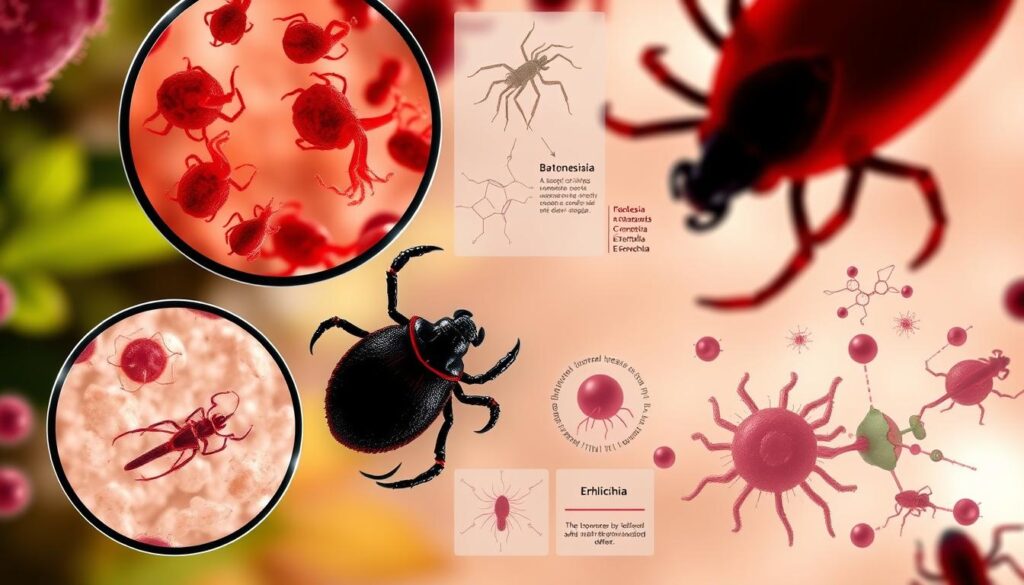
Common Co-Infections
Some common friends of Lyme disease are:
- Babesiosis: It’s like malaria and can make you feel very sick, with fever and anemia.
- Anaplasmosis: This illness can make you feel tired, have headaches, muscle pain, and chills.
- Bartonella: It’s known for causing cat scratch disease. It can make you feel sick, swell lymph nodes, and cause skin problems.
Symptoms of Co-Infections
It’s important to know the signs of these friends:
- Fever and chills: Babesiosis and anaplasmosis can make you feel very sick with fevers and chills.
- Muscle pain: Anaplasmosis can make your muscles hurt, adding to the feeling of being sick.
- Joint pain and swelling: These illnesses can make your joints hurt and swell, similar to Lyme disease.
Long-Term Effects of Lyme Disease
Some people have symptoms that last long after Lyme disease treatment. This is called Post-Treatment Lyme Disease Syndrome (PTLDS). It can really affect daily life and how well you feel.
Post-Treatment Lyme Disease Syndrome
PTLDS means you might feel tired, have muscle and joint pain, and struggle with thinking. Even though the infection is gone, these symptoms can stay. It’s not fully understood, but it involves the immune system and maybe some bacteria left behind.
Managing Chronic Symptoms
Dealing with chronic Lyme disease symptoms needs a team effort. Patients find help in medical care, physical therapy, and changing their lifestyle. Here are some ways to help:
- Medication: Antibiotics are key, but other medicines can help with pain and tiredness.
- Physical Therapy: Exercise and physical therapy can help with joint pain and moving better.
- Nutrition: Eating foods that fight inflammation can help your health and lessen symptoms.
- Mental Health Support: Talking to a counselor and joining support groups can help with the emotional side of chronic illness.
Using these methods, people with PTLDS can manage their symptoms better. This can improve their life quality.
Impact on Mental Health
Lyme disease and mental health are closely linked. This connection is often missed. The mental health effects of Lyme disease can greatly reduce quality of life.
Psychological Effects of Lyme Disease
Lyme disease can cause anxiety, depression, and problems with thinking. People often feel overwhelmed and scared. This is because the disease is long-lasting and its symptoms can change a lot.
These feelings show why it’s important to take care of both body and mind.
Resources for Support
It’s key to have strong support when dealing with Lyme disease’s mental side. Therapy, counseling, and support groups are very helpful. Many groups and organizations are there to help manage mental health issues.
They remind us that we don’t have to face this alone.
When to Seek Medical Help
Knowing when to get medical help for Lyme disease is key. Quick action can stop the disease from getting worse. Spotting Lyme disease emergency symptoms early is very important for your health.
Recognizing Urgent Symptoms
Get help right away if you have heart problems, really bad joint pain, or can’t move your face. These are signs you need to see a doctor fast. Knowing these signs helps you get help quickly, which is good for your health.
Consultation and Follow-Up Care
Seeing a doctor early can help you get better faster. It’s important to keep going back to your doctor for Lyme disease care. This helps catch any new problems early, keeping you healthy and avoiding long-term issues.