
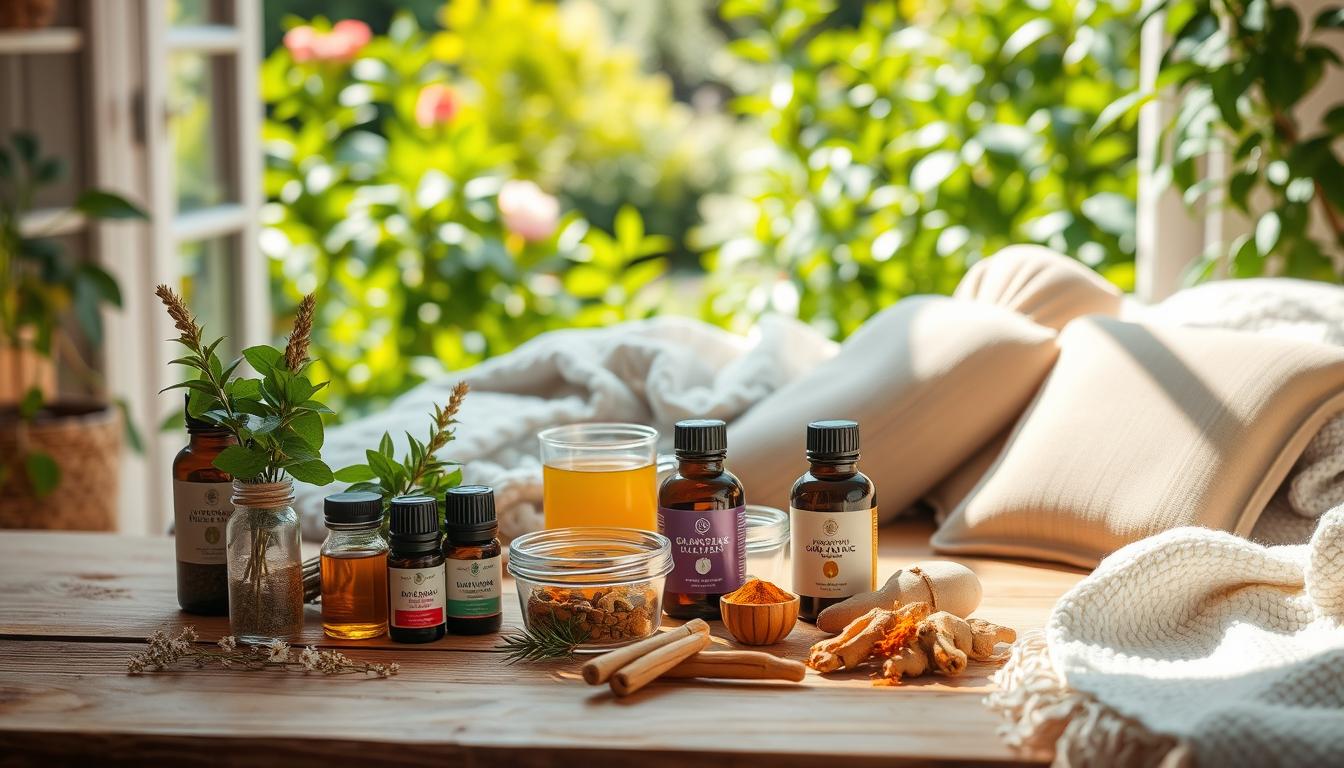
Millions of women in America face monthly menstrual cramps that make everyday tasks hard. Over half of menstruating women suffer from dysmenorrhea for one to two days each month. This pain comes from the uterus contracting to shed its lining, causing discomfort in the stomach, lower back, groin, and upper thighs.
But, there’s good news. Natural remedies for period pain can be as effective as over-the-counter meds. A 2018 medical review showed that heat therapy, like using heating pads or hot water bottles, can relieve period pain as well as NSAIDs. Even simple massage therapy for 20 minutes can greatly reduce cramps, especially when using essential oils.
Dr. Barry Komisaruk and Dr. Beverly Whipple at Rutgers University found another surprising way to treat menstrual cramps. Their 1985 study showed that orgasms release endorphins and oxytocin, which naturally lower pain. They found that vaginal self-stimulation doubled women’s pain tolerance levels.
Key Takeaways
- More than 50% of women experience period pain for 1-2 days monthly
- Heat therapy matches the effectiveness of common pain medications
- 20-minute massage sessions can significantly reduce menstrual cramps
- Essential oils enhance the pain-relieving effects of massage therapy
- Orgasms naturally release pain-fighting hormones like endorphins
- Natural remedies offer safe alternatives to frequent medication use
Understanding Period Pain: Causes and Symptoms
Millions of women deal with period pain every month. This pain makes simple tasks hard. Knowing what causes it helps find real dysmenorrhea relief solutions.
Common Symptoms of Dysmenorrhea
Period pain is more than just cramps. Women with dysmenorrhea face many symptoms that affect their whole body. The main signs are:
- Sharp or throbbing abdominal cramps
- Lower back pain that radiates down the legs
- Nausea and vomiting
- Headaches or migraines
- Diarrhea or constipation
- Fatigue and weakness
These symptoms happen when the uterus makes too many prostaglandins. These substances make the uterine muscles contract hard. This cuts off oxygen and causes pain. Young women, those with heavy periods, and women who haven’t had children are at higher risk.
Different Types of Period Pain
Not all period pain is the same. Primary dysmenorrhea is typical menstrual cramps without health issues. Secondary dysmenorrhea means something serious is happening inside the body.
Conditions like endometriosis and adenomyosis can cause secondary dysmenorrhea. Fibroids, ovarian cysts, and pelvic inflammatory disease can make pain worse. About 5% of women have PMDD, facing severe emotional and physical symptoms. They need special menstrual discomfort solutions.
Why Natural Remedies Can Be Effective
Many women are choosing natural remedies for period pain. These options work with the body’s healing systems. Unlike synthetic meds, plant-based treatments have compounds that ease discomfort.
Research shows some herbs have anti-inflammatory and antispasmodic properties. These properties target the root causes of menstrual cramps.
The Role of Herbal Infusions
Herbal infusions are powerful in treating menstrual cramps. Studies on various herbal teas show chamomile relaxes muscles and nerves. A 2012 review confirmed chamomile’s ability to soothe cramping muscles.
Fennel extract also shows great results. In a study, 15-24-year-olds taking 30mg four times daily felt less pain. Cinnamon is also effective, with women taking 840mg capsules three times daily experiencing less bleeding, pain, and nausea in a 2015 study.
Mind-Body Connection in Pain Relief
Physical activity is key in managing period discomfort. Exercise releases endorphins, which fight pain. These “feel-good” hormones block pain signals and boost mood during menstruation.
Yoga is a standout exercise for managing PMS symptoms. It combines stretching, breathing, and mindfulness. This makes yoga a powerful natural remedy for period pain.
Dietary Changes for Period Pain Relief
What you eat is key in managing menstrual pain. Choosing the right foods can help reduce inflammation and ease cramps. These changes offer natural relief that works well with other treatments.
Foods to Include for Pain Management
Anti-inflammatory foods are great for menstrual cramps. Fatty fish like salmon has omega-3s that fight inflammation. Dark leafy greens, like spinach and kale, have magnesium to relax muscles and lessen cramps.
- Berries, tomatoes, and pineapple for antioxidants
- Turmeric, ginger, and garlic for natural anti-inflammatory properties
- Almonds and walnuts for healthy fats
- Brown rice for vitamin B6 to reduce bloating
- Avocados, bananas, and chickpeas containing boron
A 2015 study showed that foods rich in boron can lessen pain. Papaya is full of vitamins, and peanut butter and prunes add more boron benefits.
Avoiding Inflammatory Foods
Some foods can make period symptoms worse by causing inflammation and bloating. Cutting down on these foods can help:
- Fatty and fried foods
- Alcohol and carbonated beverages
- Caffeine from coffee and energy drinks
- Salty snacks and processed foods
- Trans fats and high fructose corn syrup
These foods lead to more inflammation and water retention, making cramps worse. Switching to whole foods helps your body heal naturally during your period.
Exercise as a Form of Pain Relief
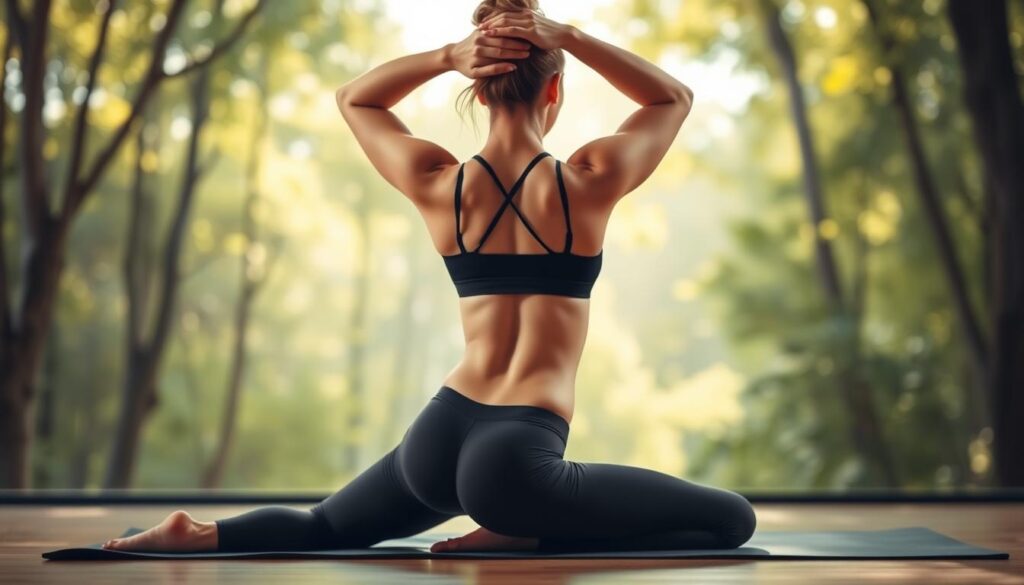
Physical activity can help manage menstrual cramps without just using medicine. Exercise releases endorphins, which are natural pain relievers. These chemicals help reduce pain during your period. Many women find exercise improves their well-being during menstruation.
Types of Exercises That Help
Not all exercises are good for period pain. Gentle, moderate activities are best. Here are some effective options:
- Walking at a comfortable pace for 20-30 minutes
- Light swimming or water aerobics
- Gentle stretching routines
- Low-impact cycling
- Pilates movements
Even 15 minutes of movement can help. It’s important to listen to your body and choose what feels right. Regular exercise can also prevent severe cramping when your period comes.
The Benefits of Yoga for Menstrual Pain
Yoga is a great option for menstrual cramps. A 2024 study found that women who did yoga twice a week for 12 weeks felt less pain. Certain poses target the areas most affected by cramping:
- Cat-Cow Pose: Gently massages abdominal organs
- Child’s Pose: Relieves lower back tension
- Plank Pose: Strengthens core muscles
- Cobra Pose: Opens hip flexors and stretches the abdomen
These poses improve blood flow and relax tense muscles. Yoga, combined with period tracking, can help manage pain and improve athletic performance during your cycle.
The Importance of Hydration
Staying hydrated is key to managing menstrual discomfort. Drinking water is a simple yet effective way to ease period symptoms. When your body lacks fluids, muscles cramp more, making pain worse. Drinking enough water can help reduce cramps and bloating.
How Water Affects Period Pain
Drinking at least eight glasses of water a day helps fight bloating and water retention. Dehydration makes your body hold onto fluids, causing swelling. Warm water helps by improving blood flow and relaxing muscles.
Water-rich foods also boost hydration. Foods like watermelon, cucumbers, and berries are full of water and nutrients. Berries add antioxidants that support menstrual health.
Herbal Teas for Comfort
Herbal teas offer warmth and relief for menstrual discomfort. Different teas target different symptoms:
- Ginger and peppermint teas help with cramps and bloating
- Raspberry leaf and chamomile ease cramping muscles
- Cinnamon and dandelion reduce water retention
- Green tea and oolong offer gentle relief and boost energy
Drinking these teas keeps you hydrated and eases symptoms. Enjoying tea can be a calming ritual during tough days.
Essential Oils and Aromatherapy
Aromatherapy is a soothing way to handle period pain. A 2018 review showed that mixing massage with essential oils cuts down on menstrual pain. This ancient method uses plant extracts to help with cramps and relax you during your cycle.
Best Essential Oils for Menstrual Cramps
Some essential oils are great for easing severe period cramps. Each oil has special compounds that fight pain and swelling in its own way.
| Essential Oil | Key Benefits | Dilution Ratio |
|---|---|---|
| Lavender | Calms muscles, reduces anxiety | 1 drop per teaspoon carrier oil |
| Peppermint | Cooling effect, eases spasms | 1 drop per teaspoon carrier oil |
| Rose | Anti-inflammatory, mood enhancer | 1 drop per teaspoon carrier oil |
| Fennel | Relieves cramping, hormone balancing | 1 drop per teaspoon carrier oil |
How to Use Aromatherapy Effectively
To get the most out of essential oils, mix them with a carrier oil like grapeseed or sweet almond oil. Massage the blend onto your abdomen, sides, and lower back for about 20 minutes. The circular motions and the oils’ anti-inflammatory properties offer relief beyond just massage.
Women with endometriosis find this method especially helpful. The oils go through the skin, and the massage boosts blood flow. This combo fights severe period cramps in two ways.
Acupressure Techniques
Acupressure is a needle-free way to ease menstrual pain. It uses finger pressure on certain points to help your body fight pain naturally. Many women find it helps manage PMS pain without the side effects of medicine.
Key Points for Pain Relief
There are several spots that can quickly ease menstrual cramps. The best ones are:
- Spleen 6 (SP6): Located four finger-widths above your inner ankle bone
- Large Intestine 4 (LI4): Found in the webbing between your thumb and index finger
- Stomach 36 (ST36): Positioned below your kneecap on the outer shin
- Conception Vessel 6 (CV6): Sits two finger-widths below your navel
Press each point with firm, circular motions for 30-60 seconds. Breathe deeply to relax and improve blood flow. Start with light pressure and increase as you get more comfortable.
Tools and Resources
While fingers are great, tools can make acupressure easier:
- Acupressure mats for full-body relief
- Wooden massage sticks for precise pressure
- Tennis balls for self-massage on hard-to-reach spots
- Mobile apps like AcuPressure: Heal Yourself for guided sessions
Think about taking an online course or watching YouTube tutorials from experts. Books like “Acupressure’s Potent Points” by Michael Reed Gach are also helpful for beginners.
Warm Compress and Heat Therapy
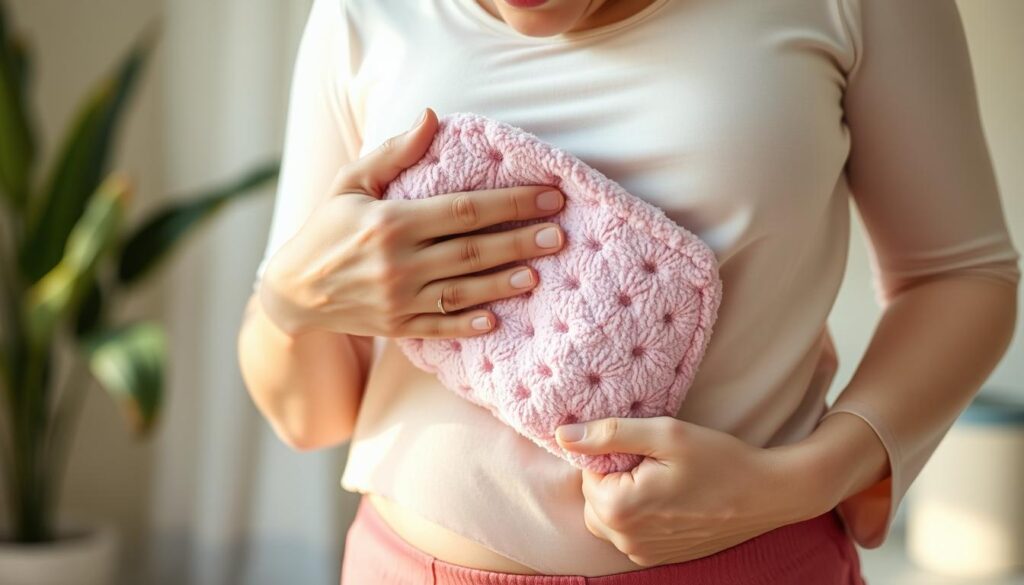
Heat therapy is a simple way to ease period pain. A 2018 study showed it’s as good as NSAIDs for cramps, with fewer side effects. It relaxes the uterus and eases pain in the area.
Benefits of Applying Heat
Heat therapy has many benefits for pain relief. It increases blood flow to the pelvic area, reducing muscle spasms. This increased circulation brings oxygen and nutrients, and removes pain-causing chemicals. Many women see relief in 15-20 minutes.
Different Ways to Use Heat
There are many ways to use heat for relief:
- Electric heating pads on the abdomen or lower back
- Warm baths that relax muscles in the abdomen, back, and legs
- Hot water bottles wrapped in a soft towel
- Adhesive heat patches for on-the-go relief
For a cheap option, make your own heating pad. Sew two fabric pieces together, leaving a small opening. Fill it with uncooked rice, then sew it closed. Microwave for 1-2 minutes for warmth. Use it throughout your period, reheating every few hours.
Managing Stress for Pain Relief
Stress and menstrual pain often go hand in hand, making it tough for many women. When stress goes up, so do period cramps. This makes a bad time even worse. But, knowing this link lets women fight back with stress-busting methods that help with menstrual pain.
Techniques for Reducing Stress
There are many ways to cut down stress and ease period pain. Deep breathing is one. It works by slowing down your heart rate and calming your mind.
Meditation is another strong stress fighter. Just a few minutes a day can help a lot. Guided imagery is also good. Imagine a calm place like a beach or forest, and focus on the sights and sounds while breathing slowly.
- Practice yoga for gentle movement and mindfulness
- Try progressive muscle relaxation before bed
- Listen to calming music or nature sounds
- Journal thoughts and feelings regularly
The Connection Between Stress and Pain
Studies show a clear link between stress and menstrual pain. A 2016 study found that women who managed stress well had less severe cramps. This shows that reducing stress is as key as any pain medicine.
Women under a lot of stress, with depression, or with a family history of depression are at higher risk for PMDD. This condition makes cramps worse and adds emotional symptoms. So, managing stress is key in taking care of period pain.
Supplements That May Help
Dealing with severe period cramps can be tough. But, some supplements can really help. They work by reducing inflammation and easing muscle tension.
Vitamins and Minerals for Menstrual Health
Some nutrients are key for managing menstrual pain. Vitamin D helps with calcium absorption and cuts down on inflammation. Omega-3 fatty acids and vitamin E also help by reducing pain-causing inflammation.
Magnesium is a top choice for easing period pain. It relaxes the uterus and lowers prostaglandin levels. Foods like dairy, sesame seeds, almonds, and leafy greens are good sources. They help prevent muscle cramps.
Herbal Supplements to Consider
Herbal options are also worth trying for severe cramps. Ginger supplements, taken four times a day, are as good as ibuprofen. French maritime pine bark extract, or Pycnogenol, at 60mg daily, offers long-term benefits.
Dill supplements, at 1000mg for five days, are as effective as mefenamic acid. A 2022 study found that curcumin not only eases pain but also boosts vitamin D levels in women with PMS and dysmenorrhea.
Sleep and Its Role in Period Pain Relief
Getting enough rest is key to managing period pain. When you sleep well, your body fixes itself and balances hormones that affect pain. Poor sleep can make cramps worse and make you more sensitive to pain.
Importance of Quality Sleep
Sleep affects how your body handles pain. Deep sleep relaxes muscles and lowers inflammation. This natural healing reduces the need for uterine pain relief during your period. Women who sleep 7-9 hours have milder symptoms than those who don’t sleep well.
Your body releases hormones that fight pain while you sleep. These hormones help by reducing inflammation and calming nerves. Missing sleep can make period pain feel worse.
Tips for Improving Sleep Hygiene
Creating a sleep-friendly environment helps manage period discomfort:
- Keep your bedroom cool and dark
- Use a heating pad on your lower abdomen before bed
- Take a warm bath with Epsom salts 30 minutes before sleeping
- Drink chamomile or valerian root tea instead of coffee after 2 PM
- Try gentle stretches or meditation to relax tense muscles
Having a consistent bedtime routine helps your body relax. Going to bed at the same time each night helps regulate hormones. This simple habit is a powerful uterine pain relief strategy during menstruation.
When to Seek Medical Attention
Natural remedies can help with dysmenorrhea relief. But, some cases need a doctor’s help. It’s important to know when your symptoms are more than just normal menstrual pain.
Signs Your Pain May Be More Serious
Some signs mean you should see a doctor for severe period cramps. If pain stops you from going to work or school, or if meds don’t help, get help. Pain that lasts over 72 hours or gets worse each month is a red flag.
Experts say to call your doctor if you have new, severe cramps after 25. Also, if you feel nauseous, dizzy, or have very heavy bleeding with pain. These could mean problems like endometriosis, fibroids, or pelvic inflammatory disease.
Consultation and Diagnosis Options
Doctors at places like HealthPartners and Park Nicollet can help with menstrual pain. They’ll look at your health history and might do tests to find issues like adenomyosis or PCOS.
They offer more than just natural remedies:
- Prescription pain meds for dysmenorrhea relief
- Hormonal birth control to control cycles and lessen pain
- Special treatments for specific problems
Seeing a doctor early can stop bigger problems and make your life better.
Real-Life Experiences: Stories of Success
Many women have found relief from period pain using natural methods. Their stories show that success often comes from mixing different approaches. This gives us valuable insights into treating menstrual cramps.
Testimonials on Natural Pain Relief
Women from all over share similar success stories. Sarah from California found relief with heat therapy and gentle yoga. Her cramps decreased by 70% within three months. Maria in Texas noticed a big change after cutting out dairy and taking magnesium supplements.
Tracking symptoms was key for many women. Jessica from New York kept a journal. She found that ginger tea and evening primrose oil worked best for her. This helped her understand her body’s patterns.
How Personal Experiences Influence Choices
Women’s personal journeys shape their approach to period pain relief. Through trial and error, they find solutions that fit their lives. The most successful outcomes come from making consistent lifestyle changes all month long.
| Method Combination | Success Rate | Time to Relief |
|---|---|---|
| Heat + Yoga | 78% | 30-45 minutes |
| Diet Changes + Supplements | 82% | 2-3 cycles |
| Exercise + Stress Management | 75% | 1-2 cycles |
These stories remind us that finding relief from menstrual cramps takes patience and personalization. What works for one person might need adjustments for another.
Conclusion: A Holistic Approach to Pain Management
Finding relief from period pain often needs more than one solution. Many women find that mixing natural remedies works best. You might use heat therapy with gentle stretching or follow an anti-inflammatory diet. Staying hydrated is also important.
Some women find success by combining stress management with the right supplements. Since every body is different, finding your own mix is crucial.
Combining Remedies for Best Results
Start your pain relief routine early. Use a heating pad on your lower abdomen and practice deep breathing. Drink ginger tea and soak in a warm bath with lavender oil.
Keep healthy habits like regular exercise and eating fiber-rich foods. Apps like Flo and Clue can help track what works for you.
Encouragement for Seeking What Works Most
Remember, 90% of women experience PMS symptoms. You’re not alone in your search for relief. Natural remedies help many, but some may need medication or professional care.
If your pain affects daily life or natural methods don’t help, see your healthcare provider. They can check for conditions like endometriosis and suggest more treatments. Your comfort and health are important, so keep looking until you find what works for you.