
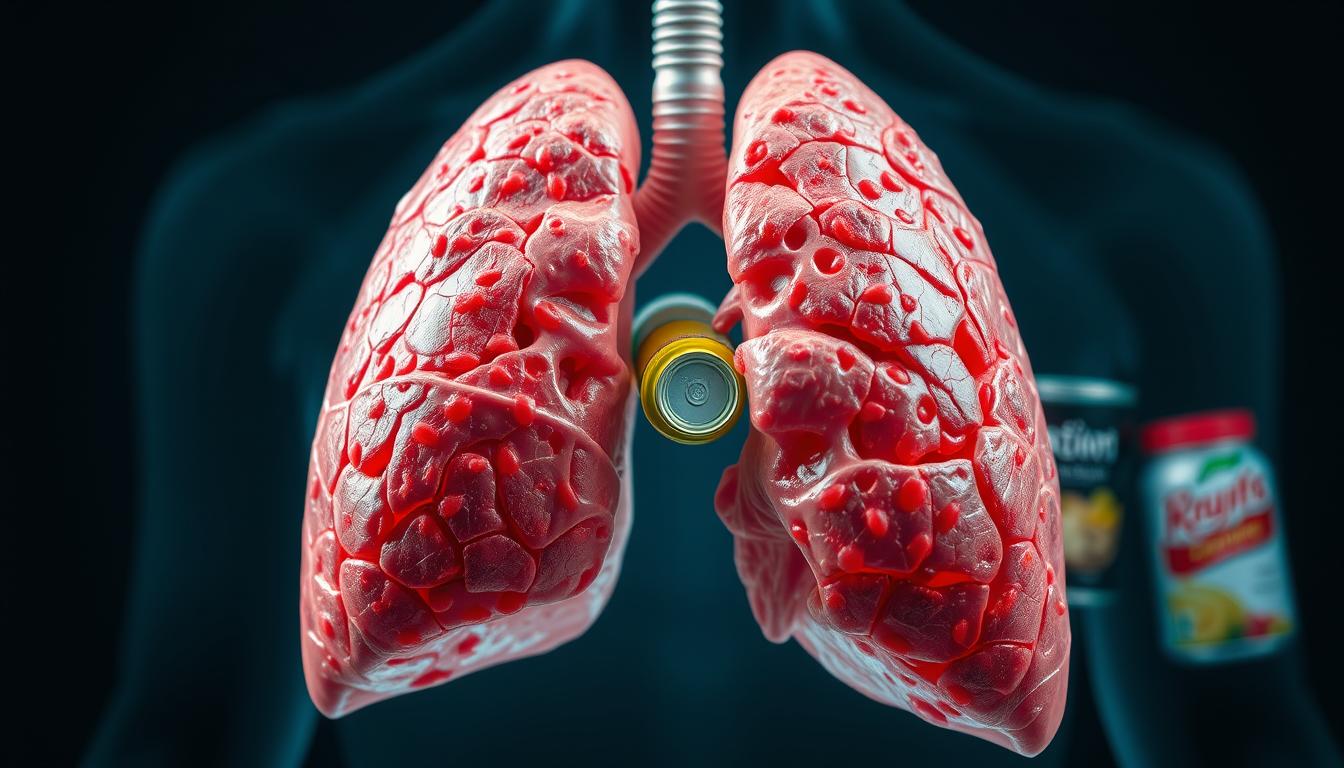
Did you know over 60% of what Americans eat is processed? This is a big worry for health. It shows how our diet might lead to lung cancer. We need to look at how our food choices affect our health.
We’re looking into how processed foods might be linked to lung cancer. We’ll check how what we eat affects our lung health. Knowing this can help us make better choices to fight lung cancer.
Key Takeaways
- Over 60% of the American diet consists of processed foods.
- Modern dietary patterns may increase lung cancer risks.
- Understanding diet and lung health is key to preventing cancer.
- Choosing the right foods can greatly improve our health.
- The dangers of processed foods are urgent and need attention.
Understanding Processed Foods
Processed foods are everywhere, in our kitchens and supermarkets. They are foods that have been changed from their natural state. Knowing what processed foods are helps us make better food choices and understand their health effects.
Definition of Processed Foods
Processed foods are foods that have been cooked, canned, frozen, or packaged. They can also be changed to last longer or taste better. Examples include canned veggies, baked goods, and frozen dinners. These foods often have additives to make them taste and look better.
Common Types of Processed Foods
There are many types of processed foods. Some are only slightly changed, like pre-cut veggies. Others are very processed, like sugary cereals and soda. The more a food is processed, the less healthy it usually is.
Nutritional Profile Comparison with Whole Foods
Processed foods are often very different from whole foods. They have more sodium, sugar, and unhealthy fats. But they have fewer vitamins, minerals, and fiber. This can lead to health problems and increase the risk of chronic diseases.
| Category | Whole Foods | Processed Foods |
|---|---|---|
| Fiber | High | Low |
| Sugar | Low | High |
| Sodium | Low | High |
| Unhealthy Fats | Low | High |
| Vitamins & Minerals | High | Low |
Whole foods are better for us because they have more nutrients. By knowing the differences, we can choose healthier foods. This helps us avoid health problems caused by eating too much processed food.
The Link Between Diet and Cancer
Diet plays a big role in cancer risk, including lung cancer. This is why scientists study how food affects cancer.
Overview of Diet-related Cancer Risks
Eating certain foods can increase cancer risk. Foods high in processed ingredients are linked to more cancers, like lung cancer. It’s key to know that processed food health effects are not just about missing nutrients. These foods often have bad additives that can cause cancer.
Statistics on Lung Cancer and Diet
Research shows a strong link between diet and lung cancer. A study by the American Cancer Society found that eating lots of processed foods raises lung cancer risk. Eating more fruits and veggies can lower this risk.
| Dietary Habit | Increased Lung Cancer Risk (%) |
|---|---|
| High Processed Food Intake | 30% |
| Low Fruit and Vegetable Intake | 20% |
| Balanced Whole Foods Diet | 10% |
These numbers show how important it is to know about diet-related cancer risks. Cutting down on processed foods and eating more whole foods can help. This can lower lung cancer risk and improve health.
Processed Foods and Lung Health
Today, we eat more processed foods. This has brought health worries, including lung problems. Studies show these foods can harm our lungs and even lead to lung cancer.
How Processed Foods Affect Lung Function
Eating processed foods can hurt our lungs. They have additives that can make breathing hard. These foods also lack good stuff our lungs need.
Potential Carcinogens in Processed Foods
Processed foods might have harmful stuff called carcinogens. For example, acrolein is in grilled foods and is bad for us. It raises the chance of lung cancer. We should know this and choose better foods for our lungs.
Role of Additives in Processed Foods
Processed food additives help keep food fresh longer. They make food taste better and look good. But, using too many of these chemicals worries people about their health, like lung health. Let’s look at some common additives and their possible dangers.
Common Additives in Processed Foods
Processed foods have many additives, including:
- Preservatives: These stop food from spoiling and keep it fresh longer. Sodium benzoate and nitrates are examples.
- Artificial Flavors: Made to taste like real flavors, like ethyl vanillin.
- Colorants: Used to make food look better, like tartrazine and carmine.
Health Impacts of Food Additives on Lungs
Food additives can harm lung health. Some studies show they might cause inflammation and stress in lungs. This could lead to lung cancer over time.
Knowing these risks helps us make better food choices. It’s important to choose healthier foods to protect our lungs and health.
Inflammation and Processed Foods
Eating processed foods can lead to chronic inflammation. This can harm your health, including your lungs. Knowing how processed foods cause inflammation is key. It helps us understand how they might lead to lung cancer.
Processed Foods and Chronic Inflammation
Processed foods have lots of refined sugars, trans fats, and artificial stuff. These can start inflammation in your body. Your immune system fights back, releasing chemicals that cause inflammation.
This ongoing inflammation can hurt your tissues and organs. It can cause many health problems.
Chronic inflammation is bad because it lets diseases grow. Key inflammatory markers like CRP and IL-6 show this. They are high in people who eat a lot of processed foods. These markers mean your body is fighting inflammation, which weakens it against diseases like cancer.
The Role of Inflammation in Lung Cancer Development
Inflammation in the lungs can lead to cancer. It causes changes in cells that make them more likely to become cancerous. Long-term inflammation can damage DNA and cause cells to grow out of control.
The NF-κB pathway is important here. It helps the body fight infections. But, if it’s always on because of processed foods, it can help cancer grow. It turns normal cells into cancer cells.
Inflammation also helps tumors grow by giving them what they need. So, eating well is key to lowering lung cancer risk.
Sugar, Salt, and Preservatives
Processed foods have a lot of sugar, salt, and preservatives. These things can hurt our lungs. It’s important to know how they affect us so we can make better food choices.
Impact of High Sugar Intake on Lung Health
Sugar is bad for our lungs. Eating too much sugar can make us fat. Being overweight can hurt our lung function.
High sugar levels also cause inflammation. This makes it hard for our lungs to work right. Drinking sugary drinks and eating sweets can make asthma worse.
Sodium and Respiratory Issues
Sodium in processed foods can cause breathing problems. Eating too much sodium can make it hard to breathe. It can make asthma and other lung diseases worse.
It’s important to eat less salt. This helps keep our lungs healthy and prevents breathing problems.
Preservatives: Are They Dangerous?
Preservatives in food are a big debate. They make food last longer, but some might be harmful. Chemicals like nitrites and sulfites in processed meats and snacks can increase lung cancer risk.
We should think carefully about whether we really need these additives in our food.
| Component | Health Impact | Example Foods |
|---|---|---|
| Sugar | Increases inflammation, contributes to obesity, exacerbates asthma | Sodas, candies, baked goods |
| Sodium | Fluid retention, worsens chronic respiratory conditions | Chips, canned soups, processed meats |
| Preservatives | Potential carcinogenic effects, increased lung cancer risk | Processed meats, packaged snacks, condiments |
The Importance of Whole Foods
Eating whole foods is good for your health. It helps prevent diseases like lung cancer. Whole foods are not processed much. They have nutrients that processed foods often lose.
Benefits of a Whole Foods Diet
Whole foods give your body vitamins, minerals, and antioxidants. These help keep you healthy and strong. Eating whole foods can also make your lungs work better.
Whole foods also help you stay at a healthy weight. They lower blood pressure and reduce inflammation. All these things are good for your lungs and lower cancer risk.
Whole Foods vs. Processed Foods: A Comparison
| Nutrient | Whole Foods | Processed Foods |
|---|---|---|
| Fiber | High | Low |
| Vitamins | Rich in natural vitamins | Often fortified, synthetic vitamins |
| Minerals | Rich in essential minerals | Frequently lacking |
| Antioxidants | High | Low |
| Added Sugars | Minimal | High |
Whole foods and processed foods are very different. Whole foods like fruits, veggies, and grains are full of nutrients. Processed foods have lots of added sugars and unhealthy fats.
Choosing whole foods is key to good health. It can make you healthier and lower the risk of lung problems.
Research Studies on Processed Food and Cancer
Recent research on processed food effects has shown a scary processed food and cancer connection. These studies are key to understanding how our diet affects our health over time.
Overview of Key Studies
Many studies have looked into how processed foods affect cancer. For example, a study in the Journal of Clinical Nutrition looked at over 100,000 people. It found a link between eating processed foods and getting cancer.
Another big study in the British Medical Journal found that eating a lot of processed foods raises cancer risk. This was true for many types of cancer.
Findings Related to Lung Cancer
Lung cancer has a scary link to processed foods. A big study in the American Journal of Respiratory and Critical Care Medicine found this. It said eating more processed foods means a higher chance of lung cancer.
This data shows we need to eat better to lower cancer risks.
| Study | Participants | Key Findings |
|---|---|---|
| Journal of Clinical Nutrition | 100,000+ | Higher processed food intake linked with increased cancer incidence |
| British Medical Journal | Estimates based on national surveys | Correlation between processed foods and multiple cancer types |
| American Journal of Respiratory and Critical Care Medicine | National health study data | Elevated risk of lung cancer with high processed food consumption |
Risk Factors for Lung Cancer
Knowing about lung cancer risk factors is key in the battle against this deadly disease. Both genes and the environment play big roles. Diet, like eating processed foods, is also important.
Genetic vs. Environmental Factors
Genes can make you more likely to get lung cancer. But, things like smoking and what you eat matter a lot too. Your genes might make you more at risk, but what you do can really affect if you get sick.
The Role of Processed Foods as a Risk Factor
Studies show that processed foods as risk factor can increase lung cancer risk. These foods have additives and chemicals that can harm your body. Eating them a lot can lead to inflammation, which can cause cancer.
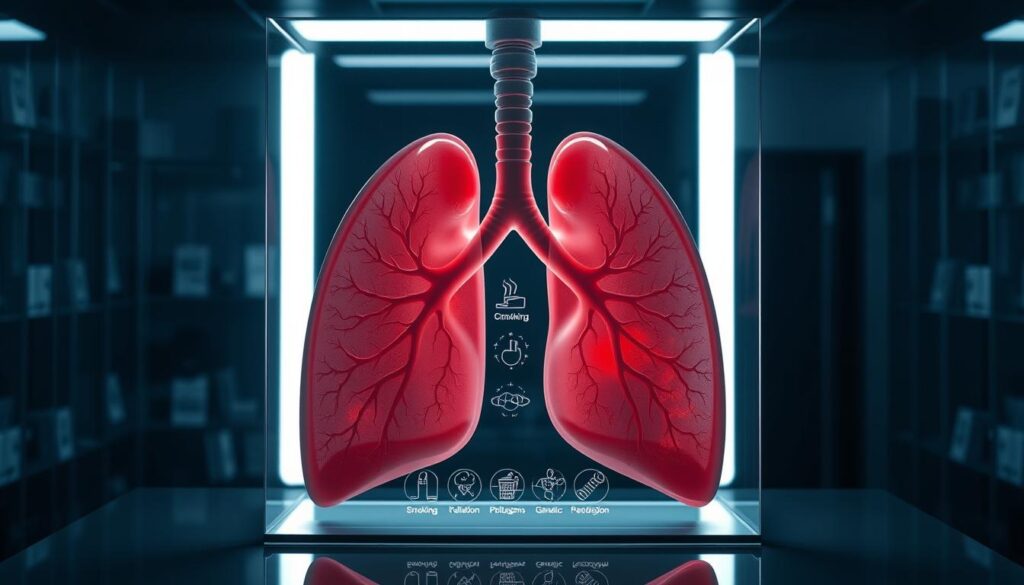
It’s worrying how many convenience foods we eat. They’re bad for our health and can increase cancer risk. What we eat is very important in preventing cancer.
The Impact of Smoking on Processed Food Risks
Studies show that smoking and eating processed foods can harm your lungs a lot. It’s important to know this to lower your risk of lung cancer and breathing problems.
Smoking and Lung Health
Smoking hurts your lungs a lot. It puts harmful chemicals in your lungs. This can cause lung cancer and other breathing problems.
These chemicals damage your lung tissues. They cause inflammation and make your lungs work less well.
Interaction Between Processed Foods and Smoking
The interaction between smoking and diet is very worrying. Processed foods have bad stuff like preservatives and artificial additives. These can make smoking’s harm worse.
Research shows that processed food’s carcinogens can work with smoking’s toxins. For example, nitrosamines in both smoked foods and tobacco can cause cancer.
This shows why knowing about smoking and processed food risks is key. The table below shows how they work together:
| Factor | Impact on Lung Health | Combined Effect |
|---|---|---|
| Smoking | Increases inflammation, introduces carcinogens | Compounded damage resulting in higher cancer risk |
| Processed Foods | High in harmful additives, promotes inflammation | Synergistic effect with smoking toxins |
| Combined Effect | Greater than the sum of individual risks | Significant increase in lung cancer development |
Lifestyle Changes to Reduce Risk
Changing your lifestyle is key to preventing cancer. This means eating better and living healthier to protect your lungs. It also helps lower your risk of getting cancer.
Dietary Recommendations to Lower Cancer Risks
Eating right is important for lung health. Eat more fruits, veggies, and whole grains. Try to eat less processed foods.
Stay away from too much sugar, salt, and preservatives. This is good for your health.
Here’s a look at whole foods versus processed foods:
| Whole Foods | Processed Foods |
|---|---|
| High in nutrients | Often low in essential nutrients |
| Minimal processing | Includes additives and preservatives |
| Supports healthy metabolism | May contribute to inflammation |
Other Lifestyle Changes for Lung Health
Along with eating better, other lifestyle changes are important. Exercise regularly to boost lung function and health. Quitting smoking is also critical.
Drinking enough water and doing lung exercises are also good. A balanced lifestyle can lower your lung cancer risk and improve your health over time.
Advocating for Healthier Eating Habits
Diet and health are closely linked. Eating healthy is key to staying well. It helps prevent diseases and keeps us feeling good.
Building Public Awareness on Diet and Health
Public awareness campaigns are very important. They teach us how diet affects our health, like lung health. They push for eating whole foods over processed ones.
Social media, health groups, and influencers help spread these messages. They make it easier for people to eat better. This builds a culture that values health and mindful eating.
Encouraging Policy Changes for Healthier Options
Policy changes are vital for healthier eating. Governments can limit processed foods and support healthier ones. This helps everyone eat better.
Things like better food labels and taxes on sugary drinks help too. They make it easier to choose healthy foods. This pushes the food industry to offer better options.
By giving people the right info and pushing for big changes, we can make eating healthier easier. This improves health for everyone.
Understanding Your Food Labels
Learning to read food labels can change your health for the better. By looking closely at what’s on the packaging, you can pick safer foods. This helps you avoid health dangers from some ingredients.
How to Read Food Labels Effectively
To read labels well, focus on the ingredient list, nutritional info, and any claims. The ingredient list shows what’s in the product. Note the order; it shows what’s most in the product first.
- Serving Size: Look at the serving size first. All nutrition facts are based on this.
- Calories: Notice how many calories are in one serving.
- Percentage Daily Values (%DV): These show how much of each nutrient a serving has for a day.
Identifying Harmful Ingredients
Reading labels also means spotting bad ingredients for your health. Be careful of:
- Artificial Additives: These include sweeteners, colorings, and preservatives. They can harm your health.
- Trans Fats: Known as partially hydrogenated oils, they can cause heart disease and other issues.
- Excessive Sugar and Sodium: Too much sugar and sodium in foods can lead to high blood pressure and diabetes.
Next time at the store, take a little extra time to read labels. Spotting bad ingredients helps you make better choices. This is good for your health in the long run.
Community Support and Resources
It can be hard to eat healthier without help. Luckily, many groups and websites help people eat better. They offer tips and support to live a healthy life.
Local Programs Promoting Healthy Eating
In the U.S., many local groups help people eat well. They have workshops, cooking classes, and gardens. These places help people learn to eat better and feel supported.
- Farmers’ markets with fresh, local food
- CSA programs for fresh produce
- Cooking classes by local health departments
- Nutrition programs in schools
Online Resources for Nutritional Education
There are also many websites and apps for nutrition help. They have meal plans, tips, and advice. This makes it easy to learn about healthy eating at home.
Some top websites are:
- MyPlate.gov: Has tools and tips for a balanced diet
- EatRight.org: Gives science-backed healthy eating advice
- SparkPeople: Offers meal plans and nutrition tracking
- Yummly: Suggests recipes based on your diet
Combining local support with online nutrition help is key. It helps people make smart food choices. Whether it’s through local groups or websites, these resources are vital for a healthy diet.
The Future of Food and Health Research
Our knowledge of nutrition and health is growing fast. This makes studying food’s impact on diseases like lung cancer very important. New tech and teamwork between experts are key to finding out how food affects our health.
Current Trends in Food Research
Now, we’re moving towards personalized nutrition. This means diets that fit each person’s needs, thanks to genetic tests. We’re also looking at foods that are good for us in more ways than just taste.
The Need for Further Studies on Processed Foods
We need more research on processed foods. It’s key to know how they affect our health, like lung cancer. More studies will help us understand how these foods can harm us.
| Research Focus | Goals | Examples |
|---|---|---|
| Personalized Nutrition | Tailor diets to genetic profiles | Gene-based diet plans |
| Sustainable Foods | Promote environmentally friendly food production | Plant-based meats, lab-grown foods |
| Functional Foods | Enhance health beyond basic nutrition | Probiotics, fortified foods |
| Processed Foods Impact | Understand health impacts, focus on diseases like lung cancer | Longitudinal studies, mechanistic research |
Conclusion: Making Informed Choices
Looking at how processed foods affect lung health shows making smart food choices is key. This article talked about how diet and lung health are connected. It showed how bad foods can harm us and good foods can help.
Summary of Key Points
We started by talking about what processed foods are and why they’re not as good as whole foods. Then, we looked at how diet and cancer are linked. Studies showed how bad foods can hurt our lungs and make cancer more likely.
Also, we talked about how smoking and bad foods together are really bad for our lungs. We said eating better and reading food labels are important for a healthy life.
Final Thoughts on Reducing Lung Cancer Risks
To lower lung cancer risks, we need to eat right and live healthy. Even with modern life, choosing good foods is vital for our health. By making smart food choices, we can lower our lung cancer risk and feel better overall.