
Last summer, I noticed small, rough patches on my daughter’s arms. She looked up at me with worried eyes, asking if something was wrong with her skin. That moment reminded me how unsettling raised skin bumps can be, when we don’t understand what causes them.
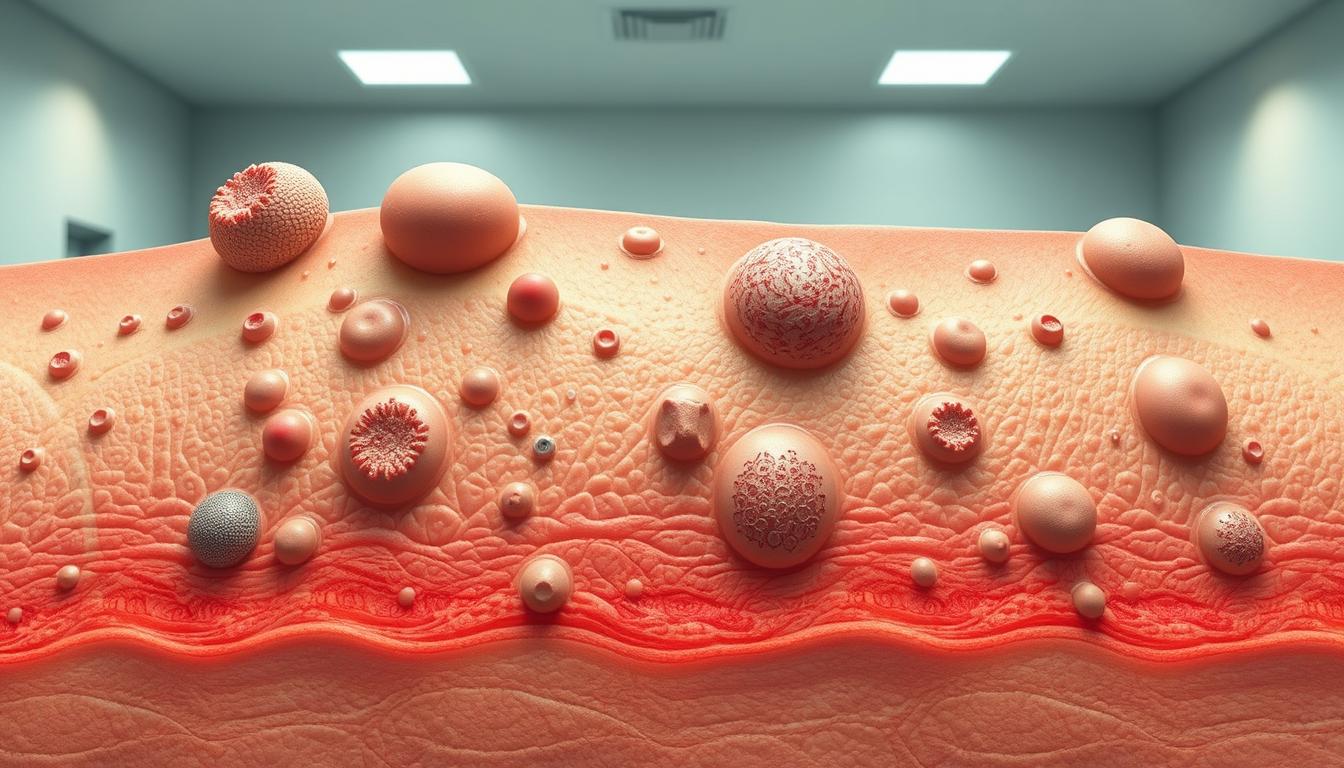
Raised skin bumps appear for many reasons. Some pop up overnight, while others develop gradually over weeks or months. These skin lesions might feel soft and squishy, or firm like tiny pebbles beneath your fingertips. They can match your natural skin tone or stand out with different colors.
Most skin conditions that cause bumps are completely harmless. A mosquito bite, an allergic reaction to new laundry detergent, or simple acne can create temporary raised areas. Yet sometimes these bumps signal something that needs medical attention. Changes in size, color, or texture deserve a closer look from a dermatology professional.
Understanding what causes raised skin bumps helps ease anxiety and guides us toward proper care. From everyday irritations to rare genetic conditions, knowing the possibilities empowers us to make informed decisions about our skin health.
Key Takeaways
- Raised skin bumps have over 25 different causes ranging from allergies to infections
- Most bumps on skin are harmless and don’t require medical treatment
- Changes in bump appearance, persistent itching, or pain warrant professional evaluation
- Skin conditions can result from viral, bacterial, or fungal infections
- Early detection and proper diagnosis lead to better treatment outcomes
- Both genetic factors and environmental triggers can cause skin lesions
Understanding Raised Skin Bumps
Raised skin bumps can pop up anywhere on your body. They look different from one another. These skin lesions might show up quickly or slowly. Knowing what they are helps figure out if you need a doctor.
A skin check can tell you a lot about these bumps. It helps decide the best way to treat them.
What Are Raised Skin Bumps?
Raised skin bumps are areas that stick out from the rest of your skin. They can be filled with fluid, pus, or solid stuff. They can be tiny or quite big.
Going to a dermatologist often means they’ll look at these bumps closely. They try to find out why they’re there.
Common Characteristics
There are some things that most raised bumps have in common:
- They can be any size, from tiny to big
- They can be many colors, like red, pink, white, brown, or the same as your skin
- They can feel smooth or rough, even scaly
- They can be alone or in groups
When to Seek Medical Advice
See a dermatologist if your bumps don’t get better in two weeks. You should go right away if they bleed, ooze, or change fast. If they hurt, make you feel sick, or get bigger, it’s a sign of trouble.
Any new bump that looks different from your usual moles needs a doctor’s check. This is important for your health.
Allergic Reactions
Allergic skin reactions happen when your body sees something as a threat. These can be mild or very serious. Knowing about different skin allergies helps find what causes them and how to treat them.
Contact Dermatitis
Contact dermatitis is when your skin reacts to something it touches. This can happen hours or days later. You might see a rash that looks like where the substance touched your skin.
Common signs include:
- Red, inflamed patches on lighter skin tones
- Dark brown, purple, or gray discoloration on darker skin
- Itchy, scaly, or raw skin texture
- Blisters that may weep or crust over
Hives (Urticaria)
Hives are itchy welts that can pop up anywhere. They come in different sizes and can join together. Unlike other reactions, hives usually go away in 24 hours, but new ones can show up.
Things that can cause hives include allergies, infections, sun, exercise, and stress. The welts might look like your skin or be a bit red or different.
Types of Allergens
Many things can cause skin allergies:
- Food allergens: Nuts, shellfish, eggs, and dairy products
- Environmental triggers: Pollen, dust mites, and pet dander
- Chemical irritants: Detergents, fragrances, and preservatives
- Plants: Poison ivy, poison oak, and certain flowers
Follicular Conditions
Hair follicles are key to skin health. When they get damaged, different conditions can show up. These can cause bumps on the skin, from mild to serious.
Knowing about these conditions helps find the right treatment. It also helps avoid them in the future.
Folliculitis
Folliculitis happens when bacteria or fungi get into hair follicles. This leads to hair follicle infections. The infections cause red, painful bumps with white or yellow centers. These bumps might burst and drain fluid.
It often hits areas that get a lot of rubbing, like the face, neck, armpits, and buttocks.
Things that increase your chance of getting folliculitis include:
- Wearing tight clothes that trap sweat
- Using hot tubs with the wrong chemical mix
- Having a weak immune system
- Shaving with dull razors
Keratosis Pilaris
Keratosis pilaris makes small, pointed bumps that feel like sandpaper. It happens when keratin builds up and blocks hair follicles. It usually shows up on the upper arms, thighs, and buttocks.
It doesn’t usually hurt, but it might itch sometimes. Factors like genetics and dry skin play a part. People with eczema are more at risk, and cold weather can make it worse.
Effective treatment for keratosis pilaris often involves moisturizing and gentle exfoliation.
Ingrown Hairs
Ingrown hairs happen when hair curls back into the skin instead of growing out. This causes raised, often painful bumps that can get infected. Men, and those with curly hair, often get this after shaving.
To prevent it, use the right shaving techniques and exfoliate your skin regularly.
Viral Infections
Viral skin infections cause raised bumps that spread through touch or from viruses in your body. They affect millions of Americans yearly, showing up in many forms on the body. Knowing how to spot them early helps stop them from spreading.
Molluscum Contagiosum
Molluscum contagiosum leads to small, pearl-like bumps that can grow in clusters of up to 20. These bumps are smooth, dome-shaped, and 2-5 millimeters wide. They have a tiny dent in the center and are flesh-colored, white, or pink, feeling firm to the touch.
Children aged 2 to 5 get this infection most often through skin contact during play. Adults may get bumps on their torso, arms, or genital area. The virus spreads quickly in warm, humid places like swimming pools and shared towels.
Human Papillomavirus (HPV)
HPV warts are rough, raised growths on hands, feet, and other areas. They can be alone or in groups, and vary in color from skin-colored to pink or light brown. Common warts on fingers feel like tiny cauliflowers, while plantar warts on feet grow inward and hurt when walking.
Herpes Simplex
Cold sores start with tingling around the mouth, then turn into painful, fluid-filled blisters. These red bumps cluster together and burst open within days, forming crusty scabs. The virus is most contagious when blisters leak fluid but stays transmissible even after scabbing starts.
Bacterial Infections
Bacterial skin infections are common, mainly in kids and those with weak immune systems. They happen when bacteria get into the skin through cuts or hair follicles. This causes bumps that need medical help.
Impetigo
Impetigo is a very contagious skin infection, mostly seen in young kids. It causes rashes and blisters that burst, leaving a honey-colored crust. These bumps often show up around the mouth and nose.
Doctors treat impetigo with antibiotics. Keeping the infected area clean and covered is key to prevent spreading. Kids with impetigo should stay home until the infection clears, usually 24-48 hours after starting treatment.
Staphylococcal Infections
Staphylococcus bacteria are normal on our skin but can cause problems if they get in. MRSA is a serious type that doesn’t respond to many antibiotics.
MRSA symptoms include:
- Painful, raised red bumps resembling spider bites
- Warm, swollen areas that may drain pus
- Fever accompanying skin symptoms
MRSA needs quick medical attention because it can lead to serious issues like blood infections. Doctors use strong antibiotics to fight MRSA.
Fungal Infections
Fungal skin infections happen when tiny fungi attack the skin’s outer layers. These fungi love warm, damp spots on our bodies. They cause bumps and rashes. Knowing the types of skin fungus is key to finding the right treatment.
Tinea (Ringworm)
Ringworm isn’t caused by worms but by fungi called dermatophytes. This common fungal infection makes circular, red, scaly patches with raised edges. The center is often clearer, making it look like a ring.
To treat ringworm, doctors use antifungal creams like clotrimazole or terbinafine. For serious cases, they might prescribe pills. The infection spreads through touching infected people, animals, or things like gym equipment or pool areas.
| Body Area | Medical Name | Common Symptoms |
|---|---|---|
| Scalp | Tinea capitis | Hair loss, scaling, itching |
| Feet | Tinea pedis | Cracking, peeling, burning |
| Groin | Tinea cruris | Red, itchy rash in skin folds |
| Body | Tinea corporis | Ring-shaped patches, scaling |
Candidiasis
Candida yeast is normal on our skin but can grow too much in moist spots. This fungus causes red, itchy bumps and white patches in skin folds, under breasts, or in the groin. Diabetics and people on antibiotics are at higher risk.
Treatment includes:
- Antifungal powders or creams containing miconazole
- Keeping affected areas dry and clean
- Wearing loose, breathable clothing
- Managing underlying conditions like diabetes
Skin Cancer
Skin cancer happens when cells in the skin grow out of control. There are three main types that affect many Americans each year. Each type has its own symptoms and needs different treatments. Catching it early is key to saving lives, so regular skin checks are important for everyone.
Basal Cell Carcinoma
Basal cell carcinoma looks like raised, firm patches that might resemble scars. These patches often have a pearly look with a sunken center. They can be pink or red with visible blood vessels.
These lesions bleed easily and don’t heal quickly. This type makes up 80% of skin cancers but rarely spreads. Treatment usually involves surgery, creams, or radiation.
Squamous Cell Carcinoma
Squamous cell carcinoma starts as scaly red patches that turn into raised bumps. These bumps show up on areas that get a lot of sun, like the face, ears, and hands. If left untreated, they grow and can spread to nearby tissues.
Surgery is the main treatment, and it works well if caught early.
Melanoma
Melanoma detection uses the ABCDE criteria to spot unusual moles:
- Asymmetry – one half is different from the other
- Border – edges are irregular or blurred
- Color – the mole has multiple shades
- Diameter – it’s bigger than a pencil eraser
- Evolution – it changes in size, shape, or color
This aggressive cancer needs quick action. Treatment usually includes surgery, followed by immunotherapy or targeted drugs for more advanced cases.
Benign Growths
Many raised skin bumps on our bodies are harmless. These non-cancerous lumps can appear anywhere and vary in size and look. Some people remove them for looks or if they’re uncomfortable.

Lipomas
Lipomas are soft, fatty lumps that grow slowly under the skin. They feel soft and move easily when pressed. Lipomas often show up on the neck, shoulders, back, and arms.
They are usually small, between 1 to 3 centimeters, and don’t hurt unless they press on nerves. Though not needed, some get them removed if they’re big or bother them.
Sebaceous Cysts
Sebaceous cysts happen when keratin gets trapped under the skin. They grow slowly and can be small or big. They’re usually painless but can cause problems if they get infected or are in sensitive spots.
Treatment often involves draining or removing them surgically if they’re inflamed or look bad.
Dermatofibromas
Dermatofibromas are small, firm bumps that are often red-brown. They’re found mostly on the legs. They have blood vessels and nerves, so they might bleed if scratched.
The cause is not known, but they can start after minor skin injuries like bites or cuts.
Genetic Skin Disorders
Some raised skin bumps come from genetic skin conditions passed down in families. These hereditary skin disorders often show up at birth or early childhood. The bumps have unique patterns and textures that doctors use to identify them.
Understanding these inherited conditions helps families prepare for proper care and management.
Neurofibromatosis
Neurofibromatosis causes soft, fleshy bumps called neurofibromas to grow on or under the skin. This genetic condition affects about 1 in 3,000 people worldwide. The bumps feel soft and rubbery to the touch.
They can appear anywhere on the body but commonly develop along nerve pathways.
People with neurofibromatosis often notice:
- Light brown spots (café-au-lait marks) on the skin
- Freckles in unusual places like armpits or groin
- Multiple soft bumps that increase with age
- Bumps ranging from tiny to several inches wide
Epidermal Nevus
An epidermal nevus appears as a raised, rough patch of skin that follows a line or swirl pattern. These hereditary skin disorders result from overgrowth of skin cells during development. The bumps often have a tan, brown, or grayish color.
Most epidermal nevi are present at birth or appear within the first year of life.
These genetic skin conditions require regular monitoring by dermatologists. Early diagnosis helps families access specialized care and support services. Treatment focuses on managing symptoms and watching for any changes in the bumps over time.
Hormonal Changes
Hormones are key to our skin health at all ages. From teens to pregnant women, hormone swings can cause skin issues like raised bumps. These changes affect how our skin makes oil, how fast cells turn over, and how sensitive it is. This leads to noticeable changes in how our skin looks and feels.
Pregnancy-Related Bumps
Women’s hormones change a lot during pregnancy. This can cause different skin problems. Some common ones are:
- Pruritic urticarial papules and plaques of pregnancy (PUPPP) – itchy red bumps on the belly
- Skin tags – small, soft growths in areas where skin rubs together
- Cherry angiomas – bright red bumps from too many blood vessels
These skin changes usually show up in the second or third trimester. They often go away after the baby is born. But, if you notice new or strange bumps, see a doctor.
Puberty and Skin Changes
Puberty brings big changes to a teenager’s skin. More androgens make oil glands work harder. This leads to hormonal acne, which looks like:
- Blackheads and whiteheads on the face, chest, and back
- Painful cystic acne under the skin
- Red, inflamed papules and pustules
Boys usually get worse hormonal acne because of more testosterone. Girls might see breakouts tied to their periods. These changes can last a few years but get better with good skincare and sometimes doctor help.
Environmental Factors
Our skin faces many challenges from the world around us. Environmental factors play a big role in causing skin bumps and irregularities. Daily exposure to sunlight and air pollution can lead to specific skin conditions.
Sun Exposure
Long-term sun damage can cause actinic keratosis, a common type of raised skin bump. These rough, scaly patches often appear in people over 40 who have spent years in the sun without protection. They feel like sandpaper and may develop a horn-like texture over time.
Actinic keratosis can be serious if not treated. Up to 10% of these bumps can turn into squamous cell carcinoma. Between 40% and 60% of squamous cell skin cancers start as untreated actinic keratosis.
Pollution Effects
Air pollution causes environmental skin damage in urban areas. Microscopic particles settle on the skin, clogging pores and creating inflammatory bumps. These pollutants break down the skin’s natural barrier, making it more vulnerable to irritation and infection.
| Environmental Factor | Type of Skin Bump | Risk Level |
|---|---|---|
| UV Radiation | Actinic Keratosis | High |
| Air Pollution | Inflammatory Bumps | Moderate |
| Combined Exposure | Multiple Conditions | Very High |
Protecting your skin requires daily attention to both sun damage prevention and pollution exposure. Simple steps like wearing sunscreen and cleansing your face thoroughly each evening can significantly reduce the risk of developing environmentally-caused skin bumps.
Differential Diagnosis
Finding the cause of raised skin bumps needs careful checking. Many skin problems look alike, making it key to figure out the right one. A doctor can tell different bumps apart by looking closely and asking about your health history.
How to Differentiate Bumps
Doctors look for certain signs to spot skin issues. Where the bump is can help tell what it is. For example, dermatitis often shows up in places like the elbows and knees’ folds. Psoriasis, on the other hand, usually shows up on the outside of these areas.

Looking closely at the skin can give big clues. Each skin problem has its own look that doctors know well:
| Condition | Appearance | Common Locations | Key Symptoms |
|---|---|---|---|
| Eczema | Red, inflamed, may leak fluid | Inner elbows, knee creases | Intense itching |
| Psoriasis | Silvery, scaly patches | Scalp, elbows, knees | Mild itching |
| Contact Dermatitis | Blistered, swollen skin | Area of contact | Burning sensation |
Importance of Medical Examination
Getting a doctor to check your skin is very important. They look at the texture, color, and pattern of the bumps. They also ask about your symptoms, health history, and what might have caused the bump. This way, they can make sure you get the right treatment.
Trying to guess what’s wrong yourself can lead to the wrong treatment. What looks like simple dermatitis might actually be a fungal infection or even skin cancer. Only a doctor can do a full check to find out what’s really going on and how to fix it.
Diagnosis and Testing
To find out what’s causing raised skin bumps, you need a doctor’s help. They use diagnostic testing to figure out the problem. These tests help find out what kind of bump you have and if it’s serious.
Physical Examination
Your doctor will start by looking closely at the bumps. They check the texture, color, and how they spread on your skin. Sometimes, they use a special tool called a dermatoscope for a better look.
During the dermatology diagnosis, you’ll be asked about the bumps. They want to know when they started, if they itch or hurt, and your health history. Your daily life and recent activities might help find the cause.
Biopsy Procedures
If looking isn’t enough, your doctor might suggest a skin biopsy. This means taking a small piece of skin for tests.
| Biopsy Type | Procedure | Best Used For |
|---|---|---|
| Shave Biopsy | Removes top skin layers | Surface-level bumps |
| Punch Biopsy | Takes circular sample | Deeper skin conditions |
| Excisional Biopsy | Removes entire bump | Suspicious growths |
After the skin biopsy, it takes about one to two weeks to get the results. Your doctor might send you to a dermatologist if the tests show something serious like skin cancer.
Treatment Options
Finding the right skin treatment options can make a big difference. Most skin bumps are harmless and don’t need medical help unless they’re uncomfortable or affect your looks. Knowing about treatments helps you take care of your skin better.
Home Remedies
Simple home care can handle many skin bumps. Avoid putting pressure on blisters to stop them from bursting and getting infected. Use ointments with calamine or hydrocortisone to ease itching from eczema flare-ups or bug bites.
Clean the area gently with mild soap and warm water, then dry it carefully. For acne cysts, don’t squeeze or pick at them. Instead, use warm compresses for 10-15 minutes several times a day to help them drain naturally. Keep the area clean and use sterile bandages if it opens up on its own.
Medical Treatments
When home remedies don’t work or for serious conditions, you need professional help. Dermatologists offer different treatments based on the type of bump:
| Treatment Method | Used For | Recovery Time |
|---|---|---|
| Cryotherapy (Freezing) | Warts, skin tags | 1-2 weeks |
| Surgical Removal | Acne cysts, lipomas | 2-4 weeks |
| Antibiotics | MRSA, impetigo | 7-14 days |
| Antiviral Medications | Chickenpox, herpes | 5-10 days |
For cancerous or precancerous bumps, removing them completely is key. This usually means excision with clear margins followed by regular check-ups every 3-6 months.
Preventive Measures
Prevention is key to avoiding skin bumps and managing chronic conditions like eczema flare-ups. Keep your skin clean by washing it daily with gentle cleansers. Moisturize often to prevent dry skin that can cause irritation and bumps.
- Wear sunscreen with SPF 30 or higher daily
- Choose breathable fabrics to reduce sweat-related bumps
- Avoid known allergens and irritants
- Keep wounds clean and covered until healed
- Change razors regularly to prevent ingrown hairs
Regular skin checks are important. See a dermatologist if bumps change color, size, or texture, or if new symptoms appear. Early treatment often means simpler solutions and better results.
Managing Raised Skin Bumps
Managing raised skin bumps needs a mix of lifestyle changes and a good skin care routine. Many bumps can be helped by the right care and changes in our environment. Knowing what makes your skin react and using the right strategies can greatly improve your skin’s look and feel.
Lifestyle Adjustments
Making simple changes in our lifestyle can help a lot with skin bumps. First, find and avoid things that make your skin worse. Reducing stress is key, as stress can make skin problems worse. Here are some changes to try:
- Choose fragrance-free laundry detergents and fabric softeners
- Wear loose-fitting, breathable cotton clothing
- Take lukewarm showers instead of hot baths
- Stay hydrated by drinking at least 8 glasses of water daily
- Avoid unnecessary skin trauma from tight jewelry or clothing
Skin Care Regimens
A gentle skin care routine is key to managing bumps. Choose products with good ingredients that help your skin without causing irritation. Important ingredients include:
| Product Type | Beneficial Ingredients | Purpose |
|---|---|---|
| Moisturizers | Glycerin, Hyaluronic Acid | Attracts moisture to skin |
| Emollients | Lanolin, Glycerol Stearate | Softens and smooths skin |
| Natural Soothers | Aloe Vera, Urea | Reduces inflammation |
Use moisturizer twice a day after washing with fragrance-free soap. For sudden flare-ups, cool compresses can help right away. Antihistamines can stop itching, and corticosteroid creams can reduce swelling if your doctor prescribes them. To prevent scars, use silicone gel sheets on wounds as they heal.
Conclusion
Raised skin bumps have many causes and can be harmless or need treatment. Knowing what causes your bumps helps you take care of your skin better. It also tells you when to see a doctor.
Summary of Key Points
Skin bumps can come from allergies, infections, genetics, or the environment. They might be caused by irritants, viruses like HPV, or bacteria like Staphylococcus. Hormonal changes, sun damage, or pollution can also cause them.
Each bump has its own signs that doctors look for. Allergic bumps itch and show up fast. Infectious bumps spread or have discharge. Cancerous bumps grow, change shape, or color over time.
Getting a proper diagnosis is key. Doctors need to know the cause to treat it right. This means a medical check-up is important.
Encouraging Early Detection
Regular skin checks are important for healthy skin. Use the ABCDE method to check moles: look for Asymmetry, irregular Borders, unusual Colors, Diameter larger than a pencil eraser, and Evolving appearance. These signs might mean skin cancer.
Early detection is key for all skin issues, including cancer. If you see persistent bumps or changes, see a doctor. Acting fast is good for your health in the long run.