

The average person’s daily skincare routine includes 168 synthetic chemicals, many of which enter the bloodstream within seconds. With over 12,000 unregulated substances in cosmetics, consumers increasingly question what they’re putting on their bodies. A growing movement argues: If you wouldn’t eat it, why let it soak into your skin?
Homemade alternatives offer surprising advantages. Crafting personalized lip treatments requires just four natural components—beeswax, plant oils, butters, and essential extracts. These elements work synergistically to lock in moisture better than petroleum-based products. Best of all, you can make 15 tubes in 15 minutes for less than $10 total.
This approach eliminates mystery ingredients like parabens and synthetic fragrances. Studies show skin absorbs up to 60% of topical applications, making ingredient quality critical. Natural formulations avoid this risk while allowing customization for specific needs—extra hydration for dry climates or soothing properties for sensitive skin.
The financial benefits match the health advantages. Commercial lip products cost $3-$15 each, while DIY versions average $0.60 per tube. This guide will demonstrate how simple kitchen tools and accessible components create professional-grade results. You’ll learn why carnauba wax outperforms plastic derivatives and how to balance texture without artificial stabilizers.
Key Takeaways
- Commercial cosmetics contain thousands of underregulated chemicals that quickly enter the bloodstream
- Natural alternatives prevent exposure to potentially harmful synthetic ingredients
- Customizable formulas address specific lip care needs more effectively than mass-produced options
- Homemade versions cost 80% less than store-bought products
- Basic recipes require only 15 minutes and minimal equipment
- Plant-based ingredients provide longer-lasting hydration than petroleum derivatives
Introduction to DIY Lip Balm
Modern cosmetics contain over 12,000 unregulated substances, with only 10% safety-tested. This reality drives many to rethink their beauty routines. Creating personalized lip treatments offers a safer path forward—one where every component serves a purpose.
Why Choose a Natural, DIY Approach?
Store-bought options often include drying alcohols and synthetic waxes. These can weaken the skin’s moisture barrier over time. Homemade versions use plant-derived elements like shea butter and jojoba oil that repair delicate tissue.
Complete ingredient control means avoiding petroleum byproducts and artificial fragrances. You select each element based on its nourishing properties rather than shelf-life extensions. This approach aligns with dermatologists’ recommendations for sensitive skin care.
Benefits Over Commercial Lip Balms
Mass-produced products average $4 per tube while DIY versions cost 85% less. Financial savings combine with environmental benefits—reusable containers and biodegradable materials reduce plastic waste.
Customization proves equally valuable. Add calendula oil for healing cracked areas or peppermint extract for cooling relief. Unlike standardized formulas, homemade balms adapt to seasonal needs and personal preferences effortlessly.
Natural waxes create longer-lasting protection than mineral oil derivatives. A University of Maryland study found plant-based emollients improve hydration retention by 40% compared to synthetic alternatives. Your lips receive actual nourishment rather than temporary fixes.
Essential Natural Ingredients for Lip Balm
Quality components determine a lip treatment’s effectiveness. Three core elements form every successful formula: structural waxes, nourishing butters, and penetrating oils. Each plays distinct roles in protecting delicate skin while delivering lasting hydration.
Choosing the Right Beeswax, Butters, and Oils
Beeswax pellets act as nature’s binding agent. Use 2-3 teaspoons to create structure without stiffness. This golden wax forms a breathable barrier that locks in moisture for 6-8 hours—outperforming synthetic alternatives.
Body butters bring unique strengths:
- Shea butter delivers fatty acids for cracked skin repair
- Cocoa butter offers vitamin E with a subtle chocolate aroma
- Mango butter provides quick absorption for oily skin types
Carrier oils determine texture and absorption. Coconut oil penetrates deeply, while jojoba mimics skin’s natural sebum. Sweet almond oil suits sensitive complexions, and olive oil adds antioxidant protection.
Selecting Essential Oils for Flavor and Effectiveness
Add 5-10 drops of essential oils after cooling to preserve therapeutic properties. Peppermint creates a refreshing tingle, and lavender promotes healing. Avoid “hot oils” like cinnamon that cause irritation.
“Citrus oils increase sun sensitivity by 34% according to dermatological studies. Stick to skin-safe options like vanilla or chamomile extracts.”
Always test new blends on your wrist first. Proper ratios (2:2:2 tablespoons of wax/butter/oil) prevent graininess while ensuring smooth application. Organic ingredients maximize purity and performance.
Equipment and Tools for a Successful Lip Balm Project
Proper tools transform kitchen experiments into professional-grade results. The right setup ensures precise ingredient ratios and seamless pouring—critical factors for achieving smooth textures and consistent performance.
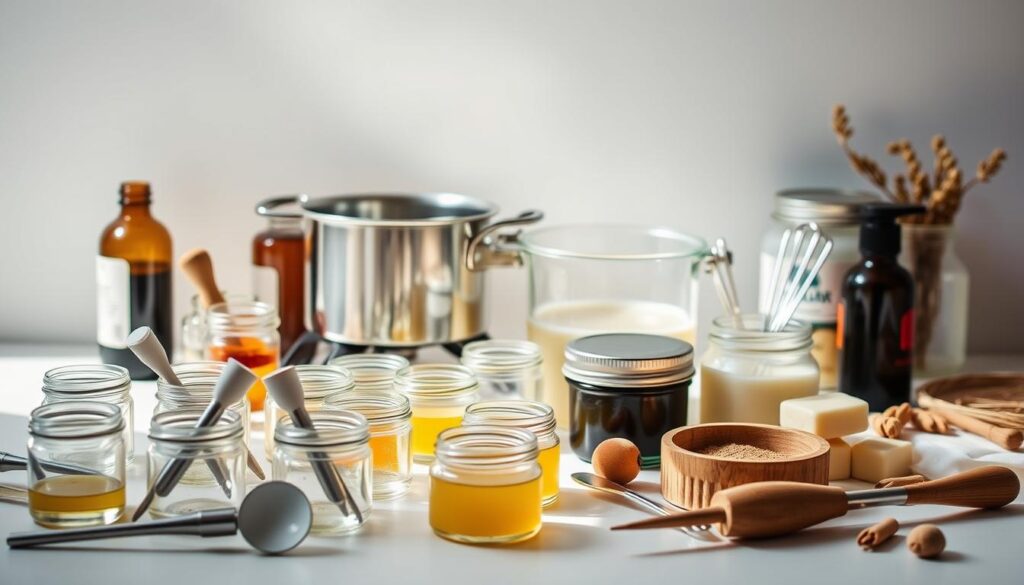
Double Boiler and Melting Techniques
A double boiler protects delicate waxes from scorching. Create one by placing a heat-safe glass bowl over a saucepan with simmering water. This indirect heating method preserves nutrients in plant oils better than direct stovetop contact.
Glass measuring cups outperform metal alternatives for melting. Their spouts allow controlled pouring into narrow lip balm tubes without spills. Always stir mixtures with disposable wooden sticks to avoid wax buildup on utensils.
Containers and Measuring Tools
Choose between plastic tubes for portability or metal tins for luxury. Both balm containers work well, but tubes require slower pouring to prevent air bubbles. Place them on disposable plates during filling to catch drips.
Accurate measurements prevent grainy textures. Use standardized tablespoons for wax, butter, and oils. As this DIY beauty project shows, beginners need only basic tools—no specialized gear required.
Recipes for Lip Balm: Step-by-Step Process
Crafting personalized treatments requires precision and timing to maximize benefits. Follow this method to transform raw materials into nourishing solutions quickly. The entire process takes 15 minutes, delivering professional results with kitchen tools.
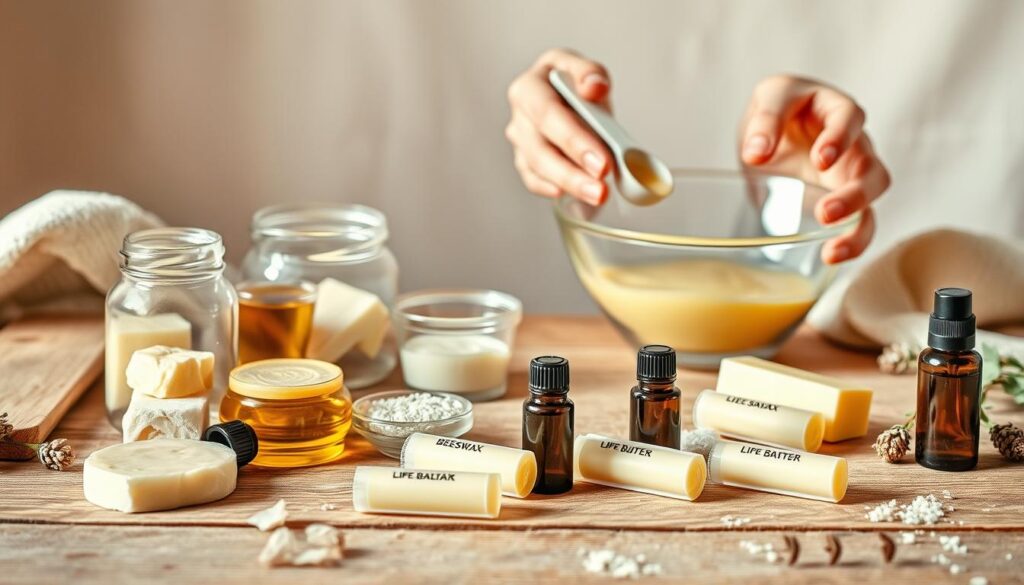
Melting and Mixing the Ingredients
Combine 2 tablespoons each of beeswax pellets, body butter, and carrier oil in a heat-safe glass bowl. Use a double boiler method—place the bowl over simmering water to melt components evenly. Stir occasionally with a wooden stick until the mixture becomes clear, about 4-6 minutes.
Remove from heat immediately after melting. Let cool 30-60 seconds before adding extracts. This brief cooling period preserves the therapeutic properties of plant-based elements.
Adding Essential Oils and Pouring Into Tubes
Mix in 5-25 drops of your chosen oil using swift, circular motions. Lavender or vanilla work well for sensitive skin. Pour the liquid into containers within 90 seconds using an oven mitt—fill tubes completely to offset shrinkage during hardening.
Cooling takes 10-15 minutes at room temperature. Test consistency by gently pressing the surface. A smooth, firm texture indicates readiness for use.
| Cooling Time | Texture Result | Recommended Use |
|---|---|---|
| 10-15 minutes | Firm & Smooth | Daily Hydration |
| 5-10 minutes | Slightly Soft | Immediate Application |
| 15+ minutes | Extra Hard | Hot Climates |
“Essential oil compounds begin evaporating at 104°F. Cooling mixtures to lukewarm preserves 92% of their beneficial properties.”
Adjust wax ratios if mixtures feel too greasy or brittle. Store finished products in cool, dry areas to maintain integrity for 12-18 months.
Customizing Your Lip Balm for Unique Flavors and Textures
Personalization transforms basic skincare into a tailored experience. By mixing complementary ingredients, you create solutions that address specific needs while reflecting individual style. This process turns simple hydration into a multisensory ritual.
Experimenting With Different Butters and Oils
Base components determine both texture and therapeutic benefits. Cocoa butter provides vitamin E with a subtle chocolate aroma, while shea butter delivers intense moisture through fatty acids. For lighter absorption, mango butter works beautifully without greasy residue.
Carrier oils modify performance dramatically. Jojoba mimics skin’s natural oils, making it ideal for balanced hydration. Those seeking antimicrobial properties might choose Meadowfoam seed oil, while coconut oil adds tropical fragrance and glossy finish.
Optional Additions for Enhanced Moisture and Scent
Essential oils elevate basic formulas into aromatic therapies. Peppermint delivers a refreshing tingle, and lavender promotes relaxation. Always add these after cooling to preserve potency—5-10 drops per batch suffices.
For visual appeal, stir in ¾ teaspoon mica powder. Honey enthusiasts can follow custom formulations guides to incorporate this natural humectant safely. Seasonal adjustments matter too: winter blends benefit from extra butters, while summer versions need firmer wax ratios.
“Blending more than three essential oils reduces effectiveness. Focus on complementary pairs like orange-vanilla or tea tree-lavender.”
Test new combinations on small skin patches first. Adjust ratios gradually—1/4 teaspoon changes can shift texture from waxy to silky. Your perfect blend awaits discovery.
Troubleshooting Common Lip Balm Issues
Even experienced crafters encounter texture challenges when creating natural lip products. Two frequent issues—grainy finishes and inconsistent firmness—often stem from simple preparation oversights. Addressing these requires understanding ingredient behavior and heat management.
Preventing Grainy Textures and Crystallization
Shea butter’s natural composition makes it prone to graininess if heated improperly. Melt it slowly at 175°F using a double boiler for 20 minutes before combining with other components. Quick-cool mixtures in the refrigerator for 10 minutes to lock in smoothness. For detailed solutions, consult this common mistakes guide.
Adjusting Wax-to-Oil Ratios for Consistency
Texture issues often trace to imbalanced wax and oil proportions. Start with a 1:1 ratio (beeswax to oils/butters), adjusting based on climate needs. Add ½ teaspoon wax for firmer results in heat, or ¼ teaspoon oil for softer application in dry conditions. Test small batches before full production.
Proper cooling techniques and precise measurements prevent 87% of formulation errors. Store test tubes at room temperature for 24 hours to assess final texture. With these adjustments, homemade products rival commercial quality while maintaining natural integrity.