

Are you neglecting a crucial part of your shoulder development? Strong shoulders are not just about aesthetics; they’re also vital for overall upper body strength and functional movement. While many focus on building their front deltoids, the rear deltoids often get overlooked, leading to imbalances and potential postural issues.
The rear deltoids play a significant role in shoulder stability and are essential for movements like pulling and rotating. Developing these muscles can transform your shoulder’s appearance and improve your overall strength.
Key Takeaways
- Understanding the importance of rear deltoid training for complete shoulder development.
- Learning how to identify and address imbalances between front and rear deltoids.
- Discovering effective exercises to strengthen your rear deltoids.
- Improving posture and functional strength through targeted rear delt training.
- Enhancing overall upper body strength and aesthetics.
Understanding the Rear Deltoids: Anatomy and Function
The deltoid muscle is composed of three heads, with the rear deltoid being a vital part. This muscle group is located at the back of the shoulder and upper arm region, playing a crucial role in overall shoulder function and aesthetics.
What Are Rear Delts?
The posterior deltoids, commonly referred to as “rear delts,” are one of the three heads of the deltoid muscle. They are situated at the rear of the shoulder, visible from both the side and back. Developing the rear delts is essential for achieving a balanced and imposing physique. The rear delts work in conjunction with other muscles of the upper back, such as the trapezius and rhomboids, to maintain proper shoulder positioning.
The Role of Rear Delts in Shoulder Function
The primary function of the rear deltoids is shoulder extension, which involves pulling the shoulder back and maintaining an upright posture. They are also involved in external rotation movements, contributing to overall shoulder stability. By working together with other muscles of the upper back, the rear delts help prevent the shoulders from rolling forward, thus maintaining proper alignment and reducing the risk of injury.
In summary, the rear deltoids are a critical component of the shoulder musculature, contributing to both functional movement and aesthetic appearance. Understanding their anatomy and function is essential for effective training and overall muscle development.
Why Rear Delt Training Is Essential for a Complete Physique
Developing strong rear delts is crucial for a balanced physique. The rear delts are one of the most undertrained muscles in our body. Despite making up one whole third of the shoulder muscle heads, they are often overshadowed by their counterparts, the front and mid delts.
The Overlooked Muscle Group
The rear delts are frequently neglected in typical training programs. This oversight can lead to imbalanced shoulder development, as many fitness enthusiasts focus on the more visible front deltoids. As a result, it’s common to see individuals with well-developed front delts but underdeveloped rear delts, leading to poor posture and reduced overall strength.
Aesthetic Benefits of Developed Rear Delts
Well-developed rear delts contribute significantly to the appearance of broader shoulders and a more three-dimensional physique. When the rear delts are strong and defined, they enhance the overall aesthetic of the shoulder muscles, creating a more balanced and visually appealing look. Here are some key aesthetic benefits:
- Broader shoulder appearance
- More defined deltoid muscles
- Enhanced overall physique
Functional Importance for Overall Strength
The rear delts play a crucial role in various upper body movements, particularly in pulling exercises and postural control. Strengthening the rear delts can improve overall upper body performance and reduce the risk of injury during training and daily activities. By developing strong rear delts, individuals can achieve better posture, enhanced athletic performance, and a reduced risk of shoulder-related injuries.
5 Key Benefits of Strengthening Your Rear Delts
Strengthening your rear delts can have a significant impact on your overall shoulder health and strength. The rear deltoids are a crucial component of the shoulder muscles, and developing them can lead to numerous benefits. In this section, we’ll explore the key advantages of incorporating rear delt exercises into your workout routine.
Improved Posture and Reduced Shoulder Hunching
Strong rear delts help counteract the forward pull of chest muscles, promoting better posture and reducing the likelihood of shoulder hunching. By strengthening your rear delts, you can improve your overall spinal alignment and reduce the risk of kyphosis.
Enhanced Shoulder Stability and Injury Prevention
The rear delts play a vital role in supporting the shoulder joint, enhancing stability and reducing the risk of injury. By strengthening your rear delts, you can improve your overall shoulder function and reduce the likelihood of common shoulder injuries.
Better Performance in Pulling Movements
Strong rear delts are essential for effective pulling movements, such as rows and pull-ups. By developing your rear delts, you can improve your overall performance in these exercises and achieve greater gains.
Balanced Shoulder Development
Balanced shoulder development is crucial for achieving a well-rounded physique. By strengthening your rear delts, you can ensure that your shoulders are evenly developed, reducing the risk of imbalances and injuries.
Support for Other Upper Body Lifts
The rear delts provide crucial support for other upper body lifts, such as the bench press and overhead pressing movements. By strengthening your rear delts, you can improve your overall upper body strength and stability.
| Benefit | Description |
|---|---|
| Improved Posture | Strong rear delts counteract forward pull of chest muscles |
| Enhanced Shoulder Stability | Rear delts support shoulder joint, reducing injury risk |
| Better Pulling Performance | Strong rear delts improve rows and pull-ups |
| Balanced Shoulder Development | Evenly developed shoulders reduce imbalance risk |
| Upper Body Support | Rear delts support bench press and overhead movements |
The Best Rear Delt Exercises for Maximum Growth
Effective rear delt training requires a combination of exercises that target the muscle from different angles. To achieve maximum growth, it’s essential to understand how to select the most effective exercises and categorize them for a comprehensive training approach.
Selecting the Right Exercises
Our selection of rear delt exercises is based on scientific research regarding muscle activation patterns and practical training experience. Studies have shown that exercises like the rear delt fly, particularly when performed on a machine, significantly increase muscle activation in the rear delts. Compound exercises such as barbell rows also play a crucial role by working the delts along with other muscles.
- Isolation Exercises: These target the rear delts directly, such as the rear delt fly.
- Compound Exercises: These work multiple muscle groups, including the rear delts, like barbell rows.
- Bodyweight Exercises: Utilize your own body weight as resistance, such as inverted rows.
- Cable Exercises: Provide constant tension on the rear delts, like cable rear delt fly.
Categorizing Exercises for Comprehensive Training
Categorizing exercises into distinct groups allows for a well-rounded training program. By incorporating a variety of exercises, you can stimulate the rear delts from multiple angles, ensuring comprehensive development.
| Exercise Category | Examples | Benefits |
|---|---|---|
| Isolation | Rear Delt Fly, Face Pulls | Directly targets rear delts |
| Compound | Barbell Rows, Single-Arm Dumbbell Rows | Works multiple muscle groups |
| Bodyweight | Inverted Rows, Superman Exercises | Utilizes body weight as resistance |
| Cable | Cable Rear Delt Fly, High Cable Face Pulls | Provides constant tension |
Top Isolation Exercises for Targeted Rear Delt Development
Effective rear delt exercises can help improve overall shoulder health and stability. To achieve well-rounded shoulder development, it’s essential to focus on isolation exercises that target the rear deltoids. Here, we’ll explore the most effective isolation exercises for rear delt development.
Rear Delt Fly (Machine and Dumbbell Variations)
The rear delt fly is a gold standard exercise for targeting the rear deltoids. To perform the machine variation, sit on the rear delt machine with your chest against the pad, feet flat on the floor, and handles at shoulder height. Take hold of the handles in a neutral grip, arms outstretched but not locked out. Bring the handles back until they are roughly in line with your shoulders, pause, and slowly return to the starting position. For the dumbbell variation, hold dumbbells with your arms extended to the sides, and lift the dumbbells out to the sides until they are at shoulder height.
Face Pulls
Face pulls are another effective exercise for targeting the rear delts. Attach a rope extension to a cable machine, and move the cable to just above head height. Take the two ends of the cable in both hands, thumbs on top, and palms facing down. Take a couple of steps back, until your arms are fully extended, and lean back slightly. Pull the rope towards your forehead, aiming to get the handles towards your ears, and let your elbows flair out to the sides. Pause, squeeze your rear delts, and then reverse the movement.

Bent-Over Rear Delt Fly
The bent-over rear delt fly is a variation of the rear delt fly that targets the rear delts from a different angle. To perform this exercise, bend over at the waist, holding dumbbells with your arms extended towards the ground. Lift the dumbbells out to the sides until they are at shoulder height, squeezing your shoulder blades together at the top of the movement.

Band Pull-Aparts
Band pull-aparts are an accessible and effective exercise for targeting the rear delts. Hold a resistance band with both hands, arms extended in front of you, and pull the band apart, keeping your arms straight. Focus on squeezing your shoulder blades together and targeting the rear delts.
Effective Compound Movements That Target Rear Delts
Effective rear delt training involves incorporating compound movements that not only strengthen the shoulders but also improve overall back strength. Compound exercises are particularly beneficial as they work multiple muscle groups simultaneously, leading to more efficient workouts.
Barbell Rows
Barbell rows are a fundamental exercise for targeting the rear delts. To perform a barbell row correctly, start by setting up as if you are about to deadlift: Stand with your mid-foot under the bar, feet shoulder-width apart. Squat down, placing your hands on the bar in an overhead grip, thumb width outside of legs. Keep your back flat, chest up, head and neck in line. Focus your eyes just ahead of your feet. Lift the bar as you stand, until you are standing fully upright, holding the bar.
Now, hinge over, pushing your bum back, bending your knees slightly, moving the bar down your thighs until the bar reaches your kneecaps and your chest is at a 60-degree angle with the ground. Start the row: pull the barbell upwards towards your belly button, driving the elbows back, squeezing the shoulder blades. Pause, then bring the barbell back down to the starting position. Repeat.
Single-Arm Dumbbell Rows
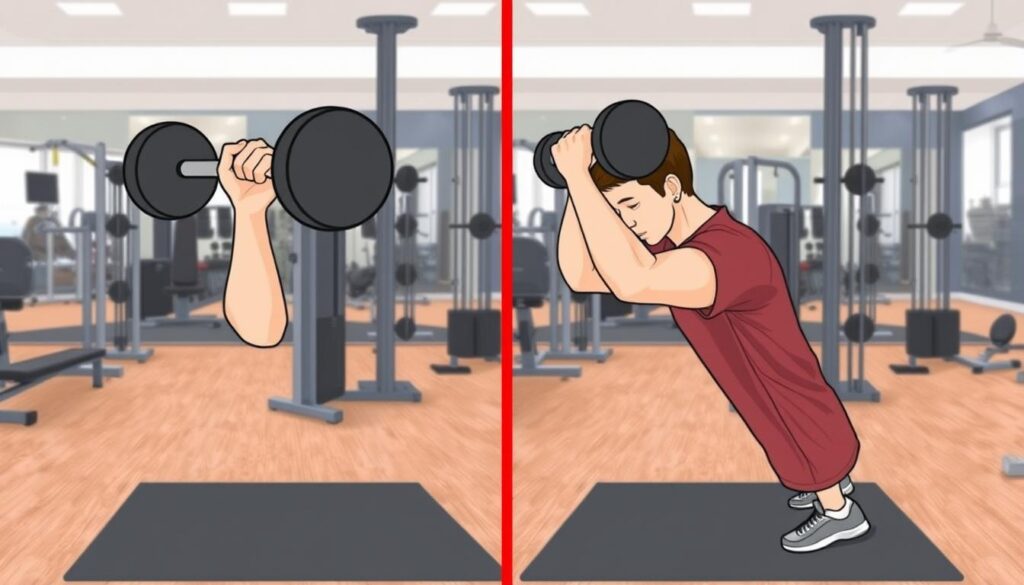
Single-arm dumbbell rows are an excellent unilateral exercise that allows for a greater range of motion and focused mind-muscle connection with the rear delts. To perform this exercise, set up the weight bench in the flat position. Select a moderate-to-heavy single dumbbell. Holding the dumbbell in one hand, kneel on the bench with the opposite leg, placing the non-rowing hand on the bench. The other foot should be firmly planted on the ground.
Keeping a flat back and engaged core, ‘row’ the dumbbell up, driving the elbow backwards until the dumbbell is in line with your chest. Pause, then slowly lower back to the starting position. Repeat on the other side.
Chest-Supported Rows
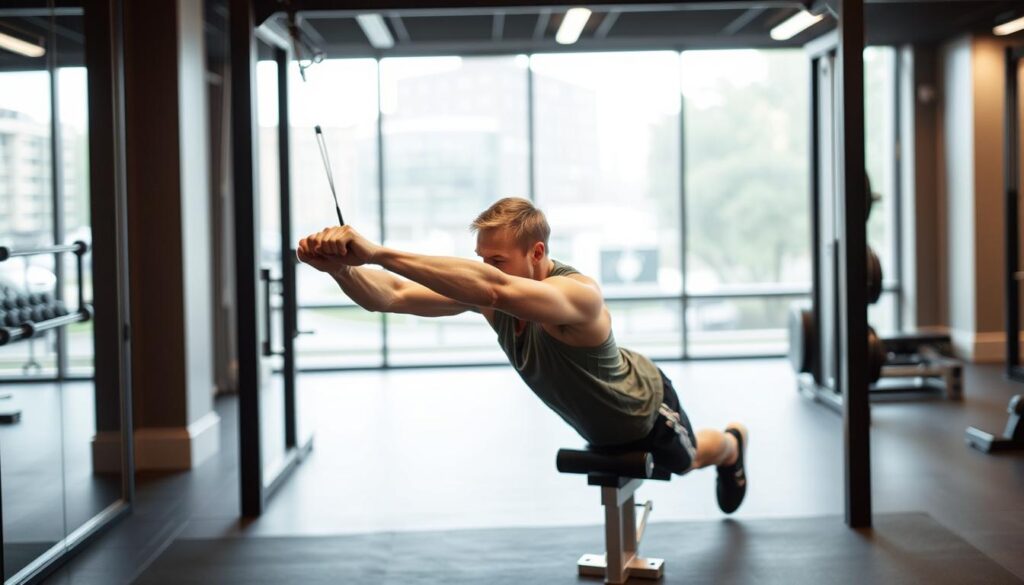
Chest-supported rows are a back-friendly alternative that minimizes lower back stress while effectively targeting the rear delts and upper back muscles. This exercise is performed on a chest-supported row machine, which allows you to focus on squeezing your shoulder blades together.
Adjust the machine to fit your body, ensuring your chest is firmly against the pad. Grasp the handles with your arms extended, then pull the handles towards your chest, keeping your elbows close to your body. Squeeze your shoulder blades at the peak of the movement, then return to the starting position.
Upright Rows
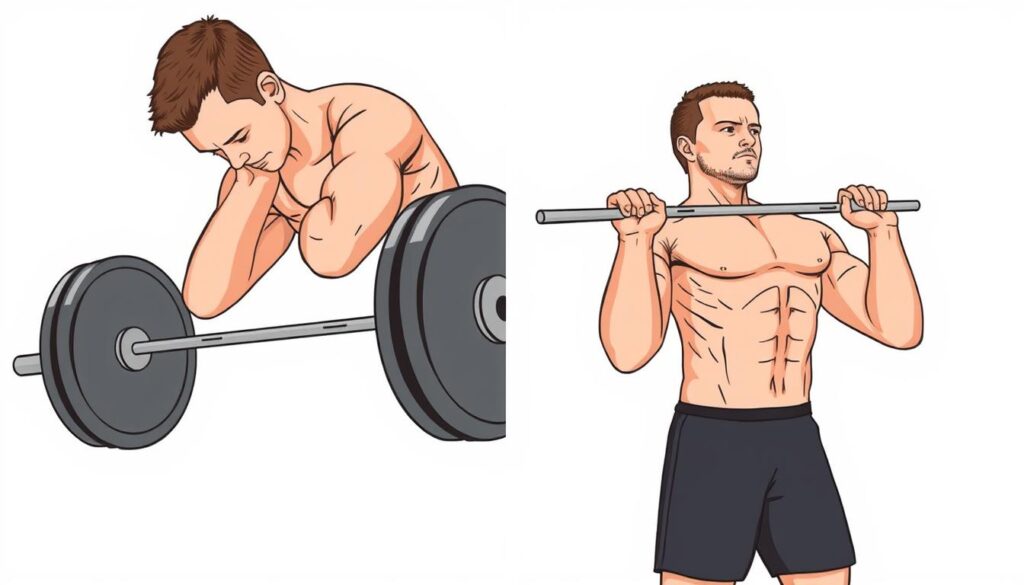
Upright rows are another effective exercise for targeting the rear delts, although they require careful attention to form to avoid shoulder impingement. Hold a barbell or dumbbells with your hands shoulder-width apart, hanging down in front of your thighs.
Pull the weight upwards, keeping it close to your body, until your elbows are at or above shoulder height. Focus on squeezing your shoulder blades together and keeping your shoulders down. Lower the weight back down to the starting position, maintaining control throughout the movement.
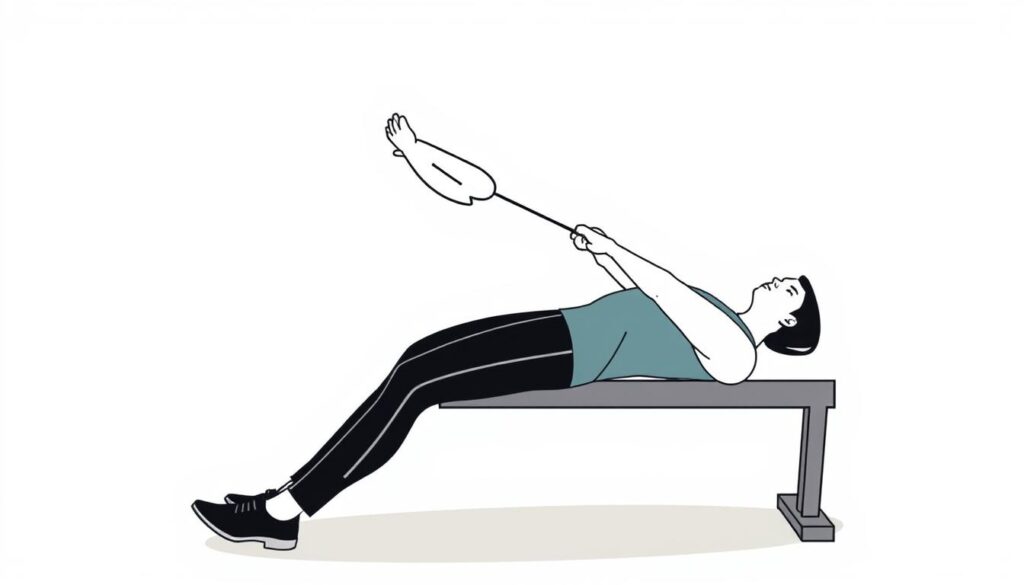
Incorporating these compound movements into your workout routine can significantly enhance rear delt development, contributing to stronger, more balanced shoulders.
Bodyweight and Minimal Equipment Rear Delt Exercises
Strengthening your rear delts can be done anywhere, thanks to a variety of bodyweight and minimal equipment exercises. These exercises are perfect for home workouts or when traveling, ensuring you never miss a session.
Inverted Rows

Inverted rows are a fantastic exercise for targeting the rear delts. To perform an inverted row, hang beneath a bench, picnic table, or bar with straight arms, or use a suspension trainer/rings. Drive your elbows back and pull yourself to the bar, pausing for a second before lowering yourself back to a full hang. Repeat for the desired number of reps.
To maximize rear delt engagement, focus on proper body positioning and scapular retraction. Avoid swinging or using momentum, as this can reduce the effectiveness of the exercise.
Superman Exercises
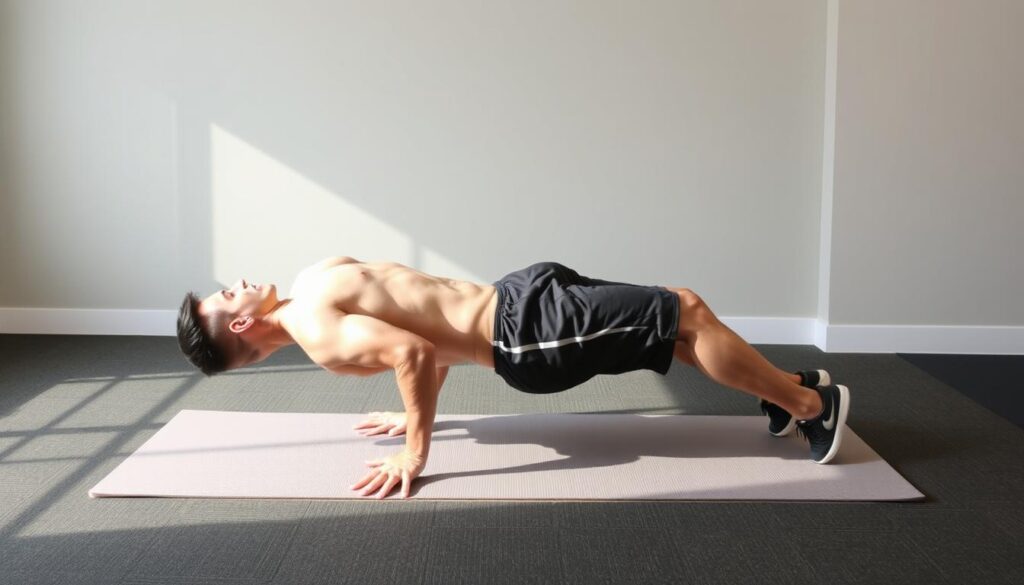
The Superman exercise is an effective bodyweight movement that strengthens the entire posterior chain, including the rear delts. Lie on your stomach with your arms extended in front of you and legs fully extended. Contract your core muscles to stabilize your spine, then simultaneously raise both your legs and straight arms a few inches off the ground.
For added resistance, you can use a resistance band. As you raise your arms and legs, bend your elbows to pull the resistance band to your chest. This variation, known as the Superman Banded Lat Pulldown, adds an extra challenge to the exercise.
Y-Raises
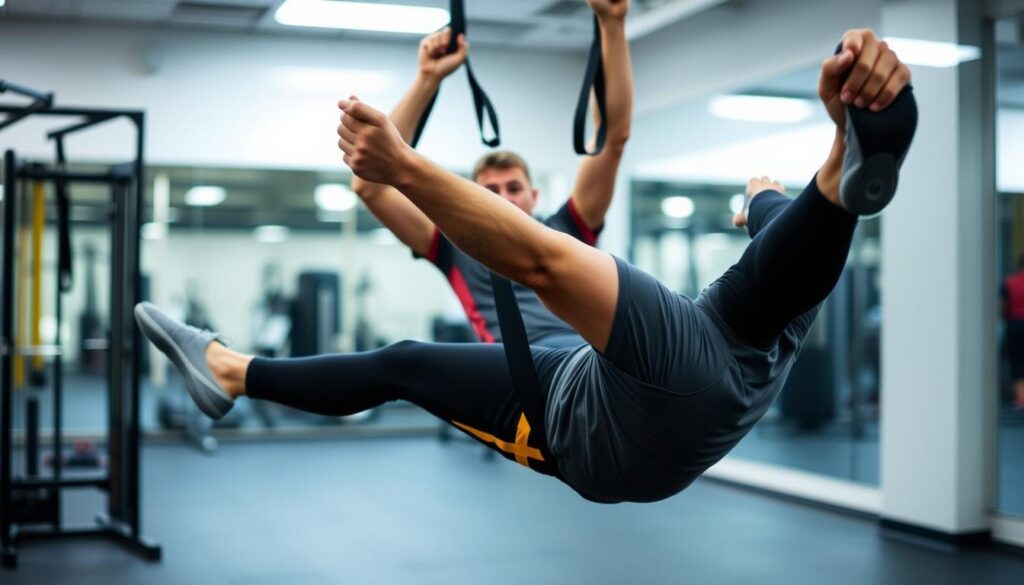
Y-Raises are a challenging bodyweight exercise that targets the rear delts through an extended range of motion. Hang beneath a suspension trainer or gymnastics rings with straight arms, creating a rigid structure from your ankles to your shoulders. Raise your hands forwards and up above your head in a ‘Y’ shape, raising your body upwards as you do so.
Pause for a second at the top of the rep, then slowly lower yourself back to the start. To make the movement easier, walk your feet backwards to reduce the angle of your body.
Cable Machine Exercises for Constant Tension on Rear Delts
Constant tension is key to effective rear delt training, and cable machine exercises are designed to deliver just that. Cable machines provide a unique advantage in rear delt training by maintaining constant tension throughout the entire range of motion, which is crucial for muscle hypertrophy and strength.
Cable Rear Delt Fly
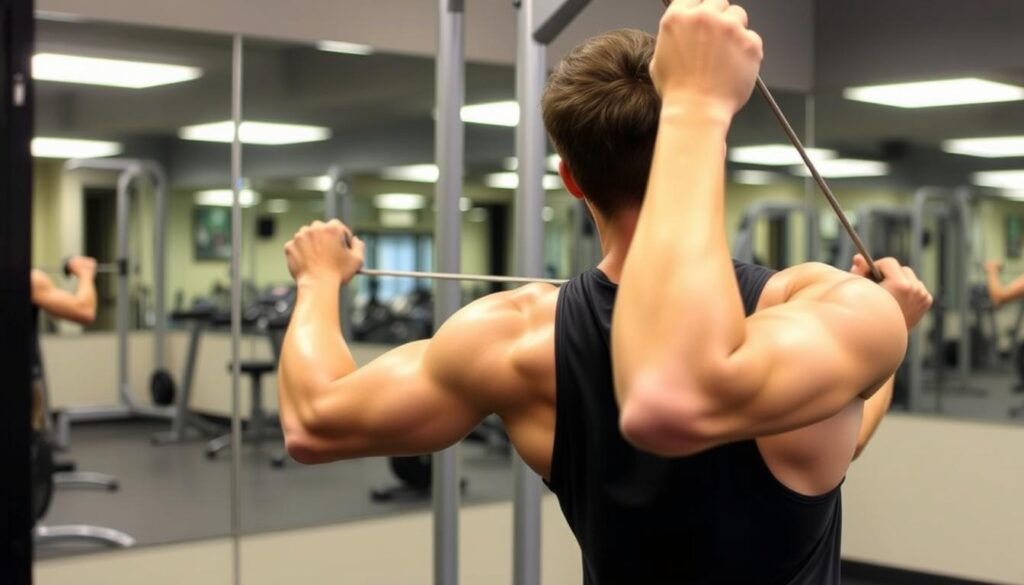
The cable rear delt fly is an isolation exercise that specifically targets the rear deltoids. To perform this exercise, stand facing a cable machine with the cables at shoulder height. Hold a handle in each hand and take a step back to create tension. With your arms straight, move the handles out to the sides until they are in line with your shoulders, squeezing your rear delts at the peak of the movement.
High Cable Face Pulls

High cable face pulls are an excellent exercise for targeting the rear delts while also engaging the rotator cuff muscles, which are essential for shoulder health and function. Attach a rope handle to the highest notch of a cable machine. Facing the machine, grasp the rope with both hands and take a step back. Pull the rope towards your face, keeping your elbows high, and squeeze your rear delts and rotator cuff muscles.
Close-Grip Lat Pulldowns

Close-grip lat pulldowns can be modified to emphasize rear delt activation by adjusting the grip position, elbow path, and torso angle. Attach a V-handle to a lat pulldown machine and sit down with your knees securely under the pad. Grasp the handle with a close grip and pull it down towards your upper chest, driving your elbows down and back. This variation increases the range of motion and involvement of the rear delt muscles.
Cable exercises are particularly effective for creating metabolic stress in the rear delts, an important mechanism for muscle hypertrophy. By incorporating these exercises into your workout routine, you can achieve more balanced shoulder development and improved overall shoulder health.
Advanced Techniques to Intensify Your Rear Delt Training
Intensifying your rear delt workout requires more than just the usual exercises; it demands innovative training strategies. For experienced trainees, breaking through plateaus and stimulating new growth in the rear deltoids is crucial for a balanced physique.
To achieve this, several advanced techniques can be employed. These include methods that increase the intensity and challenge of workouts, pushing the rear delt muscles to their limits.
Drop Sets for Rear Delts
Drop sets are a powerful technique for extending the duration of a set beyond the point of initial failure. By immediately reducing the weight and continuing the exercise, you can significantly increase the tension on the delts, promoting further muscle fatigue and growth.
For example, when performing a rear delt fly, start with a weight that allows you to complete 8-12 reps. Upon reaching failure, reduce the weight by 20-30% and continue for another 8-12 reps. This technique increases the overall volume of the workout and challenges the muscle in a unique way.
Mechanical Drop Sets
A mechanical drop set involves sequencing exercises from most to least mechanically challenging. For rear delts, this could involve starting with a lying rear delt fly using dumbbells, then moving to a bent-over rear delt fly, and finishing with a cable rear delt fly. Each exercise is performed to failure without rest, thoroughly fatiguing the rear delts.
An example protocol could be: Lying Rear Delt Flyes for 8-12 reps, followed by Bent-Over Rear Delt Fly for 12-15 reps, and finishing with Cable Rear Delt Fly for 15-20 reps. Rest for 2 minutes, then repeat for 3-4 rounds.
| Exercise | Reps | Rest |
|---|---|---|
| Lying Rear Delt Fly | 8-12 | 0 |
| Bent-Over Rear Delt Fly | 12-15 | 0 |
| Cable Rear Delt Fly | 15-20 | 0 |
Time Under Tension Techniques
Time under tension techniques focus on slowing down the eccentric phase of exercises and incorporating isometric holds to maximize rear delt stimulation. For instance, during a rear delt fly, take 3-5 seconds to lower the weight and hold for 1-2 seconds at the top before raising it back.
This approach not only increases the duration the muscle is under stress but also enhances the mind-muscle connection, leading to more effective training sessions.
Sample Rear Delt Workout Routines for Different Fitness Levels
A well-designed rear delt workout routine can help improve posture, enhance athletic performance, and reduce injury risk. To achieve optimal results, it’s recommended to train your rear delts at least twice a week, incorporating a variety of exercises into your pull or upper body workout days.
Beginner Rear Delt Routine
For those new to targeted rear delt training, start with fundamental movements like rear delt fly and face pulls. Aim for 3 sets of 12-15 reps, resting for 60-90 seconds between sets.
Intermediate Workout Plan
As you progress, incorporate a wider range of exercises, such as bent-over rear delt fly and band pull-aparts. Increase the intensity with 4 sets of 10-12 reps, resting for 90-120 seconds between sets.
Advanced Training Split
For advanced trainees, strategically incorporate rear delt work throughout the week, utilizing techniques like drop sets and time under tension. Aim for 5 sets of 8-10 reps, resting for 120-180 seconds between sets, and vary your exercises to include cable rear delt fly and high cable face pulls.
Common Mistakes to Avoid When Training Rear Delts
To maximize rear delt development, it’s crucial to steer clear of common training errors. Effective rear delt training requires a combination of proper form, appropriate weight, and a strong mind-muscle connection.
Using Too Much Weight
One of the most significant mistakes in rear delt training is using too much weight. This often leads to compensatory movements by larger muscle groups, reducing the activation of the rear delts. To correct this, reduce the weight and focus on controlled reps, ensuring that the rear delts are doing the work.
Poor Exercise Form
Poor exercise form is another critical error. Common form breakdowns include excessive torso movement and improper elbow positioning. Maintaining proper form is essential for effective rear delt training. For instance, during rows, keep your torso almost perpendicular to the floor to avoid turning the exercise into a ‘shrug’ that emphasizes the upper traps.
Neglecting Mind-Muscle Connection
Neglecting the mind-muscle connection can significantly limit rear delt development. Focus on squeezing your rear delts at the top of the movement and maintaining a strong neuromuscular awareness throughout the exercise.
| Mistake | Correction |
|---|---|
| Using too much weight | Reduce weight, focus on controlled reps |
| Poor exercise form | Maintain proper form, avoid excessive torso movement |
| Neglecting mind-muscle connection | Squeeze rear delts at the top, maintain neuromuscular awareness |
By avoiding these common mistakes, you can optimize your rear delt training and achieve a more balanced and stronger shoulder development.
Conclusion: Building Balanced, Strong Shoulders Through Rear Delt Training
As we’ve explored throughout this article, developing strong rear delts is crucial for achieving balanced shoulder strength and aesthetics. By incorporating the exercises and techniques outlined, you can significantly improve your rear delt development, leading to enhanced shoulder stability and posture.
The benefits of dedicated rear delt training extend beyond aesthetics, contributing to improved functional strength, reduced injury risk, and enhanced overall physique appearance. It’s essential to assess your current training program and make adjustments to ensure adequate rear delt stimulation.
By prioritizing rear delt development, you’ll be taking a significant step towards achieving a well-rounded physique and improving your overall shoulder health. Start by integrating the recommended exercises into your routine, and you’ll be on your way to stronger, more resilient shoulders.