
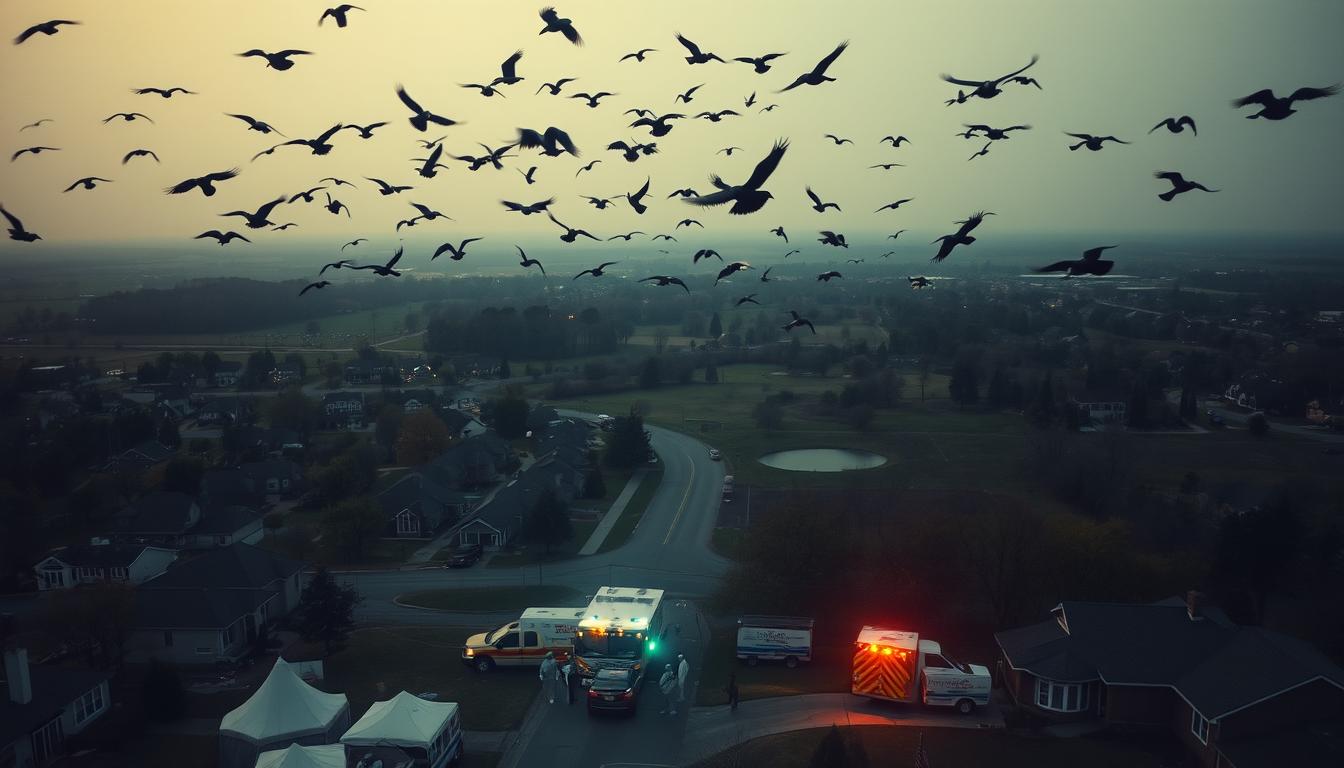
This summer, the United States has seen a 40% increase in West Nile virus cases, according to the CDC. By September 16, 2025, there were about 770 human cases, with nearly 500 severe cases. These numbers are expected to grow as more cases are reported.
The CDC’s ArboNET system updates numbers every one to two weeks from June to December. Local health sites might update faster, leading to different numbers. Mild cases often take time to report, so the real number of cases is likely higher.
Where you live affects the number of cases. Each county has its own data, making year-to-year comparisons hard. But, the trend is clear: more areas are at risk this year.
This update will follow the outbreak, how officials respond, and what you can do. As the weather changes, keeping an eye on mosquito numbers is key.
Key Takeaways
- CDC’s ArboNET reports about a 40% rise in West Nile virus activity this season.
- Approximately 770 U.S. cases have been logged, with nearly 500 neuroinvasive illnesses.
- Data are current as of September 16, 2025, and are subject to change due to reporting lags.
- Surveillance varies by county and behavior, affecting comparisons across locations and time.
- Updates occur every one to two weeks; local health departments may post newer figures.
- Early, accurate surveillance helps guide response to this mosquito-borne disease.
Overview of West Nile Virus
Every summer and fall, health officials watch the west nile virus closely. Most people get mild symptoms, but some get very sick. Because it can cause serious brain diseases, it’s a big deal nationwide.
Knowing the basics helps communities stay safe and know when to seek help.
What is West Nile Virus?
West nile virus is spread by Culex mosquitoes. It goes between mosquitoes and birds, and humans get it by accident. Most people don’t show symptoms, but some get fever, headache, and tiredness.
In serious cases, it attacks the brain. This can lead to meningitis or encephalitis, needing hospital care. In the US, it’s a condition that must be reported.
| Feature | Typical Presentation | Clinical Concern | Public Health Relevance |
|---|---|---|---|
| Transmission | Mosquito bites from infected Culex species | Exposure varies by season and habitat | Classified as a mosquito-borne disease |
| Mild Illness | Fever, rash, body aches | Usually self-limited | Signals local virus activity |
| Severe Illness | Neck stiffness, confusion, seizures | Neuroinvasive disease including encephalitis | Triggers urgent reporting as a notifiable condition |
| Reservoir Cycle | Bird–mosquito amplification | Drives community risk | Guides surveillance and control |
History of the Virus in the US
The virus was first found in Africa in 1937 and spread to Europe in the 1990s. It came to the US in 1999, causing an outbreak in New York City. This led to a big effort to control mosquitoes.
Now, the virus is found all over the US. It’s more active in warm weather and can last into fall. Reporting it helps track and fight it nationwide.
Symptoms and Transmission
Most people with this mosquito-borne disease don’t show symptoms. When they do, the illness is usually mild and short-lived. Knowing the symptoms and how the virus spreads helps us understand recent cases.
Common Symptoms of West Nile Virus
Sudden fever, headache, body aches, and fatigue are common symptoms. Some people also notice a light rash that fades quickly. These signs are usually mild, and many cases go unreported.
But severe illness is rare and serious. Neuroinvasive disease can cause meningitis or encephalitis. This includes neck stiffness, confusion, or muscle weakness. In some cases, paralysis or long hospital stays can occur.
How the Virus is Transmitted
The virus is spread through mosquito bites. The mosquito gets the virus from an infected bird and then bites humans. This explains why cases can cluster even when people and birds move around.
Reports list cases by county of residence, not where exposure happened. This means mild illnesses might be missed. This affects how transmission patterns appear on official maps.
Geographic Spread
West Nile virus is found across the United States, with more cases in late summer and fewer in fall. Hundreds of cases have been reported, and tracking mosquito habitats and human exposure is key. Data updates help us see trends, but reports can be uneven.
States Affected by Recent Outbreaks
Outbreaks have been reported from the Pacific to the Atlantic, showing how wide the mosquito habitats are. By early September 2025, about 770 U.S. cases were reported, with nearly 500 being severe. This shows how outbreaks can cluster in certain areas.
ArboNET uses county-level reporting, which can be delayed by a week or two. Surveillance of non-human cases also varies by area.
- Breadth: Activity reported across most regions of the United States, including the Midwest, Southwest, and Mid-Atlantic.
- Timing: Peaks observed in July–September, with updates continuing into December as investigations close.
- Signal strength: Absence of detections in some areas may reflect limited trapping, not zero risk.
Urban vs. Rural Transmission Patterns
In cities, more people are exposed because of mosquito habitats like storm drains and ponds. In rural areas, outbreaks are linked to irrigation, wetlands, and bird habitats near farms. It’s hard to compare illness rates in different places because mild cases often go untested.
| Setting | Primary Mosquito Habitats | Drivers of Risk | Reporting Considerations |
|---|---|---|---|
| Urban | Stormwater systems, rooftop gutters, containers, decorative water features | Dense populations, heat islands, consistent bird–mosquito contact | More clinics may boost detection; mild cases are often underreported |
| Suburban | Backyard pools, rain barrels, greenbelts, retention ponds | Outdoor leisure, lawn irrigation, mixed bird species | Variable lab access; periodic county-level reporting cycles |
| Rural | Irrigation ditches, wetlands, stock tanks, floodplain pools | Seasonal water management, migratory birds, agriculture | Longer reporting lags; non-human surveillance often intermittent |
| Transit Corridors | Roadside ditches, construction basins | Human movement, equipment yards, temporary water | Outbreak distribution may shift rapidly between counties |
Risk Factors
Knowing who’s most at risk and how surroundings affect exposure is key for public health. The recent surge matches seasonal patterns and mosquito pool tests. This helps send out local alerts without being too sure.
These insights come from ongoing surveillance and real-world reports. They can change as awareness and seeking care evolve across areas.
Who is Most at Risk?
Older adults and those with weakened immune systems face the biggest risk. If they get infected, it could lead to serious brain diseases. These might need hospital treatment.
People over 50 need to be extra careful when mosquitoes are most active. Conditions like chronic illnesses, recent chemo, organ transplants, or high-dose steroids increase risk.
Environmental Factors that Influence Spread
Environmental conditions affect mosquito behavior and virus spread. Warm nights, recent rain, and standing water boost mosquito breeding. Dry heat, on the other hand, pushes them to irrigated areas and parks.
Most cases happen in late summer, often in August and September. This is when mosquito counts go up and more pools test positive. Signs like infected birds and mosquitoes in surveillance systems help spot areas at higher risk.
Local patterns may vary due to testing intensity and reporting. This affects how communities see their risk levels.
Prevention Strategies
Peak risk for mosquito bites is in late summer and early fall. To stay safe, focus on daily habits. These include avoiding mosquitoes, choosing the right clothes, and fixing your home.
Effective Prevention Measures
Use an EPA-registered insect repellent with DEET, picaridin, or oil of lemon eucalyptus. Apply it at dawn and dusk. Always follow the label’s instructions, and pick the right one for kids and adults.
Wear long sleeves and loose, light-colored pants. Treat your outer clothes with permethrin, but don’t apply it to your skin.
At home, fix any torn screens on windows and doors. Also, empty standing water from buckets, tires, and plant saucers every few days. This helps prevent mosquitoes from breeding.
The Role of Mosquito Control Programs
Community mosquito control helps by targeting larvae and adults. They use larvicides, ultra-low volume spraying, and field surveillance. This helps find and control mosquito hot spots.
Each county and state has its own coverage and timing. So, keep up with prevention even when crews are working. Always use insect repellent in August and September.
Key takeaway: combine individual action with coordinated mosquito control to reduce overall risk.
Treatment Options
Care plans for West Nile virus start with a quick check-up and clear symptom management. Most people get better with rest, fluids, and pain relief. If signs point to neuroinvasive disease, fast evaluation is key to the right care and less harm.
Medical Treatments for West Nile Virus
There’s no direct treatment for West Nile virus. Doctors use supportive care like acetaminophen for fever and headaches. They also focus on keeping patients hydrated.
For those worried about dengue, the CDC advises against NSAIDs until tests clear it. This is based on their guidance on symptoms, diagnosis, and treatment.
Severe cases might need hospitalization for IV fluids, pain control, and nursing care. Those with neuroinvasive disease need close monitoring, respiratory checks, and infection prevention. This helps manage symptoms while the body fights off the virus.
Home Remedies and Supportive Care
For mild cases, home supportive care works well. Drink lots of fluids, rest, and use acetaminophen for pain and fever. These steps are key for treating mild cases at home.
If you have confusion, stiff neck, severe headache, new weakness, or persistent vomiting, seek help fast. These could be signs of neuroinvasive disease. Early hospitalization helps manage hydration, pain, and breathing, making recovery safer.
Vaccination Efforts
West Nile virus is tracked through ArboNET. In the U.S., there’s no vaccine for humans yet. So, health agencies focus on prevention, controlling mosquitoes, and quick reporting. They do this as part of public health preparedness.
There’s ongoing interest in vaccine development because of outbreaks and surges.
Current Vaccines Available
There’s no approved vaccine for humans in the U.S. for West Nile virus. But, there are vaccines for horses. These help lower the risk of the virus spreading in stables.
For people, the main strategy is prevention. This includes using repellents, wearing protective clothes, and supporting local mosquito control. These efforts help prepare for public health preparedness.
Future Developments in Vaccination
Researchers at places like the National Institutes of Health and biotech firms are working on vaccines. They’re exploring different types, like inactivated and live-attenuated ones. They’re also looking at recombinant vaccines.
They’re studying how safe these vaccines are and how well they work. They want to make sure the vaccines last all season and fit into prevention plans.
The goal is to help public health preparedness by focusing on high-risk groups. They want to make trials faster during outbreaks. And they aim to make enough vaccine to meet demand.
They’re using data from outbreaks to figure out the best doses and who should get vaccinated first. They’re working towards making a vaccine that meets all the rules.
Public Health Response
The nation’s public health response to West Nile virus is fast and clear. It uses quick data and strong surveillance coordination. This way, alerts quickly reach doctors, blood centers, and teams fighting mosquitoes.
Role of the Centers for Disease Control and Prevention (CDC)
The CDC runs ArboNET with partners to track West Nile virus. They watch human illness, blood donors, animals, mosquitoes, dead birds, and animals in the wild. They update reports every one to two weeks from June to December.
The CDC also shares maps and summaries. But, they warn about underreporting and delayed confirmations. They say cases show where people live, not where they got sick.
Local Health Departments’ Initiatives
State and city health teams often post updates faster than the CDC. They use special traps and animals to check for mosquitoes. They look at neighborhood risks and weather to plan their work.
Local teams use lab and vector data to take action. They spray larvicide, adulticide, and send out public notices. This helps fight West Nile virus by working closely with the CDC and state health departments.
Community Awareness Programs
Outreach in neighborhoods is key before summer’s peak. Clear updates mix data with action steps. This helps residents act today.
Community education succeeds with simple, frequent messages. Alerts on radio, TV, and texts reinforce good habits. Local health departments act quickly, while national updates offer broader views.
Importance of Community Education
Many mild infections go unnoticed, making daily choices critical. Prevention messaging reminds us to tip over standing water and repair screens. Using EPA-registered repellents also helps keep families safe.
It’s important to explain the difference between preliminary and confirmed cases. This builds trust and keeps focus on preventing bites in August and September.
- Use repellent before dusk and dawn walks.
- Wear long sleeves and pants when mosquitoes are active.
- Dump and scrub buckets, birdbaths, and planters weekly.
- Report green pools and clogged drains to the city.
Successful Awareness Campaigns
Cities that offer alerts and free resources see more participation. Drive-up events give out repellents and screen patches. Social posts with short videos show how to remove standing water quickly.
Working with schools, faith groups, and pharmacies expands awareness. Consistent prevention messaging keeps the message simple and memorable.
| Campaign Element | What Worked | Why It Matters | Real-World Example |
|---|---|---|---|
| Local Alerts | Twice-weekly text blasts with heat and rainfall context | Aligns behavior with real-time risk | City SMS updates coordinated with county public guidance |
| Hands-On Events | Pop-up booths distributing repellents and screen repair kits | Lowers cost barriers to prevention | Health department curbside pickup outside libraries |
| How-To Content | 30-second videos on dumping water and fixing screens | Turns advice into quick actions | Municipal social channels and local TV segments |
| School Outreach | Take-home flyers and parent text reminders | Extends community education to households | District messages aligned with city prevention messaging |
| Retail Partners | Point-of-sale prompts near repellents | Reinforces mosquito-borne disease awareness at purchase | Pharmacy counter cards and aisle signage |
Mosquito Control Measures
Local action is key in summer and fall when West Nile virus is more active. Health departments work with education, mapping, and quick field responses. They track standing water, test mosquito pools, and adjust routes as needed.
Consistent effort matters even when reports lag. Crews keep up field checks, night spraying, and door-to-door outreach. This way, gaps in data don’t slow down protection.
Community-Based Mosquito Control Programs
City and county programs focus on removing breeding sites and simple yard fixes. They start with larval source reduction, like tipping buckets and clearing gutters. Neighborhoods and schools help spread the word.
- Weekly yard walks to dump standing water and report trouble spots.
- Block-by-block larvicide drops in storm drains after rain.
- Multilingual flyers and text alerts timed to high-risk evenings.
Surveillance includes mosquito pool testing, traps, and mapped complaints. Results guide crews on where to focus larval source reduction and when to schedule night routes.
Innovations in Mosquito Management
Agencies are adopting integrated vector management to align tools and timing. Data dashboards flag hotspots; drones spot hidden containers; smart traps sort species and count captures. These innovations link with community programs for a unified effort.
Targeted strategies keep treatments precise. Larvicides address early stages, while ultra-low volume adulticide is reserved for spikes. Clean-ups, rain garden fixes, and stormwater maintenance enhance larval source reduction without heavy chemical use.
| Approach | Primary Goal | When Used | Tools and Partners | Benefit to Public |
|---|---|---|---|---|
| Larval Source Reduction | Eliminate breeding water | Weekly, after rain | Catch basin tablets, trash removal, public works crews | Fewer mosquitoes before they hatch |
| Integrated Vector Management | Coordinate methods by risk | Season-long, data-driven | GIS maps, CDC guidelines, calibrated sprayers | Efficient control with less exposure |
| Surveillance and Pool Testing | Detect virus in mosquitoes | Peak season, ongoing | CO2 traps, lab PCR, ArboNET reporting | Faster decisions on where to treat |
| Community Programs | Engage residents | All season, event-based | Schools, 311 apps, neighborhood teams | Clear steps households can take |
Environmental Impact
Rising heat and changing rain patterns affect West Nile virus. These changes influence mosquito behavior and where they breed. They also impact how we manage our yards and public spaces.
Seasonal patterns are key. Mosquitoes are most active in summer and sometimes into fall. This is when warm evenings and humid air keep them buzzing.
Effects of Climate Change on Virus Spread
Hot weather lets viruses multiply faster in mosquitoes. Late-season warmth means mosquitoes can bite longer. Storms that leave puddles for days also increase the risk of infection.
Urban areas get even hotter because of the concrete. This helps mosquitoes survive and feed. When it’s dry, people store water, creating hidden breeding sites.
Habitat Changes and Mosquito Breeding Sites
Small containers can be big problems. Buckets, tires, and clogged gutters can turn into breeding sites quickly. Clearing these areas can help reduce the risk near homes and parks.
Teams that take care of storm drains and irrigation ditches look for standing water. When rain changes from heavy to dry, these areas can trap water. Removing this water breaks the cycle of spread and shows how we can control it locally.
- Home focus: Empty containers after rain; scrub birdbaths weekly to disrupt eggs at breeding sites.
- Neighborhood focus: Report standing water in vacant lots; support larvicide use where seasonal patterns show repeat activity.
- Regional focus: Track heat waves and intense storms as climate impacts that can predict spikes in mosquito testing.
Surveillance and Reporting
Public health teams track West Nile virus through a national system. They use both human cases and environmental signals. This method helps explain trends but also shows data limitations.
How West Nile Virus is Monitored
ArboNET, run by the Centers for Disease Control and Prevention, collects data from states. It tracks human cases and environmental signs like mosquito pools and dead birds.
Cases are reported nationally and follow standard rules. From June to December, updates are given every one to two weeks. This can lead to a delay in reporting.
States and territories might update their data differently than the CDC. So, local dashboards might show more recent numbers than the national total.
Reporting Cases and Data Transparency
Reports focus on being open about data collection and gaps. They mention underreporting of mild cases and uneven monitoring. This helps understand the data’s limitations.
Experts consider reporting delays when looking at weekly changes. They explain these issues to help readers understand trends and changes in totals.
Long-term Effects of Infection
Some people get better fast, but others face long-term problems with their nervous system. This is more common when the virus reaches the brain or spinal cord, known as neuroinvasive disease. Doctors track these effects to plan care and set recovery goals.
Potential Complications After Infection
Severe cases can lead to meningitis, encephalitis, or paralysis. These can cause memory loss, mood swings, tremors, or constant tiredness. Some people also experience muscle weakness and balance issues for months.
When neuroinvasive disease happens, hospital stays get longer and rehab needs increase. Patients may face ongoing pain, sleep issues, and less ability to exercise. Families take on new caregiving roles while patients face uncertain futures.
Research on Long-term Health Outcomes
Doctors and researchers study groups to understand long-term brain effects. This year’s data shows more severe cases, leading to a closer look at long-term patterns. Because mild cases are often missed, complication rates might be higher than thought.
ArboNET reporting helps compare data over time, showing trends. Standardized follow-ups track brain function, movement, and daily life after encephalitis or similar conditions. This helps understand which symptoms last, which get better, and how they affect daily life.
Global Perspective
West Nile virus first appeared in Uganda in 1937. It then spread to Europe in 1996 and reached New York in 1999. This shows how bird–mosquito cycles can start outbreaks worldwide and affect seasonal patterns.
These patterns change with weather, host movements, and local mosquito life.
Public health agencies compare data to spot changes in risk. This helps them align lab tests, control mosquitoes, and alert communities at the right time.
West Nile Virus Around the World
In Europe, outbreaks happen due to Culex mosquitoes and migratory birds. North America tracks cases through ArboNET. The Middle East and Africa see longer mosquito seasons due to irrigation and urban growth.
Southern Europe sees spikes in late summer, and North America follows a similar pattern. Outbreaks vary with temperature, rainfall, and bird migration.
Comparisons with Other Arboviral Diseases
Like dengue, Zika, and chikungunya, West Nile virus relies on mosquitoes. But it uses birds as main hosts. These diseases differ in vectors and symptoms but share weather sensitivity.
Comparing surveillance shows different approaches. ArboNET combines human, mosquito, and bird data. Dengue focuses on human cases. Mixing entomology with clinical data helps detect and respond faster.
| Metric | West Nile Virus | Dengue | Zika | Chikungunya |
|---|---|---|---|---|
| Primary Vectors | Culex spp. | Aedes aegypti, Aedes albopictus | Aedes aegypti, Aedes albopictus | Aedes aegypti, Aedes albopictus |
| Key Hosts in Cycle | Birds (amplifying), humans (dead-end) | Humans | Humans | Humans |
| Seasonality | Warm-season peaks; periodic epidemics | Tropical/subtropical year-round with peaks | Outbreaks tied to vector presence | Outbreaks tied to vector presence |
| Common Surveillance Approach | Human, mosquito, bird testing (e.g., ArboNET) | Human case reporting with vector monitoring | Human case reporting; congenital tracking | Human case reporting with vector monitoring |
| Typical Clinical Focus | Neuroinvasive risk; asymptomatic majority | Fever, severe dengue risk | Rash, pregnancy outcomes | Arthralgia and fever |
Key insight: Combining wildlife, vector, and clinical data improves monitoring of arboviral diseases. This leads to better surveillance comparisons and preparedness.
Recent Statistics and Trends
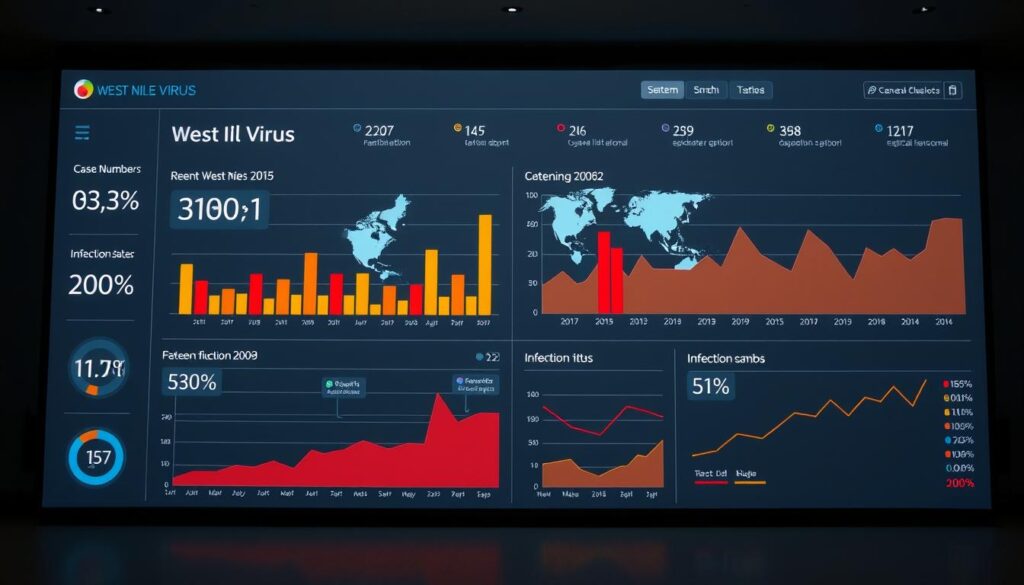
New reports show a sharp rise this season. As of early September 2025, about 770 human cases are on record nationwide. Nearly 500 of these are neuroinvasive. These numbers are roughly 40% higher than the average for this time in past years.
Officials note that figures are preliminary. Reporting lags and confirmations can lift totals as the month progresses. ArboNET updates arrive every one to two weeks from June through December. Local health departments follow their own schedules, shaping the outbreak trajectory seen in public dashboards.
Positive mosquito pools remain high in several regions, pointing to active transmission cycles. Most human illness occurs in late summer. This is due to heat and rainfall patterns. Early signals suggest vigilance is needed through fall.
Analysis of Latest Data
This data analysis compares current counts with prior years to show the scale of change. By early September in typical seasons, totals hover near 550 cases, with about 350 severe. The present gap highlights elevated exposure risk and a wider geographic footprint.
Surveillance cadence matters. Irregular uploads can compress case curves and mask week-to-week trends. A higher share of positive mosquito tests supports a steeper outbreak trajectory. This signals that local conditions favor continued amplification.
- Approximate U.S. cases to date: 770
- Approximate severe cases: 500
- Relative increase vs. prior average: ~40%
- Update frequency: ArboNET every 1–2 weeks; local schedules vary
| Indicator | Early Sept. 2025 | Prior-Year Average (Same Period) | Directional Signal |
|---|---|---|---|
| Total Human Cases | ~770 | ~550 | Elevated incidence |
| Severe (Neuroinvasive) | ~500 | ~350 | Higher severity share |
| Mosquito Positivity | Unusually high | Typical to moderate | Sustained transmission |
| Reporting Lag | Notable | Expected | Counts may rise |
Predicted Trends for the Upcoming Season
Models suggest continued activity through September and into October. Regions with warm evenings, intermittent rain, and dense urban habitats may face extended exposure windows.
Short-term trends hinge on weather swings, mosquito control operations, and public behavior. If testing positivity stays high, the outbreak trajectory could remain above average before tapering with cooler nights.
- Near-term risk: Elevated in late summer hot spots
- Primary drivers: Weather, mosquito abundance, and outdoor activity
- Monitoring focus: Data analysis of case onsets and mosquito pool trends
Conclusion and Future Outlook
This outbreak update shows a clear surge in summer 2025. By early September, about 770 cases are reported nationwide. Nearly 500 of these cases are severe, which is about 40% above typical levels for this time of year.
These numbers are preliminary and updated through ArboNET every one to two weeks. So, state dashboards may post newer counts.
Summary of Key Points
Activity tends to peak in August and September, making prevention vital. Use EPA-registered repellents, wear long sleeves, and secure window and door screens. Also, drain standing water.
Community mosquito control is essential, alongside timely treatment for severe neuroinvasive disease. West Nile is nationally notifiable. Surveillance of humans, birds, and mosquitoes guides the public health response.
What to Expect Moving Forward
Expect reporting adjustments through the fall as underreporting and lags resolve. Risk persists until the first hard frost in many regions. So, keep up prevention and support local spraying, larviciding, and source reduction.
Clinicians should monitor for neurologic signs and provide supportive treatment. Ongoing monitoring, clear communication, and a steady public health response will shape the future outlook as the mosquito season winds down.