

Could a mosquito bite in your backyard put you at risk of a hidden health threat? While these insects are often seen as mere annoyances, some carry a potentially serious illness that silently impacts thousands annually. Let’s explore what makes this seasonal concern worth your attention.
Mosquitoes transmit a widespread virus that’s active across the U.S., particularly from summer to fall. Most infected individuals show no signs of illness, making it easy to overlook the risks. However, roughly 20% experience flu-like symptoms, while a small percentage face severe complications.
Understanding how this disease spreads is crucial. Peak mosquito activity aligns with warmer months, creating predictable patterns for outbreaks. Communities can reduce risks through simple precautions like eliminating standing water and using repellents.
Key Takeaways
- Mosquito-borne illnesses peak during summer and fall in most U.S. regions
- 80% of infected individuals never show noticeable symptoms
- Preventive measures significantly lower transmission risks
- Early detection helps prevent severe health outcomes
- Public awareness campaigns reduce community exposure
Understanding West Nile Virus
Many assume mosquito bites only cause temporary itching. However, certain insects carry pathogens that create year-round concerns in warmer states and seasonal risks elsewhere. Let’s examine how this illness operates and who faces the greatest dangers.
Nature’s Hidden Cycle
This pathogen belongs to the flavivirus family, naturally circulating between birds and mosquitoes. When Culex species feed on infected birds, they become carriers. Humans and mammals get exposed through subsequent bites, breaking the bird-mosquito cycle.
Who Faces Higher Dangers?
While anyone can contract the infection, severe outcomes concentrate in specific groups. Data from Johns Hopkins Medicine shows these patterns:
| Risk Group | Complication Rate | Prevention Priority |
|---|---|---|
| Adults over 60 | 3x higher | High |
| Organ transplant recipients | 5x higher | Critical |
| Diabetes patients | 2.5x higher | Moderate-High |
Southern states see cases throughout the year due to warmer climates. Northern regions experience summer-fall peaks. Rare transmission methods include blood products and pregnancy, though mosquito bites cause 99% of infections.
Protective strategies become vital for high-risk individuals during active seasons. Simple actions like using screens and repellents create effective barriers against disease-carrying insects.
How West Nile Virus found in mosquitoes Spreads
A silent exchange between winged creatures and insects drives this health concern. The cycle starts when specific mosquito species bite infected birds, creating a biological bridge for pathogen transfer.
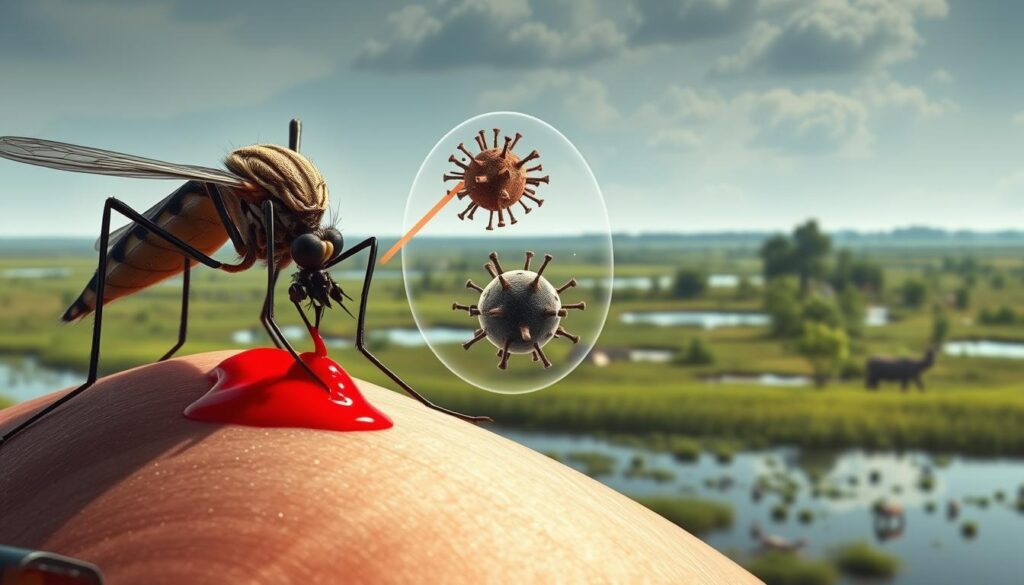
Bird-to-Mosquito Infection Pathway
Certain birds act as natural reservoirs for the pathogen. Crows and blue jays show high infection rates, but over 110 species can carry it. When female mosquitoes feed on these birds, they acquire the virus through their blood meals.
The pathogen multiplies inside the insect for 5-15 days. Once active, subsequent mosquito bites can transfer it to humans. This makes birds critical players in maintaining the disease’s presence across ecosystems.
Conditions That Fuel Outbreaks
Three environmental factors create ideal breeding grounds:
- Stagnant water sources like buckets or clogged gutters
- Warm temperatures accelerating mosquito development
- Urban areas with limited natural predators
Rain patterns directly affect risks. A wet spring followed by hot summer days often leads to increased mosquito populations. Regular yard inspections for standing water help disrupt this dangerous cycle.
Identifying Symptoms and Health Risks
Many individuals remain unaware they’ve contracted this mosquito-borne pathogen until symptoms appear. While most cases resolve naturally, certain warning signs demand urgent attention to prevent lasting damage.
Common Flu-like Indicators
About 20% of those exposed develop noticeable mild symptoms resembling seasonal illnesses. These typically emerge 2-14 days after infection and may include:
| Symptom | Frequency | Duration |
|---|---|---|
| Fever above 100.4°F | 90% of cases | 3-6 days |
| Muscle aches | 75% | 1-2 weeks |
| Skin rash | 50% | 3-10 days |
| Swollen glands | 40% | 5-14 days |
These discomforts often subside without treatment. However, lingering fatigue may persist for months in some individuals. Medical guidance recommends hydration and rest during recovery.
Severe Neurological Complications
Approximately 1 in 150 people infected experience dangerous brain-related complications. These high-risk scenarios require immediate hospitalization:
| Condition | Key Symptoms | Emergency Signs |
|---|---|---|
| Encephalitis | Confusion, seizures | High fever (104°F+) |
| Meningitis | Neck stiffness, light sensitivity | Muscle weakness |
| Acute paralysis | Limb numbness | Breathing difficulty |
Older adults and immunocompromised individuals face greater risks of permanent nerve damage. Early recognition of severe neurological signs improves recovery chances significantly.
Steps to Protect Yourself from Mosquito Bites
Your outdoor adventures shouldn’t come with unwanted hitchhikers. Simple precautions create effective shields against disease-carrying insects. Let’s explore science-backed strategies that keep you safer during high-risk seasons.
Using EPA-Approved Insect Repellent and Protective Clothing
The CDC recommends EPA-registered formulas as your first line of defense. Look for products containing DEET, picaridin, or oil of lemon eucalyptus. These ingredients disrupt mosquitoes’ ability to detect human scent for several hours.
Apply repellent to all exposed skin before heading outside. Avoid spraying under clothing or near eyes. For extra protection, treat shirts and pants with permethrin – this insecticide stays effective through multiple washes.
Time your activities wisely. Dawn and dusk hours see peak mosquito activity. If you must be outdoors then, wear light-colored long sleeves and pants. Tightly woven fabrics block mosquito bites better than loose knits.
Reapply repellent every 4-6 hours or after swimming. Store products away from children’s reach and wash treated skin when returning indoors. Combine these personal measures with community efforts like draining standing water for maximum safety.
Preventative Measures in the Home and Community
What transforms a peaceful neighborhood into a hotspot for disease-carrying insects? Stagnant water sources create ideal breeding grounds for pests linked to serious health risks. Addressing these hazards requires both individual action and community-wide strategies.
Breaking the Reproduction Cycle
Standing water serves as the primary nursery for species that spread WNV. A single bottle cap holding liquid for five days can produce hundreds of larvae. Common household items often overlooked include:
Buckets collecting rainwater and clogged gutters with decaying leaves top the list. Pet bowls left outdoors and children’s toys in yards also rank high as silent threats.
Pool maintenance proves critical for neighborhoods. Untreated water in abandoned pools becomes a public health concern, potentially affecting entire blocks. Proper chlorination stops larvae development within hours.
Communities facing high infection rates should coordinate with local vector control teams. These experts identify problem areas like storm drains and overgrown lots. Regular inspections of public spaces reduce risks more effectively than isolated household efforts.
Residents can adopt simple habits to disrupt breeding cycles. Empty containers weekly, especially after rainfall. Store outdoor items upside-down or indoors. Adjust landscaping to prevent puddles in low-lying areas.
Diagnosis, Treatment, and When to Seek Medical Help
When symptoms suggest more than a seasonal bug, proper medical evaluation becomes essential. Healthcare providers use specialized testing to confirm infections affecting the brain and spinal cord. Early detection helps manage complications before they escalate.
Identifying the Problem
Doctors typically order blood tests to detect antibodies fighting the pathogen. If neurological issues appear, a spinal tap might check cerebrospinal fluid for inflammation. Sharing recent mosquito exposure history speeds up accurate diagnosis.
Managing the Condition
No antiviral treatments exist for this illness. Severe cases require hospital care with IV fluids and breathing support. Medical teams focus on preventing secondary infections like pneumonia during recovery.
Recovery timelines vary widely – some regain strength in weeks, while others face challenges for months. Those with organ transplants or weakened immunity need extra monitoring. Always consult a healthcare provider if fever persists or neurological symptoms emerge.