
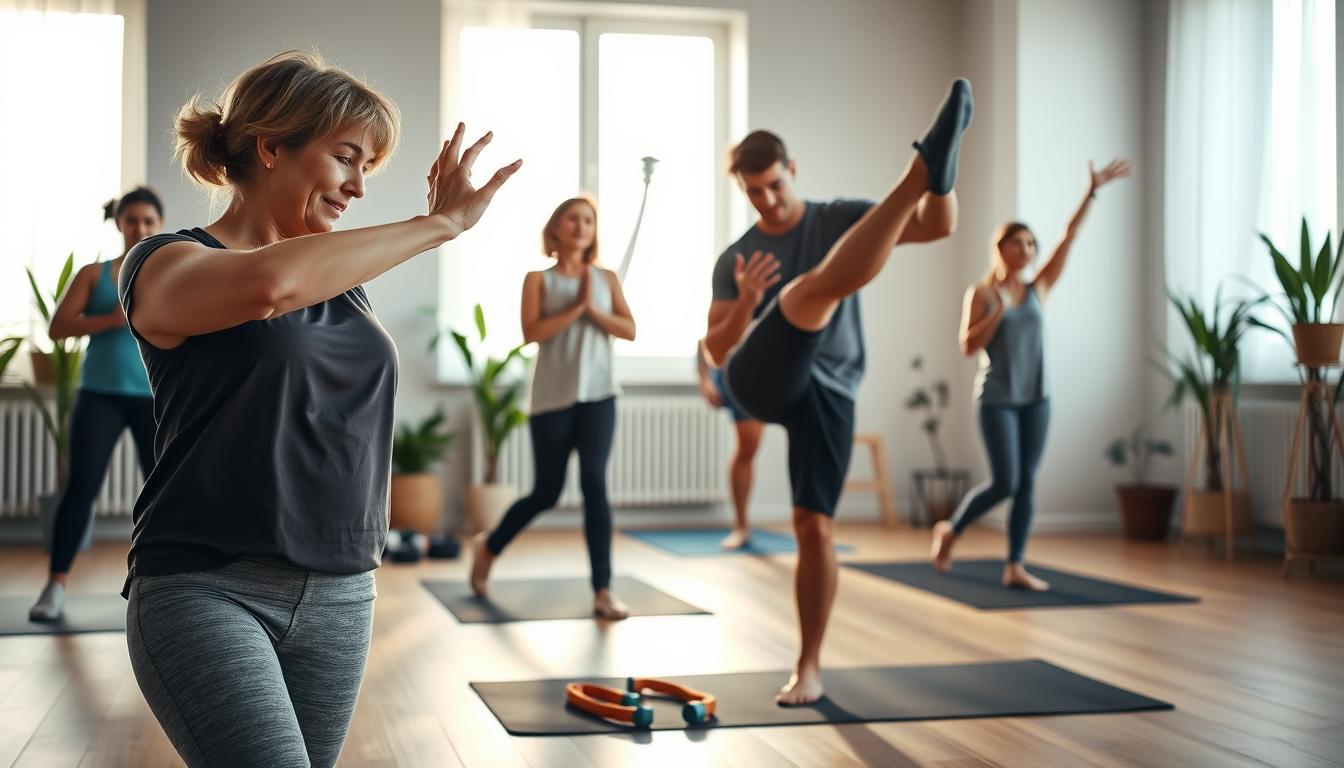
Nearly one in four adults in the United States experiences persistent discomfort in their joints. This surprising statistic highlights a widespread challenge that affects daily life and mobility for millions.
Many people believe that rest is the best solution for an aching joint. However, keeping the area immobile can often lead to more stiffness and increased discomfort over time.
This guide explores a different path. It focuses on gentle, evidence-based movements designed to alleviate discomfort. The goal is to restore mobility and build supportive strength in the surrounding muscles.
Whether the cause is overuse, arthritis, or an old injury, targeted activity can be a powerful tool. This approach helps maintain flexibility and reduces stress on the joint itself.
You will discover a practical resource for safely incorporating movement into your routine. The strategies emphasize gradual progression and listening to your body for effective, lasting relief.
Key Takeaways
- Movement, not complete rest, is often better for joint health.
- Gentle, low-impact activities can help reduce stiffness.
- Strengthening the surrounding muscles provides crucial support.
- Proper form is essential to prevent further discomfort.
- A gradual approach ensures safe and effective progress.
- These strategies can improve quality of life for many individuals.
Understanding Knee Pain and Its Causes
From sudden twists to gradual wear and tear, the origins of joint discomfort are often multifaceted. Identifying the source is the first step toward effective management and relief.
Common triggers include overuse from repetitive activities and osteoarthritis, which breaks down protective cartilage. Other frequent sources are tendinitis, bursitis, meniscus tears, and ligament sprains. These issues can stem from athletic activity, aging, or an acute injury.
Common Causes: Overuse, Arthritis, and Injuries
When discomfort strikes, the instinct is often to rest the area completely. However, this immobility can cause stiffening and worsen the situation over time. Movement is crucial for maintaining joint health.
The surrounding muscles play a vital role. Weak quadriceps and hamstrings cannot properly support the knee joint. This leads to increased stress. Strengthening these muscles helps absorb shock and reduce pressure.
| Cause Type | Description | Typical Onset |
|---|---|---|
| Overuse | Repetitive stress from activities like running or jumping. | Gradual |
| Arthritis | Breakdown of cartilage within the joint. | Gradual (with age) |
| Acute Injury | Sudden damage from a twist, fall, or impact. | Immediate |
How Knee Pain Affects Mobility and Daily Life
The impact on daily life can be significant. Simple tasks like walking, climbing stairs, or standing up become challenging. This affects independence and overall quality of life.
Research shows that physical activity for arthritic discomfort often yields better long-term outcomes than medications or surgery. The key is choosing low-impact activities that build supportive strength without straining the joint. Learning about common knee pain causes empowers you to find the right path to relief.
Getting Started with Your Workout for Knee Pain
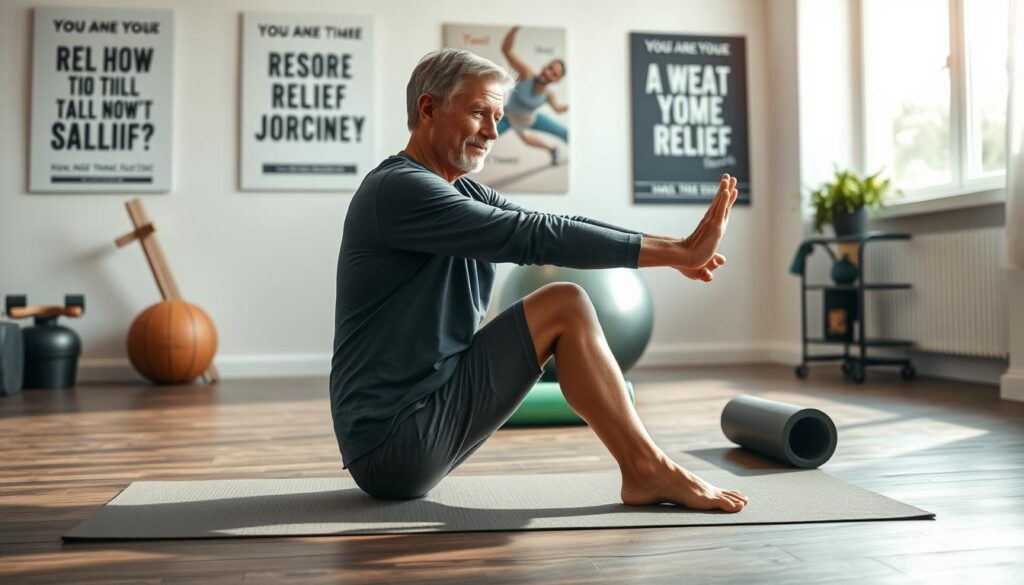
Embarking on a new fitness journey requires careful preparation, especially when managing joint concerns. Laying a safe foundation is critical for achieving positive results and preventing setbacks. This initial phase focuses on essential steps before beginning any activity.
A thoughtful approach ensures your efforts support long-term mobility and strength. The goal is to build sustainable habits that contribute to overall well-being.
Preparing Safely: Warm-Up and Precautions
Always begin with a proper warm-up. Spend five to ten minutes on low-impact movements like walking or using a stationary bike. This prepares your body for the upcoming exercise by increasing blood flow.
Listening to your body is the most important safety rule. Stop immediately if you feel sharp or severe discomfort. Never push through these signals.
Other key precautions include wearing supportive footwear and avoiding movements that strain the joint. Establishing a consistent weekly routine is better than sporadic intense sessions.
- Consult a professional before starting a new program.
- Warm up for 5-10 minutes before every session.
- Replace old shoes to maintain proper shock absorption.
- Follow recommended guidelines for weekly activity.
The Role of a Physical Therapist and Medical Advice
Seeking guidance from a physical therapist or doctor is a vital first step. They can assess your specific situation and create a tailored plan. This personalized advice is invaluable for a safe exercise program.
These experts teach proper form and suggest modifications. Their supervision helps monitor progress and adjust the routine as needed. This support is crucial for effective rehabilitation.
General guidelines, like getting 150 minutes of activity per week, are a good framework. A physical therapist will adapt these for your health and safety. A typical rehab plan lasts 4-6 weeks before moving to a maintenance schedule.
This professional input ensures your efforts directly support your joint health and overall fitness goals each week.
Effective Stretching Routines for Knee Relief
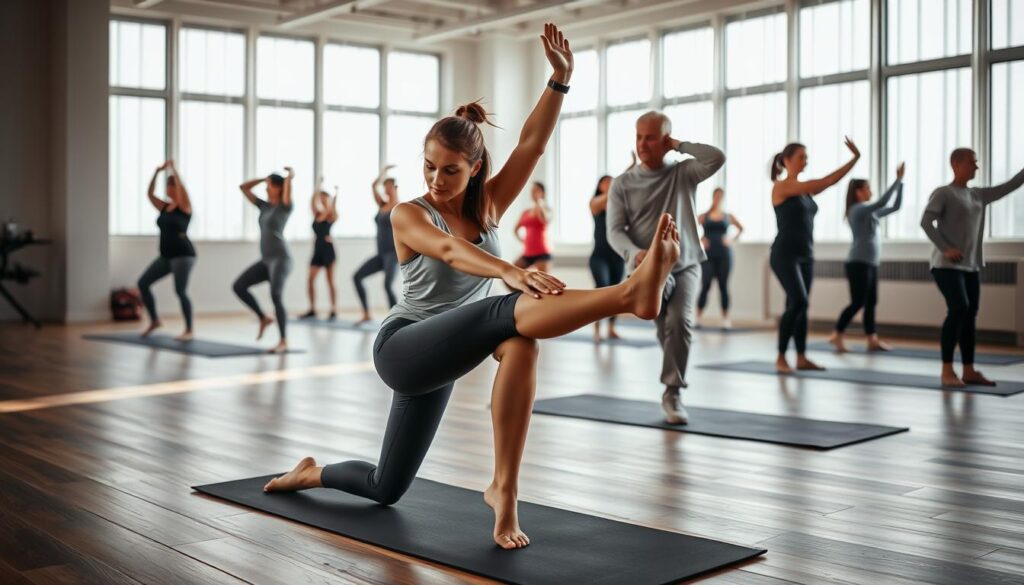
A key component of a joint health strategy involves regular lengthening of the surrounding muscles. Improving your flexibility directly supports mobility and can make everyday activities more comfortable.
These routines focus on major muscle groups in the lower body. Consistent practice helps restore range of motion and prevents stiffness.
Lower-Body Stretches: Calf, Quadriceps, and Hamstring
Perform these movements after a brief warm-up. Hold each stretch for about 30 seconds and repeat twice on each side.
Proper technique is essential for safety and results. Move slowly and never push into sharp discomfort. Breathe naturally throughout each position.
| Stretch | Target Muscles | Key Instructions |
|---|---|---|
| Calf Stretch | Gastrocnemius, Soleus | Face a wall, hands for support. Step one foot back, heel down. Lean forward gently. |
| Quadriceps Stretch | Front of Thigh | Stand near a wall for balance. Bend one knee, grab your ankle, and pull heel toward glutes. |
| Hamstring Stretch | Back of Thigh | Lie on the floor. Lift one leg, hands behind the thigh. Gently pull the straight leg toward you. |
Incorporating Flexibility into Your Daily Routine
Aim to include these exercises four to five times per week. This frequency maintains progress and keeps muscles long.
You can stretch after strengthening activities or as a standalone session. The consistency of your effort is what builds lasting flexibility.
Stretching the muscles you strengthen is important for restoring range of motion and preventing injury.
Integrating these movements into your day supports overall joint health and prepares your body for more demanding exercises.
Strengthening Exercises to Support Your Knees
Building strong supporting muscles is a powerful strategy for improving joint stability. These activities focus on the quadriceps, hamstrings, and glutes. A robust muscular system helps absorb impact and reduce stress.
Targeted Moves: Half Squats, Calf Raises, and Leg Extensions
Begin with foundational movements. Half squats involve lowering your body about ten inches while pushing through your heels. This builds strength in multiple muscle groups.
Calf raises target the back of the lower leg. Stand and lift both heels off the ground, then lower with control. For the quadriceps, try seated leg extensions.
Straight leg raises are also effective. Lie on the floor and lift one leg, holding the position for a few seconds. Perform two to three sets of ten repetitions for each exercise.
Progressing Safely with Increasing Intensity
Start these exercises using only your body weight. Proper form is non-negotiable for safety and results. Movements should always be slow and controlled.
As the movements become easier, you can gradually add intensity. This might involve incorporating light ankle weights. Listening to your body ensures steady, safe improvement in muscular strength.
Integrating Low-Impact Cardio and Functional Movements
Cardiovascular fitness plays a crucial role in comprehensive joint management strategies by improving circulation and supporting weight management. These activities maintain mobility while minimizing stress on sensitive areas.
Gentle aerobic movement provides sustainable benefits for long-term wellness. It complements your strengthening efforts perfectly.
Benefits of Activities: Cycling, Walking, and Swimming
Walking offers excellent accessibility and joint lubrication. Longer, slower-paced sessions are particularly gentle on the body.
Cycling provides both aerobic conditioning and muscle strengthening. The pedaling motion targets quadriceps while engaging hamstrings and glutes.
Water-based exercises eliminate pressure on joints through buoyancy. Swimming and water aerobics allow freedom of movement without strain.
Discover more about optimal cardiovascular choices for your specific needs. These options promote range of motion safely.
Combining Cardio with Strength Training for Better Outcomes
Integrating aerobic exercise with resistance work creates a balanced approach. This combination addresses multiple aspects of joint health simultaneously.
Cardiovascular activities support weight management, reducing load on the knees. Strength training builds the muscular support system that absorbs impact.
Consider exploring safe alternatives to traditional leg exercises for variety. A well-rounded routine delivers comprehensive health benefits beyond joint support.
This balanced strategy improves circulation, endurance, and overall fitness. It represents a sustainable path to lasting mobility.
Conclusion
Taking consistent action toward joint wellness requires a balanced blend of stretching, strengthening, and professional guidance. This comprehensive strategy can significantly ease discomfort and improve your mobility.
Success hinges on a safe, gradual progression. Always consult a doctor or physical therapist before starting any new exercise program. They can tailor activities to your specific needs.
Remember, the goal is long-term health. A typical plan spans 4 to 6 weeks, followed by a maintenance routine. Listen to your body and stop any movement that causes sharp pain.
By committing to this approach, you build resilient knees that support an active lifestyle. The journey requires patience, but the rewards of reduced pain and improved function are well worth the effort.