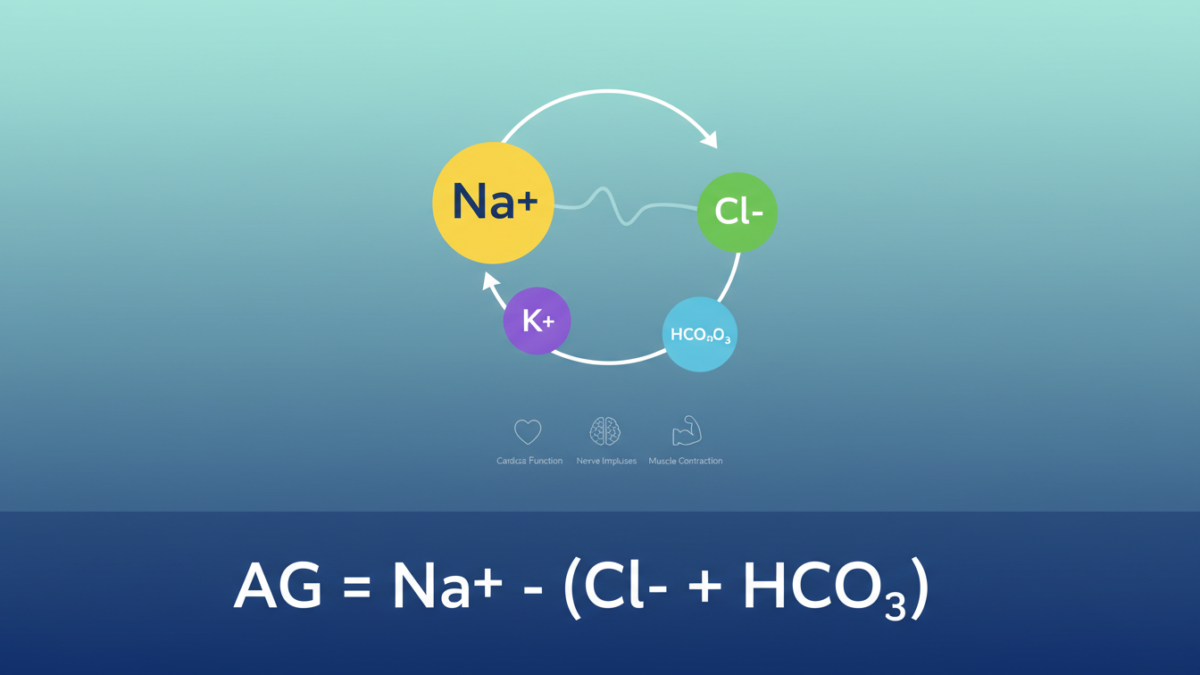
About 30% of patients in emergency departments have acid-base problems. But, many go unnoticed without lab tests. The serum anion gap is a key tool that shows hidden metabolic issues through simple math.
This value shows the difference between cations and anions in plasma. It’s based on the idea that total positive and negative charges must be equal in our bodies.
The standard anion gap calculation uses sodium, chloride, and bicarbonate from metabolic panels. Some labs also include potassium, but it’s not always used.
Normal ranges are between 4 to 12 mmol/L with old methods. Newer methods say it’s 7 ± 4 mmol/L. This value shows ions like albumin, phosphate, and organic acids that we can’t measure directly.
Knowing this helps doctors spot metabolic acidosis, find test mistakes, and understand many health issues. It helps keep our electrolyte balance and acid-base levels in check.
Key Takeaways
- The anion gap measures the difference between measured cations (sodium, potassium) and measured anions (chloride, bicarbonate) in serum
- Normal ranges span 4 to 12 mmol/L with traditional methods or 7 ± 4 mmol/L using modern ion-selective electrodes
- The calculation reveals unmeasured anions such as albumin, phosphate, and organic acids not included in standard electrolyte panels
- Two formulas exist: Na+ – (Cl- + HCO3-) or alternately (Na+ + K+) – (Cl- + HCO3-) when potassium is included
- Clinical applications include identifying metabolic acidosis causes, detecting laboratory errors, and monitoring acid-base disturbances
- Electrochemical neutrality principle underlies the calculation, requiring total positive charges to equal total negative charges
Understanding the Anion Gap
The anion gap is a tool used in health checks. It shows how well the body’s acid-base balance is. Doctors use it to check how well the body is working.
Doctors use the anion gap to find problems in the body. It helps them make decisions about treatment. This is true for both short-term and long-term care.
Definition and Importance
The anion gap is the difference between certain chemicals in the blood. Sodium is one of these, and chloride and bicarbonate are the others. It shows the levels of other chemicals in the blood too.
To find the anion gap, you subtract chloride and bicarbonate from sodium. Some labs add potassium to this mix. This changes the range of what’s considered normal.
The normal range for the anion gap varies. It’s usually between 8 to 16 mEq/L without potassium. With potassium, it’s 4 to 12 mmol/L. Some labs say it’s 7 ± 4 mmol/L to account for different ways of measuring.
This calculation is important for finding problems in the body. Changes in albumin and bicarbonate levels are key. They show how well the body’s acid-base balance is.
The anion gap helps doctors see if the blood is too acidic. It’s part of the comprehensive metabolic panel used in health checks and when someone is very sick.
Clinical Relevance
The anion gap is important in many areas of medicine. It helps doctors figure out what’s wrong with the body. It’s used in emergency medicine, critical care, nephrology, and endocrinology.
Doctors use it to tell if someone has a certain kind of acidosis. High anion gap metabolic acidosis means there are extra unmeasured anions. Normal anion gap acidosis means there’s not enough bicarbonate.
Emergency rooms use it to check for problems like confusion or fast breathing. It helps doctors narrow down what might be wrong. Critical care units watch it to see if treatments are working.
Nephrologists use it to check on kidney problems. Endocrinologists use it to spot diabetic emergencies. It’s a first step to finding out what’s wrong.
Knowing about the anion gap helps doctors make quick decisions. It helps them figure out what might be wrong and how to fix it. But, it’s just one part of checking the body’s health.
The anion gap helps doctors find out what kind of acidosis someone has. This is important because different kinds have different causes and treatments. Doctors look at the anion gap along with other tests and the patient’s story to make a diagnosis.
Components of the Anion Gap
Four main electrolytes make up the anion gap formula used in medical tests. These are measured in labs through metabolic panels. Knowing which ions are in the formula helps doctors understand test results better.
Measured Ions in the Calculation
Sodium is the main positive ion in the anion gap formula. It makes up over 90 percent of the positive ions in our body fluids. This makes it very important in the calculation.
Chloride and bicarbonate are the two negative ions measured. Together, they make up about 85 percent of the negative ions in our body. Chloride helps keep the balance with sodium.
Bicarbonate is key for keeping our blood’s pH balanced. It’s a major buffer system in our blood.
Some labs add potassium to the anion gap formula. But, because its levels can change a lot, many labs don’t include it. Whether or not potassium is included affects the range used to interpret results.
Unmeasured Ions
The anion gap formula doesn’t count some ions in our serum. Unmeasured anions include albumin, phosphate, and organic acids like lactate and uremic toxins. These are important but not measured in the standard test.
Albumin is the biggest part of unmeasured anions. It’s not counted in the formula, which is why we call it the “anion gap.”
Unmeasured cations include calcium and magnesium. When potassium is not counted, it’s also in this group. These ions are present but not in the standard anion gap calculation.
Reference Ranges and Normal Values
What’s considered normal for the anion gap varies. Older methods gave ranges of 8 to 16 mEq/L or 12 ± 4 mEq/L. These were based on flame photometry.
Newer methods, like ion-selective electrodes, have changed these ranges. Now, most labs say normal is 7 ± 4 mEq/L or 3 to 11 mEq/L. This change shows better accuracy in testing.
| Methodology | Normal Range (mEq/L) | Potassium Inclusion |
|---|---|---|
| Flame Photometry (Traditional) | 8-16 or 12 ± 4 | Variable |
| Ion-Selective Electrode (Modern) | 3-11 or 7 ± 4 | Usually Excluded |
| With Potassium Included | 10-20 or 16 ± 4 | Included |
Different labs might have different ranges because of their equipment. Whether potassium is included also changes the range. Doctors need to know the lab’s specific values to understand results.
It’s important to know how these values are determined. Lab reports should clearly state the formula used and the range for accurate interpretation.
The Formula for Anion Gap Calculation
There are two main ways to figure out the anion gap. Each uses different electrolytes. Both use values from blood tests. The choice depends on the situation and what the doctor prefers.
How to Calculate Anion Gap
The most common anion gap formula doesn’t include potassium. It’s: Anion Gap = [Na+] – [Cl-] – [HCO3-]. This is often used because potassium doesn’t change the result much. It also avoids mistakes from potassium changes.
The other formula does include potassium. It’s: Anion Gap = [Na+] + [K+] – [Cl-] – [HCO3-]. Some doctors like this one because potassium levels can change a lot in kidney disease. It might give a more accurate result in some cases.
The idea behind anion gap calculation is that everything in the blood must balance. This is called electrochemical neutrality. It means: ([Na+] + [K+] + [Unmeasured Cations]) = ([Cl-] + [HCO3-] + [Unmeasured Anions]).
By rearranging this, we get the basic formula. It shows: ([Na+] + [K+]) – ([Cl-] + [HCO3-]) = [Unmeasured Anions] – [Unmeasured Cations]. This shows the anion gap is the difference between unmeasured anions and cations.
| Formula Type | Equation | Clinical Application | Typical Result Range |
|---|---|---|---|
| Standard (without K+) | [Na+] – [Cl-] – [HCO3-] | General clinical use | 8-12 mEq/L |
| Alternative (with K+) | [Na+] + [K+] – [Cl-] – [HCO3-] | Nephrology settings | 12-16 mEq/L |
| Theoretical basis | [UA] – [UC] | Conceptual understanding | Varies with formula |
Common Units of Measurement
For anion gap calculation, we use milliequivalents per liter (mEq/L) or millimoles per liter (mmol/L). These units are the same for the ions we’re dealing with. Labs around the world use either one without changing the number.
The values for the formula are also in these units. Normal ranges are:
- Sodium: 135 to 145 mEq/L
- Chloride: 98 to 106 mEq/L
- Bicarbonate: 22 to 28 mEq/L
- Potassium: 3.5 to 5.0 mEq/L
To get the anion gap right, all values must be in the same units. They must come from the same blood sample. This ensures the result is accurate and useful for doctors. Labs usually give all the needed values in the same units.
Conditions Affecting Anion Gap
Anion gap values change with certain health conditions. These changes affect how our body handles electrolytes and acid-base balance. The main issue is anion gap metabolic acidosis. Knowing what conditions raise or keep the anion gap normal helps doctors diagnose and test.
Metabolic Acidosis
Metabolic acidosis is a big deal for anion gap readings. It splits into normal anion gap metabolic acidosis and high anion gap metabolic acidosis. The type depends on why there’s less bicarbonate.
Normal anion gap metabolic acidosis happens when bicarbonate goes down and chloride goes up. This keeps the anion gap normal. It’s seen in severe diarrhea, pancreatic fistulas, or ureterosigmoidostomy.
Renal tubular acidosis types I, II, and IV also cause normal anion gap metabolic acidosis. The kidneys can’t handle bicarbonate or hydrogen ions right. This leads to bicarbonate loss and chloride gain.
High anion gap metabolic acidosis happens when there are more unmeasured anions in the blood. These anions take the place of bicarbonate, making the anion gap go up.
Diabetic ketoacidosis is a common cause of high anion gap metabolic acidosis. Without enough insulin, the body makes more ketones. These ketones are unmeasured anions that raise the anion gap.
Salicylate poisoning also affects the anion gap. It starts with a respiratory alkalosis and then turns to metabolic acidosis. The salicylate anions add to the high anion gap.
Lactic acidosis is another reason for a high anion gap. It can be Type A from poor blood flow or Type B from mitochondrial problems. Both types make lactate, an unmeasured anion.
Metabolic Alkalosis
Metabolic alkalosis usually doesn’t change the anion gap much. The high bicarbonate should lower the anion gap. But, other electrolyte problems can make it hard to read the anion gap.
Things like volume loss, too much mineralocorticoid, or losing stomach acid cause metabolic alkalosis. The anion gap might look normal or even lower because of these other issues. Losing chloride is common with metabolic alkalosis and can hide changes in the anion gap.
Other Clinical Conditions
Many other health issues can change the anion gap, not just metabolic acidosis. Uremia from kidney failure leads to more phosphate, sulfate, and organic anions. These increase the anion gap before acidosis gets severe.
Drinking toxic alcohols is another big issue for the anion gap. Methanol makes formic acid, and ethylene glycol creates glycolic acid and oxalic acid. Both are unmeasured anions that raise the anion gap a lot.
Here are some conditions that affect the anion gap:
- Renal failure: Keeps sulfate, phosphate, and organic acid anions in the blood
- Ketoacidosis: Makes acetoacetate and β-hydroxybutyrate in diabetes, alcoholism, or starvation
- Toxic ingestions: Methanol, ethylene glycol, propylene glycol, and pyroglutamic acid
- Drug exposures: High-dose aspirin, metformin (causes lactic acidosis), and some antiretroviral drugs
- Inborn errors of metabolism: Organic acidemias and mitochondrial disorders
Knowing about these conditions helps doctors figure out what’s going on. The anion gap can tell us a lot about the body’s problems. But, it’s important to look at the whole picture and other lab results too.
How to Interpret Anion Gap Results
Anion gap results help doctors understand health issues. They use certain ranges and consider each patient’s needs. The value shows the balance of ions in the blood.
Doctors need to know how tests are done to understand results. Different tests give different ranges. This means doctors must adjust when looking at patient data.
Normal Ranges and Interpretation
The normal range for anion gap changes with the test method. Older tests said it was 8 to 16 mEq/L. Newer tests say it’s 7 ± 4 mmol/L or 4 to 12 mmol/L.
New tests are more accurate because they measure chloride better. This makes the anion gap lower. Each lab sets its own range based on its equipment and patients.
Results outside the normal range mean there might be health issues. A high anion gap means there are more unmeasured ions. These could be organic acids or toxins.
A low anion gap is less common. It can be due to low albumin, certain proteins, or lithium. Sometimes, tests can be wrong and need to be done again.
| Measurement Method | Normal Range (mEq/L) | Normal Range (mmol/L) | Clinical Application |
|---|---|---|---|
| Flame Photometry (Traditional) | 8 to 16 | 8 to 16 | Historical reference standard |
| Ion-Selective Electrode (Contemporary) | 3 to 11 | 4 to 12 | Current laboratory practice |
| Contemporary (Alternative Range) | 7 ± 4 | 7 ± 4 | Widely used reference |
Albumin levels affect how to understand anion gap results. Albumin is a big unmeasured anion in healthy people. A drop in albumin lowers the anion gap.
For every 10 g/L albumin drop, the anion gap goes down by 2.3 mmol/L. Patients with low albumin might seem fine but actually have acidosis. This can hide the problem if albumin levels are ignored.
When to Be Concerned
Doctors should worry about anion gap results in certain cases. Values outside the normal range need more checking. It’s important to look at the whole picture, including symptoms and other lab results.
Healthcare professionals should look into anion gap issues when:
- Clinical context suggests acid-base disturbance: Symptoms point to a metabolic problem
- Abnormal arterial blood gas parameters: Blood gas shows pH or bicarbonate issues
- Neurological symptoms present: Mental changes or unconsciousness without clear cause
- Respiratory changes observed: Fast breathing or signs of acidosis
- Gastrointestinal manifestations: Stomach pain, nausea, or vomiting with lab issues
- Signs of dehydration: Signs of not enough fluids or electrolyte imbalance
Small changes in anion gap might just be normal. Sometimes, tests can be wrong and need to be done again. Doctors decide if to check small changes.
An elevated anion gap with low bicarbonate means acidosis. This needs to be found out. Normal or low anion gap with acidosis means different problems.
Common Causes of High Anion Gap
Many health issues can lead to high anion gap values. This happens when the body has too many unmeasured anions. Doctors use the MUDPILES mnemonic to find these causes. It stands for Methanol, Uremia, Diabetic ketoacidosis, Paraldehyde/Phenformin, Iron/Isoniazid/Inhalants, Lactic acidosis, Ethylene glycol/Ethanol, and Salicylates/Solvents/Starvation.
There’s also a longer version, CATMUDPILES, that includes more causes. It adds Carbon monoxide/Cyanide, Aminoglycosides, and Theophylline. These tools help doctors when they see high anion gap levels.

Diabetic Ketoacidosis
Diabetic ketoacidosis is a common cause of high anion gap acidosis. It mainly affects people with type 1 diabetes. But, it can also happen in type 2 diabetes under stress.
This condition happens when there’s not enough insulin. Hormones like glucagon and cortisol increase. This leads to high blood sugar and losing important salts and water.
Without enough insulin, the body breaks down fat. This makes ketone bodies, like acetoacetate and β-hydroxybutyrate. These are unmeasured anions in the blood.
The signs of diabetic ketoacidosis are high blood sugar, ketones in the blood, and acidosis. It’s a serious condition that needs quick treatment.
The symptoms of diabetic ketoacidosis include:
- Polyuria and polydipsia from losing salts
- Nausea and vomiting with stomach pain
- Changes in mental state, from confusion to coma
- Fast breathing, known as Kussmaul breathing
- Fruity smell from the breath
- More urine leading to dehydration
Renal Failure
Renal failure, like chronic kidney disease, can cause high anion gap acidosis. The kidneys can’t get rid of metabolic waste. This leads to unmeasured anions in the blood.
Uremia is when the kidneys can’t clear out phosphate and other acids. This makes the anion gap go up in kidney disease.
The anion gap in uremia is usually 20 to 25 mEq/L. It can vary based on kidney function and other health issues. This shows how kidneys struggle to keep acid-base balance.
Lactic Acidosis
Lactic acidosis is another common cause of high anion gap. It’s divided into two types based on why it happens. Knowing the type helps doctors figure out what’s causing it.
Type A lactic acidosis happens when tissues don’t get enough oxygen. This can be due to shock, heart problems, or severe low blood pressure. Without enough oxygen, tissues make more lactate than they can use.
Type B lactic acidosis doesn’t come from lack of oxygen. It’s caused by:
- Medicines like metformin or nucleoside reverse transcriptase inhibitors
- Cancer that changes how cells work
- Genetic disorders that affect lactate metabolism
- Problems with the liver that affect lactate removal
There are more causes of high anion gap acidosis. Toxic alcohol poisoning, like methanol or ethylene glycol, is very dangerous. So is salicylate poisoning, starvation ketoacidosis, and alcoholic ketoacidosis.
Less common causes include other poisonings and genetic disorders. These need careful checking and lab tests for the right diagnosis.
Common Causes of Low Anion Gap
Low anion gap happens when there are fewer unmeasured anions or more unmeasured cations. This changes the balance of charged particles in the body. It’s less common than high anion gap but important to understand.
It can be caused by having fewer negative ions or more positive ions. This makes the difference between cations and anions smaller. Knowing the reasons helps doctors understand what’s going on.
Albumin Deficiency and Its Impact
Hypoalbuminemia is the main reason for low anion gap. Albumin is a protein that carries a negative charge. It makes up most of the anion gap.
When albumin levels go down, the anion gap also goes down. Each 1 g/L drop in albumin lowers the anion gap by about 0.25 mmol/L. A 10 g/L drop lowers it by about 2.3 mmol/L.
Many conditions can cause low albumin levels. These include kidney problems, liver disease, and severe malnutrition. Severe burns and chronic inflammation also lower albumin.
Low albumin levels are not just about the anion gap. They can hide serious acid-base problems. Doctors need to check for albumin levels to find these issues.
Paraproteinemia and Plasma Cell Disorders
Multiple myeloma and similar conditions cause low anion gap through paraproteins. These proteins carry a positive charge. They act like cations, lowering the anion gap.
The effect on the anion gap depends on the paraprotein’s concentration and charge. IgG myeloma increases cations, lowering the anion gap. This can be a sign of the disease.
Other conditions like HIV and chronic inflammation also increase cations. This lowers the anion gap in the same way as monoclonal gammopathies.
| Condition | Mechanism | Magnitude of Effect | Associated Clinical Finding |
|---|---|---|---|
| Hypoalbuminemia | Decreased unmeasured anions | 0.25 mmol/L per 1 g/L albumin decrease | Edema, malnutrition, liver disease |
| Multiple Myeloma | Increased unmeasured cations (IgG) | Variable based on paraprotein level | Bone pain, anemia, renal dysfunction |
| Lithium Intoxication | Increased unmeasured cation | Proportional to lithium concentration | Tremor, confusion, polyuria |
| Hypercalcemia | Increased unmeasured cation | Moderate reduction | Kidney stones, bone disease |
Lithium overdose lowers the anion gap because lithium is a cation. At normal levels, it doesn’t affect the anion gap much. But too much lithium lowers it.
Other electrolyte problems can also lower the anion gap. For example, too much calcium, magnesium, or potassium. Each of these increases cations, lowering the anion gap.
High triglycerides can also lower the anion gap, but this is a lab issue. Lab errors, like bromide poisoning, can also make the anion gap seem lower than it is.
Doctors need to look at the whole picture when they see a low anion gap. They should check for problems with proteins, plasma cells, or electrolytes. They also need to watch out for lab mistakes.
Anion Gap in Different Populations
Age affects how we look at anion gap values. Kids and older adults have different needs. This is because their bodies work differently at different ages.
Doctors need to know how age changes anion gap values. This helps them understand lab results better. It’s all about knowing what’s normal for each age group.
Pediatric Considerations
Children’s anion gaps change as they grow. Babies have less albumin, which means lower anion gap values. This changes as they get older.
Preemies face extra challenges. Their kidneys and acid balance are not fully developed. This makes it harder to understand lab results.
Key factors affecting pediatric anion gap include:
- Changes in electrolytes as kids grow
- Renal function improves with age
- Albumin levels change with growth
- Metabolic needs change with age
- Nutrition affects electrolytes
Diagnosing kids is different from adults. Kids can have special problems like metabolic disorders. Accidental poisonings are also more common in young ones.
Doctors need to use age-specific ranges for kids. Growth and how well a child eats are important clues. This helps doctors make better diagnoses.
Geriatric Considerations
Older adults have unique challenges with anion gap. Their albumin levels drop with age. This is due to many factors, including less protein made in the liver and more inflammation.
Geriatric patients often have lower anion gap values. This is because of less albumin. Doctors need to adjust for this when looking at lab results.
Factors influencing anion gap in geriatric patients include:
- Renal function declines with age
- More unmeasured anions due to reduced filtration
- More medications can cause electrolyte problems
- More health issues can lead to acid-base problems
- Body composition changes with age
Older adults often have less kidney function. This affects how their bodies handle acids. This can change anion gap values, even without other problems.
Geriatric patients often have many health issues. These can include diabetes, heart failure, and lung disease. Each condition can affect acid-base balance in different ways.
Metabolic acidosis might not show up in older adults the same way. They have less ability to handle changes. Lab tests, including anion gap, are very important for them.
When looking at anion gap in older adults, doctors need to adjust for albumin. They also need to consider kidney function. Knowing about medications, health issues, and how well a person functions helps doctors make better diagnoses.
Limitations of Anion Gap Calculation
It’s key to know the limits of anion gap tests to avoid mistakes in acid-base diagnosis. The anion gap has anion gap limitations that doctors need to know. These can lead to wrong interpretations of metabolic problems if not seen in the bigger picture.
The anion gap can vary a lot in different people and labs. There are many reasons for abnormal results. So, we need to look at more than just the number.
Factors That May Alter Results
Changes in serum albumin levels are the biggest issue for anion gap accuracy. Albumin is the main unmeasured anion in blood. Changes in albumin levels can greatly affect the anion gap value.
Not correcting for albumin can lead to missing acid-base problems. Patients with low albumin might seem fine but could have anion gap metabolic acidosis. This is because low albumin lowers the anion gap, hiding other problems.

Different lab methods can change anion gap values and what’s considered normal. Old flame photometry methods give different results than today’s ion-selective electrode tests. Doctors must use lab-specific ranges and not compare values from different places.
Many things can affect anion gap tests:
- Sample hemolysis causing high potassium levels
- Lipemia messing with measurements
- When the sample is taken after IV fluids
- How long the sample is stored
Some medicines and substances can mess with electrolyte tests or change the anion gap. For example, bromide can make chloride levels seem higher. Iodide, lithium, and some cancer drugs can also affect tests. These can lead to laboratory error and wrong diagnoses.
“The anion gap gives limited info on its own. It can’t tell us the exact cause of metabolic acidosis without more clinical data.”
The anion gap calculation assumes certain things about unmeasured ions. But this doesn’t hold true in some cases. For example, in severe electrolyte imbalances or unusual substances.
Mixed acid-base disorders are hard to figure out. They can make pH and bicarbonate levels seem normal but the anion gap is high. This can hide how bad the metabolic problems are.
Importance of Clinical Correlation
It’s very important to look at the big picture when dealing with anion gap issues. The value needs to be seen in the context of the patient’s health, other conditions, and medicines. Looking at how values change over time can help a lot.
We need more tests to really understand acid-base problems. Things like blood gas analysis, lactate, and toxicology tests are key. They help us find the real cause of anion gap metabolic acidosis.
Errors can happen if we don’t get all electrolyte values at once or use the wrong units. We must check our work to make sure our results are right.
The anion gap is not perfect for finding metabolic acidosis. Even normal values don’t always mean there’s no problem. This shows we need to look at everything, not just one test.
Conclusion: The Role of Anion Gap Calculation in Medicine
The anion gap calculation is key in medicine. It helps doctors understand metabolic problems and balance in the body. It’s used to spot errors, find proteins, and check for acid-base issues.
Core Principles
This tool helps doctors sort out acidosis types. The formula [Na+] – [Cl-] – [HCO3-] shows normal values. These values are usually between 7 ± 4 mmol/L.
High anion gap acidosis happens when the body builds up certain toxins. Normal anion gap acidosis is when bicarbonate and chloride levels change together.
Clinical Applications
Doctors use this tool by looking at albumin levels, lab methods, and the patient’s situation. Correcting for albumin helps in cases of low albumin. Quick tests at the hospital can help too.
Using this tool with other tests makes diagnosis better. The anion gap is a first step in checking acid-base balance. It’s used with blood gas tests and electrolyte checks.