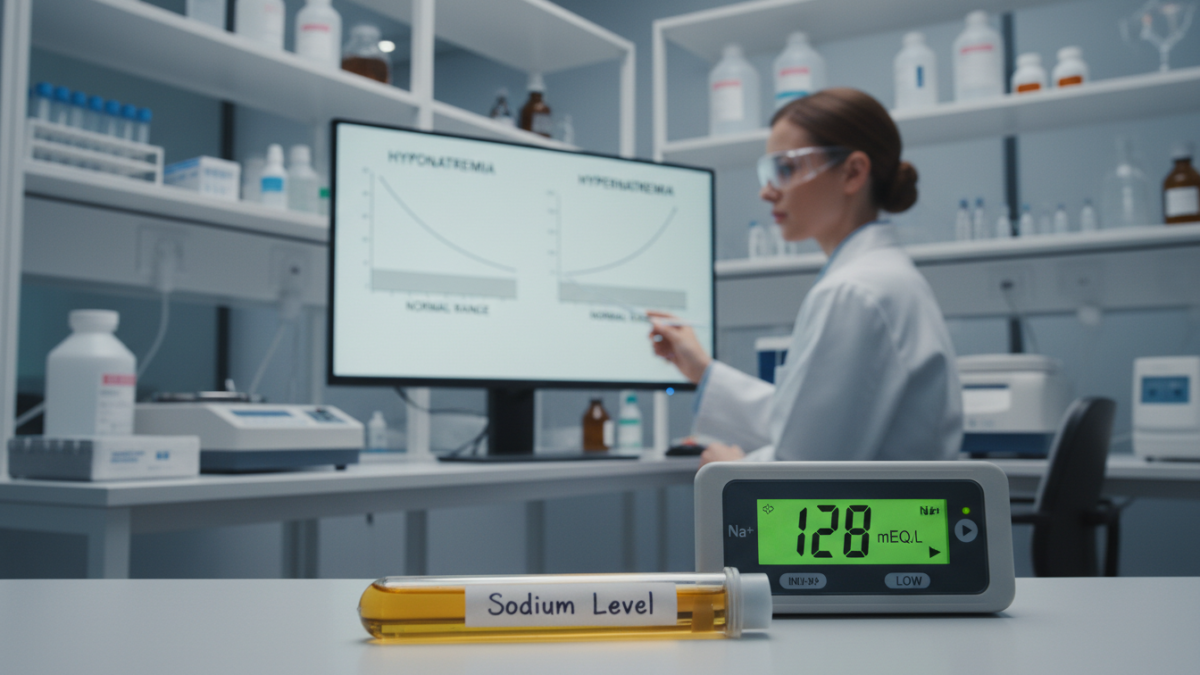
About 28% of hospitalized patients have hyponatremia. This shows how important it is to check sodium levels in the blood.
Sodium is key in the blood and helps keep the balance of fluids. The normal range for serum sodium concentration is 135 to 145 mEq/L. If it’s higher than 145 mEq/L, it’s hypernatremia. If it’s lower than 135 mEq/L, it’s hyponatremia.
Sodium electrolyte problems can be serious. They can lead to more health issues and even death. The symptoms depend on how bad it is and how fast it happens.
Key Takeaways
- Normal serum sodium range is 135-145 mEq/L for all age groups
- Hyponatremia affects approximately 28% of hospitalized patients and 7% of outpatients
- Hypernatremia occurs when concentrations exceed 145 mEq/L
- Both disorders are associated with significant morbidity and mortality
- Sodium serves as the major extracellular cation and primary osmolarity determinant
- Clinical symptoms vary based on severity, onset speed, and patient factors
What is a Sodium Blood Test?
Clinical labs use sodium blood tests to check electrolyte balance. They look for any concentration problems. This test is part of many metabolic panels in hospitals and clinics.
This test is very common in clinical medicine. It helps doctors understand fluid balance and kidney function.
Definition and Purpose
A sodium blood test checks sodium levels in blood. It measures sodium in milliequivalents per liter (mEq/L). This test is part of many diagnostic panels.
The main reasons for this test are:
- To check fluid and electrolyte balance
- To see how well the kidneys are working
- To find out about blood pressure issues
- To watch patients on IV fluids
- To check on patients taking diuretics
Doctors also use this test for symptoms like altered mental status or muscle weakness. These signs might mean there’s an electrolyte problem. Lab tests help confirm this.
How It’s Conducted
To get a sample, a healthcare worker uses venipuncture. They take blood from a vein in the arm. The blood goes into special tubes.
The blood is then spun in a lab to separate it. This makes serum or plasma ready for analysis.
Labs use ion-selective electrode methodology or flame photometry for sodium tests. These methods give accurate sodium levels. Results are usually ready in a few hours.
Interpreting Results
The sodium normal range is 135 to 145 mEq/L. Labs use studies to set these ranges. But, ranges can vary slightly.
When looking at test results, many things matter:
- The patient’s volume status and hydration
- Any medical conditions that affect fluid balance
- Medications, like diuretics
- Any symptoms the patient has
- Results of other lab tests
Normal sodium levels mean everything is okay. But, low or high levels mean there’s a problem. Doctors need to figure out why.
It’s important to look at the whole picture. Lab results alone don’t tell the whole story. Doctors use them with what they see and other tests to understand what’s going on.
Importance of Sodium in the Body
Sodium helps keep cells hydrated, sends signals in the brain, and helps muscles work. It’s the main mineral in the fluid outside our cells, making up about 90 percent of it. The body keeps sodium levels stable through special systems in the kidneys, hormones, and cells.
When sodium levels change, it affects how cells work and our health. Doctors check sodium levels to see if we have too much or too little fluid. They also check it to help diagnose and treat many health problems.
Cellular Osmotic Regulation
Sodium helps control the balance of fluids in and out of cells. Cell membranes let water in but keep sodium out. This balance is key to keeping cells healthy.
Water moves from areas with less solutes to areas with more. This movement helps keep cells the right size. It stops cells from getting too big or too small.
Too much sodium pulls water out of cells, making them dry. Too little sodium lets water into cells, making them swell. This is bad for brain cells and other sensitive tissues.
The body has ways to keep sodium levels right. Hormones and special cells in the kidneys help. They work together to keep sodium levels in a safe range.
When sodium levels get too far off, the body tries to fix it. But big changes or big imbalances need doctor help. This is like other serious health issues that need expert care.
Neurological and Muscular Electrical Activity
Sodium is key for nerve and muscle signals. It helps create electrical signals in cells. This is thanks to a special pump that moves sodium and potassium.
This pump moves sodium out and potassium in. It makes a difference in electrical charge across cell membranes. This charge is what makes cells ready to send signals.
When sodium rushes into cells, it starts a signal. This signal travels along nerves and muscles. It helps us move and react to the world.
Changes in sodium levels can mess with these signals. This can cause problems like feeling off, seizures, and weak muscles. It can even affect the heart’s rhythm.
How bad symptoms are depends on how much and how fast sodium levels change. Slow changes can be managed better. But sudden changes can cause big problems. Doctors use tests to see how sodium levels are doing.
Causes of Low Sodium Levels (Hyponatremia)
Hyponatremia has many causes, depending on the body’s volume status. It’s divided into three main types: hypovolemic, euvolemic, and hypervolemic. Each type has its own reasons and symptoms.
Understanding volume status helps us see how sodium and water get out of balance. The amount of sodium and water in the body tells us which type of hyponatremia someone has. Doctors use lab tests, physical checks, and patient history to figure this out.
| Volume Status | Total Body Sodium | Total Body Water | Primary Mechanism |
|---|---|---|---|
| Hypovolemic | Decreased | Decreased (greater loss) | Sodium and water loss with hypotonic replacement |
| Euvolemic | Normal to slightly decreased | Increased | Excess water retention without edema |
| Hypervolemic | Increased | Markedly increased | Water retention exceeding sodium retention |
Medical Conditions
Hypovolemic hyponatremia happens when more sodium is lost than water. This can be due to vomiting, diarrhea, or other losses. Replacing these losses with water lowers sodium levels.
Renal sodium loss is another cause. This includes problems like kidney stones or not enough aldosterone. Burns or pancreatitis can also lead to sodium loss.
Euvolemic hyponatremia often comes from syndrome of inappropriate antidiuretic hormone secretion (SIADH). This is when the body holds too much water. It can be caused by lung problems or brain injuries.
Brain injuries or tumors can also cause SIADH. Some cancers, like lung cancer, can make too much ADH. This leads to water retention.
Other causes include drinking too much water and severe hypothyroidism. Not enough solutes in the diet can also cause it. This is common in older adults.
Hypervolemic hyponatremia happens when there’s too much water and sodium. This is seen in heart failure and liver disease. These conditions make the body hold onto water.
Chronic kidney disease and nephrotic syndrome also cause it. These conditions make it hard for the body to get rid of water. This leads to water retention.
Medications That Affect Sodium
Medications can also cause hyponatremia. Diuretics are a big cause. Thiazide diuretics are more likely to cause it because they keep the body from getting rid of water.
Loop diuretics can also cause it, but less often. Older people and those who don’t eat much salt are more at risk.
Psychotropic drugs can cause SIADH. This includes antidepressants and certain painkillers. Mixing these drugs increases the risk, even more in older adults.
Dietary Factors
What we eat affects our sodium levels. Eating very little can make it hard for the kidneys to get rid of water. This is because the kidneys need solutes to work right.
Drinking too much beer without eating can cause hyponatremia. This is because beer has lots of water but not much solute. This is called beer potomania.
Drinking too much water can also cause it. This is common in people with mental health issues or in athletes who drink a lot of water during exercise. This is called water intoxication.
Signs and Symptoms of Hyponatremia
Symptoms of hyponatremia range from mild to severe. They can be subtle or life-threatening. Knowing these symptoms helps doctors act fast.
The symptoms depend on how low the sodium is and how fast it drops. Each person reacts differently. This makes it key to notice these signs early.
Mild to Moderate Symptoms
When sodium levels are between 125 and 134 mEq/L, symptoms are mild. These symptoms often go unnoticed or are blamed on other things. They show early brain swelling from water moving into brain cells.
Common symptoms include:
- Nausea without any stomach problems
- Feeling weak and tired all the time
- Headaches of different kinds and places
- Small problems with thinking and memory
- Not feeling like eating
- Muscle cramps and feeling generally unwell
These signs are not clear-cut. People might feel slow and foggy. This makes it hard to do daily tasks without obvious brain problems.
Long-term low sodium hyponatremia might not show symptoms at all. The brain adapts by losing water inside cells. This keeps people feeling normal even with low sodium levels.
Severe Symptoms and Complications
When sodium levels drop below 125 mEq/L, symptoms get worse. Quick drops in sodium can cause serious brain swelling.
Severe symptoms include:
- Changes in how you think and feel, from confused to very sleepy
- Ataxia, or trouble with balance and coordination
- Seizures from brain cells not working right
At levels below 115 mEq/L, brain problems get even worse:
- Very strong reflexes
- Trouble speaking and swallowing
- Odd breathing patterns
- Getting more and more sleepy
Ignoring severe low sodium hyponatremia can lead to brain damage or death. The brain gets too big for the skull, pressing on important parts. This is a medical emergency.
Even mild low sodium hyponatremia can cause long-term problems. These include:
- Tripping and falling more often
- Breaking bones, like hips
- Thinning bones and osteoporosis
- Dying from other causes
Studies show these risks are real even at mild levels. Keeping sodium levels stable is important for health and survival.
| Sodium Level (mEq/L) | Symptom Severity | Common Clinical Findings |
|---|---|---|
| 130-134 | Mild | Headache, nausea, weakness, subtle cognitive deficits |
| 125-129 | Moderate | Confusion, fatigue, muscle cramps, anorexia |
| 120-124 | Severe | Altered mental status, ataxia, seizures, disorientation |
| Below 115 | Critical | Coma, hyperreflexia, respiratory changes, risk of herniation |
Early signs of hyponatremia include feeling slow and confused. Catching these signs early is key to avoiding serious problems. How fast sodium drops is as important as how low it goes.
Causes of High Sodium Levels (Hypernatremia)
High sodium hypernatremia happens when we lose too much water and not enough sodium. This imbalance often comes from losing more water than sodium and potassium. It can also happen if we get too much sodium without enough water.
Most cases of hypernatremia are caused by not having enough water. This is common in hospitals where patients can’t drink water on their own. Problems with the brain’s thirst center can also make it hard for the body to keep the right balance of fluids.
Dehydration and Fluid Loss
Fluid loss from the gut is a big reason for hypernatremia. Viral stomach problems make us lose fluids that are not as salty as our blood. Diarrhea, for example, can lose a lot of sodium and potassium.
Drugs like lactulose and antibiotics can also cause fluid loss. So can using a tube to remove stomach fluids. If we replace these lost fluids with the wrong kind, our sodium levels can go up.
Our kidneys can also lose too much water. This is because of medicines like furosemide. These medicines stop the kidneys from making very salty urine, leading to more water loss than sodium.
Drinking too much sugar can also cause water loss. This is because our kidneys can’t handle all the sugar. So, we lose more water than we should.
Some brain problems make it hard for our body to keep the right balance of fluids. This can happen after a brain injury or during surgery. It can also happen with certain brain problems.
Our kidneys can also not work right because of certain medicines or too much salt. This makes it hard for our body to keep the right balance of fluids.
After a kidney problem, our body might not be able to make very salty urine. This means we lose more water than we should, leading to high sodium levels.
Being in the hospital can also lead to high sodium levels. This is because we might not get enough water. Babies and young children lose water through their skin more easily. This is because their skin is thinner.
There are other ways we can lose too much water. This includes having a tube in our stomach or having a high-output ostomy. All these things can lead to high sodium levels in our blood.
High sodium levels can happen for many reasons. It’s important to know why this happens so we can treat it properly.
Medications and Medical Conditions
Not getting enough water is a big reason for high sodium levels. This is because we might be getting too much sodium without enough water. This can happen when we lose fluids that are not as salty as our blood.
Not getting enough water with our food can also lead to high sodium levels. This is because our food might be too salty. If we don’t get enough water, our sodium levels can go up.
Some medicines can also cause high sodium levels. This includes medicines used to treat high blood pressure and medicines used to treat acid in the blood. These medicines can add too much sodium to our body.
Using too much normal saline and then using diuretics can also cause high sodium levels. This is because the diuretics make us lose more water than sodium. This can lead to high sodium levels in our blood.
| Mechanism Category | Specific Causes | Clinical Context | Fluid Characteristics |
|---|---|---|---|
| Gastrointestinal Losses | Viral enteritis, lactulose-induced diarrhea, nasogastric suctioning | Acute gastroenteritis, hepatic encephalopathy management | Hypotonic (30-90 mEq/L sodium) |
| Renal Water Losses | Loop diuretics, osmotic diuresis, diabetes insipidus | Volume management, hyperglycemia, pituitary disorders | Variable concentration, impaired urinary concentration |
| Insensible Losses | Transepidermal water loss, radiant warmers, phototherapy | Neonatal intensive care, premature infants | Pure water loss |
| Iatrogenic Sodium Excess | Hypertonic saline, sodium bicarbonate, inadequate free water | Intracranial hypertension, metabolic acidosis correction | Sodium gain exceeding water gain |
Some medical conditions can also cause high sodium levels. Kidney problems can make it hard for our body to keep the right balance of fluids. Not feeling thirsty enough can also lead to high sodium levels.
Signs and Symptoms of Hypernatremia
High sodium levels in the blood can cause many symptoms. These range from mild signs to serious brain problems. It’s important to notice these symptoms early to avoid serious issues.
The symptoms get worse as sodium levels go up. Quick changes in sodium levels cause more severe symptoms than slow changes. This is because the body can adapt a bit if sodium levels rise slowly.

Recognizing Mild Symptoms
The first sign of high sodium levels is intense thirst. This is the body’s way of trying to balance sodium levels. But, some people, like the elderly or those who can’t drink on their own, might not be able to notice this sign.
Other mild symptoms include muscle weakness, feeling irritable, trouble sleeping, and feeling very tired. These symptoms can be signs that sodium levels are too high.
Pediatric patients, like babies, might cry a lot, have trouble eating, and seem less active. These signs are important for doctors to notice quickly.
When sodium levels are high, the body loses water but might not show all the usual signs of dehydration. This is because the body tries to keep water in the blood vessels. This can make the skin feel different.
The skin might feel “doughy” when touched. It might also feel smooth, like velvet. This is different from how skin feels in other types of dehydration.
Severe Symptoms and Medical Emergencies
Severe symptoms of high sodium levels are very serious. They can affect the brain and need quick medical help.
High sodium levels can cause the brain to shrink. This can lead to bleeding in the brain or make the brain more likely to get hurt. It’s a serious problem.
High sodium levels can also make blood thicker. This can cause blood to slow down in the veins. This can lead to serious problems like blood clots in the brain.
High sodium levels can also hurt the brain in many ways. This includes causing confusion, seizures, and muscle damage. These problems are very serious.
High sodium levels can also hurt the kidneys. This is more likely if the person is also dehydrated. This can lead to kidney failure.
The following table shows how symptoms get worse as sodium levels increase:
| Severity Level | Sodium Range (mEq/L) | Primary Symptoms | Examination Findings |
|---|---|---|---|
| Mild | 146-150 | Thirst, weakness, irritability | Doughy tissue, velvet-like skin |
| Moderate | 151-160 | Lethargy, confusion, muscle cramps | Minimal hypovolemia signs |
| Severe | >160 | Seizures, coma, encephalopathy | Neurological deficits, altered consciousness |
In children, high sodium levels can be very dangerous. It can lead to death or serious brain damage. This can affect how well a child develops.
Doctors need to look at both blood tests and how the body looks to diagnose high sodium levels. Finding the problem early is key to preventing serious damage.
How Sodium Blood Levels Are Managed
Sodium disorders need special care. Doctors use lab tests and watch how the body reacts. They slowly fix the serum sodium levels to avoid brain problems.
First, doctors make sure the blood flows well. Then, they fix the sodium levels. They check the sodium levels often, every 2-4 hours, to make sure it’s going right.
Approaches to Hyponatremia Management
Hyponatremia is a big deal and needs quick action. If the sodium level is too low and the brain is affected, doctors act fast. They use sodium blood tests to see how low it is.
Doctors use special salt solutions to fix the sodium levels. They aim to increase the sodium slowly to avoid brain problems. They watch the sodium levels closely while doing this.
How fast to fix the sodium depends on how long it’s been low. If it’s been low for less than 48 hours, they can fix it faster. But if it’s been low for longer, they have to be more careful.
Doctors are careful not to fix the sodium too fast. This can cause serious brain damage. People with certain health problems are at higher risk.
Doctors have rules for how much sodium to increase, depending on the risk. They adjust how fast they increase the sodium based on these rules.
The rate of sodium correction should be carefully controlled to prevent neurological complications, with particular attention to patients at elevated risk for osmotic demyelination syndrome.
For some problems, like too much water in the body, doctors first try to limit water intake. They start by limiting water to 75% of what the body needs. They then adjust this based on how the body responds.
Doctors also make sure the blood flows well before they fix the sodium levels. They use special fluids that have the right amount of sodium to avoid fixing it too fast.
Approaches to Hypernatremia Management
Fixing high sodium levels is also done slowly to avoid brain swelling. Doctors first check if the body has enough water and find out why the sodium is high. They make sure the blood flows well first.
Doctors calculate how much water is needed to fix the sodium levels. They do this by looking at the weight and sodium levels. They adjust this based on how the body responds.
Fixing high sodium levels takes time, usually 24-48 hours. Doctors aim to lower the sodium slowly to avoid brain swelling. They check the sodium levels often to make sure it’s going right.
If the sodium levels drop too fast, doctors slow down the correction. They use special fluids to help manage the sodium levels. This is important for people with certain health problems.
Some people need special care for their sodium levels. This includes people with diabetes insipidus, a condition where the body can’t make enough water. Doctors use special treatments for these cases.
In some cases, doctors may need to use dialysis to manage sodium levels. This is when the kidneys aren’t working right and can’t handle the sodium. Dialysis helps control the sodium and water levels in the body.
| Parameter | Hyponatremia Management | Hypernatremia Management |
|---|---|---|
| Emergency Threshold | Below 120-125 mEq/L with neurological symptoms | Above 160 mEq/L with altered mental status |
| Acute Correction Rate | Up to 1-2 mEq/L per hour initially | Maximum 0.5 mEq/L per hour |
| Chronic Correction Limit | 8-12 mEq/L over 24 hours depending on risk | 12 mEq/L over 24 hours maximum |
| Monitoring Frequency | Every 2-4 hours during active correction | Every 2-4 hours during active correction |
| Primary Complication Risk | Osmotic demyelination syndrome from rapid correction | Cerebral edema from rapid correction |
Considerations for Ongoing Management
Keeping sodium levels stable long-term is important. Drinking enough water is key, as is eating the right amount of sodium. This helps keep the body’s electrolytes balanced.
Doctors also check if any medicines are affecting sodium levels. They look at things like diuretics and antidepressants. Regular checks are important for people at risk of sodium problems.
Teaching patients about their sodium levels helps them catch problems early. Knowing how to manage fluid intake and diet is important. People with chronic conditions need to watch their sodium levels closely.
Things like hot weather and exercise can affect how much water the body loses. Knowing this helps doctors make sure patients get the right amount of fluids.
Some groups, like the elderly and athletes, need extra care with sodium levels. Doctors watch these groups closely to make sure their sodium levels are okay.
If someone thinks they have a sodium problem, they should see a doctor. Doctors can figure out what’s going on and help fix it. Blood tests help doctors know for sure if there’s a problem and if they’re fixing it right.
Risks and Complications of Abnormal Sodium Levels
Low sodium hyponatremia and high sodium hypernatremia can harm many parts of the body. The brain is often the most affected. The harm depends on how bad the sodium imbalance is and how fast it changes.
Knowing these risks helps doctors spot serious problems that need quick help.
Problems can happen quickly or slowly. They can range from small brain changes to big emergencies. Both conditions can hurt the brain in similar ways, even though they seem opposite.
Short-Term Risks
Low sodium hyponatremia can cause serious brain swelling. This happens when sodium levels drop too low, too fast. It can lead to seizures because the brain cells get too excited.
Brain swelling can also push the brainstem, which controls breathing. This is a big emergency that can lead to death if not treated right away.
Treatment can also cause problems. One big risk is osmotic demyelination syndrome. This happens when the brain cells lose too much water too fast. It can damage the brain’s covering and cause big problems.
This syndrome can make it hard to talk, swallow, and move. It can also make you feel confused and weak. It can even make you unable to move your arms or legs.
This condition can be very serious and might not get better. It can happen if the sodium levels are too low for too long. Other risks include drinking too much water, not having enough potassium, and having liver disease.
High sodium hypernatremia can also hurt the brain. It happens when there’s too much sodium in the blood. This pulls water out of brain cells, making them shrink.
This shrinkage can hurt the veins in the brain. It can cause bleeding in the brain or make the veins block. This can lead to seizures, stroke, and even death.
High sodium levels can also make you feel confused and sleepy. It can even make you lose consciousness. Seizures can happen because the brain cells get too excited.
It can also hurt the muscles, making them weak. This can lead to kidney problems because of the waste in the muscles.
Here are some urgent problems to watch out for:
- Seizures from brain function changes in both conditions
- Coma showing severe brain problems needing quick care
- Intracranial hemorrhage from brain vein damage in hypernatremia
- Respiratory failure from brainstem compression
- Venous thrombosis with stroke risk in severe hypernatremia
Long-Term Health Effects
Chronic low sodium hyponatremia can lead to many problems. It can make it hard to walk and balance. This is because the brain might not work right.
This can make older people fall more often. It can also make bones break more easily. This is because the body loses bone strength.
It can also hurt your brain. You might have trouble paying attention and thinking clearly. The more severe and longer-lasting the problem, the worse it gets.
Having low sodium levels for a long time can also shorten your life. It’s not clear if it’s the sodium itself or if it’s a sign of other health problems.
High sodium hypernatremia can also cause lasting brain damage. People, even kids, can have trouble thinking and moving after a severe episode. The more severe and longer-lasting the problem, the worse it gets.
It can also make hospital stays longer and cost more. People with high sodium levels are twice as likely to die. It’s not clear if it’s the sodium itself or if it’s a sign of other health problems.
Both conditions are warning signs of bigger health problems. They show that something is not right with the body. Keeping an eye on sodium levels is very important for health care.
When to Get a Sodium Blood Test
Sodium problems are often found during routine tests. These tests are common in hospitals. They help find issues like too little or too much sodium in the blood.
How often to test sodium depends on the situation, not a set rule. Doctors test sodium when they think there might be a problem. They also check it regularly for people at risk.

Suggested Frequency for Different Populations
People in the hospital often need sodium tests because they’re at higher risk. These tests help find sodium problems early.
Critically ill patients get tested every day or two. This is part of their care. Those getting IV fluids need tests based on how fast they’re getting the fluid.
Testing sodium daily is common when fluids are being managed. But, if the sodium levels are way off, tests might be more often. This helps keep sodium levels safe.
Chronic disease populations need tests based on their condition. People with heart failure or on certain medicines get tested regularly. Outpatients usually get tested every few months, more often if their condition changes.
People with kidney disease get tests for sodium and other minerals. The tests happen more often as kidney function gets worse. Patients with liver disease, like cirrhosis, get sodium tests at each visit and in the hospital.
| Patient Population | Clinical Context | Typical Testing Frequency | Primary Indication |
|---|---|---|---|
| Intensive Care Patients | Critical illness with IV fluids | Daily to twice daily | Routine monitoring and abnormality correction |
| Heart Failure Patients | Stable outpatient on diuretics | Every 3 to 6 months | Medication effect monitoring |
| Advanced CKD Patients | Progressive renal disease | Monthly to quarterly | Disease progression tracking |
| Post-Surgical Patients | Major intrathoracic or abdominal surgery | Daily for several days | SIADH risk assessment |
Medication-related monitoring is another reason for tests. Starting certain medicines, like thiazides, means getting sodium tests soon. Some medicines, like carbamazepine, also need sodium checks.
Pediatric populations need sodium tests in certain situations. Newborns, for example, need tests because they can lose too much water. Kids with stomach problems also get tested to make sure they’re getting enough fluids.
Key Indicators for Testing
Some symptoms mean you should get a sodium test. These signs help doctors decide when to test your sodium levels.
Neurological symptoms like confusion or seizures mean you need a test right away. These symptoms can be caused by sodium problems. Fixing the sodium levels can help.
Other signs that might mean you need a test include:
- Nausea and vomiting that won’t go away
- Feeling weak or tired without a clear reason
- Changes in how much fluid you hold, like dehydration or swelling
- Muscle cramps or spasms
Specific clinical scenarios also mean you might need a test. For example, after a brain injury or surgery, you might need tests to watch for sodium problems. These tests are usually done every few hours at first, then daily.
Having big surgery can also mean you need sodium tests. This is because surgery can cause changes in sodium levels. Testing helps catch these problems early.
Severe pulmonary disease like pneumonia means you might need sodium tests in the hospital. This is because lung problems can affect how your body handles water. Also, athletes or military trainees in hot weather might get sodium tests. This is because they can lose too much sodium through sweat.
Elderly individuals are more likely to have sodium problems. This is because they might take medicines that affect sodium, or they might not drink enough water. They might also have trouble concentrating urine or feeling thirsty. So, they might need sodium tests more often.
Whether or not to get a sodium test is up to the doctor. There’s no rule that says everyone needs a test all the time. Tests are usually part of a bigger check-up that includes many other tests.
Conclusion: The Importance of Monitoring Sodium Levels
Sodium problems are common in medicine. About 7% of people outside the hospital and 25-28% in the hospital have sodium issues. These problems can lead to higher healthcare costs, longer hospital stays, and even death.
Staying Informed of Health Changes
Knowing your health risks is key. People with heart, liver, kidney, or endocrine diseases are at higher risk. Also, those taking certain medicines need to watch their sodium levels.
Signs like confusion, nausea, headaches, muscle weakness, or seizures mean you need to see a doctor fast. Studies show that mild sodium problems can cause balance issues, falls, and bone thinning.
Consultation with Your Healthcare Provider
Getting a sodium blood test is important, but only a doctor can interpret it. They look at many things to understand your sodium levels. They decide how often to check and what to do next.
Seeing your doctor regularly is important, too. This helps catch problems early, before they get worse.