
The triglyceride test is a common lab test used to check heart and metabolic health. Triglycerides are the main type of fat in our blood. They come from extra calories, sugars, and fats like butter and oils.
Fat cells store these lipids and release them for energy between meals.
High triglycerides are a big problem in the U.S., affecting over one-third of adults. Studies by the American Heart Association show they’re linked to serious health issues. These include heart disease, heart attacks, and stroke.
The risk is higher for those with low HDL cholesterol or type 2 diabetes.
Knowing why triglycerides are high is important for staying healthy. Diet, lifestyle, genetics, and some medical conditions can cause it. A simple blood test during a routine checkup can show if levels are safe or need attention.
Key Takeaways
- Triglycerides are blood fats the body uses for energy, stored in fat cells between meals.
- Over one-third of U.S. adults have high triglycerides, making it a widespread health concern.
- Elevated triglyceride levels are strongly tied to heart disease, stroke, and heart attacks.
- Common causes of high triglycerides include excess calorie intake, sugary diets, and lack of physical activity.
- People with type 2 diabetes or low HDL cholesterol face greater risks from elevated levels.
- A standard lipid panel blood test can detect abnormal triglyceride levels during routine checkups.
What the Test Measures
A standard blood test called a lipid panel is used to check triglyceride levels. This test shows all the fats in the blood. Knowing what it measures helps patients make lifestyle changes if their levels are too high.
Definition of Triglycerides
Triglycerides are the most common fat in our bodies. They are made from unused calories and stored in fat cells. Hormones release these fats for energy between meals.
High triglyceride levels can lead to artery buildup. This increases the risk of heart disease and stroke, says the American Heart Association.
Measurement Techniques
The lipid panel measures triglycerides in milligrams per deciliter (mg/dL) of blood. A healthcare provider takes blood from a vein in the arm. The blood is then analyzed in a lab.
Before the test, patients must fast for 9 to 12 hours. They can only drink water during this time.
Some labs offer non-fasting lipid panels for initial screenings. Rapid finger-prick tests are also available in some clinics.
| Testing Method | Sample Type | Fasting Required | Turnaround Time |
|---|---|---|---|
| Standard Lipid Panel | Venous blood draw | Yes (9–12 hours) | 1–2 business days |
| Non-Fasting Lipid Panel | Venous blood draw | No | 1–2 business days |
| Point-of-Care Test | Finger-prick capillary blood | Varies by device | 5–10 minutes |
After getting the results, a doctor can decide if lifestyle changes are needed. This might include diet changes or more exercise. Or, the doctor might suggest further medical tests.
Why It Is Ordered
Doctors order a triglyceride test for many reasons. Some patients show clear warning signs, while others need it as part of a standard checkup. Knowing when and why this test is requested helps patients take charge of their heart health early.
Clinical Symptoms and Risk Factors
Most people with elevated triglycerides feel perfectly fine. High triglycerides symptoms tend to stay silent until levels climb dangerously high. At that point, small fat deposits may form under the skin, known as xanthomas. Severe cases can trigger painful inflammation of the pancreas called pancreatitis.
A physician may order the test when certain risk factors are present:
- Being overweight or obese
- Lack of regular physical activity
- A diet heavy in sugar, refined carbs, or saturated fat
- Excessive alcohol intake
- Conditions like type 2 diabetes, kidney disease, thyroid disorders, or liver disease
- Use of certain medications for HIV or breast cancer
- South Asian ancestry, which carries a higher genetic predisposition
- Family history of lipid metabolism disorders
Because triglycerides are a type of fat circulating in the blood, lowering triglycerides naturally through omega-3-rich fish oil and lifestyle changes can make a real difference for at-risk individuals.
Routine Health Screens
The American Heart Association recommends that all adults aged 20 and older get tested on a regular schedule. This lipid panel is part of standard preventive care, even when no high triglycerides symptoms are present.
Children should receive screening at least once between ages 9 and 11, with a follow-up between ages 17 and 21. Early detection supports lowering triglycerides naturally before complications develop — a key factor explored in the next section on normal reference ranges.
Normal Reference Range
Knowing what’s a healthy triglyceride level is key. A fasting blood test shows doctors the best picture. It tells if a patient needs diet changes or medicine.
Adult Reference Ranges
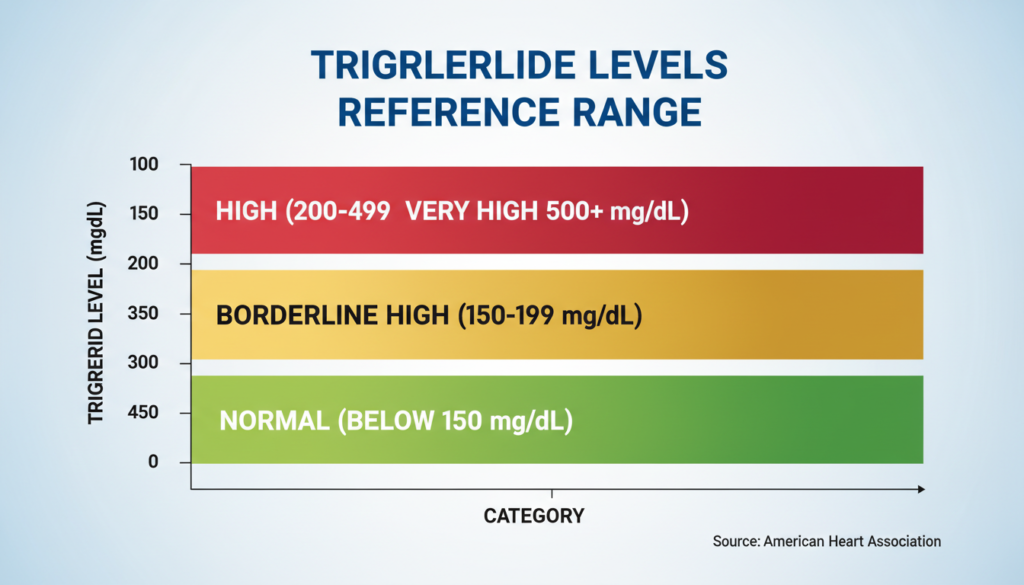
The American Heart Association and the National Cholesterol Education Program have guidelines. They use fasting blood samples to categorize triglyceride levels:
| Category | Triglyceride Level (mg/dL) | Recommended Action |
|---|---|---|
| Normal | Less than 150 | Maintain healthy habits |
| Borderline High | 150–199 | Begin a diet for high triglycerides |
| High | 200–499 | Medication and lifestyle changes |
| Very High | 500 and above | Immediate medical intervention |
Triglyceride levels over 500 mg/dL raise the risk of pancreatitis. Levels above 1,000 mg/dL are very risky. Levels over 1,500 mg/dL are extremely dangerous. This can cause liver swelling, spleen enlargement, memory loss, and severe stomach pain.
Pediatric Reference Ranges
Children and teens have their own guidelines. The National Heart, Lung, and Blood Institute suggests screening between ages 9 and 11. For kids under 10, levels below 75 mg/dL are normal. For teens aged 10–19, levels below 90 mg/dL are okay.
Early detection is important. A family history of high triglycerides may mean testing and diet changes sooner. These ranges help doctors assess risks for heart and metabolic problems.
What High Levels May Indicate
High triglyceride levels are a warning sign for serious health issues. When levels go above normal, it’s a signal that something is off. Knowing what these numbers mean is key to managing high triglycerides and keeping your health safe.
Cardiovascular Disease Risk
A study in the Journal of the American College of Cardiology shows high triglycerides increase heart attack and stroke risk. High levels can lead to atherosclerosis, where arteries harden and narrow. This can block blood flow to the heart and brain. Starting treatment early can help prevent this.
Pancreatitis Implications
Triglyceride levels over 1,000 mg/dL raise the risk of pancreatitis sharply. This condition causes severe pain, nausea, and can lead to hospitalization. The National Institute of Diabetes and Digestive and Kidney Diseases calls it a medical emergency that needs quick action.
Metabolic Syndrome Associations
High triglycerides often come with metabolic syndrome. This includes:
- Excess fat around the waist
- Elevated blood pressure
- High fasting blood sugar
- Abnormal cholesterol ratios
High numbers may indicate type 2 diabetes, hypothyroidism, liver or kidney disease, or rare genetic disorders. Treating these conditions and managing high triglycerides is essential. A healthcare provider can help develop a treatment plan.
| Triglyceride Level (mg/dL) | Risk Category | Possible Health Concern |
|---|---|---|
| 150–199 | Borderline High | Early cardiovascular risk |
| 200–499 | High | Metabolic syndrome, atherosclerosis |
| 500+ | Very High | Pancreatitis, severe cardiovascular disease |
What Low Levels May Indicate
Most talks are about high triglycerides, but low levels are important too. Triglycerides are our main energy source. They fuel our cells between meals. Low levels might mean a health issue that needs a doctor’s check.
Potential Nutritional Deficiencies
A very low reading could mean not enough dietary fat. Some diets are too strict, lacking calories or healthy fats. This makes it hard for the body to make enough triglycerides.
Malabsorption disorders also lead to low triglycerides. Conditions like celiac disease and Crohn’s disease stop the gut from absorbing fats. Even with enough food, nutrients are not used. Signs of fat malabsorption include:
- Unexplained weight loss
- Frequent loose or greasy stools
- Deficiencies in fat-soluble vitamins (A, D, E, K)
- Fatigue and muscle weakness
Endocrine Disorders
Some endocrine conditions can lower triglyceride levels. Hyperthyroidism is a common example. An overactive thyroid burns fat too fast.
Doctors usually check for high triglycerides, but low levels are important too. They might show thyroid or adrenal problems that need treatment.
Low triglyceride levels are not automatically a sign of good health — they can indicate that something in the body is not working as it should.
A doctor can do more tests to find the cause. This helps understand other health markers like cholesterol and blood sugar.
Related Biomarkers
High triglycerides often come with other markers. A lipid panel shows several at once. Each marker tells a part of the story. This helps doctors understand cardiovascular risk and guide treatment.
Total Cholesterol
Total cholesterol includes LDL, HDL, and some triglycerides. A level over 200 mg/dL is high. Non-HDL cholesterol is key because it shows all bad particles, including those from high triglycerides.
This metric is very useful, showing extra risk for those with diabetes.
LDL and HDL Cholesterol
HDL, or “good” cholesterol, helps remove LDL from arteries. LDL, or “bad” cholesterol, can clog blood vessels. High levels of LDL increase heart attack and stroke risk.
Triglycerides and HDL move in opposite directions. High triglycerides mean low HDL. This combo is a big risk for heart disease, common in metabolic syndrome.
| Biomarker | Desirable Level | Relationship to Triglycerides |
|---|---|---|
| HDL-C | ≥40 mg/dL (men), ≥50 mg/dL (women) | Inversely related |
| LDL-C | <100 mg/dL | May rise with TG-rich remnants |
| Non-HDL-C | <130 mg/dL | Directly reflects TG burden |
Blood Glucose Levels
High blood sugar makes the liver make more VLDL, carrying triglycerides. Diabetes is a common cause of high triglycerides. Doctors check fasting glucose and hemoglobin A1c to link sugar and lipid health.
- Fasting glucose above 100 mg/dL suggests prediabetes
- A1c above 6.5% indicates diabetes
- Lowering blood sugar can also lower triglycerides
These biomarkers together give a complete picture. Understanding them as a group helps doctors make better decisions. This is discussed further in the section on factors that affect results.
Factors That Affect Results
Many daily habits and choices can change triglyceride test results. Knowing these factors helps both patients and doctors understand lab results better. A diet for high triglycerides and lifestyle changes directly impact these numbers.
Fasting Status
Labs usually ask for a 9- to 12-hour fast before blood tests. Eating a lot of fat before the test can raise triglyceride levels. A diet for high triglycerides before the test can give a more accurate reading.
Alcohol Consumption
Even a little alcohol can increase triglyceride levels. The American Heart Association says alcohol makes the liver produce more triglycerides. It’s best to avoid alcohol for at least 24 hours before a test. Reducing alcohol intake can help lower triglycerides naturally.
Physical Activity Levels
Exercise greatly affects triglyceride levels. Doctors suggest at least 30 minutes of moderate activity five times a week. This helps the body burn fat more efficiently, naturally lowering triglycerides.
Some medicines can also affect test results. Here’s a table of common drugs that raise triglyceride levels:
| Medication Type | Examples | Effect on Triglycerides |
|---|---|---|
| Beta-blockers | Atenolol, Metoprolol | Moderate increase |
| Oral contraceptives | Estrogen-based pills | Mild to moderate increase |
| Corticosteroids | Prednisone, Dexamethasone | Significant increase |
| Diuretics | Hydrochlorothiazide | Mild increase |
Telling your doctor about all medicines you’re taking is important. This information helps doctors understand your test results better, along with other biomarkers.
Clinical Context Considerations
A triglyceride number on a lab report never tells the full story. Doctors must weigh each result against a patient’s unique health profile before choosing a path forward. High triglycerides treatment depends on the whole picture, not just one data point.
Patient Medical History
Several chronic conditions can raise triglyceride levels on their own. Doctors review a patient’s complete medical record before deciding on the best approach to managing high triglycerides. Conditions that directly influence results include:
- Type 2 diabetes and insulin resistance
- Chronic kidney disease
- Hypothyroidism (underactive thyroid)
- Liver disease, including non-alcoholic fatty liver
- HIV infection, which alters lipid metabolism
Prior cardiovascular events — such as a heart attack or stroke — shift the urgency of high triglycerides treatment. Certain medications, including beta-blockers, corticosteroids, and some antipsychotics, can push triglycerides higher. A full medication review is essential before new therapies begin.
Family History of Dyslipidemia
Genetics play a powerful role in lipid levels. Rare inherited conditions like familial hypertriglyceridemia prevent the body from breaking down fats properly. According to the National Heart, Lung, and Blood Institute, a strong family history of dyslipidemia raises an individual’s cardiovascular risk even when other factors seem controlled.
| Risk Factor | Impact on Triglycerides | Relevance to Treatment |
|---|---|---|
| First-degree relative with dyslipidemia | Moderate to high elevation | Earlier screening, possible medication |
| South Asian ancestry | Genetically higher baseline levels | Adjusted target goals |
| Known familial hypertriglyceridemia | Severe elevation (>500 mg/dL) | Aggressive pharmacotherapy |
People of South Asian descent — from India, Pakistan, or Bangladesh — face a notable higher risk. Managing high triglycerides in these populations often requires earlier intervention and closer follow-up.
Limitations of the Test
A triglyceride test is useful but not perfect. It doesn’t show everything about a person’s health. Knowing its limits helps everyone make better choices.

Interpretation Challenges
Triglyceride levels can change during the day. A single test might not show the real picture. The American Heart Association says it’s often wise to test again to be sure.
Recent high-fat meals, stress, or illness can also affect results. This can make it hard to understand what the numbers mean.
Non-fasting panels are becoming more common. These tests can show different numbers than fasting tests. This can make it tricky to compare results over time.
| Factor | Potential Impact on Results | Recommended Action |
|---|---|---|
| Recent meal (non-fasting) | May raise levels by 20–30% | Retest after 9–12 hour fast |
| Acute illness or infection | Temporary elevation | Delay testing until recovery |
| Medication timing | May lower or raise readings | Note all medications before testing |
Influence of Other Conditions
High triglycerides often come with other health issues. These can include type 2 diabetes, obesity, high blood pressure, and low HDL cholesterol. This makes it hard to just look at triglycerides.
The National Lipid Association suggests looking at the complete lipid profile. This includes LDL, HDL, and blood glucose. It gives a fuller picture than just triglycerides alone.
- Thyroid disorders can raise triglycerides without diet being the cause.
- Kidney and liver problems can also affect results.
- Some medicines, like corticosteroids and beta-blockers, can change readings.
Doctors should consider these factors and a patient’s history before suggesting treatment.
References
This article uses research from peer-reviewed journals, national guidelines, and lab standards. These sources explain high triglycerides and how to manage them.
Medical Journals
Studies in the Journal of the American College of Cardiology and Circulation link high triglycerides to heart disease. They show that pancreatitis risk jumps when triglycerides hit 1,000 mg/dL. These studies guide current screening and treatment.
Clinical Guidelines
The American Heart Association sets guidelines for triglyceride testing and results. The National Lipid Association provides a toolbox for managing very high levels. Both emphasize early detection and lifestyle changes to fight high triglycerides.
Laboratory Standards
Lab standards divide triglyceride levels into four groups. Normal is below 150 mg/dL, borderline is 150 to 199 mg/dL. High is 200 to 499 mg/dL, and very high is over 500 mg/dL. These ranges help doctors diagnose and track patients.