
The lipoprotein a test is key in checking how well our hearts work. But, surprisingly, it’s not checked often enough. A study in May 2025 found that only 0.1 percent of Americans have had this test. This means millions are unaware of a big risk in their blood.
For 15 years, scientists have shown that high Lp(a) levels can cause heart disease. It’s not just a side effect; it actually causes plaque in arteries. About one in five people worldwide have Lp(a) levels above 125 nmol/L, which is now seen as high by doctors.
Lp(a) is special because it’s linked to heart disease through genes. Unlike LDL cholesterol, which can be lowered by diet and medicine, Lp(a) is mostly set by our genes. This means changing our lifestyle doesn’t help much with this risk factor.
Recently, the American Heart Association and the European Society of Cardiology have updated their guidelines. They now recommend testing for Lp(a), mainly for those with a family history of heart attacks or strokes. Knowing your Lp(a) level can really help in preventing and treating heart disease.
Key Takeaways
- Lp(a) is an independent and genetically determined cause of atherosclerotic cardiovascular disease affecting roughly one in five people worldwide.
- The lipoprotein a test remains vastly underutilized, with only 0.1 percent of eligible American adults having been screened.
- Elevated Lp(a) levels are defined as greater than 125 nmol/L and signal increased risk for heart attack and stroke.
- Lp(a) serves as a reliable heart disease genetic marker because its levels are mainly controlled by inherited genes, not lifestyle choices.
- Cardiovascular risk assessment guidelines have evolved significantly over the last 15 years to include Lp(a) as a recommended screening tool.
- Early detection through testing allows patients and their doctors to pursue targeted prevention strategies before damage occurs.
What the Lipoprotein(a) Test Measures
An Lp(a) blood test shows how much of a special lipoprotein is in your blood. This lipoprotein acts like LDL cholesterol, but it’s riskier. Just a simple blood draw is needed, and it’s analyzed in a lab.
Overview of Lipoprotein(a)
Kåre Berg, a Norwegian scientist, found Lp(a) in 1963. Studies have shown that high levels of Lp(a) increase the risk of heart attacks and strokes. Yet, many people don’t get tested for it, even though it’s linked to heart health.
In January 2025, a new test for Lp(a) was approved. It measures Lp(a) in molar units (nmol/L). This new test is more accurate and doesn’t get confused by different particle sizes.
Structure and Function of Lp(a)
Lp(a) is a small LDL-like particle made of two main proteins:
- Apolipoprotein B-100 (apoB-100) — the same protein found on standard LDL particles
- Apolipoprotein(a) [apo(a)] — a unique protein attached through a covalent bond
The apo(a) part has a long tail that looks like plasminogen. This similarity lets Lp(a) interfere with normal clot breakdown. This can lead to dangerous clots in arteries.
The European Atherosclerosis Society recommends that every adult have their Lp(a) measured at least once in a lifetime to assess inherited cardiovascular risk.
Lp(a) lab work is collected the same way as a routine lipid panel. No special preparation is needed. It’s easy to include in your regular bloodwork.
Why the Lipoprotein(a) Test Is Ordered
Doctors order an Lp(a) cholesterol test for certain reasons. This blood test finds people at higher risk of heart attack, stroke, or death from heart disease. Understanding why the test is ordered helps patients see its importance in preventing health issues.
Assessment of Cardiovascular Risk
Elevated lipoprotein a levels are linked to serious heart and blood vessel problems. The 2018 American Heart Association/American College of Cardiology guidelines suggest testing for high-risk groups. Now, the 2024 National Lipid Association recommends that all adults get tested at least once in their lives. This advice is also from the European Society of Cardiology.
Key groups that benefit most from testing include:
- Men under 55 and women under 65 who have experienced a major cardiovascular event
- Individuals with LDL cholesterol at or above 190 mg/dL
- People diagnosed with familial hypercholesterolemia
- Anyone with a personal history of premature heart disease
Family History Considerations
Lp(a) levels are mostly inherited, making a genetic test important for family screening. If a close relative has early heart disease or high Lp(a), testing becomes urgent.
| Screening Criteria | Guideline Source | Year |
|---|---|---|
| Selective screening for high-risk individuals | AHA/ACC | 2018 |
| Universal screening once in adulthood | European Society of Cardiology | 2019 |
| Universal adult screening at least once | National Lipid Association | 2024 |
Early detection through an Lp(a) cholesterol test helps doctors create a prevention plan. This plan is made before a heart event happens.
Normal Reference Range for Lipoprotein(a)
It’s important to know what a “normal” Lp(a) blood test result means. Different labs use different units, and what’s considered risky can change. This information helps both patients and doctors understand heart health better.
Typical Units of Measurement
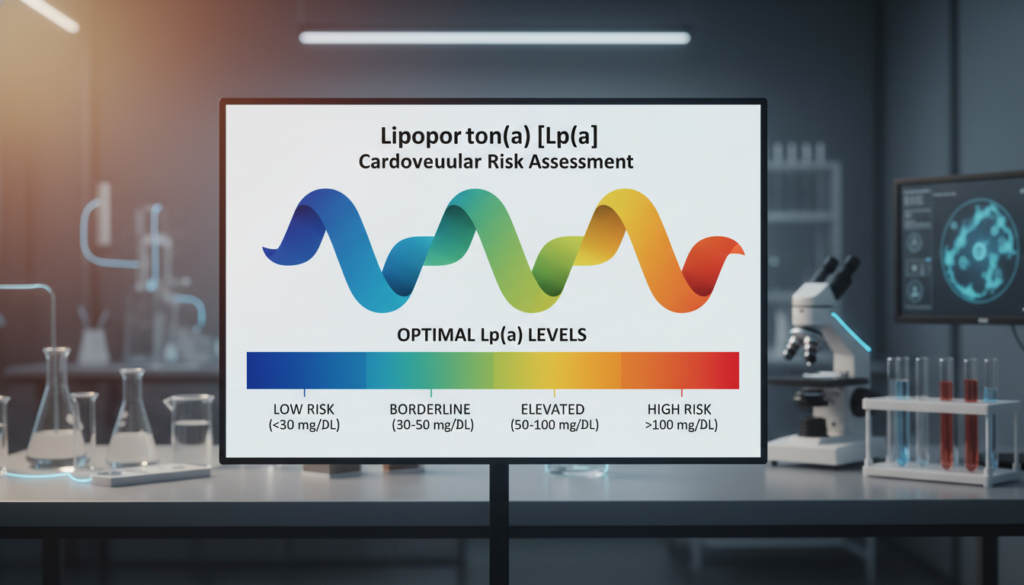
Lp(a) results are reported in two ways: milligrams per deciliter (mg/dL) and nanomoles per liter (nmol/L). In the U.S., many labs, like UCLA Health, use mg/dL. But, the National Lipid Association suggests nmol/L for better accuracy.
Using nmol/L is better because it counts particles more accurately. This is important for heart health checks. The size of Lp(a) particles, or isoforms, can affect mg/dL measurements.
| Risk Category | mg/dL | nmol/L | Clinical Significance |
|---|---|---|---|
| Desirable | Less than 30 | Less than 75 | Low cardiovascular risk |
| Borderline High | 30–49 | 75–124 | Moderate risk; monitoring advised |
| High | 50 or above | 125 or above | Increased risk of heart attack and stroke |
Population Variability in Reference Ranges
Lp(a) levels vary among different groups. People of African descent often have higher Lp(a) levels than others. This is due to genetic differences.
Doctors should consider ethnicity, family history, and other lipid levels when looking at Lp(a) results. This approach helps give a more accurate picture of heart health risk. We’ll dive deeper into this in the next section.
What High Levels of Lipoprotein(a) May Indicate
High levels of lipoprotein a in blood tests warn of serious heart problems. Lp(a) is seen as a genetic marker for heart disease. It increases the risk of heart issues over a lifetime. The National Heart, Lung, and Blood Institute says about 20–30% of people worldwide have high levels.
Potential Cardiovascular Diseases
High Lp(a) levels are linked to various heart issues. These include:
- Heart attack
- Ischemic stroke
- Aortic valve stenosis (narrowing that restricts blood flow)
- Heart failure
- Peripheral arterial disease affecting the lower limbs
For those with heart disease, high Lp(a) levels raise the risk of secondary events. This means a second heart attack or stroke is more likely when Lp(a) stays high.
Link to Atherosclerosis and Other Conditions
Lp(a) is proatherogenic, meaning it helps fatty plaques build up in arteries. It causes inflammation and clot formation, speeding up atherosclerosis. Studies show the number of Lp(a) particles is more important than size in assessing heart disease risk.
| Condition | How Lp(a) Contributes | Relative Risk Increase |
|---|---|---|
| Coronary Artery Disease | Plaque formation in coronary arteries | Up to 2–3× |
| Aortic Valve Stenosis | Calcium deposits on valve tissue | Up to 1.5–2× |
| Ischemic Stroke | Clot promotion in cerebral vessels | Up to 1.5× |
Lp(a) acts as a genetic marker for heart disease, unlike regular cholesterol. Knowing its role helps doctors create better prevention plans. This is explored further in the next section.
What Low Levels of Lipoprotein(a) May Indicate
Low Lipoprotein a levels are good news for your heart. They mean you have less than 30 mg/dL or 75 nmol/L. This is within the normal range and shows a reduced risk of heart disease.
Unlike high levels, which are a warning sign, low Lp(a) levels are a positive sign. They show a better heart health profile. Knowing this can make patients feel more at ease and help doctors make better decisions.
Implications of Low Concentrations
Low Lp(a) levels are mostly due to genetics. A study in the Journal of the American College of Cardiology found that Lp(a) levels stabilize by age five. This means one test can give a reliable view of your Lp(a) levels for years.
People with low Lp(a) have fewer Lp(a) particles in their blood. This leads to less plaque in arteries and less inflammation.
Associated Health Outcomes
Those with low Lp(a) levels tend to have better heart health. Research shows they are less likely to have:
- Heart attacks
- Ischemic strokes
- Aortic valve stenosis
- Cardiovascular-related deaths
| Lp(a) Level | Risk Category | Cardiovascular Outlook |
|---|---|---|
| Less than 30 mg/dL | Low / Normal | Favorable — reduced event risk |
| 30–50 mg/dL | Borderline | Moderate — warrants monitoring |
| Greater than 50 mg/dL | Elevated | Unfavorable — increased event risk |
Even with low Lp(a), there’s no guarantee against all heart risks. Other markers, like apolipoprotein B and C-reactive protein, are also important for assessing your heart health.
Related Biomarkers in Cardiovascular Risk Assessment
Standard cholesterol tests measure HDL and LDL levels. HDL helps clear cholesterol from the blood. LDL carries cholesterol to tissues, where it can clog arteries. But, these tests miss a key risk factor.
An Lp(a) cholesterol test uncovers a hidden risk for heart attacks and strokes. This risk is not seen in standard tests.
A full check of heart health goes beyond just lipid numbers. It looks at several biomarkers for a clearer picture.

Apolipoprotein B
Apolipoprotein B-100 (ApoB) is a major protein in Lp(a). It’s on every LDL particle in the blood. ApoB shows the total number of harmful particles, not just cholesterol.
The American College of Cardiology values ApoB. It’s useful when LDL levels seem normal but particle counts are high.
C-Reactive Protein
High-sensitivity C-reactive protein (hs-CRP) measures body inflammation. Low-grade inflammation helps plaque form and rupture. High hs-CRP and Lp(a) levels warn of increased heart event risk.
| Biomarker | What It Measures | Optimal Range | Key Insight |
|---|---|---|---|
| ApoB | Number of atherogenic particles | Below 90 mg/dL | Better predictor of risk than LDL alone |
| hs-CRP | Systemic inflammation | Below 1.0 mg/L | Identifies inflammatory component of risk |
| Lp(a) | Genetically driven lipoprotein | Below 30 mg/dL | Up to 90% determined by genetics |
Combining Lp(a) with ApoB and hs-CRP gives a deeper risk assessment. This helps doctors create better prevention plans. It’s very helpful for those with a family history of heart disease.
Factors That Affect Lipoprotein(a) Test Results
Many things can change the numbers on a lipoprotein little a screening report. Knowing what affects these levels helps both patients and doctors understand the results better. The main factors are genetics and lifestyle-related health conditions.
Genetic Influences
Genetics play a huge role, with up to 90 percent of Lp(a) levels determined by genes. The LPA gene on chromosome 6 controls how much apolipoprotein(a) the liver makes. By about five years old, a child’s Lp(a) level stays the same for life. So, a test for Lp(a) is usually done only once.
Lp(a) doesn’t change with statins, diet, or exercise. This makes early testing very important. Finding high levels helps doctors focus on other risk factors, like apolipoprotein B and C-reactive protein.
Lifestyle Factors
While daily habits can’t lower Lp(a), some health conditions and life stages can increase it:
- Hypothyroidism — untreated thyroid issues can raise Lp(a) by 20–30 percent
- Chronic kidney disease — kidney problems increase Lp(a)
- Post-menopause — lower estrogen levels are linked to slightly higher Lp(a)
Treating these conditions can help bring Lp(a) levels back to normal. Doctors should consider these factors when ordering a test. If a condition was present at the time of the test, they might need to test again.
A single lipoprotein little a screening can guide cardiovascular risk strategies for decades — making it one of the most cost-effective tests in preventive cardiology.
Clinical Context Considerations for Interpretation
A lipoprotein a test doesn’t stand alone. It’s important to look at a patient’s age, sex, and ethnic background. These details help define what’s normal and guide doctors in assessing heart risk.
Age and Gender Differences
Lp(a) levels usually stay the same after five years and into adulthood. This is different from many other lipids, which change with age and hormones. No sex-specific guidelines exist for Lp(a) tests, as high levels are a risk for both men and women.
This stability means a test in young adulthood can offer a lifetime view of heart risk. Usually, you don’t need to test again unless your health situation changes.
Ethnic Variability in Results
Ethnic background affects Lp(a) levels. It’s key to consider these differences when assessing heart risk.
| Ethnic Group | Average Lp(a) Level | Screening Priority |
|---|---|---|
| African Americans | 2–3 times higher than European Americans | High |
| South Asians | Elevated above general population | High |
| European Americans | Baseline reference range | Standard |
| East Asians | Generally lower than European Americans | Standard |
The American Heart Association started the Lp(a) CHC Discovery Project. It aims to increase testing in community health centers. This project targets groups at higher risk but often overlooked.
Using the same cutoffs for everyone, without thinking about ethnicity, can miss important health issues. This is a big concern in the broader context of testing limitations.
Limitations of the Lipoprotein(a) Test
No lab test is perfect, and the Lp(a) blood test has its own challenges. Knowing these helps patients and doctors make better choices about heart risk. Two main areas to focus on are how accurate the test is and the chance of misreading results.
Sensitivity and Specificity Issues
One big issue with Lp(a) lab work is apo(a) isoform size variability. Traditional tests might not always get the Lp(a) particle count right. This is because apo(a) sizes vary among people. Two people with the same test result could have very different Lp(a) levels.
Another problem is selective screening. Most people with high Lp(a) levels don’t show symptoms before a heart attack or stroke. Finding at-risk family members is hard because not many have been tested. Even with a healthy lifestyle and controlled heart disease risk factors, someone can have high Lp(a) levels without knowing it.
Misinterpretation of Results
Confusion over measurement units is a common mistake in Lp(a) lab work. Results in mg/dL and nmol/L are not directly interchangeable. There’s no reliable way to convert between them, which can cause mistakes in treatment decisions.
| Measurement Unit | Desirable Level | Key Limitation |
|---|---|---|
| mg/dL | Below 30 mg/dL | Affected by apo(a) isoform size |
| nmol/L | Below 75 nmol/L | More accurate but less widely available |
Patients should check which unit their Lp(a) blood test uses. They should also talk to a healthcare provider about their results. The *European Heart Journal* (2022) guidelines suggest using nmol/L-based assays to avoid mistakes.
Conclusion on Lipoprotein(a) Testing
Lp(a) testing is changing how doctors look at heart risk. Groups like the European Atherosclerosis Society and the National Lipid Association say all adults should get tested once. This blood test finds a key heart disease marker that regular tests miss.
Importance in Comprehensive Cardiovascular Risk Assessment
Knowing a patient’s Lp(a) level helps doctors understand lipid risk better. About one in five adults have high Lp(a) levels. While diet and exercise can’t change Lp(a), knowing it helps doctors set better targets for other risk factors.
When a patient has this marker, doctors can aim for tighter control of:
- LDL cholesterol with statins or PCSK9 inhibitors
- Blood pressure below 130/80 mmHg
- Blood sugar for those with diabetes or prediabetes
- Smoking and weight management
Three drugs to lower Lp(a) are in Phase III trials. These could soon change treatment options.
| Drug Name | Mechanism | Trial Phase | Sponsor |
|---|---|---|---|
| Pelacarsen | Antisense oligonucleotide targeting LPA mRNA | Phase III | Novartis / Ionis |
| Olpasiran | Small interfering RNA (siRNA) targeting LPA mRNA | Phase III | Amgen |
| Lepodisiran | Small interfering RNA (siRNA) targeting LPA mRNA | Phase III | Eli Lilly |
As we’ve discussed, interpreting Lp(a) tests needs a doctor’s insight. Yet, Lp(a) screening is becoming more common in heart disease prevention.
References
For years, research has shown the importance of lipoprotein little a screening. Leading heart health groups have published this information. It helps doctors and patients understand Lp(a)’s role in heart disease.
Citing Medical Journals and Studies
In 2024, the National Lipid Association released a scientific statement. It explains how to use Lp(a) in daily medical practice. A 2022 article in the American College of Cardiology’s magazine highlighted Lp(a)’s importance.
A study in May 2025 looked at health records of 70 million Americans. It found only 0.1 percent had tested for Lp(a). This shows how often this test is missed, despite its value.
Additional Clinical Guidelines
The 2018 guidelines from the American Heart Association and American College of Cardiology recommend Lp(a) tests for high-risk people. The European Society of Cardiology suggests testing everyone at least once in their life. The American Heart Association supports education through the Lp(a) Forum.
Karol Watson, MD, PhD, from UCLA, is on the forum’s advisory board. He helps with its educational goals.
These references and guidelines are key for discussing inherited cholesterol disorder tests. Patients and doctors can use them to make informed choices about heart health.