
The troponin test is a key test in checking heart health. It looks for a protein in heart muscle cells. When these cells get hurt, the protein leaks into the blood, showing a heart problem.
This test checks for two types of troponin protein. In healthy people, these proteins are very small. A quick blood draw from the arm can tell doctors a lot about the heart.
Doctors use this test to see if someone has had a heart attack. The more troponin in the blood, the more heart damage there is. By checking troponin levels over time, doctors can decide the best treatment in emergency rooms.
Key Takeaways
- Troponin is a protein released into the blood when heart muscle cells are damaged.
- The troponin test measures troponin I and troponin T to evaluate possible cardiac injury.
- Normal cardiac troponin levels are extremely low and require high-sensitivity assays for detection.
- Rising troponin blood test results over several hours strongly suggest an active heart attack.
- Higher troponin values generally point to more extensive heart muscle damage.
- The blood draw is quick, taking less than five minutes from a vein in the arm.
What the Troponin Test Measures
The troponin test is key in emergency and cardiac medicine. It finds proteins in the blood when heart cells are hurt. Knowing what these biomarkers show helps patients understand why doctors order this test during heart issues.
Definition of Troponin
Troponin is a set of three proteins in heart and muscle fibers. Each type has a unique role in muscle work:
- Troponin C — binds calcium ions to start muscle contraction
- Troponin I — controls the contraction process
- Troponin T — holds the troponin complex to muscle proteins
When the heart is damaged, troponin I and T leak into the blood. Labs check for cTnI and cTnT to spot heart damage, not muscle.
Role of Troponin in Cardiac Health
Troponin is a top biomarker for heart muscle injury. Even tiny amounts in the blood can mean trouble. The FDA approved new troponin tests in 2017. These can spot damage 10 to 100 times lower than old tests.
| Feature | Standard Troponin Test | High Sensitivity Troponin Test |
|---|---|---|
| FDA Approval | Before 2017 | 2017 |
| Detection Sensitivity | Baseline | 10–100x more sensitive |
| Proteins Measured | cTnI or cTnT | cTnI or cTnT |
| Early Detection Capability | Moderate | Significantly improved |
This new test lets doctors spot heart damage sooner and more accurately. So, high sensitivity troponin testing is now key in diagnosing heart attacks.
Why the Troponin Test is Ordered
Doctors order this blood test when they think the heart muscle might be damaged. The troponin test is often done in emergency rooms along with an EKG. These tests help doctors understand what’s happening in the heart. Knowing when and why this test is done helps patients understand what to expect.
Common Indications for Testing
The main reason for this test is to check for heart attacks. Emergency doctors look for high troponin levels in patients with symptoms. The American Heart Association lists important warning signs:
- Chest pain, pressure, or heaviness
- Pain spreading to the arm, back, or shoulder
- Shortness of breath or trouble breathing
- Nausea and too much sweating
- Dizziness, unusual tiredness, or an irregular heartbeat
This test is key for spotting unstable angina. It’s chest pain at rest that means a serious problem. High troponin levels help doctors tell unstable angina from a full heart attack.
Contexts in Which Testing is Utilized
The troponin test is also used before and after surgeries. Surgeons check if the heart was damaged during an operation.
Serial testing is another common method. It involves taking blood samples over 12 to 24 hours. This tracks troponin levels and helps confirm a heart attack. Rising troponin levels show heart damage, guiding treatment.
Normal Reference Range for Troponin Levels
It’s key to know the troponin normal range when looking at blood test results. Cardiac troponin levels are measured in specific units. These numbers can change based on the lab and the assay used. This knowledge helps both patients and doctors tell if a reading is normal or if it’s a sign of trouble.
Units of Measurement
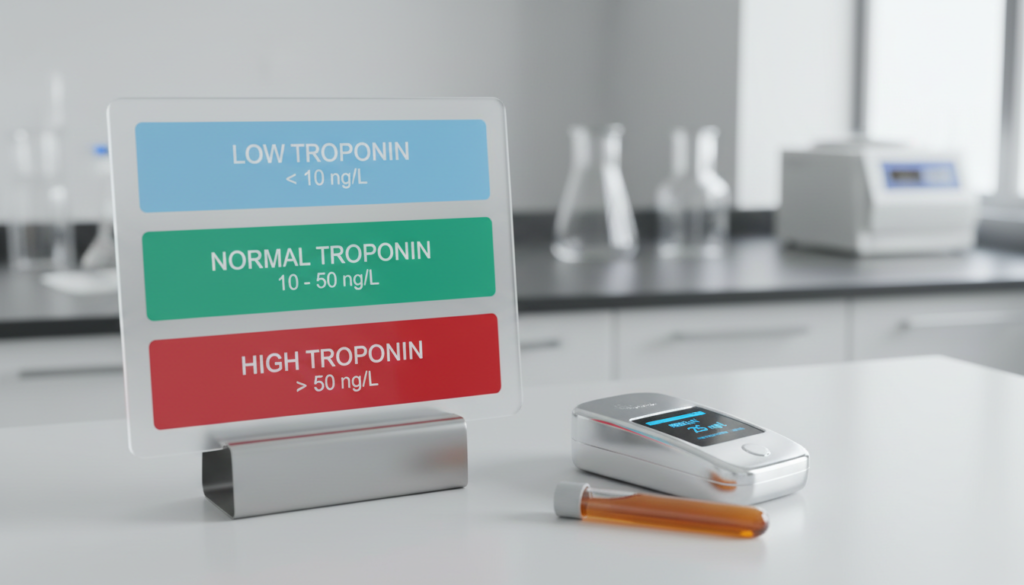
Labs report cardiac troponin levels in nanograms per milliliter (ng/mL) or nanograms per liter (ng/L). The normal range for troponin is usually 0 to 0.04 ng/mL. High-sensitivity troponin tests can spot even smaller amounts of the protein in the blood.
High-sensitivity assays have different normal ranges for men and women. The upper limit of normal is 10 ng/L for women and 14 ng/L for men, as per the European Society of Cardiology guidelines from 2020.
Variability in Reference Ranges
Different labs use different assays and equipment. This can cause slight variations in reference ranges. Some healthy people might have troponin levels above the standard cutoff without heart disease.
Here’s a quick guide to troponin levels and what they mean:
| Troponin Level (ng/mL) | Clinical Interpretation |
|---|---|
| 0 – 0.04 | Within the troponin normal range; heart damage unlikely |
| 0.04 – 0.39 | Elevated; possible cardiac injury requiring further evaluation |
| 0.40 and above | Significantly elevated; probable heart attack |
Doctors always look at troponin levels in the context of the lab’s reference range, the patient’s symptoms, and serial testing results over several hours.
What High Troponin Levels May Indicate
High troponin levels in a blood test mean the heart muscle has been damaged. The extent of damage depends on the troponin level and how fast it changes. Doctors use troponin to find the cause and decide on treatment.
Acute Myocardial Infarction
A troponin level above 0.40 ng/mL often means a heart attack. Minor heart attacks might raise troponin levels a bit. But severe attacks can make troponin levels go up to 500 ng/L or more.
Troponin levels start to rise about 24 hours after a heart attack starts. They then slowly go down over five to seven days. By checking troponin levels over time, doctors can see how much damage the heart has.
Other Cardiac Conditions
High troponin levels aren’t just from heart attacks. Several other conditions can also cause them:
- Myocarditis — inflammation of the heart muscle, often caused by a viral infection
- Unstable angina — reduced blood flow that stresses the heart without full blockage
- Cardiomyopathy — disease of the heart muscle that weakens its pumping ability
- Heart failure — chronic strain that slowly damages cardiac tissue
- Chemotherapy-related cardiotoxicity — certain cancer drugs that harm heart cells
- Traumatic chest injury — blunt force that directly injures the heart
| Condition | Typical Troponin Range | Pattern Over Time |
|---|---|---|
| Major Heart Attack | Above 0.40 ng/mL (can exceed 500 ng/L) | Peaks at 24 hours, falls over 5–7 days |
| Minor Heart Attack | 2–3× upper normal limit | Peaks at 12–24 hours, normalizes in 3–5 days |
| Myocarditis | Mildly to moderately elevated | Gradual rise, variable decline |
| Heart Failure | Mildly elevated | Chronic low-level elevation |
| Chest Trauma | Variable based on severity | Peaks within hours, resolves with healing |
Many conditions can cause abnormal cardiac biomarkers. Doctors use serial testing, patient symptoms, and imaging to find the cause. This helps them accurately diagnose heart attacks or other heart injuries.
What Low Troponin Levels May Indicate
Not every troponin blood test shows high numbers. Many times, the results are normal, which is also important. Low or no troponin levels can help doctors find the right diagnosis, just like high levels do.
Exclusion of Cardiac Events
Normal troponin levels at least 12 hours after symptoms start mean no heart attack likely happened. The American College of Cardiology says that if troponin stays normal during testing, it means no acute coronary syndrome.
If you have chest pain and your troponin is normal, it’s a good sign. It means your heart muscle is likely okay. If troponin stays low over several tests, it’s even more sure that you’re okay.
| Troponin Result | Time After Symptom Onset | Clinical Interpretation |
|---|---|---|
| Within normal range | 0–3 hours | Inconclusive; repeat testing recommended |
| Within normal range | 6–12 hours | Heart attack unlikely |
| Within normal range | 12+ hours | Acute myocardial infarction effectively excluded |
Other Clinical Interpretations
Even with normal troponin levels, you might not be completely symptom-free or risk-free. Chest pain with normal troponin levels might mean other issues, like:
- Gastroesophageal reflux disease (GERD)
- Musculoskeletal pain
- Pulmonary conditions like pneumonia or pleurisy
- Anxiety-related chest tightness
After a heart attack, troponin levels usually go back to normal in 4 to 10 days. Watching how they change helps doctors see if you’re getting better.
Related Biomarkers in Cardiac Assessment
Cardiac troponin levels are key for finding heart muscle damage. But, doctors use many biomarkers together for a full picture. Each one shows different heart stress and injury types.
Creatine Kinase (CK-MB)
CK-MB is an enzyme mostly in heart muscle cells. It goes up 4 to 6 hours after a heart issue and peaks at 12 to 24 hours. Before troponin tests, CK-MB was the main tool for diagnosing heart attacks.
CK-MB is not as specific as troponin because it can also rise from muscle injuries. Yet, it’s useful for figuring out when a heart event happened or if there’s a second heart attack soon after the first.
B-type Natriuretic Peptide (BNP)
BNP is a hormone from the heart’s ventricles when they’re stretched or under pressure. High BNP levels suggest heart failure, not just muscle damage. This makes BNP a great addition to troponin tests in emergencies.
BNP helps when troponin results are unsure. It tells doctors if it’s heart failure or a heart attack. The American College of Cardiology suggests using biomarker panels together for better accuracy.
| Biomarker | Time to Rise | Peak Time | Primary Use |
|---|---|---|---|
| Troponin I/T | 2–4 hours | 12–24 hours | Myocardial injury detection |
| CK-MB | 4–6 hours | 12–24 hours | Reinfarction timing |
| BNP/NT-proBNP | 1–2 hours | Varies | Heart failure assessment |
Using many biomarkers together helps doctors diagnose heart attacks better. It also helps them make treatment plans with more confidence.
Factors That Affect Troponin Test Results
A troponin test is not just a simple test. Many things can change the results, making it important for doctors to consider everything. From the moment blood is taken to a patient’s health, many factors can affect the results.
Timing of Sample Collection
Troponin levels don’t jump up right away after heart damage. It usually takes two to three hours for them to show up. This means a single test might not catch early damage.
The American College of Cardiology suggests doing tests over 12 to 24 hours. This helps see the full change in troponin levels.
A high sensitivity troponin test can find smaller amounts sooner. But, it’s important to do tests again for a correct diagnosis.
Patient Factors Influencing Results
Many things about a patient can make troponin levels go up without a heart attack:
| Factor | Effect on Troponin | Mechanism |
|---|---|---|
| Chronic kidney disease | Elevated baseline levels | Reduced renal clearance of troponin |
| Endurance exercise (marathons, triathlons) | Temporary elevation | Transient cardiac stress during prolonged exertion |
| Sepsis | Significant elevation | Systemic inflammation damaging myocytes |
| Pulmonary embolism | Moderate elevation | Right ventricular strain |
| Cocaine use | Variable elevation | Coronary vasospasm and direct toxicity |
| Biotin supplements | Falsely lowered readings | Interference with immunoassay chemistry |
Some people naturally have higher troponin levels without disease. Age, sex, and health conditions all matter. It’s key to look at the test results with the patient’s history and scans.
Clinical Context Considerations for Interpretation
A troponin test procedure is never done in isolation. Doctors must consider the whole clinical picture before diagnosing a heart attack. Relying solely on troponin levels can lead to mistakes in patient care.
Importance of Patient History
A patient’s symptoms, medications, and past heart issues are key. For example, someone with a history of heart surgery might have a higher baseline troponin level. This means chest pain in them is different from the same pain in a healthy 30-year-old.
Serial troponin tests over hours show a rise-and-fall pattern that indicates an acute event. A steady troponin level often points to chronic conditions like heart failure or kidney disease, not a new heart attack.
“Clinical context is king. No biomarker should override the physician’s assessment of the whole patient.” — American College of Cardiology, 2021 Chest Pain Guidelines
Integration with Other Diagnostic Tools
Doctors use troponin tests alongside EKGs to confirm or rule out heart attacks. When troponin I and T levels are high and the EKG shows ST-segment changes, it’s a strong sign of a heart attack.
In cases where troponin levels rise but the EKG is normal, stress echocardiography can check blood flow to the heart muscle. This approach helps avoid misdiagnosis.
| Diagnostic Tool | What It Assesses | Role Alongside Troponin |
|---|---|---|
| EKG (12-lead) | Electrical activity of the heart | Detects ST changes that confirm acute ischemia |
| Stress Echocardiogram | Blood flow under physical or pharmacologic stress | Identifies reduced perfusion when cause of elevated troponin is unclear |
| Coronary Angiography | Coronary artery blockages | Confirms and localizes obstruction after troponin-positive results |
| Chest X-ray | Heart size and pulmonary congestion | Rules out non-cardiac causes of chest pain |
Using these tools with troponin I and T values helps doctors make accurate treatment decisions.
Limitations of the Troponin Test
No lab test is perfect, and the troponin blood test is no exception. It’s a key tool in diagnosing heart issues, but it has its limits. Just because troponin levels are high, it doesn’t mean you have a specific heart problem. Doctors need to look at the whole picture, including your medical history and other tests, to make an accurate diagnosis.

Potential for False Positives
A high sensitivity troponin assay can find tiny amounts of protein in the blood. This is both good and bad. Small increases might not mean you’re having a heart attack. Many non-heart conditions can also raise troponin levels, such as:
- Chronic kidney disease (impaired protein clearance)
- Sepsis and systemic infections
- Intense endurance exercise, such as marathon running
- Pulmonary embolism
- Myocarditis unrelated to coronary artery disease
Some people naturally have higher troponin levels, which can cause worry if they don’t have a baseline to compare to.
Situations Leading to Misinterpretation
When you get a troponin test too early, it might not show the real problem. This is because the protein hasn’t reached its highest level in the blood yet. It’s common to do the test again a few hours later to get a clearer picture.
Results can also vary between different tests and labs. This means a high troponin value from one test might not match another. The FDA warned in 2017 that biotin supplements can lead to low readings on some tests.
| Limitation | Impact on Results | Recommended Action |
|---|---|---|
| Early sample collection | False negative reading | Serial testing at 3–6 hour intervals |
| Kidney disease | Chronically elevated baseline | Compare with prior baseline values |
| Biotin interference | Falsely low levels | Discontinue biotin 72 hours before testing |
| Lab platform variability | Non-comparable values across facilities | Use same laboratory for serial measurements |
Knowing these limitations helps doctors avoid misdiagnoses. This ensures patients get the right treatment at the right time.
Conclusion on Troponin Testing
The troponin test is key for finding heart muscle damage. It’s vital in cardiology today. This blood test helps make life-saving choices every day in the U.S.
Importance in Clinical Practice
When troponin levels go up, doctors act fast. They might use medicines, angioplasty, or surgery. They also watch how the heart damage changes over time.
“The Fourth Universal Definition of Myocardial Infarction establishes troponin as essential for MI diagnosis and supports interpretation of troponin elevations in clinical context.”
Thanks to new tests, doctors can spot heart problems sooner. This means patients get help faster and do better. Doctors then help patients make healthy lifestyle choices.
- Smoking cessation
- Weight management through balanced nutrition
- Regular physical activity tailored to cardiac health
- Dietary modifications to lower cholesterol and blood pressure
Future Directions for Research
Researchers are working to make the troponin test even better. They’re looking into point-of-care testing for quicker results. They also want to find better levels for women, as they might be missed too often.
They’re also improving how to tell real heart attacks from other issues. Making sure tests work the same everywhere will help too.
As assay technology evolves, clinicians can expect even greater precision in diagnosing and managing heart disease.
References
This article uses reliable medical sources for cardiac troponin levels, testing, and interpretation. These sources help both readers and healthcare professionals understand the troponin normal range. They also explain its role in diagnosing heart damage.
Medical Journals and Studies
Heart journal published research by Maynard, Menown, and Adgey on troponin I and T in heart disease patients. StatPearls Publishing has clinical reviews by Stark, Kerndt, and Sharma on troponin testing. Brunner and Suddarth’s Handbook of Laboratory and Diagnostic Tests is a key resource for cardiac troponin levels and lab procedures.
Clinical Guidelines and Recommendations
The National Heart, Lung, and Blood Institute updates guidelines on blood tests for heart attacks. The American Heart Association publishes treatment protocols that include troponin normal range values. The Cleveland Clinic Health Library, Harvard Heart Letter, Medical News Today, and University of Florida Health offer patient education. They explain the differences between troponin I and T and what high results mean.