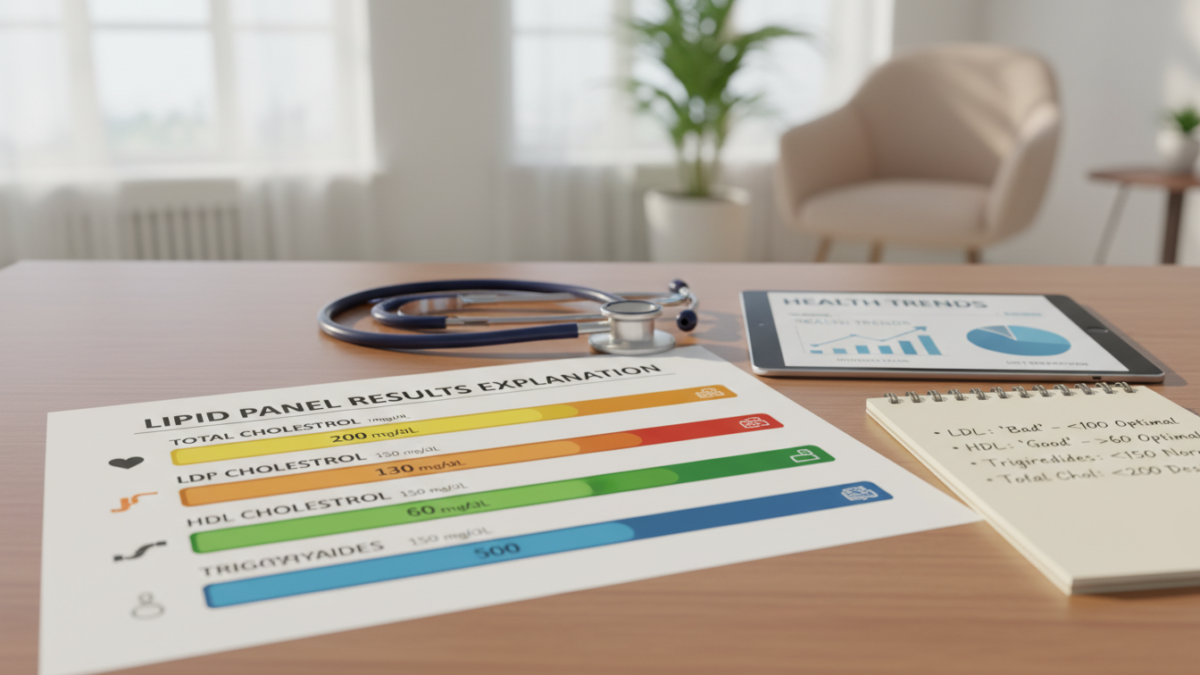
A lipid panel is a common test in health care. It checks how well your heart and blood vessels are working. It looks at four main fats in your blood: LDL, HDL, triglycerides, and total cholesterol.
Cholesterol is a fat-like substance your body needs. It helps build cell walls and make hormones. It’s carried in the blood by lipoproteins, which are proteins wrapped around fat.
Doctors use lipid panel results to see if you might get heart disease or stroke. This helps them decide how to keep you healthy.
To get a lipid profile, you just need a blood test. The blood is sent to a lab to check the cholesterol levels. These levels show how much fat is in your arteries.
It’s important to understand what each cholesterol type means. LDL, or “bad” cholesterol, can clog arteries. HDL, or “good” cholesterol, helps clean your blood. Triglycerides store energy for when you need it.
Key Takeaways
- A lipid panel measures four types of blood fats: LDL cholesterol, HDL cholesterol, triglycerides, and total cholesterol.
- Cholesterol travels through the bloodstream inside lipoproteins made of fat and protein.
- Lipid panel results help doctors assess a patient’s risk for heart disease and stroke.
- LDL cholesterol is considered harmful, while HDL cholesterol plays a protective role in cardiovascular health.
- Accurate lipid profile interpretation requires looking at all four values together, not just one number.
- The test involves a routine blood draw and cholesterol test results are typically reported in mg/dL.
What the Test Measures
A lipid panel breaks down cholesterol levels into specific components. Each marker gives doctors a clearer picture of cardiovascular health. The test focuses on four key measurements that work together to assess heart disease risk.
LDL — The “Bad” Carrier
LDL cholesterol is often called “bad” cholesterol. It carries fat particles through the bloodstream and can deposit them along artery walls. Over time, this buildup — known as atherosclerosis — narrows blood vessels and raises the risk of heart attack and stroke.
HDL — The “Good” Protector
HDL cholesterol acts as the body’s cleanup crew. It picks up excess LDL cholesterol from artery walls and transports it back to the liver for breakdown. While it carries only a small fraction of total blood cholesterol, its protective role is critical for cardiovascular health.
The Body’s Main Fat Type
Triglycerides are the most common type of fat stored in the body. They come from unused calories — mostly from sugary or high-fat foods. Elevated triglycerides often appear alongside high LDL cholesterol and low HDL cholesterol, creating a dangerous combination for heart health.
The Big-Picture Number
Total cholesterol represents the sum of all cholesterol carried by lipoproteins in the blood. According to the American Heart Association, it is calculated using the Friedewald equation: HDL + LDL + 20% of triglycerides. This single number provides a quick snapshot of overall cholesterol levels.
| Component | Primary Role | Impact on Heart Health |
|---|---|---|
| LDL cholesterol | Carries cholesterol to arteries | High levels increase risk |
| HDL cholesterol | Removes cholesterol from arteries | High levels reduce risk |
| Triglycerides | Stores unused dietary energy as fat | High levels increase risk |
| Total cholesterol | Summarizes all lipoprotein cholesterol | Used for initial screening |
Understanding what each marker reveals sets the stage for interpreting why a doctor may order this test, which the next section covers in detail.
Why it is Ordered
Doctors order a lipid panel test for several important reasons. It helps them see a clear picture of a patient’s blood fat levels. The American Heart Association recommends that adults aged 20 and older get their cholesterol checked every four to six years. Those with risk factors may need testing more often.
Risk Assessment
A cardiovascular risk assessment relies heavily on cholesterol test results. Doctors use these numbers alongside age, blood pressure, and smoking status to estimate heart disease risk. Catching severely high LDL in a patient’s 20s or 30s is very valuable.
The “lower for longer” approach reduces cumulative exposure to harmful cholesterol. It helps prevent plaque buildup in arteries over decades.
Monitoring Health Conditions
Patients with diabetes, thyroid disorders, or kidney disease often receive a lipid panel test at regular intervals. These conditions can shift lipid levels quickly. Tracking cholesterol test results over time lets physicians adjust medications and lifestyle plans as needed.
| Condition | Recommended Testing Frequency | Primary Concern |
|---|---|---|
| Low-risk adults (20+) | Every 4–6 years | Baseline cardiovascular risk assessment |
| Family history of heart disease | Every 1–2 years | Inherited high LDL levels |
| Type 2 diabetes | At least annually | Elevated triglycerides and low HDL |
| Patients on statin therapy | Every 3–12 months | Medication effectiveness |
Preoperative Screening
Before major surgeries, a lipid panel test may be part of routine lab work. Surgeons and anesthesiologists review cholesterol test results to gauge a patient’s overall cardiovascular health. Abnormal lipid levels can influence surgical planning and post-operative care decisions.
This screening is a key step in reducing complications.
Normal Reference Range
Knowing normal cholesterol levels is key when looking at your blood work. Reference ranges help everyone understand the results. They show if you might have health risks early on.
The 2022 American College of Cardiology guidelines set specific targets. These depend on your health history and risk factors. Here’s a look at each lipid component and its standard ranges.
LDL Cholesterol Units
LDL cholesterol is measured in milligrams per deciliter (mg/dL). Most adults aim for an LDL below 100 mg/dL. Those with diabetes should aim for less than 70 mg/dL.
People who have had a heart attack might need levels below 55 mg/dL. An LDL above 190 mg/dL, with a family history, could mean familial hypercholesterolemia.
HDL Cholesterol Units
HDL cholesterol is also measured in mg/dL. Men should have levels above 40 mg/dL. Women should aim for above 50 mg/dL. Higher HDL values help protect against heart disease.
Triglycerides Units
Triglycerides are measured in mg/dL as well. The goal is to keep them below 150 mg/dL. High levels might mean you need to look at your diet or lifestyle.
Total Cholesterol Units
Total cholesterol is measured in mg/dL. Most adults should keep it below 200 mg/dL. Levels between 200 and 239 mg/dL are borderline high. Anything 240 mg/dL or higher is considered high.
| Lipid Component | Optimal Level (mg/dL) | Borderline High (mg/dL) | High (mg/dL) |
|---|---|---|---|
| Total Cholesterol | Below 200 | 200–239 | 240 and above |
| LDL Cholesterol | Below 100 | 130–159 | 160 and above |
| HDL Cholesterol (Men) | Above 40 | N/A | Below 40 (low/risk) |
| HDL Cholesterol (Women) | Above 50 | N/A | Below 50 (low/risk) |
| Triglycerides | Below 150 | 150–199 | 200 and above |
These ranges are a starting point for understanding lipid panel results. Your personal health history might affect your targets. The next section will dive into what high levels mean.
What High Levels May Indicate
High cholesterol levels can be a warning sign of serious health issues. They often mean fatty deposits are building up in blood vessels. This can narrow arteries and limit blood flow to important organs.
Doctors look at these numbers along with other signs to understand a patient’s risk. They use this information to assess overall health.
Heart and Vascular Risks
High LDL cholesterol is a major risk factor for heart attacks and strokes. LDL particles can clog artery walls and form plaques. Over time, these plaques can harden the arteries, a condition known as atherosclerosis.
When plaques break, they can cause blood clots. These clots can block blood flow, leading to serious health problems.
“Reducing LDL cholesterol remains the cornerstone of cardiovascular risk reduction.” — American Heart Association, 2023 Guidelines
High triglycerides, along with high LDL or low HDL, increase the risk even more. This combination can lead to faster buildup of fatty deposits in arteries.
Diagnosing Lipid Disorders
LDL levels above 190 mg/dL, with a family history of heart disease, may indicate familial hypercholesterolemia. This genetic condition affects about 1 in 250 people globally. Very high triglycerides can cause acute pancreatitis, a serious condition that needs immediate medical attention.
High cholesterol levels often come with other metabolic issues. These conditions need ongoing monitoring and treatment adjustments.
Connection to Metabolic Syndrome
High cholesterol levels often go hand in hand with other metabolic problems. Metabolic syndrome is diagnosed when a person meets three or more of the following criteria:
| Criteria | Threshold |
|---|---|
| Triglycerides | ≥ 150 mg/dL |
| HDL Cholesterol (Men) | < 40 mg/dL |
| HDL Cholesterol (Women) | < 50 mg/dL |
| Fasting Glucose | ≥ 100 mg/dL |
| Waist Circumference (Men) | ≥ 40 inches |
| Blood Pressure | ≥ 130/85 mmHg |
This group of conditions greatly increases the risk of type 2 diabetes and heart disease. Finding abnormal lipid values early helps patients make important lifestyle changes or start treatment.
What Low Levels May Indicate
Low cholesterol levels can be a sign of health issues that need a doctor’s check-up. Cholesterol is key for cell membrane formation, making hormones, and making vitamin D. Low numbers on a lipid panel might show a condition that needs looking into.
It’s important to know that very low LDL cholesterol can be okay. The body uses cholesterol for cell tasks, not just what’s in the blood. But, very low HDL levels are a warning sign. The American Heart Association says HDL under 40 in men and 50 in women is risky for heart health.
Potential Nutritional Deficiencies
Low cholesterol might come from not eating right or not absorbing nutrients well. People on very strict diets or with conditions like celiac disease might have low lipid levels. Vitamins A, D, E, and K need cholesterol to be absorbed properly.
Genetic Disorders
Some genetic conditions can cause low cholesterol levels. These include:
- Hypobetalipoproteinemia — reduced production of LDL particles
- Abetalipoproteinemia — near-absent LDL and triglyceride levels
- Smith-Lemli-Opitz syndrome — a defect in cholesterol synthesis
Genetic tests can confirm these rare conditions.
Liver Disease
The liver makes most of our cholesterol. Damage to the liver can lead to low cholesterol. Conditions like cirrhosis or hepatitis make it hard for the liver to make lipids. Low lipid panel readings might mean the doctor will check the liver’s health with more tests.
Related Biomarkers
A standard lipid panel gives a good look at heart health. But, some biomarkers show risks that simple cholesterol numbers can’t. Advanced lipid testing looks at specific particles and proteins linked to heart disease. These markers help doctors understand a patient’s risk better.
Apolipoproteins
Apolipoprotein B (ApoB) is a protein on LDL particles. Each LDL particle has exactly one ApoB molecule. This makes ApoB a precise way to count harmful particles in the blood. Many experts say ApoB testing is a top predictor of heart disease risk, even better than LDL cholesterol alone.
Two people can have the same LDL cholesterol but different particle counts. A higher number of small, dense LDL particles is riskier. ApoB testing shows this difference, which a routine lipid panel can’t.
Non-HDL Cholesterol
Non-HDL cholesterol is found by subtracting HDL from total cholesterol. This number shows all atherogenic lipoproteins, like LDL and VLDL. It’s a useful target for treatment, mainly for those with high triglycerides.
Lp(a) — A Hidden Risk Factor
Lipoprotein(a), or Lp(a), is a particle that can cause artery blockages and blood clots. High levels, over 125 nmol/L or 50 mg/dL, increase heart disease risk. High Lp(a) and LDL together are even more dangerous, no matter the HDL level.
Standard panels don’t include Lp(a). Doctors who order detailed panels like Quest Diagnostics Panel Code 32722N can check inflammation and lipid biomarkers. This helps with a full heart disease risk check.
- ApoB testing measures harmful LDL particle count directly
- Non-HDL cholesterol captures all atherogenic particles in one value
- Lipoprotein(a) is genetically driven and not part of routine screening
| Biomarker | What It Measures | Optimal Level | Included in Standard Lipid Panel |
|---|---|---|---|
| ApoB | LDL particle count | Less than 90 mg/dL | No |
| Non-HDL Cholesterol | All atherogenic lipoproteins | Less than 130 mg/dL | Yes (calculated) |
| Lipoprotein(a) | Genetically set Lp(a) particle | Less than 75 nmol/L | No |
Factors That Affect Results
Many things can change the results of a lipid test. Knowing these factors helps both patients and doctors understand the test better. What you eat and the medicines you take can all affect your test results.
Fasting vs. Non-Fasting State
A fasting cholesterol test needs 9 to 12 hours without food or drink (except water) before the blood draw. Triglyceride levels can quickly change after eating. Even a small amount of alcohol can raise triglycerides in some people.
The American College of Cardiology says fasting samples are best for accurate triglyceride levels. Non-fasting samples can work for a first check, but fasting samples are the top choice when it really counts.
Medications
Medicines can greatly affect lipid test results. Statins, like atorvastatin and rosuvastatin, can lower LDL by 30–50%. Other drugs, like PCSK9 inhibitors and ezetimibe, help when statins aren’t enough.
Some medicines, like corticosteroids, beta-blockers, and oral contraceptives, can raise LDL or triglycerides. This is a known side effect.
| Medication Type | Effect on LDL | Effect on Triglycerides |
|---|---|---|
| Statins | Decreases 30–50% | Decreases 10–20% |
| PCSK9 Inhibitors | Decreases 50–60% | Decreases 15–25% |
| Corticosteroids | May increase | May increase |
| Beta-Blockers | Minimal change | May increase |
Lifestyle Factors
Genetics play a big role in LDL cholesterol levels, affecting 75–85% of it. Changing your diet can lower LDL by 10–15%, studies show. The Journal of the American Heart Association published this research.
Regular exercise, like aerobic activities, helps lower triglycerides and raise HDL. Quitting smoking and managing your weight are also important. These lifestyle changes can affect your lipid test results before you even get tested.
Clinical Context Considerations
Lipid panel numbers don’t tell the whole story. Each patient’s medical history, genes, and lab results are key. Dr. Corey Bradley from NewYork-Presbyterian/Columbia says ideal cholesterol levels depend on individual genes and heart disease risk. This makes interpreting lipid panels more complex than just looking at numbers.

Patient History
A person’s medical history affects how to read their lipid results. Conditions like diabetes, high blood pressure, or heart disease make things more serious. For someone with Type 2 diabetes, even slightly high LDL levels might need quick action.
Doctors must consider these conditions when looking at lipid numbers.
Family History of Heart Disease
Early heart attacks or strokes in family members often point to genetic issues. Familial hypercholesterolemia is a genetic disorder that causes high LDL from birth. If a first-degree relative had a heart event before 55 (men) or 65 (women), doctors should do more tests.
- ApoB testing is useful when family history is strong but LDL is normal
- High triglycerides and heart disease history can hide true risk
- Lipoprotein(a) testing finds inherited risks that regular tests miss
Other Laboratory Findings
Looking at lipid results with other biomarkers gives a full picture. Tests like fasting glucose, HbA1c, C-reactive protein, and thyroid function tests are important. They help understand lipid levels better.
| Lab Finding | Impact on Lipid Interpretation | Recommended Action |
|---|---|---|
| Elevated HbA1c (≥6.5%) | Increases cardiovascular risk even with normal LDL | Lower LDL target, consider ApoB testing |
| High CRP (>3 mg/L) | Signals inflammation that amplifies lipid-related risk | Statin therapy may be considered earlier |
| Low TSH (hypothyroidism) | Can elevate LDL and total cholesterol artificially | Treat thyroid first, then recheck lipids |
| Elevated liver enzymes | May indicate impaired lipid metabolism | Investigate liver function before starting statins |
Without considering the bigger picture, lipid panels can be misinterpreted. Factors like fasting state and medications are also important. Weigh these alongside clinical considerations before making treatment decisions.
Limitations of the Test
A standard lipid panel is a useful tool, but it has its limits. Patients and doctors need to understand these to make better choices. This knowledge helps avoid missing important diagnoses.
Non-Specificity
A lipid panel might show normal total cholesterol but high LDL. This can be misleading. High HDL doesn’t always mean low risk. Each part of the panel needs careful review for accuracy.
Discordance — a mismatch between LDL and risk — affects about 20% of people. It’s common in those who are overweight, obese, or have diabetes. Specialized tests might be needed to understand true risk.
Variability in Results
Results can vary due to several factors:
- Medications like corticosteroids, HIV drugs, and oral contraceptives
- Pregnancy, which can alter readings for up to four months postpartum
- Intense exercise within 12–24 hours before the blood draw
- Active inflammation, infection, or autoimmune conditions
- Alcohol consumption within 24 hours of testing
Genetic factors, like familial hypercholesterolemia, can cause high LDL. This might seem like an error but is real.
Influence of Sample Handling
Errors in blood collection, storage, or labeling can affect accuracy. Mislabeled samples and bad lab equipment can lead to false results.
| Handling Issue | Potential Impact on Results | Recommended Action |
|---|---|---|
| Mislabeled sample | Complete result mix-up | Repeat test with verified ID |
| Improper storage temperature | Degraded sample integrity | Re-collect under proper conditions |
| Malfunctioning equipment | Inaccurate lipid readings | Confirm with calibrated instruments |
| Delayed processing | Altered triglyceride values | Process within recommended timeframe |
If results seem wrong, getting a second test is best. Sharing your full medical history with your doctor helps understand true test limits and health concerns.
Interpretation of Results
Reading a lipid panel is more than just looking at numbers. It’s about understanding a patient’s health, genetics, and how long they’ve had high lipids. The 2018 American College of Cardiology/American Heart Association (ACC/AHA) guidelines say that individual context is key in making treatment choices.
Contextualizing Lipid Levels
Genetics greatly affect cholesterol levels. Studies show that 75–85% of LDL cholesterol comes from genes, not diet or exercise. This means two people with the same lifestyle can have very different cholesterol levels. It’s important to consider genetics when analyzing cholesterol results.
A high HDL level doesn’t make up for high LDL or lipoprotein(a). Long-term exposure to high LDL leads to artery plaque buildup. Experts recommend a “lower for longer” approach. Starting to lower LDL early in life is better than waiting for damage to happen.
Importance of Comprehensive Risk Assessment
The ACC/AHA guidelines suggest setting LDL targets based on overall cardiovascular risk. This includes:
- Age, sex, and ethnicity
- Blood pressure and diabetes status
- Smoking history
- Family history of premature heart disease
- Coronary artery calcium score, when available
| Risk Category | 10-Year ASCVD Risk | Recommended LDL Goal |
|---|---|---|
| Low | Less than 5% | Below 130 mg/dL |
| Borderline | 5–7.4% | Below 130 mg/dL |
| Intermediate | 7.5–19.9% | Below 100 mg/dL |
| High | 20% or greater | Below 70 mg/dL |
Accurate risk stratification helps avoid both over- and undertreatment. By understanding a patient’s lipid profile and clinical context, doctors can provide more tailored care. This is a critical step before deciding on further testing.
Recommendations for Follow-Up Testing
After looking at lipid panel results, it’s time to plan follow-up tests. The right schedule depends on age, risk factors, and health. Knowing when to test helps catch problems early.
Frequency of Testing
The American Heart Association says adults should get a lipid panel every four to six years if they’re at low risk. Those with high levels, diabetes, or heart disease in their family should test more often, like every one to two years.
If tests show something off, doctors might suggest lifestyle changes for six months before medication. Testing during this time helps see if changes are working. After starting statins, tests usually happen within 4 to 12 weeks, and then more often.
| Risk Level | Recommended Monitoring Frequency | Notes |
|---|---|---|
| Low risk (no major factors) | Every 4–6 years | Standard screening for healthy adults |
| Moderate risk | Every 1–2 years | Includes family history or borderline levels |
| High risk or on medication | Every 3–12 months | Adjusted based on treatment response |
Additional Assessments
Some people need more tests than just a lipid panel. Lipoprotein(a), or Lp(a), only needs a single measurement because levels don’t change much. This test is key for those with a family history of high cholesterol.
- Genetic testing is recommended for patients with confirmed or suspected FH.
- Lp(a) measurement helps refine cardiovascular risk in borderline cases.
- Specialized discordance testing is generally unnecessary for FH patients who have normal triglyceride levels.
Working with a healthcare provider is important to get the right testing plan for each person’s needs.
References
This article uses trusted medical sources and peer-reviewed studies. These resources help patients and doctors understand lipid panel results. They also explain how these results affect heart health.
Clinical Guidelines
In February 2024, the American Heart Association updated cholesterol testing advice. These guidelines tell adults when and how often to check their lipid levels. The American College of Cardiology set LDL targets in 2018 based on risk levels.
A 2022 update from the ACC suggests LDL levels under 55 mg/dL for those at high risk of heart disease.
Research Studies
Cholesterol research keeps evolving, guiding doctors in managing lipid disorders. The Family Heart Foundation provides detailed guides on lipid panels and lipoprotein(a) levels. Their work connects new study findings to patient care.
Cardiology experts at NewYork-Presbyterian and Columbia University Irving Medical Center offer valuable insights. They help advance lipid management.
Medical Literature
It’s important to read medical references from the American Heart Association and the American College of Cardiology. These are the top sources for lipid care. Staying updated with clinical guidelines and research helps patients talk to their doctors about heart health.