The HDL cholesterol test is a key test in health checks. It helps check how well the heart works. HDL, or high-density lipoprotein, is the “good” cholesterol in our blood. It cleans up extra cholesterol from artery walls and takes it to the liver for disposal.
Most of our cholesterol is made by our body. The liver and intestines make about 80% of it. Food provides the other 20%. HDL is about 20 to 30% of our total cholesterol. It protects arteries from harmful plaque buildup, which can cause heart attacks and strokes.
Low HDL cholesterol means our body has less defense against heart disease. Without enough HDL, cholesterol builds up in blood vessels. This buildup can harden and narrow arteries. Doctors watch HDL levels closely in blood tests.
We can increase HDL levels by changing our diet, exercising regularly, and taking certain medicines. Spotting low HDL cholesterol early helps prevent serious heart problems.
Key Takeaways
- HDL is the “good” cholesterol that removes excess cholesterol from arteries and transports it to the liver for disposal.
- Low HDL cholesterol raises the risk of heart disease, heart attacks, and strokes.
- The body produces about 80% of its cholesterol internally, while 20% comes from dietary sources.
- HDL cholesterol function includes protecting artery walls from plaque buildup and blockages.
- HDL makes up roughly 20 to 30% of a person’s total cholesterol level.
- Lifestyle changes such as exercise, healthy eating, and quitting smoking can help boost HDL levels.
- Routine blood testing allows doctors to catch low HDL early and take steps to reduce cardiovascular risk.
What the Test Measures
An HDL cholesterol test checks the amount of high-density lipoproteins in your blood. It’s part of a lipid panel that doctors use to understand your cholesterol levels. Before the test, you need to fast for about 12 hours to get accurate results.
How HDL Is Measured in Blood
To measure HDL, a blood sample is taken from your arm. The lab then finds the HDL and measures it in milligrams per deciliter (mg/dL). Knowing your HDL range helps doctors see your heart disease risk and decide on treatment.
HDL is known as “good cholesterol” because it cleans up cholesterol from artery walls. It carries this cholesterol to your liver for removal. This process, called reverse cholesterol transport, helps keep your heart healthy. HDL also has antioxidants and anti-inflammatory properties that protect your blood vessels.
Relationship with Total Cholesterol
HDL doesn’t work alone. The lipid panel also looks at LDL and VLDL. These values together form your total cholesterol number. The ratio of total cholesterol to HDL gives a clearer picture of your heart risk than any single number.
| Lipid Component | Primary Role | Desirable Direction |
|---|---|---|
| HDL | Removes cholesterol from arteries | Higher is better |
| LDL | Delivers cholesterol to tissues | Lower is better |
| VLDL | Carries triglycerides through blood | Lower is better |
Knowing how HDL fits into the lipid panel helps us understand why doctors order this test. This is explored further in the next section on cardiovascular risk assessment.
Why It Is Ordered
Doctors order an HDL cholesterol test as part of a standard lipid panel. This blood test is key in checking heart health and finding problems early. The CDC suggests that healthy adults get their cholesterol checked every four to six years starting at age 20.
Some people need testing more often. If you’re overweight, smoke, have diabetes, or have a family history of high cholesterol, you might need to get tested sooner. Finding out why HDL is low early helps doctors prevent heart issues.
Assessment of Cardiovascular Risk
HDL cholesterol is important for heart health checks. If HDL levels are too low, heart disease risk goes up. The American Heart Association says men with HDL under 40 mg/dL and women under 50 mg/dL are at higher risk.
| Risk Factor | Recommended Testing Frequency |
|---|---|
| Healthy adults (age 20+) | Every 4–6 years |
| Diabetes or obesity | Annually |
| Family history of high cholesterol | Every 1–2 years |
| Current or former smokers | Every 1–2 years |
Evaluating Lipid Disorders
The lipid panel shows more than just HDL levels. It looks at cholesterol and triglycerides too. This helps doctors find dyslipidemia, when lipid levels are not normal.
Knowing why HDL is low helps doctors make better treatment plans. They might suggest lifestyle changes, medication, or both. This approach helps keep your heart healthy and prevents serious heart problems.
Normal Reference Range (Include Units)
It’s key to know the HDL cholesterol range to understand blood test results. Doctors use these values to spot heart disease risks. These numbers change based on sex, age, and ethnicity.
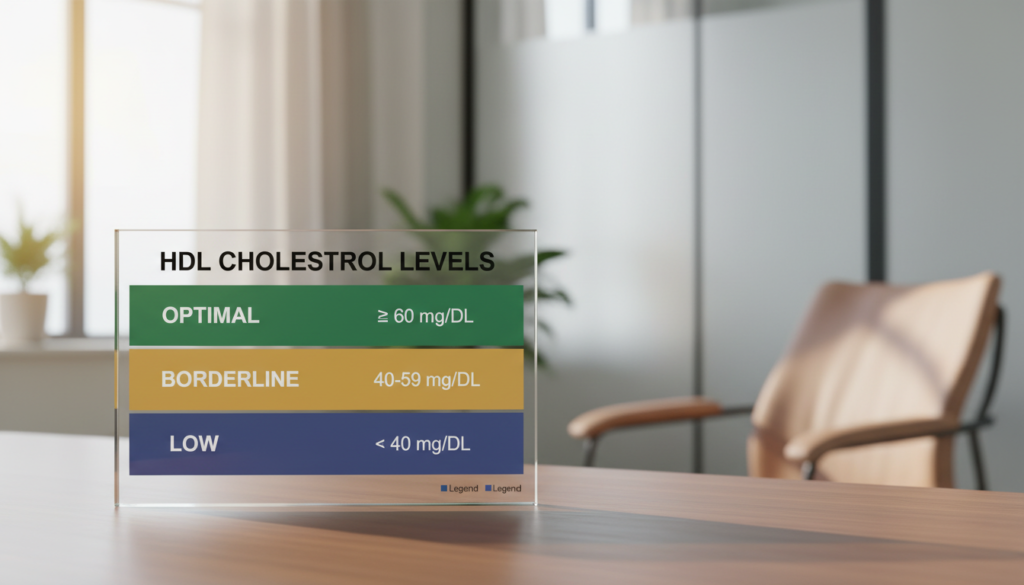
HDL Cholesterol Reference Values
The American Heart Association says the best HDL levels are 60 mg/dL or above. At this level, HDL helps protect against heart disease. But, values below certain levels are a warning sign:
- For males, an HDL below 40 mg/dL increases heart disease risk.
- For females, an HDL below 50 mg/dL is a warning.
- Total cholesterol should be under 200 mg/dL.
- LDL cholesterol should be less than 100 mg/dL.
| Biomarker | Desirable Level | At-Risk (Males) | At-Risk (Females) |
|---|---|---|---|
| HDL Cholesterol | 60 mg/dL or above | Below 40 mg/dL | Below 50 mg/dL |
| LDL Cholesterol | Below 100 mg/dL | 130 mg/dL or above | 130 mg/dL or above |
| Total Cholesterol | Below 200 mg/dL | 240 mg/dL or above | 240 mg/dL or above |
Units of Measurement
In the U.S., HDL cholesterol levels are measured in milligrams per deciliter (mg/dL). This means how many milligrams of cholesterol are in one deciliter of blood. Labs in other countries might use millimoles per liter (mmol/L), so you might need to convert.
Knowing the right unit is important. It helps patients and doctors understand lipid panel results correctly. This ensures they can accurately assess HDL levels and other important biomarkers like triglycerides.
What High Levels May Indicate
High HDL cholesterol, above 60 mg/dL, is seen as a shield against heart disease. It’s key for patients and doctors to understand its role in heart care. Yet, high HDL isn’t always a clear-cut good thing. Recent studies suggest a more complex story.
Potential Health Implications
HDL cholesterol plays a key role in reverse cholesterol transport. This means moving extra cholesterol from arteries to the liver. At 60 mg/dL or higher, this process works better. This leads to less plaque, lower stroke risk, and more flexible arteries.
HDL also carries antioxidants and anti-inflammatory agents. These protect blood vessel walls. Regular aerobic exercise boosts HDL. Omega-3s in fish like salmon also help.
Associations with Other Conditions
Very high HDL levels (over 100 mg/dL) might not always be good. A 2023 study in the Journal of the American College of Cardiology found high HDL can sometimes mean bad particles. This can be due to genetics, too much alcohol, or certain meds.
| HDL Level (mg/dL) | Risk Category | Typical Association |
|---|---|---|
| Less than 40 (men) / 50 (women) | High cardiovascular risk | Metabolic syndrome, sedentary lifestyle |
| 40–59 | Moderate risk | Average HDL cholesterol function |
| 60–99 | Lower risk | Active lifestyle, healthy diet |
| 100 or above | Uncertain benefit | Possible genetic variants, elevated HDL significance under review |
Doctors now look at more than just HDL numbers. They check particle size, function, and lipid balance. This gives a full picture of heart health.
What Low Levels May Indicate
When HDL levels drop, the body’s defense against artery plaque weakens. This means LDL particles can build up on artery walls more easily. Knowing why HDL levels are low is key to treating it.
Increased Cardiovascular Risk
The Framingham Heart Study found that heart attack risk goes up by about 25% for every 5 mg/dL drop in HDL. Low HDL is a big risk factor for heart attacks, even for those on statins.
Smoking is a major cause of low HDL. Quitting can raise HDL in just three months and cut heart disease risk in half after one year. Being inactive and eating too much trans fat or sugar also lowers HDL.
Potential Metabolic Concerns
Low HDL often goes hand in hand with metabolic syndrome, insulin resistance, and type 2 diabetes. Insulin resistance makes the liver produce more VLDL, which lowers HDL. Signs like acanthosis nigricans and belly fat may indicate this link.
Being overweight is another big factor. Losing 5–10% of body weight can significantly increase HDL. Here’s a table showing common causes of low HDL and their effects:
| Cause | Mechanism | Reversibility |
|---|---|---|
| Smoking | Reduces HDL production and increases oxidative stress | High — improves within 3 months of quitting |
| Obesity | Increases VLDL, accelerates HDL breakdown | Moderate — 5–10% weight loss raises HDL |
| High sugar diet | Elevates triglycerides, lowers HDL via CETP activity | High — dietary changes show results in weeks |
| Insulin resistance | Hepatic VLDL overproduction depletes HDL particles | Moderate — requires sustained lifestyle changes |
| Physical inactivity | Reduces lipoprotein lipase activity needed for HDL formation | High — regular exercise raises HDL by 5–10% |
Related Biomarkers
HDL cholesterol doesn’t work alone. It works with other components to show how well our heart is doing. Doctors use these markers to figure out risks and plan treatments.
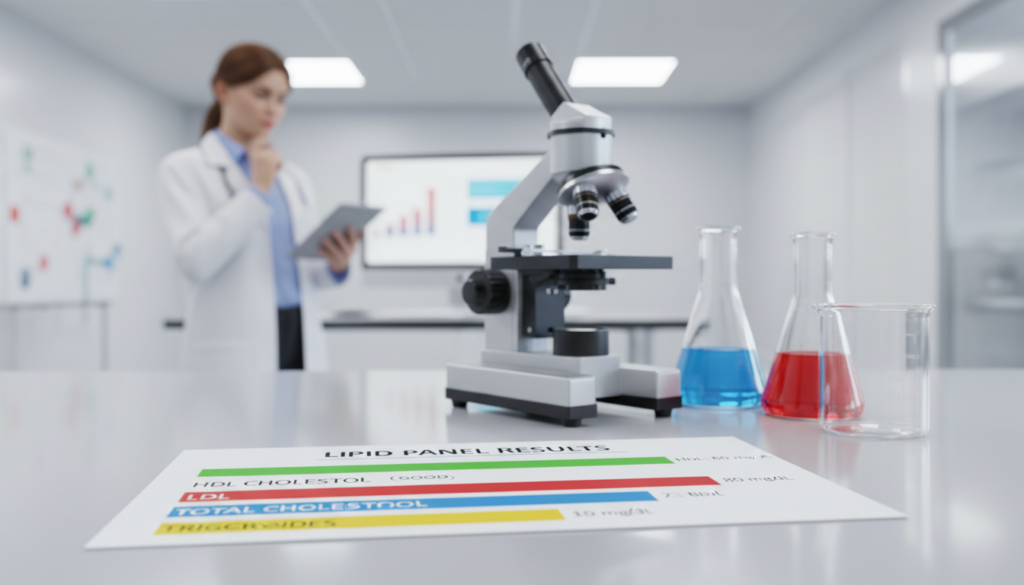
Total Cholesterol and LDL
LDL, or “bad” cholesterol, builds up in arteries. This can narrow blood vessels and cut off blood flow. VLDL, mostly triglycerides, also blocks arteries.
Total cholesterol is HDL, LDL, and VLDL combined. A test like Quest Diagnostics Panel Code checks all these. It helps doctors see how cholesterol levels are doing. Improving HDL is better when LDL and VLDL are also controlled.
Triglycerides and Their Significance
Triglycerides are fats stored for energy. High levels are linked to heart disease and diabetes. Lowering triglycerides helps HDL do its job better.
The American Heart Association suggests eating oily fish weekly. Foods like salmon and mackerel have omega-3s that lower triglycerides. This is a simple way to boost HDL naturally.
A normal triglyceride level is below 150 mg/dL, while levels above 200 mg/dL are considered high and require medical attention.
| Biomarker | Desirable Level (mg/dL) | Role in Heart Health |
|---|---|---|
| Total Cholesterol | Less than 200 | Overall lipid status indicator |
| LDL Cholesterol | Less than 100 | Primary driver of plaque buildup |
| HDL Cholesterol | 60 or higher | Removes excess cholesterol from arteries |
| Triglycerides | Less than 150 | Energy storage fat linked to cardiovascular risk |
| VLDL Cholesterol | Less than 30 | Carries triglycerides and contributes to arterial blockage |
Looking at all lipid panel components together gives a clearer picture of risk than any single measurement.
Factors That Affect Results
Many things can change HDL cholesterol levels on a blood test. Knowing how lifestyle and biology affect HDL helps both patients and doctors understand results better.
Gender and Age Variations
Biological sex is key in HDL levels. Women usually have higher HDL levels than men, thanks to estrogen. The American Heart Association says women with HDL below 50 mg/dL are at risk. For men, the risk starts at 40 mg/dL.
Age also affects HDL levels. As we get older, our body’s cholesterol handling slows down. This decline is more noticeable after menopause in women or after age 45 in men.
Impact of Diet and Lifestyle
What we eat greatly influences HDL levels. Foods high in soluble fiber like oats, black beans, and apples help. Doctors suggest eating 25 to 35 grams of fiber daily for best results.
Monounsaturated and polyunsaturated fats from olive oil and avocados also boost HDL. Foods like walnuts and flaxseed oil can improve lipid panel results over time.
Being active is a big factor in raising HDL. Exercising at 50–60% above resting heart rate, like walking two miles in 30 minutes, can significantly increase HDL levels.
| Factor | Effect on HDL | Recommended Action |
|---|---|---|
| Soluble Fiber (25–35 g/day) | Raises HDL modestly | Eat oats, beans, berries, chia seeds |
| Healthy Fats | Improves HDL levels | Use olive oil, avocados, walnuts |
| Aerobic Exercise | Increases HDL by 5–15% | Walk or bike 30 minutes, 5 days/week |
| Smoking Cessation | Raises HDL within weeks | Quit tobacco products entirely |
| Excess Alcohol | May lower HDL over time | Limit to 1 drink/day (women), 2 (men) |
Making dietary and activity changes can improve HDL levels. These changes also affect other biomarkers like triglycerides and LDL. Doctors consider these changes when looking at the bigger picture.
Clinical Context Considerations
HDL cholesterol levels don’t tell the whole story. Doctors need to look at many health markers and risk factors. This helps them understand a patient’s heart health better and decide on treatment.
Role in Comprehensive Lipid Panel
HDL is part of a lipid panel, which also includes LDL, VLDL, total cholesterol, and triglycerides. The American Heart Association suggests adults get this test every four to six years. Those at higher risk might need it more often.
Looking at HDL alone can be tricky. A full clinical assessment combines HDL with other lipids to create a complete risk picture. This is key before starting any treatment for HDL cholesterol.
| Lipid Marker | Optimal Range (mg/dL) | Primary Role in Risk Assessment |
|---|---|---|
| HDL Cholesterol | 60 or higher | Protective against artery plaque buildup |
| LDL Cholesterol | Less than 100 | Main driver of atherosclerosis |
| Triglycerides | Less than 150 | Linked to metabolic syndrome |
| Total Cholesterol | Less than 200 | Overall lipid burden snapshot |
Importance in Disease Risk Assessment
Doctors use risk calculators like the Pooled Cohort Equations to assess risk. These calculators consider HDL, age, blood pressure, smoking, and diabetes. They help doctors plan treatments based on risk.
Family history of heart disease can greatly affect risk. A detailed clinical assessment that looks at genetics, lifestyle, and current health provides the best guidance for prevention and care.
Limitations of the Test
HDL cholesterol testing is a key part of heart health checks. Yet, it has its downsides. Knowing the HDL test limitations helps both patients and doctors make better choices for heart health. A single lab report number doesn’t always tell the whole story.
Specificity and Sensitivity Challenges
Standard HDL tests only show the concentration of HDL particles in the blood. They don’t tell us how well those particles work. Studies in the Journal of the American College of Cardiology show that HDL’s benefits vary greatly among people, even with the same HDL levels.
Some key HDL test limitations are:
- They can’t check HDL particle size or subtype composition
- They don’t measure cholesterol efflux capacity (the ability to remove plaque from arteries)
- Genetic differences in HDL metabolism can make predictions less accurate in some groups
- Fasting is needed for 12 hours to get reliable results, and non-fasting samples can give false high triglycerides that affect HDL values
Potential for Misinterpretation
Low HDL and high LDL levels often have no obvious symptoms. This makes it hard to understand the results, as people might ignore them without feeling sick. A single HDL reading can change due to illness, medication, or stress.
“Relying on HDL concentration alone to predict cardiovascular outcomes is an oversimplification of a complex biological system.” — American Heart Association, 2023
| Factor | Impact on HDL Results | Risk of Misinterpretation |
|---|---|---|
| Non-fasting sample | Triglyceride elevation skews calculated values | High |
| Genetic polymorphisms | Altered HDL metabolism unrelated to lifestyle | Moderate |
| Acute inflammation | Temporary HDL suppression | Moderate |
| Recent alcohol intake | Artificially elevated HDL concentration | High |
These challenges highlight why HDL results should be looked at with other biomarkers and tests. This is something we’ll explore more in the next section on future research directions.
Future Directions in HDL Research
The study of HDL cholesterol is evolving. For years, doctors focused on increasing HDL numbers. Now, research is moving towards understanding how well HDL works, not just its quantity.
New Insights on HDL Functionality
Scientists are now looking at HDL’s size, shape, and cholesterol removal ability. This process, called cholesterol efflux capacity, might better predict heart disease risk than HDL levels alone. A 2020 study in the Journal of the American College of Cardiology found that efflux capacity offers unique insights.
Statins are being studied for their HDL-raising effects. Yet, lifestyle changes seem to work better. Some supplements also show promise:
- Niacin (vitamin B3) — may boost HDL by up to 30%
- Fish oil — mainly lowers triglycerides, with some HDL benefits
- Plant sterols — help remove cholesterol from the body
- Green tea extract — contains catechins that support heart health
- Berberine — from goldenseal, lowers LDL cholesterol
Emerging Biomarkers and Their Relevance
New markers are changing how doctors assess risk. They now look at apolipoprotein A-I levels, HDL particle number, and inflammatory proteins. These markers give a fuller picture of heart health.
| Biomarker | What It Measures | Clinical Value |
|---|---|---|
| Cholesterol Efflux Capacity | HDL’s ability to clear arterial cholesterol | Predicts cardiovascular events independently |
| Apolipoprotein A-I | Primary protein in HDL particles | Reflects HDL particle functionality |
| HDL Particle Number | Count of HDL particles in blood | May outperform standard HDL-C measurement |
These advancements mean treatments will soon be more personalized. With better testing, patients will get more accurate risk assessments.
References
This article uses HDL clinical guidelines and medical references from the U.S. These sources help healthcare professionals manage cholesterol and assess heart risk.
Peer-Reviewed Journals and Guidelines
The Centers for Disease Control and Prevention suggest cholesterol screenings for adults. The USDA Dietary Guidelines recommend eating 8 ounces of oily fish weekly for omega-3s. The American Heart Association advises 25 to 35 grams of dietary fiber daily for better cholesterol management.
Clinical Studies and Historical Data
Studies show moderate exercise for one hour a week can raise HDL levels. Research also finds a 5 to 10 percent weight loss improves HDL cholesterol. These results are key to preventing heart disease in the U.S.