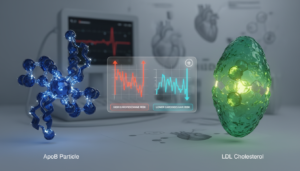
Non-HDL cholesterol is a key test in health checks. It shows how well the heart is working. It’s simple to figure out: just subtract HDL (the good cholesterol) from total cholesterol.
This test is special because it shows all bad cholesterol in the blood. It includes LDL, VLDL, IDL, and lipoprotein(a). A simple lipid panel test can give you your non-HDL number without extra cost or effort.
Studies in The Lancet and the Journal of the American College of Cardiology show its value. Non-HDL cholesterol is better at predicting heart disease risk than LDL alone. Some people might have normal LDL but face high risk from other particles. Non-HDL catches what LDL misses.
This test is also easy because you don’t need to fast. You can get your blood drawn at any time. For those checking their heart health, non-HDL gives a clearer picture.
Key Takeaways
- Non-HDL cholesterol equals total cholesterol minus HDL cholesterol and includes all harmful cholesterol particles.
- It is a stronger predictor of cardiovascular disease risk than LDL cholesterol on its own.
- The value is easily obtained from a routine lipid panel test without any additional blood work.
- Fasting is not required, making the test more convenient for patients and healthcare providers.
- Elevated non-HDL levels can signal increased heart risk even when LDL numbers appear normal.
- Major health organizations like the American Heart Association recognize non-HDL as a key metric in cardiovascular screening.
What the Test Measures
A standard lipid panel is the main blood test for checking cholesterol levels. You need to fast for 9 to 12 hours before the test. The test shows the fats in your blood, like total cholesterol, LDL, HDL, non-HDL, and triglycerides. All are measured in milligrams per deciliter (mg/dL).
Definition of Non-HDL Cholesterol
Non-HDL cholesterol is all cholesterol except HDL. You get it by subtracting HDL from total cholesterol. For example, if total cholesterol is 240 mg/dL and HDL is 40 mg/dL, non-HDL is 200 mg/dL. This number shows all the bad cholesterol in your blood, helping in assessing cholesterol levels.
Components of Non-HDL Cholesterol
Non-HDL cholesterol includes several harmful types of lipoproteins. Each one contributes to plaque buildup and atherosclerosis:
- LDL (low-density lipoprotein) — the main cause of artery plaque
- VLDL (very-low-density lipoprotein) — carries triglycerides and turns into LDL
- IDL (intermediate-density lipoprotein) — a step between VLDL and LDL
- Lipoprotein(a) — a genetically influenced particle that increases heart disease risk
LDL cholesterol alone doesn’t show the full picture. That’s why many doctors now use non-HDL as a better marker. Looking at the total cholesterol ratio and non-HDL helps understand a patient’s heart disease risk better.
| Component | Primary Role | Included in Non-HDL? |
|---|---|---|
| LDL | Deposits cholesterol in artery walls | Yes |
| VLDL | Transports triglycerides; converts to LDL | Yes |
| IDL | Intermediate step between VLDL and LDL | Yes |
| Lipoprotein(a) | Promotes clot formation and plaque growth | Yes |
| HDL | Removes excess cholesterol from arteries | No |
Why It Is Ordered
Doctors order non-HDL cholesterol tests for a good reason. They want to see more than just LDL. This test shows all the “bad” cholesterol in your blood. It’s key for preventing heart disease in many people.
Assessment of Cardiovascular Risk
Non-HDL cholesterol is great for those with conditions that make LDL readings tricky. The European Society of Cardiology says it’s a good alternative treatment target. This is true for patients with:
- High triglyceride levels
- Type 2 diabetes or metabolic syndrome
- Existing cardiovascular disease
- Obesity or insulin resistance
A study in The Lancet (2019) showed non-HDL cholesterol is a strong sign of heart problems. It spots particles like VLDL and lipoprotein(a) that LDL tests miss. This makes it a top choice for checking atherosclerosis risk in doctors’ offices.
Monitoring Patient Health
This test is not just for initial checks. It helps doctors keep an eye on cholesterol levels over time. It’s a plus that it does not require fasting, making it easy for regular visits.
Doctors use non-HDL results to decide on treatments and check if statins are working. It gives a clear picture of atherogenic burden at any time.
| Clinical Scenario | Reason for Ordering Non-HDL Test |
|---|---|
| High triglycerides (above 200 mg/dL) | LDL calculation becomes unreliable |
| Diabetes or metabolic syndrome | Captures hidden atherogenic particles |
| Statin therapy follow-up | Monitors treatment response accurately |
| Routine heart disease prevention screening | No fasting required, easy to schedule |
Knowing why this test is ordered helps us understand what the numbers mean. This is covered in the reference ranges that follow.
Normal Reference Range
Knowing where cholesterol levels are is key to checking heart health. A lipid panel test shows non-HDL cholesterol in milligrams per deciliter (mg/dL) or millimoles per liter (mmol/L). These numbers help doctors see the risk of heart disease and set goals for each patient.
Typical Values and Units
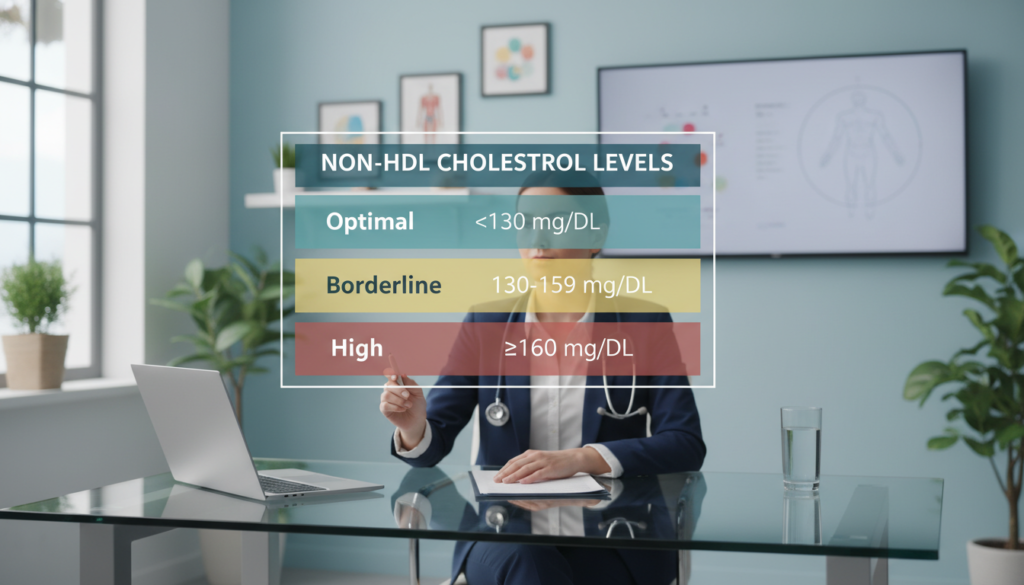
For adults at average risk, the best non-HDL cholesterol is below 130 mg/dL (3.4 mmol/L). A borderline high reading is between 130 and 159 mg/dL. Anything above 160 mg/dL is a big concern.
The National Lipid Association says non-HDL targets are about 30 mg/dL higher than LDL targets for the same risk level.
| Risk Category | Non-HDL Target (mg/dL) | Non-HDL Target (mmol/L) | Corresponding LDL Target (mg/dL) |
|---|---|---|---|
| Average Risk | Below 130 | Below 3.4 | Below 100 |
| High Risk | Below 130 | Below 3.3 | Below 100 |
| Very High Risk | Below 100 | Below 2.6 | Below 70 |
| Highest Risk | Below 85 | Below 2.2 | Below 55 |
Interpretation of Results
Doctors look at these numbers with the whole lipid panel test in mind, not just one number. For example, a patient with diabetes and heart attack history is at very high risk. Their non-HDL goal would be under 100 mg/dL, matching an LDL target of about 70 mg/dL.
“Non-HDL cholesterol captures the full burden of atherogenic lipoproteins, making it a more complete marker than LDL alone.”
— American College of Cardiology, 2023 Guidelines
Readings between 130 and 159 mg/dL need careful watching. Making lifestyle changes and getting tested again can show if cholesterol levels are rising. This early check helps prevent serious heart problems.
What High Levels May Indicate
High non-HDL cholesterol levels mean atherogenic particles are building up in your blood. These particles can cause plaque in your arteries. Knowing this helps both patients and doctors take action to prevent heart disease.
Potential Health Risks
Non-HDL cholesterol over 130 mg/dL signals a growing risk of atherosclerosis. High levels of LDL, VLDL, and other harmful particles can narrow arteries. This reduces blood flow to the heart and brain.
An LDL level over 190 mg/dL is a big cardiovascular risk. Non-HDL shows an even bigger picture of danger.
When triglycerides go over 200 mg/dL with high non-HDL, the risk grows. This combo speeds up plaque buildup. It also increases the chance of a rupture event, which can lead to heart attack or stroke. About 75% of our cholesterol is made inside our bodies. So, cholesterol medication is often needed when diet and exercise aren’t enough.
| Non-HDL Level (mg/dL) | Risk Category | Recommended Action |
|---|---|---|
| Less than 130 | Optimal | Maintain current lifestyle |
| 130–159 | Borderline High | Lifestyle modifications, reassess in 3–6 months |
| 160–189 | High | Medication evaluation with lifestyle changes |
| 190 or above | Very High | Aggressive pharmacologic intervention |
Associated Conditions
Elevated non-HDL cholesterol is linked to several chronic conditions:
- Atherosclerosis — progressive plaque buildup that narrows arteries
- Metabolic syndrome — a cluster of conditions including high triglycerides, elevated blood pressure, and insulin resistance
- Type 2 diabetes — which often worsens lipid imbalances
- Familial hypercholesterolemia — a genetic disorder causing extremely high cholesterol from birth
- Chronic kidney disease — which disrupts lipid metabolism and raises cardiovascular risk
Regular blood tests track these changes. They help make sure treatment plans work over time.
What Low Levels May Indicate
Low non-HDL cholesterol levels are usually good news. Studies in The Lancet found that lower levels mean less plaque in arteries and fewer heart problems. But, very low readings need extra attention.
Potential Implications of Low Levels
There’s no bad lower limit for non-HDL cholesterol. Most people aim for levels under 130 mg/dL for heart health. But, some factors can cause very low levels:
- Hyperthyroidism — an overactive thyroid speeds up cholesterol metabolism
- Malabsorption disorders such as celiac disease or Crohn’s disease
- Chronic malnutrition or severely restricted diets
- High-dose statin therapy or combination lipid-lowering medications
- Rare genetic conditions like hypobetalipoproteinemia
Associated Health Considerations
Very low cholesterol readings don’t always mean trouble. Doctors look at the big picture of a patient’s health. They consider nutrition, liver function, and medications.
Managing cholesterol is about finding the right balance. For those on strong statins, doctors might adjust doses if levels get too low. This is to avoid symptoms like fatigue or muscle weakness.
The American Heart Association stresses that treatment choices should consider total heart risk, not just one number.
Knowing what low values mean helps both patients and doctors make better choices. They look at other important biomarkers like LDL, HDL, and triglycerides.
Related Biomarkers
Non-HDL cholesterol is not alone. Many biomarkers work together to show how well our heart is doing. Knowing about each one helps doctors and patients make better choices for heart health.
LDL and HDL Cholesterol
LDL cholesterol is called “bad” cholesterol. It carries fat to the arteries, which can lead to plaque. The American Heart Association suggests keeping LDL below 100 mg/dL for most adults.
HDL cholesterol is the opposite. It’s called “good” cholesterol because it helps remove excess cholesterol from the blood. A higher HDL level is good for you. The total cholesterol ratio shows how balanced your lipids are.
Triglycerides and Their Role
Triglycerides are fats stored for energy. They are part of VLDL particles, which are included in non-HDL. High triglycerides make LDL formulas less accurate, making non-HDL a better marker.
Apolipoprotein B (ApoB) testing is similar to non-HDL but costs more. For most cases, tracking triglycerides with non-HDL gives good insight at a lower cost.
| Biomarker | Desirable Level (mg/dL) | Primary Function |
|---|---|---|
| LDL cholesterol | Below 100 | Delivers cholesterol to tissues; raises plaque risk when elevated |
| HDL cholesterol | 60 or above | Returns excess cholesterol to the liver for disposal |
| Triglycerides | Below 150 | Stores energy; carried by VLDL particles |
| Non-HDL cholesterol | Below 130 | Captures all atherogenic particles in one number |
| Total cholesterol ratio | Below 5:1 | Compares total cholesterol to HDL for quick risk assessment |
Looking at these biomarkers together helps doctors understand heart health better. The next section will talk about how diet and medications can affect these numbers.
Factors That Affect Results
Non-HDL cholesterol levels can change due to many factors. Everyday habits and health conditions can either increase or decrease these numbers. It’s important to understand these factors for effective cholesterol management and assessing cardiovascular disease risk.
Influence of Diet and Lifestyle
What you eat greatly affects your non-HDL cholesterol levels. Foods high in saturated fats, trans fats, and cholesterol can raise them. On the other hand, foods rich in fiber, omega-3s, and plant sterols can lower them.
The University of Rochester Medical Center notes that smoking, exercise, and fasting status before testing also impact results.
Regular physical activity is key. Aim for at least 150 minutes of moderate exercise weekly to improve your cholesterol profile. Losing 5–10% of body weight can also reduce non-HDL cholesterol, helping prevent heart disease.
- Saturated and trans fats raise non-HDL cholesterol
- Fiber and omega-3s lower non-HDL cholesterol
- Smoking reduces HDL, indirectly increasing non-HDL calculations
- Regular exercise improves overall lipid balance
Medical Conditions and Medications
Some health conditions can alter non-HDL results. Diabetes, hypothyroidism, chronic kidney disease, and liver disorders all impact lipid metabolism and increase cardiovascular disease risk.
Medications have a mixed effect. Some lower non-HDL levels, while others increase them.
| Category | Effect on Non-HDL | Examples |
|---|---|---|
| Lipid-lowering drugs | Decrease | Statins, ezetimibe, PCSK9 inhibitors, fibrates |
| Corticosteroids | Increase | Prednisone, dexamethasone |
| Beta-blockers | Increase | Atenolol, metoprolol |
| Immunosuppressants | Increase | Cyclosporine, tacrolimus |
Always tell your healthcare provider about all medications and supplements you take. This information is vital for accurate heart disease prevention planning and interpreting results.
Clinical Context Considerations
Non-HDL cholesterol means different things for different people. Doctors must consider many factors when looking at cholesterol levels. These include age, sex, ethnicity, and health conditions.
Use in Different Populations
The American College of Cardiology and the American Heart Association set cholesterol targets based on a patient’s 10-year cardiovascular risk score. People with diabetes or chronic kidney disease need more careful cholesterol management. This is because their risk of atherosclerosis is higher.
Those with established heart disease are at the highest risk. Their non-HDL cholesterol target is usually below 130 mg/dL. For very high-risk patients, doctors might aim even lower. Age and sex also play a role in cholesterol levels, making it important to interpret results for each population.
| Population | Non-HDL Target (mg/dL) | Atherosclerosis Risk Level |
|---|---|---|
| Low-risk adults | Less than 160 | Low |
| Moderate-risk adults | Less than 160 | Moderate |
| Patients with diabetes | Less than 130 | High |
| Chronic kidney disease | Less than 130 | High |
| Established cardiovascular disease | Less than 100 | Very High |
Integration with Other Diagnostic Tests
A lipid panel test is not used alone in making medical decisions. Doctors combine it with other tests to understand heart health fully. These include:
- Electrocardiogram (ECG) — checks heart rhythm and electrical activity
- Stress testing — looks at heart function during exercise
- Echocardiogram — images the heart’s structure
- High-sensitivity C-reactive protein (hs-CRP) — measures inflammation in blood vessels
- Lipoprotein(a) and apolipoprotein B — adds to the risk of atherosclerosis
This approach helps doctors decide who needs strong treatment and who can change their lifestyle. Knowing how medicines and health conditions affect results is key to this strategy.
Limitations of the Test
No single lab value tells the full story of a patient’s health. Non-HDL cholesterol is a powerful tool, but it has its limits. These limits affect how we understand and use the results.

Specificity and Sensitivity Issues
A lipid panel test gives a single number for non-HDL cholesterol. This number combines LDL, VLDL, IDL, and lipoprotein(a) into one. It doesn’t show the differences between these particles.
Particle size and density are important too. Small, dense LDL particles are more harmful than large ones. The standard test can’t tell the difference. This might make the risk seem lower than it really is for some people.
Contextual Limitations in Clinical Use
Temporary changes can affect test results. Things like illness, surgery, and pregnancy can change lipid levels. The American Heart Association suggests retesting after recovery to get accurate results.
Non-HDL cholesterol doesn’t measure inflammation or check how well the blood vessels work. Both are important for heart disease risk. Relying only on this test might miss important information.
| Limitation | Clinical Impact | Recommended Action |
|---|---|---|
| Cannot distinguish atherogenic subtypes | May miss Lp(a) or IDL-specific abnormalities | Order advanced lipid testing when needed |
| No particle size data | Underestimates risk from small, dense LDL | Consider NMR lipoprofile or ion mobility assay |
| Affected by acute illness or pregnancy | Results may not reflect true baseline | Retest 6–8 weeks after recovery |
| Does not assess inflammation | Misses residual cardiovascular disease risk | Add hs-CRP or other inflammatory markers |
Knowing these limits helps doctors use non-HDL cholesterol with other tests. This is discussed in more detail in the references and guidelines that follow.
References
This article uses medical research and guidelines to talk about non-HDL cholesterol. These sources help doctors manage cholesterol and prevent heart disease in the U.S. and worldwide.
Medical Journals and Clinical Guidelines
The European Society of Cardiology and the European Atherosclerosis Society have guidelines. They set non-HDL targets about 30 mg/dL above LDL goals. Harvard Health publications say non-HDL cholesterol doesn’t need fasting, making it easy to use in clinics.
The StayWell Company provides standards for labs to better understand non-HDL results.
Authoritative Health Organizations
The American Heart Association sees non-HDL cholesterol as a key risk marker, mainly for those with high triglycerides. The Heart Research Institute studies atherosclerotic plaque and supports using non-HDL in heart disease prevention. These groups offer a solid base for managing cholesterol in medical practice.