About 60% to 70% of white blood cells in our bodies are neutrophils. They are the most common immune cells in our blood. When the bone marrow sends out immature neutrophils, or band cells, at a higher rate, it’s a sign of a big change in our immune system.
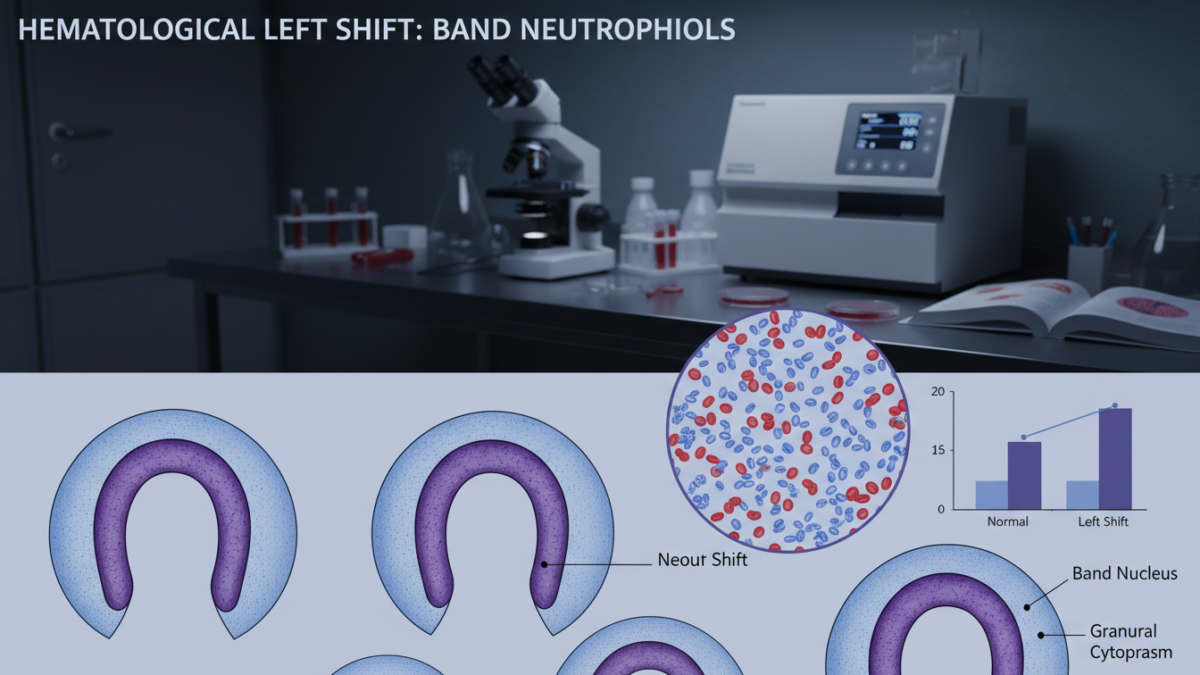
The term “left shift” comes from a German doctor named Josef Arneth. He studied neutrophils in the 1920s. He found that immature neutrophils, or band cells, were on the left side of his graph. When there were more of these cells, the curve moved to the left, earning the name “left shift.”
In medical terms, a left shift is when there are more than 700 band cells per microliter of blood. This shows up on a blood test. It means the body is fighting off an infection, damage, or stress.
Seeing immature neutrophils in the blood is important for doctors. These cells shouldn’t be in the blood unless the body needs more immune cells. Their presence means the body is calling for help to fight off something.
Key Takeaways
- Band neutrophils are immature forms of neutrophils released from the bone marrow before full maturation.
- A band neutrophils left shift refers to an increased proportion of these immature cells in peripheral blood.
- The term “left shift” originates from Josef Arneth’s 1920s nuclear segmentation graph of neutrophils.
- An absolute band count greater than 700 per microliter is a standard threshold for identifying a left shift.
- A left shift blood test result commonly reflects an inflammatory leukogram associated with infection or tissue injury.
- The detection of immature neutrophils serves as an early clinical marker of increased immune system demand.
Understanding Neutrophils: The Body’s First Line of Defense
Neutrophils are the most common white blood cells in our blood. They fight off bacteria. Knowing how they grow and what they do helps us understand blood tests, like the band neutrophils normal range.
What Are Neutrophils?
Neutrophils are a type of white blood cell made in the bone marrow. They stay in the blood for a few hours before moving into tissues. The bone marrow makes new ones about four to six times a day in healthy people.
Things like colony-stimulating factors and interleukins help make more neutrophils.
Types Based on Maturation Stage
Neutrophils are sorted by how mature they are. Each stage looks different:
| Maturation Stage | Nucleus Shape | Capable of Division | Location |
|---|---|---|---|
| Myelocyte | Round | Yes | Bone marrow |
| Metamyelocyte | Kidney-bean / indented | No | Bone marrow |
| Band neutrophil | Horseshoe / parallel-sided | No | Bone marrow and blood |
| Segmented neutrophil | Multi-lobed (2–5 lobes) | No | Blood and tissues |
An elevated neutrophil count, with more band forms, shows the bone marrow is working hard to fight off infection.
How Neutrophils Function
Neutrophils quickly move to where infections are. They eat bacteria and kill them with special enzymes. The most mature ones do this best.
Band neutrophils are a bit younger but can also help when they are released early from the bone marrow. This is important when the body is under stress.
The Concept of Left Shift
When the bone marrow sends out immature neutrophils quickly, a special pattern shows up in blood tests. This pattern is seen in labs as a key sign of the body’s fight against infection. Knowing what a left shift is and why it happens is key to understanding blood tests.
Definition of Left Shift
A left shift means there are more young neutrophils in the blood. These are called band cells. It’s seen when band cells make up more than 15% of white blood cells or when there are over 7,700 band cells per microliter. This is called bandemia.
Bandemia shows the bone marrow is working hard to make more neutrophils. This happens when the body needs them fast. Sometimes, the bone marrow also works hard to make red blood cells when there’s not enough.
Clinical Significance of Left Shift
A left shift means the body is fighting an infection or dealing with stress. It can also mean there’s inflammation or not enough blood flow.
- Active bacterial or systemic infection
- Tissue hypoxia or circulatory shock
- Acute inflammatory processes
When there’s a left shift, neutrophils might look different under a microscope. They might have special changes like more color in their cells or tiny dots inside them.
| Indicator | Normal Range | Left Shift Threshold |
|---|---|---|
| Band Neutrophil Ratio | 0–5% of WBC | >15% of WBC |
| Absolute Band Count | >7,700/µL | |
| Toxic Granulation | Absent | Present in bandemia |
Bandemia is important because it warns doctors of possible problems. It means they need to do more tests to find out what’s going on.
Causes of Left Shift in Band Neutrophils
Many health issues make the bone marrow send out immature band neutrophils. These issues range from infections to injuries. Each one makes the marrow work harder than it can.
Infections
Bacterial infections are a big reason for this. When bacteria attack, the body sends out signals. These signals tell the marrow to make more neutrophils fast.
But these cells are not fully grown yet. They are released before they are ready.
Inflammation and Tissue Injury
When we get hurt or have surgery, our neutrophils get used up fast. The body tries to make more by sending out signals. But it can’t keep up, and we see more band neutrophils.
Some cancers also make the marrow work too hard. This is like a big stress on the body.
Stress Responses
Stress, like pain or shock, makes the body release more neutrophils. This is because of a hormone called cortisol. It helps the body deal with stress by sending out more cells.
But sometimes, cancers can make the marrow make too many immature cells. This is not because of stress, but because of the cancer itself.
| Trigger Category | Key Cytokines Involved | Onset of Left Shift |
|---|---|---|
| Bacterial Infection | IL-1, IL-6, TNF-α, G-CSF | Within hours |
| Tissue Injury / Inflammation | GM-CSF, IL-6, G-CSF | Hours to days |
| Physiological Stress | Cortisol-mediated release | Within hours |
| Neoplastic / Paraneoplastic | IL-6, G-CSF | Variable |
Identifying Band Neutrophils in Blood Tests
Finding band neutrophils in blood tests needs careful lab work. Both machines and skilled eyes are used. Knowing how bands CBC results are made helps us understand their meaning in health care.

Complete Blood Count (CBC) Overview
A complete blood count checks many things in your blood. It looks at red and white blood cells, platelets, and hemoglobin. It also breaks down white blood cells into different types.
Band neutrophils are found by looking at blood under a microscope. A trained person counts each cell to find band neutrophils. Machines can’t always tell the difference between young and old neutrophils.
Interpreting Band Neutrophil Levels
Understanding band neutrophils means knowing what they look like. They have a special shape and look different when they’re fighting an infection. They also have a light area around them when next to red blood cells.
It can be hard to tell band neutrophils from monocytes. Here’s how they differ:
| Feature | Band Neutrophils | Monocytes |
|---|---|---|
| Nuclear Shape | Horseshoe or C-shaped, unsegmented | Kidney-shaped, pleomorphic, centrally located |
| Cell Size | Smaller than monocytes | Larger than immature neutrophils |
| Chromatin Pattern | Clumped, condensed | Lacy, open pattern |
| Cytoplasm Color | Pink to light purple with granules | Uniformly blue-gray |
| Cytoplasmic Rim Against RBCs | Light rim | Dark rim |
| Vacuoles | Rare unless toxic changes present | Small, discrete-margined vacuoles common |
Spotting band neutrophils on a CBC is key. It helps doctors see if there’s an infection and what to do next.
Clinical Implications of Elevated Band Neutrophils
Elevated band neutrophils in blood mean different things based on the disease. These young cells show how severe and how a disease is going. They help doctors understand the disease’s impact.
Acute vs. Chronic Conditions
There’s a big difference between degenerative and regenerative left shifts. A degenerative left shift means more young cells than mature ones. This shows severe inflammation, often from bacteria.
This is common in animals with sudden illnesses like mastitis or metritis. Horses with severe endotoxemia also show this.
A regenerative left shift means more mature cells than young ones. This shows the bone marrow is working hard to fight inflammation. It means the body is trying to keep up with the fight.
| Left Shift Type | Mature vs. Immature Ratio | Clinical Interpretation |
|---|---|---|
| Degenerative | Immature forms exceed mature | Severe inflammation, poor marrow reserve |
| Regenerative | Mature forms exceed immature | Active marrow response, myeloid hyperplasia |
Prognostic Value
Elevated band neutrophils are good signs for doctors. They show how a disease might end. A degenerative pattern with falling white cell counts means a tough road ahead.
Very high neutrophil counts can mean the bone marrow is working hard. Even without a left shift, it’s a sign of active fight. Watching these markers over time helps doctors see how the disease is doing.
Conditions Associated with Left Shift
A left shift in band neutrophils is a sign in many health issues. It helps doctors tell apart bacterial infections, viral infections, and other problems with the bone marrow.
Bacterial Infections
Bacterial infections like peritonitis and aspiration pneumonia show certain signs. These signs include changes in WBC and left shift patterns. Pyelonephritis that turns into sepsis also has these signs.
These signs happen in five stages:
- First phase (0–10 hours): WBC count goes down but stays within normal range.
- Second phase (10–20 hours): WBC stays low, and a left shift starts.
- Third phase (1 to several days): WBC count goes up with a left shift that doesn’t go away.
- Fourth phase: WBC count stays high, but the left shift goes away.
- Fifth phase: WBC count goes back to normal.
Viral Infections
Viral infections make neutrophils move to the marginal pool. This lowers their count in the blood. The bone marrow then makes more neutrophils.
Important signs of viral infections include not having high CRP levels. This helps doctors tell if it’s a viral or bacterial infection.
Other Pathological Conditions
Many non-infectious conditions also cause a left shift. These include bone marrow problems, leukemia, and severe damage to the marrow. They release immature neutrophils into the blood without harmful changes.
Pelger-Huët anomaly is a genetic issue that looks like a severe left shift. But it doesn’t have the harmful changes or vacuolization seen in infections.
It’s key to know if there are toxic changes or not. This helps figure out if it’s an infection or not.
| Condition Category | Left Shift Present | Toxic Changes | CRP Elevation |
|---|---|---|---|
| Bacterial Infections | Yes (phases 2–3) | Typically present | Moderate to high |
| Viral Infections | Mild or absent | Absent | Low or absent |
| Leukemia / Marrow Disorders | Yes | Absent | Variable |
| Pelger-Huët Anomaly | Apparent (pseudo) | Absent | Normal |
The Role of Band Neutrophils in Infections
Band neutrophils are key in fighting infections. They rush into the blood when the body uses up neutrophils too fast. This is why seeing a left shift is important in medical tests.
Innate Immunity
Neutrophils are vital for our body’s first defense. They quickly move to where bacteria are, eating them up. When infections start, the number of neutrophils in the blood goes down.
After 12 to 20 hours, the bone marrow starts sending out new neutrophils. When the blood runs low, the marrow sends out band cells. This shows the body is fighting hard against the infection.
Response During Sepsis
Sepsis is a big challenge for neutrophils. In severe cases, the body uses up neutrophils faster than it can make more. Key signs of sepsis include:
- High band neutrophil counts, showing the marrow is working hard
- Dohle bodies in neutrophils, meaning the body is under stress
- Low white blood cell counts with a left shift, showing the body can’t keep up
| WBC Count | Left Shift Present | Clinical Interpretation |
|---|---|---|
| High | Yes | The marrow is responding well to the infection |
| Normal | Yes | The infection is early or not too bad; band count helps diagnose |
| Low | Yes | The marrow is exhausted; this is a bad sign |
Studies show band neutrophil counts are most useful when total neutrophil counts are low or normal. Seeing bands in these cases points to a bacterial infection and helps doctors decide what to do next.
Diagnostic Evaluation of Left Shift
To confirm a left shift, we need a careful plan. This plan mixes lab tests with a deep look at the patient’s history. Alone, lab results or patient history aren’t enough. We must use both to understand what’s happening.
Laboratory Procedures
The manual differential count is key in lab tests for left shift. Even though machines can spot young cells, a human touch is better. Studies show mixing machine and manual counts is more accurate for finding infections.
Manual counts should be done every 24 hours. This helps track changes closely. In serious infections, like peritonitis or pneumonia, changes in cell ratios show up quickly. This lets doctors see the shift from the start to the end.
| Diagnostic Method | Sensitivity for Bacterial Infection | Recommended Frequency |
|---|---|---|
| Automated Differential Alone | Moderate | At each CBC draw |
| Manual Differential Alone | High | Every 24 hours minimum |
| Combined Automated and Manual | Highest | Every 24 hours minimum |
Importance of Clinical History
Understanding the patient’s story is vital. Knowing when the infection started and how it’s changed helps. It tells us if the high band counts mean the infection is active or getting better.
Band counts are more useful in young and old patients. Knowing how their immune systems work helps doctors make better decisions. This makes lab results more reliable and care more effective.
Treatment Considerations for Left Shift
Managing a left shift means finding and fixing what caused it. It’s not a disease but a sign of something wrong. We need to focus on the real problem, not just the numbers.
Addressing Underlying Causes
Bacterial infections often cause high band counts. We use antibiotics based on lab tests to fight these infections. Sometimes, surgery is needed to clean out the infection.
Starting treatment quickly helps. We see band neutrophil counts go down as the infection gets better. This shows we’re winning the fight against the infection.
Therapeutic Approaches
Watching the white blood cell count helps us see if treatment is working. We use certain markers to make decisions:
- Band and immature neutrophil counts go down as the infection gets better
- Total WBC goes back to normal when the left shift goes away
- CRP peaks 20–72 hours after the disease starts
- CRP stays high even 150 hours after the disease starts, showing it takes longer to go back down
| Marker | Response Time | Resolution Pattern |
|---|---|---|
| Band Neutrophils | Days | Rapid decline with effective therapy |
| Total WBC | Days | Normalizes in parallel with band counts |
| CRP | 20–72 hours to peak | Delayed normalization; may stay elevated post-recovery |
Band neutrophil trends are a quicker sign of treatment success than CRP. This shows why we keep checking CBC levels during infections.
Monitoring and Follow-Up
Watching band neutrophil levels over time is key to understanding bacterial infections and how well treatments work. It’s important to have clear plans for follow-ups. This lets doctors see if a patient is getting better, staying the same, or getting worse.
Doing lab tests again and again gives a close look at how the body fights off infection.
Importance of Serial CBCs
A single blood test only shows a moment in time. But doing CBCs over and over shows how the body’s immune system changes. Band neutrophil ratios start going up 8 to 20 hours after an infection starts. They reach their highest point at 24 to 48 hours and then start to go back down.
Immature cells show changes a few hours before band cells do. This makes early tests very useful.
By looking at WBC counts and left shift findings, researchers found five distinct phases of bacterial infection. This helps doctors use set plans for checking on patients in real time.
Interpreting Trends in Neutrophil Counts
CBC trends change based on the type and how bad the infection is. Here’s a comparison:
| Condition | WBC Behavior at 72 Hours | Left Shift Pattern |
|---|---|---|
| Pyelonephritis / Sepsis | Marked decrease toward baseline | Rapid resolution of band elevation |
| Peritonitis / Pneumonia | Sustained high counts | Prolonged or persistent left shift |
Changes in neutrophil counts usually follow WBC patterns. Sometimes, WBC counts start going down between 40 and 150 hours after the infection starts. Other times, they keep going up, which might mean the infection is not fully cleared.
- Serial monitoring captures immune response trajectory that a single test cannot.
- CBC trends help differentiate resolving infections from persistent or complicated ones.
- Structured follow-up protocols guide the timing and frequency of repeat laboratory draws.
These findings show how important it is to do tests again and again. This is something we’ll look at more in the next section on the limits of diagnosis and how to avoid mistakes.
Limitations and Misinterpretations of Left Shift
A left shift on a blood smear is not always easy to understand. Several issues can lead to wrong conclusions. It’s key to know these problems for accurate tests and good patient care.
False Positives and Negatives
Some severe infections don’t show high white blood cell or band neutrophil counts. Conditions like endocarditis, meningitis, and deep-seated abscesses are hard to interpret. In endocarditis, neutrophils fight bacteria in the blood. The bone marrow might not send out many immature cells.
In meningitis and walled-off abscesses, neutrophils can’t easily get to the infection. So, they are not used up in the blood.
Viral infections and acute hemorrhage can cause a left shift with low total WBC counts. These conditions usually don’t have the high C-reactive protein (CRP) seen in bacterial infections. Knowing this helps avoid wrong diagnoses.
The presence or absence of a left shift should never be interpreted in isolation from the broader clinical and laboratory picture.
Changes in neutrophils without a left shift might mean cell mistakes or rare conditions like myeloid leukemia.
Variability in Patient Populations
Each patient is different when it comes to left shift meaning. Reference values for band neutrophils are based on healthy people. A small increase might not mean anything if there’s no other sign of infection.
| Factor | Impact on Left Shift Interpretation |
|---|---|
| Age (neonates vs. adults) | Neonates have higher baseline band counts, raising false-positive risk |
| Pregnancy | Physiologic leukocytosis may mimic pathological left shift |
| Chronic disease | Blunted marrow response may mask expected left shift |
| Immunosuppression | Reduced neutrophil production leads to false-negative results |
These factors show why we must think about test limits, along with the patient’s history and ongoing lab checks. This is talked about in the section before this on follow-up plans.
Future Research Directions
The study of neutrophils is growing. Scientists are learning more about how neutrophils are made and work. They want to get better at diagnosing diseases and find new ways to treat them.

New Insights into Neutrophil Function
Studies are looking at how certain proteins, like G-CSF, GM-CSF, IL-1, and IL-6, control neutrophils. These proteins help decide when and how many neutrophils are made. Researchers are also studying how neutrophils move and leave the bone marrow in healthy and sick people.
Some cancers can make neutrophils by sending out proteins. This is a big area of study. It helps us understand why some people’s neutrophils act differently. Scientists are also looking at how different animals’ bone marrow works.
Potential Therapeutic Targets
Finding ways to treat neutrophil problems is a main goal. Researchers are looking at proteins on neutrophils and how they talk to each other. This could lead to new treatments.
| Area of Investigation | Focus | Clinical Relevance |
|---|---|---|
| Cytokine Regulation (G-CSF, IL-6) | Marrow release mechanisms | Sepsis, inflammatory disorders |
| Automated vs. Manual Differentials | Band count accuracy | Bacterial infection prediction |
| Paraneoplastic Granulopoiesis | Tumor-derived cytokine effects | Oncologic diagnostics |
| Neutrophil Kinetics Modeling | Margination and egress rates | Disease monitoring |
There’s a debate about using machines or people to count neutrophils. Making these methods consistent is key. It will help doctors better use neutrophil counts to diagnose diseases.
Conclusion: The Significance of Band Neutrophils
Band neutrophils are very important in medical studies. They help us see how our body fights off infections and inflammation. A high band-to-white blood cell ratio means our body is making more neutrophils to fight off infections.
Summary of Key Points
Checking band neutrophils is key to tracking infections. It shows how well our body is fighting off bacteria. By using both manual and automated counts, doctors can better see if treatments are working.
The Future of Neutrophil Research
New studies are uncovering more about neutrophils. This is important for both humans and animals. Research is looking into how to use neutrophil data to make quicker and more accurate medical decisions.