Neutrophils are a big part of our white blood cells, making up 55–70%. But, many people only look at the total white blood cell count. The absolute neutrophil count gives a clearer picture of our immune health.
The absolute neutrophil count shows how many neutrophils are in one microliter of blood. It’s found by multiplying the total white blood cell count by the percentage of mature and immature neutrophils. This number is very important for making health decisions, like checking for infection risk.
In healthy adults in the U.S., the ANC should be between 1,500 and 8,000 cells per microliter. Numbers outside this range can mean problems like bone marrow issues or infections. It’s key to understand both the math and the health context of the ANC.
To get the ANC, a complete blood count with differential is used. This test shows each white blood cell type by percentage. Without this, the total count might hide important changes in neutrophil levels.
Key Takeaways
- The absolute neutrophil count measures the total number of neutrophils per microliter of blood, providing a targeted view of immune defense capacity.
- ANC calculation requires multiplying the total white blood cell count by the percentage of both segmented neutrophils and bands.
- Normal adult ANC values range from 1,500 to 8,000 cells/µL in standard laboratory reporting.
- Neutrophil count interpretation is more clinically useful than total white blood cell count for evaluating infection risk.
- A complete blood count with differential is the primary test used in white blood cell analysis to generate the data needed for ANC determination.
- Values falling below or above the reference range may indicate underlying hematologic, infectious, or inflammatory conditions.
What is Absolute Neutrophil Count?
The absolute neutrophil count (ANC) shows how many neutrophils are in your blood. It’s more than just a percentage. It gives a clear number of immune cells fighting off infections. Knowing the ANC normal range helps doctors see if you can fight off infections well.
Understanding Neutrophils and Their Role
Neutrophils are polymorphonuclear leukocytes made in the bone marrow. They are the most common white blood cells, making up 55–70% of them. Neutrophils fight off microbes by eating them up.
There are two main types of neutrophils:
- Segmented neutrophils (polys) — fully grown cells ready to fight
- Band neutrophils (stabs) — young cells from the bone marrow, often seen in infections
Both types release substances that kill bacteria, fungi, and other harmful things.
Importance of ANC in Medical Diagnosis
The ANC is very important in medicine. Doctors use it to check if you’re at risk for infections. It helps them decide how much medicine to give you.
| ANC Value (cells/µL) | Classification | Infection Risk Level |
|---|---|---|
| 1,500–8,000 | Within ANC normal range | Low |
| 1,000–1,500 | Mild neutropenia | Moderate |
| 500–1,000 | Moderate neutropenia | High |
| Below 500 | Severe neutropenia | Critical |
If your ANC is below 500, you’re at high risk for serious infections. The next parts will explain how to measure and calculate ANC accurately.
How ANC is Measured
To find the absolute neutrophil count, a lab process is used. A complete blood count with differential is the main tool. This test counts all white blood cells and shows their types, like neutrophils and bands.
Blood Tests and Sample Collection
A CBC test takes blood from a vein in your arm. The blood goes into a tube with ethylenediaminetetraacetic acid (EDTA) to stop clotting. Machines then count and sort the cells, including neutrophils.
Reference Ranges for Healthy Individuals
Normal ANC values vary by lab and guidelines. Here are common ranges:
| Source | Normal ANC Range (cells/µL) |
|---|---|
| Standard Hematology References | 1,500–8,000 |
| Cancer Treatment Guidelines | 2,500–6,000 |
| Newborns (first 24 hours) | 6,000–26,000 |
Counts under 1,500 cells/µL are low, or neutropenia. Counts over 8,000 cells/µL might mean neutrophilia.
Factors Influencing ANC Levels
Many things can change ANC results:
- Time of day — cortisol changes affect neutrophil counts
- Physical activity — exercise moves neutrophils into the blood
- Emotional stress — stress releases neutrophils from the bone marrow
- Recent meals — eating can briefly raise counts
- Age — newborns have high counts that drop as they grow
Knowing these factors helps understand blood test results better. Taking blood tests under the same conditions helps get accurate results.
Calculating Absolute Neutrophil Count
To find the absolute neutrophil count, you need data from a complete blood count report. It uses two main values: the total white blood cell count and the neutrophil percentage. Knowing this helps in understanding lab results.
Formula for ANC Calculation
The ANC formula is simple:
ANC (cells/mm³) = [(segmented neutrophils % + bands %) ÷ 100] × total WBC count (cells/mm³)
This formula adds mature and immature neutrophils. For instance, with a WBC of 1,200/mm³, segmented neutrophils at 0.5%, and bands at 18%, the calculation is:
ANC = [(0.5 + 18) ÷ 100] × 1,200 = 222 cells/mm³
Understanding White Blood Cell Counts
The total WBC count shows all leukocytes in a blood sample. Reports might use “polys” for polymorphonuclear cells or just “neutrophils” for segmented ones. Knowing these terms is key for correct ANC calculation.
Significance of Differential Blood Count
The white blood cell differential breaks down leukocytes into five main types:
| Cell Type | Typical Percentage of Total WBC |
|---|---|
| Segmented Neutrophils | 50–70% |
| Bands (Immature Neutrophils) | 0–5% |
| Lymphocytes | 20–40% |
| Monocytes | 2–8% |
| Eosinophils | 1–4% |
| Basophils | 0.5–1% |
Understanding these percentages is vital for lab results. The differential gives the needed data to turn relative values into absolute counts. This is key for checking neutrophil levels.
Interpreting ANC Results
Understanding ANC results means knowing the normal ranges and what changes mean. If your neutrophil count is off, it can show if you’re sick or stressed. But, if it keeps changing, you should see a doctor.
Normal ANC Values
In healthy adults, ANC values should be between 1,500 and 8,000 cells/µL. This range means your immune system is working right. The neutrophil-to-lymphocyte ratio can also help understand inflammation.
Low ANC (Neutropenia) Explained
Neutropenia means your ANC is under 1,500 cells/µL. This makes you more likely to get sick. Here’s how severe it can be:
| Severity | ANC Range (cells/µL) | Infection Risk |
|---|---|---|
| Mild | 1,000–1,500 | Slightly increased |
| Moderate | 500–1,000 | Moderately increased |
| Severe | Below 500 | Significantly increased |
Severe neutropenia makes you very vulnerable to infections. This is because your immune system can’t fight off germs well.
High ANC (Neutrophilia) Explained
Neutrophilia happens when your ANC is over 8,000 cells/µL. It can be caused by:
- Bacterial infections
- Acute inflammatory responses
- Physiological stress reactions
According to the American Society of Hematology, chronic neutrophil elevation may correlate with persistent immune activation linked to metabolic syndrome and increased cardiovascular risk.
If your neutrophil count keeps changing, it’s important to find out why. This could mean looking for a health problem that needs treatment.
Causes of Low Absolute Neutrophil Count
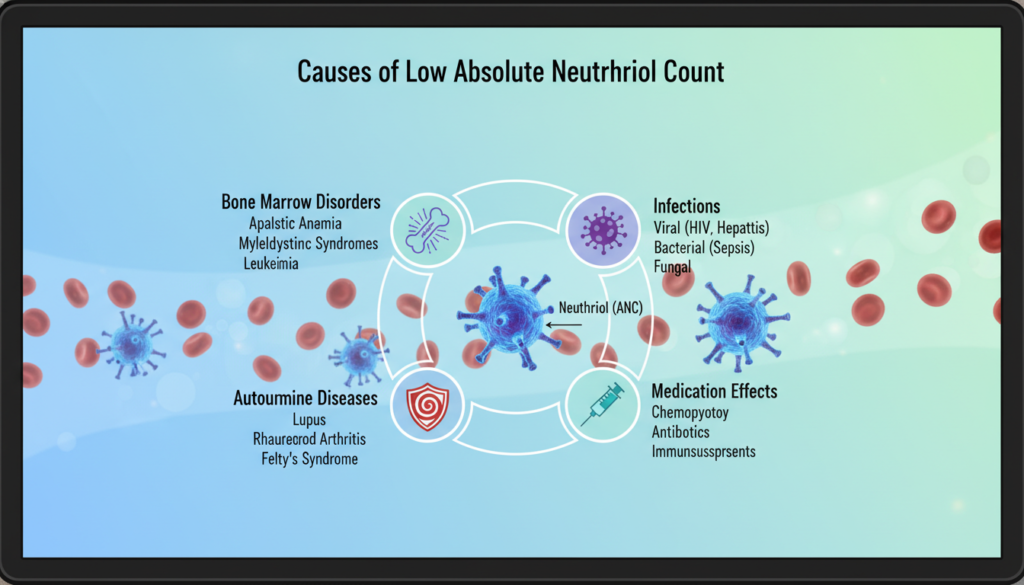
A low neutrophil count can come from many sources. Knowing what causes it helps doctors find the right treatment. The reasons include genetic problems, diseases, and side effects from treatments. Each reason affects neutrophils in different ways.
Bone Marrow Disorders
Bone marrow problems often lead to fewer neutrophils. Issues like myelodysplastic syndromes, aplastic anemia, and congenital neutropenia make it hard for the marrow to make neutrophils. Lack of vitamin B12, folate, and copper also stops neutrophils from growing right.
Chronic idiopathic neutropenia is when neutrophil counts stay low without a clear reason.
Autoimmune Diseases
Autoimmune diseases make the body attack neutrophils. Conditions like rheumatoid arthritis, systemic lupus erythematosus, and Felty syndrome cause this. This leads to more neutrophils being destroyed than made, keeping counts low.
Infections and Treatments
Some viruses, like HIV, hepatitis B, and hepatitis C, use up neutrophils fast. Bacterial infections, such as Salmonella, and parasitic diseases like malaria do the same. Lyme disease also lowers neutrophil counts.
Chemotherapy is the main reason for low neutrophil counts in cancer patients. Other drugs can also cause this problem.
| Category | Specific Cause | Mechanism |
|---|---|---|
| Bone Marrow Disorder | Myelodysplastic Syndrome | Bone marrow suppression of cell maturation |
| Autoimmune | Systemic Lupus Erythematosus | Antibody-mediated neutrophil destruction |
| Infection | HIV | Increased neutrophil consumption |
| Treatment-Related | Cytotoxic Chemotherapy | Direct bone marrow suppression |
| Medication-Induced | Anti-thyroid Drugs | Drug-induced marrow toxicity |
| Nutritional | Vitamin B12 Deficiency | Impaired neutrophil formation |
Causes of High Absolute Neutrophil Count
A high neutrophil count is called neutrophilia. It means there are more than 7,000 neutrophils per microliter. Many things can cause this. Knowing what causes it helps doctors understand and treat it better.
Infections and Inflammation
One big reason for a high neutrophil count is infections. When bacteria attack, the body quickly sends out neutrophils. This happens fast, often in just hours.
Things like injuries, burns, and surgery also cause inflammation. This leads to more neutrophils being made and sent out.
Long-term problems like rheumatoid arthritis and inflammatory bowel disease keep neutrophil counts high. Smoking also adds to this by causing ongoing inflammation in the body.
Chronic Stress Responses
Stress, both mental and physical, can raise neutrophil counts. Stress hormones like cortisol help neutrophils move into action. Even intense workouts can briefly increase neutrophil counts.
Research in the Journal of Leukocyte Biology shows stress can keep neutrophil counts high for hours after the stress is gone. This makes it hard to understand blood counts taken during or right after stress.
Medications and Treatments Impact
Some medicines affect neutrophils. Steroids, for example, make more neutrophils by keeping them active longer. Certain cancers, like chronic myeloid leukemia, make too many neutrophils because the bone marrow doesn’t stop making them.
| Category | Mechanism | Duration of Elevation |
|---|---|---|
| Bacterial Infection | Bone marrow release of stored neutrophils | Days to weeks |
| Physical/Emotional Stress | Cortisol-driven demargination | Hours |
| Corticosteroid Use | Reduced margination and apoptosis | Duration of therapy |
| Myeloproliferative Disorder | Uncontrolled marrow production | Persistent |
Symptoms of Abnormal ANC Levels
When your absolute neutrophil count is off, it can mean your immune system is not working right. This makes it hard to fight off germs. Knowing the signs of infection is very important, as abnormal counts can show up.
Recognizing Neutropenia Symptoms
Neutropenia symptoms often don’t show up until you get sick. A fever is usually the first and sometimes only sign, which is a big deal for people with weak immune systems. The National Cancer Institute says a fever over 100.4°F (38°C) in a neutropenic patient needs quick medical check-up.
Common signs of neutropenia include:
- Recurring mouth sores
- Skin infections or slow-healing wounds
- Frequent respiratory infections
- Unexplained tiredness and feeling unwell
- Periodontal disease or gum inflammation
It’s important to know that signs of infection, like redness and swelling, might not show up in neutropenic patients. This is because they don’t have enough neutrophils to fight off germs.
Identifying Neutrophilia Symptoms
Neutrophilia signs are not always easy to spot. They usually show up because of an underlying issue, like a bacterial infection or inflammation.
Signs of neutrophilia include:
- Persistent fever from an infection
- Pain, warmth, or swelling at infection sites
- General feeling of being unwell and body aches
- Fatigue from chronic inflammation
Even without clear symptoms, high neutrophil counts can be a sign of infection. This might lead to more tests to figure out what’s going on.
Diagnostic Tests Related to ANC
Getting an accurate count of neutrophils needs special tests. These tests include simple blood checks and more detailed ones. Each test helps understand neutrophil count and function.
Complete Blood Count (CBC)
The CBC differential is key for checking neutrophil count. It takes about 3–5 mL of blood from a vein. Quest Diagnostics uses it to check red and white blood cells and platelets.
If the CBC shows odd results, a peripheral blood smear is done. This test looks at neutrophil shape and size. It helps spot health issues. Doing CBC tests often helps see how treatment is working.
- Automated analyzers classify white blood cell subtypes
- Manual review detects morphologic abnormalities
- Results guide decisions for further evaluation
Bone Marrow Biopsy
A bone marrow test is needed if CBC results keep showing problems. It checks if the marrow can make blood cells well.
| Diagnostic Test | Purpose | Sample Type | Turnaround Time |
|---|---|---|---|
| CBC Differential | Quantify blood cell types | Venous blood (3–5 mL) | Hours |
| Peripheral Blood Smear | Evaluate cell morphology | Venous blood | Same day |
| Bone Marrow Biopsy | Assess marrow production | Bone marrow aspirate/core | 3–7 days |
| Flow Cytometry | Immunophenotyping | Blood or marrow | 1–3 days |
| Cytogenetic Analysis | Detect chromosomal abnormalities | Bone marrow | 7–14 days |
Treatment Options for Low ANC
When the absolute neutrophil count drops below safe levels, doctors must act. The treatment depends on the cause, how severe it is, and the patient’s risk of infection. It can include medicines or changes in diet to help the bone marrow work better.
Medications for Neutropenia
Medicines like filgrastim and pegfilgrastim are key. They help the bone marrow make more neutrophils, which is important when neutropenia is caused by chemotherapy. A study shows these medicines can lower the risk of infections and hospital stays.
Doctors might also use antibiotics to prevent infections when the ANC is low. For some, long-term use of G-CSF can help, but stem cell transplants are the only cure for some cases.
Side effects of G-CSF include:
- Bone pain
- Leukocytosis
- Rare splenic rupture
Nutritional Support and Lifestyle Changes
Eating right is important for immune health. Foods rich in vitamin B12, folate, copper, and iron help the bone marrow. These nutrients are key for making neutrophils.
| Nutrient | Role in Neutrophil Production | Common Dietary Sources |
|---|---|---|
| Vitamin B12 | Supports DNA synthesis in bone marrow cells | Meat, fish, dairy, fortified cereals |
| Folate | Essential for cell division and maturation | Leafy greens, legumes, citrus fruits |
| Copper | Required for white blood cell development | Shellfish, nuts, seeds, whole grains |
| Iron | Facilitates hematopoietic cell proliferation | Red meat, spinach, fortified bread |
Preventing infections is also key. This includes washing hands often, staying away from crowds, and eating safely. Regular blood tests help doctors see if the treatment is working and make changes if needed.
Treatment Options for High ANC
High absolute neutrophil counts often mean there’s an active process happening. Finding and treating the cause is key. This way, treatments can be more effective.

Addressing Underlying Causes
Treating the cause is the primary approach for high ANC. Bacterial infections are a common cause. Antibiotics can help lower neutrophil counts in a few days to weeks.
Chronic inflammation needs a different plan. Anti-inflammatory treatments can help manage immune cell production. Conditions like rheumatoid arthritis and inflammatory bowel disease need special care.
Important factors in treating underlying causes include:
- Active bacterial, fungal, or parasitic infections
- Chronic inflammatory or autoimmune disorders
- Myeloproliferative neoplasms requiring hematologic evaluation
- Tobacco use as a source of persistent neutrophil stimulation
- Physiologic or psychological stress responses
Medications to Lower ANC
Some medicines can raise neutrophil counts. Corticosteroids can do this by releasing neutrophils from blood vessels. Stopping these medicines slowly can help counts return to normal.
| Contributing Factor | Mechanism of Neutrophilia | Clinical Focus |
|---|---|---|
| Bacterial Infection | Bone marrow stimulation and release | Antimicrobial therapy |
| Corticosteroid Use | Neutrophil demargination | Medication adjustment |
| Chronic Inflammation | Cytokine-driven granulopoiesis | Inflammation reduction |
| Myeloproliferative Disorder | Clonal bone marrow proliferation | Hematologic management |
Managing neutrophilia in myeloproliferative disorders like chronic myeloid leukemia is complex. Bone marrow biopsies help guide treatment. Keeping a close eye on how treatment is working is also key.
Monitoring and Follow-Up
ANC monitoring is key to tracking immune health over time. A single blood test gives a quick view. But, regular tests show patterns that are much more important.
Tracking neutrophils helps doctors spot trends and early drops. They can link these changes to health events.
Regular Blood Tests and Check-Ups
How often to test depends on the patient’s health and condition. For example, cancer patients getting chemo need ANC checks before each treatment. This ensures their bone marrow is ready.
When neutrophil counts are very low, tests might be needed every day. But, for those who are stable, tests might only be needed weekly or monthly.
| Clinical Scenario | Recommended Frequency | Primary Purpose |
|---|---|---|
| Severe neutropenia (ANC below 500 cells/µL) | Daily | Detect recovery or further decline |
| Active chemotherapy cycles | Before each cycle | Confirm bone marrow readiness |
| Moderate neutropenia (ANC 500–1,000 cells/µL) | Two to three times per week | Monitor trend direction |
| Stable chronic condition | Monthly | Long-term neutrophil tracking |
Keeping records of medicines, infections, and symptoms helps doctors understand test results better. Using electronic health records makes it easier to spot patterns and make decisions.
When to Seek Medical Attention
Some ANC levels and symptoms need quick doctor visits:
- ANC falling below 1,000 cells/µL
- Fever with known or suspected neutropenia
- Unexplained high neutrophil counts
- Recurring infections despite treatment
Seeing a doctor quickly is very important. This is because febrile neutropenia is a serious condition that needs immediate care.
Special Considerations for Specific Populations
Understanding neutrophil counts is more than just numbers. Different groups have unique needs. Using the same ranges for everyone can lead to mistakes. It’s important to have specific ranges for each group, like in oncology, obstetrics, and pediatrics.
ANC in Cancer Patients
Watching neutrophil counts is key in cancer care. Chemotherapy can lower these counts a lot. The lowest count, or nadir, happens 7 to 14 days after treatment starts.
It takes 21 to 28 days to get back to normal. If the count is too low and there’s a fever, it’s a big problem. Quick action is needed. Checking blood counts often helps doctors catch and fix these issues.
ANC in Pregnancy
Neutrophil counts go up in pregnancy. This is due to hormones and body changes. It’s a normal thing and doesn’t mean there’s an infection.
Counts can get very high during labor. After the baby is born, they usually go back to normal in one to four weeks.
| Population | Expected ANC Range (cells/µL) | Key Clinical Note |
|---|---|---|
| Non-pregnant Adults | 1,500–8,000 | Standard reference range |
| Pregnant Individuals (Third Trimester) | Up to 13,000–15,000 | Physiological neutrophilia; not pathological |
| Cancer Patients (Post-Chemotherapy Nadir) | Below 500–1,000 | Nadir at days 7–14; febrile neutropenia risk |
| Neonates (First Week of Life) | 6,000–26,000 | Age-specific interpretation required |
Knowing the right ranges helps avoid extra tests and wrong diagnoses. It’s all about understanding each group’s needs.
The Role of Diet in ANC Levels
Diet affects how well our bodies make neutrophils. Neutrophil nutrition studies how certain nutrients help create white blood cells in bone marrow. Not having enough vitamins and minerals can change ANC levels.
Nutrients Essential for Neutrophil Production
Many nutrients help make healthy neutrophils. Bone marrow needs the right stuff to keep making white blood cells. Here are some nutrients that help:
| Nutrient | Role in Neutrophil Biology | Common Dietary Sources |
|---|---|---|
| Vitamin B12 | Supports DNA synthesis in bone marrow cells | Beef, salmon, eggs, dairy |
| Folate | Required for cell division and maturation | Spinach, lentils, chickpeas |
| Iron | Integral to immune cell energy metabolism | Red meat, fortified cereals |
| Zinc | Affects both production and functional capacity | Oysters, pumpkin seeds, beef |
| Copper | Involved in white blood cell differentiation | Shellfish, cashews, dark chocolate |
| Vitamin D | Modulates immune regulation pathways | Fatty fish, fortified milk, egg yolks |
Eating about 0.8–1.2 g/kg body weight daily of protein helps bone marrow. This is what research in nutritional hematology says.
Foods to Include and Avoid
Eating foods like berries, olive oil, fatty fish, and green tea helps. They have good stuff for the immune system.
But, eating too much processed food, sugar, and bad fats is bad. It can make inflammation worse. Dietitians and doctors look at what we eat when ANC levels are off.
Research and Advances in ANC Studies
Neutrophils are now understood to do more than fight infections. Recent studies show they help with tissue repair and blood vessel growth. They also play a big role in how our immune system works.
Recent Findings in Hematology
There have been big changes in how we see ANC and its role in health:
- The neutrophil-to-lymphocyte ratio (NLR) is now seen as a sign of heart disease and cancer risk.
- The Systemic Immune-Inflammation Index (SII) uses neutrophil, lymphocyte, and platelet counts to measure inflammation.
- Studies show that neutrophil extracellular traps (NETs) can cause blood clots and some autoimmune diseases.
These discoveries mean ANC is more than just a count. There are different types of neutrophils, each with its own job. This changes how we see these cells.
A 2023 review in Nature Reviews Immunology says neutrophil diversity is a big change in immune research.
Future Directions in Neutrophil Research
Now, researchers are working on finding new biomarkers for neutropenia. They want to predict how well treatments will work for cancer and autoimmune diseases.
| Research Area | Focus | Clinical Relevance |
|---|---|---|
| Neutrophil-to-Lymphocyte Ratio | Prognostic biomarker | Cancer and cardiovascular risk stratification |
| Neutrophil Extracellular Traps | Thrombosis mechanisms | Autoimmune and clotting disorder assessment |
| Neutrophil Subpopulations | Functional heterogeneity | Targeted diagnostic classification |
| Systemic Immune-Inflammation Index | Multi-cell inflammatory scoring | Comprehensive inflammation monitoring |
These advances will help make ANC tests better. They will help doctors sort patients better in many areas of medicine.
Patient Education and Awareness
Teaching patients about their health is key. Knowing about abnormal neutrophil levels helps them understand their lab results. This knowledge lets them talk better with their doctors.
Understanding Your ANC Results
Laboratory reports show ANC values in different ways. Knowing these ways is important for understanding your results. Here are two common formats:
| Unit Format | Example Value (Normal) | Common Usage |
|---|---|---|
| ×10⁹/L | 1.5–8.0 | International standard reporting |
| cells/µL | 1,500–8,000 | Frequently used in U.S. laboratories |
Resources from places like the American Society of Hematology help. They teach about baseline ANC values and how they change during treatment. Using patient portals to track ANC values helps understand trends over time. Keeping a record of symptoms and ANC values helps doctors make better decisions.
Communicating with Healthcare Providers
Talking clearly with doctors is important. Patients should come ready with questions. Here are some examples:
- What is the personal infection risk based on current ANC levels?
- Which warning signs require immediate medical attention?
- How frequently should ANC monitoring occur given the clinical context?
- What relationship exists between current ANC trends and the overall treatment trajectory?
Keeping a log of symptoms, dates, and lab values helps. It makes talking with doctors easier. This education helps patients take a bigger role in their care.
Conclusion: The Importance of ANC in Health Management
The absolute neutrophil count is very important in medicine. It shows how well our immune system is working. It tells us if we are ready to fight off infections and if we have inflammation.
A normal ANC is between 1,500 and 8,000 cells/µL. This means our body is making enough neutrophils. To find the ANC, we add segmented neutrophils and bands to the total white blood cell count.
Summary of Key Points
Checking ANC is part of a full immune check. We also look at C-reactive protein and erythrocyte sedimentation rate. Looking at how ANC changes over time is more useful than just one number.
Changes in ANC can mean different things. It could be about the bone marrow, autoimmune diseases, infections, or side effects from medicine. Watching ANC values helps find problems early, before we even feel sick.
Encouraging Regular Health Screenings
Getting a complete blood count with ANC is key for staying healthy. It helps catch small changes in neutrophils early. This is important for people at risk, like those with cancer or on certain medicines.
Talking to a doctor about your ANC results is important. They can help figure out what to do next if your ANC is not normal.