Nearly 900,000 Americans get venous thromboembolism each year, says the Centers for Disease Control and Prevention. Many of these cases need careful blood clotting checks. The activated partial thromboplastin time is a key test in medicine today.
The aPTT blood test shows how fast blood clots, in seconds. It checks the intrinsic pathway coagulation, almost all clotting factors, except VII and XIII. This test is vital for finding bleeding disorders and checking drug effects.
To test, a reagent called kaolin starts factor XII. Cephalin acts like platelet phospholipid. Blood is taken in light blue tubes with citrate. Citrate stops the blood from clotting too early.
Normal PTT test results are 60 to 70 seconds. aPTT values are 30 to 40 seconds. But, lab results can vary. Any unusual result needs more checking.
Key Takeaways
- The activated partial thromboplastin time measures the speed of clot formation through the intrinsic coagulation pathway.
- Normal aPTT values typically range from 30 to 40 seconds, though laboratory-specific reference ranges may vary.
- The PTT test evaluates all clotting factors except factor VII and factor XIII (fibrin stabilizing factor).
- Blood samples for the aPTT blood test must be collected in citrate-containing light blue tubes to prevent premature clotting.
- Kaolin and cephalin are used as activating reagents during intrinsic pathway coagulation testing.
- Abnormal partial thromboplastin time results require a full clinical check to find the cause.
What is aPTT and Its Purpose?
The activated partial thromboplastin time (aPTT) is a key blood test in labs. It shows how fast blood clots under certain conditions. This test helps see how well clotting factors work in the body.
Definition of aPTT
The aPTT checks the body’s clotting process. Lab workers add special substances to blood. They then see how long it takes for a clot to form.
According to the University of Rochester Medical Center, normal times are between 21 and 35 seconds. But, times can differ in each lab.
The clotting factors tested by the aPTT include:
- Factor VIII (antihemophilic factor)
- Factor IX (Christmas factor)
- Factor XI (plasma thromboplastin antecedent)
- Factor XII (Hageman factor)
- Factors in the common final pathway (Factors I, II, V, and X)
Importance in Clinical Practice
The aPTT is very important in healthcare. It helps find problems that could cause bleeding. Doctors use it before surgery to check for risks.
This test is also key for checking how well anticoagulant drugs work. For heparin, the goal is an aPTT 2 to 2.5 times normal. It looks at two parts of clotting, giving a full picture for doctors to make decisions.
How is aPTT Measured?
Measuring aPTT is a detailed process. Each step, from collecting blood to analyzing it, must be done carefully. This ensures the results are accurate and within the normal range.
The Testing Process
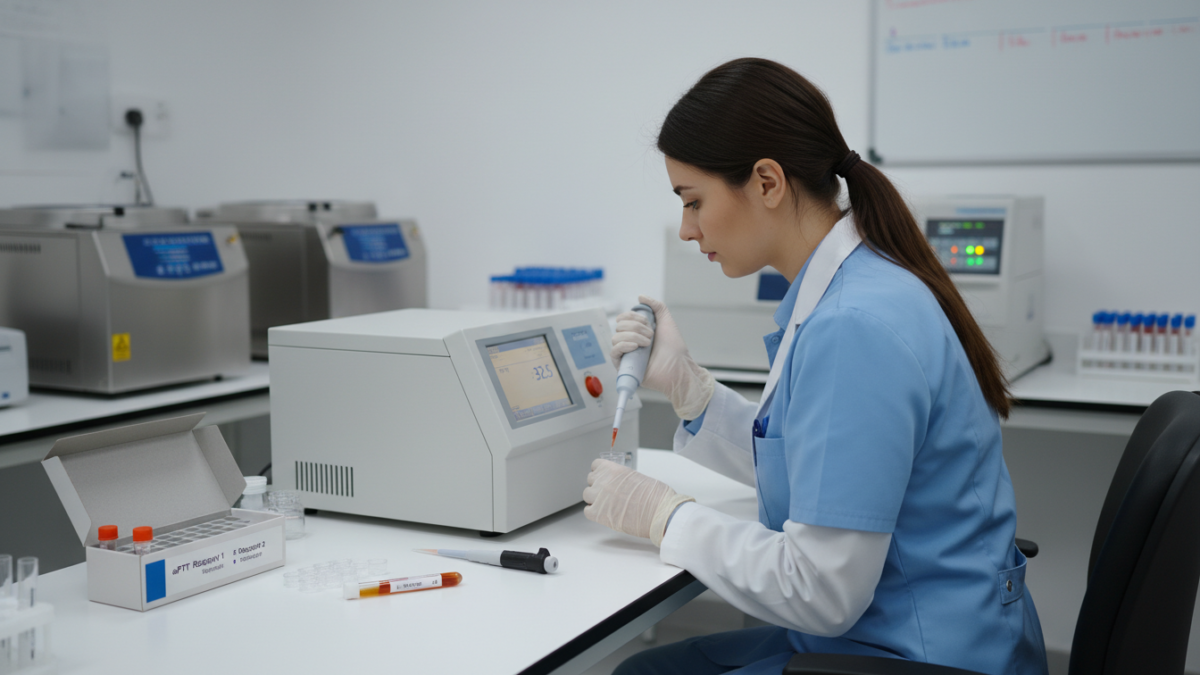
First, a technician collects blood using a special technique. The blood goes into a tube with sodium citrate. This stops the blood from clotting too early.
Then, the blood is spun in a centrifuge. This separates the plasma from other parts of the blood. The plasma is what gets tested.
Laboratory Techniques Used
In the lab, technicians add special substances to the plasma. These include:
- A phospholipid substitute (cephalin) that mimics platelet membranes
- A contact activator such as kaolin or silica
- Calcium chloride to restore clotting ability
After adding calcium, the timer starts. Clotting usually takes 25 to 35 seconds. For patients on heparin, blood tests are done every six hours.
Factors Influencing aPTT Results
Many things can change how accurate aPTT results are. The normal range can vary between places because of different equipment and reagents.
| Factor | Impact on Results |
|---|---|
| Reagent type and manufacturer | Sensitivity to factor deficiencies varies |
| Underfilled citrate tube | Falsely prolonged clotting time |
| Delayed sample processing | Degradation of coagulation cascade factors |
| High hematocrit levels | Altered citrate-to-plasma ratio |
These factors show why it’s important to know the specific ranges for each place. This is discussed further in the next section.
When is an aPTT Test Ordered?
An aPTT test is ordered for many reasons. Doctors use it to check the body’s clotting system. This test is used for both routine checks and when there are bleeding or clotting issues.
Screening for Coagulation Abnormalities
The aPTT test is key for checking clotting before surgery. It makes sure the body’s clotting system is working right. The Choosing Wisely Campaign suggests skipping this test for low-risk surgeries if there’s no clotting history.
This test also checks liver health, as the liver makes clotting factors. It’s used for immune issues and to prevent miscarriages.
Tracking Anticoagulant Therapy
Monitoring aPTT is vital for heparin therapy. For unfractionated heparin, the goal is an aPTT of 60–100 seconds. This range helps keep anticoagulation safe and effective.
| Heparin Dosing Intensity | Target aPTT Range (seconds) | Clinical Context |
|---|---|---|
| Low-intensity | 60–80 | Venous thromboembolism prophylaxis |
| Standard therapeutic | 60–100 | Active thrombosis treatment |
Evaluating Unexplained Symptoms
Some symptoms lead to an aPTT test. These include:
- Easy bruising or prolonged bleeding from minor cuts
- Blood in stool or urine
- Bleeding gums without dental cause
- Heavy menstrual periods
- Frequent nosebleeds
- Joint swelling or pain suggestive of hemarthrosis
Unexpected blood clots may mean there’s a clotting problem. APTT tests help find these issues.
Understanding Normal aPTT Range
Understanding aPTT results is key. Normal values can vary between labs. This is because of different reagents and tools used.
Typical Values for Adults
Most labs say normal aPTT values are between 25 and 35 seconds. Some labs say it’s 30 to 40 seconds. The non-activated partial thromboplastin time (PTT) is longer, from 60 to 70 seconds.
When taking heparin, the goal is an aPTT of 60 to 80 seconds. This is about 1.5 to 2.5 times the normal value.
| aPTT Category | Approximate Range (seconds) | Clinical Significance |
|---|---|---|
| Normal | 25–35 | Adequate intrinsic pathway function |
| Therapeutic Range (Heparin) | 60–80 | Target anticoagulation level |
| High aPTT (Prolonged) | >80 | Possible factor deficiency or inhibitor presence |
| Low aPTT (Shortened) | Potential hypercoagulable state |
Factors Affecting Normal Range
Many things can change aPTT results. These include:
- Type of reagent and activator used by the laboratory
- Patient age and underlying health status
- Presence of lupus anticoagulant or factor inhibitors
- Concurrent use of anticoagulant medications
Implications of Abnormal Results
A high aPTT might mean a problem with coagulation factors or inhibitors. It could also be due to anticoagulant drugs. If the result is too high, it’s important to see a doctor right away.
A low aPTT is rare but can mean a higher risk of blood clots. It might also cause recurrent pregnancy loss. Doctors can get these results quickly, helping them make fast decisions.
Conditions Associated with Abnormal aPTT
An abnormal aPTT result can point to many clinical conditions. These include clotting factor deficiency or interference with the coagulation cascade. It’s key to understand the cause for accurate diagnosis.
Hemophilia and Coagulation Disorders
Hemophilia A is caused by a lack of factor VIII. It’s an X-linked recessive disorder. About one-third of cases come from spontaneous mutations with no family history.
Hemophilia B is caused by a lack of factor IX. It has the same inheritance pattern as Hemophilia A. Both conditions make aPTT long but PT normal.
Von Willebrand disease is the most common inherited bleeding disorder. It’s inherited in an autosomal dominant pattern. There are three types:
- Type 1 — about 85% of cases, with a partial deficiency of VWF
- Type 2 — has dysfunctional VWF with low activity
- Type 3 — the rarest and most severe, with almost no VWF and very low factor VIII
Liver Disease Impact
The liver makes most coagulation factors, including vitamin K–dependent proteins. In severe liver disease, both PT and aPTT may be high. This is different from the isolated clotting factor deficiency in Hemophilia A or B.
Antiphospholipid Syndrome
Antiphospholipid syndrome has lupus anticoagulant antibodies. These interfere with phospholipid-dependent coagulation assays. This makes aPTT seem high in tests, but it actually increases clot risk.
| Condition | Deficient Factor or Mechanism | aPTT | PT |
|---|---|---|---|
| Hemophilia A | Factor VIII deficiency | Prolonged | Normal |
| Hemophilia B | Factor IX deficiency | Prolonged | Normal |
| Von Willebrand disease (Type 3) | VWF absence, low factor VIII | Prolonged | Normal |
| Severe liver disease | Multiple factor synthesis impairment | Prolonged | Prolonged |
| Antiphospholipid syndrome | Lupus anticoagulant interference | Prolonged | Normal |
aPTT vs. Other Coagulation Tests
The aPTT checks the intrinsic coagulation pathway. It’s part of a bigger coagulation panel used by doctors. This panel helps them understand bleeding and clotting.
Other tests look at different parts of the clotting process. Each test gives special information to doctors.
Comparisons with PT (Prothrombin Time)
The PT test looks at the extrinsic pathway. It checks factors I, II, V, VII, and X. The aPTT, on the other hand, looks at the intrinsic pathway. It checks factors VIII, IX, XI, and XII.
A full coagulation panel usually includes both tests. This way, it covers a wide range of clotting factors.
| Feature | aPTT | PT Test |
|---|---|---|
| Pathway Assessed | Intrinsic | Extrinsic |
| Key Factors Evaluated | VIII, IX, XI, XII | I, II, V, VII, X |
| Primary Monitoring Use | Heparin therapy | Warfarin therapy |
| Normal Range (Approximate) | 25–35 seconds | 11–13.5 seconds |
The Role of INR (International Normalized Ratio)
The INR test comes from the PT test. It makes PT values the same across labs. This is key for checking oral anticoagulant therapy worldwide.
The INR was introduced by the World Health Organization in 1983. It was to make PT values the same in all labs.
Understanding the Differences
There are more tests in the coagulation panel. Thrombin time checks the last step of clotting. The dilute Russell viper venom test finds lupus anticoagulant.
Von Willebrand factor tests check for von Willebrand disease. In DIC, high PT and aPTT and low platelets show coagulopathy.
Each test in the panel adds something special to the diagnosis.
Preparing for an aPTT Test
The aPTT test is easy to prepare for. A small blood sample is taken from your arm. This whole process takes less than five minutes. Knowing what to do before the test helps get accurate results.
Pre-Test Guidelines
No special steps are needed for a PTT test. Just follow the usual blood draw steps. You might feel a little sting when the needle is in or out.
Minor bruising might happen but it goes away fast. It’s very important to tell your doctor about all medicines you take. This includes prescription drugs, over-the-counter items, herbal supplements, and vitamins.
Medications that Affect Results
Some medicines can change your aPTT test results. Heparin and big doses of warfarin are big influencers. Knowing what medicines you take helps doctors understand your test results better.
| Medication Category | Examples | Effect on aPTT |
|---|---|---|
| Anticoagulants | Heparin, Warfarin | Prolonged aPTT |
| Antiplatelet Agents | Aspirin, Clopidogrel | May alter results |
| Antihistamines | Diphenhydramine, Chlorpheniramine | Potential interference |
| Herbal Supplements | Ginkgo biloba, Garlic extract | Variable interference |
Importance of Fasting
The aPTT test does not need fasting. You don’t have to change your diet before the test. Just remember to tell your doctor about all medicines you’re taking.
Arrive on time for your blood draw. This makes the test simple and easy to fit into your schedule. It’s also important for checking on anticoagulant therapy.
The Role of Anticoagulants
Anticoagulant medicines help stop dangerous blood clots. The aPTT test checks if these medicines work right. It shows how well blood clots are prevented.
Common Anticoagulants That Influence aPTT
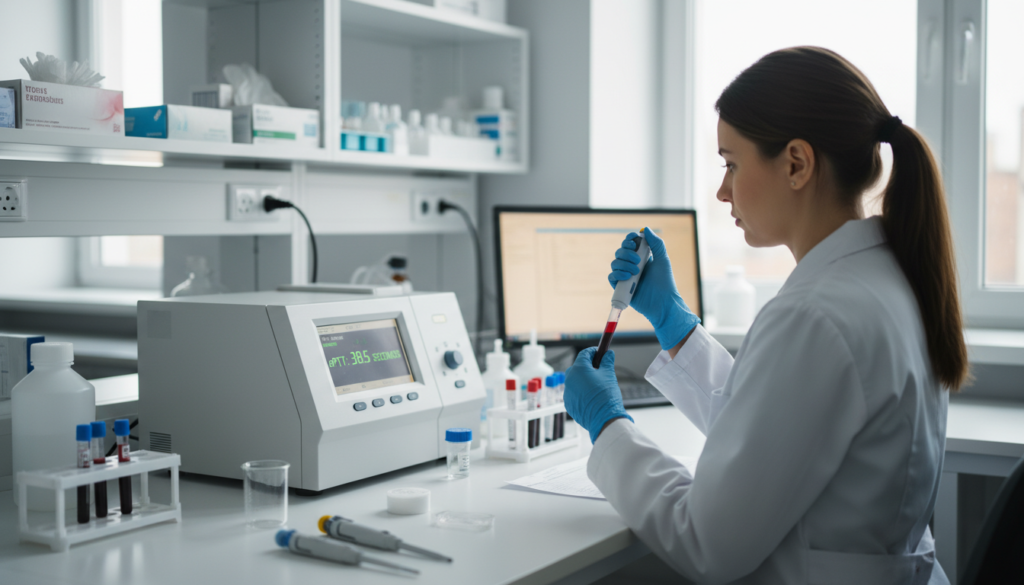
Unfractionated heparin is closely linked with aPTT tests. It’s often given in hospitals through an IV. The goal is to keep the aPTT between 60 and 100 seconds.
Other medicines like argatroban and bivalirudin also affect aPTT. Each needs its own watch.
How Anticoagulants Work
Unfractionated heparin boosts antithrombin III, a clot-stopping protein. The aPTT checks how well this works. It doesn’t measure the drug’s level in blood. Tests are done every six hours to adjust doses.
Risks and Benefits of Anticoagulant Therapy
Anticoagulants have good and bad sides. Here’s what to know:
| Aspect | Potential Benefits | Potential Risks |
|---|---|---|
| Clot Prevention | Reduces risk of stroke and pulmonary embolism | Insufficient dosing may fail to prevent clot formation |
| Bleeding Risk | Monitored through regular aPTT testing | Excessive anticoagulation may cause hemorrhage |
| Protocol Intensity | Low-intensity protocols suit lower-risk patients | High-intensity protocols carry greater bleeding risk |
| Laboratory Monitoring | Frequent testing enables timely dose adjustments | Delayed testing may result in prolonged subtherapeutic levels |
Keeping a close eye on aPTT is key. It helps make sure anticoagulants work well and safely.
Interpretation of aPTT Results
When aPTT values are given, it’s important to compare them to the lab’s reference ranges. These values are in seconds. Even small changes can mean a lot, depending on the patient’s health and medicines. It’s key to check these results carefully to avoid mistakes.
Clinician’s Role in Analysis
The doctor must look at the aPTT values and the patient’s overall health. A high aPTT doesn’t always mean a problem. Mixing studies are important to figure out if it’s a factor deficiency or coagulation inhibitor.
If the aPTT goes back to normal after mixing, it’s likely a factor issue. But if it stays high, it might be an inhibitor, like a lupus anticoagulant.
Follow-Up Actions Based on Results
If the aPTT is off, more tests are needed. These might include:
- Prothrombin time (PT) and INR to check the extrinsic pathway
- Specific coagulation factor assays (e.g., Factor VIII, IX, XI, XII)
- Mixing studies to tell if it’s a deficiency or inhibitor
- Antiphospholipid antibody panels if lupus anticoagulant is thought of
Many abnormal test results might mean a complex issue. In such cases, a hematology expert is needed.
Importance of Complete Evaluation
Don’t look at just one test result. The meaning of an abnormal aPTT depends on other lab results, symptoms, medicines, and health conditions. The American Society of Hematology says clinical correlation is key for accurate diagnosis of coagulation problems.
Accurate result interpretation demands that laboratory data be considered within the broader context of each patient’s unique clinical profile.
This detailed approach makes sure follow-up tests are focused and right. It follows the best ways to diagnose, as we’ll see next.
Potential Risks and Limitations of the Test
The aPTT test is useful, but it has its limits. Many things can mess with its accuracy, leading to wrong results. It’s key to know what can go wrong to understand aPTT results right.
False Positives and Negatives
Some health issues can make an aPTT test show wrong results. Antiphospholipid antibody syndrome is one example. It makes the aPTT look higher than it should be. This is because of how the test works.
Another problem is acquired coagulation factor inhibitors. These antibodies can make factors work less well or get cleared faster. Even mixing studies can show issues, not just a simple lack of factors.
Patient-Related Factors
Patients can also affect the test. Here are some ways:
- Recent use of blood thinners can change how the test works
- High hematocrit levels can mess with the test’s balance
- Too much pressure during blood draw can start clotting too soon
- Some foods or herbs can also affect blood clotting
Getting blood through a vein can cause some minor problems. These include bruising, bleeding, infection, and feeling dizzy. The needle might sting a bit, and the area might hurt later.
Laboratory-Related Variabilities
How different labs use equipment and test methods can also affect results. This means aPTT values might not match up across places.
Getting aPTT results right means looking at many things. This includes what the patient has been through, what meds they’re on, and the lab’s own standards.
Doctors need to think about these things when they look at aPTT results. This helps avoid mistakes caused by wrong test results.
Patient Experience During the Test
The aPTT test is done with a simple blood draw. A trained phlebotomist does it in just a few minutes. Knowing what happens can make you feel more at ease.
What Patients Can Expect
A technician will clean the area where the blood is taken. This is usually the inner elbow or the back of the hand. They will use a rubber tourniquet to make the vein easier to see.
A thin needle is then inserted into the vein. A small amount of blood is taken into a tube. After, the tourniquet is removed and a bandage is put on the area.
- The blood draw procedure takes approximately 2–5 minutes
- A brief needle prick is the primary sensation reported
- Results are typically available within hours to one business day
Dealing with Anxiety and Discomfort
Some people might feel a bit dizzy or lightheaded. This can happen if you haven’t eaten or are dehydrated. A small bruise at the site is normal and will go away in a few days.
As mentioned in comprehensive panel testing guides, serious problems like infection or nerve issues are rare. If you’ve had trouble with blood draws before, tell the phlebotomist. This can help make you more comfortable.
Post-Test Instructions
After the test, there’s not much to do. You don’t need to avoid any activities. Just keep the bandage on for at least 30 minutes to help prevent bruising.
| Post-Test Care Step | Purpose | Duration |
|---|---|---|
| Keep bandage applied | Prevent bleeding at puncture site | 30–60 minutes |
| Apply gentle pressure if bleeding resumes | Promote clot formation | As needed |
| Hydrate with water | Restore fluid balance after fasting | Immediately after test |
| Monitor site for redness or swelling | Identify early signs of infection | 24–48 hours |
Patients should report any persistent pain, swelling, or signs of infection at the puncture site to their healthcare provider promptly.
Advances in Coagulation Testing
The field of hemostasis evaluation has changed a lot in recent years. Now, coagulation testing goes beyond just looking at clots. New methods give us more precise results, faster, and deeper insights into how blood clots.

New Technologies in aPTT Testing
New tools have been added to traditional aPTT tests. Chromogenic assays help measure protein C activity levels. Viscoelastic tests like thromboelastography (TEG) and rotational thromboelastometry (ROTEM) show how clots form and break down.
- Anti-Xa assays now complement aPTT for more accurate heparin therapy assessment
- Factor VIII and Factor IX–specific assays improve hemophilia monitoring
- Specialized protocols support anticoagulation monitoring during extracorporeal membrane oxygenation (ECMO)
Future Directions in Hematology
New ways to diagnose coagulation disorders are coming. Point-of-care devices are getting smaller and faster. Microfluidic chips and automated analyzers aim to use less blood and reduce errors.
Impact of Digital Health
Digital health is changing coagulation testing. Electronic health records make it easier to share results and get alerts. Artificial intelligence is being used to spot early signs of problems. These changes make care more connected and data-driven.
| Technology | Primary Application | Key Advantage |
|---|---|---|
| Thromboelastography (TEG) | Viscoelastic clot assessment | Whole-blood coagulation profiling |
| Anti-Xa Assay | Heparin monitoring | Greater specificity than aPTT alone |
| Chromogenic Assay | Protein C activity measurement | Reduced interference from lupus anticoagulant |
| AI-Based Decision Support | Result interpretation | Faster pattern recognition in complex data |
Resources for Patients and Families
Getting the right healthcare info is key for patients and families. It helps them understand coagulation tests and related issues. Many trusted groups and sites offer accurate clinical info for making smart choices.
Educational Materials
The National Library of Medicine has StatPearls for detailed medical info on coagulation and aPTT. The StayWell Company gives patient materials on blood clotting tests. These explain lab tests in simple terms for everyone.
Support Groups for Hemophilia and Clotting Disorders
Groups focused on hemophilia help those with factor or von Willebrand disease. In the U.S., key groups include:
- National Hemophilia Foundation (NHF) — offers community programs and educational events
- Hemophilia Federation of America (HFA) — provides peer support and advocacy
- World Federation of Hemophilia (WFH) — has global treatment center lists
Meeting others with the same condition can make you feel less alone. It also helps you understand your health better.
Finding Healthcare Providers
Finding a good hematologist or hemophilia treatment center (HTC) is vital. The CDC has a list of HTCs in the U.S. These centers have teams skilled in managing clotting disorders.
| Resource | Type | Focus Area |
|---|---|---|
| National Hemophilia Foundation | Nonprofit Organization | Hemophilia support and patient education |
| StatPearls (NLM) | Medical Database | Clinical reference for healthcare resources |
| CDC HTC Directory | Government Resource | Provider and treatment center locator |
Using these resources keeps patients and families informed about aPTT tests and related issues. This helps them stay up-to-date with the latest medical knowledge.
Conclusion: The Importance of aPTT Testing
The aPTT test is key in today’s hematology and coagulation monitoring. It checks the intrinsic coagulation pathway. It helps find issues like hemophilia A, B, and von Willebrand disease.
It’s also important for unfractionated heparin therapy. The right dose depends on the aPTT value.
Summary of Key Points
A single aPTT test isn’t enough. You need other tests like prothrombin time and platelet counts. Each lab must have its own standards for aPTT results.
Testing early can help catch bleeding disorders. This leads to better decisions in healthcare.
Call to Action for Regular Testing
Regular coagulation tests are vital for those on anticoagulant therapy. Checking aPTT often keeps the anticoagulation right. It also lowers the chance of bleeding.
Testing early in those at risk helps find coagulation factor problems. Doctors and patients learn a lot from aPTT tests.