Fibrinogen is the most common coagulation factor in our blood. It’s very important for making blood clots and healing wounds. This big protein is made by the liver and stays in our blood for about three to four days before it’s removed.
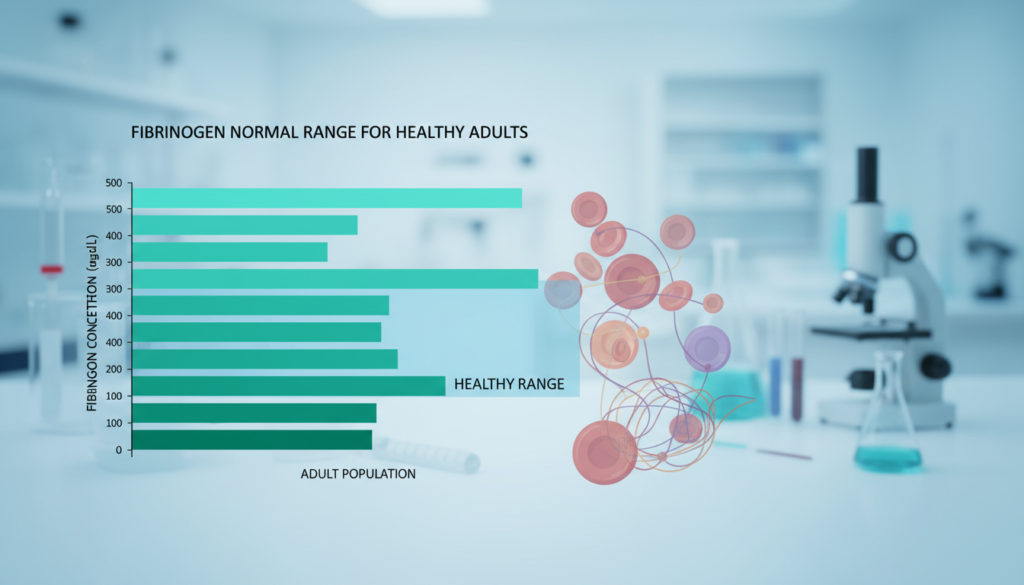
For adults, the normal amount of fibrinogen in the blood is between 200 and 400 mg/dL. If it’s too high, it can cause dangerous clots. If it’s too low, it can lead to too much bleeding, which is a big problem during surgery.
A fibrinogen blood test checks how much fibrinogen is in the blood. It also checks how well it works in making clots. Doctors use this test to see if there are problems with bleeding or clotting, and to check heart health.
Fibrinogen is also known as coagulation factor I. It turns into fibrin, which is the strong structure that holds blood clots together. Without enough fibrinogen, it’s hard for the body to stop bleeding.
Key Takeaways
- Fibrinogen is the most concentrated coagulation factor in human plasma, with a normal range of 200–400 mg/dL in healthy adults.
- Three genes located on chromosome 4 are responsible for fibrinogen production in the liver.
- Fibrinogen clotting involves conversion to fibrin, which forms the structural framework of blood clots at wound sites.
- Elevated fibrinogen levels above 700 mg/dL are associated with increased thrombotic risk affecting the brain, lungs, and heart.
- Levels below 50 mg/dL may indicate serious conditions such as liver disease, disseminated intravascular coagulation, or inherited clotting disorders.
- A fibrinogen blood test serves as a diagnostic tool for both bleeding disorders and cardiovascular risk assessment.
What is Fibrinogen?
Fibrinogen is a key blood protein. It helps the body form clots and keep blood vessels strong. It’s called clotting factor I. Knowing how fibrinogen works and what’s normal is key for doctors.
Definition of Fibrinogen
Fibrinogen is made mainly in the liver. It has a big molecular weight and a special structure. It’s made up of three chains: Aα, Bβ, and γ.
This protein is ready to be used in the blood. It waits for the right signal to start working.
This protein is a target for three important enzymes:
- Thrombin — turns fibrinogen into fibrin by removing fibrinopeptides A and B
- Factor XIIIa — makes the clot stronger by linking fibrin strands
- Plasmin — breaks down fibrin to dissolve the clot
For healthy adults, fibrinogen levels should be between 2 and 4 g/L. This is what doctors look for.
Functions in the Body
Fibrinogen’s main job is clotting. When blood vessels get hurt, thrombin turns fibrinogen into fibrin. This fibrin forms a strong clot that stops bleeding.
Fibrinogen does more than clotting:
- Helps platelets stick together at damaged areas
- Starts the process to dissolve clots when needed
- Helps wounds heal and tissues repair
- Acts as a marker of inflammation
Because of these roles, fibrinogen is important for checking blood health and spotting diseases.
Importance of Fibrinogen in Blood Clotting
Fibrinogen clotting is key in stopping bleeding. Without it, the body can’t make stable clots. It’s all about finding the right balance between clotting and dissolving clots, called fibrinolysis.
When this balance is off, due to too much or too little fibrinogen, it can cause big problems.
Role in Hemostasis
Fibrinogen is the last piece in the coagulation puzzle. Thrombin breaks it down into fibrin monomers. These then stick together, forming a strong mesh.
Factor XIIIa makes this mesh even stronger. It’s needed to stop bleeding effectively, needing at least 100 mg/dL.
This mesh traps blood cells and platelets, helping to heal wounds. But too much fibrinogen can lead to too many clots, raising the risk of blood clots.
Interaction with Platelets
Fibrinogen is key in platelet aggregation. It sticks to platelets, helping them stick together. This is important for stopping bleeding right away.
Studies show fibrin and platelets work together to make strong clots:
| Component | Contribution to Maximum Clot Amplitude |
|---|---|
| Platelet function | Approximately 80% |
| Fibrin network | Approximately 20% |
Fibrin may not make up as much of the clot, but it’s vital. Without enough fibrin, platelets can’t hold a clot together. High fibrinogen levels can make platelets stick together too much, which is bad for the heart.
How is the Fibrinogen Blood Test Performed?
A fibrinogen blood test is simple. It starts with taking a blood sample and ends with lab tests. This test checks if fibrinogen levels are normal. It’s key for checking how blood clots.
Sample Collection Process
A phlebotomist takes blood from a vein in your arm or hand. They use venipuncture. The blood goes into a tube with sodium citrate to keep clotting factors good for testing. It’s important to handle the blood right and fast for good results.
Laboratory Analysis Techniques
There are many ways to do a fibrinogen blood test. Each method looks at a different part of fibrinogen in your blood.
- Clauss assay — the most common method. It adds thrombin to diluted plasma and measures clot formation time
- Fibrinogen antigen test — uses antibodies to count the total fibrinogen protein
- Thromboelastography (TEG) — a quick test at the doctor’s office. It checks K time, alpha angle, and maximum amplitude
| Method | What It Measures | Reporting Units |
|---|---|---|
| Clauss Assay | Functional clotting activity | mg/dL or g/L |
| Antigen Test | Total fibrinogen protein quantity | mg/dL or g/L |
| Thromboelastography | Clot formation dynamics | mm, degrees, seconds |
These tests compare your results to the normal range. The Clauss assay is the main test in the U.S. It’s approved by the College of American Pathologists.
Understanding Normal Fibrinogen Levels
Understanding a fibrinogen blood test is key. It helps doctors know if you’re healthy or not. Many things can change how much fibrinogen you have.
Average Ranges for Healthy Adults
For healthy adults, fibrinogen levels should be between 200 and 400 mg/dL. If it’s too low, it can mean you might bleed a lot. If it’s too high, you might get blood clots.
In the third trimester of pregnancy, fibrinogen levels can go up to 500 mg/dL. This is normal and not a sign of trouble.
| Clinical Context | Fibrinogen Level (mg/dL) | Clinical Significance |
|---|---|---|
| Healthy Adult | 200–400 | Within expected reference range |
| Third Trimester Pregnancy | Up to 500 | Physiological elevation |
| Post-Surgical Bleeding Risk | Below 50 | Critical hemorrhagic concern |
| Thrombotic Risk Zone | Above 700 | Elevated clot formation |
Factors Influencing Fibrinogen Levels
Many things can change fibrinogen levels. For example, birth control pills and exercise can raise them. Some medicines can lower them.
Here are some medicines that can lower fibrinogen levels:
- Streptokinase (a thrombolytic agent)
- Valproic acid (an anticonvulsant)
- Phenobarbital (a barbiturate)
- Anabolic steroids
Knowing these things helps doctors understand fibrinogen levels better. This is important for making accurate diagnoses.
Causes of High Fibrinogen Levels
High fibrinogen levels in the blood come from many reasons. Fibrinogen is made more by the liver when we’re stressed. Knowing why fibrinogen goes up helps doctors understand lab results better.
Inflammation and Its Impact
Fibrinogen and inflammation are closely linked. When we get sick, our liver makes more fibrinogen. This is part of how our body fights off infections.
Things like infections, injuries, and diseases like rheumatoid arthritis make fibrinogen go up. Even being overweight or smoking can keep fibrinogen high. A study in the Journal of Thrombosis and Haemostasis found that high fibrinogen is linked to more plaque in arteries.
Other Medical Conditions Related to High Levels
Many health issues can lead to high fibrinogen levels. Here are some examples:
- Heart disease, like heart attacks
- Nephrotic syndrome
- Certain cancers
- Pregnancy (because of the body’s changes)
- Heart attacks and strokes
| Condition | Typical Fibrinogen Range (mg/dL) | Primary Mechanism |
|---|---|---|
| Acute Infection | 400–700 | Cytokine-driven hepatic synthesis |
| Rheumatoid Arthritis | 350–600 | Chronic autoimmune inflammation |
| Nephrotic Syndrome | 400–800 | Compensatory hepatic protein production |
| Pregnancy (Third Trimester) | 400–650 | Physiological adaptation for hemostasis |
| Active Malignancy | 350–600 | Tumor-associated inflammatory response |
It’s important to know if fibrinogen levels are high for a short time or all the time. High fibrinogen levels are important signs to look at with other test results.
Causes of Low Fibrinogen Levels
Low fibrinogen can come from inherited or acquired conditions. A blood test shows levels below 150 mg/dL. This calls for a doctor’s check-up. Both genes and other factors can affect fibrinogen levels or how well it works.
Genetic Disorders Affecting Fibrinogen
Some conditions are passed down through genes and cause low fibrinogen. These can vary in how they affect people:
- Afibrinogenemia — a rare condition where no fibrinogen is found in the blood
- Hypofibrinogenemia — a condition with less fibrinogen, usually under 150 mg/dL
- Dysfibrinogenemia — a condition where fibrinogen is made but doesn’t work right
- Hypodysfibrinogenemia — a mix of having less fibrinogen and it not working well
Doctors use a blood test and clotting tests to find these genetic disorders. Most are caused by changes in the FGA, FGB, or FGG genes on chromosome 4.
Other Health Issues Leading to Low Levels
Many things can cause low fibrinogen, not just genes. Liver disease makes it hard to make fibrinogen. Disseminated intravascular coagulation (DIC) uses up fibrinogen fast.
| Acquired Cause | Mechanism of Fibrinogen Reduction |
|---|---|
| Severe liver disease | Decreased hepatic synthesis |
| Disseminated intravascular coagulation | Excessive consumption of clotting factors |
| Massive hemorrhage | Loss and dilution of coagulation proteins |
| Malnutrition | Insufficient protein substrate for production |
| Certain cancer treatments | Suppression of hepatic protein synthesis |
Blood transfusions can also lower fibrinogen by diluting it. Finding the exact cause is key for treatment.
Symptoms of Abnormal Fibrinogen Levels
Abnormal fibrinogen levels can cause different symptoms. These symptoms vary based on how much the levels are off and any health issues. It’s important to notice these signs early for proper medical care.
Signs of High Fibrinogen
High fibrinogen often doesn’t show symptoms until a blood clot forms. High levels make blood thicker and more likely to clot. This can lead to serious problems like:
- Deep vein thrombosis (DVT)
- Pulmonary embolism
- Myocardial infarction
- Arterial thrombosis affecting the limbs or brain
Usually, high fibrinogen is found after a blood clot has formed. It can stay high if there’s ongoing inflammation or infection. But, it might not cause symptoms right away.
Signs of Low Fibrinogen
Low fibrinogen makes it hard for blood to clot properly. This can cause bleeding that doesn’t stop, bleeding during surgery, and slow healing of wounds.
When fibrinogen levels fall below 100 mg/dL, bleeding can happen without injury. Afibrinogenemia, a rare condition, means no fibrinogen at birth. It leads to severe bleeding problems from the start.
| Condition | Fibrinogen Level | Primary Clinical Feature |
|---|---|---|
| Hypofibrinogenemia | Below 200 mg/dL | Prolonged bleeding |
| Severe Hypofibrinogenemia | Below 100 mg/dL | Spontaneous hemorrhage |
| Afibrinogenemia | Undetectable | Severe bleeding from birth |
| Dysfibrinogenemia | Variable | Bleeding or thrombosis |
Dysfibrinogenemia is a problem with fibrinogen’s structure. It can cause bleeding or clotting, depending on the issue. Finding the cause of low fibrinogen is key for diagnosis, as we’ll see next.
Risk Factors Associated with Abnormal Fibrinogen Levels
Many things can cause abnormal fibrinogen levels in the blood. These include our daily habits and health conditions. Knowing how fibrinogen reacts to inflammation helps doctors understand test results better.
Lifestyle Factors
Some things we can change affect fibrinogen levels. Smoking is a big one. It causes inflammation that makes the liver make more fibrinogen.
Other lifestyle factors include:
- Obesity — too much fat can cause inflammation
- Sedentary behavior — not moving much raises fibrinogen
- High-fat dietary patterns — eating too much fat can be inflammatory
- Advanced age — fibrinogen levels go up as we get older
Pre-existing Health Conditions
Some health issues affect fibrinogen levels. For example, liver diseases can lower fibrinogen because the liver can’t make it well.
| Condition | Effect on Fibrinogen | Mechanism |
|---|---|---|
| Chronic liver disease | Decreased | Impaired hepatic synthesis |
| Third trimester pregnancy | Elevated | Physiologic acute-phase response |
| Cardiovascular surgery | Variable | Perioperative coagulopathic bleeding risk |
| Congenital fibrinogen deficiency | Decreased | Genetic mutation affecting production |
Pregnancy in the third trimester is a physiologic state with high fibrinogen. Genetic issues can cause fibrinogen deficiency from birth.
Diagnosing Abnormal Fibrinogen Levels
To find out if fibrinogen levels are off, doctors use a few steps. A single test might show levels that are not normal. But to know why, they need to look at more things.
Doctors use tests like coagulation studies and immunologic assays. They also use special tests at the doctor’s office. This helps them figure out what’s going on.
Initial Medical Evaluation
The first thing doctors do is a coagulation screening. They check prothrombin time (PT), activated partial thromboplastin time (aPTT), and thrombin time (TT). TT is very good at finding fibrinogen levels below 100 mg/dL.
Reptilase time is also used. It’s good for patients on heparin because it’s not affected by it.
Mixing studies are also important. They help doctors see if there’s a problem with fibrinogen. If mixing normal plasma with patient plasma fixes the problem, it’s a quantitative issue. But if it doesn’t, it might be a problem with how fibrinogen works.
Role of Additional Tests
If the first tests show something’s off, doctors do more tests:
- Immunologic (Clauss) assays — measure the actual amount of fibrinogen to find out if it’s a problem with how much or how it works
- Genetic testing — finds problems with fibrinogen that are passed down in families
- Liver function panels — check if the liver is working right, because it makes fibrinogen
Thromboelastography (TEG) and rotational thromboelastometry (ROTEM) are special tests. They show how well blood clots. They help doctors make quick decisions during surgery.
Treatment Options for High Fibrinogen Levels
Managing high fibrinogen levels starts with finding and treating the cause. Doctors don’t usually aim to lower fibrinogen directly. They look at the complete clinical profile of each patient, including health conditions and heart risk factors.
Fibrinogen and inflammation are closely linked. When inflammation is the cause, treating it often lowers fibrinogen levels.
Lifestyle Modifications
Some lifestyle choices can raise fibrinogen levels. Studies show:
- Tobacco use is linked to significantly higher fibrinogen concentrations
- Obesity correlates with persistent low-grade fibrinogen inflammation
- Sedentary behavior is associated with increased cardiovascular risk markers
- Chronic psychological stress may contribute to sustained elevations
Changing these habits is key to reducing risk, mainly for heart health.
Medications and Therapies
Medicines usually aim at the primary condition causing high fibrinogen, not fibrinogen itself. The table below shows common conditions and treatments.
| Underlying Condition | Therapeutic Category | Effect on Fibrinogen |
|---|---|---|
| Chronic Inflammatory Disease | Anti-inflammatory Agents | Indirect reduction through inflammation control |
| Cardiovascular Disease | Antiplatelet and Lipid-Lowering Agents | Modest fibrinogen-lowering observed in some studies |
| Acute Infection | Antimicrobial Therapy | Normalization following infection resolution |
When fibrinogen stays high, doctors weigh the risks and benefits. They keep a close eye on patients with chronic conditions and high fibrinogen.
Treatment Options for Low Fibrinogen Levels
When fibrinogen levels are low, doctors work to raise them. This is to help with clotting. The plan depends on why the levels are low and how much bleeding risk there is.
Replacement Therapies
FDA-approved fibrinogen concentrates like Riastap and Fibryga help with bleeding in those with congenital deficiency. The dose depends on the product and the patient’s age:
- Riastap: 70 mg/kg when fibrinogen levels are unavailable
- Fibryga: standard adult dose of 4 grams
- Pediatric patients aged 12 and older: 50 mg/kg
- Pediatric patients under 12: 70 mg/kg
For general bleeding, fibrinogen levels should be 100–150 mg/dL. For brain bleeding, levels should be 150–200 mg/dL. Cryoprecipitate is another option, raising levels by 7–10 mg/dL. Fresh frozen plasma also helps, with levels of 1–3 mg/mL.
| Product | Fibrinogen Content | Expected Level Increase |
|---|---|---|
| Fibrinogen Concentrate (Riastap) | 900–1300 mg per vial | Dose-dependent |
| Cryoprecipitate (per unit) | 200–250 mg | 7–10 mg/dL |
| Fresh Frozen Plasma | 1–3 mg/mL | Variable |
Liquid fibrin adhesives can be used to stop bleeding during surgery in patients with low fibrinogen.
Management of Underlying Conditions
Low fibrinogen can also come from conditions like disseminated intravascular coagulation, severe liver disease, or massive transfusions. Treating the main cause is key to fixing fibrinogen clotting. Regular checks help decide how often and what treatment is needed.
Monitoring Fibrinogen Levels
Keeping track of fibrinogen levels is very important. The fibrinogen blood test helps doctors see how well treatments are working. It also helps them understand how blood clots and find out who might be at risk for heart problems.

Frequency of Testing
How often tests are done depends on how serious the situation is. When doctors are giving fibrinogen to help with clotting, they check levels closely. They use a formula to figure out how much more fibrinogen is needed.
In pregnancy, it’s very important to keep fibrinogen levels high. Doctors check these levels more often as the baby gets ready to be born. Tests like thromboelastography and rotational thromboelastometry are used in surgery to get quick results.
| Clinical Scenario | Recommended Monitoring Frequency | Target Level |
|---|---|---|
| Active bleeding or surgery | Every 4–6 hours | Above 150 mg/dL |
| Replacement therapy maintenance | Every 1–3 days | Above 50 mg/dL |
| Pregnancy (third trimester) | Weekly to biweekly | Above 100 mg/dL (1 g/L) |
| Chronic inflammatory conditions | Every 3–6 months | Within fibrinogen normal range (200–400 mg/dL) |
Importance of Regular Monitoring
Checking fibrinogen levels often is key. It makes sure levels stay in a safe range. It also helps catch any problems early.
For people with long-term inflammation, watching fibrinogen levels is very important. It helps doctors know who might be at risk for heart problems. Regular checks help doctors make better decisions over time.
Implications of Fibrinogen Measurement in Healthcare
The fibrinogen blood test is very important in healthcare. It helps doctors make big decisions in many areas, like cardiology and surgery. It shows if a person might have problems with blood clotting or bleeding.
Role in Cardiovascular Risk Assessment
High fibrinogen levels mean a person might have heart disease. Studies like the Framingham Heart Study and the European Prospective Investigation into Cancer and Nutrition (EPIC) found this. Fibrinogen goes up when the body is fighting off an infection or inflammation.
Doctors look at fibrinogen levels along with other heart disease risk factors. High fibrinogen makes blood thicker and blood cells stick together more. This can lead to heart attacks and strokes.
Use in Surgical Decisions
Before surgery, fibrinogen levels can tell doctors how much bleeding might happen. A study in the British Journal of Anaesthesia showed that low fibrinogen levels mean more blood loss during big surgeries.
In obstetrics, fibrinogen levels under 200 mg/dL during bleeding after childbirth mean a person might need a lot of blood. In trauma care, fibrinogen tests help doctors control bleeding fast.
| Clinical Setting | Fibrinogen Role | Key Threshold or Finding |
|---|---|---|
| Cardiovascular risk stratification | Inflammatory biomarker | High fibrinogen linked to increased coronary events |
| Cardiac surgery | Bleeding risk predictor | Low pre-operative levels correlate with greater transfusion needs |
| Obstetric hemorrhage | Massive blood loss predictor | Below 200 mg/dL signals elevated risk |
| Major trauma | Hemorrhage management guide | Early measurement reduces RBC and platelet transfusion requirements |
| Liver transplantation | Coagulation status assessment | Guides targeted replacement strategies intraoperatively |
Conclusion: The Importance of Fibrinogen Testing
Fibrinogen is key in stopping bleeding. Its test is vital in many medical areas. It helps doctors know if someone might bleed too much or clot too easily.
This test shows fibrinogen levels, which are between 200–400 mg/dL. It helps doctors make important decisions. This includes finding out if someone was born with a problem or if they are at risk for heart disease.
Summary of Key Points
There are several ways to test fibrinogen clotting. These include the von Clauss technique and antigen-based testing. There’s also viscoelastic analysis.
New tests like Functional Fibrinogen (FF) on thromboelastography platforms are quick. They can be done in under 15 minutes. They show how well fibrinogen and platelets work together, as research shows.
These tests help doctors understand how blood clots. They also check how platelets work. This gives a full picture of how blood stops bleeding.
Fibrinogen concentrates are safe. They go through special steps to kill viruses. This makes them very safe to use.
Future Directions in Fibrinogen Research
New studies are looking at fibrinogen’s uses beyond stopping bleeding. They’re studying how it can help in making new medicines and repairing tissues. This includes making scaffolds for wounds and drug delivery systems.
As technology gets better, fibrinogen tests will get more accurate. They might even be used right at the doctor’s office. This could help doctors find problems sooner and treat them better.