The bilirubin blood test is very common in medical care. It checks how well the liver and blood are working. It looks at bilirubin, a yellow pigment from broken-down red blood cells. The liver turns this pigment into bile fluid.
Doctors call this test by different names. These include total bilirubin, direct (conjugated) bilirubin, and indirect (unconjugated) bilirubin tests. It’s used to check for jaundice or high bilirubin levels. Sometimes, it’s also tested in urine.
Knowing your bilirubin test results is important. It helps doctors see if there are any health problems. For adults, results outside the normal range mean more tests might be needed.
Before the test, you need to fast for at least four hours. This makes the test results more accurate. Only a small blood sample is needed, making it quick and easy.
Key Takeaways
- The bilirubin blood test measures a yellow pigment produced during the breakdown of red blood cells.
- The bilirubin normal range is a critical reference point for evaluating liver and blood health.
- Bilirubin test results may be reported as total, direct, or indirect bilirubin levels.
- Normal bilirubin adults values can vary slightly between laboratories and testing methods.
- A four-hour fast is typically required before the blood sample is collected.
- Bilirubin testing can be performed through both blood draws and urine analysis.
What the Test Measures
A bilirubin blood test checks how well the liver breaks down waste from old red blood cells. It looks at total bilirubin levels and its two types. This helps doctors understand liver function and blood health.
Understanding Bilirubin
Bilirubin is a yellowish pigment made when the body breaks down heme from red blood cells. Every day, the body replaces millions of old red blood cells, releasing bilirubin into the blood.
The liver turns this pigment into a form that goes through the digestive system and leaves the body in stool. If bilirubin levels go over 2.0 mg/dL, it can cause jaundice. This is when the skin, mucous membranes, and eyes turn yellow.
Types of Bilirubin Measured
The test looks at two types of bilirubin:
- Unconjugated (indirect) bilirubin — This form hasn’t been processed by the liver yet. Healthy adults usually have indirect bilirubin between 0.2 and 0.8 mg/dL.
- Conjugated (direct) bilirubin — This form has been processed by the liver and is water-soluble. Direct bilirubin levels should be between 0.1 and 0.3 mg/dL for healthy adults.
| Bilirubin Type | Normal Range (mg/dL) | Processing Status |
|---|---|---|
| Direct (Conjugated) | 0.1–0.3 | Processed by the liver |
| Indirect (Unconjugated) | 0.2–0.8 | Not yet processed by the liver |
| Total Bilirubin | 0.1–1.2 | Combined measurement of both types |
Total bilirubin levels are the sum of direct and indirect bilirubin. The American Liver Foundation says high levels in either type can mean there’s a problem. Doctors then do more tests to find out what it is.
Why It Is Ordered
Doctors order a bilirubin blood test for many reasons. Some patients show clear signs of a problem. Others need routine checks to confirm a healthy bilirubin count. Understanding why this test is requested can help patients feel more prepared.
Indications for Testing
Jaundice — a visible yellowing of the skin and eyes — is the most common trigger. When a healthcare provider notices these signs, bilirubin lab values are among the first things checked. Newborns are tested frequently, as the American Academy of Pediatrics notes that about 60% of full-term babies develop jaundice in their first week of life.
Providers may request this test when a patient reports any of the following:
- Unexplained fatigue or nausea
- Abdominal pain or swelling
- Dark-colored urine or pale stools
- Persistent itchy skin
- Regular alcohol consumption
- Family history of liver disease
For newborns, the speed at which levels rise, gestational age, and hours after birth all influence how bilirubin lab values are interpreted. Premature infants face a higher risk of complications and require closer monitoring.
Routine Health Screenings
Bilirubin testing is not just for emergencies. It’s part of a metabolic panel that many adults get during annual physicals. People with type 2 diabetes, those taking medications that affect liver function, or individuals managing chronic liver conditions benefit from regular checks.
“Early detection through routine screening remains one of the most effective strategies for preventing liver disease progression.” — American Liver Foundation
Tracking a healthy bilirubin count over time gives providers a baseline. Any shift from that baseline can signal a new issue long before symptoms appear, making early intervention possible.
Normal Reference Range
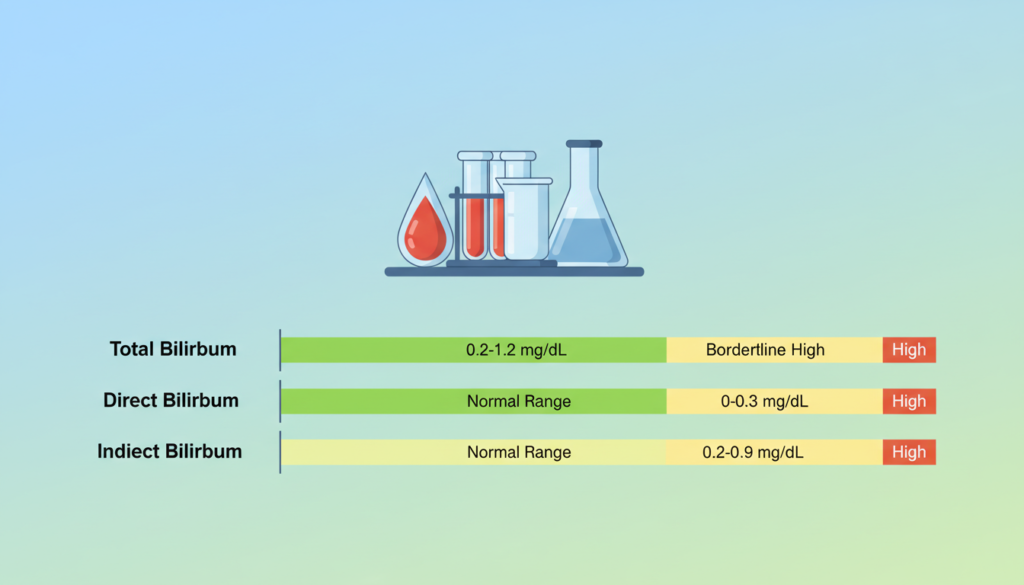
It’s key to know the bilirubin normal range to understand blood test results. These values help doctors find health problems early. But, different labs might have slightly different ranges because of their equipment and how they process samples.
Total Bilirubin Levels
For adults, total bilirubin should be between 0.1 and 1.2 mg/dL (1.71–20.5 µmol/L). Babies over a month should have levels of 0.3–1.2 mg/dL. Newborns have higher levels, but under 10 mg/dL (171 µmol/L) is okay in the first days.
Jaundice, or yellow skin and eyes, shows up when bilirubin hits about 3 mg/dL (51 µmol/L).
Direct and Indirect Bilirubin Levels
Lab tests split bilirubin into direct and indirect types. Direct bilirubin should be under 0.3 mg/dL (5.1 µmol/L). Indirect bilirubin ranges from 0.1 to 1.0 mg/dL (1–17 µmol/L). A good direct-to-total bilirubin ratio is under 20%.
| Bilirubin Type | Normal Range (mg/dL) | Normal Range (µmol/L) |
|---|---|---|
| Total (Adults) | 0.1–1.2 | 1.71–20.5 |
| Total (Newborns) | Under 10 | Under 171 |
| Total (Over 1 Month) | 0.3–1.2 | 5.1–20.5 |
| Direct (Conjugated) | 0–0.3 | 0–5.1 |
| Indirect (Unconjugated) | 0.1–1.0 | 1–17 |
High bilirubin levels in newborns need careful watching. High levels for too long can cause serious problems. Doctors look at test results and symptoms together. This is covered in the next section.
What High Levels May Indicate
High bilirubin test results mean the body can’t process or get rid of bilirubin. This is called hyperbilirubinemia. It can be caused by liver, bile duct, or red blood cell problems. Doctors look at the test results to find out why.
Liver Disorders
Liver disease is a common reason for high bilirubin levels. When the liver is damaged, it can’t handle bilirubin right. Some liver problems include:
- Hepatitis (viral, autoimmune, or drug-induced)
- Cirrhosis and alcohol-related liver disease
- Non-alcoholic fatty liver disease
- Gilbert’s syndrome — a benign genetic condition affecting up to 10% of the population
- Wilson’s disease
- Primary biliary cholangitis and sclerosing cholangitis
- Liver tumors or metastatic cancer
Bile duct problems, like gallstones or cancer, can also raise bilirubin levels. Pregnancy-related liver issues are another cause.
Hemolytic Anemia
When red blood cells break down fast, bilirubin levels go up. This usually shows as high indirect bilirubin. Some common causes include:
| Condition | Primary Mechanism | Bilirubin Type Affected |
|---|---|---|
| Autoimmune hemolytic anemia | Antibodies attack red blood cells | Indirect (unconjugated) |
| Sickle cell disease | Abnormal hemoglobin causes cell fragility | Indirect (unconjugated) |
| Transfusion reactions | Immune response to donor blood | Indirect (unconjugated) |
| Malaria | Parasite destroys red blood cells | Indirect (unconjugated) |
| Erythroblastosis fetalis | Rh incompatibility between mother and fetus | Indirect (unconjugated) |
Other things, like big hematomas or spleen problems, can also raise bilirubin levels. Finding the cause helps doctors decide how to treat it.
What Low Levels May Indicate
Low bilirubin levels get less attention than high ones. Usually, a reading below the normal range doesn’t mean serious health issues. Doctors often don’t investigate or treat low bilirubin on its own.
Rare Conditions
Some substances can lower bilirubin levels. These include:
- Barbiturates (sedative medications)
- Caffeine in high amounts
- Penicillin and certain other antibiotics
- High-dose salicylates such as aspirin
A study in the Journal of the American Heart Association found that bilirubin might protect against heart disease. At healthy levels, it could help prevent strokes. But, if levels drop too low, this protection might lessen.
Low bilirubin levels are not typically associated with disease and rarely prompt further diagnostic workup in clinical settings.
Absence of Clinical Significance
For most people, low bilirubin results mean nothing. It doesn’t indicate liver failure, blood disorders, or organ problems. Doctors usually see it as harmless and don’t need to do more tests.
If a patient’s bilirubin is low, doctors look at other tests. A healthy bilirubin count is just one part of a bigger picture. Things like medicines, diet, and how much you drink can change results. We’ll look at these factors in the next sections.
Related Biomarkers
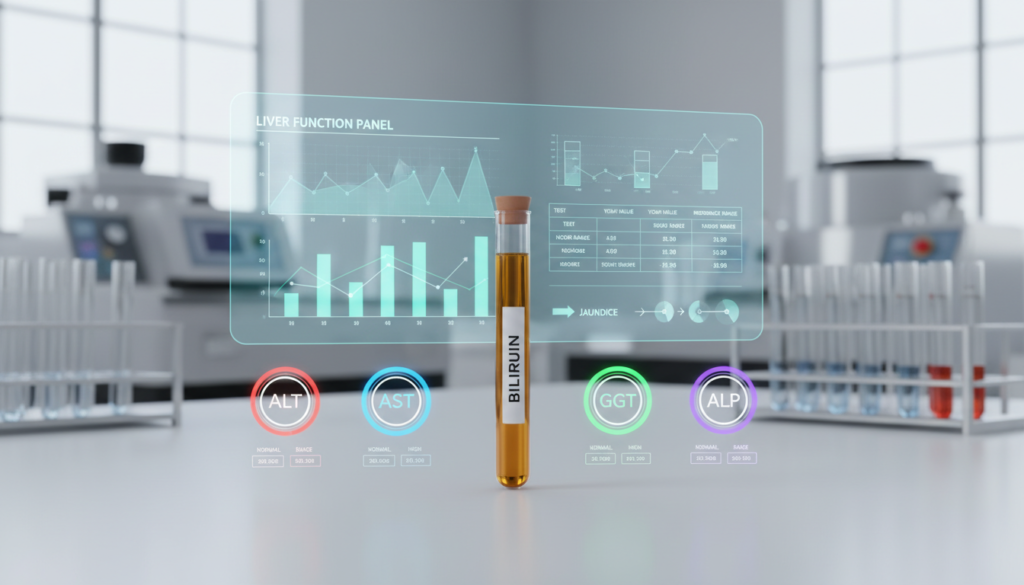
Doctors don’t look at bilirubin lab values alone. They check many enzymes and proteins for a full liver health picture. Key markers include albumin, alanine aminotransferase (ALT), globulin, total protein, and gamma-glutamyl transferase (GGT). Two biomarkers are very helpful when paired with direct bilirubin normal values.
Alkaline Phosphatase
Alkaline phosphatase (ALP) is key for checking bile duct blockages. A big jump in ALP suggests a blocked bile duct. This can lead to very high bilirubin levels.
The direct to total bilirubin ratio is also important. It helps doctors understand what’s going on when ALP results are high:
| Direct/Total Bilirubin Ratio | Likely Condition |
|---|---|
| Under 20% | Hemolysis (red blood cell breakdown) |
| 20%–40% | Intrahepatic liver disease |
| 40%–60% | Combined pathology |
| Over 50% | Extrahepatic obstruction |
In some liver diseases, ALP goes up while bilirubin stays normal. This helps doctors figure out the problem.
Aspartate Aminotransferase
Aspartate aminotransferase (AST) is in liver cells, heart, and muscles. High AST means active liver cell damage, not just bile flow problems. Comparing AST with direct bilirubin helps doctors diagnose liver issues.
- A sudden AST spike with slightly high bilirubin often means acute liver injury.
- Slow increases in AST and bilirubin suggest chronic liver disease.
Looking at these biomarkers together gives a clearer picture than any one test. The next section talks about how medications can affect these results.
Factors That Affect Results
Many things can change bilirubin test results. This doesn’t always show the real health of the liver or blood. Before getting a blood test, tell your doctor about any medicines, supplements, or habits that might affect the results. These can make the indirect bilirubin range seem higher or lower than it really is.
Medications and Supplements
Many drugs, both prescription and over-the-counter, can change bilirubin levels. Here are some common ones:
| Medications That May Increase Bilirubin | Medications That May Decrease Bilirubin |
|---|---|
| Oral contraceptives | Barbiturates |
| Phenytoin (Dilantin) | Caffeine |
| Rifampin | Penicillin |
| Atazanavir (anti-HIV drug) | Corticosteroids |
| Methotrexate | High-dose salicylates |
For example, Atazanavir can make indirect bilirubin levels seem higher without harming the liver. Vitamins A and C can also increase levels. It’s important to tell your doctor about all medicines and supplements you’re taking.
Hydration Status
Being dehydrated can make bilirubin levels seem higher because the blood gets more concentrated. Fasting can have a similar effect, which is a problem for people with Gilbert’s syndrome. This condition makes bilirubin levels go up when stressed or not eating enough.
Ask your healthcare provider if you should fast and how much water to drink before a bilirubin blood draw.
Doing a lot of exercise, like running a marathon, can also change bilirubin levels by breaking down more red blood cells. Stress and sudden illness can also affect results. Knowing these things helps doctors understand bilirubin levels better.
Clinical Context Considerations
Bilirubin lab values are never just a number. They tell part of the story. Clinicians must consider the patient’s background, age, sex, and health before making conclusions. This is why normal ranges can differ between labs, methods, and health.
Patient History
A detailed medical history is key for accurate results. Adult men usually have slightly higher readings than women and children. Pregnancy increases total bilirubin, changing expected ranges.
For infants, newborn bilirubin levels are critical. Doctors look at the rate of rise, the baby’s age, and if the birth was premature. High levels can harm brain cells, leading to serious issues:
- Slowed intellectual development
- Reduced learning ability
- Hearing loss
- Eye movement disorders
- Death in severe, untreated cases
Coexisting Medical Conditions
Many conditions affect how bilirubin lab values are read. The table below shows key factors and their impact.
| Condition | Effect on Bilirubin | Clinical Consideration |
|---|---|---|
| Hypothyroidism | May elevate indirect bilirubin | Thyroid function tests recommended |
| Pregnancy | Increases total bilirubin | Trimester-specific ranges apply |
| Premature birth | Newborn bilirubin levels rise faster | Lower treatment thresholds used |
| Decompensated heart failure | Elevates direct and total bilirubin | Hepatic congestion must be assessed |
| Existing liver disease | Chronic elevation expected | Trend monitoring over time preferred |
Providers need full liver function test results, a complete medication list, and symptom evaluation. No single bilirubin value should be interpreted alone.
Limitations of the Test
A bilirubin blood test is a useful tool, but it has its limits. It cannot diagnose a specific medical condition by itself. Doctors must look at other tests, the patient’s history, and images to make a correct diagnosis. Knowing the bilirubin normal range is just one part of solving the puzzle.
Variability in Measurement Techniques
Different labs use different methods to measure bilirubin. This can lead to slight variations in what’s considered normal. The American Association for Clinical Chemistry explains that what’s normal can vary from one lab to another.
Some conditions can give misleading test results. For example, in cases of hemolysis, total plasma bilirubin might not be very high unless there’s liver disease. Severe cirrhosis can even show decreased direct bilirubin because the liver can’t process it right. This is why looking at the ratios of different bilirubins is so important.
False Positives and Negatives
Some situations can make test results seem off:
- Liver cancer can make total serum bilirubin very high, hiding other problems.
- Acute viral hepatitis can cause bilirubin to spike in urine before jaundice shows up, making diagnosis tricky.
- Dirty or damaged blood samples can give wrong readings.
A single bilirubin value, without clinical correlation and supporting labs, should never be used as the sole basis for diagnosis.
Because of these issues, doctors use a range of tests and look at the big picture. They don’t just rely on bilirubin levels when checking liver function or looking for signs of hemolytic disorders.
Conclusion
The bilirubin blood test is key for checking liver health and spotting various conditions. It helps understand how the body breaks down yellowish pigment from old red blood cells. This is true for jaundice in babies and liver issues in adults.
Summary of Key Points
For adults, a healthy bilirubin level is between 0.1 and 1.2 mg/dL. Direct bilirubin should be under 0.3 mg/dL. Indirect bilirubin ranges from 0.1 to 1.0 mg/dL. These numbers can change based on age, testing methods, and health.
Here’s a quick summary of important points from this guide:
- High bilirubin levels might mean liver problems, hemolytic anemia, or blockages in the bile ducts.
- Low bilirubin levels are not usually a concern and don’t often need treatment.
- Medicines, staying hydrated, and being active can affect bilirubin test results.
- Understanding test results depends on the patient’s history, other health issues, and certain biomarkers like alkaline phosphatase and AST.
| Bilirubin Type | Normal Range (Adults) | Primary Clinical Use |
|---|---|---|
| Total Bilirubin | 0.1–1.2 mg/dL | Overall liver function screening |
| Direct Bilirubin | 0.0–0.3 mg/dL | Detecting biliary obstruction |
| Indirect Bilirubin | 0.1–1.0 mg/dL | Identifying hemolytic conditions |
No single test tells the whole story. A healthy bilirubin level is confirmed by looking at the whole liver function panel. It’s important for patients to talk to a healthcare provider about their test results. This ensures a correct and personalized diagnosis.
References
This article on bilirubin lab values comes from trusted medical texts and experts. These sources help us understand direct bilirubin normal values and liver function tests.
Medical Sources and Guidelines
Henry’s Clinical Diagnosis and Management by Laboratory Methods, 24th edition, edited by McPherson RA and Pincus MR, is a key reference. Chapter 22, written by Daniels L, Khalili M, Goldstein E, Bluth MH, Bowne WB, and Pincus MR, dives deep into liver function tests. It’s a go-to for learning about bilirubin lab values.
Sleisenger and Fordtran’s Gastrointestinal and Liver Disease: Pathophysiology, Diagnosis, and Management, 11th edition, edited by Feldman M, Friedman LS, and Brandt LJ, is also vital. Chapter 73, by Pratt DS, explains liver chemistry and function tests. It covers direct bilirubin normal values and their importance in diagnosis.
Clinical insights were provided by Nguyen Thi Ngoc, MSc MD, a General Internal Medicine Endocrinologist at Vinmec Central Park International General Hospital. With over 10 years of endocrinology experience, she reviewed this content.