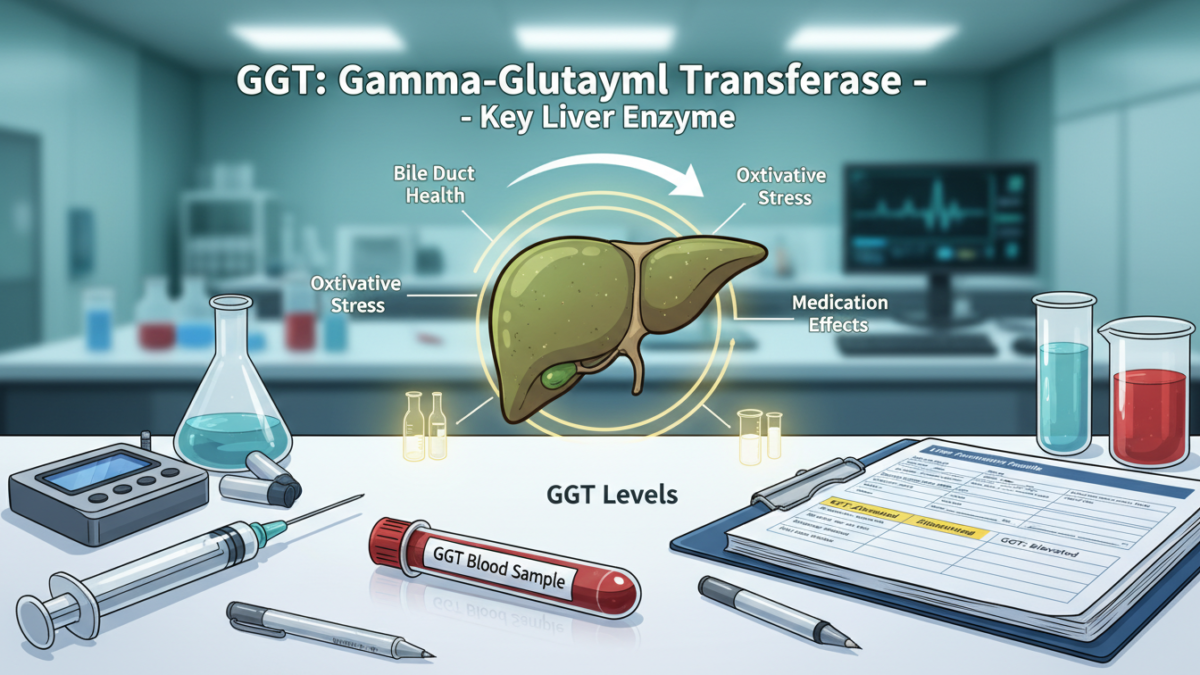
The gamma-glutamyl transferase test is a common lab test used to check liver health. It’s a simple blood test that looks at an enzyme made mainly in liver cells. If the liver or bile ducts are damaged, this enzyme leaks into the blood in higher amounts.
Knowing what the GGT blood test means is important for both patients and doctors. Gamma-glutamyl transferase is a protein that helps with body functions. The liver has the most of it. If GGT levels go up, it might mean the liver or bile ducts are damaged.
The GGT liver function test is not a single solution for finding problems. It’s more like a warning light that something might be off. Doctors use it with other tests to understand liver health better and decide what to do next.
Key Takeaways
- The GGT blood test measures gamma-glutamyl transferase enzyme levels circulating in the bloodstream.
- GGT is found in multiple organs but is most concentrated in liver cells.
- Elevated GGT levels may point to liver damage or bile duct obstruction.
- The gamma-glutamyl transferase test cannot identify the specific cause of liver disease by itself.
- Doctors interpret GGT results alongside other liver markers for a complete clinical picture.
- The GGT liver function test is a valuable screening tool used widely across the United States.
What the GGT Blood Test Measures
GGT blood tests measure a specific protein in the body. This protein is key for processing certain compounds. It’s an important marker for detecting problems in vital organs.
Overview of Gamma-Glutamyl Transferase
Gamma-glutamyl transpeptidase, or GGTP, is found in many tissues. It’s in the liver, kidneys, pancreas, heart, and brain. It’s also in the spleen and intestines, but in smaller amounts.
This enzyme helps move amino acids across cell membranes. It also plays a role in glutathione metabolism, which is vital for antioxidants.
| Organ | GGT Concentration Level |
|---|---|
| Liver | Very High |
| Kidneys | Very High |
| Pancreas | High |
| Heart | Moderate |
| Brain | Moderate |
Role in Liver Function
The Gamma-GT test is great for checking liver health and bile ducts. If bile flow is blocked, GGTP levels go up. This can happen due to infections, toxins, or chronic diseases.
Doctors often look at GGT with other tests like ALT, AST, ALP, and bilirubin. This helps them understand the situation better.
Other Conditions Measured
This test is not just for liver issues. It can also show:
- Differences between liver or bile duct problems and bone diseases (when ALP is high)
- Signs of pancreatic inflammation or blockage
- Heart tissue stress in some cases
GGTP is found in many organs. So, high levels need careful checking. This includes looking at the whole lab panel and medical history, as we’ll see next.
Why the GGT Blood Test is Ordered
Doctors order a GGT blood test for several reasons. It helps find the cause of abnormal liver enzymes and rules out certain conditions. Knowing why a doctor orders this test helps patients understand their care better.
Screening for Liver Diseases
Liver disease screening is a main reason for the GGT test. Symptoms like jaundice — a yellowish tint to the skin and eyes — can be checked. It’s useful when alkaline phosphatase (ALP) results are abnormal.
The GGT test helps figure out if high ALP is from liver disease or bone issues. High GGT and ALP levels suggest liver or bile duct problems.
Monitoring Alcohol Consumption
Alcohol use increases GGT enzyme activity in the blood. Research in Clinical Chemistry shows most with alcohol use disorder (AUD) have high GGT levels. Doctors use this marker to:
- Detect heavy or chronic alcohol use
- Track progress during AUD treatment programs
- Confirm patient compliance with sobriety goals
Testing over time shows a patient’s drinking patterns.
Evaluating Bile Duct Obstruction
Blockages in the bile ducts cause bile to back up into the liver, raising GGT. Doctors use this test with imaging studies to check for obstructions. Accurate GGT test results help guide treatment.
Normal Reference Range for GGT Levels
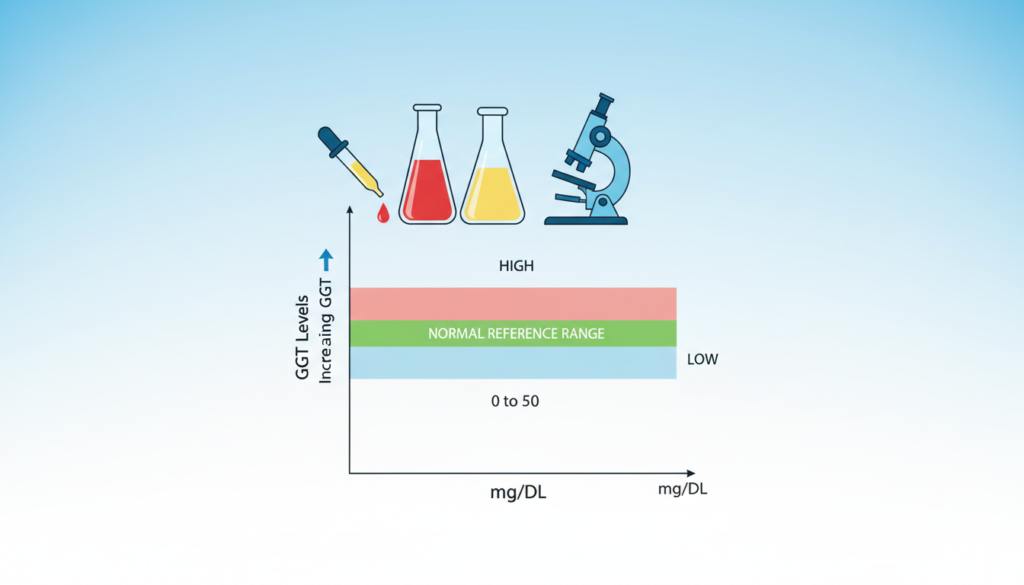
It’s key to know the GGT normal range to understand lab results. Different labs use different methods and equipment. This means reference values can vary. A doctor will compare your results to the lab’s specific range.
Adults Normal Values
For adults, normal GGT levels are between 5 and 40 U/L. Some labs might report a wider range. Newborns have much higher levels that drop as they grow. By childhood, their levels are more like adults.
Variance by Gender
GGT levels vary by gender. Men and those assigned male at birth usually have higher levels. Labs often set different reference values for men and women:
| Gender | GGT Normal Range (U/L) |
|---|---|
| Males | 7 – 47 U/L |
| Females | 5 – 25 U/L |
In women, GGT levels increase with age, more so after menopause. Men’s levels stay relatively stable. These changes are important for doctors to consider.
Units of Measurement
GGT results in the U.S. are in units per liter (U/L). This shows enzymatic activity in blood volume. Because labs use different assays, a result of 38 U/L might be normal in one lab but borderline in another.
- Always review the specific reference values printed on the lab report.
- Compare results using the same laboratory whenever possible for consistency.
- Discuss any borderline or unexpected normal GGT blood test results with a healthcare provider.
Understanding these ranges helps grasp what high or low GGT levels might mean for your health.
What High GGT Levels May Indicate
High GGT blood test results often mean something is wrong with the liver, bile ducts, or pancreas. These high readings can point to various conditions, from mild to serious. Doctors use these results along with other markers to find the cause.
Liver Disease and Damage
Most often, high GGT levels are linked to liver issues. Problems like hepatitis, cirrhosis, and tumors can raise GGT levels. Drinking too much alcohol is a big reason for high GGT, as it harms the liver.
High liver enzymes usually mean inflammation or cell death in the liver. The more damage, the higher the GGT. Even conditions like liver ischemia, where blood flow is low, can cause sharp increases.
Biliary Obstruction
Blocked bile ducts, or cholestasis, often cause high GGT levels. When ducts are blocked by stones or tumors, bile builds up, raising enzyme levels. Doctors often check GGT and alkaline phosphatase (ALP) together to spot biliary problems.
Pancreatic Disorders
Pancreatic cancer and pancreatitis can also lead to high GGT levels. The pancreas and liver share bile pathways, so problems in one can affect the other’s enzyme levels.
| Condition | GGT Elevation Level | Common Co-Findings |
|---|---|---|
| Chronic Alcohol Abuse | Moderate to Very High | Elevated AST, fatty liver |
| Hepatitis | Moderate to High | Elevated ALT, jaundice |
| Bile Duct Obstruction | High | Elevated ALP, bilirubin |
| Pancreatic Cancer | Moderate to High | Weight loss, elevated CA 19-9 |
| Heart Failure | Mild to Moderate | Elevated BNP, fluid retention |
Other conditions that can raise liver enzymes and GGT include diabetes, hyperthyroidism, lung disease, and viral infections like Epstein-Barr. Knowing these connections helps doctors understand the results better.
What Low GGT Levels May Indicate
Low GGT levels in a blood test are usually good news. They don’t usually mean there’s a problem with the liver or bile ducts. This is because low GGT levels often mean the liver and bile ducts are working well.
Potentially Non-Significant Findings
Low GGT levels don’t point to any known disease. The American Association for Clinical Chemistry says they mean there’s no liver damage or bile duct blockage. Doctors see these results as reassuring and not something to worry about.
- No evidence of liver inflammation or injury
- No signs of bile duct blockage
- Low likelihood of alcohol-related liver stress
Individual Variability
GGT levels can vary from person to person. Things like genetics, diet, and fitness level can affect them. For example, a fit young woman might have lower GGT than a less active older man, even if both are in the normal range. This makes understanding GGT levels very personal.
| Factor | Influence on Baseline GGT |
|---|---|
| Genetics | Can set naturally lower or higher enzyme production |
| Physical Activity | Regular exercise is linked to lower GGT values |
| Age | GGT tends to rise gradually with aging |
| Sex | Women typically have lower baseline levels than men |
Impact on Clinical Assessment
Normal GGT results tell doctors the liver is likely fine. When combined with other liver tests, low GGT levels help doctors rule out liver diseases. This helps them focus on other possible causes of health issues.
A low or normal GGT value is one of the most reassuring findings a patient can receive during a routine liver function evaluation.
In short, low GGT levels are positive clinical meaning. They show there’s no serious liver or biliary disease. They also suggest a healthy metabolic state.
Related Biomarkers to GGT
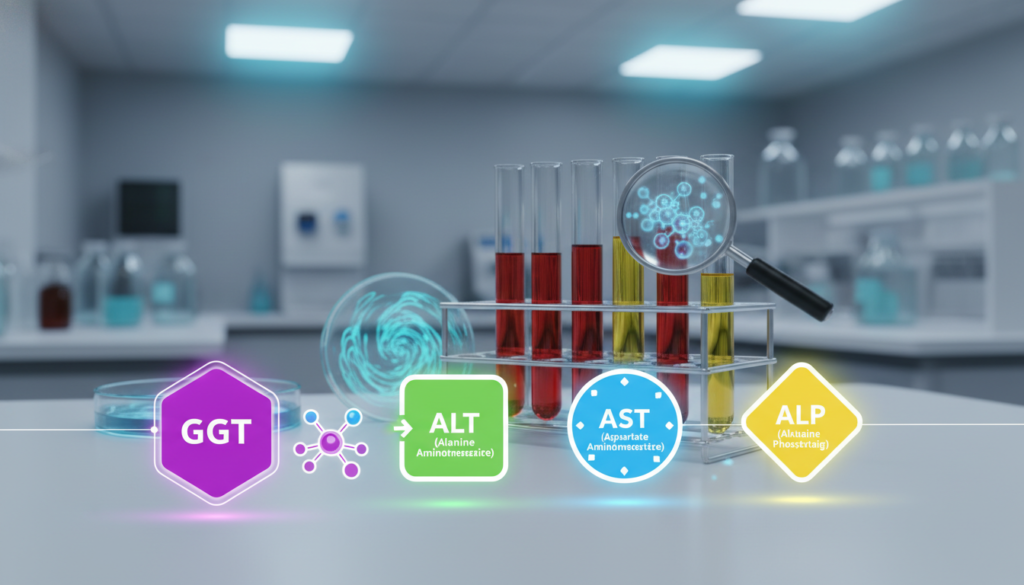
Doctors don’t just look at GGT alone. It’s part of a group of tests called liver function tests. These tests check different enzymes to see how well the liver works. Looking at them all together gives a clearer picture of what’s happening in the body.
ALT and AST, along with ALP, are common tests. Each gives different clues. By combining these, doctors can figure out if the liver, bile ducts, or another part of the body is affected.
Alanine Aminotransferase (ALT)
ALT is mainly in the liver. When liver cells get damaged, ALT gets into the blood. High ALT levels can mean hepatitis, fatty liver, or drug damage to the liver. Normal levels for adults are 7 to 56 U/L, says the American College of Gastroenterology.
Aspartate Aminotransferase (AST)
AST is in the liver, heart, and muscles. A high AST level isn’t as clear as ALT for liver damage. Doctors look at both ALT and AST to find the cause. A special ratio can even show if liver damage is from alcohol.
Alkaline Phosphatase (ALP)
The alkaline phosphatase test is important for telling liver problems from bone issues. Both GGT and ALP go up with liver or bile duct problems. But, only ALP goes up with bone issues like Paget’s disease.
| Biomarker Combination | Likely Indication |
|---|---|
| High ALP + High GGT | Liver or bile duct disorder |
| High ALP + Normal GGT | Bone disorder |
| High ALT and AST + High GGT | Liver cell damage with possible cholestasis |
Other tests like bilirubin, 5′-nucleotidase, and lactic dehydrogenase might be used too. These tests help doctors find the right diagnosis and treatment.
Factors That Affect GGT Test Results
Many things can change how accurate GGT test results are. Doctors look at a patient’s lifestyle, medicines, and who they are. Knowing these details helps doctors make the right diagnosis.
Alcohol Consumption
Studies show alcohol and GGT levels are linked. Even a little drinking can increase GGT in the blood. Drinking a lot or often makes GGT levels go up even more. The American Journal of Clinical Pathology says GGT can stay high for up to four weeks after stopping drinking.
Smoking also affects GGT levels. It’s important for patients to tell doctors about all substances they use to get accurate results.
Medication Interactions
Medicines can change GGT levels in different ways. Some drugs can make GGT levels go up or down. This makes it harder to understand the results.
| Medications That Raise GGT | Medications That Lower GGT |
|---|---|
| Acetaminophen (Tylenol) | Oral contraceptives (birth control pills) |
| Carbamazepine (Tegretol) | Clofibrate (Atromid-S) |
| Phenytoin (Dilantin) | — |
| Phenobarbital | — |
Herbal supplements and over-the-counter products can also affect results. It’s important for patients to tell their doctors about everything they take.
Age and Gender Considerations
Age and sex are important when looking at GGT test results. Women’s GGT levels tend to go up with age, more so after menopause. Men’s levels usually stay about the same throughout their lives.
- GGT levels in men are generally higher than in women at every age.
- Newborns can show GGT levels several times higher than adults.
- Fasting for at least 8 hours before testing is sometimes required, as GGT levels may drop after meals.
These factors are connected to the broader limitations of GGT testing. We’ll look at non-specific indications and external influences in more detail next.
Clinical Context Considerations for GGT Testing
A single GGT result only tells part of the story. To understand it fully, we need to look at the patient’s overall health. Doctors must consider symptoms, lifestyle, and other lab results. This way, they can make the most accurate diagnosis possible.
Importance of Patient History
Before looking at GGT levels, doctors review the patient’s medical history. Important factors include:
- History of alcohol use or substance exposure
- Current prescription and over-the-counter medications
- Pre-existing conditions such as diabetes or obesity
- Family history of liver or biliary disease
Without this background, high GGT levels can be confusing. For example, some medications can raise GGT levels without harming the liver.
Additional Diagnostic Procedures
The GGT test alone can’t pinpoint liver damage. Doctors often do more tests to find the cause. They might use ultrasound or CT scans to see if there’s a blockage or fatty liver.
Getting a blood sample is quick and safe. It might cause a little bruise, some pain, or dizziness.
Correlation with Other Tests
GGT results are best when compared with other tests. The table below shows common pairs used in practice:
| Test Combination | Clinical Purpose | What It Reveals |
|---|---|---|
| GGT + ALP | Differentiate bone vs. liver source of elevated ALP | Elevated GGT confirms hepatic origin |
| GGT + ALT + AST | Comprehensive liver panel evaluation | Identifies hepatocellular damage patterns |
| GGT + Bilirubin | Assess bile flow and excretion | Detects cholestatic conditions |
By looking at several markers together, doctors can make more accurate diagnoses. This approach helps avoid mistakes and ensures the right treatment, as the American Association for Clinical Chemistry notes.
Limitations of the GGT Blood Test
The GGT blood test is important for checking liver health, but it has its downsides. Knowing the GGT test limitations helps both patients and doctors make better choices. Several factors can make the test less accurate and harder to use alone for diagnosis.
Non-Specific Indications
One big problem with the GGT test is that it’s not specific to liver issues. High GGT levels can mean many things, like fatty liver disease or heart problems. This makes it hard to say what’s wrong just by looking at the GGT levels. Doctors need to use other tests like ALT, AST, and ALP to figure out the real cause.
Influence of External Factors
Many things outside the body can affect GGT test results, making diagnosis tricky. Some common things that can change GGT levels include:
- Drinking alcohol, even a little bit
- Taking certain medicines like phenytoin or antibiotics
- Smoking, which can raise GGT levels
- What you’ve eaten recently before getting your blood drawn
These factors make it hard to know if a high GGT result means real liver damage or just a temporary issue.
Interpretation Challenges
It’s also hard to understand what GGT results mean because different labs use different standards. The American Association for Clinical Chemistry says this lack of standardization makes it tough to compare results over time or between different places.
| Challenge | Impact on Results | Recommended Action |
|---|---|---|
| Varying lab reference ranges | Same result may be normal at one lab, abnormal at another | Use the same lab for serial testing |
| Non-specific liver markers elevation | Cannot distinguish between liver and non-liver causes | Combine with additional liver panels |
| Medication interference | Falsely elevated readings | Disclose all medications to the provider |
Because of these issues, it’s important to look at GGT results in the context of the whole clinical picture. This includes the patient’s history and other test results.
Conclusion on GGT Blood Test Utility
The GGT blood test is more than just a number. It’s a key tool for doctors to spot liver issues, bile duct problems, and alcohol use patterns. It works best when combined with alkaline phosphatase (ALP) tests to tell liver disease from bone issues.
GGT tests don’t find the exact cause of liver disease alone. But, they show how severe the damage is and if treatment is working. This makes them important for tracking recovery in people with alcohol problems or liver issues from medicines.
Getting the most from GGT tests depends on a few things:
- Looking at the patient’s history and symptoms
- Comparing with other biomarkers like ALT, AST, and ALP
- Considering age, gender, and medicines taken
- Using a reliable reference range from the testing lab
No test tells the whole story. Doctors use GGT as part of solving the puzzle. With imaging, patient talks, and more liver tests, the GGT test’s meaning becomes clearer and more useful.
A well-informed patient is better equipped to discuss their results with a healthcare provider and participate in shared decision-making about next steps.
If you get GGT results, it’s key to compare them with the lab’s reference values. Then, a doctor can decide if more tests or lifestyle changes are needed.
References
This article uses many medical references, clinical sources, and laboratory guidelines. These help make sure the information is accurate and trustworthy. They support the data in each section about GGT testing.
Medical Journals and Research Articles
Kunutsor SK’s 2016 study in Liver International looked at gamma-glutamyltransferase in medicine. Xing M et al. published a 2022 study in Medicine Baltimore. It looked at GGT in the blood for different liver diseases. Both studies are key for understanding GGT and health conditions.
Official Health Organizations
Many trusted groups helped with this article. The American Liver Foundation, Cleveland Clinic Health Library, Mayo Clinic Laboratories, and Labcorp all have useful resources. Their materials help people understand GGT results in a medical setting.
Clinical Practice Guidelines
Important textbooks guide us here. Henry’s Clinical Diagnosis and Management by Laboratory Methods, edited by McPherson and Pincus (2022), covers liver enzyme testing. Sleisenger and Fordtran’s Gastrointestinal and Liver Disease, edited by Feldman, Friedman, and Brandt (2021), offers detailed advice on diagnosing and treating GGT-related conditions. These books are essential in medical education and practice in the U.S.