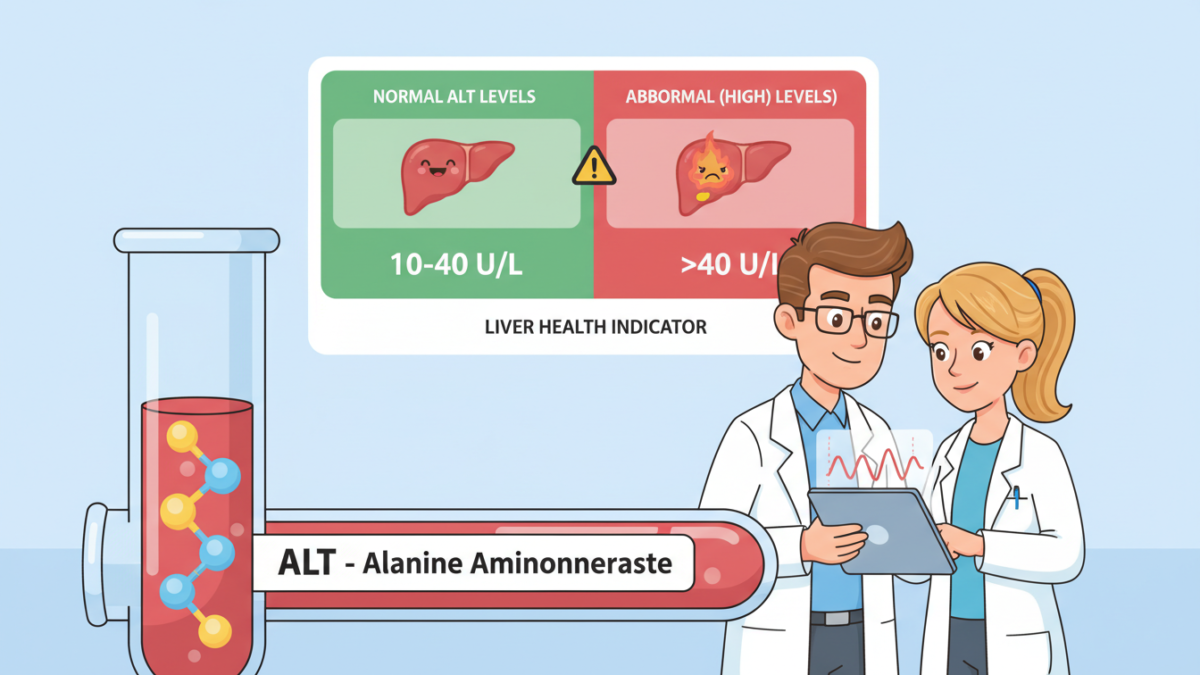
The ALT blood test is a key test in checking liver health. ALT, or alanine aminotransferase, is a protein made of 496 amino acids. It mainly lives in liver cells, helping with important chemical reactions.
When liver cells get hurt or inflamed, they spill ALT into the blood. A simple blood test can spot these changes early. This is why the ALT test is so important in medicine.
To understand the ALT test, knowing what’s normal is key. In the U.S., a healthy ALT level is below 30 IU/L. The enzyme stays in the blood for about 47 hours after liver damage.
The ALT test is a first step in checking liver health. It helps doctors decide on further tests and treatments. It’s useful for spotting issues like hepatitis or fatty liver disease.
Key Takeaways
- The ALT blood test measures levels of the enzyme alanine aminotransferase, which is found mainly in liver cells.
- Damaged or inflamed liver cells release ALT into the bloodstream, causing levels to rise above the normal range.
- Normal ALT levels typically fall below 30 IU/L in healthy adults.
- This liver enzyme test can detect liver injury early, even before noticeable symptoms develop.
- ALT has a half-life of roughly 47 hours, so elevated results may linger for several days after the initial damage.
- Physicians use the alanine aminotransferase test as part of broader liver function panels to guide diagnosis and treatment.
What the ALT Blood Test Measures
A liver function blood test often includes a key marker called alanine aminotransferase, or ALT. This enzyme lives inside liver cells and enters the bloodstream when those cells are injured. Doctors rely on ALT readings to gauge liver health and detect problems early.
Understanding Alanine Aminotransferase
ALT is an enzyme that helps convert the amino acid L-alanine into pyruvate and L-glutamate. This chemical reaction is part of the body’s energy cycle. The enzyme needs vitamin B6 (pyridoxal 5′-phosphate) to work properly.
ALT exists in several organs, including the kidneys, heart, brain, and pancreas. The liver, though, holds the greatest concentration. Liver cells contain roughly 3,000 times more ALT than normal blood serum. That is why elevated ALT levels almost always point back to the liver as the primary source.
“ALT is considered the most specific enzyme marker for hepatocellular injury due to its high concentration in hepatocyte cytosol.” — American Association for the Study of Liver Diseases
Role in Liver Function
So what does high ALT mean in practical terms? It signals that liver cells may be leaking their contents into the blood. The liver performs hundreds of essential tasks, and ALT plays a part in many of them:
- Protein synthesis and amino acid metabolism
- Glucose regulation and energy production
- Detoxification of drugs and harmful substances
- Bile acid synthesis for digestion
- Lipid metabolism and fat processing
| Organ | Relative ALT Concentration | Clinical Relevance |
|---|---|---|
| Liver | Very High | Primary diagnostic target |
| Kidneys | Moderate | Rarely a significant source |
| Heart | Low | Minor contributor in cardiac injury |
| Skeletal Muscle | Low | Can rise after extreme exercise |
| Brain | Very Low | Minimal clinical impact |
When a liver function blood test reveals elevated ALT levels, it prompts doctors to investigate specific causes — a topic covered in the next section on why this test is ordered.
Why the ALT Blood Test is Ordered
Doctors order the ALT blood test for many reasons. Some patients show signs of liver trouble. Others get it as part of a health check.
The ALT test helps find liver damage early. This is often before serious problems start. Studies show that 10 to 30 percent of Americans have high transaminase levels. But, only about 5% have a serious liver issue.
Symptoms Leading to Testing
A healthcare provider will order this test for certain symptoms. These signs include:
- Jaundice — yellowing of the skin and eyes
- Persistent nausea, vomiting, or loss of appetite
- Unexplained fatigue and weakness
- Abdominal pain or swelling
- Swelling in the ankles and legs
- Dark-colored urine or light-colored stool
- Frequent itching without a clear cause
When ALT levels are high with these symptoms, it helps doctors diagnose and treat. Early detection is key for managing conditions like hepatitis and fatty liver disease.
Routine Screening Considerations
Not all patients with this test have symptoms. The liver enzyme test is part of the comprehensive metabolic panel (CMP). Many doctors include it in annual physicals.
Population data shows ALT elevations affect about 8.9% of Americans. Routine screening is important. It catches abnormal ALT levels before symptoms appear.
This is very helpful for people with risk factors like obesity and diabetes. Spotting high enzymes early can prevent serious damage. It opens the door to lifestyle changes and treatments.
Normal Reference Range for ALT Levels
Knowing the normal ALT range is key for understanding test results. The usual range for an alanine aminotransferase test is 4 to 36 U/L. But, these numbers can change based on the lab, a person’s body, and factors like age and sex.
Units of Measurement
ALT levels are measured in Units per Liter (U/L) or International Units per Liter (IU/L). Both are the same in everyday medical use. ALT levels also change throughout the day. They are lowest around 4:00 AM and highest near 4:00 PM. This can affect test results depending on when the blood is taken.
Because reference ranges can differ between labs and individuals, it’s important to talk to a doctor about your results.
Age and Gender Considerations
Men usually have higher ALT levels than women. This is mainly because of hormonal differences. Being overweight can also raise ALT levels, even without liver disease.
Research from the National Health and Nutrition Examination Survey (NHANES) found that Mexican Americans have higher ALT levels than other groups in the U.S.
| Group | Typical ALT Range (U/L) | Key Influencing Factor |
|---|---|---|
| Adult Males | 7–56 | Higher muscle mass and testosterone levels |
| Adult Females | 4–36 | Lower baseline due to estrogen influence |
| Children (1–12 years) | 10–25 | Developing liver enzyme activity |
| Older Adults (65+) | 5–30 | Reduced liver mass and metabolic rate |
| Individuals with Obesity (BMI >30) | Up to 40% higher than standard | Fatty liver infiltration and metabolic stress |
It’s clear that a single number can’t apply to everyone. To understand ALT test results, we must consider gender, age, BMI, and ethnicity.
What High ALT Levels May Indicate
Understanding what does high ALT mean is key to finding the cause of liver stress. High ALT levels in blood tests show liver cell damage. This damage releases the enzyme into the blood. The level of increase often shows how severe and what type of problem it is.
Liver Damage or Disease
Abnormal ALT levels are often linked to liver issues. Viral hepatitis (types A, B, and C) can cause ALT levels to soar up to 3,000–4,000 IU/L. Paracetamol (acetaminophen) overdose is a common cause of liver injury, with ALT levels often over 1,000 U/L.
Chronic conditions have different patterns. Non-alcoholic fatty liver disease (NAFLD), alcoholic hepatitis, and autoimmune hepatitis show moderate ALT levels that last six months or more. Rare but serious conditions like hemochromatosis and Wilson disease also play a role.
“Persistent ALT elevation beyond six months warrants a thorough diagnostic workup to rule out chronic liver disease.” — American Liver Foundation
Other Possible Conditions
Not all cases of high ALT levels come from the liver. Several non-liver conditions can also raise ALT levels:
- Celiac disease
- Pancreatitis
- Infectious mononucleosis
- Alpha-1 antitrypsin deficiency
- Budd-Chiari syndrome
| Condition | Typical ALT Range (U/L) | Pattern |
|---|---|---|
| Acute Viral Hepatitis | 1,000–4,000 | Sudden spike |
| Acetaminophen Toxicity | >1,000 | Rapid onset |
| NAFLD / NASH | 50–300 | Chronic, mild-moderate |
| Alcoholic Hepatitis | 100–500 | Chronic |
| Celiac Disease | 40–100 | Mild, persistent |
A single high ALT reading doesn’t mean you have a problem. Doctors look at ALT, AST, bilirubin, and alkaline phosphatase levels together. This helps them understand the situation better.
What Low ALT Levels May Indicate
Most people talk about high ALT levels. But low ALT levels are important too. Doctors look closely when they see low ALT in a blood test.
Clinical Significance of Low Levels
Seeing ALT levels that are too low is rare. A study in the Journal of Clinical Medicine found a few reasons for this:
- Vitamin B6 deficiency, as ALT needs B6 to work
- Advanced chronic kidney disease
- Frailty or muscle loss in older adults
- Long-term smoking, which can lower nutrient levels
Understanding low ALT levels depends on the whole picture. A low reading alone might not be a big deal. But if other liver tests show problems, it could mean more tests are needed.
A 2020 study in PLOS ONE showed that low ALT in the elderly could mean a higher risk of death. This might mean the liver is smaller or the body is getting weaker, not just one disease.
| Possible Cause of Low ALT | Associated Finding | Recommended Follow-Up |
|---|---|---|
| Vitamin B6 deficiency | Fatigue, nerve issues | Serum B6 level testing |
| Chronic kidney disease | Elevated creatinine | Renal function panel |
| Muscle wasting or frailty | Low body mass, weakness | Nutritional assessment |
| Chronic smoking | Nutrient depletion | Comprehensive metabolic panel |
Low ALT levels are not as well-studied as high ones. So, it’s key to talk about your blood test results with your doctor. This helps make sure everything is checked before looking at other tests like AST and bilirubin.
Related Biomarkers in Hepatic Function

The alanine aminotransferase test is not used alone. It’s part of a bigger test that shows how well the liver is working. This test includes several markers that help find out what’s wrong with the liver.
AST (Aspartate Aminotransferase)
AST is often tested along with ALT. ALT is mainly in the liver, but AST is found in many parts of the body. This makes ALT a better sign of liver damage.
The ratio of AST to ALT, or the De Ritis ratio, helps doctors figure out what’s wrong. A high ratio might mean alcohol damage, while a low ratio could suggest other problems like fatty liver or viral infections.
Bilirubin and Alkaline Phosphatase
Bilirubin is a yellow pigment made when old red blood cells break down. High levels can mean blocked bile ducts, too many red blood cells breaking down, or liver problems. Alkaline phosphatase (ALP) goes up when bile can’t flow right, which is a sign of cholestatic issues.
These markers, along with others like gamma-glutamyltransferase (GGT), prothrombin time, and serum albumin, make up the standard liver test. Modern labs use special machines to get very accurate results.
| Biomarker | Primary Source | Key Clinical Indication |
|---|---|---|
| ALT | Liver | Hepatocellular injury |
| AST | Liver, heart, muscle | Tissue damage (less liver-specific) |
| ALP | Liver, bone | Cholestasis or bile duct obstruction |
| Bilirubin | Red blood cell breakdown | Jaundice, hemolysis, liver dysfunction |
| GGT | Liver, bile ducts | Alcohol use, bile duct disease |
| Albumin | Liver | Chronic liver disease, synthetic function |
Knowing about these related biomarkers helps doctors understand the results of the alanine aminotransferase test better. This is important for making accurate diagnoses.
Factors That Affect ALT Test Results
Understanding the ALT test purpose is more than just looking at a number. Many things can change the results, making them not always accurate. Knowing these factors helps avoid misunderstandings.
Influential Lifestyle Factors
Being very active can cause ALT levels to rise. Studies show that hard exercise can make ALT levels two to 2.2 times higher. But, these levels usually go back to normal after a few days of rest.
Being overweight or obese also affects ALT levels. When people ask about high ALT levels, extra body weight is often the reason.
Medication Interference
Drug-induced liver injury happens to about 19 out of every 100,000 persons in the U.S. Many medicines can cause ALT levels to go up. It’s important to check which medicines you’re taking.
| Medication Category | Examples | Notable Risk |
|---|---|---|
| Antibiotics | Amoxicillin/clavulanate, cotrimoxazole, ceftriaxone | Most common cause of drug-induced ALT elevation |
| Cholesterol-Lowering | Statins (atorvastatin, rosuvastatin) | Affects approximately 5% of patients |
| Anti-Tuberculosis | Isoniazid, pyrazinamide, rifampicin | Requires routine liver monitoring |
| Antidepressants | Imipramine, amitriptyline, tricyclics | Dose-dependent elevation possible |
| Anti-Inflammatory | Ibuprofen, nimesulide | Chronic use increases risk |
| Anticonvulsants | Phenytoin, carbamazepine | Long-term therapy warrants monitoring |
Hepatitis E can look like drug-induced liver injury in 3 to 13 percent of cases. This shows why understanding high ALT levels is complex. It involves looking at other biomarkers and medical history.
Clinical Context Considerations for Interpretation
A single number on a lab report never tells the full story. Proper ALT test results interpretation depends on a wide range of clinical factors unique to each patient. Doctors must weigh symptoms, personal background, and family genetics before drawing any conclusions from a liver function blood test.
Correlating Symptoms with Results
Physicians look for specific physical signs when evaluating ALT blood test meaning. A thorough review of systems should assess for:
- Jaundice (yellowing of skin and eyes)
- Ascites and peripheral edema
- Hepatosplenomegaly (enlarged liver or spleen)
- Pruritus (persistent itching)
- Gastrointestinal bleeding
- Signs of encephalopathy or muscle wasting
When these symptoms align with elevated ALT levels, the clinical picture becomes clearer. Isolated elevations without symptoms may require a different diagnostic approach, including repeat testing and monitoring over time.
Importance of Medical History
A patient’s medical and family history shapes every aspect of ALT test results interpretation. Conditions like diabetes, obesity, hyperlipidemia, thyroid disorders, celiac disease, and autoimmune hepatitis can all influence ALT values. Alcohol consumption, medication use, and toxin exposure must be documented as well.
Family history plays a critical role. Inherited conditions such as Wilson disease, alpha-1-antitrypsin deficiency, and hereditary hemochromatosis can cause chronic liver enzyme elevations. Identifying these early changes outcomes.
To clarify the full ALT blood test meaning, physicians often order supplementary studies alongside the liver function blood test:
| Supplementary Test | Purpose |
|---|---|
| Hepatitis B Surface Antigen | Screen for hepatitis B infection |
| Hepatitis C Antibody | Screen for hepatitis C infection |
| Iron Studies | Evaluate for hemochromatosis |
| Hemoglobin A1c | Assess long-term blood sugar control |
| Fasting Lipid Panel | Identify metabolic risk factors |
| Complete Blood Count | Detect anemia or infection |
This approach ensures accurate ALT test results interpretation and guides effective treatment decisions, as noted by the American College of Gastroenterology’s 2017 clinical guidelines on liver enzyme evaluation.
Limitations of the ALT Blood Test

To fully understand the ALT blood test, we must know its limits. It’s a useful screening tool but has blind spots. Doctors must think carefully before making a diagnosis.
Specificity and Sensitivity Issues
ALT is good at showing liver damage, but it’s not precise. A high ALT level can mean many things, like viral hepatitis or muscle damage. It’s hard to tell what’s causing the high reading just by looking at the number.
High ALT levels don’t always mean the liver is getting better. Sometimes, levels can drop because there are too few liver cells left. This can confuse both patients and doctors.
Also, having normal ALT levels doesn’t mean the liver is perfectly fine. Research shows that some people with chronic hepatitis C can have normal ALT levels but have liver damage. The American Journal of Gastroenterology found that a level seven times the normal range is best for spotting liver injury, with over 95% accuracy.
Other Diagnostic Tools
Because of these limitations, doctors use other ways to check the liver:
- NAFLD Fibrosis Score — a score that shows how much scarring there is in fatty liver disease
- CT or MRI imaging — scans that show structural changes, fat, and tumors
- Liver biopsy — the most accurate way to diagnose, by looking at liver tissue directly
These methods, along with the patient’s history and other biomarkers, give a clearer picture than ALT levels alone.
References
This article uses trusted medical sources and peer-reviewed research. These sources give detailed info on the alanine aminotransferase test. They explain its use in medicine and how to understand test results. For more on the ALT test and other tests, check out the resources below.
Medical Sources for Further Reading
The American Liver Foundation has guidelines on diagnosing liver disease with enzyme tests. The Cleveland Clinic and Mayo Clinic offer detailed info on high liver enzymes and blood tests. The Merck Manual Consumer Version explains liver blood tests in simple terms.
Pathology Tests Explained by the Australasian Association for Clinical Biochemistry and Testing.com provide easy-to-understand info on liver tests and ALT.
Research Studies on ALT Levels
StatPearls publications by Moriles KE, Zubair M, and Azer SA are important references on ALT testing. The NCBI Bookshelf, run by the National Library of Medicine, has many reviews on ALT test standards. Medscape Laboratory Medicine articles by Vovchuk E discuss the details of enzyme interpretation.
The National Institute of Diabetes and Digestive and Kidney Diseases has a database on liver damage and drug effects. This supports understanding the ALT test’s role in real-world medicine.