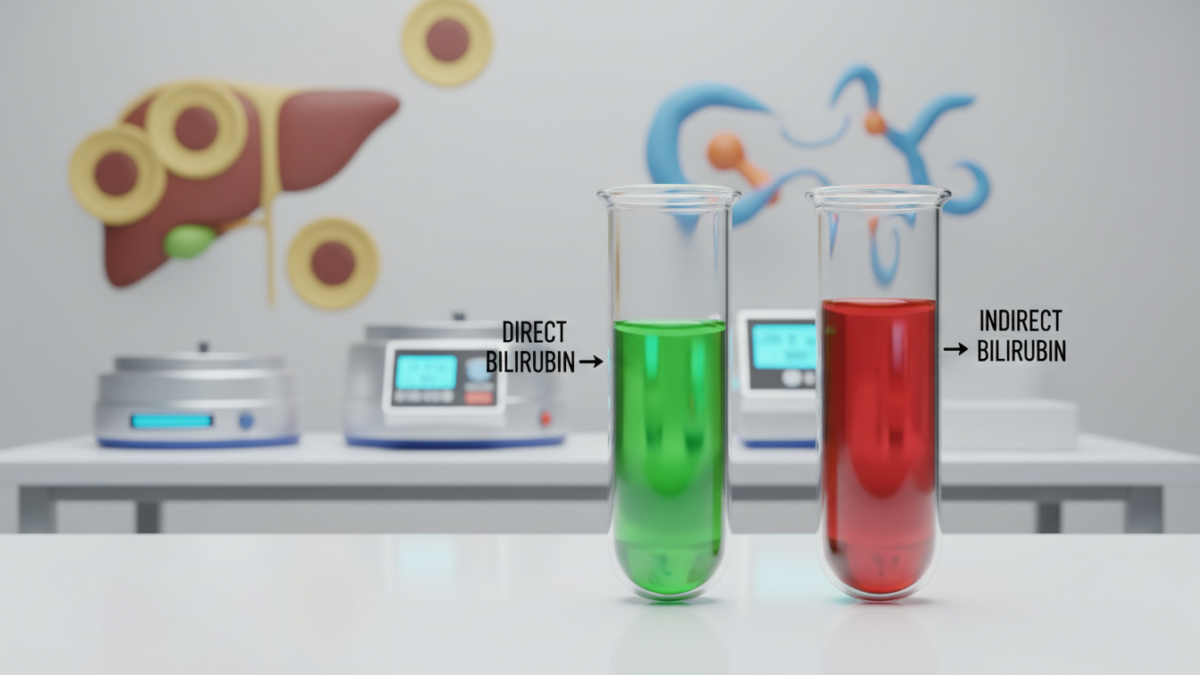
The bilirubin test is very common in medical checks. It helps doctors understand liver health and red blood cell function. By looking at direct vs indirect bilirubin, doctors learn how the body gets rid of old red blood cells.
Bilirubin is a yellow pigment made when hemoglobin breaks down. The first form, unconjugated bilirubin, is fat-soluble. It binds to albumin to travel safely through the blood. But too much of it can harm tissues, like the brain.
In the liver, an enzyme adds glucuronic acid to bilirubin. This makes it water-soluble, called conjugated bilirubin. This form is less harmful and can be easily removed from the body.
Doctors measure bilirubin levels in mg/dL or µmol/L. High direct bilirubin levels often mean liver or bile duct problems. High indirect bilirubin levels suggest issues with red blood cells breaking down too fast. Both help doctors understand jaundice in patients.
Key Takeaways
- Direct vs indirect bilirubin testing reveals whether a problem lies in the liver, bile ducts, or red blood cell breakdown.
- Unconjugated bilirubin is lipid-soluble, albumin-bound, and potentially toxic at elevated concentrations.
- Conjugated bilirubin is water-soluble and formed in the liver through enzymatic processing.
- High direct bilirubin levels often indicate bile duct obstruction or liver disease.
- High indirect bilirubin levels may suggest hemolytic anemia or ineffective red blood cell recycling.
- Bilirubin levels are reported in mg/dL or µmol/L depending on the laboratory standard used.
What the Test Measures
A bilirubin blood test checks the levels of a yellow pigment in the blood. This pigment comes from breaking down old red blood cells. The test looks at total bilirubin, which is made up of two types: direct (conjugated) and indirect (unconjugated) bilirubin. It’s a key test for liver health in the U.S.
Overview of Bilirubin Types
Each bilirubin type shows a different stage of processing. Indirect bilirubin is the unconjugated form. It travels with albumin to the liver. Direct bilirubin is the conjugated form. It has changed in the liver and goes to the intestines for excretion.
| Feature | Direct (Conjugated) | Indirect (Unconjugated) |
|---|---|---|
| Solubility | Water-soluble | Fat-soluble |
| Processing Site | Liver | Spleen and bloodstream |
| Excretion Path | Bile ducts to intestines | Transported to liver via albumin |
| Included in Total Bilirubin | Yes | Yes |
The Mechanism of Bilirubin Formation
Bilirubin comes from hemoglobin catabolism. When old red blood cells are broken down, an enzyme changes hemoglobin. This creates a green pigment called biliverdin, which is then turned into bilirubin.
Bilirubin is not just waste. It also acts as an antioxidant. A study in the Annals of Medicine (2012) found it fights free superoxide molecules. This helps protect the brain from damage. Knowing how bilirubin is made helps doctors understand liver tests and diagnose issues.
Why It Is Ordered
Doctors order bilirubin tests when they think there might be a liver, blood, or bile duct issue. These tests check liver function and can find many problems in adults and kids. Certain symptoms often lead to this test.
- Dark urine or clay-colored stools
- Nausea, vomiting, or abdominal pain
- Abdominal swelling or persistent fatigue
- Yellowing of the skin or eyes
Blood draws are the usual way to get these tests. Urine tests and transcutaneous measurement devices are used on newborns. They are less invasive and help track bilirubin levels over time.
Evaluating Liver Function
Bilirubin results are key in liver function tests. High levels can mean cirrhosis, hepatitis, or blocked bile ducts. Doctors look at these levels, along with other liver enzymes, if there’s a history of alcohol use or drug reactions.
Early detection of hyperbilirubinemia can prevent serious liver damage.
Diagnosing Hemolytic Disorders
When red blood cells break down too fast, indirect bilirubin goes up. This helps find sickle cell disease and hemolytic anemia. By separating direct and indirect bilirubin, doctors can tell if it’s a blood issue or a liver problem.
Investigating Jaundice
Jaundice in adults can mean liver disease or blocked bile ducts. In newborns, it’s about age-specific bilirubin levels. These levels help decide if phototherapy or exchange transfusion is needed.
Tracking bilirubin levels helps doctors act quickly. This is based on American Academy of Pediatrics guidelines.
Normal Reference Range
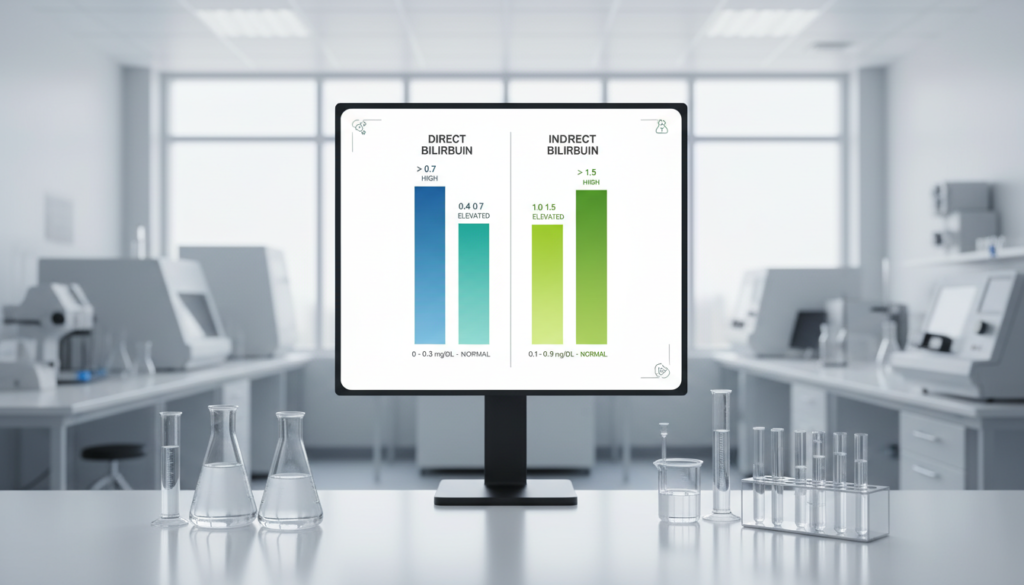
It’s key to know the normal bilirubin levels to understand lab results. Each bilirubin type has its own range, which can change with age, sex, and ethnicity. A liver panel checks both types of bilirubin for a full metabolic check.
Direct Bilirubin Values
Direct bilirubin, or conjugated bilirubin, should be between 0.0 to 0.3 mg/dL in adults. This means the liver has already processed it. If it’s above 0.3 mg/dL, it could mean a problem with bile flow or liver function. Newborns can have up to 12 mg/dL of total bilirubin, which is normal in the first days of life.
Indirect Bilirubin Values
Unconjugated bilirubin is found by subtracting direct from total bilirubin. Healthy adults over 18 should have total bilirubin below 1.2 mg/dL. Those under 18 should be under 1.0 mg/dL. Men usually have slightly higher levels than women. A study by the National Health and Nutrition Examination Survey (NHANES) found Black populations tend to have lower baseline values than other racial groups.
Units of Measurement
Labs in the U.S. use two standard units for bilirubin levels. The table below shows both:
| Bilirubin Type | Normal Range (mg/dL) | Normal Range (µmol/L) |
|---|---|---|
| Total Bilirubin (Adults ≥18) | 0.1 – 1.2 | 1.7 – 20.5 |
| Conjugated Bilirubin (Direct) | 0.0 – 0.3 | 0.0 – 5.1 |
| Unconjugated Bilirubin (Indirect) | 0.1 – 0.9 | 1.7 – 15.4 |
| Total Bilirubin (Newborns) | 1.0 – 12.0 | 17.1 – 205.2 |
In the U.S., labs usually use milligrams per deciliter (mg/dL). But micromoles per liter (µmol/L) is the international standard. Knowing the unit your lab uses is important to avoid mistakes when bilirubin levels are high.
What High Levels May Indicate
High bilirubin levels mean something in the body needs attention. In adults, levels over 2.0 mg/dL cause yellow skin and eyes. Newborns need treatment if levels hit 15 mg/dL.
Liver function tests help find the cause. It’s important to know if direct or indirect bilirubin is high — or both.
Conditions Leading to Increased Direct Bilirubin
High direct bilirubin means liver problems after processing bilirubin. Common causes include:
- Gallstones blocking the bile duct
- Tumors in the pancreas or bile duct
- Hepatitis (viral, autoimmune, or drug-induced)
- Cirrhosis and alcoholic liver disease
These issues stop conjugated bilirubin from moving into the intestines. This leads to hyperbilirubinemia, causing dark urine and pale stools.
Conditions Leading to Increased Indirect Bilirubin
Indirect bilirubin goes up when there’s too much red blood cell destruction or liver uptake issues. Key causes include:
| Condition | Primary Mechanism |
|---|---|
| Hemolytic anemia | Excessive red blood cell breakdown |
| Gilbert syndrome | Enzyme deficiency reducing conjugation |
| Internal bleeding (skin or lungs) | Reabsorption of hemoglobin byproducts |
| Blood transfusion reactions | Immune-mediated red cell destruction |
Strenuous exercise, like marathon running, can briefly raise indirect levels. Severe or long-term hyperbilirubinemia is dangerous. It can harm the brain and cause seizures.
Liver function tests and a complete blood count help doctors figure out the cause.
What Low Levels May Indicate
Most people talk about high bilirubin levels. But low levels, called hypobilirubinemia, get less attention. They usually don’t cause worry and rarely need quick medical help. Yet, they might hint at something important.
Clinical Significance of Low Bilirubin Levels
A study in the Journal of the American Heart Association found a link between low bilirubin and heart disease. Bilirubin helps protect the body. Low levels might mean less protection.
Some studies suggest low bilirubin levels could be linked to autoimmune diseases. These include:
- Rheumatoid arthritis
- Systemic lupus erythematosus
- Polymyositis
- Sjögren’s syndrome
Low bilirubin might be a sign of oxidative stress-related conditions. But we need more research to be sure.
Rare Causes of Low Bilirubin Levels
Some lifestyle choices and medicines can lower bilirubin levels. Drinking a lot of caffeine, for instance, can lower bilirubin. Certain drugs, like barbiturates and some anti-inflammatory drugs, can also do this.
| Potential Cause | Mechanism | Clinical Concern |
|---|---|---|
| Caffeine consumption | Enhances bilirubin metabolism | Minimal |
| Barbiturate use | Induces liver enzymes that clear bilirubin | Low |
| Autoimmune conditions | Chronic inflammation and oxidative stress | Moderate — warrants monitoring |
Unlike high bilirubin levels, low levels usually don’t need treatment on their own. Doctors look at them with other tests to understand what’s happening.
Related Biomarkers
Bilirubin levels don’t always tell the whole story. Doctors use a group of biomarkers to understand direct vs indirect bilirubin results. These tests help figure out if the issue is with the liver, bile ducts, or red blood cells.
Correlation with Liver Enzymes
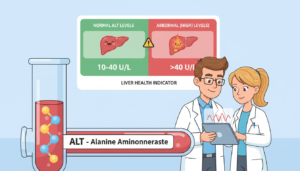
Liver function tests include enzyme measurements. These work with total bilirubin to show disease patterns. For example, alanine aminotransferase (ALT) and aspartate aminotransferase (AST) rising with direct bilirubin often means liver cell damage.
Alkaline phosphatase (ALP) and gamma-glutamyl transferase (GGT) high with direct bilirubin usually means bile duct blockage.
These enzyme patterns help doctors tell if the problem is liver damage or bile duct issues. Direct vs indirect bilirubin levels alone can’t always make this clear.
Other Tests for Liver Function
There are more tests to check liver function:
- Albumin — shows how well the liver makes proteins
- Prothrombin time (PT/INR) — checks clotting factor production
- Lactate dehydrogenase (LDH) — finds out if red blood cell breakdown is causing high indirect bilirubin
- Reticulocyte count — confirms if red blood cell destruction is raising bilirubin
| Biomarker | Primary Role | Bilirubin Correlation |
|---|---|---|
| ALT / AST | Detect liver cell injury | Rises with direct bilirubin in hepatitis |
| ALP / GGT | Identify bile flow obstruction | Rises with direct bilirubin in cholestasis |
| LDH | Signal tissue breakdown | Rises with indirect bilirubin in hemolysis |
| Albumin | Gauge synthetic liver function | Drops in chronic liver disease with elevated total bilirubin |
Looking at these biomarkers with liver function tests gives a full picture. This helps doctors make accurate diagnoses, as the American Association for the Study of Liver Diseases (AASLD) guidelines suggest. It’s important to understand how each marker works with bilirubin before looking at external factors that can affect test results.
Factors That Affect Results
A bilirubin blood test can be influenced by several external factors. Before drawing conclusions from results, patients and clinicians should consider lifestyle habits and current medications. Both conjugated bilirubin and unconjugated bilirubin levels may shift based on what a person eats, drinks, or takes as prescribed therapy.
Influence of Diet and Hydration
Fasting for at least four hours before the test is typically recommended. Food intake can temporarily alter how the liver processes bilirubin, leading to inaccurate readings. A high-fat meal, for example, may affect conjugated bilirubin clearance through bile.
Hydration status matters as well. Dehydration concentrates blood, which can make unconjugated bilirubin appear falsely elevated. Intense physical activity before the test may cause mild hemolysis of red blood cells, raising bilirubin levels beyond their true baseline.
The American Association for Clinical Chemistry recommends that patients disclose all dietary supplements and fasting status before a bilirubin blood test.
Medications Impacting Bilirubin Levels
Many common drugs alter bilirubin results. Some raise levels, while others suppress them. A full medication review before testing helps ensure accuracy.
| Effect on Bilirubin | Drug Category | Examples |
|---|---|---|
| Increases levels | Antibiotics | Erythromycin, Rifampin |
| Increases levels | Antimalarials | Chloroquine |
| Increases levels | MAO Inhibitors | Phenelzine, Tranylcypromine |
| Increases levels | Opioids / Hormones | Morphine, Oral Contraceptives, Steroids |
| Decreases levels | Barbiturates | Phenobarbital |
| Decreases levels | Stimulants | Caffeine |
| Decreases levels | Antibiotics | Penicillin |
| Decreases levels | Analgesics | High-dose Aspirin (Salicylates) |
Patients should never stop medications without a doctor’s guidance. Informing the lab about all current prescriptions helps clinicians interpret conjugated bilirubin and unconjugated bilirubin values in the right clinical context — a topic explored in the next section.
Clinical Context Considerations
Bilirubin values alone don’t tell the whole story. Doctors must look at symptoms, medical history, and lab results together. Liver function tests are just the beginning. Understanding the context is key.
Integrating Bilirubin Levels with Other Findings
Direct and indirect bilirubin tests have different uses. They can’t be swapped. Together, they give a full picture of liver health and guide diagnosis.
High bilirubin levels can point to many issues, like hemolytic conditions or bile duct problems. Doctors check bilirubin with liver enzymes like ALT and AST. This helps find the cause early.
| Clinical Finding | Suggested Testing | Possible Interpretation |
|---|---|---|
| Yellowing skin or eyes | Total, direct, and indirect bilirubin | Investigating jaundice causes such as obstruction or hemolysis |
| Elevated ALT/AST | Liver function tests with bilirubin panel | Hepatocellular injury or inflammation |
| Fatigue with dark urine | Direct bilirubin, urinalysis, CBC | Possible cholestasis or hyperbilirubinemia |
| Anemia with pallor | Indirect bilirubin, reticulocyte count, LDH | Hemolytic disorder contributing to elevated bilirubin |
Importance of Patient History
A detailed patient history is vital. Factors like activity, diet, alcohol, and medications affect bilirubin levels. Some drugs can skew results.
Doctors should ask about family history of conditions like Gilbert syndrome. This is a common, harmless cause of high bilirubin. Also, pre-existing liver disease, recent infections, and herbal supplements are important. They help doctors understand test results and find the true cause of jaundice.
Limitations of the Test
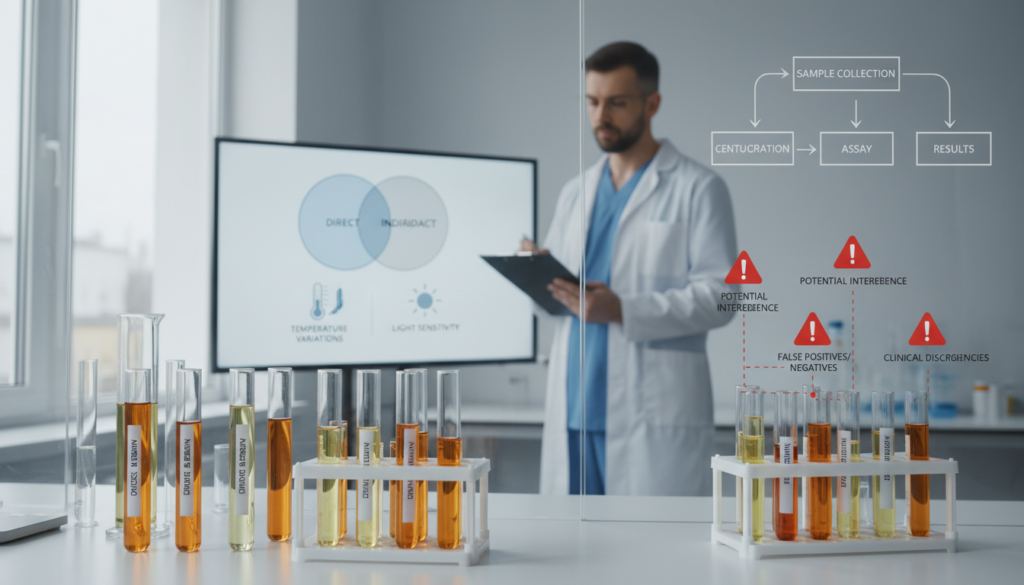
No lab test is perfect, and bilirubin testing is no exception. It’s important for both patients and doctors to know the limits of measuring bilirubin levels. This knowledge helps in making better decisions.
Interpretation Challenges
One big issue is falsely elevated direct bilirubin readings. Monoclonal immunoglobulins, found in diseases like multiple myeloma, can make direct bilirubin seem higher than total bilirubin. This can cause confusion because total bilirubin should always be as high or higher than direct bilirubin.
When both direct and indirect bilirubin levels go up together, it might mean liver damage and enzyme problems. Finding the exact cause needs a detailed look at each marker type. A single test result usually doesn’t tell the whole story.
“Bilirubin fractionation results must always be interpreted in the context of the patient’s clinical picture and corroborating laboratory data.” — American Association for Clinical Chemistry
Variability in Laboratory Methods
Results can change based on the lab’s testing method. Different analyzers and reagents might give slightly different values for total bilirubin and its fractions. The time it takes to process the test also varies, from a few hours to a full day.
For those who don’t like needles, like newborns, there’s a noninvasive option. Transcutaneous bilirubin measurement is a noninvasive way to check bilirubin levels. But, it has its downsides:
- Less precise than serum blood testing
- Accuracy can be affected by skin color
- Can’t tell direct vs indirect bilirubin fractions apart
- Best used as a screening tool, not a diagnostic tool
Understanding these limitations helps use bilirubin levels as part of a bigger diagnostic picture. This connects to other biomarkers and clinical context discussed earlier.
References
This article uses trusted clinical sources and research. It’s based on bilirubin metabolism, how it’s changed, and how doctors use it to diagnose.
Key Medical Sources and Guidelines
Guidelines from the American Association for the Study of Liver Diseases and manuals from the American College of Gastroenterology are key. They explain bilirubin and how it’s made from broken-down hemoglobin. They also talk about how it’s changed into a form that’s easier for the body to get rid of.
Lab tests for bilirubin follow rules set by the College of American Pathologists. These rules help doctors know what’s normal for different people.
Further Reading on Bilirubin Testing
Doctors looking for more information can check out journals like Hepatology, The American Journal of Gastroenterology, and Clinical Chemistry. These studies show how high levels of bilirubin can point to certain diseases. They also highlight the importance of knowing the difference between direct and indirect bilirubin.
People and doctors can find free info on MedlinePlus and the Mayo Clinic’s website. These places explain what a bilirubin test does. They also show how it fits into tests that check the liver’s health.