
The gamma-glutamyl transferase (GGT) blood test is very common in medical checks. It helps check how well the liver and bile system work. This enzyme is found in many organs like the liver, kidneys, and brain. It’s also in smaller amounts in other body parts.
GGT, also known as Gamma-GT, GGTP, or gamma-glutamyl transpeptidase, is part of a big family of enzymes. These enzymes help with many body functions every day. For liver health, GGT levels in the blood are a good marker for liver or bile duct diseases.
Knowing the GGT normal range is key for both patients and doctors. High or abnormal GGT levels can mean anything from mild liver issues to serious bile blockages. This guide explains what the test measures, why it’s done, and how to understand the results.
Key Takeaways
- GGT is an enzyme concentrated in the liver, kidneys, pancreas, heart, and brain that helps drive important chemical reactions.
- The GGT blood test results are used mainly to spot liver disease and bile duct issues.
- The GGT normal range changes with age, sex, and the lab doing the test.
- High GGT levels might show liver damage, alcohol use, or side effects from medicines.
- GGT results are most helpful when looked at with other liver tests and a patient’s full medical history.
- A single abnormal result doesn’t mean you have a disease — more tests are usually needed.
What the GGT Test Measures
The GGT blood test is a simple way for doctors to check the liver’s health. It looks at a specific enzyme in the blood. Knowing the GGT reference range helps doctors spot liver problems early.
Definition of GGT
GGT stands for gamma-glutamyl transferase. It’s a protein enzyme that helps with chemical reactions in the body. It’s mostly found in the liver and bile ducts. A small blood sample is taken from a vein and tested in a lab.
Results usually come back in one to two days. Labs give different GGT reference ranges based on age and sex. Doctors compare these ranges to decide if more tests are needed.
Role in Liver Function
GGT is key for the liver to process nutrients and remove toxins. It helps make bile, a digestive fluid. If the liver or bile ducts get damaged, GGT leaks into the blood.
This can mean liver inflammation, bile duct blockage, fatty liver disease, or alcohol damage. Normal GGT levels change with age. So, what’s normal for a 25-year-old might not be for someone over 60. Doctors look at GGT results, patient history, and other liver markers to make a diagnosis.
Why the GGT Test is Ordered
Doctors don’t order a GGT test randomly. This blood test is key for checking liver health and spotting risks. Knowing what healthy GGT values are helps doctors find problems early and help patients get the right treatment.
Indications for Testing
A GGT test is often used to find liver disease, blockages in bile ducts, or to tell if high alkaline phosphatase comes from the liver or bones. It’s also used to screen for alcohol use disorder (AUD). Most people with AUD have high GGT levels.
Doctors might ask for this test during routine blood panels, annual physicals, or when a patient is on liver-stressing meds. It’s vital to understand GGT lab values to track treatment for alcohol-related issues, as clinical guidelines suggest comparing results to lab-specific ranges.
Symptoms Leading to Testing
Certain symptoms make doctors quickly check GGT levels. These signs often show liver or biliary system problems:
- Jaundice — yellowing of the skin and eyes
- Dark-colored urine
- Light or clay-colored stools
- Persistent nausea or vomiting
- Abdominal pain, mainly in the upper right area
- Chronic fatigue
- Unexplained weight loss
| Reason for Ordering | Primary Goal | Common Patient Scenario |
|---|---|---|
| Suspected liver disease | Confirm or rule out hepatic damage | Patient with jaundice and fatigue |
| Alcohol use screening | Monitor drinking habits and recovery | Patient in AUD treatment program |
| Medication monitoring | Assess drug-related liver toxicity | Patient on long-term prescriptions |
| Elevated ALP follow-up | Differentiate liver vs. bone origin | Patient with abnormal routine labs |
Understanding healthy GGT values with these symptoms helps doctors figure out if high results mean a serious issue or just a temporary change.
Normal Reference Range for GGT
Knowing the GGT test normal limits is key to understanding lab results. Doctors use these ranges to spot liver problems. These ranges can change based on the lab, the patient’s age, and their sex.
Units of Measurement
GGT results are given in units per liter (U/L) or international units per liter (IU/L). In the US, the normal range for adults is 5 to 40 U/L. Some labs in the US say it’s up to 50 IU/L. The UK’s National Health Service says it’s between 15 and 40 IU/L.
Results within this range usually mean no liver damage. But, if the GGT levels are higher, it means more testing is needed.
Population Variability
Not everyone has the same normal range. Age, sex, and life stage affect what’s considered normal. Here’s a table showing these differences:
| Population Group | Typical GGT Range (U/L) | Notable Considerations |
|---|---|---|
| Adult Males | 8–61 | Ranges tend to be higher than in females |
| Adult Females | 5–36 | Lower ranges due to hormonal differences |
| Newborn Infants | Up to 6–10× adult levels | Levels drop significantly within the first few months |
| Older Adults (65+) | Slightly higher than younger adults | Age-related increases are common |
Newborns have GGT levels that are several times higher than adults. These high levels are normal and go down quickly in infancy. Doctors must consider these factors when looking at GGT levels.
What High GGT Levels May Indicate
High gamma-glutamyl transferase levels mean the liver or bile ducts are under stress. This can signal a range of health issues. The level of elevation often shows how severe the damage is.
Liver Disease
GGT levels above the normal range often point to liver problems. These include:
- Nonalcoholic fatty liver disease (NAFLD)
- Viral hepatitis (types A, B, and C)
- Cirrhosis (progressive liver scarring)
- Cholestasis (blocked bile flow)
- Liver cancer or metastatic tumors
- Liver ischemia (restricted blood supply)
Heart failure, pancreatic disease, and diabetes can also raise GGT levels. Some drugs, like antibiotics and painkillers, can cause a spike even without liver disease.
| Condition | Typical GGT Elevation | Primary Mechanism |
|---|---|---|
| Cholestasis | 5–30× upper limit | Bile duct obstruction |
| Cirrhosis | 2–10× upper limit | Chronic liver scarring |
| NAFLD | 1.5–3× upper limit | Fat accumulation in liver cells |
| Drug-induced injury | 2–5× upper limit | Hepatotoxic medication exposure |
Alcohol Consumption
GGT is very sensitive to alcohol use. Drinking regularly or heavily raises GGT levels. But, occasional or moderate drinking usually causes only a small increase.
Doctors use GGT tests to track patients with alcohol use disorder. A drop in GGT levels over time shows the liver is healing. This is based on research in Clinical Chemistry and Laboratory Medicine (2023).
What Low GGT Levels May Indicate
Low GGT blood test results are usually good news. The liver has the most GGT in our bodies. Blood and other organs have very little. A low reading means the liver and bile ducts are working well.
Condition Overview
Low GGT values usually mean the liver is healthy. Some medicines, like oral contraceptives and clofibrate, can lower GGT levels. This is because they affect how the liver works.
Knowing what’s normal for GGT levels by age helps doctors. Young people and those not exposed to harmful substances usually have lower levels.
Insignificance of Low Levels
Low GGT levels don’t usually cause concern. Doctors don’t need to investigate further. A low result means symptoms are unlikely from liver or bile duct problems.
Here’s what you need to know about low and high GGT results:
| GGT Result | Clinical Meaning | Follow-Up Needed |
|---|---|---|
| Below normal range | No evidence of liver or bile duct disease | Rarely required |
| Within normal range | Healthy liver function likely | None in most cases |
| Above normal range | Possible liver damage, alcohol use, or bile duct obstruction | Often recommended |
If GGT levels are normal, doctors look for other causes of symptoms. This makes the GGT test useful for ruling out liver problems.
Related Biomarkers
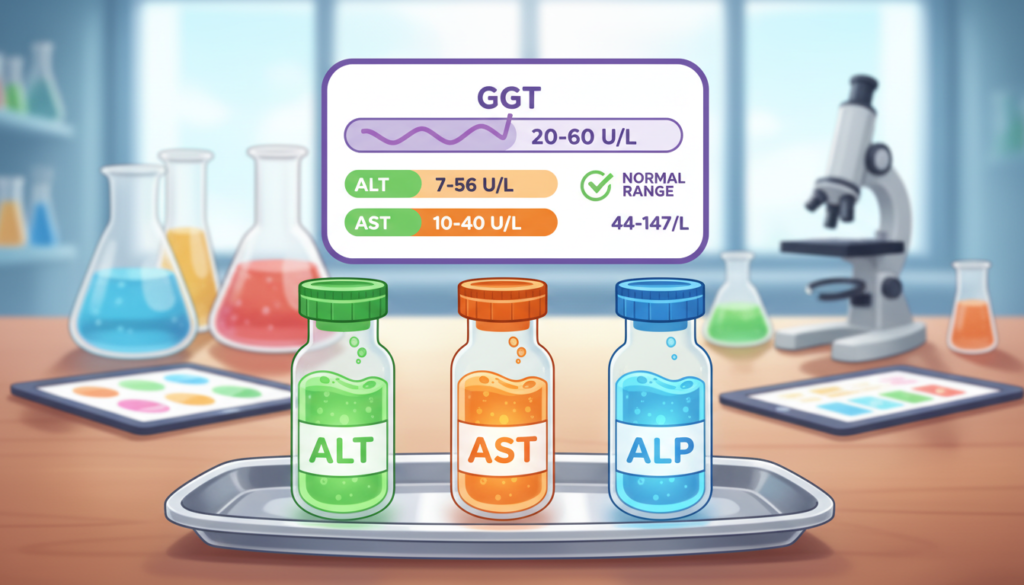
GGT is not tested alone. It’s part of a liver function panel. This helps doctors see if problems are in the liver, bile ducts, or bones. Knowing the GGT range with other markers gives a better picture.
ALT and AST
ALT and AST are liver enzymes. They leak into the blood when the liver is damaged. High levels of ALT and AST, along with GGT, suggest liver injury.
The ratio of AST to ALT is key. A ratio over 2:1, with high GGT, often means alcohol damage to the liver, says the American College of Gastroenterology.
Interpreting liver enzymes in combination — not alone — is key to accurate diagnosis.
ALP and Bilirubin
ALP and bilirubin are important with GGT. ALP can be high in liver or bone issues. GGT helps tell the difference.
| Pattern | GGT Level | ALP Level | Likely Source |
|---|---|---|---|
| Both elevated | High | High | Liver or bile duct disorder |
| ALP elevated alone | Normal | High | Bone disorder |
| GGT elevated alone | High | Normal | Possible alcohol use or medication effect |
Bilirubin adds more to the analysis. High bilirubin and GGT suggest bile duct blockage. Normal GGT and bilirubin mean less chance of biliary problems. This helps doctors narrow down what’s wrong and what to do next.
Factors That Affect GGT Results
GGT test results are not just numbers. Many things can change them, making it hard to understand what they mean. Doctors have to consider these factors to know if a patient’s liver is healthy.
Age and Gender
GGT levels change as we grow and with our sex. Newborn infants have very high GGT levels, which is normal. These levels go down as they get older.
In adults, men usually have higher GGT levels than women. These levels also go up as we get older. The American Association for Clinical Chemistry says we need to consider these differences to avoid mistakes.
| Factor | Effect on GGT Levels | Clinical Relevance |
|---|---|---|
| Newborn age | Markedly elevated | Normal; not a sign of disease |
| Male sex | Higher baseline than females | Gender-specific ranges recommended |
| Advancing age | Gradual increase | Age-adjusted interpretation needed |
Medications and Lifestyle
Some drugs can make GGT levels go up. These include:
- Acetaminophen (when used a lot)
- Anticonvulsants like phenytoin, carbamazepine, and phenobarbital
- Certain antibiotics and antifungal agents
Our lifestyle also affects GGT levels. Drinking alcohol regularly can raise them. Smoking cigarettes can do the same.
GGT levels might drop after eating, so fasting before the test is sometimes needed. Doctors consider all these things when looking at GGT test results. This helps them make the right decisions for patients.
Clinical Context Considerations
A GGT result is just one piece of a larger puzzle. Healthcare providers never make decisions based on just one lab value. They look at the whole picture before making conclusions.
Interpreting GGT Within Clinical History
Doctors look at GGT results with symptoms, medication use, alcohol intake, and existing diagnoses. A high GGT in someone on certain drugs means something different than in someone with jaundice.
They also compare GGT with alkaline phosphatase (ALP) results. High levels of both suggest liver disease. But if ALP is high and GGT is normal, it might be a bone issue.
Watching GGT levels over time helps doctors see how a disease is progressing. A single reading doesn’t tell the whole story.
Recommended Follow-Up Tests
When GGT levels are not normal, doctors usually order more tests:
- Comprehensive metabolic panel (CMP)
- Abdominal ultrasound or CT imaging
- Hepatitis B and C screening
- Liver biopsy in select cases
| Follow-Up Test | Purpose | When Ordered |
|---|---|---|
| Comprehensive Metabolic Panel | Assess overall liver and kidney function | Elevated GGT with unclear cause |
| Abdominal Ultrasound | Detect structural liver abnormalities | Suspected bile duct obstruction |
| Hepatitis Panel | Identify viral liver infections | Persistent GGT elevation |
| Liver Biopsy | Evaluate tissue damage and fibrosis | Chronic liver disease suspected |
These tools help doctors find specific causes for abnormal GGT readings, as the American Association for Clinical Chemistry (AACC) notes.
Limitations of the GGT Test
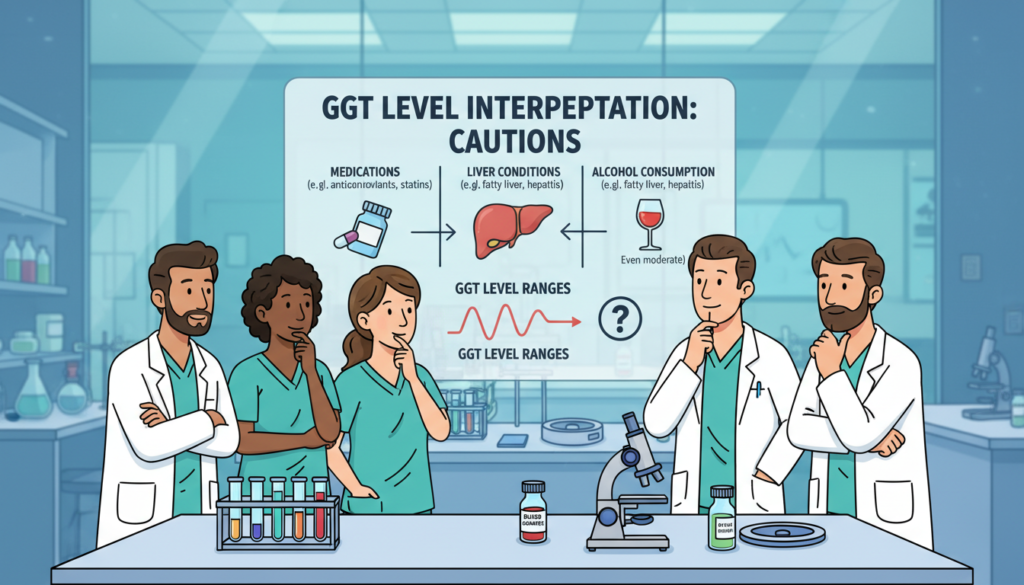
GGT blood tests give us important information, but they have some big drawbacks. They can’t diagnose a problem on their own. High levels of gamma-glutamyl transferase might show there’s an issue, but they don’t tell us what it is. Doctors need to look at other lab results and the patient’s medical history too.
Specificity and Sensitivity Issues
The GGT test is highly sensitive but not very specific. It can react to many conditions, not just liver disease. High GGT levels can mean different things, like:
- Chronic obstructive pulmonary disease
- Congestive heart failure
- Diabetes mellitus
- Pancreatic disorders
- Kidney disease
Because many conditions can raise GGT levels, one high reading doesn’t mean just one thing. Doctors use other tests like ALT, AST, ALP, and bilirubin to figure out what’s going on.
Potential for Misinterpretation
What’s considered abnormal can vary between labs. Some say levels over 40 IU/L are abnormal, while others use 50 IU/L. This makes it hard to compare results from different places.
| Challenge | Impact on Interpretation |
|---|---|
| Variable lab thresholds (40–50 IU/L) | Results may appear normal at one lab and elevated at another |
| Alcohol sensitivity | Difficult to distinguish alcohol-related elevation from liver disease |
| Non-hepatic causes | Elevated readings may falsely suggest liver damage |
| Medication interference | Drugs like phenytoin and barbiturates can raise levels independently |
The test’s strong sensitivity to alcohol is a big problem. It’s hard to tell if alcohol or liver disease is causing high GGT levels. That’s why more tests are needed to make sure doctors make the right decisions.
References
This article uses data from well-known medical textbooks. Henry’s Clinical Diagnosis and Management by Laboratory Methods, by McPherson and Pincus, was published in 2022 by Elsevier. It’s the 24th edition. Sleisenger and Fordtran’s Gastrointestinal and Liver Disease, by Feldman, Friedman, and Brandt, was released in 2021 by Elsevier. It’s the 11th edition.
These texts are key for understanding the GGT reference range in diagnostics today.
Health organizations like the Cleveland Clinic Health Library, Mayo Clinic Laboratories, and the American Liver Foundation offer important information. They provide resources for both doctors and patients. Journals like Liver International and Medicine (Baltimore) also offer research on GGT levels in different groups.
Labcorp and the Australasian Association for Clinical Biochemistry and Laboratory Medicine provide testing protocols and GGT reference values. These sources help keep GGT levels consistent and reliable in the U.S. and worldwide.