The alkaline phosphatase (ALP) blood test is very common in medical checks. It helps check on liver and bone health. This enzyme is found in many body tissues, but most in the liver, bile ducts, and bones.
When these areas get damaged or change fast, ALP levels in the blood go up.
Doctors use ALP tests to find liver disease, bile duct problems, and bone issues. The enzyme is key for many body functions. It helps move nutrients, supports bone growth, and aids in fat digestion.
It also plays a role in cell growth and division during fetal development.
Knowing the ALP normal range is key because abnormal values can mean health problems. Normal ranges can vary by lab, method, age, and sex. A single ALP test result is not enough. Doctors look at symptoms and other blood tests too.
This guide explains what the test measures, why doctors order it, and what different results mean for patients in the U.S.
Key Takeaways
- ALP is an enzyme found throughout the body, with the highest concentrations in the liver, bile ducts, and bones.
- The ALP blood test results help doctors screen for liver disease, bile duct obstructions, and bone conditions.
- The ALP normal range varies based on age, sex, and the specific laboratory performing the test.
- Elevated alkaline phosphatase levels may point to liver damage, bone disorders, or other underlying conditions.
- Low ALP values can indicate nutritional deficiencies or rare genetic conditions like hypophosphatasia.
- Clinicians interpret ALP results alongside other biomarkers such as ALT and AST for a complete picture.
- Pregnancy, certain medications, and recent meals can all influence ALP readings.
What the Test Measures
The ALP blood test checks the level of alkaline phosphatase in your blood. This enzyme is important for many body functions. Knowing what is normal helps doctors find health problems early.
The test is simple. A healthcare provider takes a small blood sample from a vein. It usually takes less than five minutes.
Overview of Alkaline Phosphatase
Alkaline phosphatase is a protein that helps chemical reactions in the body. It’s found in almost every tissue, but more in the liver, bile ducts, kidneys, and bones. It helps break down proteins and supports bone health and nutrient transport.
Doctors compare your results to a standard range to see if they’re normal. The range can vary by lab. But it helps doctors check if organs are working right.
“Alkaline phosphatase is one of the most commonly measured enzymes in routine blood work because it reflects the health of multiple organ systems at once.”
Types of ALP Isoenzymes
Different tissues make their own ALP, called isoenzymes. If your results are not normal, an isoenzyme test can find where the problem is.
| ALP Isoenzyme | Primary Source | Clinical Relevance |
|---|---|---|
| Liver ALP | Liver and bile ducts | Elevated in bile duct obstruction, hepatitis |
| Bone ALP | Osteoblasts (bone-forming cells) | Elevated during growth, fractures, or bone disease |
| Intestinal ALP | Small intestine lining | May rise after eating in certain blood types |
| Placental ALP | Placenta | Present during pregnancy, specially third trimester |
Knowing which isoenzyme is high helps doctors figure out the cause. It guides them in finding the right diagnosis and treatment.
Why It Is Ordered
Doctors order an ALP blood test for many reasons. It’s a key part of the comprehensive metabolic panel (CMP) and liver function tests. These tests are part of routine checkups. Knowing alkaline phosphatase normal levels helps doctors find problems early.
ALP test interpretation guides doctors in diagnosing and treating patients. This is important for early intervention.
Screening for Liver Disease
One main reason for this test is to check for liver or biliary problems. High ALP lab values can indicate hepatitis, biliary obstruction, or cirrhosis. Doctors look at this marker with symptoms like:
- Jaundice (yellowing of the skin or eyes)
- Persistent abdominal pain
- Nausea and vomiting
- Unexplained fatigue or weakness
- Sudden, unexplained weight loss
The test also helps monitor medication side effects that may harm the liver. It tracks how well a treatment plan is working over time.
Evaluating Bone Disorders
ALP is made in large amounts by bone cells. High levels can signal bone diseases like Paget’s disease, osteomalacia, or increased fracture risk. Doctors may order the test for bone pain, joint inflammation, or unusual bone shapes.
| Reason for Ordering | Common Symptoms | Suspected Conditions |
|---|---|---|
| Liver screening | Jaundice, abdominal pain, fatigue | Hepatitis, biliary obstruction, cirrhosis |
| Bone evaluation | Bone pain, frequent fractures, joint swelling | Paget’s disease, osteomalacia, rickets |
| Treatment monitoring | Varies by condition | Drug-induced liver injury, metabolic bone disease |
According to the American Liver Foundation, routine blood panels that include ALP lab values can detect liver disease years before noticeable symptoms appear.
Accurate ALP test interpretation requires comparing results with age- and sex-specific reference ranges. This is covered in the next section.
Normal Reference Range

Knowing the ALP normal range is key to understanding blood test results. The values can vary based on the lab. Each lab uses different equipment and methods, leading to slight differences in ranges.
Units of Measurement
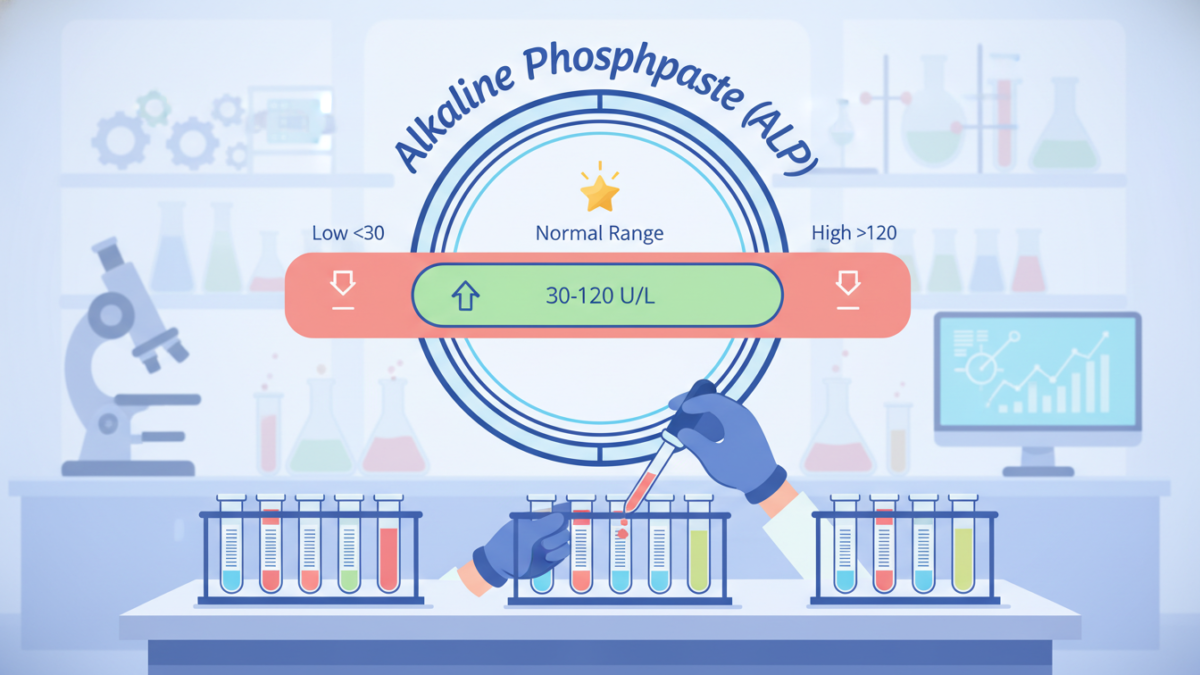
ALP results are given in two main units. In the U.S., most labs use international units per liter (IU/L). For adults, the normal range is 44 to 147 IU/L.
In some countries, like the UK, the range is given in microkatal per liter (μkat/L). Here, normal values are 0.73 to 2.45 μkat/L.
The UK National Health Service lists its adult reference range (ages 18 and older) as 30–130 IU/L. This shows why it’s important to check your lab report’s specific range, not just general guidelines.
Variations by Age and Sex
ALP levels vary by age, sex, and ethnicity. Children and teens have higher levels due to bone growth. Pregnant women, too, have higher levels, which is normal.
Adults usually have stable levels. After bones stop growing, levels settle in a narrower range. The table below shows typical ranges for different groups:
| Population Group | Typical Range (IU/L) | Key Notes |
|---|---|---|
| Children (1–9 years) | 156–369 | Elevated due to rapid bone growth |
| Adolescents (10–17 years) | 141–460 | Peak during puberty growth spurts |
| Adult Males (18+ years) | 44–147 | Stable through adulthood |
| Adult Females (18+ years) | 44–147 | May rise slightly after menopause |
| Pregnant Women (3rd trimester) | Up to 200–300 | Placental ALP contributes to elevation |
Staying within these ranges means the liver and bones are working well. If levels are off, doctors might check other biomarkers like ALT and AST to find the cause.
What High Levels May Indicate
High ALP blood test results, above 130 IU/L in adults, suggest liver, bone, or organ issues. High alkaline phosphatase levels don’t mean one specific problem. They just start the investigation process.
Liver Conditions
The liver is a common source of high ALP levels. Issues like blocked or damaged bile ducts cause big spikes. These include:
- Biliary obstruction from gallstones or strictures
- Hepatitis (viral or autoimmune)
- Cirrhosis and chronic liver disease
- Pancreatitis affecting the bile duct
- Decreased bile flow (cholestasis)
In these cases, ALP levels go up with other liver markers like GGT, ALT, and bilirubin. This helps doctors find the cause.
Bone Disorders
Bones have a special ALP isoenzyme that’s active during bone growth. Several bone conditions raise alkaline phosphatase levels:
| Bone Condition | Mechanism Behind Elevated ALP |
|---|---|
| Paget’s disease | Excessive bone remodeling produces enlarged, weakened bones |
| Osteomalacia | Vitamin D deficiency causes bone softening and increased osteoblast activity |
| Healing fractures | New bone formation temporarily raises enzyme output |
| Osteogenic sarcoma | Malignant bone-forming tumor drives ALP production |
| Bone metastasis | Cancer spreading to bone triggers osteoblastic response |
Other conditions like hyperparathyroidism, hyperthyroidism, heart failure, Hodgkin lymphoma, and sarcoidosis can also increase ALP. Understanding these results needs a full look at the patient’s health and other biomarkers.
What Low Levels May Indicate
Low ALP lab values are just as important as high ones. A reading below 30 IU/L might show a health issue that needs checking. Knowing what’s normal helps doctors and patients catch these signs early.
Nutritional Deficiencies
The body needs certain nutrients to make alkaline phosphatase. Not enough zinc, protein, or calories can lower enzyme levels. Severe malnutrition is a big reason for low readings.
Some medicines, like birth control pills, can also lower ALP levels. Problems like pernicious anemia and hypothyroidism can cause low readings too. Wilson’s disease, which causes copper buildup, is another possible cause.
| Cause of Low ALP | Mechanism | Key Nutrient or Factor |
|---|---|---|
| Zinc deficiency | Zinc is a cofactor for ALP enzyme activity | Zinc |
| Malnutrition | Reduced protein synthesis limits enzyme production | Protein, calories |
| Hypothyroidism | Slowed metabolism decreases enzyme output | Thyroid hormones |
| Oral contraceptives | Hormonal influence on liver enzyme activity | Estrogen/progestin |
Hypophosphatasia
Hypophosphatasia is a rare genetic disorder that affects ALP production. It impacts bone and tooth development, leading to issues like fractures and dental loss. The condition varies from severe in infants to milder in adults.
If a child has low ALP levels and bone problems, it might be hypophosphatasia. Early genetic testing and seeing a specialist are key. Now, there’s enzyme replacement therapy approved by the FDA for treatment.
Related Biomarkers

ALP blood test results are often part of a bigger picture. Doctors usually run a comprehensive metabolic panel that includes several liver enzymes. This helps them understand the ALP test results better and find the source of any issues.
When ALP levels are high, doctors need to figure out if it’s due to liver or bone problems. Two enzymes are key in making this determination.
Alanine Aminotransferase (ALT)
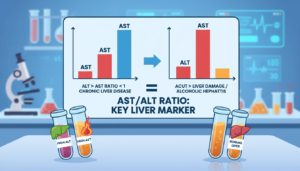
ALT is mainly found in liver cells. When the liver is damaged, ALT gets into the blood. If ALP and ALT are both high, it usually means liver damage.
If ALP is high but ALT is normal, bone issues are more likely. This helps doctors choose the right treatment to keep ALP levels healthy. ALT is a key tool in diagnosing liver problems.
Aspartate Aminotransferase (AST)
AST is found in the liver, heart, and muscles. It helps show if tissues are damaged. When AST, ALP, and bilirubin levels are checked together, doctors get a clearer picture of liver health.
These markers help doctors understand ALP test results better. Here’s a quick guide to interpreting these results:
| ALP Level | ALT Level | AST Level | Likely Source |
|---|---|---|---|
| High | High | High | Liver disease |
| High | Normal | Normal | Bone disorder |
| Normal | High | High | Liver inflammation |
| Normal | Normal | Normal | Healthy ALP levels confirmed |
By looking at these biomarkers together, doctors can make more accurate diagnoses. This helps each patient get the right care.
Factors That Affect Results
Many things can change how much alkaline phosphatase is in your blood. Knowing these can help doctors and patients understand test results better. Without this knowledge, a normal test could seem wrong.
Age and Sex
Age greatly affects how much alkaline phosphatase is in your blood. Kids and teens, who are growing fast, have a lot more. Levels can be two to three times higher than adults during puberty, says the American Academy of Pediatrics.
Sex also plays a part. Adult men usually have a bit more alkaline phosphatase than women before menopause. After menopause, women’s levels can go up because of bone changes.
Blood type can also affect results. People with blood types O or B might see their intestinal ALP go up after eating fatty foods. It’s best to fast for at least 8 hours before getting tested to avoid this.
| Factor | Effect on ALP | Clinical Note |
|---|---|---|
| Children (ages 1–15) | Significantly elevated | Reflects active bone growth |
| Adult males | Slightly higher than premenopausal females | Driven by bone and liver activity |
| Postmenopausal females | Gradual increase | Linked to bone turnover changes |
| Blood types O and B | Temporary increase after fatty meals | Fasting minimizes impact |
Pregnancy
Pregnant women often have more alkaline phosphatase in the third trimester. The placenta makes its own ALP, which raises levels above what’s normal for non-pregnant adults.
Some medicines can also change test results. Birth control pills can lower levels, while some drugs for seizures and infections can raise them. Always tell your doctor about all the medicines you’re taking before getting tested.
Clinical Context Considerations
ALP lab values don’t tell the whole story. A single number on a lab report needs to be seen in a bigger picture. Doctors look at multiple factors to understand what’s normal for a patient. They consider personal health history and other test results carefully.
Importance of Patient History
Before interpreting ALP test results, doctors need to know a patient’s background. Important details include:
- Current symptoms such as fatigue, jaundice, or bone pain
- All medications and supplements being taken
- Pre-existing conditions like liver disease, chronic kidney disease, or gastrointestinal disorders
- Known bone disorders including Paget’s disease or osteomalacia
These factors can change what’s normal for a person. For instance, some drugs can raise ALP levels without causing harm. It’s important to tell the lab about all medications before the test.
Correlation with Other Tests
If ALP lab values are not normal, doctors do more tests to find the cause. An ALP isoenzyme test helps by showing if the high levels come from the liver or bones.
| Follow-Up Test | Purpose | Primary Focus |
|---|---|---|
| ALP Isoenzyme Test | Identify the tissue source of elevated ALP | Liver vs. Bone |
| X-Ray Imaging | Detect fractures or bone lesions | Bone |
| Bone Density Scan (DEXA) | Measure bone mineral density | Bone |
| GGT (Gamma-Glutamyl Transferase) | Confirm liver origin of elevated ALP | Liver |
Understanding ALP test results involves looking at the abnormal level, symptoms, and overall health. This detailed approach helps doctors grasp the test’s limitations.
Limitations of the Test
The ALP blood test is a helpful tool, but it has its limits. It can’t pinpoint the exact cause of an abnormal reading. The enzyme is found in the liver, bones, kidneys, and intestines.
This makes it hard to know which organ is causing the change in alkaline phosphatase levels. More tests are needed to figure this out.
Potential for False Positives
Many normal body processes can raise ALP levels. Pregnancy, growth spurts in teens, healing fractures, and eating fatty foods before the test can all cause this. These increases don’t mean there’s a disease.
They show natural biological activity. Doctors must check for these causes before thinking a patient has a problem.
Interpretation Challenges
ALP results can be tricky to understand. Reference ranges vary between conditions, and what’s “normal” can differ from lab to lab. Some medicines, like birth control pills and antibiotics, can affect the results.
The test can’t tell apart two diseases affecting the same organ. For a clear diagnosis, doctors need to look at ALP results, symptoms, medical history, and other blood tests like GGT, ALT, or AST. No single number can tell the whole story. Doctors in the United States should always look at the bigger picture when interpreting results.