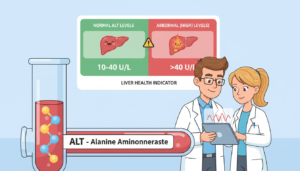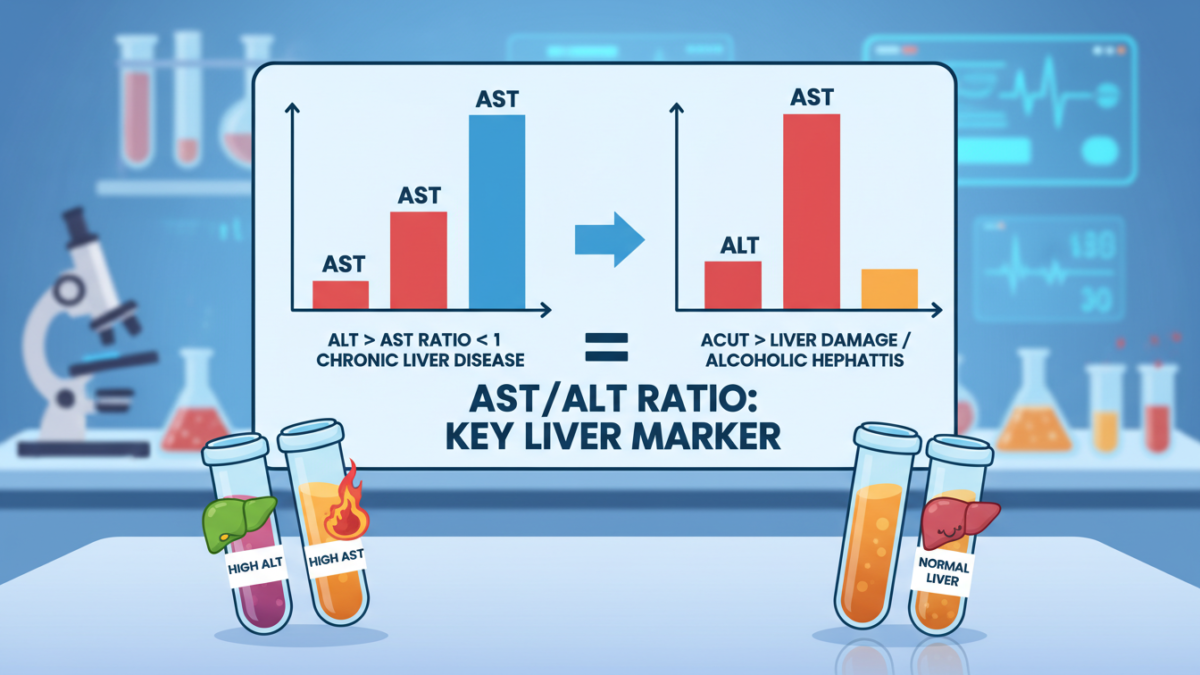
The AST/ALT ratio is a key test in checking liver health. It compares two enzymes, AST and ALT, in the blood. Doctors use it to understand why liver enzymes might be high.
In 1957, Italian scientist Fernando De Ritis studied these enzymes. His work led to the De Ritis ratio. This ratio helps doctors identify liver damage causes.
A blood test tracks both enzymes, allowing for the ratio calculation. When the liver is hurt, AST and ALT levels change differently. This helps doctors figure out the damage’s cause.
This test is part of a bigger picture. It’s used with other tests, medical history, and symptoms. Yet, the ratio is a key tool in many hospitals and clinics in the U.S.
Key Takeaways
- The AST/ALT ratio compares two liver enzymes in the blood to help identify the cause of liver damage.
- Fernando De Ritis first analyzed transaminase patterns in 1957, giving the ratio its alternate name — the De Ritis ratio.
- The De Ritis ratio clinical significance includes distinguishing alcoholic liver disease from other forms of hepatotoxicity.
- AST ALT ratio meaning depends on whether the value falls above, below, or at the normal reference point.
- The liver enzyme ratio explained in context with other tests gives doctors a clearer picture of hepatic health.
- This ratio is part of standard liver function panels ordered in routine clinical practice across the United States.
What the AST/ALT Ratio Measures
AST and ALT are key liver enzymes. They help with amino acid metabolism and energy production. By comparing these enzymes, doctors can see how well the liver is working and what might be wrong.
Introduction to AST and ALT
AST, or aspartate aminotransferase, is found in the liver, heart, and muscles. It helps break down amino acids. ALT, or alanine aminotransferase, is mainly in the liver. It also breaks down amino acids but focuses on energy production.
ALT levels often show liver damage because it’s more liver-specific. AST levels can rise from injuries in different tissues.
Understanding the Ratio
In liver cells, AST is about 2.5 times more than ALT. But in healthy blood, their levels are almost the same. This is because AST leaves the blood faster than ALT.
| Enzyme | Primary Location | Serum Half-Life | Normal Serum Level |
|---|---|---|---|
| AST | Liver, heart, muscle, kidneys | ~18 hours | 10–40 U/L |
| ALT | Primarily liver | ~36 hours | 7–56 U/L |
In healthy adults, the AST/ALT ratio is about 1.0. If it goes above or below, it’s important to understand what’s causing it. This could be due to alcohol use, liver disease, or other conditions.
Importance in Hepatic Function
The ratio is a metabolic clue. It helps doctors tell apart liver injuries, like those from viruses or alcohol. Knowing these ratios helps find problems early and focus on the right tests. The next sections will dive deeper into this.
Why the AST/ALT Ratio is Ordered
Doctors order this blood test for many reasons. It helps find out if there’s a problem with the liver. Knowing why this test is done helps patients understand their health better.
Diagnostic Purposes
Doctors use the AST ALT ratio to find the cause of symptoms. Signs like jaundice, dark urine, pale stools, nausea, vomiting, or chronic fatigue mean a test is needed. High enzyme levels in the blood show liver trouble. The ratio helps figure out what’s wrong, like:
- Viral hepatitis (A, B, or C)
- Alcoholic liver disease
- Cirrhosis and fibrosis
- Liver cancer
- Non-alcoholic fatty liver disease (NAFLD)
Screening for Liver Diseases
Liver function tests are important for regular checks. Even without symptoms, people at risk, like heavy drinkers or those with obesity, should get tested. The American Liver Foundation says 100 million Americans have liver disease. Catching it early is key.
| Reason for Ordering | Common Patient Profile |
|---|---|
| Symptom evaluation | Patients with jaundice or abdominal pain |
| Routine screening | Individuals with risk factors like obesity |
| Treatment monitoring | Patients on hepatotoxic medications |
| Disease progression tracking | Those with diagnosed chronic liver conditions |
Monitoring Liver Health
Doctors also use the AST ALT ratio to track liver health over time. This is key when starting or changing treatments. It shows if the liver is getting better, staying the same, or getting worse. This helps doctors decide what to do next.
Normal Reference Range for AST/ALT Ratio
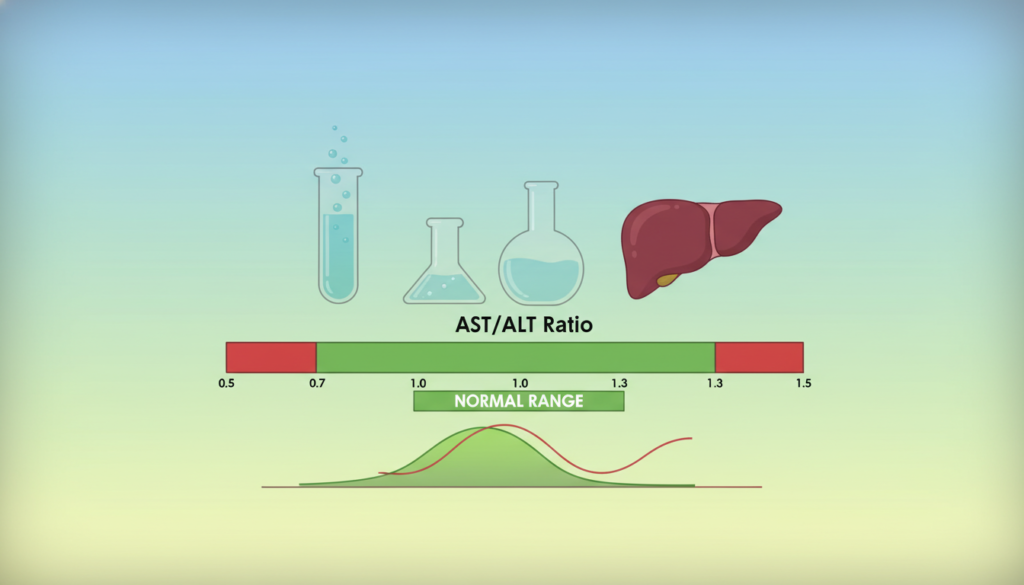
Understanding the AST ALT ratio normal range is key to reading liver function tests. In a healthy adult, this ratio usually stays around a certain value. The liver enzyme ratio compares AST and ALT levels in the blood. Several factors can change what’s considered “normal” for each person.
Typical Values
For most healthy people, the AST/ALT ratio is at or below 1.0. A ratio under 1 usually means the liver is healthy. If the ratio goes over 1, it might mean liver damage. When values go over 2.0, it often points to alcoholic liver disease.
Lab reference ranges can differ. Age, sex, and body mass index affect these ranges. For instance, men usually have higher ALT levels than women. Older adults might have different baseline values than younger people.
Units of Measurement
AST and ALT levels are measured in international units per liter (U/L). The upper limit of normal (ULN) is the highest value in a healthy range. Here’s a look at standard reference ranges in U.S. clinical labs:
| Enzyme | Normal Range (U/L) | Upper Limit of Normal |
|---|---|---|
| ALT (Alanine Aminotransferase) | 4–36 U/L | 36 U/L |
| AST (Aspartate Aminotransferase) | 8–33 U/L | 33 U/L |
| AST/ALT Ratio (Healthy Adult) | 0.7–1.0 | 1.0 |
These ranges are a starting point. Doctors adjust their interpretation based on the patient’s unique characteristics. This helps them make accurate diagnoses about high or low values.
What High Levels May Indicate
When the AST/ALT ratio goes up, it’s a sign that something is off. This can mean liver problems or issues with other organs. It’s important to look at the whole picture, not just one number.
Potential Liver Conditions
A ratio over 2:1 often points to alcoholic liver disease. This is even more likely if gamma-glutamyl transferase (GGT) levels are high too. Alcoholic hepatitis, liver cancer, and early viral hepatitis can also raise the ratio above 2.
But liver disease isn’t the only concern. Wilson’s disease and cirrhosis from viral hepatitis can also show AST higher than ALT, though the ratio usually stays under 2. Nonalcoholic steatohepatitis (NASH) might slightly raise the ratio too.
Other Health Issues Related to High Ratio
A ratio over 5:1 suggests damage outside the liver. At this level, liver cell death alone can’t explain the numbers, as it usually doesn’t go over 2.5.
| Condition | Typical AST/ALT Ratio | Primary Source of Elevation |
|---|---|---|
| Alcoholic Liver Disease | >2:1 | Hepatic |
| Bone Disease | >5:1 | Extrahepatic |
| Chronic Renal Failure | >5:1 | Extrahepatic |
| Lymphoma | >5:1 | Extrahepatic |
| Congestive Heart Failure | >5:1 | Extrahepatic (cardiac) |
In cases of extrahepatic damage, AST goes up a lot while ALT stays the same. It’s key to understand these causes to make the right diagnosis and treatment plan.
What Low Levels May Indicate
When the AST/ALT ratio is below 1, it means ALT levels are higher than AST. This can help find specific liver problems. It shows liver damage where ALT is released more than AST.
Possible Interpretations of Low Ratio
A ratio below 1 often points to non-alcoholic fatty liver disease (NAFLD). It shows the liver is inflamed but mostly intact. ALT leaks into the blood more during early damage.
A ratio of 1 might mean acute viral hepatitis or drug damage to the liver. In late-stage liver injury, AST is cleared but not ALT. This is why the ratio is often below 1 when diagnosed.
Conditions Associated with Low Levels
Several conditions are linked to a low ratio. The table below outlines key associations:
| Condition | Typical AST/ALT Ratio | Key Feature |
|---|---|---|
| Non-Alcoholic Fatty Liver Disease | Less than 1 | Fat accumulation in liver cells |
| Late-Stage Acute Viral Hepatitis | Less than 1 | AST cleared faster than ALT |
| Acute Viral Hepatitis (onset) | Equal to or near 1 | Early inflammatory response |
| Drug-Induced Hepatotoxicity | Around 1 | Medication-related liver stress |
As acute liver damage heals, the ratio returns to normal. This is if no chronic disease is present. Regular tests help track recovery and guide treatment.
Related Biomarkers in Liver Function Tests
The AST/ALT ratio is just one part of the picture. A full liver panel includes many biomarkers. Doctors use these to understand liver health better.
Introduction to Other Liver Enzymes
AST and ALT are joined by other enzymes in blood tests. Each enzyme has its own role:
- Alkaline phosphatase (ALP) — important for bone and bile duct health
- Gamma-glutamyl transferase (GGT) — helps with immunity and cell repair
- Lactate dehydrogenase (LDH) — helps cells make energy
These enzymes are found in more than just the liver. High levels don’t always mean liver disease. It’s key to understand the liver enzyme ratio with other markers for accurate diagnosis.
| Biomarker | Normal Range | Primary Function | Found In |
|---|---|---|---|
| ALP | 44–147 U/L | Bone and bile duct metabolism | Liver, bones, kidneys |
| GGT | 5–40 U/L | Glutathione metabolism | Liver, pancreas, kidneys |
| LDH | 125–220 U/L | Cellular energy production | Liver, heart, muscles |
Significance of Bilirubin and Albumin
Bilirubin and albumin are part of the metabolic panel. Bilirubin levels can show bile duct issues or red blood cell problems. Albumin shows how well the liver makes proteins.
Doctors look at these markers together when checking for liver issues. Low albumin and high bilirubin might mean chronic liver disease. These values give a clearer picture than any one test.
Factors that Affect Results
Understanding the AST ALT ratio meaning involves knowing several factors that can change enzyme levels. A single test result doesn’t tell the whole story. Changes in levels can come from biological shifts, daily habits, or lab processing.
Biological Factors
Age, sex, and body type can affect liver enzyme ratios. Obesity can raise ALT levels. Pregnancy can change both AST and ALT readings.
Muscle inflammation, like in dermatomyositis, can increase AST more than ALT. This is because AST is found in skeletal muscle, not just the liver.
Lifestyle Influences
Our daily choices can quickly change enzyme levels. Here are some lifestyle factors to consider:
- Intense exercise — Weightlifting or endurance training can raise AST to 100–1,000 U/L, roughly four times ALT, for up to a week after a session.
- Heavy alcohol use — Recent binge drinking inflates AST disproportionately, skewing the ratio upward.
- Medications — Aspirin and high-dose vitamin C or E supplements may interfere with accurate readings.
- Extreme fasting or rapid weight loss — Both can trigger short-term liver stress and enzyme release.
- Cocaine use — This substance is directly hepatotoxic and can cause acute enzyme elevation.
“A single elevated result without clinical context can lead to unnecessary anxiety or, worse, misdiagnosis.” — American College of Gastroenterology
Laboratory Variability
The significance of a low AST ALT ratio can change based on when blood is drawn and the lab. Different tools and kits can give slightly different values. Morning fasting samples often give more consistent results than afternoon draws.
| Factor | Effect on AST | Effect on ALT | Impact on Ratio |
|---|---|---|---|
| Intense exercise | Significant increase | Mild increase | Ratio rises |
| Heavy alcohol intake | Moderate increase | Mild increase | Ratio rises |
| Obesity | Mild increase | Moderate increase | Ratio decreases |
| Pregnancy | Variable | Variable | Unpredictable |
Clinicians should carefully consider these factors before making conclusions from a single liver panel. The biomarkers discussed earlier provide important context.
Clinical Context Considerations
No lab result exists in a vacuum. The AST to ALT ratio interpretation depends heavily on a patient’s full clinical picture. A ratio above or below a certain threshold gains meaning only when paired with medical history, physical symptoms, and supporting diagnostic tests. Physicians rely on this broader context to make accurate diagnoses and guide treatment plans.
Importance of Medical History
A patient’s background shapes how clinicians read enzyme ratios. For example, a history of heavy alcohol use combined with an AST/ALT ratio greater than 1 strongly suggests alcoholic liver disease or cirrhosis. In such cases, the AST ALT ratio liver disease connection often prompts a liver biopsy or advanced imaging to confirm the diagnosis.
The De Ritis ratio clinical significance becomes clear in patients with known risk factors. Chronic medication use, metabolic syndrome, or a family history of hepatic conditions all influence how a physician weighs ratio results. Without this background, a number alone can be misleading.
Correlation with Symptoms and Other Tests
Symptoms like fatigue, jaundice, and abdominal pain add critical clues. A patient showing these signs alongside a ratio greater than 1 may need viral hepatitis panels to rule out hepatitis B or C infection. Even normal ratios paired with persistent symptoms can signal early-stage liver disease.
When enzyme levels stay elevated for six months or more despite treatment, clinicians often order supplemental testing:
- Bilirubin and alkaline phosphatase levels
- Liver fibrosis assessment (FibroScan or serum markers)
- Advanced imaging such as magnetic resonance cholangiopancreatography (MRCP)
- Liver biopsy for definitive tissue evaluation
A single lab value tells part of the story. The full diagnosis emerges when test results, patient history, and clinical symptoms align.
This layered approach ensures the AST to ALT ratio interpretation drives meaningful clinical decisions. It prevents premature conclusions.
Limitations of the AST/ALT Ratio Test

No single blood test tells the whole story of a patient’s health. The AST ALT ratio meaning is valuable but has big limitations. Using it alone can lead to wrong conclusions.
Contextual Interpretation Challenges
AST and ALT enzymes are found in more than just the liver. AST is in the heart, kidneys, and muscles. So, high AST levels don’t always mean liver damage.
Intense physical exercise can raise AST levels without harming the liver. A normal AST ALT ratio doesn’t always mean the liver is healthy. Symptoms like fatigue or jaundice need more tests.
Liver function tests can spot early problems. But without the right context, they can cause confusion.
Scenarios Where Results May Be Misleading
Several real-world situations can skew results:
- A mildly elevated initial reading may normalize on repeat testing, reflecting a transient cause.
- Patients with advanced cirrhosis may show a high ratio even as ALT levels drop.
- Medications, alcohol use, and obesity can each distort liver function test ratios.
- AST ALT ratio meaning shifts depending on the clinical scenario.
A single lab value is a snapshot, not a diagnosis. It must be interpreted alongside a patient’s full medical picture.
So, the AST ALT ratio normal range is just a starting point. Clinicians use it with other tests and patient history for a full picture.
Conclusion on the AST/ALT Ratio
The AST ALT ratio is more than just a number on a lab report. It’s a key tool for doctors to find liver problems. When explained, it shows how this test helps spot different liver diseases.
Summary of Insights
The De Ritis ratio is important because it can tell apart diseases that look similar on blood tests. Here are some key points:
- A ratio below 1.0 often points to viral hepatitis or nonalcoholic fatty liver disease
- A ratio above 2.0 raises strong suspicion for alcoholic liver disease
- Progressive ratio increases may signal advancing fibrosis or cirrhosis
- The ratio must always be interpreted alongside clinical history and imaging
Implications for Patient Care
Understanding this ratio helps doctors create better treatment plans. Catching diseases early through regular tests can help patients get better faster. This knowledge helps both doctors and patients make better choices.
| Clinical Application | Impact on Patient Care | Recommended Action |
|---|---|---|
| Early disease detection | Enables timely intervention | Routine screening in at-risk groups |
| Disease differentiation | Guides specific treatment plans | Correlate with imaging and biopsy |
| Progression monitoring | Tracks treatment effectiveness | Serial testing at regular intervals |
| Risk stratification | Identifies high-risk patients | Combine with fibrosis scoring systems |
The De Ritis ratio is backed by research. The American College of Gastroenterology says using both enzyme levels and their ratio is best. Knowing about the AST ALT ratio helps healthcare teams give better care at a lower cost.
References
This article is based on decades of research and clinical guidelines. It talks about AST to ALT ratio interpretation and liver diagnostics.
Medical Literature Review
De Ritis, Coltorti, and Giusti’s work from the 1950s laid the groundwork for diagnosing viral hepatitis. Their study was revisited in 2006. Botros and Sikaris built on this in 2013 with “The De Ritis Ratio: The Test of Time,” published in Clinical Biochemist Reviews.
Nyblom’s research in 2004 and 2006 gave insights into liver disease. It showed how the AST ALT ratio changes in advanced liver disease. These studies are key for today’s liver function tests.
Clinical Practice Guidelines
American Family Physician provided guidance on liver transaminase levels. Johns Hopkins Medicine, Stanford Health Care, and the University of California San Francisco also offered valuable resources. These sources help doctors interpret AST to ALT ratios in different situations.