The AST blood test is very common in medical checks. It helps doctors check the liver and overall health. Aspartate aminotransferase, or AST, is found in the liver, heart, muscles, kidneys, and brain. When these cells get damaged, AST leaks into the blood.
Doctors use a simple blood test to find it.
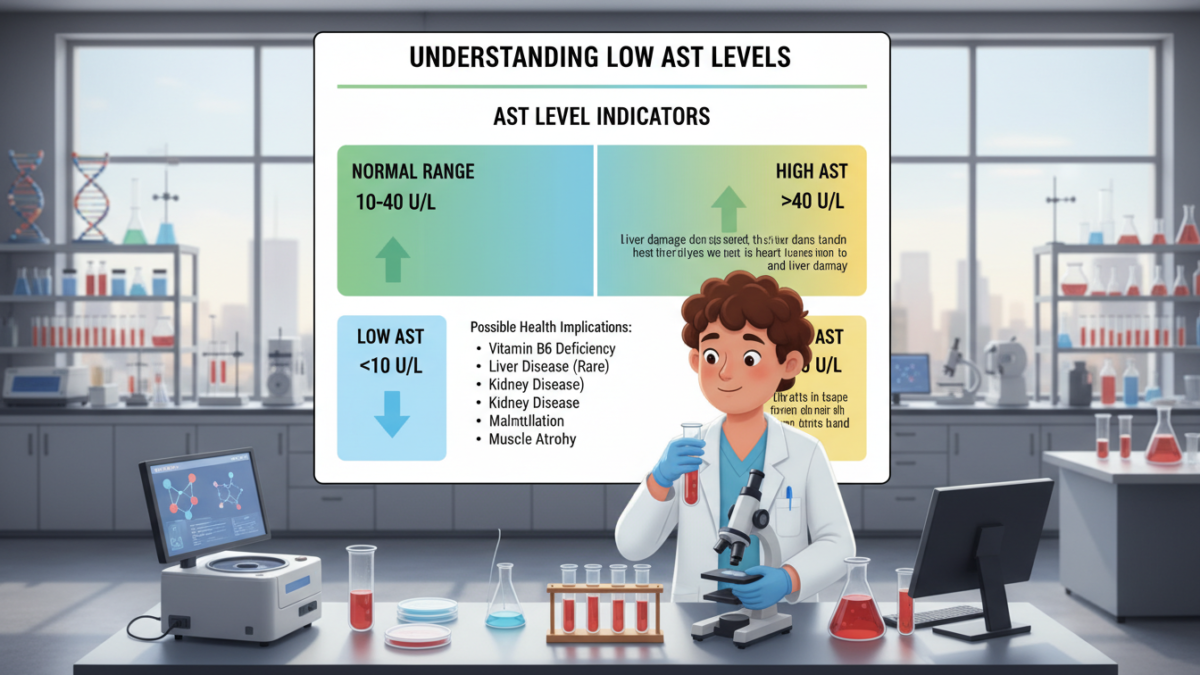
Most talk about high AST levels. But knowing about low AST levels is also key. In healthy adults, AST levels should be between 10 and 40 U/L. Levels under 10 U/L are rare and might show a nutritional issue or a health problem that needs attention.
Understanding low AST levels helps patients be more involved in their health. Low AST levels usually don’t cause symptoms. They might show a vitamin B6 deficiency, chronic kidney disease, pregnancy changes, or genetic issues. A doctor will look at all these possibilities with the patient’s full medical history.
Getting low AST results can make you wonder during a routine checkup. This article explains what low AST values might mean, how the test works, and when you might need more tests.
Key Takeaways
- AST is an enzyme found in the liver, heart, muscles, kidneys, and brain that helps gauge organ health.
- Normal adult AST levels range from 10 to 40 U/L, and values below 10 U/L are considered unusually low.
- Low AST blood test results may suggest vitamin B6 deficiency, chronic kidney disease, or pregnancy-related changes.
- Low readings alone rarely produce symptoms but can signal conditions that need medical evaluation.
- Understanding what does low AST indicate empowers patients to have informed conversations with their doctors.
- A single AST result should always be interpreted alongside other lab work and a patient’s complete health history.
What the AST Test Measures
The AST test checks for aspartate aminotransferase in the blood. This enzyme is found in many organs and tissues. When cells get damaged, AST leaks into the blood.
Doctors look at AST levels to check a patient’s health. Low levels or values outside the norm can lead to further tests.
Understanding Aspartate Aminotransferase
Aspartate aminotransferase is a protein enzyme that helps chemical reactions in the body. It’s important for breaking down proteins into energy. AST needs vitamin B6 to work right.
Without enough B6, AST can’t do its job well. This is one reason doctors look at AST levels.
AST is found in:
- Liver
- Heart
- Skeletal muscles
- Kidneys
- Brain
- Red blood cells
Role in Liver Function
The liver has lots of AST. It helps with protein making and metabolism. Doctors test AST as part of a comprehensive metabolic panel or liver test.
They pair it with ALT for a full view. Low AST levels might show nutritional gaps or other issues.
Significance in Muscle Metabolism
AST is also in skeletal muscles. It helps make energy during exercise. This is why exercise and muscle mass affect AST test results.
Doctors use this to understand patient care better.
Why the AST Test is Ordered
Doctors order AST tests for many reasons related to health. This blood test helps find problems early, track conditions, and understand low AST levels. These levels can show nutritional or metabolic issues. Knowing why the test is done can help patients feel more ready.
Routine Health Assessments
AST testing is a key part of yearly blood tests for certain patients. This includes those with:
- Family history of liver disease
- Obesity or type 2 diabetes
- Alcohol use disorder
- Past exposure to hepatitis B or C
Regular testing helps catch changes in AST values before symptoms show. Finding AST deficiency symptoms early can lead to more tests.
Evaluation of Liver Health
An AST test is often one of the first tests when symptoms appear. Symptoms like jaundice, dark urine, and abdominal pain can trigger testing. The American Liver Foundation says many liver problems are silent until damage is done, making early testing key.
Early detection through routine liver enzyme testing can reduce long-term complications and improve patient outcomes.
Monitoring Disease Progression
For patients with liver conditions or taking liver-affecting meds, regular AST tests are important. They show if treatment is working. Low AST levels can mean overtreatment, nutritional issues, or metabolic changes that need attention.
Doctors look at AST results with other liver markers like ALT and ALP for a full picture. This helps in diagnosing more accurately.
Normal AST Reference Range
It’s important to know the normal range for AST before looking into what low levels mean. These ranges help doctors see if a patient’s results are okay or if they need to look closer.
Typical Levels in Adults
In the U.S., a normal AST level for adults is between 10 and 40 units per liter (U/L). If levels go below 10 U/L, doctors start to look into what it might mean for a patient’s health. Levels above 40 U/L can suggest liver or muscle issues.
Measurement Units Explained
AST results are measured in units per liter (U/L) or international units per liter (IU/L). Both units show the same thing — how much enzyme activity is in the blood. Different labs might use different methods, so the ranges can vary. Always check your lab report for the specific range.
Variations by Age and Sex
AST levels vary among different groups. Several factors affect where a person falls on the spectrum:
- Sex: Men usually have higher AST levels than women because of more muscle.
- Age: Kids and teens might have higher normal ranges, thanks to growth spurts.
- Body composition: Weight, race, and muscle mass can change baseline values.
| Group | Typical AST Range (U/L) | Key Influencing Factor |
|---|---|---|
| Adult Men | 10–40 | Higher muscle mass |
| Adult Women | 9–32 | Lower muscle mass |
| Children (1–9 years) | 15–55 | Active growth and development |
| Adolescents (10–17 years) | 10–40 | Growth spurts |
AST levels can change throughout the day and after hard exercise. Understanding low liver enzyme AST meaning involves looking at these factors. This helps doctors figure out what high or low AST levels might mean for a patient’s health.
Implications of High AST Levels
It’s just as important to know what high AST levels mean as it is to understand low levels. High AST can show damage in organs like the liver and heart. The level of AST helps doctors figure out what’s wrong.
Liver Damage Indicators
AST levels over 40 U/L might mean liver trouble. The exact level helps doctors find the cause:
| AST Level (U/L) | Severity | Possible Causes |
|---|---|---|
| 41–120 | Mild elevation | Fatty liver disease, medication side effects, alcohol use |
| 121–999 | Significant elevation | Chronic hepatitis, cirrhosis, liver cancer |
| 1,000+ | Severe elevation | Acute hepatitis, drug-induced liver injury |
The AST-to-ALT ratio is a key tool for doctors. If AST is higher than ALT, it often means liver damage from alcohol, says the American College of Gastroenterology.
Heart Muscle Damage
High AST isn’t just about the liver. It can also mean heart problems like a heart attack or heart failure. While troponin is used to diagnose heart attacks, AST is also important.
Knowing what low AST means is just as important as knowing what high AST means. Both need medical attention.
Other Medical Conditions
Many conditions can raise AST levels, not just liver and heart issues:
- Muscle disorders such as rhabdomyolysis
- Pancreatitis
- Hemochromatosis and Wilson’s disease
- Celiac disease
- Certain cancers affecting the liver or bones
AST is found in many tissues, so a high reading doesn’t always tell the whole story. Doctors look at several biomarkers to make a correct diagnosis.
Implications of Low AST Levels
When AST levels drop below normal, it’s a sign of a problem. Levels below 10 U/L can point to nutritional gaps, genetic traits, or chronic health issues. It’s important to understand these low levels to find the cause early.
Potential Nutritional Deficiencies
Vitamin B6 is key for making AST. Without enough B6, the body can’t make enough AST. Poor diet, malabsorption, and some medicines like isoniazid can quickly lower B6 levels.
Pregnant women need more B6, making them more at risk. Severe malnutrition is also a common cause of low AST levels in hospitals.
Genetic Factors to Consider
Some people are born with genes that lower enzyme production. These genes can lead to low AST levels all their lives. Age also plays a part, as older adults naturally make less enzyme.
Other Health Conditions
Chronic kidney disease, like in hemodialysis patients, is a known cause. Dialysis takes out B6, lowering AST. Autoimmune diseases can also lower AST levels.
According to the National Kidney Foundation, hemodialysis patients should be monitored for B6 depletion given its direct impact on liver enzyme readings.
AST deficiency symptoms come from B6 shortage, not low AST:
- Skin rashes and mouth sores
- Swollen tongue (glossitis)
- Mood changes and confusion
- Weakened immune response
- Anemia
- Peripheral neuropathy (tingling in hands and feet)
Spotting these symptoms early helps doctors test and treat the right way.
Related Biomarkers in Liver Function
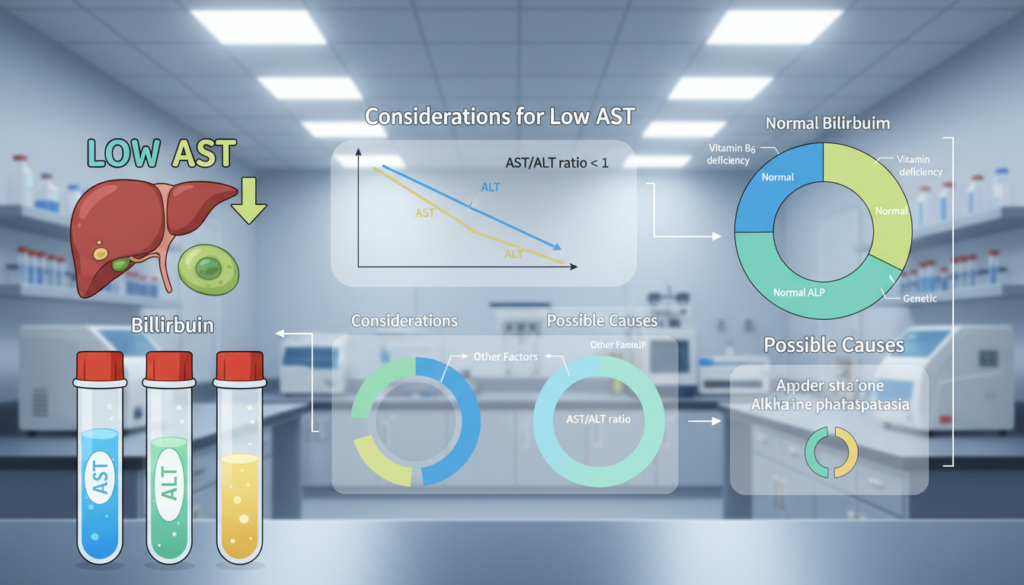
AST is just one piece of the puzzle when it comes to assessing liver health. Doctors rely on several biomarkers together to get a full picture. Interpreting low AST levels becomes much more meaningful when these results are compared against other key liver enzymes and markers.
Alanine Aminotransferase (ALT)
ALT is another enzyme tested alongside AST. It is more specific to the liver than AST, which appears in multiple organs. Normal ALT levels fall below 33 U/L for males and below 25 U/L for females, according to the American College of Gastroenterology.
The AST/ALT ratio offers diagnostic clues about liver condition types. When AST is elevated but ALT stays normal, it may point to alcohol-induced damage or non-liver problems. Understanding low aspartate aminotransferase causes requires comparing both enzymes side by side.
Alkaline Phosphatase (ALP)
ALP helps evaluate bile duct function and bone metabolism. Elevated ALP paired with abnormal AST or ALT levels can signal bile duct obstruction or bone disease. This marker adds critical context during a comprehensive metabolic panel.
Bilirubin Levels
Bilirubin is a byproduct of red blood cell breakdown processed by the liver. Elevated bilirubin causes jaundice — a yellowing of the skin and eyes. Testing bilirubin alongside AST helps pinpoint whether the liver is struggling to filter waste properly.
“A single lab value tells you very little. The real story emerges when you look at the full panel together.” — Dr. Sanjiv Chopra, Harvard Medical School
| Biomarker | Primary Function | Normal Range (Adults) |
|---|---|---|
| ALT | Liver cell damage detection | 7–33 U/L (males), 7–25 U/L (females) |
| ALP | Bile duct and bone assessment | 44–147 U/L |
| Bilirubin (Total) | Red blood cell breakdown processing | 0.1–1.2 mg/dL |
| Albumin | Liver protein synthesis | 3.5–5.0 g/dL |
| GGT | Bile duct function | 9–48 U/L |
Reviewing these biomarkers together gives clinicians a reliable framework for interpreting low AST levels and identifying low aspartate aminotransferase causes with greater accuracy.
Factors Affecting AST Test Results
Many things can change AST test results. It’s key to know what affects them. Lifestyle, medicines, and when you get your blood drawn are important. These can make results seem off, confusing liver or muscle health.
Impact of Physical Activity
Hard exercise can temporarily raise AST levels. This is because AST is in muscle tissue. Activities like weightlifting or long-distance running can cause muscle breakdown. This releases AST into your blood.
The American Association for Clinical Chemistry suggests avoiding hard workouts 24 to 48 hours before testing. This helps get accurate results.
Being very inactive might also affect AST levels in some people.
Influence of Alcohol Consumption
Drinking a lot can raise AST levels because it damages the liver. Stopping drinking can lower AST levels temporarily. When you last drank is important for understanding your results.
| Factor | Effect on AST Levels | Recommended Action |
|---|---|---|
| Heavy exercise (24–48 hrs prior) | Temporary increase | Rest before testing |
| Chronic alcohol use | Sustained elevation | Disclose intake to provider |
| Vitamin B6 deficiency | Decreased levels | Nutritional evaluation |
| Pregnancy | Possible decrease | Adjusted reference range |
Medications and Supplements
Some drugs can change AST levels. These include:
- Acetaminophen (Tylenol) at high doses
- Statins used for cholesterol management
- Antibiotics and antifungal medications
- Anti-seizure drugs and NSAIDs
Vitamin B6 can help if you’re low on it. Always tell your doctor about all your medicines before testing.
Clinical Context Considerations
A single AST reading never tells the full story. Doctors must interpret results within a broader clinical picture. This includes other lab values, physical exams, and the patient’s unique health background. Understanding what does low AST indicate requires looking beyond a number on a page.
Importance of Comprehensive Evaluation
A thorough workup pairs AST with multiple biomarkers. Physicians review ALT, ALP, GGT, bilirubin, and metabolic panels together. Nutritional indicators like vitamin B6 levels play a role too. This combined approach prevents misdiagnosis and reveals patterns a single test might miss.
Tracking trends over time is far more useful than reacting to one isolated value. A steady downward trend carries different meaning than a one-time dip.
Patient Medical History Relevance
A patient’s background shapes how clinicians read AST results. Key factors include:
- Existing liver, kidney, or heart conditions
- Diabetes or metabolic syndrome diagnosis
- History of alcohol use or hepatitis exposure
- Current medications and supplement use
- Family history of liver disease
- Previous abnormal lab results
Physical exam findings—such as hepatomegaly or fluid buildup in the abdomen—give providers extra context for interpreting low values.
Symptoms Correlated with AST Levels
Recognizing AST deficiency symptoms helps guide clinical decisions. Patients may report fatigue, appetite changes, unexplained weight shifts, or mild abdominal discomfort. Jaundice and swelling can appear in more advanced cases.
| Symptom | Possible Association | Urgency Level |
|---|---|---|
| Chronic fatigue | Nutritional deficiency, low B6 | Moderate |
| Appetite loss | Liver or metabolic concern | Moderate |
| Unexplained weight change | Malnutrition or chronic illness | Moderate |
| Jaundice | Liver dysfunction | High |
| Abdominal swelling | Ascites or organ enlargement | High |
Pairing these symptoms with lab data helps providers determine whether further testing—discussed in the next section on AST test limitations—is needed.
Limitations of the AST Test

The AST test is useful but has its limits. It’s important to know these when looking at low AST levels or any unusual results. No single test can fully show a person’s health, and the AST test is no different.
Specificity and Sensitivity Issues
AST is found in the liver, heart, muscles, kidneys, and brain. So, abnormal levels can’t pinpoint a single organ. Low AST levels might seem good, but they don’t mean you’re healthy.
They do not rule out early liver disease. The test might miss conditions that haven’t caused much damage yet.
Potential for Misinterpretation
Looking at AST numbers alone can lead to wrong conclusions. It can’t tell if a problem is new or long-standing. Exercise, muscle injuries, and some supplements can change AST levels.
Without looking at the whole picture, like diet and genetics, you might miss important issues. This could mean missing important health problems.
Need for Additional Testing
Doctors usually order more tests to get a clear picture. These might include:
- ALT levels for calculating the AST/ALT ratio
- Complete metabolic panel
- Viral hepatitis screening
- Coagulation studies
- Abdominal ultrasound or other imaging
- Platelet count (to check for HELLP syndrome in pregnancy)
- Glucose testing for metabolic concerns
The type of follow-up depends on symptoms, medical history, and overall health. As we’ve seen, looking at the whole picture is key. This way, low AST levels are not dismissed too quickly.
Conclusion: Importance of AST Testing
AST testing is key to keeping us healthy. It helps doctors see how well our organs are working. Knowing what low liver enzyme AST means lets us take better care of ourselves.
Role in Comprehensive Health Assessment
Doctors don’t just look at AST results alone. They also check other markers like ALT and ALP. This helps them understand liver health better.
When AST is low, it usually means our cells are healthy. But very low levels might show a vitamin B6 problem or other rare issues.
| AST Result | Typical Interpretation | Recommended Action |
|---|---|---|
| Below 5 U/L | Possible nutrient deficiency | Evaluate vitamin B6 status; order follow-up labs |
| 5–40 U/L | Within standard reference range | Continue routine screening |
| Above 40 U/L | Potential organ stress or damage | Investigate cause; repeat testing |
Communicating with Healthcare Professionals
Talking openly with doctors about AST results is important. A single test doesn’t tell the whole story. Our symptoms, family history, and lifestyle also matter.
- Bring a full list of medications and supplements to every appointment.
- Ask how current results compare to previous readings.
- Request clarification on any AST below normal range finding before drawing personal conclusions.
“Early detection saves lives. Regular lab work, paired with honest patient-provider communication, is one of the most effective tools in modern medicine.” — American Liver Foundation
Regular AST tests are vital, even for those at risk. They help catch problems early. Understanding lab results is the first step to taking control of our health.
References
This article uses trusted medical sources, clinical guidelines, and research. These references help explain decreased AST enzyme levels and low aspartate aminotransferase causes. They are found throughout the sections above.
Medical Sources and Research Articles
MedlinePlus AST Test guidelines and the Cleveland Clinic’s resources on aspartate transferase are key. The Mayo Clinic’s liver function test protocols are also a main source. StatPearls publications by Lala V. et al. and Moriles KE et al. on liver function tests add clinical context.
Medical News Today and Testing.com explain decreased AST enzyme levels in simple terms. They highlight their importance.
Guidelines from Health Organizations
The American Liver Foundation’s guidelines for liver biopsy and function testing are referenced. The Merck Manual Consumer Version helps understand liver blood tests. ACG Clinical Guidelines by Kwo PY et al. and a CMAJ guide by Li TK et al. frame the discussion on low aspartate aminotransferase causes.
Peer-Reviewed Journals
Studies by Ndrepepa G. on AST and cardiovascular disease are included. Lumeng L. and Li TK’s work on vitamin B6 metabolism in alcohol abuse is also mentioned. A World Journal of Gastroenterology study on metabolomics and liver enzymes supports understanding nutritional and metabolic factors.
Readers are encouraged to consult these sources and talk to a healthcare provider for personalized advice.