
The AST blood test is very common in medical care. It helps check the liver and metabolic health. AST stands for aspartate aminotransferase, found mainly in the liver, heart, and muscles. Doctors use this test to spot tissue damage and make treatment plans for many conditions.
Originally called SGOT, this enzyme is key for cell reactions. When liver or muscle cells get hurt, AST gets into the blood. A simple blood draw is all it takes to check these levels. The whole process is quick, taking less than five minutes, and doesn’t need any special preparation.
Knowing the normal levels of aspartate aminotransferase is important. These levels can change based on age, sex, and health. Now, there are at-home test kits. They let you take a blood sample from your finger and send it to a lab for testing.
Normal AST results are a starting point for health checks. If the results are not normal, doctors will look for the cause. This article explains what the test measures, what the numbers mean, and when to seek more tests.
Key Takeaways
- AST is an enzyme found in the liver, heart, and muscles that gets into the blood when tissue is damaged.
- The AST normal range for most healthy adults is between 10 and 40 U/L, but this can vary by lab.
- Normal AST results need to be looked at with the patient’s age, sex, medications, and medical history in mind.
- AST levels alone can’t diagnose a condition — tests like ALT and ALP are needed for more information.
- The blood draw is quick, painless, and doesn’t require fasting or special preparation.
- At-home kits make it easy to screen for health issues outside of a clinic.
What the AST Test Measures
The AST blood test checks for a certain enzyme in the blood. This enzyme is found in many organs, showing how well cells are working. Doctors use an AST levels chart to see if a patient’s results are normal or not.
Definition of AST
AST stands for aspartate aminotransferase. It helps speed up chemical reactions in amino acid metabolism. The body has lots of AST in the liver, heart, and muscles. It’s also found in the kidneys, brain, pancreas, and red blood cells.
When cells are healthy, only a little AST leaks into the blood. For adults, the normal range is about 10–40 U/L. This range can change depending on the lab. If your AST levels are within this range, it means your cells are working well.
Role of AST in the Body
AST helps turn the amino acid aspartate into oxaloacetate. This is key for:
- Energy production in cells
- Proper protein breakdown and recycling
- Keeping nitrogen levels balanced in the body
When tissues with lots of AST get damaged, cells burst. This releases AST into the blood, raising levels. The American Association for Clinical Chemistry says high AST levels can mean liver problems, heart attacks, or muscle damage from hard exercise.
Because AST is found in multiple organs, a high AST level doesn’t mean just one disease. Doctors use other tests to figure out the exact cause.
Why the AST Test is Ordered
Doctors order the AST blood test for many reasons. It’s used in routine health checks and for specific tests. Knowing how to read AST lab values helps doctors find problems early and see how treatments are working.
Screening for Liver Disease
One main reason for this test is to check for liver damage. People with signs like jaundice, constant tiredness, or unexpected weight loss might get tested. Even without symptoms, some people are tested because of their risk factors.
- Family history of liver disease
- Obesity or type 2 diabetes
- Heavy alcohol consumption
- Use of hepatotoxic medications (e.g., acetaminophen, statins)
- Suspected viral hepatitis exposure
This test is usually part of a bigger liver function panel. It includes ALT, ALP, and bilirubin. By comparing these levels, doctors can spot issues like cirrhosis, hepatitis, and liver cancer.
Assessing Muscle Damage
AST is found in the heart, muscles, kidneys, and brain, not just the liver. High levels can mean other health problems that need to be looked at separately.
| Non-Hepatic Cause | Typical AST Elevation | Diagnostic Context |
|---|---|---|
| Heart attack (myocardial infarction) | Moderate to high | Confirmed with troponin and ECG |
| Rhabdomyolysis (muscle breakdown) | Very high | Paired with creatine kinase (CK) |
| Recent surgery or trauma | Mild to moderate | Expected post-operative finding |
| Acute pancreatitis | Mild to moderate | Evaluated with lipase and amylase |
| Seizures or severe burns | Moderate | Tissue damage related |
Understanding AST lab values is key. A single high reading doesn’t mean you have a problem. Doctors look at the whole picture, comparing AST levels with other markers to find the cause.
Normal Reference Range for AST
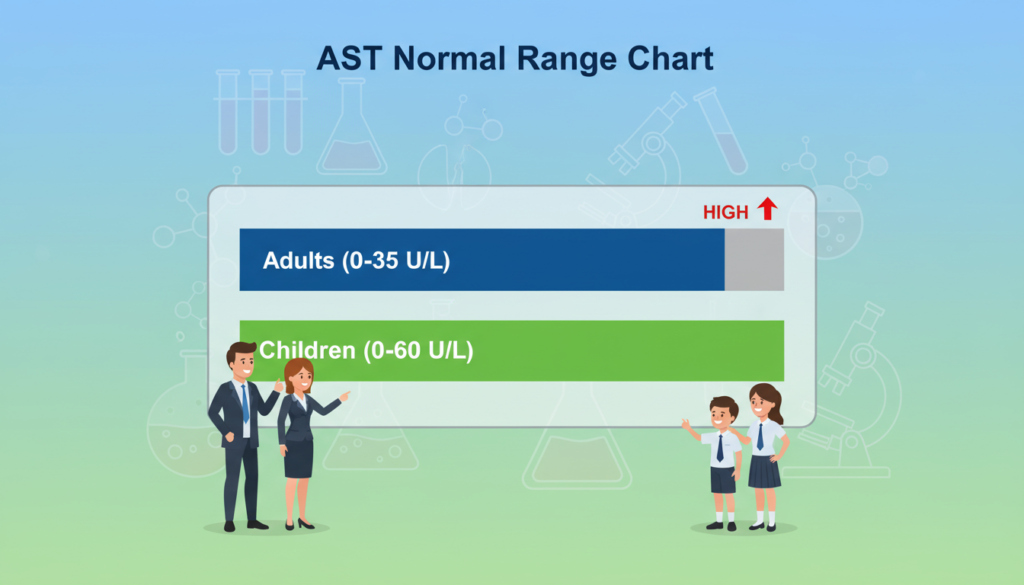
Knowing the AST normal range is key to understanding blood tests. Labs in the U.S. might report different values. This is because they use different testing equipment and methods.
Each lab prints its own AST reference values on the results report. This makes it easy for patients and doctors to compare.
Typical Values (U/L)
For most adults, normal AST blood test results are between 8 and 33 U/L. Some labs set the upper limit at 40 IU/L. Both units are used in clinical practice.
Any result within the lab’s stated range is considered normal.
| Group | AST Normal Range (U/L) |
|---|---|
| Adult Males | 10–40 |
| Adult Females | 9–32 |
| Children (1–18 years) | 10–40 |
| Newborns | 25–75 |
Variability by Age and Gender
AST reference values change based on several factors. Men usually have slightly higher baseline levels than women. Newborns often have higher readings that decrease over the first few months.
Children between 1 and 18 years old typically have values between 10–40 U/L.
Certain situations can cause AST levels to rise. Intense exercise can temporarily increase AST due to muscle cell turnover. Pregnancy can also cause mild changes.
Weight and race may influence where a person’s value falls within the accepted range.
A single AST reading outside the expected range does not confirm a diagnosis. Doctors always interpret results alongside symptoms, medical history, and related biomarkers.
Because normal AST blood test results depend on many variables, patients should review their numbers against the specific AST reference values printed on their lab report. This context is key before exploring what elevated or low readings may suggest in the sections ahead.
What High Levels of AST May Indicate
When AST levels go over 40 U/L, it means cells in organs have been damaged. AST is found in the liver, heart, muscles, kidneys, and brain. Finding the exact source needs careful analysis of AST levels and other tests.
An AST levels chart helps doctors understand how severe the increase is. Small increases might mean chronic conditions. But, very high levels, over 1,000 U/L, show acute and severe damage.
Liver Conditions
The liver is the most common source of high AST levels. Inflammation or damage to liver cells releases a lot of AST into the blood. Main causes include:
- Acute viral hepatitis (A, B, C, or E)
- Cirrhosis and alcoholic liver disease
- Drug-induced hepatotoxicity (e.g., acetaminophen overdose)
- Liver ischemia due to reduced blood flow
- Hemochromatosis and liver cancer
Muscle Disorders
Skeletal muscle has a lot of AST. Rhabdomyolysis, muscular dystrophy, and severe injuries can raise AST levels. AST and creatine kinase (CK) tests help confirm muscle damage.
Other Health Issues
Many non-liver, non-muscle conditions also raise AST levels. Myocardial infarction, pancreatitis, infectious mononucleosis, deep burns, seizures, and recent surgeries can all cause elevations.
| AST Range (U/L) | Severity | Possible Causes |
|---|---|---|
| 41–120 | Mild elevation | Chronic hepatitis, fatty liver disease, strenuous exercise |
| 121–400 | Moderate elevation | Alcoholic liver disease, mononucleosis, muscle injury |
| 401–1,000 | Marked elevation | Drug-induced hepatotoxicity, myocardial infarction, rhabdomyolysis |
| Above 1,000 | Severe elevation | Acute viral hepatitis, liver ischemia, acetaminophen toxicity |
What Low Levels of AST May Indicate
Most medical talks focus on high AST levels. But low AST values are rarely a worry. In fact, normal liver enzyme AST levels at the lower end of the range are common in healthy people.
A healthy AST range for adults usually starts at 10 U/L and goes up to 40 U/L. Any value within this range, even the lowest, is not seen as a warning by most labs. Doctors see low values as a sign that the liver, heart, and muscles are working well.
Rare Clinical Situations
In rare cases, extremely low AST levels can show up in patients with advanced kidney disease. Those on long-term dialysis might have lower enzyme activity. Some chronic conditions that reduce AST cofactors can also lower readings below what’s usual.
These cases are not common in routine tests. A doctor will look at the whole picture before thinking about a very low result.
Nutritional Factors
Vitamin B6 (pyridoxine) is key for AST enzyme activity. A lack of this vitamin can lower AST in blood tests. Here’s a table of conditions linked to low AST levels:
| Possible Cause | Mechanism | Clinical Significance |
|---|---|---|
| Vitamin B6 deficiency | Reduced cofactor for AST enzyme | Mild; correctable with supplementation |
| Chronic kidney disease on dialysis | Loss of enzyme cofactors and proteins | Moderate; requires ongoing monitoring |
| Healthy baseline in absence of disease | No tissue damage releasing AST | None; considered normal |
For most adults, low readings within normal liver enzyme AST levels just mean they’re healthy. A healthy AST range for adults shows no major organ damage.
Related Biomarkers in Liver Function Tests

Doctors don’t look at AST blood test results alone. They use a liver function panel with several biomarkers. These markers check different parts of liver health, like cell damage and bile flow.
ALT (Alanine Aminotransferase)
ALT is more specific to the liver than AST. The American College of Gastroenterology says normal ALT levels are below 33 U/L for men and 25 U/L for women.
Doctors look at AST and ALT together for better diagnosis. Here’s what they look for:
- Both AST and ALT elevated — points to liver diseases like hepatitis or fatty liver
- AST up but ALT normal — might mean muscle injury or alcohol damage to the liver
- Both within range — usually means the liver is healthy
ALP (Alkaline Phosphatase)
ALP helps doctors tell if the problem is with the bile ducts or liver cells. If ALP is high but AST is normal, it often means there’s a blockage in the bile ducts, not liver damage.
A full liver panel also includes other tests:
| Biomarker | Primary Purpose | Key Clinical Use |
|---|---|---|
| Bilirubin | Measures bile pigment | Jaundice evaluation |
| Albumin | Assesses protein synthesis | Chronic liver disease staging |
| PT/INR (Coagulation) | Tests clotting factor production | Liver synthetic function |
| Platelet Count | Screens for low platelets | HELLP syndrome in pregnancy |
Knowing how these markers relate to AST levels helps both patients and doctors make better choices about care.
Factors That Affect AST Results
Many things can change AST reference values. It’s important to know what affects test results. Lifestyle, biology, and drugs all play a part in the outcome.
Age and Gender Considerations
AST levels change with age. Newborns and babies have high AST due to cell growth. By teens, levels get closer to adult values. Adults, men usually have higher AST than women because of muscle.
Pregnancy can also change liver enzymes. Mild AST increases in the third trimester are common. Race and weight might also affect baseline values, but more research is needed.
Medications and Their Influence
Some drugs can change AST levels. It’s important to tell your doctor about all medications before testing. Certain drugs, like statins and antibiotics, can affect results.
- Statins (e.g., atorvastatin, rosuvastatin)
- Acetaminophen at high or prolonged doses
- Antibiotics such as amoxicillin-clavulanate
- Herbal supplements like kava and green tea extract
Hard exercise can briefly raise AST due to muscle damage. Drinking a lot of alcohol can also raise AST levels.
| Factor | Effect on AST | Duration of Impact |
|---|---|---|
| Strenuous exercise | Temporary increase | 24–72 hours |
| Chronic alcohol use | Sustained elevation | Weeks to months |
| Statin therapy | Mild to moderate increase | Throughout treatment |
| Pregnancy (3rd trimester) | Slight elevation | Until delivery |
| Acetaminophen overuse | Significant elevation | Days after exposure |
You don’t need to fast for an AST test alone. But, if you’re getting a full liver panel, fasting might be asked to get accurate results.
Clinical Context Considerations
AST lab values are more than just numbers. They need to be seen in the context of symptoms, personal history, and changes over time. This helps doctors make accurate diagnoses.
Symptom Correlation
Symptoms are important when doctors look at AST levels. For example, jaundice, fatigue, abdominal pain, or unexplained weight loss might suggest liver issues. In these cases, high AST levels are more significant.
But, if a patient has no symptoms and only a slight increase in AST, doctors might want to test again. The AST/ALT ratio is also helpful:
- A ratio greater than 2:1 often points to alcoholic liver disease, says the American College of Gastroenterology.
- A ratio close to 1:1 might suggest viral hepatitis or nonalcoholic fatty liver disease.
- When the AST level goes up, it helps doctors tell if it’s an acute or chronic problem.
Tracking AST levels over time gives doctors more insight. It helps them see how the disease is progressing or how well treatment is working.
Patient History Relevance
A detailed patient history is key to understanding AST lab values. Doctors look at several factors before making conclusions:
| History Element | Why It Matters |
|---|---|
| Alcohol consumption patterns | Chronic use elevates AST more than ALT |
| Medication use (statins, acetaminophen) | These drugs can cause liver damage and raise AST |
| Family history of liver disease | Genetic conditions like hemochromatosis may be present |
| Metabolic conditions (diabetes, obesity) | Linked to nonalcoholic fatty liver disease |
| Recent trauma or surgery | Muscle damage can cause temporary AST spikes |
Each of these factors influences how doctors interpret and respond to AST results. It ensures that the impact of medications and age is considered in the right context.
Limitations of the AST Test
The AST test is useful but has its downsides. AST is found in many parts of the body, not just the liver. This makes it hard to know where high levels come from without more information.
Specificity and Sensitivity Issues
An AST test alone can’t tell doctors why or how bad cell damage is. It doesn’t measure liver function or predict outcomes. Doctors often need more tests to make a diagnosis.
Watching AST levels over time is more helpful than a single test. It shows if a person’s levels are getting better or worse.
Potential for False Positives
Many things can make AST levels seem high without real disease:
- Vigorous exercise or intense physical training within 24–48 hours before the blood draw
- Minor muscle injuries, including intramuscular injections
- Hemolyzed (damaged) blood samples collected during the lab process
- Certain supplements and over-the-counter medications
| False-Positive Cause | Mechanism | Recommended Action |
|---|---|---|
| Strenuous exercise | Muscle cell micro-damage releases AST | Retest after 48–72 hours of rest |
| Hemolyzed sample | Red blood cell destruction during collection | Recollect specimen with proper technique |
| Muscle trauma | Direct tissue injury elevates enzyme levels | Correlate with creatine kinase (CK) levels |
| Medication effects | Drug-induced enzyme release from tissues | Review medication list; retest after adjustment |
Knowing these limitations helps everyone understand test results better. This is important, as discussed in the section on patient history relevance.
References
This article uses information from trusted medical sources. For more on aspartate aminotransferase normal levels, check out clinical resources used by doctors in the U.S.
Medical Sources and Guidelines for Further Research
Henry’s Clinical Diagnosis and Management by Laboratory Methods, 24th edition, is from Elsevier in 2022. It has a detailed chapter on liver function. Sleisenger and Fordtran’s Gastrointestinal and Liver Disease, 11th edition from Elsevier 2021, dives deep into liver chemistry and function tests.
StatPearls Publishing has free updates on liver function tests and ALT testing. It’s a great resource for understanding normal AST blood test results.
The American Liver Foundation, Cleveland Clinic, Mayo Clinic, and the Merck Manual publish guides on liver diagnostics. These guides explain how to interpret aspartate aminotransferase normal levels. They are good places to start for patients and doctors looking for evidence-based information.
Always talk to a healthcare provider about your normal AST blood test results. While guidelines are helpful, your health history is key to understanding your results. A doctor can use your test results and medical history to give you the best advice.