The cholesterol blood test is very common in medical checks. It helps check how well the heart and blood vessels are working. Cholesterol is a fatty substance found in every cell of our body. It helps make hormones, vitamin D, and bile acids for fat digestion.
The liver makes enough cholesterol for us. But, foods like eggs, dairy, meat, and seafood add more to our blood.
Knowing what’s normal for cholesterol is key for many Americans. The Centers for Disease Control and Prevention says about 86 million adults in the U.S. have too much cholesterol. When cholesterol builds up, it forms plaque in artery walls.
This plaque narrows arteries and cuts off blood flow to the heart, brain, and other important organs.
A standard lipid panel shows cholesterol levels in milligrams per deciliter (mg/dL). It breaks down results into total cholesterol, LDL, HDL, and triglycerides. The American Heart Association says to start screening at age 20.
Spotting high cholesterol early lets doctors and patients take action before serious problems start.
Key Takeaways
- The cholesterol blood test measures total cholesterol, LDL, HDL, and triglycerides in mg/dL.
- The body produces all needed cholesterol on its own; dietary intake from animal-based foods can raise levels beyond the cholesterol normal range.
- High cholesterol causes plaque buildup in arteries, which can block blood flow and lead to heart attack or stroke.
- Current cholesterol guidelines recommend screening every four to six years for healthy adults starting at age 20.
- Normal cholesterol levels vary by age, sex, and individual risk factors, making personalized assessment important.
- Lifestyle changes and medications can help bring elevated cholesterol back within a safe range.
What the Test Measures
A lipid panel is a blood test that shows the types of fats in your blood. It helps doctors see if your cholesterol and heart health are good. You need to fast for 9 to 12 hours before the test.
Each part of the panel has its own role. Knowing these numbers helps you keep your cholesterol in the right range for your age and health risk.
Total Cholesterol
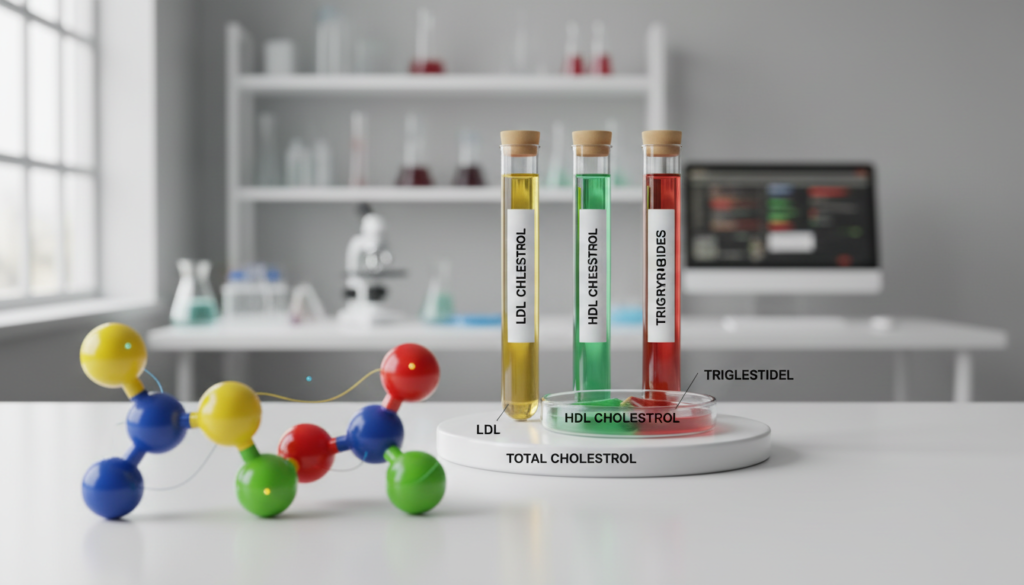
This number is the total of all cholesterol in your blood. It’s found by adding HDL, LDL, and 20% of triglycerides. While it gives a quick view, it doesn’t tell the whole story.
Low-Density Lipoprotein (LDL) Cholesterol
LDL, or “bad” cholesterol, builds up plaque in arteries. High levels can narrow blood vessels and increase heart attack or stroke risk. Keeping LDL low is key to preventing heart disease.
High-Density Lipoprotein (HDL) Cholesterol
HDL, or “good” cholesterol, cleans up excess cholesterol from arteries. It takes it back to the liver for removal. Higher HDL levels mean better heart health.
Triglycerides
Triglycerides are fats stored for energy. High levels increase heart disease risk, more so in women, says the American Heart Association. Keeping triglycerides low is important for heart health.
| Component | Role | Impact on Heart Health |
|---|---|---|
| Total Cholesterol | Sum of all cholesterol types | General risk indicator |
| LDL Cholesterol | Deposits fat in artery walls | Raises risk when elevated |
| HDL Cholesterol | Removes cholesterol from arteries | Lowers risk when elevated |
| Triglycerides | Stores unused calories as fat | Raises risk when elevated |
Why It Is Ordered
Doctors order a cholesterol blood test for several important reasons. It helps them understand a patient’s heart health. The test is key in preventing, diagnosing, and managing diseases.
Routine Health Checkups
The American Heart Association suggests adults aged 20 and older get their cholesterol checked every four to six years. This is for those with low cardiovascular risk. Early screening catches problems before symptoms show up.
Knowing the cholesterol reference range helps doctors and patients spot early warning signs.
Risk Assessment for Heart Disease
A cholesterol test is vital for assessing heart attack and stroke risk. Doctors don’t just look at lipid numbers. They consider other factors too:
- Age and biological sex
- Family history of heart disease
- Smoking status
- Blood pressure readings
- Presence of diabetes
This approach gives a more accurate risk profile. It helps doctors suggest the right treatments, from lifestyle changes to medication.
Monitoring Existing Conditions
Those with heart disease, high cholesterol, or related conditions need more tests. The cholesterol reference range helps track treatment success. Doctors might test every few months for those on statins or recovering from heart events.
The American Heart Association states that early detection and consistent monitoring remain two of the most powerful tools in reducing cardiovascular disease deaths.
Regular monitoring lets patients and doctors adjust treatment plans fast. This reduces the risk of serious complications later on.
Normal Reference Range
Understanding the cholesterol normal range is key for heart health. It helps doctors and patients make smart choices. Remember, the right levels can change based on age, race, and family history. The American Heart Association and American College of Cardiology have guidelines to follow.
Total Cholesterol Levels
The best total cholesterol level is around 150 mg/dL. Levels under 200 mg/dL are good. But, if it goes over 200 mg/dL, it’s considered high and needs attention.
LDL Cholesterol Levels
LDL, or “bad” cholesterol, can clog arteries. Adults should keep LDL below 100 mg/dL. This helps prevent heart disease and stroke.
HDL Cholesterol Levels
HDL, or “good” cholesterol, helps clear LDL. Men should have at least 40 mg/dL of HDL, and women 50 mg/dL. Higher HDL levels are better for your heart.
Triglycerides
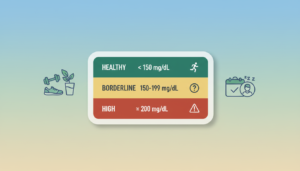
Triglycerides store energy and should be under 150 mg/dL. Here’s a breakdown:
| Category | Triglyceride Level (mg/dL) | Recommended Action |
|---|---|---|
| Normal | Below 150 | Maintain healthy habits |
| Borderline High | 150–199 | Lifestyle changes advised |
| High | 200 or above | Medical treatment may be needed |
These levels are a starting point. But, what’s right for you might be different. The next part talks about what high levels might mean for your health.
What High Levels May Indicate
High cholesterol levels are a warning sign from the body. They can signal serious health risks that need immediate attention. The American Heart Association says high cholesterol quietly damages arteries over time.
Cardiovascular Disease Risk
High cholesterol causes plaque buildup in arteries. This makes blood vessels narrow and limits blood flow. It can lead to angina or a heart attack over time.
Heart disease and stroke are the top causes of death in the U.S., says the CDC. High LDL cholesterol increases the risk of these conditions. Keeping cholesterol levels normal can greatly reduce this risk.
Metabolic Syndrome
Metabolic syndrome shows a concerning pattern in lipid panels:
- High total cholesterol and elevated LDL
- Low HDL (“good”) cholesterol
- High triglyceride readings
- Elevated blood sugar and increased waist circumference
This pattern raises the risk for type 2 diabetes and heart problems. Doctors screen for three or more of these markers.
Pancreatitis
Very high triglyceride levels can inflame the pancreas. This is called pancreatitis and causes severe pain. It may need emergency care.
| Triglyceride Level (mg/dL) | Classification | Pancreatitis Risk |
|---|---|---|
| Below 150 | Normal | Very low |
| 150–499 | Borderline to High | Low to moderate |
| 500 and above | Very High | Significantly elevated |
Early detection through lipid testing helps doctors prevent serious problems.
What Low Levels May Indicate
Most people talk about high cholesterol levels. But, levels that are too low can also be a big worry. If your cholesterol is way below what’s healthy, your doctor might look for other health issues.
Potential Nutritional Deficiencies
Low cholesterol might mean you’re not getting enough nutrients. Cholesterol helps make hormones and vitamin D. People with poor diets or diseases like celiac might have very low levels. Doctors might check for vitamin deficiencies in A, D, E, and K.
Hypolipidemia
Hypolipidemia means your blood has too little lipid. Some people are born with it, while others get it from hyperthyroidism or meds. The National Institutes of Health says levels under 120 mg/dL need attention to check for rare diseases.
“Cholesterol that is too low is just as deserving of clinical attention as cholesterol that is too high.” — American Heart Association
Liver Disease
The liver makes most of our cholesterol. Damage from hepatitis or alcohol can lower production. A drop in cholesterol could mean liver problems.
| Condition | Possible Cholesterol Effect | Key Diagnostic Clue |
|---|---|---|
| Malnutrition | Low total cholesterol | Vitamin deficiencies on blood panel |
| Abetalipoproteinemia | Extremely low LDL | Fat malabsorption from infancy |
| Hyperthyroidism | Reduced LDL and total cholesterol | Elevated thyroid hormones (T3, T4) |
| Liver Cirrhosis | Decreased total cholesterol | Elevated liver enzymes (ALT, AST) |
Don’t ignore low cholesterol results. A full check-up helps doctors figure out if it’s a real problem or just a normal low.
Related Biomarkers
A standard lipid panel gives a good look at heart health. But, there are more biomarkers that add to the picture. These markers help doctors get a better idea of your risk and how to treat it.
Apolipoproteins
Apolipoproteins are proteins that carry fats in the blood. Apolipoprotein B (ApoB) is on LDL and shows heart disease risk. Apolipoprotein A-1 (ApoA1) is with HDL and protects the heart. These proteins help doctors see more than just cholesterol numbers.
Lipoprotein(a)
Lipoprotein(a), or Lp(a), is a special LDL. High levels raise the risk of heart disease and blood clots. It’s mostly genetic and doesn’t change with diet. The American Heart Association says Lp(a) should be under 30 mg/dL.
Other Lipid Panel Components
Non-HDL cholesterol is total cholesterol minus HDL. It shows LDL and VLDL together. It’s useful when triglycerides are high. Total cholesterol is HDL plus LDL plus 20% of triglycerides.
| Biomarker | What It Measures | Desirable Level |
|---|---|---|
| Apolipoprotein B | Number of atherogenic particles | Below 90 mg/dL |
| Apolipoprotein A-1 | Protective HDL-related protein | Above 120 mg/dL |
| Lipoprotein(a) | Genetic LDL variant | Below 30 mg/dL |
| Non-HDL Cholesterol | Total cholesterol minus HDL | Below 130 mg/dL |
| VLDL Cholesterol | Triglyceride-rich particles | Below 30 mg/dL |
These biomarkers add to what standard lipid tests show. They help doctors understand cholesterol levels better and plan treatments.
Factors That Affect Results
A cholesterol blood test doesn’t happen in a vacuum. Many things can change your results, making it key to know what affects them. This way, you can understand your numbers better.
Diet and Lifestyle
Saturated fat is the primary dietary driver of high blood cholesterol. Foods like red meat, full-fat dairy, baked goods, and deep-fried items raise LDL levels a lot. Being overweight or obese makes it worse, increasing LDL and triglycerides while lowering HDL.
Being inactive also plays a big role. Not moving much makes it harder for your body to clear lipids from your blood. Smoking lowers HDL cholesterol, which is bad for removing cholesterol from arteries. The American Heart Association says exercise, diet changes, and quitting smoking are key first steps.
Genetics
Genes help decide how much cholesterol your liver makes. High cholesterol often runs in families, known as familial hypercholesterolemia. It can cause very high LDL even in young people. Race and ethnicity also play a role in your risk.
| Population Group | Notable Cholesterol Trend |
|---|---|
| Asian Americans | Higher LDL cholesterol levels on average |
| Non-Hispanic White Adults | Higher total cholesterol levels on average |
| Adults Over Age 50 | Natural rise in total and LDL cholesterol with age |
Medications
Some drugs can change your cholesterol levels. Statins, fibrates, and PCSK9 inhibitors lower LDL. But, corticosteroids, beta-blockers, and some diuretics can raise cholesterol or triglycerides. Doctors always check your medications before looking at your cholesterol results, as explained in the next section.
Clinical Context Considerations
A cholesterol blood test is never just a number. It’s part of a bigger picture. Doctors look at many factors before deciding if your cholesterol levels are okay or if you need help. The American Heart Association’s guidelines say that each person’s risk is unique.
Patient History
Age and sex are key in cholesterol risk. Men under 40 are more likely to have high cholesterol than women. After menopause, women’s risk goes up fast. Past health issues, like heart attacks, also affect how doctors see your cholesterol levels.
Family History of Heart Disease
Genetics can be a big factor. If a close relative had heart disease early, it’s a warning sign. Conditions like familial hypercholesterolemia can cause high LDL levels from birth. Doctors suggest more frequent tests for those with a family history.
“Cardiovascular risk assessment must account for the whole patient, not just one lab value.”
— American College of Cardiology, 2019 Prevention Guidelines
Other Comorbidities
Some health issues change what doctors consider normal cholesterol levels. These include:
- Type 2 diabetes and insulin resistance
- Obesity and metabolic syndrome
- Chronic kidney disease
- Underactive thyroid (hypothyroidism)
- Pregnancy, specially the third trimester
- Inflammatory diseases such as rheumatoid arthritis and lupus
Each condition affects cholesterol in different ways. Doctors who consider these factors can make better care plans for each patient.
Limitations of the Test
A cholesterol blood test is a valuable tool, but it has its limits. Knowing these helps patients and doctors make better choices about cholesterol levels.
Variability in Results
Cholesterol levels can change from one test to another. Stress, illness, and seasonal changes affect them. Studies show total cholesterol can vary by up to 10% between tests just weeks apart. This means one reading might not show someone’s true cholesterol level.
Influence of Timing and Fasting
For accurate results, you need to fast for 9 to 12 hours before the test. Eating or drinking before can change triglyceride and LDL numbers. Lifestyle choices also impact results:
- Too much alcohol raises triglycerides
- Sugary drinks and processed foods distort lipid readings
- Some medications, like beta-blockers and corticosteroids, can increase triglycerides
Potential for Misinterpretation
LDL levels are just one part of heart health. The 2018 American College of Cardiology/American Heart Association guideline suggests focusing on lowering LDL-C. But, total cholesterol must be considered with other risk factors like blood pressure, age, and smoking status.
“No single lab value should dictate treatment decisions without considering the full clinical picture.” — American Heart Association
| Limitation | Impact on Results | Recommended Action |
|---|---|---|
| Biological variability | Up to 10% fluctuation | Repeat testing to confirm |
| Inadequate fasting | Elevated triglycerides and LDL | Fast 9–12 hours before the test |
| Medication effects | Altered lipid levels | Inform provider of all medications |
| Isolated interpretation | Incomplete risk assessment | Evaluate alongside full health profile |
Understanding these limits helps ensure cholesterol levels are viewed in the right context. This leads to better care decisions in the next sections on testing and interpreting results.
Testing Procedures and Recommendations
Getting a cholesterol blood test is easy. Knowing when and how often to test is key. It helps catch problems early. The test schedule depends on age, risk factors, and medical history.
Sample Collection
A cholesterol test is a simple blood draw from the arm. Doctors usually ask for a 9 to 12 hour fast before the test. This ensures accurate readings, like for triglycerides.
The sample is collected in a few minutes. It’s done in a clinical setting or lab.
Laboratory Analysis
The blood sample goes to a lab for analysis. Technicians measure total cholesterol, LDL, HDL, and triglycerides. They compare these to the cholesterol reference range to spot any issues.
Most results come back in 24 to 48 hours.
Follow-Up Testing
Screening frequency changes with age and risk level. The American Heart Association suggests the following schedule:
| Age Group | Recommended Frequency | Special Notes |
|---|---|---|
| Children (ages 9–11) | Every 5 years | Start at age 2 if family history of high cholesterol, heart attack, or stroke |
| Young adults (ages 20–44) | Every 5 years | More frequent if risk factors are present |
| Men 45–65 / Women 55–65 | Every 1–2 years | Closer monitoring as cardiovascular risk increases |
| Adults over 65 | Annually | Annual testing is standard practice |
| High-risk patients | As directed by provider | Target LDL-C of 70 mg/dL or at least 50% reduction for those with prior heart attack or stroke |
Patients on cholesterol-lowering meds need regular check-ups. This ensures their cholesterol levels stay in check. A healthcare team assesses each person’s risk and creates a personalized plan. Understanding cholesterol levels at every stage of life is key to better heart health.
Interpretation of Results
A cholesterol blood test gives numbers, but they only tell part of the story. To understand results, we must look at a person’s health as a whole. The cholesterol normal range is just the beginning.
Understanding the Implications
Each number on a lipid panel has its own meaning. For most healthy adults, an LDL level below 100 mg/dL is the goal. We must consider total cholesterol, HDL, LDL, and triglycerides together.
A high total number with strong HDL might not be as concerning as a borderline total with very low HDL.
“Cholesterol numbers should never be interpreted in isolation — they gain meaning only within a patient’s complete cardiovascular risk profile.” — American Heart Association
Several factors influence what results mean:
- Age and biological sex
- Blood pressure readings
- Body weight and BMI
- Smoking status
- Family history of heart disease
Role of Healthcare Providers
Doctors and care teams use guidelines from the American College of Cardiology to suggest treatments. They look at overall cardiovascular risk instead of just one number. This might include statins, dietary changes, or regular tests to track progress.
Importance of Contextual Information
A person’s race, ethnicity, and health conditions affect how results are viewed. The cholesterol normal range can change based on these factors. For example, someone with Type 2 diabetes might need tighter LDL targets.
Regular check-ups and talking openly with a healthcare provider help apply guidelines right for each person. This approach connects test data to real health choices.
References
This article uses information from trusted medical journals and health organizations. It helps readers understand normal cholesterol levels. It also keeps them updated on lipid management research.
Medical Journals and Articles
Recent studies have looked into vitamin D’s impact on heart health. They’ve also studied how oats can lower cholesterol. Journals have published findings on improving HDL and LDL through lifestyle changes.
ClinicalTrials.gov lists ongoing studies on high cholesterol. These include trials on familial combined hyperlipidemia and hyperlipoproteinemia Type II.
Clinical Guidelines
The USDA’s Dietary Guidelines for 2020–2025 talk about fats and cholesterol. The American Heart Association updates cholesterol guidelines to prevent heart disease. These guidelines help doctors make treatment plans based on each patient’s risk.
Professional Health Organizations
The National Heart, Lung, and Blood Institute has resources for cholesterol management. MedlinePlus offers simple information on cholesterol testing and results. These organizations provide the latest advice on lipid health.