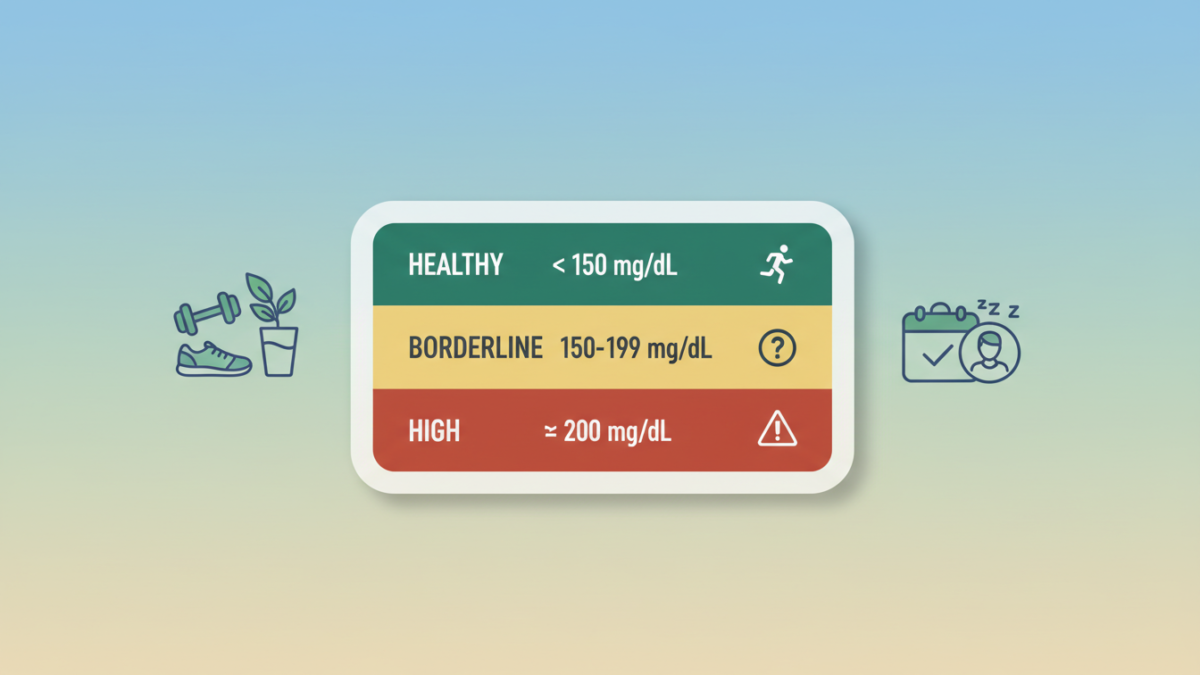
The triglycerides blood test is a common test in doctor’s offices. It checks how well your heart and metabolism are working. It looks at the fats in your blood, which come from food and stored energy.
Doctors report these results in milligrams per deciliter (mg/dL) or millimoles per liter (mmol/L). You need to fast for 8 to 12 hours before the test. A healthcare professional takes the blood from your vein.
Understanding triglyceride levels is key for everyone. This guide explains what the test does, why doctors order it, and what it means for your health.
Key Takeaways
- The triglycerides blood test measures fat levels in the blood and requires an 8- to 12-hour fast for reliable results.
- The triglycerides normal range for adults is generally below 150 mg/dL (1.7 mmol/L), according to guidelines from the American Heart Association.
- Triglycerides originate from dietary fats and from excess calories the liver converts into stored energy.
- Healthy triglyceride levels are a key indicator of cardiovascular and metabolic well-being.
- Normal triglyceride values can vary based on a person’s age, sex, and overall health status.
- Elevated or unusually low results may signal underlying conditions that require further evaluation by a physician.
What the Test Measures
A triglycerides blood test checks the level of a specific type of fat in the blood. It helps patients understand their results. A triglyceride levels chart shows where a person’s reading falls, from normal to high risk.
Definition of Triglycerides
Triglycerides are the most common type of fat in the blood. They are different from cholesterol, which is a waxy substance. The body makes triglycerides from fats and carbs we eat.
When we eat more than we need, the liver turns the extra into triglycerides. These are stored for later use.
Role of Triglycerides in the Body
Triglycerides are key for energy. They break down into fatty acids and glycerol for fuel. Any extra is stored in fat for later.
But too many triglycerides can harm the heart. Dr. Romit Bhattacharya from Mass General Brigham Heart and Vascular Institute says they’re important for heart health. Keeping triglycerides below 150 mg/dL is good for the heart.
- Triglycerides provide stored energy between meals
- They insulate organs and help absorb fat-soluble vitamins
- Elevated levels increase the risk of artery-clogging plaque buildup
Understanding these basics helps us see why this test is important. The next section will explain more.
Why It Is Ordered
Doctors order a triglycerides blood test for several important reasons. This test helps evaluate a person’s risk for serious health problems and track existing conditions. Understanding the triglycerides reference range allows healthcare providers to make informed decisions about treatment and prevention strategies.
Screening for Cardiovascular Risk
High triglyceride levels contribute to atherosclerosis — the buildup of fatty deposits inside artery walls. This process narrows blood vessels over time and raises the chance of heart attack and stroke. Early detection is critical because cardiovascular disease develops over decades.
A triglycerides test is typically part of a lipid panel, which measures other blood fats like LDL and HDL cholesterol. The American Heart Association recommends that healthy adults get a lipid panel every four to five years starting at age 20. Knowing the acceptable triglyceride range gives patients a clear target for heart health.
Certain groups need more frequent testing, including:
- Adults over 45 years old
- People with a family history of heart disease
- Individuals with high blood pressure or diabetes
- Those who smoke or are physically inactive
Monitoring Medical Conditions
Beyond heart disease screening, this test is essential for managing specific medical conditions. Triglyceride levels above 500 mg/dL can trigger pancreatitis, a painful and potentially dangerous inflammation of the pancreas.
Doctors use the triglycerides reference range to monitor patients with conditions such as diabetes, thyroid disorders, and kidney disease. Regular testing helps track whether medications and lifestyle changes are keeping levels within the acceptable triglyceride range.
The National Lipid Association recommends that patients with elevated triglycerides receive repeat testing every three to six months until levels stabilize.
Routine monitoring ensures that shifts in blood fat levels are caught early, giving patients the best chance at effective treatment before complications arise.
Normal Reference Range
Knowing the ideal triglyceride levels is key for health checks. These levels are found through a fasting blood test. They are measured in milligrams per deciliter (mg/dL) or millimoles per liter (mmol/L). Remember, normal ranges can differ based on testing methods and health.
Standard Values and Units
The National Heart, Lung, and Blood Institute has set triglyceride categories. Levels under 150 mg/dL are normal. But, levels over 175 mg/dL increase heart disease and stroke risks.
Levels at or above 500 mg/dL are very dangerous. They can lead to acute pancreatitis, a painful condition needing hospital care.
| Classification | mg/dL | mmol/L | Associated Risk |
|---|---|---|---|
| Normal | Less than 150 | Less than 1.69 | Low cardiovascular risk |
| Borderline High | 150–199 | 1.69–2.25 | Elevated heart disease risk |
| High | 200–499 | 2.26–5.64 | Metabolic syndrome concern |
| Very High | 500 or above | 5.65 or above | Acute pancreatitis risk |
Extremely high levels, over 1,500 mg/dL, can stop the body from digesting fat.
Age and Sex Variation
Triglyceride levels change with age and sex. Men usually have higher levels than women until menopause. Then, women’s levels may match men’s.
Pregnancy can also raise triglycerides, making it important to consider timing and context when checking levels.
To keep triglycerides normal, patients should work with their healthcare provider. This is true, even if levels are not in the expected range for their age and sex. Only a doctor can fully understand what these numbers mean for a person’s health.
What High Levels May Indicate
When triglyceride levels go over 150 mg/dL, the body’s fat system gets stressed. Too many triglyceride particles stay in the blood too long. These particles, called triglyceride remnants, are full of cholesterol and can damage artery walls, leading to atherosclerosis.
Associated Health Risks
High triglycerides can harm several organs. The biggest risks are:
- Heart attack and coronary artery disease
- Stroke caused by blocked blood flow to the brain
- Acute pancreatitis, when levels hit 500 mg/dL or more
- Peripheral artery disease affecting limbs
The American Heart Association says very high triglycerides (over 500 mg/dL) need quick medication to avoid pancreatitis. For levels that are just high or borderline, doctors often suggest more exercise and better diet first.
Conditions Linked to Hypertriglyceridemia
High triglycerides often mean there’s a health issue. Several diseases can push levels too high:
| Condition | How It Raises Triglycerides |
|---|---|
| Hypothyroidism | Slows fat metabolism and clearance |
| Poorly controlled type 2 diabetes | Increases liver triglyceride production |
| Nephrotic syndrome | Causes abnormal lipoprotein synthesis |
| Cirrhosis or liver damage | Impairs lipid processing pathways |
| Familial hypertriglyceridemia | Genetic defect in triglyceride breakdown |
Some lifestyle and medication choices can also raise levels. Diets with too much refined carbs and not enough protein can increase them. Hormone therapies with estrogen can also raise triglycerides. Finding the cause is key to getting levels back to normal and lowering heart disease risk.
What Low Levels May Indicate
Most health talks focus on high triglycerides. But, low levels are important too. They can show nutritional or metabolic problems that need a doctor’s check.
Implications of Low Triglycerides
Adults usually have triglycerides under 150 mg/dL. Levels under 35 mg/dL might mean a problem. Triglycerides are a key energy source for the body.
Being on very low-fat diets can cause triglycerides to drop too low. This is not always good. Doctors might do more tests to find out why.
Conditions Linked to Hypotriglyceridemia
Several health issues can cause triglycerides to be too low:
- Hyperthyroidism — An overactive thyroid burns fat too fast.
- Malabsorption syndrome — The small intestine can’t absorb fats well, like in celiac disease.
- Malnutrition — Not eating enough can deplete fat stores.
- Rare genetic disorders — Some conditions affect fat transport in the blood.
The National Institutes of Health say low triglycerides need a detailed check-up to find treatable causes.
A single low reading might not be a big deal. But, if it keeps happening and you feel tired or lose weight, it’s time to check your thyroid, digestion, and nutrition. Finding these problems early can help a lot.
Related Biomarkers
Triglycerides are just one part of a bigger picture. Doctors usually check them with other blood fats. This gives a clearer view of heart health.
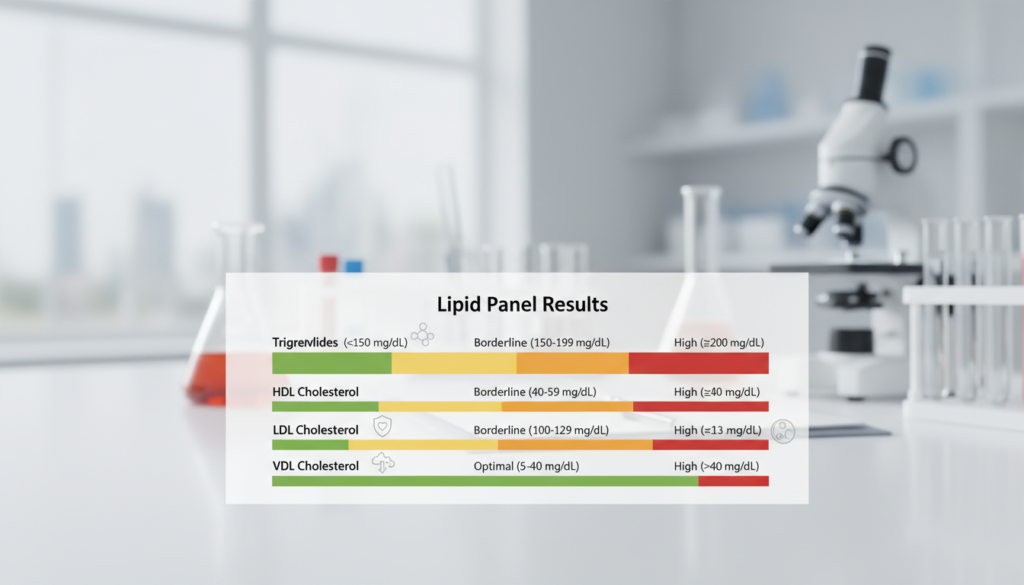
Cholesterol Levels
Doctors often check cholesterol levels with triglycerides. A total cholesterol of 150 mg/dL is good. But, levels over 200 mg/dL are high.
Dr. Salim Virani from Baylor College of Medicine says a normal LDL reading can be reassuring. But, ignoring high triglycerides can lead to heart disease. Keeping triglycerides in check is just as important as cholesterol.
Lipoprotein Profiles
Lipoproteins carry fats in the blood. Each type has a different role in heart health. VLDL carries triglycerides to body tissues. High VLDL means triglycerides are likely high too.
The table below shows important lipid biomarkers and their good levels, as the American Heart Association suggests:
| Biomarker | Desirable Level (mg/dL) | Primary Function |
|---|---|---|
| Total Cholesterol | Less than 200 | Overall lipid burden indicator |
| LDL Cholesterol | Less than 100 | Delivers cholesterol to arteries |
| HDL Cholesterol | 60 or higher | Removes cholesterol from arteries |
| VLDL Cholesterol | Less than 30 | Transports triglycerides to tissues |
| Triglycerides | Less than 150 | Energy storage and supply |
Looking at these biomarkers together helps doctors understand how diet, lifestyle, and medicine affect health. This makes future evaluations more reliable.
Factors That Affect Results
Many daily habits and timing choices can change triglyceride levels. Knowing these factors helps in understanding lab results better. Without this knowledge, a single test result might be misleading.
Dietary Influences
What you eat and drink greatly affects your triglycerides. Extra calories from carbs, fats, or proteins turn into triglycerides and are stored in fat cells. Diets rich in added sugars and refined grains can raise levels the most.
Drinking too much alcohol also impacts levels. Even moderate drinking can push numbers above the American Heart Association’s recommendations. Smoking can make this effect worse by changing how the body handles fats.
Some medicines can also affect test results. It’s important to tell your doctor about all medications you take, including over-the-counter and supplements. Common ones include:
- Beta-blockers
- Oral estrogens
- Corticosteroids
- Diuretics
- Retinoids
Temporal Factors
When you have your blood drawn is just as important as what you eat. Fasting for 8 to 12 hours before the test gives the most accurate results. Eating a meal right before can double or triple your triglyceride levels.
Changes in body weight also affect results. Being overweight keeps baseline levels higher, making it harder to reach ideal levels even with fasting.
| Factor | Effect on Triglycerides | Recommended Action |
|---|---|---|
| High-sugar diet | Raises levels significantly | Limit added sugars to under 25 g/day |
| Alcohol consumption | Elevates levels dose-dependently | Avoid alcohol 24+ hours before the test |
| Non-fasting blood draw | Temporarily inflates readings | Fast 8–12 hours prior |
| Certain medications | May raise or lower values | Disclose all drugs to the provider |
| Obesity | Keeps baseline elevated | Pursue gradual, sustained weight loss |
Clinical Context Considerations
A single triglyceride reading doesn’t tell the whole story. Doctors look at a patient’s full medical history, current meds, and lifestyle. This helps them make the best treatment plans and keep triglycerides in check.

Interpretation of Results
Cardiologist Dr. Nandita Bhattacharya says levels above 175 mg/dL on repeat tests increase heart disease risk. Levels at or above 150 mg/dL are a sign of metabolic syndrome, linked to heart attack and stroke.
Doctors don’t just look at one blood test. They consider trends and compare triglycerides with other health markers. This helps spot problems early and keep patients healthy.
Patient Risk Assessment
Medication is usually for those with atherosclerosis or type 2 diabetes. For others, lifestyle changes come first:
- Regular aerobic exercise—at least 150 minutes per week
- A balanced diet low in refined sugars and saturated fats
- Gradual weight loss of 5–10% of body weight
- Limiting alcohol intake
These lifestyle changes can sometimes avoid the need for medication. Regular doctor visits are key to tracking progress and making adjustments.
| Risk Factor | Triglyceride Threshold | Recommended Action |
|---|---|---|
| General cardiovascular risk | Above 175 mg/dL | Lifestyle changes, closer monitoring |
| Metabolic syndrome component | 150 mg/dL or higher | Evaluate all five metabolic criteria |
| Existing atherosclerosis or diabetes | Any elevated reading | Lifestyle changes plus medication review |
Regular follow-up tests help doctors keep triglycerides normal. This prevents serious heart problems.
Limitations of the Test
No lab test is perfect, and the triglycerides blood test is no exception. Several factors can affect results, making it hard to know if a patient is in the normal range. Knowing these limitations helps patients and doctors avoid misinterpreting test results.
Factors That May Compromise Accuracy
The test needs strict fasting for 9 to 12 hours before the blood draw. If a patient eats or drinks anything other than water during this time, readings can be much higher. This is true even if their triglyceride levels are usually healthy.
Certain medical conditions can also affect results in unpredictable ways:
- Pregnancy can raise triglyceride levels by up to two to three times, mostly in the third trimester.
- Poorly controlled type 2 diabetes often raises readings, even without diet changes.
- Thyroid disorders, like hypothyroidism, tend to increase levels.
- Chronic liver or kidney disease changes lipid metabolism, affecting baseline values.
- Genetic lipid disorders, like familial hypertriglyceridemia, make standard benchmarks less reliable.
Contextual Limitations and Misinterpretations
Reference ranges for triglycerides can vary from one lab to another. A borderline result at one lab might be normal at another. Always talk to your healthcare provider about your specific lab’s reference values.
A single high reading doesn’t always mean a chronic problem. Alcohol, intense exercise, or the time of day can temporarily raise levels. The American Heart Association suggests repeating the test before making treatment decisions based on one result.
A triglyceride test is just one piece of a larger puzzle. It should always be interpreted with other biomarkers and clinical findings.
For these reasons, doctors usually look at triglyceride results along with other biomarkers. This helps build a complete picture of cardiovascular risk.
References
This article uses trusted medical sources. These sources help us understand normal triglyceride values and their link to heart health. You can find more information on triglyceride levels and guidelines by checking out the sources below.
Medical Journals and Guidelines
The 2019 American College of Cardiology and American Heart Association guideline is key. It was published in Circulation (2019;140(11):e596–e646). It helps us understand how to prevent heart disease.
The 2018 AHA/ACC guideline on blood cholesterol management is also important. It was printed in Circulation (2019;139(25):e1046–e1081). It tells us how to classify normal triglyceride levels in medical practice.
The National Heart, Lung, and Blood Institute and the American Heart Association have guidelines too. They help doctors understand triglyceride levels charts accurately.
Relevant Clinical Studies
Studies from the Mass General Brigham Heart and Vascular Institute are important. They help us understand the risks of high triglycerides. Harvard Medical School has published guides for patients on controlling triglycerides and making lifestyle changes.
The Mayo Foundation for Medical Education and Research also has guidelines. They help standardize testing and reference ranges in the U.S.
Together, these resources give patients and doctors a solid basis for understanding triglyceride test results. They help make informed health choices.